Seven Mile Beach
🇰🇾 Cayman Islands
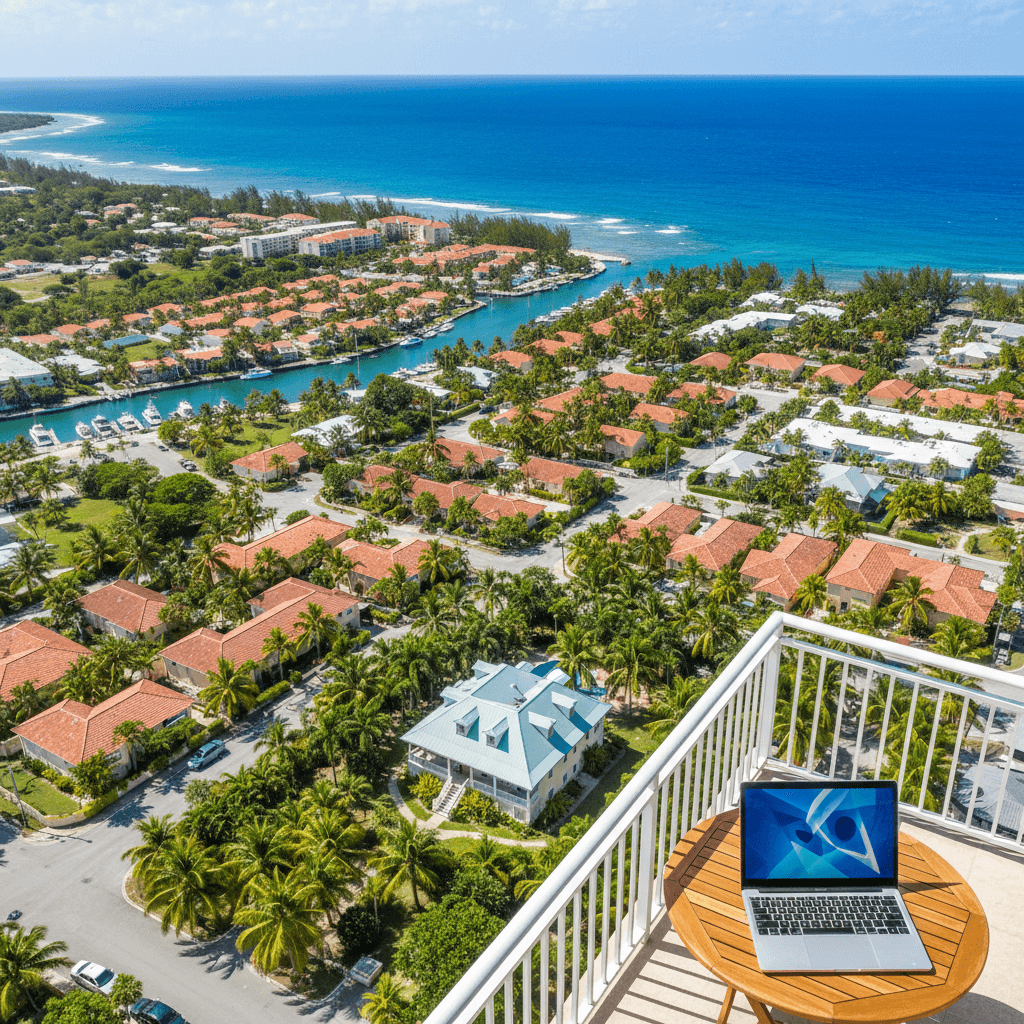
Seven Mile Beach is, honestly, one of the most polished tropical destinations you'll find anywhere in the Caribbean. The sand is powdery white, the water runs a shade of blue that looks almost unreal and the whole place feels like someone turned the contrast up. It's not rugged. It's not gritty. That's the point.
What separates it from other beach destinations is the combination of genuine luxury and genuine accessibility. The beach itself is public, so you're lying next to a $800/night resort guest on the same stretch of sand, paying nothing. Zero murky runoff means visibility in the water stays clear year-round, which makes even casual snorkeling feel like something you'd pay extra for elsewhere.
The vibe skews toward well-heeled travelers and long-term expats, so the social scene is, turns out, easier to crack than you'd expect. Nomads and expats tend to find each other quickly through Facebook groups and the kind of casual beach bar conversation that happens when everyone's a little sun-drunk by 3pm. The community is small, English is the official language and crime is low enough that most people relax almost immediately after arriving.
Still, it's not paradise without caveats. The cost is genuinely high, groceries will shock you ($13 for a gallon of milk, $9 for a dozen eggs) and the tourist density during peak season makes parts of the corridor feel less like a Caribbean island and more like a theme park with better food. The pace is slow by design, which is wonderful until you want variety and realize there isn't much of it.
Emotionally, the place does something specific to you. The air smells faintly of salt and sunscreen, the sound of small waves is basically constant and the sunsets over the water are the kind that make people stop mid-sentence. It's easy to understand why people come for a week and start quietly researching apartments.
Seven Mile Beach works best for nomads who want a clean, safe, beautiful base with reliable internet and don't mind paying a premium for it. Budget travelers will struggle here, it's not a destination you can hack cheaply. But if the budget fits, few places feel this effortless.
Seven Mile Beach is, honestly, one of the most expensive places you can choose to base yourself in the Caribbean. That's not a warning, it's just the reality you need to budget around before you fall in love with the turquoise water and start pricing flights.
Rent is the biggest hit. A studio or one-bedroom along the Seven Mile corridor runs $2,400 to $4,000 USD per month and demand keeps it there year-round. Pull back from the beach toward South Sound or George Town and you can find something for $700 to $2,400, though you'll need a car to make that work. Utilities add another $270 to $340 on top, because air conditioning in 85-degree heat isn't optional.
Groceries are, weirdly, where the sticker shock really lands for most newcomers. A gallon of milk costs around $13, a dozen eggs runs $9 and your weekly shop for one person will reliably hit $100 to $150. Nearly everything is imported, so that smell of fresh produce at the supermarket comes with a premium you can't negotiate away. Eating out mid-range runs $20 to $50 per meal, street food and fast casual closer to $10 to $28.
Transport adds up fast. Gas sits around $6.40 per gallon, taxis between George Town and Seven Mile run $20 to $28 via the CI:GO app and longer island trips can hit $90. Internet is $110 per month for a cable connection, turns out the speeds are solid enough for video calls without much drama.
Most nomads land in one of three real budget tiers:
- Basic: ~$3,600/month, shared housing, buses along the corridor, cooking at home most nights
- Mid-range: $5,000 to $7,000/month, a one-bedroom, eating out a few times a week, occasional taxi
- Comfortable: $8,000+/month, beachfront apartment, a rental car, dining out regularly
Skip trying to bank locally, the requirements are maddening for non-residents. Use Wise or Revolut instead, both handle USD to KYD conversion without the fees a local bank would charge you for the privilege of existing here.
None of this is cheap. But if the budget works, it works well.
Where you land on this island matters more than most people expect, the price gap between neighborhoods is genuinely dramatic and the lifestyle differences are just as stark.
Nomads & Solo Travelers: Seven Mile Beach Corridor and Camana Bay
This is the obvious choice and honestly, it earns that reputation. You're walking distance to the beach, to cafes with decent WiFi and to Camana Bay's open-air shops and restaurants where you'll spot other laptop workers most mornings. The tradeoff is brutal: a 1-bedroom here runs $2,800+ KYD per month, which is, turns out, more than most nomads budget for an entire month elsewhere in the Caribbean.
George Town's waterfront is a solid second pick. It's more urban, Regus at The White House gives you a proper coworking option and you're only about seven minutes from Seven Mile Beach by car. The energy is grittier than the corridor, skip the inland industrial blocks and don't linger around the bar strips late at night.
Expats: South Sound and Snug Harbor
Most long-term expats quietly migrate here. Rent drops to $1,800 to $4,000 KYD per month, the streets are calm and there's a genuine neighborhood feel that the corridor, weirdly, never quite manages despite all its polish. You'll need a car to reach Seven Mile, that's the main frustration, but expats who've made the move consistently say the tradeoff is worth it.
- Rent: $1,800 to $4,000 KYD/month
- Vibe: Quiet, residential, genuinely local
- Downside: No beach access without a drive
Families: Prospect Point and Grand Harbour
Frankly, this is the most livable corner of the island for families. Modern amenities, a real community feel, good proximity to schools. It's inland and the traffic to Seven Mile can pile up, but families here don't seem to mind, the day-to-day convenience outweighs the beach commute.
What to Skip
West Bay and Bodden Town come up occasionally as budget alternatives. Don't bother. Higher crime rates and poor convenience make them a bad deal even at lower rents, the savings aren't worth the daily friction.
Internet here is, honestly, reliable enough to run a full remote workload without much stress. Most accommodations along the Seven Mile corridor get 50 Mbps or better via cable and hotel WiFi at places like the Marriott or Westin is genuinely solid, not the throttled, shared-bandwidth nightmare you'd expect from resort properties. That said, you're paying for it, $110 USD a month for a home connection is the going rate and that stings when you're already bleeding money on rent.
The coworking scene is thin. That's the honest reality.
Regus at The White House in George Town is the main dedicated option, offering both hot desks and private offices only about a seven-minute drive from the heart of Seven Mile Beach. Most nomads, turns out, skip the dedicated office route entirely and just work from cafes or their apartments; it's a small enough island that a proper coworking membership rarely feels worth it.
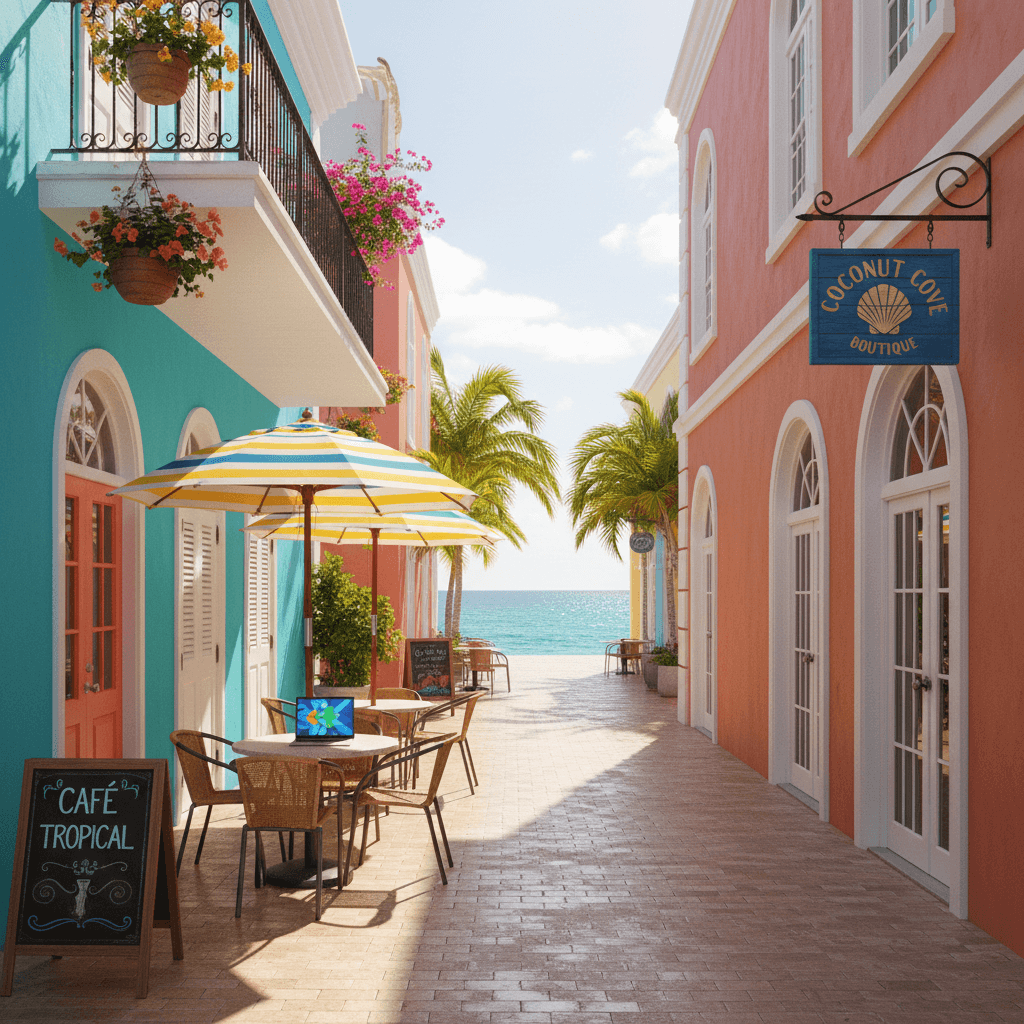
Café del Sol has a working-friendly atmosphere where you'll spot laptops most mornings, the coffee's decent and nobody rushes you out. It's not a coworking space, but it functions like one for a few hours at a time.
For mobile data, local SIM cards run $10 to $40 USD depending on the plan and most nomads find a mid-tier data plan covers gaps when cafe WiFi gets spotty. An eSIM is worth loading before arrival, especially if you want connectivity the moment you land.
A few practical notes on connectivity:
- Home internet: ~$110 USD/month, cable or DSL, 50 Mbps+ standard
- Regus: George Town location, seven minutes from Seven Mile
- Resort day passes: Marriott and Westin both offer options for non-guests
- Local SIM: $10 to $40 USD, covers most of the island adequately
Weirdly, the beach itself works as a backup office on calm days, the sun glare is brutal on screens though, pack a hood or find shade. Power outages are rare but they do happen during storm season, a small UPS or a fully charged laptop battery buys you enough time to wrap up anything urgent.
Grand Cayman sits at a U.S. Level 1 travel advisory, the lowest risk rating possible and Seven Mile Beach genuinely earns that. It's one of those rare places where you can leave your laptop bag at a beach chair and feel reasonably fine about it, the local culture is honest and community-oriented, petty crime is low compared to most Caribbean destinations.
That said, it's not uniformly safe everywhere. George Town's waterfront bars late at night attract some sketchy energy and the inland industrial zones aren't somewhere you'd want to wander after dark. Stick to the beach corridor and you'll almost never feel uncomfortable.
Healthcare here is, honestly, exceptional for a small island. The Cayman Islands Hospital in George Town runs a 24/7 emergency room and holds JCI accreditation, which is the same international standard major U.S. hospitals aim for. Doctors Hospital is the go-to for more personalized, private care and most expats prefer it for non-emergency visits. Private consultations run $100 to $250 USD, ER visits land between $300 and $600 USD, so it's not cheap, travel insurance isn't optional here.
Pharmacies are well-stocked and easy to find. Total Health on Seven Mile Beach is the most convenient option for nomads staying in the corridor, open Monday through Saturday 8am to 8pm. For emergencies, dial 911, it works exactly as you'd expect.
A few practical things worth knowing before you arrive:
- Travel insurance: Get it. Medical costs without coverage add up fast and evacuation to Miami for serious cases runs into the thousands.
- Sun and water safety: The UV index here is, weirdly, brutal even on overcast days; reef-safe sunscreen and hydration matter more than most visitors expect.
- Hurricane season: June through November carries real risk, peak danger sits in September and October. Check your insurance policy covers weather disruptions before booking long stays.
- Water quality: Tap water is turns out perfectly safe to drink, desalinated and clean throughout the island.
Overall, Seven Mile Beach is one of the easier places in the Caribbean to feel secure day-to-day. The infrastructure is solid, the healthcare is genuinely good, common sense still applies at night though.
Seven Mile Beach is, honestly, one of the more walkable stretches in the Caribbean. The beach corridor runs roughly from the Marriott down past the Westin and if you're staying anywhere along that spine, you can handle most daily errands on foot. Restaurants, grocery runs, beach access, all within a reasonable walk, no car needed for the basics.
That changes fast once you leave the corridor. The island doesn't have a proper transit network, so getting to George Town, South Sound or anywhere inland means figuring out alternatives. Most long-term nomads end up renting a car, gas runs about $6.40 a gallon and parking is generally free, which softens the blow a little.
For shorter trips, there are two apps worth knowing. Island:GO! is the local ride-hailing option, newer but functional. CI:GO handles taxi bookings with fixed fares, so you won't get stung by surge pricing or a driver who "forgot" the meter. Airport to mid-Seven Mile runs $20 to $28 for up to four people and the drive itself is only 5 to 15 minutes depending on traffic.
Buses exist, they're cheap, they run along the main routes and they operate on something loosely described as a schedule. Expats use them, it works, just don't plan anything time-sensitive around one. The vibe is very local, which is actually a nice change from the resort bubble.
Bikes and scooters are worth considering for the beach corridor specifically. Several rental spots along Seven Mile will set you up by the day or week and the flat terrain makes it easy, the warm air and smell of salt water while you're riding makes it genuinely pleasant. Skip the scooter if you're heading into George Town traffic though, it gets chaotic around the roundabouts.
- Walking: Practical along the Seven Mile corridor; less useful anywhere else
- Taxis/Ride-hailing: CI:GO for fixed fares, Island:GO! for on-demand rides
- Buses: Budget-friendly, flexible schedules, good for the main Seven Mile route
- Car rental: Turns out, near-mandatory if you plan to explore beyond the corridor
- Bikes and scooters: Great for short beach runs, skip them for heavy traffic areas
No single option covers everything here. Most people end up mixing ride apps for airport runs, a rental car for weekend exploring and their own feet for daily beach life.
English is the official language and everyone speaks it fluently, so you won't run into communication barriers here. That said, the local Caymanian dialect has its own rhythm, a warm Caribbean lilt that can catch you off guard when you first arrive.
A few phrases come up enough that you'll want to recognize them. "Wha gwaan?" means "what's going on?" and "Ah wah?" functions as a catch-all confirmation, somewhere between "or what?" and a simple yes/no prompt. Locals use it casually, it's not rude or abrupt, just efficient. You'll hear it at the grocery store, at a beach bar, from the guy renting you a scooter.
Most expats and nomads find the language adjustment takes about a day. Honestly, the harder adjustment is the pace of conversation, not the words themselves. Caymanians don't rush. Expect longer pleasantries before getting to the point of any transaction and don't try to shortcut that, it reads as rude and you'll get slower service for your trouble.
Spanish turns up occasionally, mostly in service industry settings where Latin American workers are common, a quick "gracias" goes a long way. Google Translate handles anything else that comes up, though you'll rarely need it.
Phone communication is straightforward. Local SIM cards run $10 to $40 USD for data plans and most providers have decent coverage across Seven Mile Beach and George Town. eSIMs are, turns out, the cleaner option if you're hopping between islands or want to avoid the hassle of a physical swap. Coverage gets spottier in inland areas and parts of the eastern districts, so don't count on strong signal if you're day-tripping away from the main corridor.
WiFi in cafes and hotels is, weirdly, more reliable than you'd expect for a small island. However, keep in mind that Café del Sol has limited weekday hours and is closed on weekends at its main location, so it may not be ideal for full-day work sessions. For anything serious, a local SIM with a data backup is the sensible move.
- Official language: English
- Useful phrases: "Wha gwaan?" (what's going on), "Ah wah?" (yes/no confirmation)
- SIM cards: $10 to $40 USD, eSIM recommended for flexibility
- Translation app: Google Translate covers edge cases, rarely needed
Temperatures on Seven Mile Beach sit between 75 and 87°F year-round, so you're never really dressing for weather. The sun's out, the water's warm, it stays that way.
That said, the calendar matters more than you'd think. The rainy season runs May through November and it's not just a light drizzle situation. September and October are, honestly, the worst of it, with rain falling on nearly half the days and the constant background anxiety of hurricane season, which officially spans June through November. The storms don't hit every year, but the threat is real, the humidity clings to everything and the tourist infrastructure gets quieter in a way that can feel a little flat if you're here for the energy.
The sweet spot is February through April. Low rainfall, slightly cooler temperatures and dry air that actually lets you breathe. March and April are, turns out, the driest months of the year, which makes them ideal if you're here to work and want to spend evenings outside without getting soaked on the walk back from dinner.
Peak tourist season runs December through April, so you'll be sharing the beach. Crowds are thickest around the holidays and spring break, rooms are pricier and restaurants along the corridor fill up fast. If you're staying longer than a week or two, that congestion gets old quickly, expats recommend arriving in January or February to catch the dry weather without the worst of the holiday rush.
Here's a quick breakdown of what to expect by season:
- Feb to Apr: Driest months, mild heat, low humidity. Best overall window for nomads and long-stay visitors.
- Dec to Jan: Dry but peak tourist crowds; expect higher prices and busier beaches.
- May to Aug: Rain picks up, still manageable, fewer tourists and better rental deals.
- Sep to Oct: Wettest months, weirdly oppressive humidity, hurricane risk highest. Skip it if you can.
- Nov: Transitional, rain tapering off, decent value before December prices kick in.
One thing most travelers don't expect: even during rainy season, storms tend to pass fast. You get a heavy downpour, the smell of wet sand and warm pavement, then blue skies again within the hour, it's rarely a full washout day.
SIM cards are easy. Pick up a local data plan for $10,$40 USD, though most nomads who've been burned by spotty coverage recommend grabbing an eSIM before you land so you're connected the moment you clear customs. It's a small thing, honestly, but arriving without data in an unfamiliar place is an unnecessary headache.
Banking is, frankly, the most frustrating part of settling in here. Local bank accounts require proof of employment, so nomads are largely locked out, don't even bother trying to open one without a work permit. Use Wise or Revolut instead; both handle multi-currency transfers at low fees and work fine for day-to-day spending on the island.
For finding an apartment, expats recommend starting with EcayTrade.com and Facebook Marketplace before calling a realtor, because listings move fast and the good ones at reasonable prices get snapped up within days of posting. CIREBA.ky is worth checking for longer-term rentals too.
Getting around takes some adjustment. The Island:GO! app handles ride-hailing, taxis via CI:GO give fixed fares so you won't get stung on the way in from the airport and buses run along Seven Mile for cheap if you're not in a hurry. A car, turns out, becomes almost non-negotiable once you want to explore beyond the corridor, gas runs about $6.40 per gallon.
Day trips are genuinely worth building into your schedule:
- Stingray City: Book through a local operator rather than a resort desk, you'll pay less and the experience is identical.
- Starfish Point: A short drive north, calm water and almost no crowds on weekday mornings.
- Rum Point Sunday Funday: The unofficial nomad and expat social ritual, it's how most people make their first real connections here.
A few cultural notes that'll save you minor embarrassment. Sunday is genuinely quiet, many businesses close and locals take rest seriously, plan your grocery run for Saturday. "Island time" is real, not a joke, meetings and services run late and getting annoyed about it won't change anything. If you're paying for activities, ask about resident rates, some operators offer them and they're weirdly easy to get just by asking.
Weather-wise, avoid September and October if you can. Hurricanes are possible June through November, but those two months are the wettest and most disruptive by a clear margin.
Need visa and immigration info for Cayman Islands?
🇰🇾 View Cayman Islands Country GuideEasy Landing
Settle in, no stress