Sengkurong
🇧🇳 Brunei
The Serene Suburb
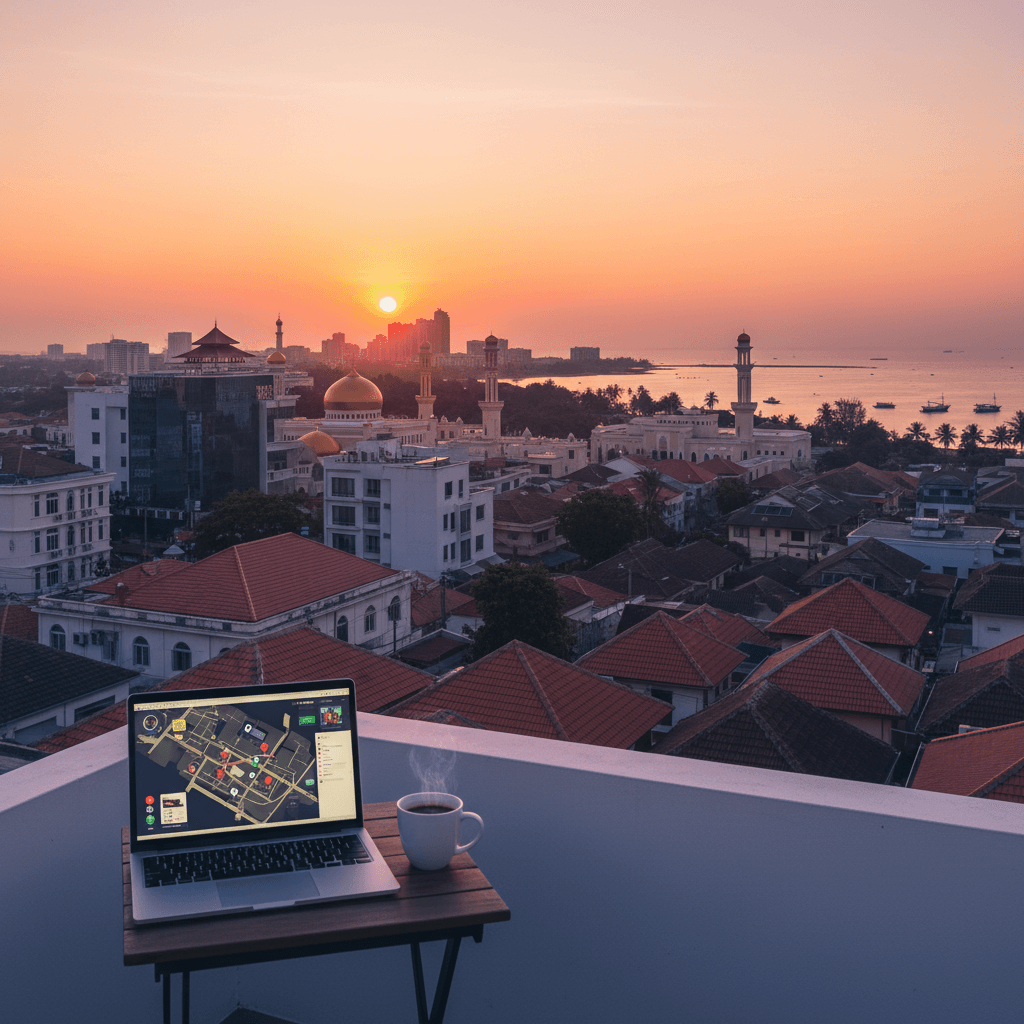
If your idea of a perfect workday involves the sound of tropical birds instead of sirens, Sengkurong might be your speed. It isn't a high energy hub like Bangkok or Bali. Instead, it feels like a deep breath. Located just 15 minutes from the capital, Bandar Seri Begawan, this residential district offers a rare slice of quietude where the rainforest meets low rise architecture. It’s a place where life slows down to a crawl, and the local culture is defined by Islamic traditions, safety, and a genuine, understated friendliness.
Most nomads find that Sengkurong feels more like a retreat than a city. You won’t find a nightlife scene here; the evenings are for watching sunsets over the trees or grabbing a $3 Nasi Katok from a roadside stall. It is one of the safest places you will ever visit, and because English is widely spoken, you can easily chat with locals at the tamu (market) without a language barrier. The emotional experience here is one of total security and focus, making it a dream for those who need to finish a big project without distractions.
The Nomad Reality Check
While the vibe is peaceful, the infrastructure requires a bit of a "DIY" spirit. You won't find sleek, glass walled coworking spaces with artisanal espresso. Most digital nomads work from their apartments or local cafes. The internet is actually quite strong, with 4G coverage hitting nearly 98% in this area and speeds averaging around 87 Mbps, but you'll want a local SIM from DST or Progresif to stay connected. Expect to pay about BND 50-80 for high-data or 'unlimited' (fair use) plans.
The cost of living is another factor to weigh. Brunei isn't a budget destination like its neighbors. Since so much is imported, your monthly burn will likely hover around $1,500 USD. Travelers often say the trade off for the higher price tag is the lack of crowds and the incredible access to nature. You might be typing away on your laptop in the morning and spotting Proboscis Monkeys in the mangroves by the afternoon.
Cost of Living Breakdown
- Housing: A decent 1BR in central Sengkurong runs between $800 and $1,200. If you look toward the outskirts, you might find something for $500, while modern apartments near the Jerudong border can climb past $1,500.
- Food: Local eateries and street food are affordable at $3 to $15 per meal. If you head to high end spots like the Empire Hotel, expect to pay $30 or more.
- Transportation: Public buses are cheap at $1 but notoriously infrequent. Most expats use the InDrive app for rides, which cost between $5 and $10 for local trips. Car rentals are the best bet for freedom, costing roughly $50 a day.
- Workspaces: Since dedicated coworking is scarce, budget $100 to $200 a month for cafe hopping or basic shared office setups in the capital.
Navigation and Logistics
Getting around Sengkurong requires a bit of planning. It’s a walkable area if you stay in the core, but the tropical heat and humidity often make a 10 minute walk feel like a marathon. Most nomads recommend using InDrive since Grab doesn't operate here. If you're coming from the airport, a taxi will cost you about $20 to $30 for the 25 minute drive.
The social scene is muted. Without bars or clubs, social life revolves around food, nature, and home gatherings. It can feel isolating if you're a solo traveler looking for a party, but it’s perfect for those who value privacy and a healthy, alcohol free lifestyle. To meet people, look for expat groups on Facebook or head to the local parks and beaches in nearby Jerudong. Just remember to dress modestly and respect the local customs, especially during Friday prayers when the district goes quiet.
The Price of Peace
Living in Sengkurong is a study in trade-offs. While it’s one of the most serene corners of Southeast Asia, it isn't a budget destination like Bali or Chiang Mai. Because Brunei imports a significant portion of its goods, you'll find that your monthly burn rate sits around $1,562 USD. It’s a price many nomads are willing to pay for the safety and the ability to work surrounded by rainforests rather than traffic jams.
Most of your budget will go toward housing. Since Sengkurong is a residential suburb, you get more space for your money than in downtown Bandar Seri Begawan, but short-term rentals are rare. You'll likely need to browse Facebook groups or PropertyGuru to find a decent setup. Most expats recommend looking for modern apartments near the Jerudong border if you want better amenities.
Monthly Budget Breakdowns
To give you a realistic idea of what life here looks like, here is how the costs shake out across different lifestyles:
The Budget Nomad
- Total: ~$1,000 USD
- Rent: $500 to $800 for a basic unit on the outskirts of Sengkurong.
- Food: Stick to the night markets. A plate of Nasi Katok will only set you back about $1 to $3.
- Transport: Mostly walking and the occasional $1 purple bus ride, though the heat makes this a challenge.
- Workspace: Local coffee shops with free WiFi.
The Mid-Range Professional
- Total: ~$1,500 USD
- Rent: $800 to $1,200 for a central, well-maintained one-bedroom apartment.
- Food: A mix of local cafes and mid-range eateries, averaging $10 to $15 per meal.
- Transport: Regular use of ride-hailing apps like InDrive, costing roughly $5 to $10 per trip.
- Workspace: A dedicated desk at a basic coworking space for $100 to $200 a month.
The High-End Resident
- Total: $2,500+ USD
- Rent: $1,500+ for a luxury apartment or a small house near the Jerudong coast.
- Food: Frequent dining at hotel restaurants like those at The Empire, where meals start at $30.
- Transport: Renting a private car for around $50 a day to explore the island freely.
- Workspace: Premium office setups or high-speed home fiber connections.
Utilities and Connectivity
Internet is surprisingly reliable, with 4G coverage reaching nearly 98% of the Brunei-Muara district. You can expect average speeds around 87 Mbps, which is plenty for video calls and heavy uploads. Most nomads pick up a SIM card from DST or Progresif at the airport. An unlimited data plan usually runs between $20 and $30 per month, though using an eSIM via Airalo is a popular shortcut for shorter stays.
Electricity and water are generally affordable, but if you're running the air conditioning 24/7 to beat the 32°C heat, expect your utility bill to jump. Since there is no booze and very little nightlife, your "entertainment" budget will likely shift toward weekend trips to Ulu Temburong or diving excursions, which can be pricey due to the lack of mass tourism infrastructure.
Practical Spending Tips
Cash is still useful at local markets, but most established businesses in Sengkurong accept cards. Travelers often suggest using Wise or Revolut to avoid hefty bank conversion fees. If you're staying longer than a month, it’s worth investing in a bicycle or a cheap car rental, as the lack of a robust public transit system can make you feel stranded in the suburban sprawl. Finally, remember that Brunei is a dry country. You won't be spending a dime on cocktails or beer, which often helps balance out the higher cost of imported groceries.
For Digital Nomads: Sengkurong Core
If you're looking for the sweet spot between local life and proximity to the capital, the central Sengkurong area is your best bet. It's a peaceful residential suburb where the pace of life slows to a crawl, making it perfect for deep work sessions. You won't find a dedicated coworking hub here, but the local cafes are welcoming and the 4G coverage is surprisingly robust, often hitting speeds around 87 Mbps.
- Rent: Expect to pay between $800 and $1,200 for a decent 1BR or studio in the more central pockets.
- Vibe: Low-key and green. You're surrounded by rainforest patches and low-rise architecture that keeps the sunset views unobstructed.
- Connectivity: Most nomads rely on a DST or Progresif SIM for unlimited data, which usually runs about $20 to $30 per month.
The main trade-off is the lack of a "scene." You'll be trading networking events for quiet evening walks and the occasional monkey sighting. It’s a 10 to 15 minute drive into Bandar Seri Begawan when you need a dose of urban energy or a larger mall like Yayasan Sultan.
For Expats: Bandar Seri Begawan Border
Expats who want a bit more structure often settle on the fringes of Sengkurong heading toward the capital. This area provides easier access to international schools and the more specialized grocery stores that stock imported goods. Since Brunei's cost of living can be high, around $1,562 per month for a comfortable lifestyle, being near the city helps justify the price through convenience.
- Housing: Modern apartments and larger houses are more common here, with rents often exceeding $1,500 for premium spots.
- Dining: You're closer to mid-range eateries where a meal costs $10 to $15, a step up from the $3 to $5 nasi katok stalls found deeper in the suburbs.
- Transport: A car is almost mandatory. While the InDrive app works for occasional trips at $5 to $10 a pop, most long-term residents find renting or buying a vehicle is the only way to stay sane.
For Solo Travelers: Jerudong
Just a short hop from Sengkurong is Jerudong, the go-to for solo travelers who want a bit more "resort" in their stay. It's home to the famous Empire Hotel and some of the country's best beaches. While it's pricier than the residential heart of Sengkurong, it offers the most entertainment options in a country that is otherwise very quiet at night.
- Activities: Easy access to beach sunsets and the Jerudong Park playground. It feels less isolated than the deep suburbs.
- Budget: It's the most expensive area to base yourself. Upscale dining at the hotels can easily top $30 per person.
- Safety: Like all of Brunei, it's incredibly safe. You can walk around at night without a second thought, though the lack of streetlights in some areas is more of a hazard than the crime rate.
For Nature-Loving Families: Tutong Border
Families looking for space and a rural atmosphere often look toward the Tutong side of the district. It’s about a 30 minute drive from the Sengkurong core, but it puts you right on the doorstep of Brunei’s natural wonders. It's the best area for those who want a backyard and easy weekend trips to the Ulu Temburong rainforest.
- Rent: You can find more affordable, larger homes on the outskirts for $500 to $800, though you'll spend more on fuel.
- Lifestyle: Very family-oriented and quiet. The social life revolves around home visits and community markets rather than public venues.
- Practicality: Public transport is almost non-existent here. If you don't have a car, you'll feel stranded. Ensure your banking is set up with Wise or Revolut before heading out this far, as ATMs are less frequent than in the city center.
Connectivity in the Quiet Zone
Working from Sengkurong requires a bit of a mindset shift. You aren't going to find the high energy, neon-lit coworking hubs of Bali or Bangkok here. Instead, you get a reliable, steady connection in a town that actually lets you focus. Brunei has invested heavily in its digital infrastructure, and Sengkurong benefits from near-complete 4G coverage in Brunei-Muara district. You can expect average mobile download speeds of 50-100 Mbps depending on provider and location, which is more than enough for seamless Zoom calls or uploading large files.
Most nomads skip the hunt for public hotspots and grab a local SIM card immediately. DST and Progresif are the two main players. You can pick up a physical SIM at the airport or in nearby malls, but Airalo eSIMs work perfectly if you want to be online before you even leave the arrivals hall. An unlimited data plan usually runs between $20 and $30 per month. If you plan on working from local cafes, always use a VPN. While the internet is fast, public networks aren't always the most secure.
Coworking and Desk Space
Sengkurong doesn't have dedicated, name-brand coworking franchises. If you need a formal office environment, you'll likely have to make the 15 minute drive into Bandar Seri Begawan. In the capital, basic shared spaces are available for $100 to $300 a month, though they tend to be functional rather than "lifestyle" oriented. Most people living in Sengkurong prefer the home-office setup or "cafe hopping" to keep things interesting.
For a more casual workspace, local coffee shops are your best bet. Because the town is so peaceful, you can usually sit for a few hours with a laptop without being moved along. Just keep in mind that Brunei is a dry country and very traditional; Friday afternoons are exceptionally quiet due to prayer times, and many businesses close temporarily between 12:00 PM and 2:00 PM.
The Digital Nomad Budget
Living here isn't as cheap as neighboring Malaysia or Indonesia, but it's manageable if you know where to spend. Most nomads find they need about $1,562 a month to live comfortably. Housing is the biggest variable. A modern apartment near the Jerudong area can cost $1,500 or more, but if you look at the outskirts of Sengkurong, you can find simple studios for $500 to $800.
Your daily expenses will look something like this:
- Daily Meals: Expect to pay $3 to $5 for local staples like nasi katok at street stalls. A mid-range sit-down meal at a local eatery will be closer to $10 or $15.
- Transportation: Public buses are cheap at $1 per ride but notoriously unreliable. Most expats use the InDrive app, where a typical trip costs between $5 and $10.
- Coffee: A decent latte in a work-friendly cafe usually costs around $5.
Practical Work-Life Tips
Since there isn't a massive nomad community in Sengkurong, it can feel a little isolating if you're used to constant networking events. To meet people, expats usually head to the Empire Hotel for a bit of luxury or join Facebook groups for local meetups. If you need a break from the screen, the rainforest is right on your doorstep. Many people take day trips to Ulu Temburong or head to the coast to catch the sunset, which is one of the perks of living in a low-rise town with zero skyscrapers to block the view.
One thing to remember is the visa situation. Brunei doesn't currently offer a specific digital nomad visa. Most travelers rely on the 90 day tourist visa. It's great for a three-month deep-work retreat, but extending beyond that requires some planning. Always keep a copy of your onward travel documents ready, as immigration can be thorough.
Safety in Sengkurong
Brunei is consistently ranked among the safest countries on the planet, and Sengkurong is no exception. You can walk home after a late dinner at a local eatery without a second thought. Street crime like mugging or pickpocketing is incredibly rare here. Most nomads find the atmosphere more like a sleepy village than a suburban district, where neighbors look out for one another and the pace of life feels naturally secure.
The local culture is deeply rooted in Islamic traditions, which contributes to the orderly and respectful environment. While there aren't any "no-go" zones or dangerous neighborhoods to worry about, you should respect local customs. This means dressing modestly and being aware that alcohol is not sold publicly. Following these social norms ensures you'll be met with the legendary friendliness Bruneians are known for.
For peace of mind, keep these emergency contacts saved in your phone:
- Police: 991
- Ambulance: 995
- Fire and Rescue: 995
Healthcare Facilities
If you need medical attention, you're in good hands. While Sengkurong itself is residential, it's only a 15 minute drive from the capital's top tier facilities. Most expats and nomads head to Raja Isteri Pengiran Anak Saleha (RIPAS) Hospital in Bandar Seri Begawan for specialist care or emergencies. It's a massive public facility with high standards of care and English speaking staff.
For more routine issues, you'll find plenty of private clinics and well stocked pharmacies scattered around the Sengkurong core. Pharmacists are usually very knowledgeable and can provide over the counter help for common tropical ailments or minor infections. If you have a specific prescription, it's a good idea to bring a supply with you, though most international brands are available in the larger pharmacies near the malls.
Health Tips for Nomads
The biggest health hurdle you'll likely face is the tropical heat. Temperatures regularly hit 32°C (90°F) with high humidity, so staying hydrated is a full time job. While the tap water in Brunei is generally considered safe to drink after boiling, most long term residents prefer filtered or bottled water for the taste and extra safety.
Since Sengkurong is surrounded by lush greenery and rainforests, mosquitoes can be a nuisance, especially during the rainy season from November to February. It's smart to use repellent if you're heading out for sunset views or exploring the nearby trails. There's no malaria risk in this part of Brunei, but dengue fever pops up occasionally in the region, so avoiding bites is your best bet.
- RIPAS Hospital: The main government hospital, located about 10 to 15 minutes away.
- Local Clinics: Numerous private "Klinik" options in Sengkurong for quick consultations, usually costing $30 to $50 for a visit.
- Insurance: Always carry a policy that covers medical evacuation, though basic care is quite affordable out of pocket.
The Logistics of Getting Around
Moving through Sengkurong requires a bit of strategy because the infrastructure doesn't mirror the high-tech transit systems of neighboring Singapore or Kuala Lumpur. It's a car-centric suburb where the pace is slow and the humidity is high. Most nomads find that while the core of Sengkurong is walkable for quick errands, the tropical heat makes anything longer than a ten minute stroll a sweaty endeavor.
Ride-Hailing and Taxis
Forget about opening Uber or Grab here; they don't operate in Brunei. Instead, you'll want to download Dart, the local equivalent. It's the most reliable way to get a ride, though wait times can be longer than what you're used to in bigger hubs. Another popular option is InDrive, where you can negotiate your fare directly with the driver. Expect to pay between $5 and $10 for most local trips within the Sengkurong and Jerudong area.
- Airport Transfers: A ride from Brunei International Airport (BWN) to Sengkurong typically takes 20 to 30 minutes and costs between $20 and $30.
- Availability: Drivers are plentiful during the day but can become scarce late at night or during Friday prayer times, when the whole country pauses for a few hours.
Car Rentals
If you're planning to stay for more than a week, renting a car is the smartest move. It gives you the freedom to chase sunsets at the beach or head into Bandar Seri Begawan without waiting for a ride-hail. The roads are excellent, well-maintained, and fuel is incredibly cheap. You can find rentals for around $50 per day, though monthly rates can be negotiated down with local agencies.
Public Buses
Public transport is the most budget-friendly option but also the least convenient. The purple "Franchise" buses serve the Brunei-Muara district, and a ride will only set you back $1. However, schedules are more of a suggestion than a rule. Expats recommend using the bus only if you aren't on a tight timeline, as they are infrequent and the routes can be confusing for newcomers.
Practical Transport Tips
- Friday Shutdown: Everything, including most transport services, comes to a standstill on Fridays between 12:00 PM and 2:00 PM for prayers. Plan your errands around this window.
- Walking: Stick to the early mornings or late evenings if you want to walk. The midday sun is intense, and while Sengkurong is safe, many roads lack consistent sidewalks once you leave the main commercial strips.
- Navigation: Google Maps is generally reliable for driving directions, but don't count on it for accurate bus timings.
Connectivity on the Go
To keep your navigation apps running, pick up a local SIM card immediately. DST and Progresif are the main players. You can get an unlimited data plan for roughly $20 to $30 per month. If your phone supports it, an Airalo eSIM is a quick way to get connected the moment you land, though local physical SIMs usually offer better value for long-term stays.
The Linguistic Landscape
You'll find that getting your point across in Sengkurong is surprisingly effortless. While Malay is the official language, English is the de facto second language and is spoken with a high level of proficiency by almost everyone you'll encounter. From shopkeepers at the local markets to staff in the more modern cafes, communication rarely hits a wall. Most nomads find they don't need to learn Malay to handle daily logistics, though a few local phrases go a long way in building rapport with the community.
The local dialect is Brunei Malay, which has its own unique rhythm and vocabulary. However, standard Malay is used in all formal settings and signage. Because English is the medium of instruction for many subjects in schools, the younger generation and professionals are often near-fluent. You can expect menus, road signs, and official documents to be bilingual, making it one of the most accessible spots in Southeast Asia for English speakers.
Key Phrases to Know
While you can get by on English alone, locals genuinely appreciate it when you make an effort. It signals respect for their culture and often leads to better service or a friendly conversation. Here are the basics to keep in your pocket:
- Selamat Pagi: Good morning.
- Terima Kasih: Thank you.
- Sama-sama: You're welcome.
- Berapa harganya?: How much is this?
- Lurus: Straight (useful for giving directions to drivers).
Digital Connectivity and Apps
Staying connected is straightforward, though you should set things up as soon as you land. Most expats recommend picking up a local SIM card rather than relying on international roaming, which can get pricey. DST and Progresif are the two main providers. You can grab a SIM at the airport or in one of the malls for about BND 10-15 for starter SIM with initial data, top-ups BND20+ for monthly high data. If your phone supports it, Airalo offers eSIM options that work well for a quick start.
For translation and navigation, Google Translate handles Malay quite well, and Google Maps is reliable for finding your way around the Sengkurong outskirts. Since there is no Grab or Uber here, you will want to download InDrive or Dart. These are the local go-to apps for ride-hailing and will save you the headache of trying to haul a cab on the street, which is nearly impossible in residential areas.
Social Etiquette and Communication Style
Communication in Brunei is deeply influenced by Islamic values and a generally polite, reserved culture. People in Sengkurong are incredibly friendly but tend to be soft-spoken. Raising your voice or showing outward frustration is generally looked down upon and won't get you far. A calm, patient approach is always the best way to handle any misunderstandings.
When meeting people, a light handshake is common, but some locals may prefer a simple nod and a hand over the heart, especially when interacting with members of the opposite sex. It is a good rule of thumb to wait for them to initiate a handshake first. Travelers often say that the "peaceful vibe" of the town extends to how people speak; it is a low-stress environment where people take their time to listen.
Staying Productive
If you are planning to work from cafes in Sengkurong, keep in mind that while many offer free WiFi, the speeds can be hit or miss. Most nomads prefer to use their own mobile hotspots as a backup. The 4G coverage in the Brunei-Muara district is excellent, often hitting 98% coverage, so you won't be hunting for a signal. If you need a more stable environment for video calls, look for newer cafes or hotel lobbies in nearby Jerudong where the infrastructure is a bit more robust.
The Tropical Rhythm
Living in Sengkurong means embracing a tropical climate that stays remarkably consistent. You can expect temperatures to hover between 25°C and 32°C (77°F to 90°F) throughout the year. Humidity is a constant companion here, so your wardrobe should stick to light, breathable fabrics. Most nomads find the air conditioning in local cafes and the Empire Hotel a necessary refuge during the midday heat.
The year is split into two main seasons: the dry and the wet. While rain can happen any day in a rainforest climate, the patterns significantly impact how much work you'll get done outdoors or how often you can hit the nearby beaches.
The Peak Season: March to October
This is widely considered the best time to base yourself in Sengkurong. The weather is generally drier and more predictable, making it the ideal window for exploring the lush rainforests or catching those famous Bornean sunsets. Since the skies are clearer, the low rise architecture of Sengkurong allows for unobstructed views of the horizon.
- March to May: These months are often the hottest but also the driest. It is prime time for spotting Proboscis Monkeys in the mangroves without getting caught in a downpour.
- June to August: You might see a slight increase in short, sharp afternoon showers, but they rarely derail a day's plans.
- September to October: The transition period. You'll get plenty of sunshine, but the humidity starts to ramp up as the monsoon approaches.
The Monsoon Season: November to February
If you don't mind the sound of heavy rain on a tin roof, the monsoon season has its own charm. This period sees frequent, intense downpours that can last for hours. It’s a great time for deep work and focused projects, though the gray skies can feel a bit isolating if you're staying in a quieter residential area.
Travelers often say that the "worst" months are December and January. Not only is it wet, but localized flooding can occasionally make the infrequent bus system even more unreliable. If you are here during this time, you'll definitely want to rely on the InDrive app for transport rather than trying to walk between neighborhoods.
Cultural Timing and Holidays
Beyond the weather, your experience in Sengkurong will be shaped by the Islamic calendar. The most significant period to watch for is Ramadan. During this holy month, eating and drinking in public during daylight hours is prohibited. Many local eateries in Sengkurong will be closed or offer limited takeaway services until sunset.
While the atmosphere is incredibly peaceful, it can be a challenging time for digital nomads who rely on working from cafes during the day. On the flip side, the Hari Raya celebrations that follow are spectacular. You might even get a chance to visit the Istana Nurul Iman palace in nearby Bandar Seri Begawan, which opens to the public for a few days each year.
The Nomad Verdict
For the best balance of work and play, aim to arrive in March or April. You'll avoid the heaviest rains, the heat is still manageable, and you'll have several months of clear weather to explore the surrounding nature before the humidity peaks. If you're on a 90 day tourist visa, this window ensures you won't spend your entire stay stuck indoors watching the rain.
Getting Connected and Setting Up
Staying online in Sengkurong is straightforward, even if the infrastructure feels a bit old school. You'll find 4G coverage is excellent, often reaching speeds around 87 Mbps. Most nomads skip the hunt for public WiFi and grab a local SIM from DST or Progresif at the airport or a nearby mall. Expect to pay between BND 50-80 for generous data or throttled unlimited plans. If you prefer a digital route, Airalo eSIMs work well here too.
Coworking hasn't quite hit its stride in this corner of Brunei. You won't find dedicated spaces in Sengkurong itself; instead, you'll be working from hotel lobbies or local cafes. For a more professional setup, you might need to commute 15 minutes into Bandar Seri Begawan, where basic shared spaces cost between $100 and $300 per month. Always keep a VPN active when using cafe networks to keep your data secure.
The Cost of Living
Brunei is pricier than its neighbors like Malaysia or Indonesia, mostly because so much is imported. A mid-range lifestyle usually runs about $1,500 USD per month. Here is how that breaks down for different budgets:
- The Budget Tier (~$1,000/mo): You'll be living on the Sengkurong outskirts with rent around $500 to $800. Meals will mostly be $3 to $5 street food like nasi katok, and you'll rely on the $1 public bus.
- The Mid-Range Tier (~$1,500/mo): This gets you a central Sengkurong apartment for $800 to $1,200. You can eat out at local eateries for $10 to $15 and use ride-hailing apps for daily trips.
- The Comfortable Tier (~$2,500+/mo): You can snag a modern apartment near Jerudong for $1,500 or more. This allows for upscale dining at spots like the Empire Hotel and a rental car at $50 per day.
Navigation and Neighborhoods
Sengkurong is the sweet spot for nomads who want peace without being totally isolated. It's a residential suburb that feels green and quiet, located just a short drive from the capital. If you want more action, Bandar Seri Begawan has the malls and urban energy, but the traffic and rent are higher. Jerudong is the place for beach access and high-end resorts, while Tutong is too rural for most remote workers due to the 30 minute commute and lack of amenities.
Getting around is the biggest hurdle. Public buses are infrequent and unreliable. There is no Grab here; instead, download InDrive or use local taxis for trips that usually cost $5 to $10. Most expats eventually rent a car through DiscoverCars because the tropical heat makes walking more than ten minutes a sweaty ordeal.
Daily Life and Cultural Etiquette
Life here follows a different rhythm. There is no nightlife in the traditional sense. Since Sharia law is in place, you won't find bars or clubs. Social life revolves around night markets, mosque visits, and quiet cafe hangouts. Dress modestly, especially when away from the beach, and remember that things get very quiet during Friday prayers.
English is widely spoken, so you won't have trouble at the pharmacy or the bank. ATMs are everywhere and apps like Wise or Revolut are widely accepted in shops. For healthcare, the RIPAS Hospital in the capital is only 15 minutes away and offers high-quality care. If you have an emergency, dial 991 for police or 995 for an ambulance.
Weather and Timing
It is hot and humid year-round, typically hovering between 25 and 32°C. The best time to visit is between March and October when it is relatively dry. Avoid November through February if you can, as the monsoon rains are heavy and can disrupt outdoor plans. Even in the dry season, a sudden afternoon downpour is common, so always carry a light rain jacket or umbrella.
Need visa and immigration info for Brunei?
🇧🇳 View Brunei Country GuideHidden Gem
Worth the effort