Segovia
🇪🇸 Spain
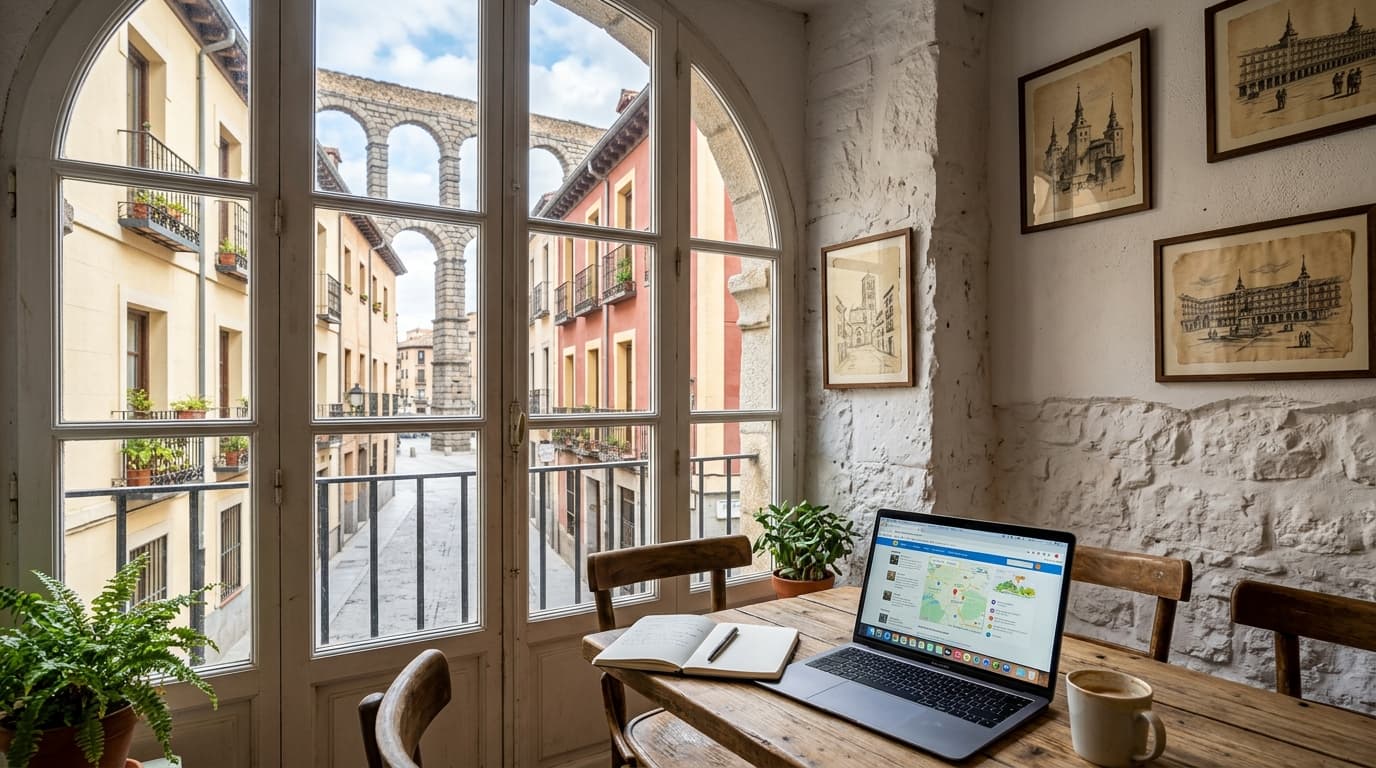
Segovia feels smaller than its reputation and that’s part of the appeal. The old city sits on a ridge, the Roman aqueduct cuts through the center like a stone spine and the whole place has a dry, high-altitude crispness that can make a midday walk feel strangely clean and harsh at the same time.
For nomads, it’s a better fit for slow, focused stays than for social, laptop-all-day city life. You can work well here if you like quiet mornings, short walking commutes and an easy reset from bigger Spanish cities, but you won’t find Madrid-level coworking energy or a deep remote-worker scene. Nights are calm, sometimes almost too calm and after dinner the streets can empty fast.
The city’s rhythm is shaped by tourism, students and local routines. Around Plaza Mayor and the aqueduct, you’ll hear camera shutters, footsteps on cobblestones and the occasional tour guide rising above the hum. Duck one street back and it gets residential quickly, with bakeries, small bars and the smell of roasting meat drifting out of tabernas, especially on colder evenings.
Most nomads do best near the centro, the area around the aqueduct and the streets leading toward Plaza Mayor. It keeps you close to cafés, bus connections and the main sights, though it can feel a bit heavy with day-trippers in peak hours. If you want a quieter base, look just beyond the historic core, where rents are usually softer and the sidewalks aren’t packed with visitors carrying gelato and selfie sticks.
- Best for: Quiet routines, walkability, short stays and history-heavy city living
- Not ideal for: Big coworking scenes, late-night energy or people who need constant variety
- Work vibe: Good for writing, design and solo remote work, less convincing for team-heavy schedules
- Daily feel: Stone streets, cool mornings and a pace that slows down hard after sunset
Food is one of Segovia’s strongest pulls and it’s not subtle. Cochinillo, roast lamb, thick soups and local wine make this a place where lunch can run long and heavy, then leave you needing a walk up one of the steep hills. Winters bite more than most visitors expect and the cold gets into the stone floors and stays there.
If you want a Spanish city that feels historic without being chaotic, Segovia is an easy yes. Just don’t expect it to perform for you. It’s better when you let it stay a little stern, a little quiet and completely itself.
Segovia isn’t a cheap base, but it’s still easier on the wallet than Madrid. For a solo nomad living sensibly, a monthly budget usually lands around €1,000 to €1,500 ($1,080 to $1,620), depending on rent and how often you eat out. The city is compact, so you won’t bleed money on transit and that helps more than people expect.
Rent is the biggest swing factor. A one-bedroom outside the center can run about €650 to €900 ($702 to $972), while a place in the historic core or near the aqueduct often creeps higher. Furnished rentals exist, but the good ones get snapped up fast, especially during university months and spring tourism.
- Coffee: €1.50 to €2.50 for a café con leche, more in the tourist-heavy streets near Plaza Mayor.
- Lunch menu: €12 to €18 for a menú del día, usually filling and usually better value than dinner.
- Groceries: €200 to €300 a month if you cook most meals and shop at Mercadona, Carrefour or local markets.
- Coworking: about €120 to €220 a month, depending on desks, hours and whether you want a fixed spot.
Transportation is refreshingly cheap because you can walk most places. The uphill streets do get your calves working, though and winter mornings can be cold enough that the stone sidewalks feel like they’re pulling heat straight out of your shoes. Buses are inexpensive for the few times you need them and taxis are fine for late nights, but you probably won’t use them much.
Where costs feel different
- Centro and around the aqueduct: pricier cafés, more short-stay apartments and the highest tourist markup.
- San Lorenzo: often a better mix of everyday shops, local bars and midrange rent.
- Nueva Segovia: more residential, usually cheaper and practical if you want space over charm.
Eating like a local keeps the budget sane. Skip the restaurants with laminated tourist menus under the aqueduct and head for places where office workers and older locals are ordering wine at lunch. The best-value days in Segovia usually involve bread, roast chicken, lentils, market fruit and a long lunch that doesn’t try too hard.
The annoying part is that Segovia can feel expensive for a city this small if you want polished apartments, central views and regular coworking. Still, if you’re happy walking, cooking and keeping your nightlife modest, it’s a manageable city with fewer financial shocks than Spain’s bigger hubs.
Segovia is compact, walkable and a little uneven in the practical stuff. The center is lovely, but some streets are steep, cobbled and annoying with luggage, so where you stay matters more than it does in flatter Spanish cities.
Nomads
Most nomads do best near the old center, around Plaza Mayor, Calle Juan Bravo and the streets leading toward the aqueduct. You can walk to cafés, bus stops and most sights, then disappear into a quiet apartment once the day-trippers leave. The tradeoff is simple, charming buildings usually mean older plumbing, thinner walls and spotty fiber in some rentals.
- Best fit: Centro, San Millán and the edges of the historic quarter
- Typical rent: about $850 to $1,400 for a one-bedroom long term, depending on exact location, season and apartment condition.
- Work setup: Look for local cafés with decent seating or ask about spaces near the station and main avenues
If you need reliable desk time, check the connection before booking. One weak router can turn a pretty apartment into a daily headache.
Expats
Expats who stay longer usually prefer areas just outside the tourist core, especially San Lorenzo and the neighborhoods toward the station. They’re calmer, a bit cheaper and easier for errands. You’ll hear more bus brakes and grocery carts than tour groups and that’s the point.
- Best fit: San Lorenzo, El Carmen, areas near the AVE station
- Typical rent: about $750 to $1,200 for a one-bedroom, with calmer residential areas generally on the lower end than the historic center.
- Daily life: Better for supermarkets, gyms and normal apartment living than the historic center
The station area isn’t pretty in the postcard sense, but it’s practical. If you’re commuting to Madrid a few times a week, it saves time and keeps your routine less chaotic.
Families
Families should look at quieter residential pockets with easier parking and less foot traffic. San Lorenzo is a strong pick and parts of El Carmen work well too. Kids can actually sleep and you’re less likely to deal with late-night noise drifting through open windows in summer.
- Best fit: San Lorenzo, El Carmen, newer residential streets south of the center
- Typical rent: about $1,050 to $1,700 for larger apartments, depending on size, age of the building and exact neighborhood.
- What matters: Elevator access, storage, parking and proximity to schools or parks
Solo travelers
Solo travelers should stay in the historic center if they want easy evenings and no taxi dependence. It feels safe and easy to read, especially around well-lit streets near the aqueduct and Plaza Mayor, though the nights can get very quiet once restaurants close. That silence is either lovely or a little eerie, depending on your mood.
- Best fit: Old town, near the aqueduct, Plaza Mayor and Cathedral area
- Typical hotel or studio: about $70 to $150 a night
- Best move: Pick a place with good heating or cooling, because stone buildings can get icy or stuffy fast
If you want the easiest first stay, book central. If you want the easiest long stay, move one ring out.
Segovia isn’t a heavy-duty remote-work city and that’s fine if you don’t need one. The internet in the center is generally decent for email, calls and light video work, but you’ll still run into the usual small-city annoyances, slower speeds in older buildings, spotty café Wi-Fi and the occasional afternoon lull when everyone seems to be online at once.
Most nomads stay near the historic center or around the José Zorrilla area, then work from a mix of apartments, cafés and the few proper coworking spaces in town. If you’re taking meetings every day, ask for a recent speed test before booking a flat. Thick stone walls and old wiring can turn a nice-looking apartment into a dead zone.
Where to work
- Coworking spaces: Segovia has very limited coworking options, with at least one main space in or near the center. It’s worth checking what’s currently open before you arrive, rather than assuming several choices around town. Day passes are usually the easiest way to test the setup before committing.
- Cafés: Good for a laptop session if you order properly and don’t camp out all day. Look for quieter spots away from Plaza Mayor, where tourist chatter and chair scraping can get old fast.
- Home base: A flat with fiber internet is still the best bet for anyone on Zoom a lot. In Segovia, that matters more than shiny furniture.
Practical budget
- Coworking day pass: expect roughly €10 to €20 if offered, depending on the space and what’s included.
- Monthly desk: about €100 to €180, depending on whether you choose a flexible or fixed desk and any extras.
- Apartment with reliable internet: often €800 to €1,200 ($866 to $1,300) for a one-bedroom, depending on location and season
For phone data, local eSIMs and prepaid SIMs are easy to find and they’re useful as a backup when your apartment Wi-Fi decides to act up. Vodafone, Movistar and Orange all have coverage in town, though speeds can dip inside older stone buildings. If you’re a digital nomad who needs to upload large files every day, don’t rely on café Wi-Fi alone.
The town is easy to work around on foot, which helps. You can take a break, hear the clack of heels on cobblestones, grab a coffee, then get back to work without fighting Madrid-level noise or transit chaos. Still, Segovia’s not built for late-night coworking energy. Shops close early, evenings get quiet and the city can feel a little too sleepy if you like a buzzing work scene.
Best setup, then, is simple: stay central, get fiber, keep a backup data plan and use coworking for the days when you need quiet and a proper chair. That’s the sweet spot here. Anything more ambitious and you’ll probably end up annoyed.
Segovia feels calm on the surface and for the most part it's. The old center is walkable, the night streets around the aqueduct and Plaza Mayor stay lively without getting rowdy and pickpocketing is more of a Madrid problem than a Segovia one. Still, the tourist core pulls in day-trippers, so keep an eye on phones and wallets in crowded spots, especially near the Alcázar, the aqueduct and busy cafés around Calle Real.
Most nomads settle into a simple routine here, walk home before the late-night crowd thins out, use licensed taxis after midnight and avoid flashy laptop work in open terraces if the place feels too exposed. Segovia’s cobblestones are no joke either. In winter, a slick patch near a steep lane can send you straight down on your side and in summer the dry heat can hit hard by late afternoon.
Healthcare is solid for a city this size. You’ll find pharmacies throughout the center and pharmacists are often the fastest first stop for minor issues like a stomach bug, a rash or a bad blister. For anything more serious, the main public hospital is Hospital General de Segovia and private doctors and dental clinics are easy to find in town if you want a quicker appointment.
Travelers with a European Health Insurance Card can usually use public care under Spain’s system, while others should keep private travel insurance handy. If you need medication, bring a copy of the prescription or the package photo, because brand names don’t always line up neatly across countries. Also, don’t assume every clinic runs late hours. Segovia keeps a smaller-city pace, so evening care can mean a trip to urgent services instead of a quick walk-in fix.
- Emergency number: 112 for police, fire and medical help
- Police: National Police for serious incidents, Local Police for minor trouble and traffic issues
- Pharmacies: Look for the green cross and check the posted rota for 24-hour or on-call pharmacies
- Heat and sun: Summer afternoons can be punishing, so carry water and sunscreen even on short walks
- Winter slips: Old stone streets get icy and brutal underfoot after rain or frost
For common-sense safety, Segovia is easy enough to manage, but don’t get careless just because it feels sleepy. Lock your bag on trains and buses, skip leaving laptops in cars and avoid isolated stretches outside the center late at night. If you’re staying in the historic core, the biggest nuisance is usually noise from weekend visitors, not crime. That said, the thin mountain air, hot afternoons and hard winter wind can wear you down faster than you expect.
Segovia is small enough that you can cross the center on foot without much planning, which is the main reason it works so well for a short stay. The old town is hilly and the stone streets can be slippery after rain, so good shoes matter more here than they do in flatter Spanish cities. You’ll hear church bells, tour groups and the occasional bus grinding uphill, then there are long quiet stretches once you move a few blocks off the main sights.
Walking: This is how most people get around. The route between the aqueduct, Plaza Mayor and the Alcázar is straightforward, though the climbs can sting if you’re carrying a laptop bag in summer heat. Segovia’s scale makes errands easy, but the cobblestones can be punishing on knees and luggage wheels.
City buses: Useful for getting between the historic center, train station and newer residential areas. They’re not frequent enough to replace walking for most day-to-day trips, so don’t build a tight schedule around them. If you’re staying outside the core, check return times in advance because late-evening service can feel thin.
- Taxis: Easy to find near the aqueduct, train station and major hotels. They’re handy for late arrivals or steep uphill stretches, but they add up fast on short intra-city hops.
- Ride-hailing: Availability can be patchy compared with bigger Spanish cities. Travelers often end up using local taxis instead.
- Bikes and scooters: Not my first pick in the old town. Traffic, slopes and rough paving make them more annoying than they look on paper.
Getting in and out: The high-speed train from Madrid is the cleanest option for most visitors and it drops you at the Segovia-Guiomar station outside the center. From there, you’ll need a bus or taxi into town, so don’t assume the trip ends when the train does. Once you’re based in Segovia, Madrid is the obvious airport and big-city escape hatch for coworking, specialist shopping or a change of pace.
For nomads: Stay near the aqueduct or Plaza Mayor if you want to walk everywhere and keep your coffee stops simple. If you’d rather trade charm for convenience, look closer to the train station, where access is easier and the streets are less tourist-heavy. Either way, keep an eye on luggage, because dragging a roller over Segovia’s old stone gets old fast.
Spanish is the default in Segovia and outside the tourist core, English drops off fast. At the Alcázar, the aqueduct and around Plaza Mayor, staff usually handle basics, but in smaller cafés, repair shops and clinics, you’ll get farther with simple Spanish and patience. The city feels calmer than Madrid, but it still has the usual soundtrack of footsteps on stone, café chatter and the occasional scooter buzzing by.
For nomads, that means a little prep goes a long way. Download offline maps, keep your address written down and learn the phrases for "takeout", "receipt", "I have a reservation" and "where’s the nearest pharmacy". WhatsApp is widely used for bookings and quick coordination, so locals often expect you to text rather than call. Email works too, but don’t be surprised if replies come later than you’d like.
What to learn before you arrive
- Basics: "hola", "por favor", "gracias", "¿habla inglés?" and "¿cuánto cuesta?"
- Transit: "estación", "autobús", "tren", "taxi" and "a pie"
- Food and errands: "agua", "sin hielo", "factura", "farmacia" and "cajero"
- Emergency phrases: "necesito ayuda", "llame a un médico" and "no entiendo"
The accent in Castilla y León can feel sharp if you’ve only heard Latin American Spanish and people do speak quickly. That said, Segovians are usually direct rather than unfriendly, so a clean "perdón" and a modest attempt in Spanish goes a long way. Bad Spanish is fine. No Spanish is what slows things down.
For internet and day-to-day communication, Segovia is solid in the center and in most furnished apartments, but old buildings can be patchy. If you’re apartment hunting, ask about fiber speed, router placement and whether the landlord has dealt with remote workers before. In coworking spaces, the connection is usually better than in cafés, where one weak plug and a wobbly table can ruin your afternoon.
Useful local habits
- Book ahead: restaurants and trains, especially on weekends and holidays
- Use WhatsApp: for housing agents, clinics, plumbers and many small businesses
- Speak plainly: short sentences beat flashy Spanish
- Carry cash: some tiny shops still prefer it for small purchases
If you’re staying a month or more, set up your phone plan early and keep your passport handy for anything official. Spanish bureaucracy can be maddening, especially when a desk clerk wants one more photocopy at 1 p.m. and the line snakes past the door, but the communication culture itself is straightforward. Clear, polite and a little persistent usually gets the job done.
Segovia gets proper inland-Castile weather, which means sharp seasons and very little mercy in summer. The city sits high enough that winter mornings can feel raw, with cold stone underfoot and a bite of wind that comes straight off the plateau. Summer afternoons, on the other hand, can be brutally hot and the old streets hold that heat long after sunset.
Spring and fall are the sweet spots. April, May, Sept. and Oct. usually bring the best balance, with clear light on the aqueduct, decent walking weather and fewer tour groups clogging the lanes around the cathedral and Alcázar. You’ll still want a jacket at night, though, because temperatures drop fast once the sun goes down.
Most nomads find winter manageable if they’re fine with quieter streets and indoor days. Heating in older apartments can be patchy and some places feel drafty even when the landlord swears the radiators work. Summer is the tougher sell, especially in July and Aug., when the dry heat, afternoon glare and occasional tourist crush can make working from a café less appealing.
If you want a month-by-month feel, here’s the simple version:
- Best overall: April, May, Sept. and Oct., for mild days and long walks.
- Warmest: July and Aug., with hot afternoons and bright, dry air.
- Coldest: Dec. through Feb., when mornings can be icy and the wind cuts hard.
- Rainiest stretches: spring and late fall, though Segovia is still pretty dry compared with northern Spain.
Pack like someone who’ll be outside a lot. Good walking shoes matter more than fashion here, because the cobbles are uneven and the hills around the historic center will test your knees. In winter, bring layers, gloves and a proper coat. In summer, go for breathable clothes, sunscreen and a water bottle, because the sun can feel harsh even when the temperature looks only middling on paper.
For remote work, the most comfortable rhythm is usually mornings out, afternoons inside. By 2 p.m., the plazas can be bright and a little sleepy, with the smell of coffee, grilled meat and hot dust hanging in the air. That’s a decent cue to head back to your apartment or a coworking space and wait for evening, when the city cools down and the streets get livelier again.
Segovia is small enough that you can keep your life simple, but it still has a few quirks that matter. The old center is walkable, yet the hills, cobblestones and summer heat can make a short errand feel longer than it looks on a map. Bring comfortable shoes, a light jacket for evenings and don’t expect much mercy from the dry Castilian air in winter.
Where to stay: Centro, near the aqueduct and Plaza Mayor, is the easiest base if you want cafés, buses and fast access to most sights. San Lorenzo feels calmer and more residential, with easier parking and a more local pace. If you want a cheaper, more practical setup, look toward areas just outside the historic core, then use buses or walk in.
Monthly budget: Segovia is cheaper than Madrid, but it isn’t bargain-basement. A modest room or small apartment can run around €700 to €1,100 ($760 to $1,200) a month, while better-located places cost more. Lunch menus are the best value, usually around €12 to €18 ($13 to $20) and a coffee is often €1.50 to €2.50 ($1.60 to $2.70).
Getting around: Most people walk. The local bus system is fine for cross-town trips, but it won’t save much time inside the center, where narrow streets and pedestrian zones slow everything down. For day trips, Renfe trains and buses connect Segovia with Madrid and nearby towns and taxis are easy to grab when you don’t want to climb another hill.
- Apps: Google Maps works well for walking routes. Moovit can help with buses. Free Now is handy for taxis if you’re not in a rush.
- Work setup: Wi-Fi is usually good in cafés and apartments, though some of the prettiest spots are noisy, with clinking cups, chair scrapes and tour groups drifting through.
- Best coworking bet: If you need a focused desk, book ahead. Segovia doesn’t have Madrid-level coworking choice, so don’t assume you can walk in and find a perfect seat.
- Safety: It’s generally relaxed, even at night, but keep an eye on pockets around the main monuments and busier squares.
Weather shapes daily life here. Summers can be brutally hot in the afternoon, then cool off fast after sunset; winters bring icy mornings, stone floors that never warm up and a wind that cuts across open plazas. Spring and fall are the sweet spot, with clearer light on the aqueduct and better conditions for day trips to La Granja, Pedraza or Ávila.
Food tip: Don’t miss cochinillo, but skip the touristy places crowding the main route unless you’ve checked the menu first. Neighborhood bars away from the obvious sights usually serve better value, louder conversations and fewer rushed tables. That’s where Segovia feels most like a lived-in city, not just a photo stop.
Frequently asked questions
How much does it cost to live in Segovia as a digital nomad?
What is the best neighborhood for digital nomads in Segovia?
Is Segovia good for remote work?
How good is the internet in Segovia?
Are there coworking spaces in Segovia?
Is Segovia safe for solo travelers and digital nomads?
Where should I stay in Segovia for a longer stay?
Need visa and immigration info for Spain?
🇪🇸 View Spain Country GuideHidden Gem
Worth the effort