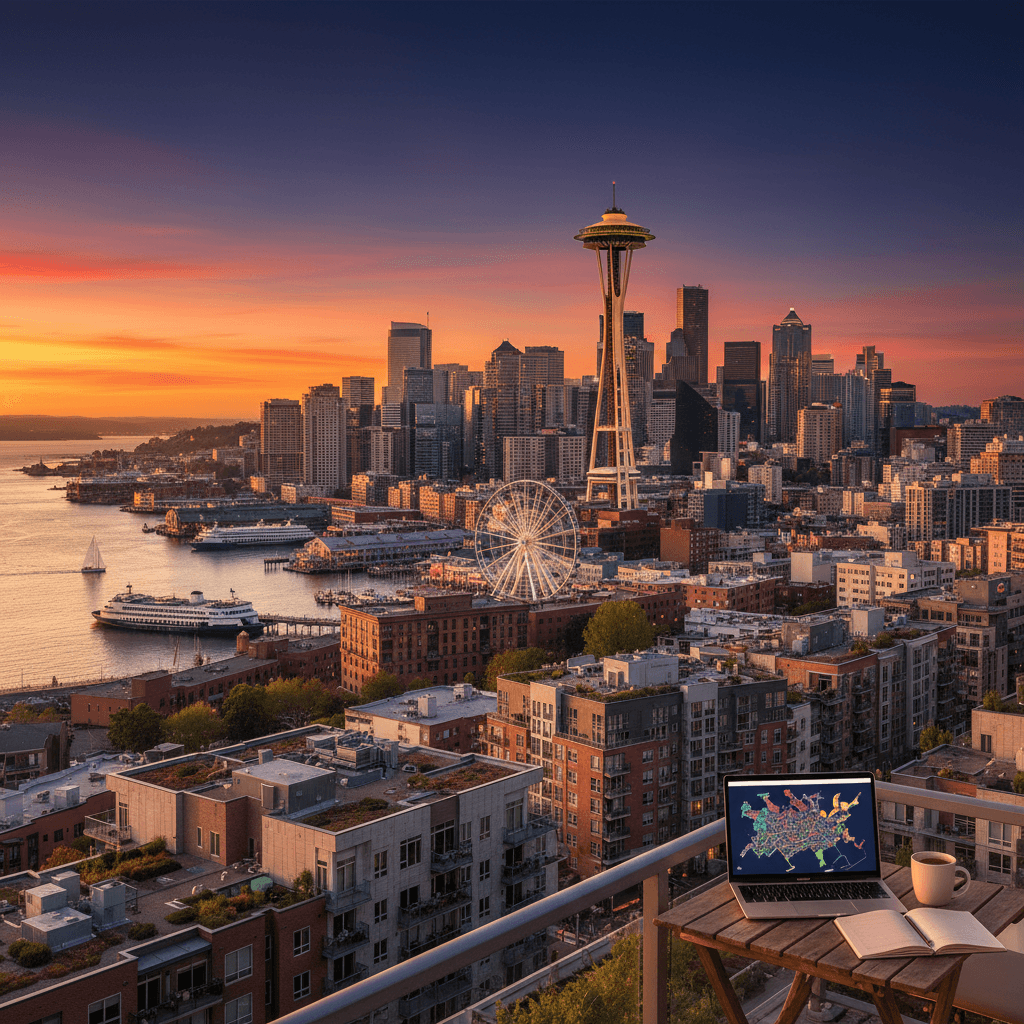
Seattle
🇺🇸 United States
The Tech Hub in the Trees
Seattle is where high-stakes innovation meets a deep, quiet reverence for the outdoors. It feels different from the frantic pace of New York or the polished glitz of LA. Here, the air smells like saltwater and pine, and you're just as likely to see a software engineer in a flannel shirt as you are a professional musician. It is a city of layers, where glass skyscrapers reflect the Cascades and the Olympic Mountains, reminding you that nature is always the real boss.
Most nomads find the energy here infectious but grounded. There is a "get it done" attitude during the day, fueled by a world-class coffee culture that goes far beyond the original Starbucks. When the laptop closes, the vibe shifts toward exploration. Whether it is catching a ferry across the Sound or finding a corner in a dim jazz bar, the city rewards those who stay curious. The downside? It is undeniably expensive, and the gray "drizzle season" from November to March can test your resolve if you aren't prepared with a good rain shell and a solid social circle.
The Monthly Damage
Living the Seattle life requires a healthy bankroll. You should budget between $4,285 and $5,294 per month to cover the basics comfortably. While you can scrape by on less by staying in the suburbs, the true Seattle experience happens in the walkable central neighborhoods.
- Budget ($3,000 to $4,000): Expect shared housing at around $1,500, relying on the light rail, and sticking to the legendary street food at Pike Place Market.
- Mid-range ($4,000 to $5,000): This covers a private one-bedroom apartment, frequenting mid-range spots like Chophouse Row, and a dedicated coworking desk.
- Comfortable ($5,000+): You'll be living in a central high-rise in Belltown or Capitol Hill, dining out at upscale seafood spots, and using rideshares to get around.
Where to Plant Your Flag
Seattle is a city of distinct villages. Your choice of neighborhood will completely dictate your daily experience.
- Capitol Hill: The undisputed heart of the city's nightlife and nomad scene. It is hip, loud, and incredibly walkable. Total monthly costs around $4,000-4,500 including rent of ~$2,000-2,500 for 1BR, and you're steps away from the best bars and the Cloud Room coworking space.
- Pike/First Hill: Ideal if you want to be in the thick of the action. It is the most convenient spot for solo travelers who want museums and markets at their doorstep, though studios average ~$1,800-2,200.
- Pioneer Square: This is the historic soul of Seattle with cobblestone streets and beautiful brick buildings. It is great for culture, though locals suggest being cautious at night in certain pockets.
- Tacoma: If the Seattle price tag is too steep, look south. Total monthly costs around $3,500-3,800 with rents ~$1,700, and the Pioneer Collective has a great outpost there. It is a bit of a trek to the city center, but the light rail makes it manageable.
Productivity and Connection
The internet here is lightning fast, usually ranging from 25 to 252 Mbps. You won't struggle for a signal, and most cafes are accustomed to the laptop crowd. For a more professional setup, The Pioneer Collective offers a sleek, modern vibe for $225 a month. If you want something more upscale, The Cloud Room in Capitol Hill charges $390 a month but includes a rooftop lounge and a steady stream of networking events.
To meet people, don't just wait for it to happen. The "Seattle Freeze" is a real phenomenon where locals are polite but take time to warm up. Expats recommend joining Facebook groups or Slack communities early. Showing up to a meetup at a brewery or a bouldering gym is the fastest way to break the ice.
Getting Around
You don't need a car if you stay central. The ORCA pass is your best friend, costing about $100 a month for unlimited bus and light rail rides. For quick hops, the city is littered with Lime, Bird, and Veo scooters. They cost $1 to unlock and $0.45 per minute. If you're heading to the airport (SEA), the light rail is a steal at $3 and takes about 40 minutes, whereas an Uber will easily set you back $40 or more.
Practical Realities
Healthcare is top-tier, with UW Medicine providing world-class care, and you'll find a Bartell Drugs or Walgreens on almost every major corner. For your phone, an Airalo eSIM or a T-Mobile prepaid SIM for $30 to $50 will get you unlimited data. One final tip: tipping 15 to 20% is the standard here. It is a service-heavy city, and the locals take it seriously.
The Bottom Line on Seattle Living
Seattle is a city where tech innovation meets rugged Pacific Northwest beauty, but that lifestyle comes with a steep price tag. Most digital nomads find they need between $4,285 and $5,294 per month to live comfortably here. It is one of the more expensive hubs in the United States, yet the access to world class coffee, a thriving startup scene, and mountains within driving distance keeps the nomad community growing.
If you are planning your budget, your biggest hurdle will be housing. Renting a central studio or one bedroom apartment in trendy areas like First Hill or Pike Place usually sits around $3,000. If you are willing to commute from the suburbs or share a house with roommates, you can drop your total monthly spend closer to the $3,000 to $4,000 range, but you will sacrifice the walkability that makes the city so appealing.
Monthly Budget Tiers
- Budget Nomad ($3,000 to $4,000): You will likely stay in shared housing for $1,500 to $2,000, rely on the King County Metro bus system, and stick to the incredible street food at Pike Place Market.
- Mid-Range Nomad ($4,000 to $5,000): This covers a private one bedroom apartment, regular coworking memberships, and frequenting mid-range spots like Chophouse Row.
- Comfortable Nomad ($5,000+): Expect a high end central apartment, daily rideshares, premium coworking at the Cloud Room, and upscale dining across the city.
Where to Plant Your Laptop
Neighborhood choice defines your Seattle experience. Most nomads gravitate toward Capitol Hill because it is the heart of the city's nightlife and LGBTQ+ culture. It is noisy and expensive, with monthly costs averaging around $4,795, but you are steps away from the best bars and the Cloud Room coworking space. If you want something more historic and closer to the water, Pioneer Square is a solid bet, though locals suggest staying alert at night in certain isolated spots.
For those looking to stretch their dollars, Tacoma is becoming a popular alternative. It is south of the city, much closer to the airport, and offers significantly lower rent. You can find coworking at The Pioneer Collective there for about $175 a month, compared to the $225 you would pay at their Seattle location. The internet remains reliable even in these more affordable pockets, usually ranging from 25 to 252 Mbps.
Food, Transport, and Daily Costs
Eating out is a major pastime here, but it adds up quickly. A quick lunch at a public market vendor costs $10 to $15, while a sit down dinner at a mid-range restaurant will run you $20 to $30 before the standard 15% to 20% tip. Coffee culture is serious business; expect to pay a premium for high quality roasts that act as your fuel for the day.
Getting around is relatively easy without a car. An ORCA pass for public transit costs about $100 a month and covers the light rail and buses. For shorter hops, many travelers use bike share apps like Lime or Veo, which cost $1 to unlock and $0.45 per minute. If you are coming from the airport, the light rail is a steal at $3 for the 40 minute trip, whereas an Uber can easily hit $40 or more depending on traffic.
Practical Essentials
- Connectivity: Grab an eSIM via Airalo or a physical SIM from T-Mobile for $30 to $50 a month for unlimited data.
- Coworking: The Pioneer Collective is great for a professional vibe at $225, while the Cloud Room at $390 offers a rooftop lounge and social perks.
- Healthcare: Facilities like UW Medicine are top tier. For quick needs, Bartell Drugs is the go to local pharmacy chain.
- Weather: Pack a high quality raincoat. The "Drizzle Season" lasts from November to March, but the stunning, dry summers from June to September make the high costs feel worth it.
For the Social Nomad: Capitol Hill
If you want to be where the action is, Capitol Hill is the undisputed heart of Seattle's social scene. It is the city's most walkable neighborhood, packed with coffee shops, indie bookstores, and a legendary nightlife scene that leans heavily into the LGBTQ+ community. Most nomads feel right at home here because the density makes it easy to meet people without trying too hard.
Expect to pay around $3,800 to $4,500 per month to live here comfortably. Most people head to Chophouse Row for mid range eats or grab a desk at Cloud Room on 11th Ave. For $390 a month, you get a rooftop lounge and a steady supply of kombucha, which is a great way to break the ice with locals. It can get noisy on weekends, so pick an apartment a few blocks off the main Pike and Pine corridor if you value your sleep.
For the Solo Traveler: Central Seattle (Pike & First Hill)
Solo travelers who want everything within a ten minute walk should stick to the central core. You are steps away from the art museums and the iconic vendors at Pike Place Market, where you can grab a $15 lunch and watch the tourists. It is the most convenient spot for those without a car, especially since the light rail connects you directly to the airport for just $3.
- Monthly Cost: Roughly $4,737
- Rent: Studios and one bedrooms average $2,000-$2,500
- Transport: Highly walkable; $100 ORCA pass covers all transit
- Vibe: Fast paced, urban, and very convenient
The downside is the price tag and the crowds. It is the most expensive part of the city, but you save money on Ubers because you are already in the middle of it all. Just keep an eye on your surroundings at night near the transit hubs.
For the Long Term Expat: Pioneer Square & Belltown
Expats looking for a more "established" feel often gravitate toward Pioneer Square or Belltown. Pioneer Square is the historic heart of the city with beautiful brick buildings and art galleries. It feels a bit more sophisticated than the Hill. Belltown offers high rise living with stunning waterfront views and easy access to the Olympic Sculpture Park for your morning run.
The Pioneer Collective is the go to workspace here, costing about $225 a month. It has a professional, modern setup that suits people who are actually trying to get deep work done. While these areas are great for culture, some spots in Pioneer Square can feel a bit isolated or sketchy late at night, so most expats recommend sticking to the well lit promenades.
For Families and Budget Seekers: Tacoma (South Seattle)
If you are traveling with a family or just want your money to go further, look south toward Tacoma. While technically its own city, it functions as a budget friendly alternative for nomads who do not mind a commute for the occasional city day. You can find much better deals on larger apartments here, with total monthly costs averaging around $3,500.
- Coworking: Pioneer Collective (Tacoma branch) for $175
- Internet: Reliable 25 Mbps to 250 Mbps
- Rent: Significantly lower than the $2,000-$2,500 central average
It is quieter and less "tech heavy" than downtown Seattle, making it a solid choice for families who need more space and a slower pace. You are also closer to the airport, which is a win if you plan on taking weekend trips to explore the rest of the Pacific Northwest.
Connectivity and Speed
Seattle isn't just a tech hub by name; it's the backbone of the cloud. You'll find some of the most reliable internet in the country here, with speeds ranging from 25 Mbps on the low end to over 250 Mbps in modern apartment buildings and coworking spaces. Most nomads find that even the local coffee shops offer enough bandwidth for video calls without the dreaded lag.
For your mobile setup, skip the hassle of physical SIM cards if your phone supports it. Apps like Airalo are popular for quick data, but if you're staying a month or longer, head to a T-Mobile or Verizon store. You can grab an unlimited data plan for $30 to $50. This is particularly useful if you plan on taking your laptop to a park like Gas Works or Discovery Park to work with a view of the water.
Top Coworking Spaces
The coworking scene in Seattle reflects the city's personality: professional but laid back, with a heavy emphasis on good design and even better coffee. Many expats recommend choosing a spot based on which neighborhood you want to call home base, as traffic can make cross-town commutes a pain.
- The Pioneer Collective: Located in both Pioneer Square and Tacoma, this is a favorite for those who want a boutique feel without the corporate stiffness. Hot desk memberships start around $225-$380; check site for dedicated. It's known for its high-speed WiFi and sleek, modern aesthetic that feels more like a library than an office.
- The Cloud Room: Situated in the heart of Capitol Hill at 1424 11th Ave, this is the premium choice. At $390 per month, it's pricey, but the perks are hard to beat. You'll get access to a rooftop lounge, unlimited printing, and local treats like kombucha on tap. It's the place to be if you want to network with the city's creative and tech elite.
- WeWork and Regus: For those who prefer a familiar layout or need to jump between different parts of the city, these giants have locations scattered everywhere from downtown to Bellevue. Day passes usually hover between $25 and $50, making them a solid backup if your home internet flinches.
Coffee Shop Culture
Working from a cafe is practically a local pastime in Seattle. Unlike some cities where laptop users are frowned upon, most Seattle baristas expect you to stay for a while. Capitol Hill is the epicenter of this culture. You'll see dozens of nomads parked at places like Espresso Vivace or the Starbucks Reserve Roastery, though the latter is often too loud for focused work.
If you need a quieter environment without paying for a desk, the Seattle Public Library's central branch is a stunning glass-and-steel architectural marvel with plenty of free work carrels and solid WiFi. It's a great "budget" coworking alternative when you want to save that $200 for a nice dinner at Pike Place Market instead.
Nomad Networking
Breaking into social circles in the Pacific Northwest can sometimes feel a bit "chilly," but the coworking spaces do a lot of the heavy lifting for you. The Pioneer Collective and Cloud Room frequently host happy hours and member events. Outside of the office, travelers often use Meetup.com or local Facebook groups to find hiking buddies or tech mixers. If you're into the startup scene, keep an eye on Slack communities dedicated to Seattle tech; they're often the best place to find under-the-radar events and workspace recommendations.
Staying Safe in the Emerald City
Seattle generally ranks high on the safety scale for digital nomads. It feels like a secure coastal city where you can comfortably walk most neighborhoods during the day. Most people who live here describe the vibe as relaxed but alert. While violent crime rates are low, property crime, specifically car break ins, is a common headache. If you're renting a car for a weekend trip to Mount Rainier, never leave bags or tech visible in the seats.
Stick to well lit, populated areas after dark. While Capitol Hill and Pike Place stay lively late into the night, some nomads mention feeling less comfortable in parts of Pioneer Square or near the 3rd Avenue transit corridor downtown late at night. If you're heading home from a late night set at Neumos, using a rideshare app like Uber or Lyft is a smart move. A typical cross town trip usually costs between $15 and $30.
- Emergency Services: Dial 911 for immediate police, fire, or medical assistance.
- Walking Safety: Stick to main thoroughfares in Belltown and stay aware of your surroundings near transit hubs.
- Digital Safety: Public WiFi is everywhere, but stick to secured networks at spots like The Pioneer Collective or use a VPN when working from cafes.
Healthcare Access and Quality
The healthcare here is world class, which isn't surprising given the city's tech and research focus. You're in the home of UW Medicine and Harborview Medical Center, so if anything serious happens, you're in excellent hands. Most expats and long term nomads recommend having comprehensive travel insurance that covers US private healthcare costs, as out of pocket expenses are notoriously high without it.
For minor issues like a stubborn cough or a flu shot, urgent care clinics are your best friend. They're much faster than an ER and easier to get into than a primary doctor. Look for Indigo Urgent Care or ZoomCare; they often allow you to book same day appointments online. You can expect to pay around $150 to $250 for a basic consultation if you aren't covered by a local plan.
Pharmacies and Everyday Wellness
You won't have to look far for a pharmacy. Bartell Drugs is a local staple, though you'll also see plenty of Walgreens and CVS locations. Most are open until 9:00 PM or 10:00 PM, and several 24 hour options exist in the city center. If you need a quick prescription refill or basic over the counter meds, these are your go to spots.
Seattleites are obsessed with wellness, so staying healthy is part of the lifestyle. The air quality is usually excellent, with an average AQI around 42, though late summer can occasionally bring wildfire smoke from the Cascades. If you're sensitive to the "Big Dark" (the rainy season from November to March), many nomads recommend picking up a Vitamin D supplement or a light therapy lamp from a local shop to keep your energy up while working through those drizzly afternoons.
Quick Reference for Health and Safety
- High Quality Hospitals: UW Medicine, Swedish Medical Center, and Harborview.
- Common Pharmacies: Bartell Drugs, CVS, Walgreens.
- Urgent Care Cost: $150+ per visit without insurance.
- Safety Rating: High for solo travelers, though standard urban precautions apply.
Seattle is a city built on water and hills, but you won't need a car to conquer it. If you're staying in central hubs like Capitol Hill or Belltown, your own two feet are often the most efficient way to get around. The city is remarkably walkable, though your calves will definitely feel the incline when you head up from the waterfront toward Pike Place Market.
Public Transit and the ORCA Card
The backbone of Seattle transit is the King County Metro bus system and the Link Light Rail. Most nomads find the light rail particularly useful for getting from Sea-Tac Airport (SEA) to downtown in about 30 to 50 minutes for roughly $3. It beats the $40 Uber fare, especially during the notorious rush hour traffic.
To ride like a local, grab an ORCA card. You can load it with a monthly pass for $100 or just pay as you go at $2.75 per ride. It works on buses, the light rail, and even the iconic Seattle Monorail that connects Westlake Center to the Space Needle. Pro tip: the card also covers the water taxis, which are a great way to see the skyline from the water for just a few bucks.
Micromobility: Bikes and Scooters
Seattle has embraced the "last mile" philosophy with a fleet of shared electric bikes and scooters. You'll see Lime, Bird, and Veo scattered across the sidewalks. They usually cost $1 to unlock plus $0.45 per minute. While they're convenient for a quick zip across Pioneer Square, the costs can add up faster than a fancy latte if you use them for long commutes.
- Lime: The most ubiquitous brand, offering both e-bikes and scooters.
- Bird: Great for quick scooter trips in flatter areas like the waterfront.
- Veo: Often features seated scooters which are a bit more comfortable for longer stretches.
Ride-Hailing and Driving
Uber and Lyft are everywhere, but they aren't cheap. A standard cross-town trip usually runs between $15 and $30 depending on demand. Most expats recommend avoiding car rentals unless you're planning a weekend hike at Mount Rainier or Olympic National Park. Parking in neighborhoods like First Hill is a nightmare and can cost $30 to $50 per day in secure garages.
Getting Around by Neighborhood
Your transport strategy will change depending on where you set up your workstation. Here is how the most popular nomad areas stack up:
Capitol Hill
- Vibe: High walkability. You can reach Cloud Room or dozens of coffee shops on foot.
- Transit: Excellent. The light rail station here connects you to the airport and the University District in minutes.
- Cost: High for rideshares due to narrow, busy streets.
Pioneer Square & Belltown
- Vibe: Very walkable and flat along the waterfront.
- Transit: Central hub for almost every bus line in the city.
- Cost: $15 to $20 for short Uber rides to nearby nightlife.
Tacoma (South Seattle)
- Vibe: Less walkable; you'll likely want a bike or frequent bus use.
- Transit: The Sounder train is a great commuter option to get into Seattle proper.
- Cost: Much more affordable, but factor in the $100 monthly transit pass to make the commute viable.
Most travelers say the best way to experience the city is a mix of the light rail and heavy walking. Just remember to pack a waterproof shell. Seattleites don't use umbrellas, and you'll want your hands free for your phone or a coffee while you wait for the bus.
Seattle is an easy transition for most English speakers, as it's the primary language spoken by nearly the entire population. You won't need to brush up on any specific phrases before you land, but you will notice the local dialect is shaped by the city's tech roots and outdoorsy spirit. A simple thanks or excuse me goes a long way here, as the locals are generally polite, even if they have a reputation for being a bit reserved at first.
Language in Daily Life
While English is the standard, Spanish is common in service industries and certain neighborhoods. If you're coming from abroad and your English is a bit rusty, Google Translate works perfectly here, especially with the offline mode downloaded for those moments you're hiking outside of cell range. You'll find that signage in public transit hubs and government buildings is often multilingual, making it simple to get around even on your first day.
The local "tech speak" is something you'll pick up quickly in coffee shops. Don't be surprised to hear people discussing sprints, bandwidth, or scaling over their morning latte. It's just part of the atmosphere in a city that hosts giants like Amazon and Microsoft.
Staying Connected
Reliable internet is the backbone of the Seattle experience. Most nomads find the citywide speeds ranging from 25 to 252 Mbps more than enough for video calls and heavy uploads. If you're looking for a physical SIM card, you can walk into any T-Mobile or Verizon store and grab an unlimited data plan for about $30 to $50 per month. For a more immediate solution, many travelers recommend using an eSIM app like Airalo to get data the moment you touch down at SEA airport.
- WiFi Quality: Excellent across most cafes and public spaces.
- Mobile Data: 5G is standard in the city center and Capitol Hill.
- Best Apps: Use Meetup.com or local Facebook groups to find social events and tech mixers.
Social Nuances and Networking
Communication in Seattle is often described as friendly but somewhat distant, a phenomenon locals call the Seattle Freeze. It isn't that people are rude; they just tend to stick to their established social circles. To break through this, expats recommend being the one to initiate plans. Joining a coworking space is the most effective way to build a network quickly.
The Cloud Room in Capitol Hill offers a floating membership at $390 a month for flexible desk access. It features a rooftop lounge where it's much easier to strike up a conversation than in a quiet library. If you're looking for other options, The Pioneer Collective is another popular choice; check current pricing on their website, as dedicated desks start around $445 in Seattle. These spaces often host events that help bridge the gap between "just visiting" and feeling like a local.
Tipping and Etiquette
When you're out at spots like Pike Place Market or dining in Belltown, remember that tipping is a standard part of the communication here. A 15% to 20% tip is expected at restaurants. In casual coffee shops, leaving a dollar or two in the jar is a nice gesture that the baristas appreciate. Being clear and direct in your communication is valued, but keeping a relaxed, casual tone will help you fit right in with the Pacific Northwest lifestyle.
The Sweet Spot: June through September
If you want to see Seattle at its absolute best, aim for the window between June and September. This is when the city finally shakes off its grey coat and replaces it with some of the most beautiful weather in the country. Temperatures usually hover around a comfortable 16 to 17°C (61 to 63°F), though you can expect occasional spikes into the high 20s. Most nomads find this the perfect time to balance work sessions at The Cloud Room with afternoon hikes or boat trips from the waterfront.
During these summer months, the rain almost entirely disappears. The air quality remains excellent, with an AQI around 25-30, making it the prime season for walking between meetings in Capitol Hill or grabbing $15 seafood at Pike Place Market. Expats often recommend this season because the daylight stretches late into the evening, giving you plenty of "after-work" sun to explore the local parks or hit a music venue.
The "Big Dark": November through March
The winter months, from November to March, are what locals affectionately (or sometimes tiredly) call the "Big Dark." It isn't necessarily freezing, with highs staying around 10°C (50°F), but the persistent drizzle and overcast skies can be a grind. This is the time of year when Seattle's world-famous coffee culture becomes a survival tool rather than just a hobby.
Travelers often say the rain isn't usually a downpour; it's a constant, misty dampness. If you're planning to stay during this window, focus your lifestyle on indoor activities. It's a great time to buckle down on deep work projects at The Pioneer Collective or dive into the city's tech meetups. Just make sure your budget accounts for some extra "comfort spending" on good food and cozy coworking spaces to beat the winter blues.
Shoulder Season Realities
Spring and autumn are unpredictable. April and October can deliver a mix of crisp, sunny days and sudden rain showers within the same hour. If you're visiting during these months, the "Seattle uniform" of a light, waterproof shell is a requirement. Most nomads don't bother with umbrellas; the wind usually renders them useless anyway. Instead, dress in layers so you can adjust as you move from a heated bus to a breezy street corner.
Seasonal Planning at a Glance
- Best for Outdoors: July and August. These are the driest months with the most reliable sunshine for weekend trips to the mountains.
- Most Expensive: July and August. Short-term rentals on platforms like Zillow or Airbnb see a massive price hike during the summer peak.
- Budget Friendly: January and February. While the weather is at its worst, you might find slightly better deals on monthly stays outside the immediate city center.
- Health Note: While the air is generally clean, late summer can occasionally bring wildfire smoke from neighboring regions. It's smart to keep an eye on air quality apps if you have respiratory sensitivities.
Ultimately, your timing depends on your tolerance for grey skies. If you're here for the tech scene and the coffee, the weather won't stop you. But if you want the Pacific Northwest experience you see on postcards, stick to the summer.
Survival Finances
Seattle isn't a place for the faint of heart when it comes to your bank account. It's a high cost tech hub, and you'll feel that most in the housing market. Most nomads find they need at least $4,285 to $5,294 per month to live comfortably without constantly checking their balance.
- The Budget Tier ($3,000 to $4,000): You're likely looking at a shared house or a small studio further out in Tacoma. You'll stick to $10 to $15 street food from Pike Place Market and rely heavily on the $100 monthly ORCA pass for the bus and light rail.
- The Mid Range Tier ($4,000 to $5,000): This covers a private one bedroom apartment in areas like Capitol Hill for roughly $2,500 to $3,000. You can afford more frequent meals at spots like Chophouse Row and a dedicated desk at a coworking space.
- The Comfortable Tier ($5,000+): You're staying in a high rise in Belltown or Pike Place, dining out at upscale seafood spots, and using Uber or Lyft for most trips at $15 to $30 a pop.
Where to Set Up Base
Choosing the right neighborhood defines your Seattle experience. If you want to be in the thick of the action, Capitol Hill is the gold standard for nomads. It's walkable, packed with coffee shops, and has a high energy LGBTQ+ scene. Expect to pay around $4,456 a month here, and be ready for some noise on the weekends.
For those who prefer a bit of history and waterfront access, Pioneer Square and Belltown offer great culture and promenades. Just be aware that some travelers find parts of Pioneer Square a bit sketchy late at night. If those prices make you wince, look south to Tacoma. Rents are significantly lower, around $3,871 total per month, and you're still close enough to the airport for quick getaways.
Internet and Productive Spaces
Connectivity is never an issue in the city that birthed some of the world's biggest tech giants. You'll find speeds ranging from 25 to 252 Mbps pretty much everywhere. For mobile data, grab an eSIM from Airalo or a local SIM from T-Mobile or Verizon for about $30 to $50 for unlimited data.
When you need to get out of your apartment, Seattle has some fantastic coworking options:
- The Cloud Room: Located in Capitol Hill, this is a favorite for its rooftop lounge and $390 monthly membership. They even have kombucha on tap.
- The Pioneer Collective: A more grounded option with locations in Seattle and Tacoma. It's about $225 a month in the city and $175 in Tacoma.
- Cafes: Seattle's coffee culture is legendary. Most cafes are work friendly, though the "Seattle Freeze" means you might have to be the one to initiate conversation with the person at the next table.
Getting Around
You don't need a car here. In fact, a car is often more of a headache given the parking prices. The King County Metro system is efficient, with light rail trips from the airport taking about 40 minutes for just $3. For short hops, use the Lime, Bird, or Veo apps to grab a bike or scooter for $1 to unlock and $0.45 per minute. It's a great way to see the waterfront without breaking a sweat.
Weather and Wellness
The "Seattle Rain" is more of a persistent drizzle than a downpour. From November to March, it's gray and damp. If you can, aim to be here between June and September. The weather is spectacular, dry, and hovers around 16 to 17°C. For healthcare, UW Medicine is world class, and you'll find a Bartell Drugs or Walgreens on almost every major corner for prescriptions.
Social Life and Local Customs
The vibe is casual and outdoorsy; you'll see people in Patagonia fleeces at nice dinners. Tipping is a big deal here, so factor in 15 to 20% at restaurants. To meet people, check out Meetup.com or local Facebook groups for nomads. Expats recommend the events at The Pioneer Collective as a low pressure way to network. Don't be surprised if people seem a bit reserved at first; once you break the ice, Seattleites are incredibly loyal and helpful neighbors.
Need visa and immigration info for United States?
🇺🇸 View United States Country GuideNomad Haven
Your home away from home