Scarborough
🇹🇹 Trinidad and Tobago
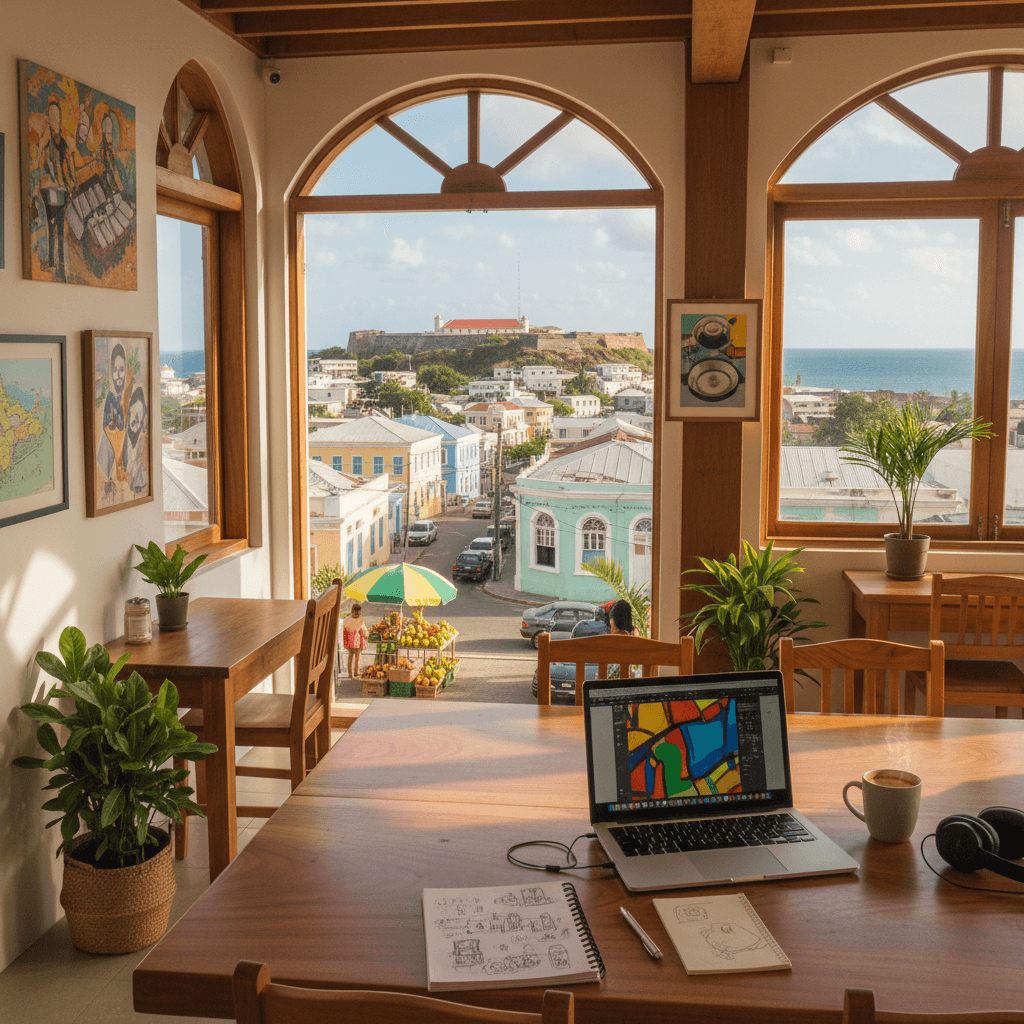
Scarborough isn't trying to impress you. It's a working Caribbean town, the kind where fishing boats come in at dawn, market vendors call out prices over each other and the smell of fry bake drifts down the hill before 8am. As Tobago's capital and only real urban center, it sits on a hillside above the Atlantic with about 17,500 residents, a fort built by the Dutch and an energy that feels genuinely lived-in rather than curated for tourists.
The pace here is slower than Port of Spain, frankly noticeably so and that's the whole point. Most nomads who end up in Scarborough weren't planning to stay long, then found themselves extending because the stress just... lifts. The town blends African, Indian and European influences in ways you feel more than see, in the food, the music leaking out of rum shops, the easy way strangers greet you on Main Street.
That said, it's not all ocean breezes and easy mornings. The hills are, honestly, brutal in the midday heat, steep enough that a ten-minute walk becomes a sweaty ordeal by noon. There's no dedicated coworking space on the entire island, internet speeds are inconsistent at best and nightlife is limited to a handful of bars and beach spots. If you need the infrastructure of a proper digital nomad hub, Scarborough will frustrate you.
What it does offer is something harder to find. The expat community is small and tight-knit, people actually know each other and locals are genuinely welcoming rather than tolerant of outsiders. The town center around the port and Main Street is walkable, loud in the best way and full of color. Fort King George sits above it all with views that make you stop mid-sentence.
The emotional experience of being here is, turns out, one of quiet recalibration. You slow down not because you're on vacation but because the town's rhythm pulls you into it. Crime is low compared to Trinidad, the food is cheap and good and the Atlantic is always visible somewhere above the rooftops.
Scarborough rewards people who don't need to be entertained constantly, it's a place to work quietly, eat well and actually decompress.
Scarborough won't drain your savings the way most Caribbean capitals do, but it's not dirt cheap either. A single person can get by on roughly $1,100 a month including rent, food, transport and the occasional dinner out. That's the honest middle ground.
Rent is, honestly, the biggest variable. A studio or one-bedroom in the town center runs $469 to $495 USD per month, which sounds reasonable until you factor in that the selection is thin and good places move fast. Drop a bit further from the center and you're looking at around $352, though you'll need transport to get anywhere useful, so the savings shrink quickly.
Food is where Tobago actually delivers. Street food runs about $8 a meal and the market near the town center smells of ripe fruit and fried dough in the morning, it's genuinely good eating for very little money. A dinner for two at a mid-range restaurant costs around $52, which feels steep compared to street food but is fair for the quality. Beer at a pub is a pleasant surprise at under $2 for a half-liter, turns out that's one of the better deals on the island.
- Studio/1-bed (city center): $469,$495/month
- 1-bed (outside center): ~$352/month
- Street food meal: ~$8
- Dinner for two (mid-range): ~$52
- Beer at a pub: ~$1.87
- Utilities (electricity, water): ~$69/month
- Gym membership: ~$47/month
- Doctor's visit: ~$46
- Taxi ride (8km): ~$9.64
Utilities are weirdly reasonable at around $69 a month, though the electricity grid has its moody days. Transport adds up if you're relying on taxis daily, the $9.64 per 8km fare sounds small but it compounds fast when there's no reliable public option for your specific route.
Budget nomads working lean can survive on $873 to $1,100 a month before rent. Couples wanting comfort should plan for $1,600 to $2,500. Frankly, that upper tier buys a genuinely relaxed life here, not luxury, just space and ease.
Digital Nomads
Scarborough Town Center is, honestly, the most practical base if you're working remotely. You're walking distance from the port, the market and most restaurants and the Atlantic views from the hillside are genuinely distracting in the best way. The steep terrain gets old fast though, especially in 32°C heat carrying a laptop bag, so expect to sweat.
Old Milford Road is quieter and sits just west of town along a scenic coastal stretch. Shore Things is out here, a good spot to eat and decompress, it's not a coworking space but the vibe works if you just need a change of scenery from your Airbnb. There are no dedicated coworking spaces anywhere on Tobago, that's the reality, so your accommodation's WiFi quality is everything.
Expats
Long-term residents tend to settle west of Scarborough along Old Milford Road or in the quieter hillside pockets above town. Rents run around $352 USD a month outside the center, which is reasonable and the neighborhood pace is calmer than the commercial strip near the port. Expats here will tell you the tight-knit community is genuinely one of the draws, you'll know your neighbors within a week.
The town center works too if you want easy access to the market and shops, though the noise from commercial traffic starts early and doesn't really let up until evening.
Families
Families are, turns out, better served by staying slightly outside the town center where it's quieter and there's more space. The hillside streets aren't great for young kids on foot, the inclines are steep and the heat is relentless, so having a car makes daily life significantly easier. Scarborough General Hospital is close and has been upgraded recently, which matters when you're thinking long-term.
Solo Travelers
Solo travelers should skip Crown Point entirely after dark. Robberies targeting foreigners have increased there, it's not worth the risk when Scarborough Town Center puts you closer to restaurants, the port and actual local life anyway. Stick to the town center or Old Milford Road, use taxis at night and don't carry your passport around. The daytime energy here is warm and genuinely welcoming, the market smells like ripe mango and fry bake and strangers will strike up a conversation unprompted.
There's no sugarcoating it: Tobago's digital infrastructure is, honestly, the island's biggest weakness for remote workers. No dedicated coworking spaces exist anywhere on the island, so you're working from your Airbnb, a hotel lobby or a restaurant table with a view of the Atlantic and a prayer that the WiFi holds.
Residential connections vary widely; speeds may range from 10-40 Mbps in some areas depending on your location and provider, which is fine for video calls and basic work, it gets frustrating fast if you're pushing large files or need a rock-solid connection for client calls. Cafe WiFi, where you can find it, tends to hover between 7 and 20 Mbps and often requires logging back in every hour or so. Annoying.
Most nomads end up making their accommodation choice based almost entirely on the WiFi quality, so ask the host directly for a speed test screenshot before you book. Don't just take "good WiFi" as an answer, that phrase means different things to different people and you'll regret trusting it.
Mobile Data & SIM Cards
- SIM cards: Available at A.N.R. Robinson International Airport before you clear baggage claim, grab one there
- eSIM option: eSIM option runs about $7.40 USD (TT$50) for 1GB through Digicel
- Free WiFi: The port area has a network called "bzone," turns out it's decent enough for a quick check-in while you wait for a ferry
Mobile data is, weirdly, often more reliable than fixed WiFi in certain parts of town. A local SIM with a solid data plan becomes your backup when the Airbnb connection drops, which it will.
Working From Cafes & Hotels
Tobago doesn't really have a coffee shop culture in the way that, say, Lisbon or Chiang Mai does. There's no go-to spot where nomads cluster with laptops. Hotel restaurants and reception areas with WiFi are your best bet for a change of scenery and some are genuinely pleasant places to work for a few hours.
If you need serious coworking infrastructure, Port of Spain in Trinidad has Regus and the newer Worx space, both worth considering if you have a trip across planned. Scarborough itself? You're on your own, plan accordingly.
Tobago is, honestly, one of the safer islands in the southern Caribbean. Violent crime is rare here compared to Trinidad and most people walking around Scarborough town center during the day won't feel uneasy. That said, petty theft, car break-ins and villa burglaries do happen, so don't get complacent just because the vibe feels relaxed.
Crown Point has seen a noticeable uptick in robberies targeting foreigners, which is frustrating given how much tourist traffic flows through there. Expats recommend avoiding that area after dark, sticking to taxis rather than walking unlit roads and not flashing cameras or phones on quiet stretches of beach. Carry only what you need, leave your passport at the accommodation.
Downtown Scarborough is fine during daylight hours. The market area, the port, Main Street, these are all active and busy enough that you'll feel comfortable. After dark, take a taxi, it's cheap enough that there's no reason not to.
- Avoid: Isolated beaches at night, unmarked taxis, carrying excessive cash
- Be cautious in: Crown Point after dark
- Generally safe: Scarborough town center during the day, Fort King George area, Old Milford Road
If you're also spending time in Trinidad, the calculus changes completely. Laventille, Morvant, Beetham Estate, Sea Lots and downtown Port of Spain east of Charlotte Street are areas where travelers have no real reason to be. Tobago and Trinidad aren't the same place in terms of street-level risk, treat them differently.
Scarborough General Hospital is the main medical facility and it's, turns out, better equipped than its size suggests. It's undergone recent upgrades including UV disinfection technology and improved infrastructure. For most routine issues, a private doctor's visit runs around $46 USD, pharmacies are scattered throughout town and well-stocked for common needs.
Telemedicine is expanding across Trinidad and Tobago, which is useful if you need a quick consultation without navigating the public hospital system. For anything serious, though, medical evacuation to Trinidad or further afield is the realistic option. Travel insurance with medical evacuation coverage isn't optional here, it's the one thing you shouldn't skip before arriving.
Scarborough's, honestly, not a place you walk everywhere. The hillside terrain is steep and unforgiving and the heat hits you fast, that sticky, pressing Caribbean warmth that makes a five-minute uphill climb feel like a workout. Most people figure this out on day one and adjust accordingly.
Public buses connect Scarborough to the rest of Tobago and cost around $0.77 USD per ride, which is genuinely cheap, though schedules can be loose and routes don't always go where you need them to. A monthly transport pass runs about $69.50 USD if you're planning to use public transit regularly.
Taxis are the more practical day-to-day option. An 8km ride costs roughly $9.64 USD, stick to official taxis or established ride-hailing apps and avoid unmarked vehicles, especially after dark. Expats recommend arranging a trusted driver early on, turns out a reliable contact makes island life considerably less stressful.
Getting from the airport takes some planning. A.N.R. Robinson International Airport sits about 11km from Scarborough, there's no shuttle system worth counting on, so sort a taxi or rental car before you land. Don't assume you'll figure it out at arrivals.
Car rental is, frankly, the most flexible way to explore the island properly. Bike and scooter rentals aren't widely available and the road conditions outside Scarborough can be rough enough that you'd want something sturdier anyway. If you're staying longer than a week and want to reach beaches beyond Crown Point or push up into the rainforest interior, a car pays for itself.
Walking works fine for the town center core, the port area, Main Street, the market and Fort King George are all reachable on foot if you time it for the cooler morning hours. Midday, though? Skip it. The heat radiating off the concrete is weirdly intense even by Caribbean standards.
- Local bus fare: $0.77 USD per ride
- Monthly transport pass: $69.50 USD
- Taxi (8km): $9.64 USD
- Airport to Scarborough: 11km, taxi recommended
- Car rental: Best option for island-wide access
The free "bzone" WiFi at the port area is a small but useful detail if you're waiting on the ferry and need a connection, it's patchy, but it works in a pinch.
Good news first: you won't have a language barrier here. English is the official language of Trinidad and Tobago and everyone in Scarborough speaks it fluently, so there's no need to dust off a phrasebook or keep Google Translate open.
What you will encounter is Trinbagonian Creole English, which is, honestly, a different experience from standard English even if every word is technically familiar. The rhythm is fast, the vowels shift and the vocabulary has its own logic, locals will switch between standard English and Creole depending on who they're talking to and once they clock you're a visitor they'll usually slow down and code-switch without making a thing of it.
A few words you'll hear constantly:
- Liming: hanging out with no particular agenda, it's the default social mode here
- Maxi: the shared minibuses that run routes across Tobago
- Doubles: the street food staple, two bara flatbreads with curried channa, you'll want to know this one early
- Wining: a style of dancing, not complaining, don't confuse them at a fete
- Fete: a party or festival, weirdly important to understand during Carnival season
Greetings matter here, more than most visitors expect. Walking into a shop without saying "good morning" first reads as rude, not neutral. It's a small thing, takes two seconds and locals notice when you do it right. Most expats say it's one of the fastest ways to warm up interactions around town.
Communication style is generally warm and direct, though turns out patience is expected on both sides. Things move at a slower pace than you're probably used to and pushing or showing frustration won't speed anything up, it'll just make the conversation colder.
Phone and data communication is straightforward. Digicel and bmobile are the two main carriers, SIM cards are available at the airport before you even hit baggage claim and an eSIM option runs about $9.50 USD for 1GB if you want to sort it before landing. WhatsApp is, frankly, how most people communicate here, including businesses, so download it before you arrive.
Tobago sits just 11 degrees north of the equator, so the heat is, honestly, relentless year-round. Daytime temperatures hover between 25 and 35°C (77 to 95°F) and don't vary much month to month. That sticky, clinging humidity is what catches most newcomers off guard, not the temperature itself.
The island splits into two seasons. The dry season runs roughly January through May and that's when most travelers want to be here. Skies are clearer, the trade winds take the edge off the heat and you can actually plan outdoor days without watching a wall of cloud roll in by 3pm. February and March also overlap with Carnival, which turns the whole island into something louder and more chaotic than usual, the kind of noise you feel in your chest.
The wet season kicks in around June and drags through December, with November and December being the worst of it. Scarborough gets around 1,500mm of rain annually, most of it concentrated in those final months. It's not constant downpour, it's more like brief, aggressive tropical showers that soak everything and disappear, then the sun comes back out and the air turns into a sauna. Annoying if you're trying to work from a cafe terrace, manageable if you're indoors.
There's also hurricane season to consider, running June through November. Tobago sits at the southern edge of the Caribbean hurricane belt, so direct hits are rare, but tropical storms can still bring heavy rain and rough seas that disrupt ferry crossings between Tobago and Trinidad.
For nomads, the sweet spot is January through April. Accommodation prices are higher during this window because everyone else has figured this out too, so book early. The shoulder months of May and late November can work if you don't mind occasional rain days and want cheaper rates, just don't count on reliable beach days.
- Best months: January to April (dry, cooler, manageable)
- Avoid if possible: November to December (peak rain, rough seas)
- Temperature range: 25 to 35°C year-round
- Hurricane risk: Low but present, June through November
- Annual rainfall: Around 1,500mm, mostly wet season
Tobago runs on its own clock and Scarborough's no different. Things move slower here, people are genuinely friendly and the pace is, honestly, part of the appeal. Still, a few things will catch you off guard if you're not prepared.
Money & Costs
The Trinidad and Tobago dollar is the local currency, though USD is widely understood. Budget around $1,100 USD per month for a solo traveler with rent, which is reasonable for the Caribbean but not the bargain some people expect. Street food runs about $8, a beer at a pub is under $2, a mid-range dinner for two will set you back around $52, so eating out doesn't have to hurt.
Getting Around
Scarborough's hills are no joke. The heat clings to you, the inclines are steep and walking anywhere beyond the port or Main Street turns into a sweaty ordeal fast. Taxis are the smarter call for most trips, around $9.64 for an 8km ride, just stick to official taxis or arrange rides through your accommodation. Don't flag down unmarked vehicles at night.
The airport is 11km out, so sort your transfer in advance. Car rental makes sense if you want to explore the island properly, bike and scooter rentals are, weirdly, hard to find here.
Connectivity
No coworking spaces exist on Tobago. That's just the reality. Most nomads work from Airbnbs or hotel lobbies, with residential WiFi hitting 12 to 40 Mbps on a decent day. Pick up a SIM at the airport duty-free before you collect your bags, it's the easiest option and saves the hassle of hunting one down in town.
Safety
Scarborough is generally calm, turns out it's one of the safer urban areas in the region, but petty theft and villa break-ins do happen. Walk downtown during daylight, avoid isolated beaches alone and don't carry your passport around unnecessarily. Crown Point has seen more incidents targeting tourists recently, so stay alert there after dark.
A Few Quick Reminders
- Language: English is official; no barrier for English speakers
- Healthcare: Scarborough General Hospital covers most needs; a doctor's visit costs around $46
- Rainy season: June through December, heaviest in November and December
- Free WiFi: Available at the port via the "bzone" network
Need visa and immigration info for Trinidad and Tobago?
🇹🇹 View Trinidad and Tobago Country GuideOff the Radar
Pioneer territory