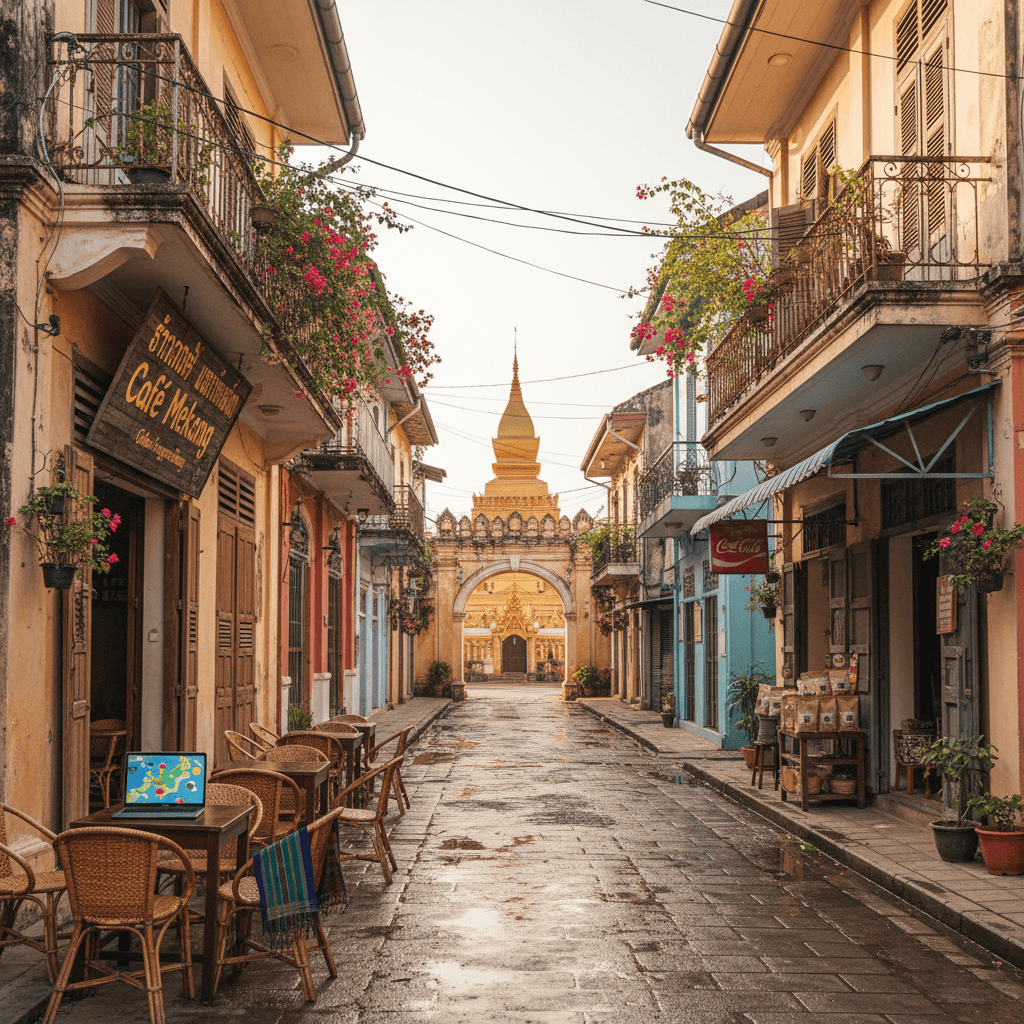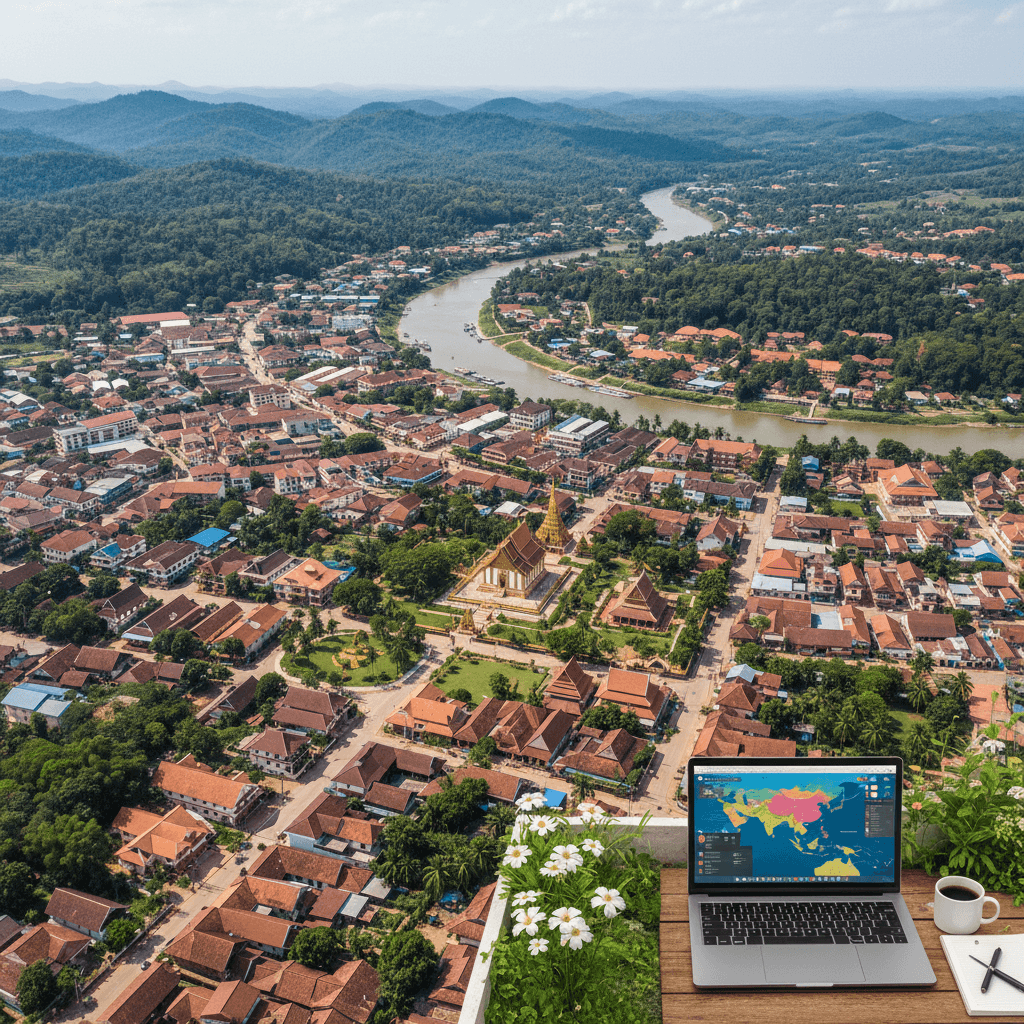
Sayaboury
🇱🇦 Laos
The Vibe: Elephants, Ethics, and Extreme Quiet
If you're looking for the high-speed caffeine culture of Chiang Mai, Sayaboury will give you culture shock. This is Laos at its most raw and unhurried. The province is the spiritual home of the elephant in Southeast Asia, and the atmosphere reflects that heavy, gentle pace. It's a place where the morning mist clings to the Mekong and the sound of rattan weaving replaces the hum of traffic.
Most travelers come here for the Elephant Conservation Center (ECC), which is the gold standard for ethical animal encounters. Beyond the sanctuary, you'll find a patchwork of ethnic minority villages, including the semi-nomadic Miabri and the Hmong. The "vibe" isn't about networking or productivity; it's about disconnecting from the grid and reconnecting with a traditional way of life that's rapidly vanishing elsewhere.
Cost of Living
Living here is incredibly affordable, even by Southeast Asian standards, though your money goes toward simplicity rather than luxury. Expect to spend $800 to $1,200 per month depending on how much you travel between districts.
- Budget Tier ($800): Includes a basic guesthouse for $200, local market meals for $240, and $45 for a generous mobile data plan.
- Mid-range Tier ($1,200): Covers a better rental in Sayaboury town for $350, more frequent dining at spots like the ECC or mid-range eateries for $300, and scooter rentals.
- Comfortable Tier ($1,800): This budget allows for the best available housing at $450, private transport, and frequent weekend trips to Luang Prabang or Thailand.
Where to Plant Your Feet
There are no "nomad hubs" here, so your choice of neighborhood depends entirely on your tolerance for isolation.
Sayaboury District (The Hub)
This is the provincial capital and your best bet for basic amenities.
- The Draw: Access to central markets, banks, and the most reliable 4G signal.
- The Downside: It's a functional town with very little "charm" compared to the surrounding wilderness.
Hongsa District
Located further north, Hongsa feels like a step back in time with its traditional farming communities and cooler mountain air.
- The Draw: Incredible scenery and a small expat presence due to the nearby power plant.
- The Downside: Extremely remote with very few long term rental options.
Ngeun and Xieng-hone
These districts are for the true adventurers who want to live among the Tai Lue people in traditional high roof houses.
- The Draw: Complete immersion in local culture and zero tourist crowds.
- The Downside: Infrastructure is skeletal; you'll struggle with consistent power and internet.
Connectivity and Work
Don't expect to find a coworking space with ergonomic chairs. You'll be working from your guesthouse porch or a handful of local cafes. Unitel and Lao Telecom are the lifelines here. A 4G SIM costs about 5,000 kip ($0.23) for 1GB per day. In Sayaboury town, you can see speeds between 20 and 50 Mbps, but this drops significantly once you head into the hills.
Expats recommend using the *209*33# code for Unitel data packages. If you need to do heavy video calls, the ECC guesthouses offer some of the most stable connections for guests, though it's still best to have a backup hotspot.
Getting Around and Staying Safe
Public transport is virtually non existent. To get around town, use the Loca app for on-demand rides or InDriver. For freedom, rent a scooter for $5 to $10 a day. Be warned that roads can be rough and dusty; an International Driving Permit is a must for staying legal.
Safety is rarely a concern. Crime against foreigners is very low, though you should avoid trekking deep into the forests at night without a guide. Healthcare is basic. The provincial hospital can handle minor issues, but for anything serious, you'll want to cross the border into Thailand or head to Vientiane.
Food, Language, and Culture
Eating is a social, communal affair centered around sticky rice, laap, and grilled meats. A meal at the night market will set you back about $3 to $5. For a rare night out, locals head to WIN Club in Xayaboury for music, but generally, the town goes to sleep by 9:00 PM.
English is sparse. You’ll need "Sabaidee" (hello) and "Khob chai" (thank you) to get by. Most nomads use Google Translate's offline Lao pack to navigate daily interactions. Remember to dress conservatively; cover your shoulders and knees when visiting temples, and always remove your shoes before entering a home or certain shops.
When to Go
The dry season from November to February is the sweet spot. Temperatures hover between 20°C and 30°C (68°F to 86°F), making it perfect for exploring. Avoid the peak of the rainy season in August, when heavy downpours can turn the rural roads into impassable mud tracks.
The Price of Peace in Northwest Laos
Living in Sayaboury is a lesson in slow, intentional spending. While Laos has seen rising costs recently, this rural province remains significantly more affordable than Vientiane or Luang Prabang. You aren't paying for high end infrastructure here; you're paying for the privilege of waking up to mist over the Mekong and the sound of distant temple bells.
A single person can maintain a respectable lifestyle for about $1,065 per month, though many expats who lean into the local way of life find they spend much less. If you're on a strict budget, $800 covers the basics. For a more comfortable experience with a decent guesthouse and frequent meals out, plan for closer to $1,800.
Monthly Budget Breakdowns
- Budget Tier: $800. This covers a basic room for $200, local street food for $240, and $80 for scooter fuel and basic transport. You'll rely on local SIM data for about $45.
- Mid-range Tier: $1,200. This buys a better room or small house for $350, a mix of local and cafe meals for $300, and $100 for transport. It includes a $50 "workspace" budget for spending time in guesthouse cafes.
- Comfortable Tier: $1,800. At this level, you're looking at the best available lodging for $450, a $400 food budget that includes Western style imports, and $150 for private transport and utilities.
Housing and Neighborhoods
You won't find modern apartment complexes or digital nomad hubs here. Most long term visitors negotiate monthly rates with guesthouses or find local houses through word of mouth and Facebook groups like Laos Expats.
- Sayaboury District: The main town is the most practical choice. It's the economic center where you'll find the biggest markets and administrative offices. While it lacks a "nomad vibe," it’s the only place with consistent services.
- Hongsa District: This area is popular with those working near the lignite power plant. It’s cooler and very rural, offering a quiet farming atmosphere, though rentals are scarce.
- Ngeun and Xieng-hone: These districts are deep in Tai Lue territory. It’s beautiful and traditional, but the infrastructure is too thin for most remote workers.
Daily Expenses and Connectivity
Eating out is cheap if you stick to the night markets. A bowl of noodles or a plate of laap with sticky rice usually runs between 75,000 and 95,000 kip, which is about $3.50 to $4.50. Mid range restaurants in town will cost you $10 to $20, but options are limited once you leave the center.
Internet is your biggest hurdle. There are no coworking spaces, so you'll be working from your accommodation or quiet cafes. A Unitel or Lao Telecom SIM is a must. You can grab 1GB of data for about 5,000 kip ($0.23). Speeds in town usually hover between 20 and 50 Mbps, but expect them to drop significantly in the districts.
Moving Around
There is no formal public bus system within the province. Most residents get around via the Loca app for taxis and motorbikes, or by renting their own scooter for $5 to $10 a day. Be careful on the roads; they are often rough and unpaved. If you're heading to the Elephant Conservation Center or remote villages, you'll likely need to arrange a private 4x4 or a boat trip across the Mekong.
Healthcare and Safety
Sayaboury is incredibly safe, with very low crime rates. The biggest risks are wildlife in the forests and the lack of advanced medical care. The local provincial hospitals are fine for minor issues, but for anything serious, you will need to evacuate to Vientiane or cross the border into Thailand. Always carry travel insurance that includes medical evacuation, and keep a stash of cash (kip or Thai baht) for emergencies, as card acceptance is rare outside of major hotels.
Sayaboury District (The Central Hub)
If you're a solo traveler or a nomad passing through for a few days, the provincial capital is your best bet. It’s the only place in the province where you'll find a concentrated selection of guesthouses, ATMs, and reliable 4G coverage. Most visitors use this as a base because it provides the easiest access to the Elephant Conservation Center (ECC), which is the main draw of the region.
- Rent: $200 to $350 for a basic local guesthouse or apartment.
- Vibe: Local and administrative. It’s not a tourist town, so you’ll get an authentic look at Lao life.
- Connectivity: Best in the province. Unitel and Lao Telecom SIMs work well here, often hitting speeds between 20 and 50 Mbps.
- Social: Head to WIN Club if you need a bit of music and a Beerlao, but don't expect a wild party scene.
Hongsa District (The Expat Choice)
Located further north, Hongsa has a unique atmosphere due to the presence of the lignite power plant. This brings in a small but steady stream of international workers and engineers, meaning the infrastructure is slightly more stable than in the deep countryside. Expats who live here enjoy the cooler mountain air and the traditional farming scenery.
- Rent: $250 to $450 depending on proximity to the main town area.
- Vibe: Industrial meets rural. It’s a valley surrounded by mountains with a very distinct, slow pace of life.
- Pros: Better electricity stability than other remote districts and a slightly more "international" awareness among locals.
- Cons: It’s isolated. You’ll need a scooter to get anywhere, and rental options are slim.
Ngeun and Xieng-hone (For Families and Adventurers)
These districts are for those who want to completely disappear from the digital world. Families looking for a cultural immersion experience often head here to see the traditional Tai Lue stilt houses with their iconic high roofs. It’s a great place to teach kids about weaving and traditional medicine, but it’s a difficult place to hold a Zoom call.
- Daily Costs: Very low. Street food like laap or sticky rice will cost you about 75,000 kip ($3.50).
- Vibe: Purely traditional. You’ll see more buffalo than cars.
- Infrastructure: Very basic. Internet is spotty and road conditions are rough, especially during the rainy season from May to October.
- Transport: You’ll rely on songthaews or your own motorbike. The Loca app won't be much help this far out.
Practical Living Costs
Living in Sayaboury is significantly cheaper than Vientiane or Luang Prabang, but you trade convenience for those savings. Most nomads find that a mid-range budget of $1,200 per month allows for a very comfortable lifestyle, including frequent trips to the elephant sanctuaries and better dining options.
- Budget Tier ($800/month): Covers a $200 room, local market food at $240, and basic 4G data.
- Mid-Range Tier ($1,200/month): Covers a $350 nicer guesthouse, $300 for a mix of cafes and street food, and $100 for scooter rentals and fuel.
- Comfortable Tier ($1,800/month): Covers the best available lodging at $450, frequent Western-style meals (where available), and private transport or Loca rides.
When you're ready to move between districts, remember that the roads can be punishing. A scooter rental usually runs between $5 and $10 a day, but always check the weather. If you're visiting between November and February, the weather is perfect for riding at 20 to 30°C. If you're here in August, the heavy rains can turn these "neighborhoods" into isolated islands very quickly.
Connectivity Realities
Working from Sayaboury requires a mindset shift. You aren't going to find high tech hubs or ergonomic chairs here. Instead, you'll be tethered to 4G hotspots while overlooking the Mekong or sitting in a quiet guesthouse garden. While the province is rural, the town center has surprisingly stable 4G coverage through Unitel and Lao Telecom. In the heart of Sayaboury town, you can expect speeds between 20 and 50 Mbps, which is plenty for Zoom calls and standard cloud work.
Once you venture into the districts like Hongsa or toward the Elephant Conservation Center, the signal can get spotty. It's a "work in the morning, explore in the afternoon" kind of place. Most expats here rely on their phone's data because guesthouse WiFi is notoriously hit or miss. If you're planning a long stay, don't rely on the router in the lobby; buy a local SIM immediately.
Getting Online
Pick up a SIM card as soon as you land or cross the border. Unitel is generally the favorite for rural coverage, while Lao Telecom holds its own in the town centers. You can get a SIM for next to nothing, and data packages are incredibly cheap. Most nomads use the *209*33# code for Unitel to activate high speed bundles. Expect to pay around 30,000-40,000 kip (~$1.50) for 1GB per day, or look for monthly packages that range from $28 to $70 depending on how much heavy lifting you're doing online.
- Unitel: Best for wide coverage in remote districts.
- Lao Telecom: Great speeds in Sayaboury town and Hongsa.
- Loca Pay: Useful for managing digital payments and some top ups.
Where to Work
There are zero dedicated coworking spaces in Sayaboury. You won't find a "digital nomad cafe" with avocado toast and power strips at every table. Instead, you'll be "café hopping" in a very literal sense. Most remote workers set up at their guesthouses or small local eateries. The Elephant Conservation Center (ECC) guesthouses are a popular choice for those who want to blend work with conservation, though the isolation means you'll want to have your offline tasks ready just in case the weather knocks out the signal.
In Sayaboury town, look for the larger restaurants near the central market. They usually have enough space for you to linger with a laptop for a few hours if you keep the Beerlao or coffee orders coming. If you're staying in Hongsa, the proximity to the lignite power plant means the electricity grid is often more stable than in other rural provinces, which is a massive plus for your laptop's battery life.
Tech Setup for the Province
Since you're off the beaten path, come prepared. Power outages aren't a daily occurrence in the dry season, but they happen. A high capacity power bank is a requirement, not a luxury. If your work depends on a stable connection, consider a dual SIM setup with both major providers so you can switch if one tower goes down.
- Backup Power: Bring a 20,000mAh power bank for those rainy season outages.
- Local Apps: Download Loca for transport and BCEL One if you manage to set up a local bank account.
- Offline Maps: Download the Sayaboury region on Google Maps; GPS can be finicky in the mountains.
While the infrastructure is basic, the lack of distractions is the real selling point. There's no "scene" to keep you from your deadlines. It's just you, your screen, and the sound of the jungle. For the right kind of nomad, that's the ultimate productivity hack.
Personal Safety and Local Vibes
Sayaboury is one of the safest corners of Laos. It lacks the frantic energy of Vientiane or the tourist density of Luang Prabang, which means you're unlikely to encounter the petty scams or bag snatching found in bigger hubs. Most expats find the local community incredibly welcoming, though the vibe is decidedly "early to bed."
The primary safety concerns here aren't people; they're environmental. If you're heading into the deep forests of the Nam Poui National Protected Area or around the Elephant Conservation Center, don't wander off marked trails at night. While encounters are rare, this is one of the few places in Laos where wild elephants and other large wildlife still roam. Minor theft is nearly unheard of in the villages, but it's always smart to lock your motorbike and keep your tech out of sight when you're not using it.
Healthcare Reality Check
You need to be realistic about the medical infrastructure. Sayaboury Provincial Hospital in the main town can handle basic ailments, stomach bugs, or minor stitches. The staff is dedicated, but they lack the high tech equipment found in neighboring countries. For anything beyond a routine checkup or a prescription refill, you'll want to head elsewhere.
- Emergency Evacuation: For serious injuries or surgeries, the standard protocol is to cross the border into Thailand. The Friendship Bridge provides access to much higher standards of care in Thai hospitals.
- Vientiane Option: Mahosot Hospital or the French Medical Centre in the capital are the best domestic bets for diagnostic work, though they're several hours away by road.
- Pharmacies: You'll find local pharmacies in Sayaboury town and Hongsa. They stock essentials like antibiotics and basic painkillers, but brand names vary. Always check expiration dates before paying.
Insurance and Prep
Since advanced care is limited, carrying robust travel insurance that includes medevac is non negotiable. Most long term travelers here keep a personalized first aid kit with rehydration salts, broad spectrum antibiotics, and any specific prescriptions they need for several months. If you're riding a scooter on the province's notoriously rough, unpaved roads, make sure your policy covers motorbike accidents; many don't unless you have a valid International Driving Permit.
Water and Hygiene
Don't drink the tap water. Even locals stick to the large blue jugs of purified water or bottled brands like Tiger or Beerlao's bottled water. Most guesthouses provide these for free or at a very low cost. Street food hygiene is generally good because the high turnover at night markets ensures things are fresh, but if you have a sensitive stomach, stick to "hot and fried" until you've acclimated to the local microbes.
Emergency Contacts
- Police: 1191
- Ambulance/Medical: 1195
- Loca App: Use this for tracked transport if you feel uneasy about a late night ride, though it's mostly available in the town center.
Sayaboury isn't a place where you'll find a sleek metro system or a fleet of air conditioned city buses. It's a rugged, rural province where the pace of life dictates the pace of travel. Getting from point A to point B requires a bit of patience and a willingness to embrace local modes of transport.
Ride Hailing and Local Taxis
While the province feels remote, tech has made a footprint in the main town. The Loca app works in major cities; availability in Sayaboury town is limited—confirm before use. InDriver may be available but primarily in larger cities—check app for Sayaboury. You can pay via cash or link a card, which saves the headache of haggling.
- Tuk Tuks: Plentiful near markets and the bus station. Always agree on a price before hopping in if you aren't using an app.
- Songthaews: These converted pickup trucks serve as communal taxis. They're the cheapest way to travel between districts, though they don't follow a strict schedule and leave when full.
Two Wheels are Better Than Four
Most expats and long term travelers find that renting a scooter is the only way to truly see the province. It gives you the freedom to explore the Elephant Conservation Center or ride out to Hongsa without relying on someone else's schedule. Rentals typically cost between $5 and $10 per day. Be aware that roads can be rough, especially during the monsoon season from May to October. You'll need an International Driving Permit and solid insurance to stay on the right side of the law and stay protected.
Navigating the Districts
The town center of Sayaboury is compact enough to explore on foot, but the real draws are scattered. If you're heading to the northern districts like Xieng hone or Ngeun, the journey is part of the experience. These areas are often accessed via winding mountain roads or even boat trips along the Mekong. For those staying in Hongsa, a motorbike is almost a requirement due to the lack of consistent internal transit within the district.
Arrival and Transit Hubs
If you're flying in, Sayaboury Airport handles domestic flights. It's located about 30 to 60 minutes from the main town center depending on traffic and road conditions. You can grab a taxi at the terminal or check for available rides via Loca. For those arriving by land, the bus station connects the province to Luang Prabang and Vientiane, but be prepared for long, bumpy rides that can take anywhere from 4 to 8 hours.
- Airport Transfers: Roughly $10 to $15 for a private car to the center.
- Walking: Only feasible within the immediate Sayaboury town market area.
- Fuel: Gas stations are easy to find in the main town but become scarce in the ethnic villages, so top up early.
The Language Landscape
In Sayaboury, Lao is the undisputed king of conversation. Unlike Vientiane or Luang Prabang, where you can get by with English in many cafes, this province is deep in the rural heartland. You'll find that English proficiency is quite low once you step away from the front desks of the major guesthouses or the specialized staff at the Elephant Conservation Center (ECC).
The linguistic makeup here is actually a fascinating mix. While Lao is the official language for trade and government, the province is a patchwork of ethnic groups. You'll likely hear Khmu, Hmong, and Tai Lue being spoken in the local markets. If you head toward the more remote districts, you might even encounter the Miabri people, who maintain their own distinct tongue. For a nomad, this means you won't be having deep philosophical debates with the locals unless you've spent significant time with a language tutor.
Communication Tools and Tech
Don't expect the locals to lead the way with translation. You'll need to be proactive. Most travelers find that Google Translate is a lifesaver, especially if you download the Lao dictionary for offline use. The script is beautiful but nearly impossible to read without practice, so the camera translation feature is your best friend when staring at a menu or a pharmacy sign. Another solid option is the Simply Learn Lao app, which focuses on phonetic phrases that actually work in real world interactions.
If you're trying to communicate with a guesthouse owner or a driver, WhatsApp is the standard. Even in this quiet corner of Laos, almost everyone with a smartphone uses it. For local services like Loca or InDriver, having a working local number is helpful, though the apps themselves handle the translation of pickup points fairly well.
Staying Connected
Reliable communication requires a local SIM. Don't rely on your home roaming plan; it'll be slow and expensive. You can pick up a SIM for about 10,000-20,000 kip ($0.50-$1) and load it with data packages. A common nomad hack is using the *209*33# code on Unitel to activate high speed data bundles.
In Sayaboury town, you can expect 4G speeds between 20 and 50 Mbps, which is plenty for a Zoom call or uploading files. However, the connection gets spotty the moment you head into the mountains or toward the Mekong. If your work requires 24/7 uptime, you'll want to stay centered in the main town or ensure your guesthouse has a dedicated router rather than just a shared mobile hotspot.
Essential Phrases for Your Pocket
Showing effort goes a long way in Lao culture. Even a butchered "hello" will get you a much warmer smile at the night market. Focus on these basics:
- Sabaidee: Hello (The universal greeting)
- Khob chai: Thank you
- Khob chai lai lai: Thank you very much
- Bor pen yang: No problem or you're welcome
- Tao dai?: How much? (Vital for the morning markets)
- Sabaidee bor?: How are you?
Social Norms and Non-Verbal Cues
Communication in Sayaboury isn't just about what you say. It's a conservative, Buddhist area where body language speaks volumes. The nop, placing your palms together in a prayer like gesture near your chest, is the standard way to greet people and show respect. Always remove your shoes before entering a home or certain small shops; you'll see the pile of sandals at the door as a cue. If you're struggling to get your point across, keep your voice low and stay patient. Raising your voice or showing frustration is seen as losing face and will usually result in the person you're talking to shutting down entirely.
When to Pack Your Bags
Timing your trip to Sayaboury is everything. Since the province's main draws are the Elephant Conservation Center and rural trekking, you want weather that doesn't turn the dirt roads into impassable sludge. The sweet spot is the cool, dry season from November to February. During these months, daytime temperatures hover between 20°C and 30°C (68°F to 86°F), making it comfortable to hike through the teak forests or sit by the Mekong without melting.
By March and April, the heat cranks up significantly. You'll see the mercury hit 35°C (95°F) or higher. This is the tail end of the dry season, and while it's great for sun seekers, the humidity starts to build and the landscape can look a bit parched before the rains arrive. If you're planning to work from a guesthouse terrace, make sure your accommodation has a strong fan or AC during this window.
The rainy season runs from May to October, peaking between July and September. Travelers usually avoid this period because Sayaboury sees 15 to 22 rainy days per month. Flash floods are a real risk in the northern mountains, and the "roads" in more remote districts like Ngeun often become a muddy mess. August is statistically the wettest month, so unless you enjoy being stuck indoors with patchy Wi-Fi while it pours, skip the late summer visit.
Seasonal Breakdown
- November to February (The Peak): Expect clear skies and cool nights. It's the best time for outdoor activities, but also the busiest time for the limited boutique guesthouses. Highs: 22°C to 30°C.
- March to April (The Burn): Very hot and dry. It's manageable if you stay near the water, but trekking is exhausting. Highs: 34°C to 35°C.
- May to October (The Monsoon): Heavy tropical downpours and high humidity. Great for seeing the forest at its greenest, but terrible for logistics and transport. Highs: 32°C to 34°C.
What to Bring
If you're arriving in the cool season, don't forget a light jacket or a decent hoodie. The northern altitude means mornings in Sayaboury town or Hongsa can feel surprisingly brisk. For the rest of the year, breathable linen and quick-dry fabrics are your best friends. Since you'll likely be visiting temples or local villages, keep your clothing conservative; keep your shoulders and knees covered to respect the local Buddhist customs.
Digital nomads should pack a reliable power bank and a rugged laptop sleeve. Infrastructure here isn't as polished as Luang Prabang, and power flickers aren't uncommon during the transition between seasons. If you're heading into the rainy season, a high-quality waterproof bag for your electronics is a mandatory investment, not a luxury.
Survival Basics
Living in Sayaboury requires a shift in mindset. It isn't a place where you'll find high speed fiber optics at every corner or a community of remote workers huddled over MacBooks. It is a rugged, beautiful outpost where life follows the rhythm of the Mekong and the needs of the local elephant population. Most travelers find that while the infrastructure is basic, the lack of distractions makes it a unique spot for deep focus or a total digital detox.
You'll want to pick up a Unitel or Lao Telecom SIM card immediately upon arrival. While town speeds can hit 20 to 50 Mbps, the signal often dips as you head into the hills. For payments, download the Loca app for rides and BCEL One for QR payments, which are surprisingly common even in smaller stalls. Cash is still king for rent and street food, so keep a stash of Lao Kip on hand.
Budgeting for the Province
Your money goes a long way here compared to Vientiane or Luang Prabang. While the province is rural, the cost of living remains low and stable. Most expats recommend budgeting based on these tiers:
- Budget ($800/month): This covers a basic $200 rental, simple street food meals like laap or sticky rice for $3.50, and a reliable scooter for local transport.
- Mid-range ($1,200/month): This allows for a $350 apartment, more frequent meals at guesthouse restaurants, and a $50 budget for data and occasional cafe work sessions.
- Comfortable ($1,800/month): At this level, you can secure the best available housing at $450, enjoy upscale dining at the Elephant Conservation Center, and afford private transport for weekend trips.
Where to Set Up Base
Since there aren't dedicated nomad districts, your choice of neighborhood depends entirely on your tolerance for isolation.
Sayaboury District (Town Center)
- The Vibe: The political and economic heart. It's the best spot for solo travelers who need access to banks and markets.
- Pros: Most reliable 4G signal and easiest access to basic lodging.
- Cons: Very limited western amenities and no real expat scene.
Hongsa District
- The Vibe: A cooler, northern climate dominated by farming and the local power plant.
- Pros: Stable electricity and a quiet, rural atmosphere that's great for writers.
- Cons: Very remote with few long term rental options.
Ngeun and Xieng-hone
- The Vibe: Traditional Tai Lue territory with iconic high roof houses.
- Pros: Incredible cultural immersion and very few tourists.
- Cons: Infrastructure is poor; expect frequent internet outages.
Connectivity and Workspace
Don't look for coworking spaces because they don't exist here. Instead, nomads usually work from guesthouses or small eateries in Sayaboury town. The Elephant Conservation Center (ECC) guesthouses are a popular choice for those who want a view with their emails, though you should verify the signal strength before settling in for a Zoom call. For data, use the *209*33# code on Unitel to activate large data packages for a few dollars.
Safety and Health
Sayaboury is exceptionally safe. Crime against foreigners is rare, though you should avoid trekking into deep forests at night without a guide. The biggest risk is the road quality; if you're renting a scooter for $5 to $10 a day, wear a helmet and have an International Driving Permit. Healthcare is rudimentary. The provincial hospital can handle minor issues, but for anything serious, you'll need to head to Vientiane or cross the border into Thailand via the Friendship Bridge for advanced care.
When to Visit
Timing is everything in northern Laos. The dry season from November to February is the sweet spot with temperatures between 20°C and 30°C. Avoid July through September if you can; the rains are relentless, and the roads in the districts often turn to mud, making travel nearly impossible. April is the hottest month, often reaching 35°C, which can be brutal without air conditioning.
Local Etiquette
This is a conservative Buddhist region. Always cover your shoulders and knees when visiting temples. Use the "nop" (placing your hands together in a prayer like gesture) to greet locals, and always remove your shoes before entering someone's home or a temple. Learning a few phrases like Sabaidee (hello) and Khob chai (thank you) will go a long way, as English proficiency is low outside of the main tourism hubs.
Need visa and immigration info for Laos?
🇱🇦 View Laos Country GuideWild Card
Expect the unexpected
Monthly Budget Estimates
More cities in Laos
Muang Xay
🇱🇦 Laos
Vang Vieng
🇱🇦 Laos
Paksong
🇱🇦 Laos