Savannah
🇺🇸 United States
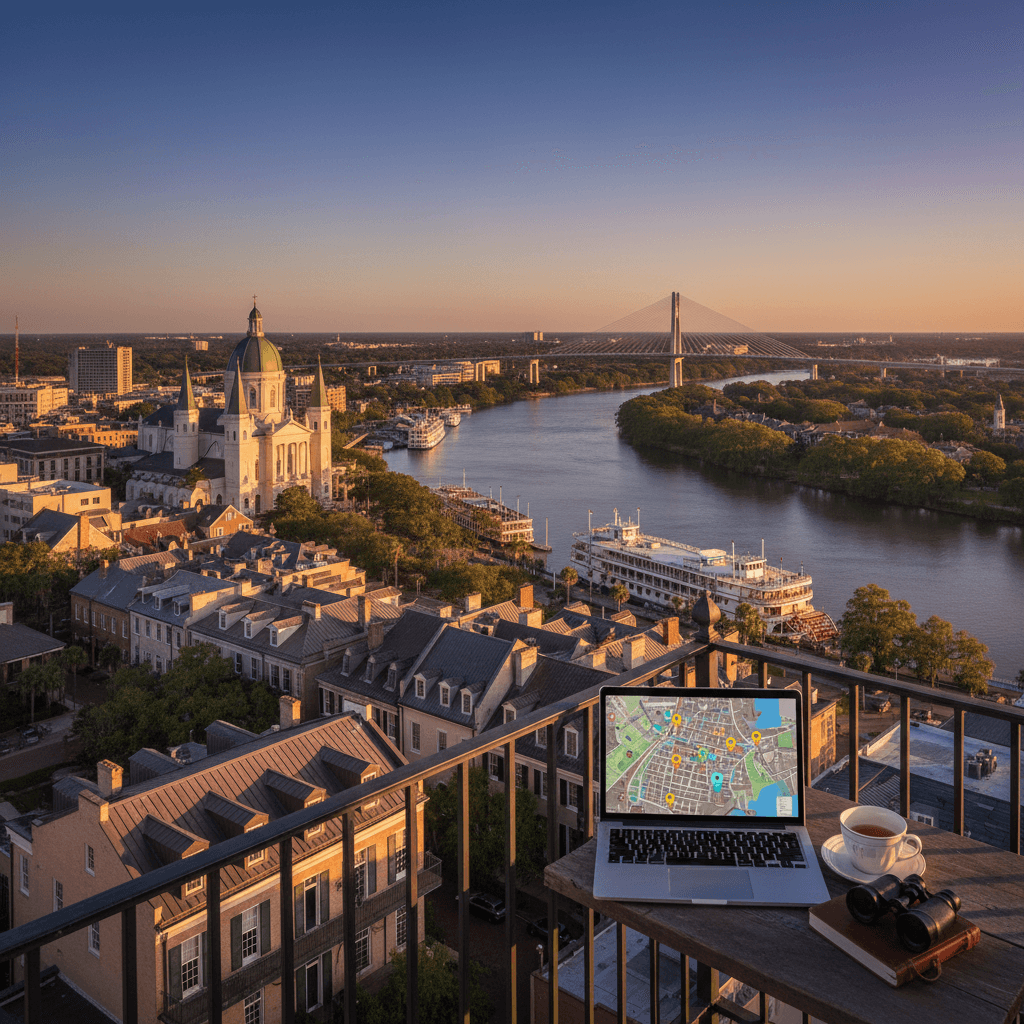
Savannah doesn't just welcome you; it envelops you. Stepping into the Historic District feels like walking onto a film set where the humidity carries the scent of jasmine and the pace of life slows to a comfortable crawl. For digital nomads, it's a rare American city that prioritizes aesthetics and walkability over the typical concrete grind. You aren't just working from a city; you're working inside a 22 square garden party shaded by massive live oaks and Spanish moss.
The vibe here is a curious mix of high-brow art and gritty Southern history. Thanks to the Savannah College of Art and Design (SCAD), the streets are filled with creative energy, keeping the city from feeling like a dusty museum. You'll see students sketching in Forsyth Park alongside travelers taking ghost tours and professionals taking Zoom calls from park benches. It's a place where "to-go" cups are legal in the historic core, lending a relaxed, social atmosphere to your post-work strolls along the riverfront.
The Nomad Experience
- Connectivity: Expect fast, reliable fiber with average speeds around 285 Mbps. Most cafes are work-friendly, provided you keep the coffee flowing.
- The Walkability Factor: If you stay in the Historic District, you can ditch the car entirely. The grid system is easy to navigate, and the DOT free shuttle helps cover ground when your legs give out, though locals suggest using a tracking app to manage its occasional unreliability.
- Social Scene: It's easy to meet people at spots like The Coffee Fox or Foxy Loxy Café. The community is open, talkative, and deeply proud of their local haunts.
Living Costs & Neighborhoods
Living the Savannah dream isn't the cheapest endeavor in the South, but it offers high value for the lifestyle. A typical monthly budget for a nomad sits around $4,037, though you can trim this by looking just outside the immediate tourist center.
Historic Landmark District
- Best For: First-timers and those who want to be steps from the action.
- Rent: $1,200 to $2,000 for a studio or one-bedroom.
- Pros: Stunning architecture, dozens of squares, and the best "work-from-anywhere" scenery in the country.
- Cons: It gets loud on weekends, and rent prices are at a premium.
Victory Drive & Starland District
- Best For: Budget-conscious nomads and long-term stays.
- Rent: Often 20% lower than downtown.
- Pros: More "local" feel, home to the Laundry Lounge and Planet Fitness for van-lifers, and great quirky dining.
- Cons: Less walkable to the river; you'll likely want a bike or a rideshare.
Tybee Island
- Best For: Beach lovers who don't mind a 30 minute commute.
- Pros: Atlantic ocean views, kayaking, and a laid-back surf-town energy.
- Cons: Can feel isolated from the city's main social hubs.
What really sets Savannah apart is the sensory experience. It's the sound of horse-drawn carriages on cobblestones while you're typing away at The Creative Coast coworking space. It's the 24 degree Celsius winter days that make you forget the rest of the country is freezing. Most nomads arrive for the history but stay for the community, finding that the "Slow-vannah" pace actually makes them more productive and significantly less stressed.
Daily life here is punctuated by small rituals. You'll grab a $5 latte at The Foundery Coffee Pub, spend your lunch hour under the oaks in Chippewa Square, and end the day watching massive cargo ships navigate the Savannah River. It's a city that encourages you to look up from your screen and actually enjoy the view.
The Bottom Line
Living in Savannah feels like a step back in time, but your monthly bank statement will firmly remind you you're in a popular US destination. Most digital nomads find that a comfortable lifestyle here lands around $4,037 per month. This covers a nice spot in a walkable area, plenty of meals out, and the occasional weekend trip to Tybee Island. If you're willing to share a house or stick to the suburbs, you can squeeze by on under $3,000, while those looking for high end Southern living should budget $5,000 or more.
Housing and Neighborhoods
Rent is your biggest variable. Most travelers and nomads gravitate toward the Historic Landmark District or the areas around Forsyth Park. It's where the magic is, but you'll pay a premium for those mossy views and walkable squares. Expect to pay between $1,200 and $2,000 for a studio or one bedroom apartment in these central hubs.
If those prices feel steep, look toward Victory Drive or the surrounding residential pockets. These areas have a more suburban feel but offer better value and easier parking. Van lifers often congregate near the Planet Fitness on Victory Drive because of the 24/7 access and proximity to the Laundry Lounge. For those who want the ocean breeze, Tybee Island is about 30 minutes away, though prices there fluctuate wildly depending on the tourist season.
Dining and Groceries
Savannah is a food town, and it's easy to blow your budget on River Street. However, locals and long term expats usually find a rhythm that balances home cooking with neighborhood favorites. A quick lunch at a spot like Foxy Loxy or a street food snack will typically run you $10 to $15. A mid range dinner with a drink usually settles between $20 and $30. If you're heading to the upscale bistros near the water, expect to see $40 or more on the bill before tip.
- Cheap Eats: Local cafes and food trucks ($10 to $15)
- Mid range Dining: Neighborhood spots like The Coffee Fox ($20 to $30)
- Fine Dining: Historic District and River Street ($40+)
Transport and Connectivity
The best part about the city core is that it's free to explore if you have a good pair of walking shoes. The DOT buses are free in the central district, though they aren't always the most reliable. Most nomads recommend downloading a separate tracking app to see where the bus actually is, as the official schedules can be more of a suggestion. For longer trips, an Uber or Lyft is standard, usually costing $2 to $5 for short hops or $25 to $40 for an airport run.
Internet is rarely an issue here. With average speeds hitting 285 Mbps, you'll have no trouble with video calls or heavy uploads. If you need a professional environment, The Creative Coast offers daily passes for $20 to $30. Otherwise, the city is full of "work friendly" cafes. The Foundery Coffee Pub is a favorite for its quiet, cozy atmosphere, while The Coffee Fox caters to a more upbeat, hip nomad crowd.
Monthly Budget Breakdown
- Rent (1BR/Studio): $1,200 to $2,000
- Coworking: $100 to $300 (depending on frequency)
- Food and Drink: $800 to $1,200
- Transport: $50 to $150
- Entertainment: $200 to $400
Keep in mind that Southern hospitality comes with a 15% to 20% tipping culture in restaurants and bars. It's a standard part of the cost of living here that can surprise international arrivals. While the price tags might be higher than some international nomad hubs, the combination of high speed infrastructure and a high quality of life makes it a solid value for those working stateside.
For Digital Nomads
If you're coming to Savannah to get work done, you'll want to plant your flag in the Historic Landmark District. This is the postcard version of the city, where you can walk between 22 historic squares under canopies of Spanish moss. Nomads flock here because everything is within a 20 minute walk, and you're never more than a few blocks from a solid caffeine fix.
The neighborhood around Jones Street and Forsyth Park is the sweet spot. You'll find plenty of 1BR apartments and historic carriage houses for rent, though they aren't the cheapest options in town. Expect to pay between $1,200 and $2,000 a month for a decent spot. The trade off for the higher rent is the lifestyle; you can start your morning with a stroll through the park and end it with live music in a nearby square.
For your "office," The Creative Coast is the go-to coworking hub, offering daily passes for $20 to $30. If you prefer the cafe circuit, The Coffee Fox on Broughton Street has a hip, nomad-heavy crowd. For a more relaxed afternoon, Foxy Loxy Café has a great courtyard and reliable WiFi. Just be aware that the Historic District gets crowded with tourists on weekends, which can drive up wait times at your favorite lunch spots.
For Solo Travelers and Expats
River Street and the surrounding waterfront area are perfect if you want to be in the middle of the action. It's the most social part of the city, packed with bars, shops, and restaurants overlooking the Savannah River. You'll see massive container ships gliding past while you grab a drink, which never really gets old. It's loud, it's busy, and it's where you'll meet the most people.
Expats who plan on staying longer often look toward the edges of the Historic District to escape the heaviest tourist foot traffic while keeping the walkability. Living here means you're close to events like the Savannah Music Festival and the First Friday Art March. While the city's public buses can be a bit of a headache, requiring two different apps to track and pay for tickets, the free DOT shuttles in the core make getting around the downtown area relatively painless for those without a car.
For Families and Nature Lovers
While Savannah's core is great, families and those who need more breathing room usually head 30 minutes east to Tybee Island. It's a classic beach town with a much slower pace than the city. South Beach is the hub for bars and the pier, but families often prefer the Back River area for its quiet waters and frequent dolphin sightings.
Tybee offers a different kind of life where kayaking and coastal trails replace cobblestones and museums. Rent can be seasonal and spike during the summer months, so many families look for long term stays starting in the fall. Keep in mind that you'll definitely need a car if you choose the island, as it's not walkable from the city center and the commute can get backed up during peak beach season.
For Budget Nomads and Van Lifers
If you're watching your bank account or traveling in a van, the area around Victory Drive is your best bet. It's less about the "Old South" aesthetic and more about practical amenities. You'll find the Planet Fitness here for 24/7 showers and the Laundry Lounge for keeping your clothes fresh. It's a more suburban feel, but it's significantly more affordable than the downtown core.
- Historic District Rent: $1,200 to $2,000 for studios or 1BRs.
- Victory Drive Food: Casual eats for $10 to $15; mid-range meals at Foxy Loxy for $20 to $30.
- Transportation: Free DOT buses in the center; $2 to $5 for standard bus rides or $50 for a monthly pass.
- Connectivity: Average speeds of 285 Mbps across the city, enough for heavy video calls.
Most travelers find that Savannah's grid system makes it nearly impossible to get lost, and the high level of safety in the main districts makes it a comfortable home base. Just remember to embrace the "Slow-vannah" pace. People here take their time, and you'll get the most out of the city if you do the same.
Connectivity and Speeds
Savannah is a dream for those who need to stay plugged in without the chaos of a major tech hub. You can expect average download speeds of around 285 Mbps across the city, which is more than enough for heavy video conferencing or uploading large files. Most short term rentals in the Historic District come equipped with high speed fiber or cable, but it is always smart to ask for a speed test screenshot before booking.
If you find yourself between meetings and need a quick connection, the Live Oak Public Libraries are a lifesaver. The downtown branch is particularly nomad friendly, offering free public WiFi and even some outdoor seating if you want to enjoy the breeze while you clear your inbox.
Coworking Spaces
The coworking scene here is intimate rather than corporate. You won't find a dozen massive chains, but the options available are high quality and foster a tight knit community of creatives and entrepreneurs.
- The Creative Coast: This is the gold standard for nomads in Savannah. It is a modern, light filled space that feels professional but welcoming. They offer daily passes for $20 to $30, making it an easy choice if you just need a dedicated desk for a day. It is a great spot to network with local SCAD grads and tech startups.
- The Foundery Coffee Pub: While technically a cafe, this spot has a unique church vibe and was designed with community in mind. It is very laptop friendly and often feels more like a shared workspace than a traditional coffee shop.
The Cafe Culture
Savannah shines when it comes to "work from anywhere" cafes. The city has a relaxed pace that allows you to linger over a latte without feeling like you are overstaying your welcome. Most nomads gravitate toward the Historic District or the Starland District for the best atmosphere.
- Foxy Loxy Café: Located on Bull Street, this is a local favorite. It features a great courtyard and reliable WiFi. It is equal parts coffee shop, bakery, and Tex-Mex eatery, so you can easily transition from morning emails to a taco lunch.
- The Coffee Fox: Situated on Broughton Street, this spot draws a hip, nomad heavy crowd. It is smaller and can get busy, but the central location makes it perfect for a quick work session between sightseeing stops.
- The Sentient Bean: Located right at the south end of Forsyth Park, this is the place to go if you want a view of the greenery while you work. It is spacious and tends to attract a quieter, more focused crowd.
Practical Tech Tips
For mobile data, the big US carriers like Verizon and T-Mobile provide excellent 5G coverage throughout the city core. If you are arriving from abroad, skip the hassle of physical SIM cards and grab an eSIM through Airalo or Holafly before you land. Most nomads find that a basic data plan is sufficient since WiFi is so prevalent in the downtown squares.
If you are living the van life or traveling on a strict budget, keep Victory Drive on your radar. There is a Planet Fitness for 24/7 showers and the Laundry Lounge nearby, which offers a clean environment and solid WiFi so you can knock out your chores and your work at the same time.
Digital Nomad Community
You won't find massive, organized nomad meetups every night, but the community is there if you look for it. Most networking happens organically at The Creative Coast or during events like the Savannah Music Festival. The city attracts a lot of remote workers during the winter months when the weather stays a comfortable 24°C, so keep an eye out for fellow laptop users at The Coffee Fox; they are usually happy to share tips on the best local spots.
Stay Smart in the Hostess City
Savannah feels like a place where time slows down, and for the most part, that relaxed energy extends to your personal safety. Most nomads find the Historic Landmark District and the area around Forsyth Park very comfortable for walking, even after the sun goes down. The city's famous grid system, designed by James Oglethorpe, is your best friend here. It makes it nearly impossible to get lost because those 22 squares act as natural landmarks every few blocks.
While the tourist corridors are well lit and active, travelers often suggest staying aware of your surroundings as you move toward the late night outskirts or less populated residential pockets. Like any urban center, petty theft can happen. If you are van lifers or driving a rental, don't leave tech gear visible in your seats. Stick to the busier streets like Broughton or Bay Street when you are heading home from the bars at night. If you're ever unsure about a walk, a $10 to $15 Uber or Lyft is always a quick and reliable backup.
Healthcare and Medical Access
You won't have to look far for quality care if you catch a bug or need a prescription. For quick fixes, pharmacies are easy to find. You will see CVS and Walgreens locations scattered throughout the city, and there is even a pharmacy at Love’s Travel Stop if you are mobile. Most nomads use these for basic supplies or flu shots without any hassle.
For more serious medical needs, Savannah is a regional hub for healthcare. You have access to major facilities within a short drive from the city center:
- Memorial Health University Medical Center: This is a major gateway for specialized care and emergency services located just south of the historic core.
- St. Joseph’s/Candler: Another highly rated system with a hospital right near the Midtown area, known for its primary care and walk in clinics.
- ExperCARE: A popular choice for expats and travelers needing urgent care without a long wait. They handle minor injuries and infections quickly.
Practical Safety Tips
The biggest "danger" you will likely face in Savannah isn't crime, it's the heat and the uneven ground. Those picturesque cobblestones on River Street are notorious for causing twisted ankles, especially after a couple of drinks. Wear sensible shoes if you are exploring the waterfront.
- Emergency Services: Dial 911 for any immediate police, fire, or medical emergencies. Response times in the downtown core are generally very fast.
- Hydration: If you are visiting during the summer months, the humidity is no joke. Carry water when you're working from outdoor spots like Foxy Loxy’s courtyard to avoid heat exhaustion.
- Digital Safety: While the 285 Mbps average speeds are great, always use a VPN when hopping on the free public WiFi at the Live Oak Public Libraries or local cafes.
Expats recommend getting a local SIM card from T-Mobile or Verizon if you plan on staying for a month or more. Having a solid 5G connection ensures you can always access your GPS and ride hailing apps, which is the best way to stay safe while navigating the city at night. Overall, if you use the same common sense you would use in any mid sized city, you will find Savannah to be a welcoming and secure base for your workation.
The Art of the Stroll
Savannah is one of the few American cities where you can genuinely ditch the car. The Historic Landmark District was designed on a grid of 22 lush squares, making it a dream for pedestrians. Most nomads find that if they stay anywhere near Jones Street or Forsyth Park, their daily commute to a cafe involves nothing more than a ten minute walk under a canopy of Spanish moss.
The city's layout is so intuitive that you'll rarely need a map after your first afternoon. While the cobblestones along River Street are charming, they’re a nightmare for ankles and bike tires, so stick to the paved sidewalks when you're in a rush. If you're heading further south toward the Starland District, a bike is your best friend. Many long term visitors rent cruisers to bridge the gap between the historic core and the trendier, less touristy neighborhoods.
Public Transit and the DOT
Savannah offers a free shuttle service called the DOT, which loops through the downtown area. It's great in theory, but travelers often complain about its reliability. If you're using it to get to a meeting at The Creative Coast, give yourself a 20 minute buffer. The city uses separate apps for tracking the buses and buying tickets for the larger CAT (Chatham Area Transit) system, which can be a bit of a headache to set up on the fly.
- DOT Express Shuttle: Free to use, covers the Historic District and the Savannah Belles Ferry.
- CAT Buses: Standard fare is about $1.50 per ride, or $3.00 for a day pass.
- The App Situation: Download the Token Transit app for tickets and the CATTracker app for real-time tracking.
Rideshares and Parking
Uber and Lyft are everywhere and usually arrive within five minutes in the downtown core. Expect to pay between $25 and $40 for a ride from Savannah/Hilton Head International Airport (SAV), depending on the time of day. The trip takes about 20 to 30 minutes.
If you're arriving in a van or bringing your own car, parking is the biggest hurdle. The Historic District is strictly metered, and the "parking pirates" (as locals call the enforcement officers) are incredibly efficient. Most nomads recommend looking for monthly garage passes or staying further south near Victory Drive, where street parking is free and plenty of laundromats like The Laundry Lounge are nearby.
Escaping to the Coast
When the humidity peaks, you'll want to head to Tybee Island. It's a 30 minute drive from downtown, but there is no public bus that goes all the way to the beach. You'll need a car or a spendy Uber. Once you're on the island, the vibe shifts completely. It's small enough to navigate entirely by bicycle or golf cart. If you're planning to work from a beach bar on Tybrisa Street for the day, parking at the pier can run you $4 per hour, so it's worth finding a rental with a dedicated spot.
- Bike Rentals: Expect to pay around $20 to $30 per day near Forsyth Park or on Tybee.
- Trolley Tours: These are mostly for tourists, but the hop on hop off passes can be a decent way to get the lay of the land during your first 48 hours in town.
- Ferry Service: The Savannah Belles Ferry is free and connects River Street to Hutchinson Island. It's a quick, scenic way to see the skyline from the water.
The Southern Drawl and Beyond
In Savannah, communication is less about what you say and more about the pace at which you say it. While English is the universal language, you'll quickly notice the local speech reflects the city's slow, rhythmic lifestyle. The famous Southern drawl is prevalent here, often characterized by elongated vowels and a polite, melodic cadence. Most nomads find the local accent easy to understand, though you might hear a few distinctive regionalisms like "y'all" for a group or "fixin' to" when someone is about to start a task.
Southern hospitality isn't just a marketing slogan; it's the foundation of how people interact. Expect strangers to make eye contact and offer a "Good morning" or a nod as you walk through Forsyth Park. In professional settings or when ordering your morning latte at The Coffee Fox, a little extra politeness goes a long way. Using "please" and "thank you" is standard, and you'll often hear "sir" or "ma'am" used even among peers. It’s a city where rushing through a conversation is seen as slightly abrasive, so take a breath and enjoy the small talk.
Digital Connectivity and Apps
Staying connected is rarely an issue in the historic core. With average speeds of 285 Mbps, the city is well equipped for heavy remote work. If you're coming from abroad, grab an eSIM from a provider like Airalo or Holafly to avoid roaming fees. For those staying longer, T-Mobile and Verizon offer the most reliable 5G coverage throughout the grid. If you find yourself needing a desk for the day, The Creative Coast provides a professional environment where the "language" shifts from casual Southern charm to focused tech and startup talk.
While English is the only language you'll need, certain apps act as your digital translator for city life. Travelers often find the local transit system a bit confusing, so download the CATTracker app for real-time bus tracking. For food and social life, Yelp is still surprisingly relevant in this part of the US for checking restaurant hours or reading recent reviews of spots like Foxy Loxy Café.
Social Etiquette for Nomads
Savannah has a unique social vocabulary shaped by its art scene and history. Because of the Savannah College of Art and Design (SCAD), the city feels more international and progressive than many other Southern towns. You'll find a mix of old school residents and a younger, transient creative crowd. This blend makes it easy to strike up conversations in bars along River Street or during the First Friday Art March.
- Tipping Culture: This is a major part of the local "language." Expect to tip 18% to 20% at restaurants and bars. For smaller services like a quick coffee or a taxi, $1 to $2 is the standard gesture of thanks.
- The Slow Pace: If a service worker is chatty, don't try to hurry them along. It’s part of the local culture to acknowledge the human element of the transaction.
- Ghost Stories: Don't be surprised if locals talk about spirits or haunted buildings as if they're a normal part of the neighborhood. It's a quirk of the city's identity that you'll hear in everything from formal tours to casual pub chats.
Expats and long term travelers recommend joining local Facebook groups or checking the bulletin boards at Live Oak Public Libraries to find community events. While there aren't many formal language exchange groups, the city's open, friendly nature means that simply sitting at a communal table in a coffee shop is usually enough to start a conversation and make a new connection.
The Sweet Spot: Spring and Fall
If you want to experience the postcard version of Savannah, aim for March through May. This is when the city truly wakes up. The famous azaleas are in full bloom, and the 22 historic squares are covered in a canopy of fresh green. Temperatures usually hover between 20°C and 26°C, which is perfect for working from the outdoor tables at Foxy Loxy Café or taking a long stroll through Forsyth Park without breaking a sweat.
Fall, particularly October and November, is the other golden window. The humidity finally breaks, and the air gets crisp. It is prime time for the city’s outdoor events like the First Friday Art March. Most nomads find this the most comfortable time for walking the grid system, as you can spend hours exploring the Historic District without the oppressive heat of the deep South.
Surviving the Southern Summer
From June through August, Savannah turns into a literal steam room. Temperatures regularly climb above 32°C, but it is the humidity that really gets you. Afternoon thunderstorms are almost a daily occurrence during these months. If you are here in the summer, you will want to lean into the "Slow-vannah" pace. Plan your deep work for the air-conditioned indoors at The Creative Coast during the heat of the day.
Travelers often head to Tybee Island, just 30 minutes away, to catch a sea breeze when the city center feels too stifling. Just be prepared for the seasonal crowds and higher prices near the beach during these months. If you are sensitive to heat, the summer might be a struggle for your productivity.
The Winter Workation
Savannah has become a go-to spot for winter workations because it rarely gets truly cold. With an average year-round temperature of 24°C, the winter months of December through February remain remarkably mild. You might see a few nights where it dips toward freezing, but snow is a rare miracle. Most days are sunny and pleasant, making it a great escape for nomads fleeing harsher northern climates.
The best part about a winter stay? The tourist crowds thin out significantly, and rent in the Historic District can be slightly more negotiable. You can enjoy the holiday lights on River Street and the cozy, church-like vibes of The Foundery Coffee Pub without fighting for a seat.
Timing Your Visit for Events
If you enjoy a bit of chaos and culture, try to sync your arrival with the local festival calendar. These events bring a unique energy to the city but also drive up accommodation prices, so book your Airbnb well in advance.
- March: The Savannah Stopover Music Festival and the massive St. Patrick’s Day celebration, which is one of the largest in the country.
- Late March to April: The Savannah Music Festival brings world-class jazz, classical, and blues to the squares.
- April: The SCAD Sidewalk Arts Festival turns Forsyth Park into a massive chalk masterpiece.
- October: The Savannah Film Festival is a major draw for the artsy crowd and digital creatives.
For the best balance of reliable 285 Mbps internet and comfortable weather, aim for the shoulder seasons. You will get the best of the city's walkable layout without the summer's heavy rain or the winter's occasional chill.
Connectivity and Workspace
You won't have to hunt for high speed internet here. Savannah clocks in at an average of 285 Mbps, which is more than enough for heavy video calls or large file uploads. For a dedicated professional environment, The Creative Coast is the local favorite. It has plenty of natural light and offers day passes for $20 to $30.
If you prefer the hum of a coffee shop, the city has a deep seated cafe culture. The Coffee Fox on Broughton Street is the go-to for the hip nomad crowd, while Foxy Loxy Café offers a great courtyard and live music if you need a change of pace. For a quieter, almost studious vibe, try The Foundery Coffee Pub. If you are watching your budget, the Live Oak Public Libraries downtown offer free WiFi and even have outdoor seating areas where you can set up for a few hours.
Getting Around the Grid
Savannah is one of the most walkable cities in the United States thanks to its 22 historic squares and grid layout. You can easily spend your entire stay on foot if you stick to the Historic Landmark District. For longer distances, the DOT provides free shuttle buses in the downtown core, though travelers often complain about their reliability. You will want to download a separate transit tracker app to see where the buses actually are, as the official schedules can be optimistic.
Rideshares like Uber and Lyft are plentiful, with a trip from Savannah/Hilton Head International Airport (SAV) to downtown usually costing between $25 and $40. If you are heading out to Tybee Island for a beach day, expect a 30 minute drive. Many nomads recommend renting a bike or a scooter for exploring the area around Forsyth Park, as it is faster than walking but more flexible than a car.
Budgeting for Your Stay
While Savannah is more affordable than Atlanta or Charleston, costs can creep up if you stay exclusively in the tourist zones. A comfortable monthly budget for a nomad usually sits around $4,037. Here is how those costs typically break down:
- Housing: A 1BR or studio in the Historic District ranges from $1,200 to $2,000. You can find better deals further south near Victory Drive.
- Dining: Expect to pay $10 to $15 for a quick lunch or street food. A mid range dinner at a spot like Foxy Loxy will run you $20 to $30, while high end River Street restaurants start at $40 per person.
- Transportation: Public bus rides are $2 to $5 if you aren't on the free DOT route, and a monthly pass is around $50.
Safety and Local Customs
The city is generally safe, especially within the main tourist and nomad hubs. Stick to the well lit areas of the Historic District at night and use the same common sense you would in any urban environment. Locals pride themselves on Southern hospitality, so expect a lot of "pleases," "thank yous," and small talk. Tipping is standard at 15% to 20% for service.
For healthcare, most expats and long term travelers head to Memorial Health downtown. If you just need a quick prescription or basic supplies, there are several pharmacies and 24 hour spots like Love’s Travel Stop nearby. For staying connected, T-Mobile and Verizon offer the best 5G coverage in the city, but you can easily grab an eSIM via Airalo if you are arriving from abroad.
Best Times to Visit
The weather averages a pleasant 24°C (75°F) year round, but the seasons vary wildly in feel. November through March is the sweet spot for nomads because the humidity is low and the crowds are thinner. Summer months from June to August can be punishingly hot and humid, often accompanied by sudden afternoon thunderstorms. If you want to catch the best local culture, aim for March to see the Savannah Music Festival or the Stopover Music Festival.
Need visa and immigration info for United States?
🇺🇸 View United States Country GuideEasy Landing
Settle in, no stress