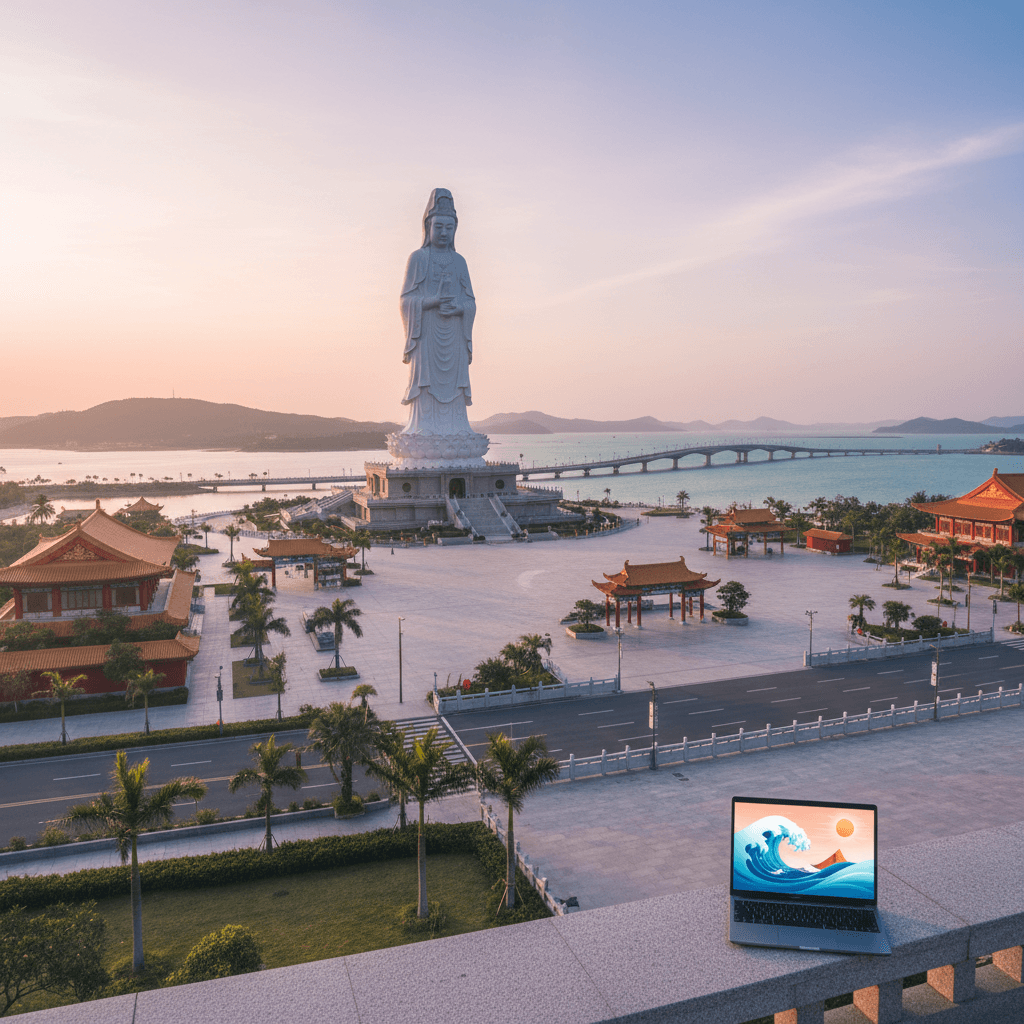
Sanya
🇨🇳 China
The Vibe: Hawaii with a Chinese Filter
Imagine the tropical humidity of Southeast Asia paired with the high-tech efficiency of a Chinese megacity. That is Sanya. It is a place where you can spend your morning answering emails under a palm tree and your afternoon scanning a QR code for a $3 bowl of Hainanese chicken rice. While the rest of China moves at a breakneck speed, Sanya operates on "island time." It is the only place in the country where you will see people trading business suits for floral shirts and flip-flops without a second thought.
For nomads, the real draw is the 30-day visa-free policy. It is a loophole into the Chinese lifestyle without the usual paperwork headache. You get the white sand of Dadonghai and the luxury of Haitang Bay, but you also get the Great Firewall. Living here feels like being an explorer on a digital frontier. You are constantly balancing the beauty of the South China Sea with the technical dance of keeping your VPN connected to Slack.
The Financial Reality
Your money goes surprisingly far here compared to hubs like Shanghai or Shenzhen. Most nomads find they can live a comfortable, beach-adjacent life for $900 to $1,500 per month. It is a tiered experience based on how much "resort life" you want to inject into your daily routine.
- Budget Lifestyle ($900): You are likely living in a shared apartment or a studio in Sanyawan, eating incredible street food like grilled oysters for 20 CNY, and using the 2 CNY public bus to get around.
- Mid-Range Nomad ($1,200): This gets you a private 1BR apartment in Dadonghai, regular DiDi rides, and frequent meals at spots like Julianna Restaurant.
- Comfortable Expat ($1,500+): You are looking at high-end serviced apartments, weekend stays at Yalong Bay resorts, and a rented electric scooter for 50 to 100 CNY a day.
Strategic Neighborhoods
Where you plant your laptop matters. Sanya is spread out, and each bay caters to a different crowd.
Dadonghai
- The Crowd: Solo nomads and social butterflies.
- The Rent: 3,000 to 5,000 CNY for a decent studio.
- The Vibe: This is the heartbeat of the local expat scene. It is walkable, packed with beach bars, and has enough cafes to keep you productive. It can get loud, but the convenience is unbeatable.
Sanyawan (Sanya Bay)
- The Crowd: Budget-conscious travelers and long-termers.
- The Rent: 2,500 to 4,000 CNY.
- The Vibe: It boasts a massive beachfront promenade that is perfect for sunset runs. It is quieter than Dadonghai but requires a bit more effort to find a dedicated workspace.
Haitang Bay & Yalong Bay
- The Crowd: Families, luxury seekers, and "deep pocket" nomads.
- The Rent: 6,000+ CNY.
- The Vibe: These areas feel like a different world. It is all high-end resorts and manicured greenery. If you need peace and don't mind being isolated from the local hustle, this is your spot.
The Digital Infrastructure
Don't expect a WeWork on every corner. Coworking spaces are scarce, so most nomads treat cafes in Dadonghai as their office for a 20 to 50 CNY daily "rent" in the form of coffee. The internet is fast, often hitting 100 Mbps, but it is filtered. You must set up a robust VPN like Astrill before you land. Most travelers recommend a "belt and braces" approach: a local SIM from China Mobile for data and an eSIM like Holafly as a backup.
The city is almost entirely cashless. You will need to link your foreign card to Alipay or WeChat Pay immediately. From the smallest fruit stall to the largest shopping mall, your phone is your wallet. It takes a day to get used to, but once you do, carrying physical cash feels like using a typewriter.
Weather and Timing
Timing your stay is everything. The sweet spot is November through April, when the air is dry and the temperature sits around a perfect 25 to 30°C. Avoid the summer months if you can. From June to October, the humidity spikes and typhoon season can turn a beach day into a week-long indoor retreat. If you are here in January, you will experience the peak of the tropical winter, which is when Sanya truly shines as an escape from the cold reality of the northern hemisphere.
The Bottom Line
Living in Sanya feels like a budget friendly version of Hawaii with a distinctly Chinese digital twist. While mainland hubs like Shanghai can easily drain $1,200 or more a month, Sanya is much more forgiving. Most nomads find they can live comfortably here for $900 to $1,500 per month, depending on how many sunset cocktails and seafood feasts are on the agenda. It is a rare spot where you can enjoy a tropical island lifestyle without the typical resort price tag.
Monthly Budget Tiers
- The Budget Nomad ($900): You're staying in a modest apartment in Sanyawan, eating mostly at local noodle shops, and using the public bus system.
- The Mid-Range Resident ($1,200): This gets you a nice one bedroom in Dadonghai, regular DiDi rides, and a mix of street food and sit down restaurants.
- The Comfortable Expat ($1,500+): You'll likely be in a higher end resort complex or a modern condo in Haitang Bay, dining at international spots, and perhaps renting a scooter for the month.
Housing and Neighborhoods
Rent is your biggest variable. For the best balance of social life and cost, look at Dadonghai. It's the most walkable area and popular with the international crowd. A decent studio or one bedroom here typically runs between 3,000 and 5,000 CNY ($420 to $700). If you are on a tighter budget, Sanyawan offers similar views for 2,500 to 4,000 CNY ($350 to $560), though it feels a bit more suburban.
For those who want luxury and don't mind being isolated, Haitang Bay is the spot. You'll pay 6,000 CNY ($840) or more for high end resort living. Most travelers recommend using Xiaozhu or Meituan to find short term rentals, as these often have better local rates than international booking sites. Just remember that on the 30 day visa free entry, you'll need to ensure your landlord registers your stay with the local police, which is standard practice in China.
Food and Dining
You can eat exceptionally well here for very little. A bowl of Hainanese chicken rice or local noodles at a street stall will cost you 15 to 30 CNY ($2 to $4). If you're heading out for a mid range seafood dinner with friends, expect to pay 50 to 100 CNY ($7 to $14) per person. Upscale dining at the major resorts in Yalong Bay is where prices spike, often hitting 200 CNY ($28) or more for a single meal. Most nomads save money by hitting the local markets for fresh fruit and snacks, then eating out for one main meal a day.
Transport and Connectivity
Getting around is remarkably cheap. The DiDi app is your best friend here; most rides across town cost between 10 and 30 CNY ($1.40 to $4). If you're really pinching pennies, the bus system is efficient and costs a flat 2 CNY per ride. For more freedom, many expats rent electric scooters for about 50 to 100 CNY per day, though you can often negotiate a much lower monthly rate if you're staying for the full 30 days.
While there aren't many dedicated coworking spaces, you'll likely work from cafes. Budget 20 to 50 CNY for a daily coffee to secure a seat. A local China Mobile or China Unicom SIM card with plenty of data will set you back about 100 to 200 CNY ($14 to $28) for the month. Just make sure you've factored in the cost of a high quality VPN like Astrill before you land, as you won't be able to access your work tools without one.
Daily Essentials
- Domestic Beer: 6 to 12 CNY ($0.85 to $1.70)
- Coffee/Latte: 25 to 40 CNY ($3.50 to $5.50)
- Gym Membership (1 month): 200 to 400 CNY ($28 to $56)
- Shared Bike (Alipay/Meituan): 1 to 2 CNY per 30 minutes
For Solo Travelers and Active Nomads: Dadonghai
If you want to be where the action is, Dadonghai is the undisputed hub. It's the most walkable part of the city and serves as the unofficial headquarters for the local expat and nomad community. You'll find a gritty but charming mix of dive bars, seafood stalls, and international cafes lining the boardwalk. It's the kind of place where you can grab a 20 CNY plate of grilled oysters, pull up a plastic stool, and actually meet people.
Most nomads gravitate here because it's the easiest place to find a work-life balance without a car. While dedicated coworking spaces are still rare, the cafe culture is solid. You can post up at a local spot for the afternoon for the price of a 30 CNY latte. Just remember to have your VPN fired up before you sit down. The vibe is loud and energetic, which is great for social butterflies but might feel a bit too "touristy" if you're looking for total peace.
- Rent: Expect to pay between 3,000 and 5,000 CNY for a decent studio or one-bedroom apartment.
- Vibe: High energy, social, and very convenient.
- Top Perk: Best nightlife and easiest access to Western-style amenities.
For Budget-Conscious Nomads and Long-Stayers: Sanya Bay (Sanyawan)
Sanya Bay offers a more localized, "old school" Hainan experience. It boasts a massive 22-kilometer stretch of beach and a long promenade perfect for morning runs or sunset bike rides. The prices here are significantly lower than Dadonghai or the luxury bays, making it the go-to for anyone planning to maximize their 30-day visa-free stay on a budget. You'll see plenty of retirees and long-term expats wandering the coconut groves here.
The trade-off is that you're further from the main social hubs. You'll rely heavily on the DiDi app to get around, though rides are cheap, usually costing between 15 and 30 CNY to get to the city center. It's a quieter, more residential choice. If you enjoy cooking at home and want a view of the South China Sea without the resort price tag, this is your spot.
- Rent: Budget apartments range from 2,500 to 4,000 CNY.
- Vibe: Relaxed, residential, and scenic.
- Top Perk: Incredible sunsets and the most affordable high-rise views in the city.
For Families and High-End Expats: Haitang Bay
Haitang Bay is where Sanya shows off its "Hawaii of China" reputation. This area is dominated by sprawling luxury resorts like the Atlantis and the Ritz-Carlton. It's clean, quiet, and incredibly safe, making it the preferred choice for expats with children or those working for international firms. The beaches here are pristine and much less crowded than the city bays, though the currents can be too strong for swimming at times.
Living here requires a higher budget and, ideally, a car or a healthy DiDi budget. Everything is spread out, and you're tucked away from the local street food scene. However, you're close to the massive duty-free shopping malls and high-end international dining. It's less of a "nomad" vibe and more of a "vacation-home" lifestyle.
- Rent: Upscale apartments and resort-style living start at 6,000 CNY and go up quickly.
- Vibe: Exclusive, quiet, and polished.
- Top Perk: Access to world-class resort facilities and the best air quality in the region.
For Luxury Travelers and Golfers: Yalong Bay
Yalong Bay is often cited as having the best beach on the island. The sand is whiter and the water is clearer than in the city center. It's a self-contained pocket of luxury that's popular with travelers who want to spend their mornings on the golf course and their afternoons by the pool. There isn't much of a "local" neighborhood feel here; it's almost entirely geared toward tourism and high-end leisure.
Nomads rarely stay here long-term because it lacks the infrastructure for daily life, like cheap markets or varied dining. But if you're in Sanya for a shorter stint and want the quintessential tropical resort experience, it's hard to beat. Just be prepared for "resort pricing" on everything from coffee to dinner.
- Rent: Primarily high-end villas and luxury hotels; expect to pay a premium.
- Vibe: Pure vacation mode.
- Top Perk: The most beautiful, swimmable beach in Sanya.
Connectivity and the Great Firewall
Working from Sanya requires a bit of digital gymnastics. Since it's part of mainland China, the Great Firewall blocks most tools you likely rely on, including Google, Slack, WhatsApp, and Zoom. You absolutely must set up a reliable VPN before you land. Astrill is the current gold standard for stability here, though many nomads keep an eSIM like Holafly as a backup since these often bypass restrictions by routing data through other regions.
WiFi speeds in hotels and mid-range cafes typically hover between 20 and 100 Mbps. While the raw speed is decent, the latency caused by VPNs can make video calls a bit jittery. If you're doing heavy uploads, skip the hotel WiFi and use your phone as a hotspot. Local 4G and 5G networks are incredibly fast and surprisingly cheap.
SIM Cards and Mobile Data
Don't rely on international roaming; it's expensive and slow. Grab a local SIM card from China Mobile or China Unicom at Phoenix International Airport or a service center in Dadonghai. You can get an unlimited data plan for roughly 100 to 200 CNY ($14 to $28) per month. You'll need your passport to register the card.
Once you have a local number, immediately link it to Alipay or WeChat Pay. Sanya is practically cashless. Whether you're buying a 15 CNY bowl of Hainanese chicken rice or paying for a DiDi ride, you'll be scanning QR codes for everything. Most nomads find that linking a foreign Visa or Mastercard to Alipay works well for 90% of transactions.
Coworking Spaces and Laptop-Friendly Cafes
Dedicated coworking spaces are still a rare breed in Sanya. You won't find a WeWork on every corner like you would in Shanghai. Most remote workers treat the city's growing cafe culture as their office. The Dadonghai area is your best bet for finding a community of other nomads and laptop-friendly spots.
- Dadonghai Beach Cafes: Several spots along the boardwalk offer decent seating and ocean views. Expect to pay 20 to 50 CNY ($3 to $7) for a coffee to secure your seat for a few hours.
- Resort Lobbies: If you need air conditioning and a quiet environment, the lobbies in Haitang Bay or Yalong Bay resorts are excellent. They're pricier, but the internet is usually more stable and the chairs are designed for long sessions.
- Shared Offices: Look for small, local business centers near the city center. These usually charge 100 to 200 CNY for a monthly pass, but they lack the social "vibe" of international coworking brands.
Remote Work Logistics
If you're planning to stay for the full 30-day visa-free period, Dadonghai is the most practical home base. It's walkable, has the highest concentration of English speakers, and plenty of spots to plug in. For those on a tighter budget, Sanya Bay offers cheaper rentals, often between 2,500 and 4,000 CNY ($350 to $560) per month, though you'll likely spend more time working from your apartment than from local cafes.
One pro tip from expats: keep your laptop charged. While power outages aren't common, the tropical humidity can be tough on electronics. If you're working outside, stay in the shade and keep an eye on your battery levels, as outdoor power outlets are a luxury you won't always find at beachside bars.
Tech Essentials Checklist
- VPN: Install at least two different providers on all devices before arrival.
- Translation Apps: Download Pleco or the offline version of Apple Translate.
- Navigation: Amap (Gaode) is much more accurate than Google Maps in Sanya.
- Communication: WeChat is the only way to talk to locals, landlords, and businesses.
Personal Safety and Scams
Sanya feels remarkably safe, even for solo travelers and digital nomads working late in cafes. Violent crime is extremely rare. You can generally walk through most neighborhoods at any hour without looking over your shoulder. The biggest safety concern isn't crime, it's the traffic. Electric scooters often zip silently onto sidewalks or through crosswalks, so keep your head on a swivel when you're exploring Dadonghai or Sanyawan on foot.
While the vibe is relaxed, petty theft can happen in crowded tourist spots. Watch your bags at the Dadonghai beach bars or when you're browsing the duty free malls. Some nomads report minor "tourist pricing" at seafood markets where scales might be slightly off. Your best bet is to check prices at local seafood markets before committing, or stick to restaurants with printed menus where prices are fixed in CNY.
If you're heading to the beach at night, avoid the poorly lit stretches of Sanya Bay. It's not necessarily dangerous, but the terrain can be uneven and it's easy to trip. Stick to the lively boardwalk areas where other people are around. If you ever need help, the police emergency number is 110. Most officers won't speak English, so have a translation app like Apple Translate or Pleco ready on your phone.
Healthcare Facilities
For most medical needs, Sanya People's Hospital is the standard choice. It's modern and can handle everything from minor infections to more serious issues. However, the experience is very "local." You'll need to register at a window, pay upfront for consultations, and navigate a system that operates almost entirely in Mandarin. Expect to pay around 20 to 50 CNY for a basic consultation fee.
Expats and nomads who prefer a smoother experience often head to the international clinics located within the high end resorts at Haitang Bay or Yalong Bay. These facilities usually have English speaking staff and a more Western style appointment system, though you'll pay a significant premium for the convenience. For any serious emergency requiring an ambulance, dial 120.
Pharmacies and Medication
Pharmacies are everywhere in Sanya. Look for the green cross or signs for Lianhua. You can find basic over the counter meds for headaches or stomach issues easily. If you have specific prescriptions, bring enough to last your entire 30 day stay. While some local pharmacists might help you find a Chinese equivalent, the packaging will be in Mandarin, and the dosage might differ from what you're used to back home.
- Pharmacy Cost: Basic cold meds or painkillers usually run 15 to 40 CNY.
- Language Tip: Use WeChat to take a photo of your medication label and translate it for the pharmacist.
- Prescriptions: Always carry a digital copy of your doctor's note just in case customs asks about your supply.
Environmental Hazards
The biggest "danger" in Sanya is the weather. Typhoon season runs from June through October. These storms can range from a heavy afternoon downpour to serious systems that shut down public transport and high speed trains. If a typhoon is approaching, stock up on some snacks and water and stay indoors. Most modern buildings in the city are built to withstand these winds, but the flying debris is no joke.
The tropical sun is also deceptively strong. Even on overcast days, nomads often find themselves with a nasty burn after a couple of hours at a beach cafe. High quality sunscreen is available at Watsons or duty free shops, but it's often more expensive than in the US or Europe, sometimes costing 100 CNY or more for a small bottle. Pack a few bottles from home to save some cash.
Emergency Contacts and Apps
- Police: 110
- Ambulance: 120
- Fire: 119
- Alipay/WeChat: Ensure your international card is linked before you have a medical emergency, as hospitals rarely take foreign credit cards directly.
The Logistics of Island Life
Moving around Sanya feels more like navigating a Southeast Asian beach town than a standard Chinese megacity. While it lacks the sprawling subway systems of Shanghai or Beijing, the city makes up for it with a highly efficient bus network and a ride hailing ecosystem that puts Western apps to shame. Most nomads find that once they have their digital payment apps sorted, the friction of getting from a beachside coworking session to a seafood dinner virtually disappears.
Mastering the Apps
Before you even step off the plane at Phoenix International Airport, you need two apps: Alipay and WeChat. Cash is nearly obsolete here, and while some high end resorts might take a physical credit card, the street food stalls and local buses won't. You can link your foreign Visa or Mastercard to these apps to pay for everything from a 2 CNY bus fare to a 100 CNY grocery haul. For navigation, download Amap (Gaode Maps). It's significantly more accurate than Google Maps in China, though you'll need to use a translation app like Pleco or Apple Translate to parse the interface if your Mandarin is rusty.
Ride Hailing and Taxis
DiDi is the undisputed king of transport here. It's integrated directly into the Alipay app, meaning you don't even need a separate download. It's significantly cheaper than traditional taxis and eliminates the language barrier since you input your destination in the app. A typical trip from the airport to Dadonghai costs between 50 and 100 CNY and takes about 45 minutes. Short hops within a neighborhood usually run between 10 and 30 CNY. If you do hail a traditional taxi, ensure the driver starts the meter, though most expats recommend sticking to DiDi for the transparent pricing.
Public Transit and High Speed Rail
The bus system is the most budget friendly way to explore the coastline. For a flat 2 CNY, you can hop on buses that connect the main hubs of Sanya Bay and Dadonghai. If you're looking to explore further afield, the high speed rail is a marvel of efficiency. You can book tickets via Trip.com to visit the provincial capital, Haikou, in about 90 minutes. The Sanya Railway Station is centrally located and easy to reach via a quick DiDi ride.
Two Wheeled Freedom
For true flexibility, many long term nomads opt for electric scooters. You can rent these for roughly 50 to 100 CNY per day, though monthly rates are much lower if you negotiate at local shops in Dadonghai. If you just need a quick ride down the promenade, look for the shared blue or yellow bikes parked on the sidewalks. You unlock these using Alipay or Meituan for about 1 or 2 CNY per 30 minutes. Just be mindful of the local traffic flow; it's chaotic but generally follows a slow, predictable rhythm.
Walkability by Neighborhood
Your need for transport depends heavily on where you plant your flag. Some areas are much more "feet friendly" than others:
- Dadonghai: This is the most walkable pocket of the city. You can reach the beach, several gyms, grocery stores, and beach bars on foot within 15 minutes.
- Sanya Bay: The promenade is massive. While great for a sunset stroll, you'll likely want a scooter or a bus pass to get from one end to the other.
- Haitang Bay: This area is spread out and dominated by massive resorts. You'll be almost entirely dependent on DiDi or hotel shuttles to get around here.
Arrival and Departure
Sanya Phoenix International (SYX) is the main gateway. Beyond DiDi, there are airport shuttle buses for 20 CNY that run to the major tourist zones. If you're coming from mainland China, the high speed train is often more comfortable than flying and drops you closer to the city center. Just remember to keep your passport on you at all times; you'll need it for everything from buying a train ticket to checking into a hotel or even registering a local SIM card.
The Language Barrier
Expect a steep learning curve when you land in Sanya. Unlike Shanghai or Beijing, where you might find a decent pocket of English speakers, Sanya operates almost entirely in Mandarin and the local Hainanese dialect. Outside of the high end resorts in Haitang Bay or Yalong Bay, English proficiency is low, sitting at about a 1 or 2 out of 5 on most nomad scales. You'll likely find that hotel staff and younger service workers in Dadonghai have a basic grasp of English, but for everything else, you're going to rely on technology.
Most expats find that the city feels accessible despite the barrier because of how digitized everything has become. Signs in major tourist zones and transit hubs are usually bilingual. However, once you step into a local seafood market or a neighborhood noodle shop, you'll be using a lot of pointing and translation apps. Don't let it intimidate you; the locals are used to tourists and are generally patient if you have your phone ready.
Must-Have Communication Apps
Living here without a specific suite of apps is nearly impossible. Since the Great Firewall blocks Google, WhatsApp, and Slack, you need to set up your digital toolkit before you clear customs. Most travelers recommend a "belt and braces" approach: a reliable VPN like Astrill paired with a local SIM or an eSIM with a built-in VPN like Holafly.
- Apple Translate or Pleco: These are the gold standards for daily life. Pleco is particularly good for deciphering menus, while Apple Translate's offline mode is a lifesaver when your connection dips.
- WeChat (Weixin): This isn't just a chat app; it's your lifeline. You'll use it to join local expat groups, book apartments, and communicate with landlords. The built-in translation feature for text messages is surprisingly accurate.
- Amap (Gaode Maps): Forget Google Maps. Amap is the most accurate way to find your way around Sanyawan or locate a specific cafe. While it's in Chinese, the interface is intuitive enough to follow the blue navigation arrow.
Digital Nomad Connectivity
Working remotely in Sanya requires some planning. While hotel and cafe WiFi is common, speeds fluctuate between 20 and 100 Mbps. Most nomads prefer using their phone as a hotspot. You can pick up a local SIM from China Mobile or China Unicom at the airport for about 100 to 200 CNY per month for a massive data package. Just remember that a local SIM will be subject to all internet restrictions, so your VPN must be toggled on at all times to access your work tools.
Practical Phrases for Daily Life
Learning a few Mandarin basics will get you a lot of smiles and better service. Focus on the essentials for survival and shopping.
- Ni hao: Hello. Use it for everyone, from the DiDi driver to the vegetable vendor.
- Xiexie: Thank you.
- Duoshao qian?: How much? Essential for the street stalls in Dadonghai.
- Ting bu dong: I don't understand. This is your "get out of jail free" card when someone tries to strike up a long conversation.
- Wo yao zhege: I want this one. Perfect for pointing at the fresh catch of the day.
Social Nuances
Communication in Sanya isn't just about words; it's about the apps you use. If you meet another nomad or a local friend at a beach bar, they won't ask for your phone number. They'll ask to "scan you," referring to your WeChat QR code. It's the universal way to stay connected. Also, keep in mind that tipping isn't part of the culture here. A simple "Xiexie" is the standard way to show appreciation for good service at a restaurant or in a taxi.
The Tropical Sweet Spot
Sanya is a year round destination, but the experience changes drastically depending on when you touch down. Most nomads and expats aim for the window between November and April. During these months, the humidity drops and the temperature hovers between a comfortable 25°C and 30°C (77°F to 86°F). It is dry, sunny, and perfect for working from a beach cafe in Dadonghai without your laptop overheating.
If you are planning a visit during the winter, keep the Chinese New Year in mind. Sanya is the top domestic getaway for mainlanders escaping the cold, so prices for short term rentals in Sanyawan can triple, and the beaches get incredibly packed. If you want the good weather without the massive crowds, March and April are the golden months before the heat starts to crank up.
The Low Season and Typhoon Risks
The vibe shifts from May through October. This is the rainy season, characterized by high humidity and temperatures peaking around 32°C (90°F). While you will get plenty of tropical downpours, they are often quick bursts followed by steaminess rather than day long washouts. The real factor to watch for is typhoon season, which typically peaks between July and September. These storms can shut down transit and cause power flickers, so if your work requires a stable connection, have a backup power bank and a local SIM ready.
The upside to the low season? The costs. You can often snag high end apartments in Haitang Bay or luxury resort stays for a fraction of the winter price. If you don't mind the sweat and the occasional storm day, this is when you will find the best deals on long term stays.
Monthly Weather Breakdown
- January: Avg High 26°C. Low rainfall. Peak tourist season. Perfect for outdoor activities but the most expensive time for rent.
- April: Avg High 29°C. Medium rainfall. The shoulder season sweet spot with fewer crowds and reliable sun.
- July: Avg High 32°C. High rainfall. Hot, humid, and the start of potential typhoon activity. Great for budget hunters.
- October: Avg High 30°C. High rainfall. Transition month where the weather begins to cool down and the rain tapers off toward the end of the month.
What to Pack for the Island
Since it never truly gets cold, you can leave the heavy coats behind. Even in the "dead of winter," a light hoodie or windbreaker is all you will need for the air conditioned malls or the occasional breezy evening on the sand. For the rest of the year, breathable linen and quick dry fabrics are your best friends. If you are arriving during the rainy season, a sturdy umbrella is better than a raincoat, as the humidity makes wearing plastic feel like a personal sauna. Most importantly, bring a high quality waterproof bag for your tech if you plan on hopping between beach clubs and coworking spots during the summer months.
Connectivity and the Digital Life
Living in Sanya requires a bit of digital prep work before you touch down. The Great Firewall is very much active here, meaning Google, Slack, and WhatsApp are off limits without a solid VPN. Expats and long term nomads almost exclusively rely on Astrill for desktop work. Most people find that a combination of a local China Mobile SIM card for data and a backup eSIM like Holafly works best to keep the connection steady.
Coworking spaces aren't exactly on every corner. You'll likely be working from your apartment or a laptop friendly cafe in Dadonghai. Expect to pay between 20 and 50 CNY for a good coffee and a few hours of table time. If you need a more formal setup, look for shared office spaces in the city center, which usually run between 100 and 200 CNY for a monthly pass.
Money and Payments
Cash is nearly extinct in Sanya. You'll need to set up Alipay or WeChat Pay immediately. Link your foreign Visa or Mastercard before you arrive and run a small test transaction at a convenience store. Once that's set, you can pay for everything from a 15 CNY bowl of Hainanese chicken rice to a 30 CNY DiDi ride across town with a quick QR scan.
While tipping isn't part of the culture, carrying your passport is. You'll need it for everything from checking into a hotel to buying a high speed train ticket to Haikou. If you're staying for the full 30 days on the visa free policy, keep a digital copy on your phone just in case.
Getting Around the Island
The DiDi app is your best friend for getting around. It's significantly cheaper and easier than flagging down a traditional taxi, especially since you can input your destination in English. A typical ride within the city or between beach zones costs between 10 and 30 CNY.
- Public Buses: Reliable and cheap at 2 CNY per ride. They're great for coastal hops between Sanya Bay and Dadonghai.
- Scooter Rentals: You can grab an electric scooter for roughly 50 to 100 CNY a day. It's the best way to feel the salt air, but watch the traffic; it can be unpredictable.
- Shared Bikes: Look for the blue or yellow bikes parked on sidewalks. Use Alipay or Meituan to unlock them for about 2 CNY per half hour.
Healthcare and Safety
Sanya is remarkably safe. You can walk through most neighborhoods late at night without a second thought, though it's smart to stay aware in the crowded nightlife strips of Dadonghai. For medical needs, Sanya People's Hospital is the standard choice for locals and expats. If you prefer a more Western experience, the high end resorts in Haitang Bay often have international clinics on site.
The biggest safety concern isn't crime; it's the weather. Typhoon season runs from June to October. If a storm is brewing, stock up on water and snacks, as the city can occasionally hunker down for a day or two. Download a weather app with real time alerts to stay ahead of any tropical depressions.
Language and Socializing
English levels are low, even in a tourist hub. You'll get by in the big resorts, but for daily life, Apple Translate and Pleco are non negotiable. Most nomads find their community through WeChat groups or by hanging out at beach bars in Dadonghai. It's a small, tight knit scene compared to Shanghai, but the shared struggle of navigating the local tech makes for quick friendships.
Seasonal Planning
The "sweet spot" for Sanya is November through April. The weather is a perfect 25 to 30°C and the humidity hasn't hit its peak yet. Avoid the Chinese New Year period if possible; prices for rentals skyrocket and the beaches become standing room only. If you're on a budget, the shoulder months of May and October offer the best balance of low rent and decent weather.
Need visa and immigration info for China?
🇨🇳 View China Country GuideHidden Gem
Worth the effort
Monthly Budget Estimates
More cities in China
Zhuhai
🇨🇳 China
Fuzhou
🇨🇳 China
Xiamen
🇨🇳 China