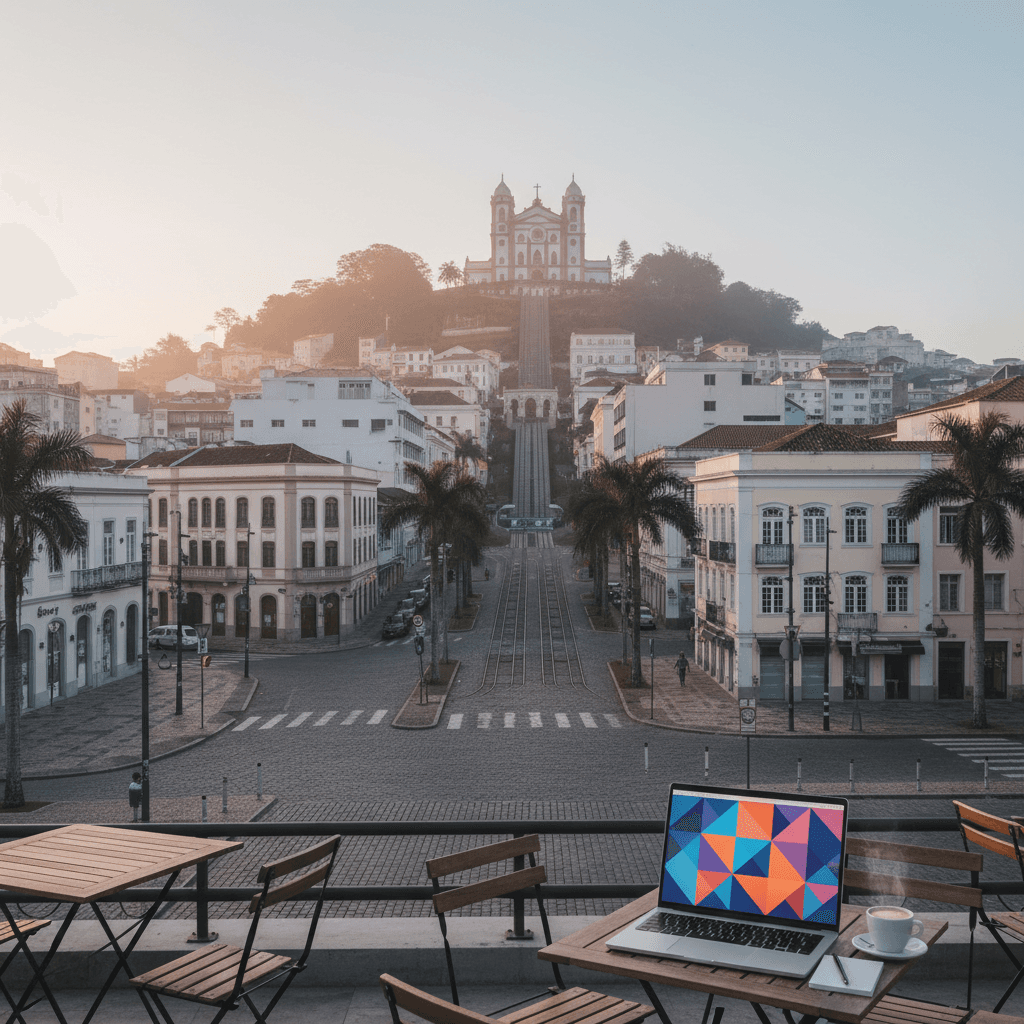
Santos
🇧🇷 Brazil
The Coastal Bridge Between Business and Beach
Santos is the city for nomads who want the proximity of a global megacity without the suffocating concrete of São Paulo. It is home to the largest port in Latin America, which gives the city a grounded, industrious backbone that separates it from the purely tourist-driven beach towns further north. You are looking at a place that feels established and functional, yet manages to maintain a seven-kilometer stretch of garden-lined beachfront that defines the local lifestyle.
The pace here is noticeably slower than its inland neighbor. While São Paulo is about the hustle and the 2:00 AM traffic jams, Santos is about the morning bike ride along the Orla da Praia. It is a city of high-rises and history, where coffee barons once built fortunes and where the world's most famous football player, Pelé, became a legend. For a nomad, this translates to a reliable infrastructure, a strong sense of local pride, and a cost of living that stays significantly lower than Rio de Janeiro.
The Daily Rhythm
Most nomads find that life in Santos revolves around the beach garden, which holds a Guinness World Record for its length. It is the city's communal living room. You will see retirees playing cards, athletes training for triathlons, and remote workers tucked into kiosks with a coconut in hand. It is not a "party town" in the traditional sense. Instead, it offers a sophisticated, middle-class comfort that feels safe and predictable.
The uniqueness of Santos lies in its duality. One hour you are in the Centro Histórico, surrounded by colonial architecture and the scent of freshly roasted beans at the Coffee Museum; the next, you are watching massive cargo ships disappear into the Atlantic from the tip of Ponta da Praia. It is a city that works hard but refuses to give up its afternoon surf sessions.
What Nomads Love and Loathe
The biggest draw for the remote crowd is the balance of amenities. You get high-speed fiber internet and modern hospitals, but you can still walk to the beach in five minutes from almost any residential street. The city is flat, making it one of the most bike-friendly spots in Brazil. This ease of movement is a massive relief for anyone who has spent time fighting the hills of Rio or the gridlock of Sampa.
On the flip side, the social scene can feel a bit insular. Unlike the "digital nomad villages" in Pipa or Florianópolis, Santos is a real city where people have lived for generations. You won't find a massive, pre-packaged expat community waiting for you at a hostel bar. You have to put in the effort to learn some Portuguese and join local gyms or beach volleyball groups to break the ice. Also, while the beaches are great for a walk or a surf, the water quality isn't always as pristine as the turquoise bays in the Northeast.
The Emotional Experience
Living in Santos feels like catching your breath. There is a specific kind of calm that comes from seeing the horizon every day while knowing a world-class sushi dinner or a high-end shopping mall is just a few blocks away. It is less about the "bucket list" travel experience and more about the "quality of life" experience. You aren't here to check off monuments; you are here to see what it feels like to live in a Brazilian city that actually works, all while keeping the ocean within earshot.
- The "Sampa" Connection: You are only 70 kilometers from São Paulo. Many nomads live in Santos for the air quality and lower rent, then take a bus up the mountain for big-city networking on the weekends.
- The Coffee Legacy: This was the world's coffee capital. The heritage is everywhere, from the architecture to the high standards locals have for their daily espresso.
- Safety Profile: While you still need to be aware of your surroundings as you would anywhere in Brazil, the beachfront neighborhoods like Gonzaga and Boqueirão feel significantly more relaxed than the tourist hubs of Rio.
The Price of Coastal Living
Santos occupies a sweet spot for your wallet. It is significantly more affordable than the high rises of São Paulo, yet it offers a similar level of infrastructure. Most nomads find they can live a high quality life here for about $1,200 to $1,800 per month, depending on how often they hit the beachfront kiosks. While the city lacks the name recognition of Rio, that anonymity works in your favor when the rent invoice arrives.
The local economy revolves around the port and tourism, so prices stay relatively stable throughout the year. You won't see the massive seasonal price hikes that plague places like Florianópolis during the summer months. It is a functional, working city where locals live year round, keeping the cost of groceries and services grounded in reality.
Monthly Budget Estimates
- Budget Nomad: $1,100 per month. This covers a modest studio apartment a few blocks from the beach, cooking most meals at home, and using the extensive bike path network instead of Ubers.
- Mid-Range Professional: $1,700 per month. At this level, you are looking at a modern one bedroom in a neighborhood like Gonzaga, daily lunches at "por quilo" restaurants, a dedicated coworking desk, and plenty of weekend trips.
- Comfortable/Luxury: $2,500+ per month. This buys you a high floor apartment with an ocean view, premium gym memberships, and frequent dining at the city's top churrascarias and seafood spots.
Housing and Utilities
Rent will be your biggest variable. If you want to be where the action is, look at Gonzaga or Boqueirão. These areas are walkable and packed with amenities. A furnished one bedroom apartment in these prime spots typically runs between $600 and $900 per month. If you move further back from the water toward the Centro or Vila Belmiro, those prices can drop by 30%.
Utilities are generally manageable. For a standard apartment, expect to pay around $80 to $120 for electricity, water, and gas. Air conditioning is the silent budget killer here. The humidity in Santos is no joke, and running the AC all day during the tropical summer will easily double your power bill.
Food and Dining
Dining out is a highlight of the Santos experience. The "por quilo" system is a nomad's best friend; you pay by the weight of your plate, which usually costs between $7 and $12 for a massive, healthy lunch. A casual dinner for two at a nice bistro will run you about $35, including a couple of caipirinhas.
- Local Beer (0.5L): $2.00 to $3.50
- Cappuccino in a cafe: $2.20
- Monthly Groceries: $250 to $350
- Street food (Pastel or Açaí): $3.00 to $5.00
Transport and Connectivity
Santos is remarkably flat, making it one of the most bike friendly cities in Brazil. Many expats simply buy a used bike or use the city's shared bike program for pennies. If you prefer cars, Uber is ubiquitous and cheap. A cross city trip rarely exceeds $6. For those heading into São Paulo for meetings or a change of pace, a comfortable bus ticket costs about $8 and takes roughly 90 minutes.
High speed fiber internet is standard in most modern apartments. A solid home connection costs around $25 per month. Mobile data is also affordable; a prepaid SIM card with a generous 20GB data package will cost you roughly $15. Look for Vivo or Claro for the best coverage along the coast.
Visa Financial Requirements
To qualify for the Brazil Digital Nomad Visa, you need to prove you are working for a non Brazilian company. The government requires proof of a monthly income of at least $1,500. Alternatively, you can show a bank balance of at least $18,000. This threshold is quite low compared to European nomad visas, making Santos an accessible entry point for those just starting their remote work journey.
The Coastal Core: Gonzaga
If you're looking for the heart of the action, Gonzaga is where most nomads land first. It's the most walkable part of the city, packed with shopping malls, cinemas, and pharmacies. You'll find the highest concentration of cafes with reliable WiFi here, making it easy to jump between a morning surf and a Zoom call. It's the primary hub for those who want everything within a five minute walk.
- Best for: Social nomads and first timers who want a city feel by the beach.
- Vibe: High energy, urban, and convenient.
- Local Tip: Head to the Praca da Independencia for people watching or grab a coffee at Rei do Cafe to fuel your afternoon deep work session.
Upscale and Quiet: Boqueirao
Expats often gravitate toward Boqueirao because it balances residential peace with high end amenities. The streets are wider and the buildings are a bit more modern than the historic center. It feels more "grown up" than Gonzaga but still keeps you close to the sand. You'll find better grocery stores and boutique gyms in this stretch, along with a few dedicated coworking spots that cater to the remote professional crowd.
- Best for: Expats and long term remote workers seeking a polished lifestyle.
- Vibe: Sophisticated, safe, and residential.
- Rent Expectation: You'll likely pay a premium here, with modern one bedroom apartments starting around $700 to $900 USD per month depending on the proximity to the water.
Family Friendly: Aparecida
For those traveling with kids or looking for a slower pace, Aparecida is the go to. It's home to the Praiamar Shopping mall, which is a lifesaver for rainy days or finding international brands. The SESC Santos is also located here, offering incredible sports facilities, libraries, and cultural workshops that are very affordable for residents. The beach gardens in this area are particularly well maintained, providing plenty of space for morning runs or family strolls.
- Best for: Families and those staying for six months or longer.
- Vibe: Community oriented and spacious.
- Key Feature: The Fonte do Sapo is a local landmark where kids gather to bike and skate in the evenings.
Solo Budget Travelers: Embaré
Solo travelers looking to stretch their Reais often find a home in Embaré. It sits right between Boqueirao and Aparecida, offering a more authentic, local feel without the tourist prices of Gonzaga. The iconic Embaré Basilica dominates the skyline here, and the surrounding bars are great for grabbing a cheap beer and meeting locals after work. It's less "polished" than the upscale districts but has far more character.
- Best for: Solo travelers and budget conscious nomads.
- Vibe: Authentic, traditional, and lively at night.
- Food Scene: This area is famous for its "kiosks" along the beach that serve fresh seafood and cold drinks at lower prices than the sit down restaurants nearby.
The Historic Edge: Centro
While most nomads choose to live by the beach, the Centro (Old Town) is undergoing a slow revival. It's not the best place to sleep due to safety concerns after dark, but it's the best place for a "work day" away from the apartment. The Coffee Museum is a must visit for any remote worker, and the area is filled with stunning colonial architecture that feels worlds away from the high rises of the coast. Use this area for daytime exploration and cafe hopping, then retreat to the beach neighborhoods for the night.
Connectivity and Speed
Santos is often overshadowed by the chaos of São Paulo, but for remote workers, that is exactly why it works. You get the infrastructure of a major metropolitan hub without the soul crushing traffic. The city is wired with high speed fiber optics, and most mid range rentals or Airbnbs in neighborhoods like Gonzaga or Boqueirão easily clock speeds between 100 Mbps and 300 Mbps. It is a reliable spot for video calls, provided you check the router placement before booking.
For mobile data, grab a SIM card from Vivo or Claro. Vivo generally has the best coverage along the coast, especially if you plan on working from a beach chair in Aparecida. Expect to pay around R$50 to R$70 for a monthly prepaid plan with plenty of data. You can find these kiosks at the Praiamar Shopping mall, just bring your passport and a healthy dose of patience for the registration process.
Coworking Spaces
The coworking scene in Santos is professional and growing, though it feels more like a business hub than a backpacker hangout. It is less about "digital nomad vibes" and more about serious local entrepreneurs and remote corporate workers. Several professional hubs are scattered throughout the city, particularly in the commercial districts, offering ergonomic setups and private meeting rooms for those who need a dedicated office environment away from their rental.
Work Friendly Cafes
If you prefer the hum of a coffee shop, Santos has a deep rooted coffee culture. Since it is home to the largest coffee export port in the world, the locals take their beans seriously. Most cafes expect you to order something every couple of hours, but they generally won't kick you out for having a laptop open.
Revo Coffee Co. is the gold standard here. It is a massive, trendy space with excellent food and even better coffee. The WiFi is strong, and the atmosphere is lively. It gets packed on weekends, so try to snag a spot on a Tuesday morning.
The "Beach Office" Reality
While the idea of working from the sand sounds great, the reality in Santos is different. The sun is intense, and the glare on your screen will be brutal. Most nomads find it better to work in an air conditioned space during the day and head to the Canais (the city's iconic canal system) for a walk or a coconut water once the laptop is closed. The city's beachfront garden, the longest in the world, has some public benches with decent shade, but save that for answering emails rather than deep work.
Practical Requirements
If you are planning to stay long term on the Brazil Digital Nomad Visa, keep in mind you will need to prove a monthly income of at least $1,500. While Santos is cheaper than São Paulo, having a stable connection is your lifeline. Power outages are rare but can happen during heavy tropical summer storms, so a power bank and a hot spot backup are smart additions to your kit.
Keeping Your Wits and Staying Healthy
Santos generally feels more manageable and laid back than the sprawling chaos of Sao Paulo, but it still requires the same street smarts you would use in any major Brazilian coastal city. Most nomads find the beachside neighborhoods like Gonzaga and Boqueirao to be the safest pockets for walking around during the day. Locals suggest keeping your phone in your pocket while walking, especially near the sand or the ferry terminals. If you need to check your GPS, step inside a pharmacy or a juice bar to do it.
Nightlife centers around the Canal 3 area and the historic center. While the bars are lively, the streets between them can get quiet quickly. It is standard practice here to use ride-sharing apps like Uber or 99 for even short distances after dark. It is cheap, reliable, and keeps you off deserted sidewalks. Avoid the port area and the far reaches of the Northwest Zone after sunset, as these are industrial sectors where tourists and remote workers have little reason to linger.
Healthcare Standards and Access
Brazil has a dual healthcare system. While the public system, known as SUS, is free and available to everyone, most expats and nomads in Santos opt for private care. The quality of private facilities in the city is high, often serving as a primary alternative for those who want to avoid the higher costs of Sao Paulo. Hospital Ana Costa and Santa Casa de Santos are the most recognized institutions, with modern equipment and specialists who often speak some English.
For minor issues, you will find a Droga Raia or Drogasil pharmacy on almost every corner. These are great for grabbing over the counter meds or getting a quick blood pressure check. If you need a consultation, a private visit to a general practitioner usually runs between $60 and $100 if you are paying out of pocket. Many nomads find it easier to use telemedicine apps for prescriptions to avoid the wait times at clinics.
Insurance and Resident Requirements
If you are applying for the Brazil Digital Nomad Visa, having valid health insurance is a non-negotiable requirement. The federal police will check for this during your registration process. Your policy needs to cover you for the entire duration of your stay and include repatriation. Even if you are just visiting on a 90-day tourist stamp, skipping insurance is a bad move. Accidents on the road or tropical bugs can happen, and private hospital bills add up fast.
- Emergency Number: Dial 192 for an ambulance or 190 for the police.
- Water Safety: Do not drink the tap water. Stick to bottled water or use a high quality filter.
- Mosquitoes: Use repellent during the summer months, especially around the lush greenery of the Orquidario or the botanical gardens, to avoid Dengue.
- Sun Protection: The Santos sun is deceptively strong due to the ocean breeze. A high SPF is a daily requirement if you are working from a beach cafe.
Overall, the lifestyle in Santos is remarkably healthy. The city boasts the longest beachfront garden in the world, and you will see locals out running and biking at all hours. Joining a local academia (gym) or a beach volleyball group is a great way to stay fit and integrate into the community. Just stay aware of your surroundings, keep your high value tech tucked away when moving between cafes, and you will find the city to be a welcoming base.
The World’s Longest Garden is Your Highway
Santos is a rare breed of Brazilian city where you can actually get by without a car. The layout is flat as a pancake and centered around the massive 7-kilometer beachfront garden. Because the city is essentially an island, everything is compressed and easy to navigate. Most nomads choose to base themselves near the beach in neighborhoods like Gonzaga or Boqueirão, where the primary mode of transport is a pair of flip-flops.
Walking is the default for daily errands, but the bike culture here is the real standout. The city is crisscrossed with dedicated cycling lanes, especially along the Orla (the waterfront). You can grab a bike through the Bike Santos sharing system. It's affordable and works through a mobile app; just keep in mind you'll need a Brazilian CPF number to register for most local apps. If you're staying for a month or two, buying a cheap used bike from a local shop in the Centro area is a smart move.
Public Transit and the VLT
For longer hauls, the bus system is extensive but can be a bit of a puzzle for newcomers. The buses are frequent, though they can get packed during the late afternoon rush when commuters head back from the port area. You'll want to get a Transporte santista card to tap on and off, as carrying exact change is a hassle. Most rides cost around R$5.25.
The VLT (Light Rail Vehicle) is the shiny, modern pride of the city. It connects Santos to the neighboring city of São Vicente. It's clean, air-conditioned, and incredibly reliable. It doesn't cover the whole city yet, but if your coworking space or apartment is near one of the stations like Ana Costa or Washington Luís, it’s the most comfortable way to move north to south.
Ride-Hailing and Logistics
Uber is the king of convenience here. It’s significantly cheaper than what you’ll find in North America or Europe, with most inner-city trips costing between R$12 and R$25. 99 is the local competitor and often runs better promos, so it’s worth having both apps on your phone. Drivers are generally professional, though very few speak English. If you’re heading out at night, sticking to ride-hailing apps is the standard safety recommendation from the local expat community.
One quirk of Santos is the ferry system. If you want to explore the more rugged beaches of Guarujá, you’ll take the Balsa. It’s a massive ferry that runs 24/7 between the two cities. It’s free for pedestrians and cyclists, making it an easy weekend trip to escape the more urbanized Santos coastline.
Getting to and from São Paulo
Since Santos doesn't have its own commercial airport, you'll likely arrive via Guarulhos (GRU) or Congonhas (CGH) in São Paulo. Don't take a taxi directly from the airport unless you want to blow your weekly food budget in one go. Instead, use the Cometa or Ultra bus lines. They run luxury coaches every 15 to 30 minutes from the Jabaquara station in São Paulo or directly from the airports.
The ride takes about 90 minutes, depending on the infamous Serra road traffic. On Friday afternoons or holiday weekends, that 90-minute trip can easily double. Expats usually suggest traveling mid-week to avoid the massive influx of Paulistanos heading to the coast for the weekend. The bus will drop you at the Rodoviária de Santos, which is a short Uber ride away from the main nomad hubs near the water.
- Bike Santos App: Best for short coastal trips.
- VLT Light Rail: Best for North-South commutes.
- Cometa Bus: Best for São Paulo transfers (approx R$40-60).
- Uber/99: Best for late-night safety and rain.
The Language Barrier
Portuguese is the heartbeat of Santos. Unlike the business districts of São Paulo where English is more common, or the tourist hubs of Rio where you can get by with "Portuñol," Santos feels like a proper Brazilian city. You will find that most locals are incredibly patient and warm, but their English is often limited to basic greetings or specific hospitality terms. If you are planning to stay for more than a week, learning the basics isn't just helpful; it's how you actually integrate into the beachside lifestyle.
Most nomads find that the younger generation and staff at upscale cafes in neighborhoods like Gonzaga or Boqueirão have a better grasp of English. However, at the local padarias (bakeries) or when chatting with the street vendors along the Orla da Praia, you will need to rely on Portuguese or a very good translation app. The local accent is generally clearer and slower than the rapid-fire slang you hear in Rio, which makes it a great place for beginners to practice.
Essential Tools and Apps
Technology will be your best friend during your first few weeks. Since many menus and signs are exclusively in Portuguese, having the right setup on your phone is a non-negotiable part of the daily routine.
- Google Translate: Download the Portuguese offline dictionary. The camera feature is a lifesaver for reading grocery labels or complex restaurant menus.
- WhatsApp: This is the primary way Brazil communicates. You will use it to book hair appointments, order water delivery, and even message landlords. If a business has a phone number, they likely have a WhatsApp account.
- Duolingo or Pimsleur: Spend at least 20 minutes a day on these before you arrive. Focus on "Brazilian Portuguese" specifically, as European Portuguese sounds quite different and uses different pronouns.
- Uber: It eliminates the need to explain directions to a driver in a language you don't speak yet. Just set your destination and go.
Key Phrases for Daily Life
Brazilians are social. Even if you don't know the full sentence, leading with a friendly greeting goes a long way. People in Santos appreciate the effort and will usually go out of their way to help you if you start the conversation in their language.
- Tudo bem? (How are you? / Everything good?): The universal icebreaker. You will hear it and say it dozens of times a day.
- Bom dia / Boa tarde / Boa noite: Good morning, afternoon, and evening. It is considered polite to greet people when entering a small shop or an elevator.
- A conta, por favor: The check, please.
- Com licença: Excuse me. Use this when moving through crowds on the busy beach boardwalk.
- Obrigado (m) / Obrigada (f): Thank you.
Communication Styles
Communication in Santos is informal and high-context. People use a lot of hand gestures and physical touch, like a pat on the shoulder, is common. If you are working from a cafe, don't be surprised if a local strikes up a conversation. They are often curious about what brings foreigners to Santos since it is less of a "nomad bubble" than other coastal cities.
When it comes to digital communication, expect a lot of audio messages. Brazilians love sending voice notes on WhatsApp rather than typing out long paragraphs. If you receive one, don't feel pressured to reply with audio if your Portuguese isn't there yet; a typed response is perfectly acceptable. For official matters, like dealing with the Polícia Federal for your nomad visa or signing a short-term lease, consider hiring a local "fixer" or using a translation service to ensure no details are lost in the bureaucracy.
The Coastal Rhythm
Santos operates on a different clock than its high energy neighbor, Sao Paulo. Being a coastal city in the state of Sao Paulo, it enjoys a humid subtropical climate that feels like an endless summer, though the seasons do have distinct personalities. You'll find the most consistent heat from December to March, when temperatures frequently climb above 30°C (86°F). This is the peak of the Brazilian summer, meaning the beaches are packed and the energy is high, but it's also the wettest time of year. Tropical downpours are common in the late afternoon, though they usually clear up quickly enough for an evening caipirinha by the water.
For nomads who prefer a balance of manageable heat and clear skies, the shoulder seasons are the real sweet spot. April, May, September, and October offer the most comfortable working conditions. During these months, the mercury stays in a pleasant range of 20°C to 26°C (68°F to 79°F). You can leave the air conditioning off, open the windows for a sea breeze, and actually walk to a cafe without needing a shower the moment you arrive. Humidity levels drop significantly, making the air feel much lighter than the heavy tropical soup of January.
Winter on the Coast
Winter in Santos, running from June to August, isn't cold by international standards, but it is noticeably cooler. Daytime highs hover around 22°C (72°F), while nights can dip to 15°C (59°F). While you won't see snow, the damp sea air can make it feel chillier than the thermostat suggests. Most apartments in Santos don't have central heating, so you'll want to pack a light hoodie or a denim jacket for those evening walks along the Gonzaga beach garden. This is the driest time of year, providing crisp, blue sky days that are perfect for outdoor exercise or exploring the historic center without breaking a sweat.
When to Plan Your Stay
If you're looking for the best overall experience, aim for the late March to June window. The holiday crowds have vanished, rental prices for beachfront apartments often soften, and the weather is stable enough that you won't be constantly checking the radar before heading out with your laptop. If you enjoy the chaos and celebration of Brazilian culture, February is the time to be there for Carnival, though keep in mind that the city becomes significantly louder and more expensive during this week.
- Peak Summer (Dec to Mar): Hot, humid, and rainy. Expect 28°C to 32°C. Best for beach lovers and social butterflies.
- Ideal Nomad Window (Apr to Jun): Mild and dry. Expect 20°C to 25°C. Best for productivity and long walks.
- The Cool Dry Season (Jul to Aug): Brisk and sunny. Expect 15°C to 22°C. Best for those who dislike extreme heat.
- Spring Transition (Sep to Nov): Warming up with occasional storms. Expect 22°C to 27°C. A great time for hiking the nearby coastal trails.
Local expats often suggest avoiding the very end of the year if you have tight deadlines. Between Christmas and New Year, the city swells with millions of visitors from the interior of the state. Traffic grinds to a halt, and the beach becomes a sea of umbrellas. Unless you're here specifically to party, you'll find much better value and a more peaceful work environment by arriving in mid-January or waiting until after Easter.
The Digital Nomad Visa
Brazil has made it fairly straightforward to stay long term. The Digital Nomad Visa is your best bet if you want to settle in Santos for more than a few months. You need to prove a monthly income of at least $1,500 or show $18,000 in your bank account to qualify. You can apply through the MigranteWeb portal or at a Brazilian consulate before you arrive. Once you're on the ground, you'll need to register with the Federal Police to get your resident card.
Money and Banking
While Santos is more affordable than its neighbor São Paulo, you'll still want to manage your funds wisely. Most nomads use apps like Wise or Revolut for daily spending. Local shops and beach kiosks almost always take cards, or even better, Pix. Pix is the local instant payment system that everyone from high end restaurants to street vendors uses. You'll need a local tax ID, known as a CPF, to set up many local apps and services. You can actually get your CPF at a Brazilian consulate abroad or at a local Receita Federal office once you arrive.
- Estimated Budget: Plan for roughly $1,200 to $1,800 per month for a comfortable lifestyle.
- Currency: Brazilian Real (BRL).
- Tipping: A 10% or 12% service charge is usually included in restaurant bills, so extra tipping isn't expected.
Connectivity and Gear
Internet in Santos is generally reliable, especially in the Gonzaga and Boqueirão neighborhoods. Most modern apartments come with fiber optic connections. For mobile data, grab a SIM card from Vivo or Claro. They have the best coverage in the coastal region. You can find these at the Miramar Shopping mall or Praiamar Shopping. Always carry a power bank, as the tropical humidity and constant GPS use during city exploration can drain your battery faster than expected.
Safety and Health
Santos is generally calmer than Rio or São Paulo, but you should still stay sharp. The beach gardens are beautiful for a walk, but it's best to avoid the sand itself after dark. Keep your phone tucked away when you're walking on the street, and don't wear flashy jewelry. If you need medical care, the private hospitals like Santa Casa de Santos are excellent. Your visa requires you to have health insurance, so make sure your policy covers private facilities to avoid the long waits at public clinics.
Getting Around
The city is famously flat, which makes it perfect for cycling. There's a great bike path that runs the entire length of the beach. For longer distances, Uber is cheap and plentiful. If you're heading to São Paulo for a weekend, the bus from the Rodoviária de Santos is the most common route. It takes about 90 minutes depending on the heavy traffic on the Anchieta or Imigrantes highways. Avoid traveling during Friday evenings or Sunday afternoons when the "paulistas" are heading to or from the coast, or you'll be stuck for hours.
Language and Local Nuance
Don't expect everyone to speak English. While people in the tourism and business sectors might have some proficiency, you'll have a much better time if you learn basic Portuguese. Use apps like Duolingo or Pimsleur to get the basics down before you land. Locals, known as Santistas, are generally laid back and friendly. They appreciate it when you try to speak the language, even if you're just ordering a "cafezinho" or asking for the check.
- Local App: Download "Moovit" for bus schedules.
- Water: Don't drink the tap water; buy 20 liter jugs for your apartment or use a filter.
- Electricity: Mostly 110v, but some newer buildings have 220v outlets. Check before plugging in your laptop.
Need visa and immigration info for Brazil?
🇧🇷 View Brazil Country GuideEasy Landing
Settle in, no stress