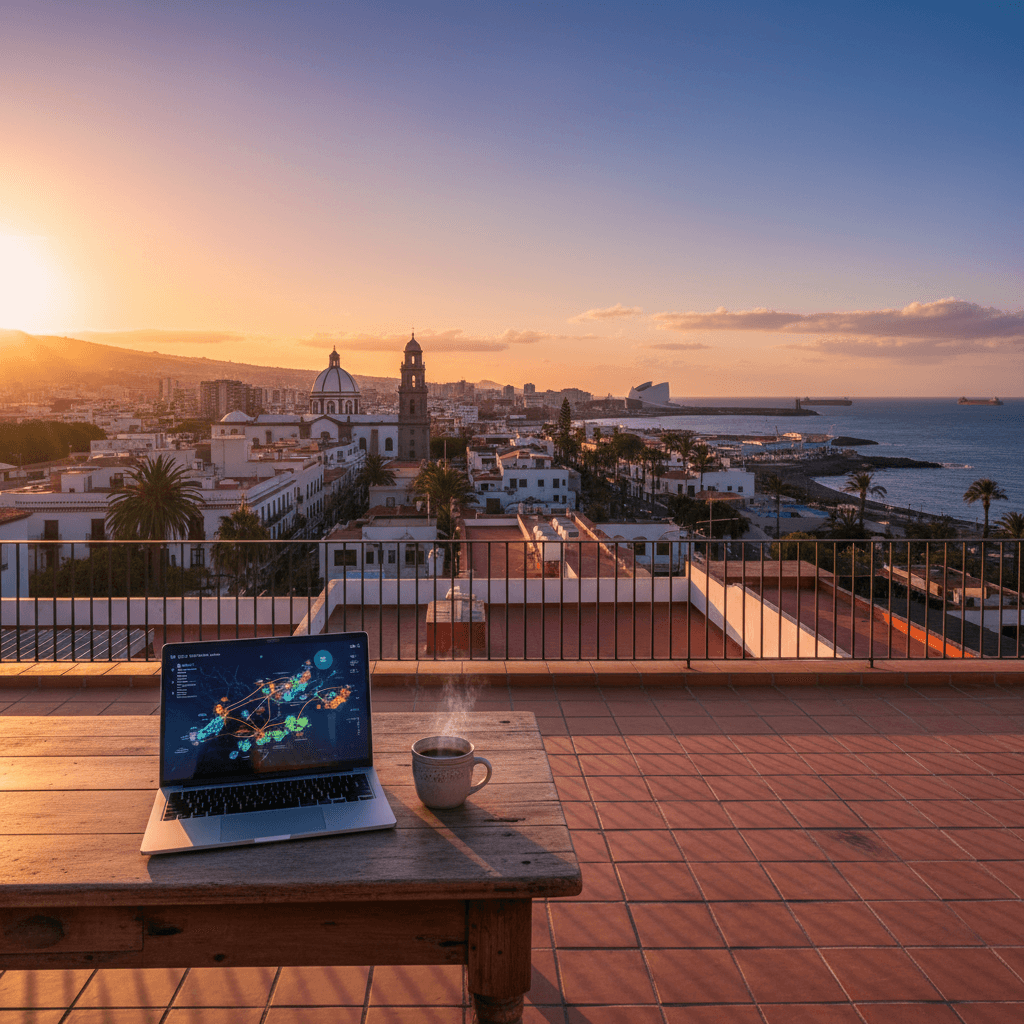
Santa Cruz de Tenerife
🇪🇸 Spain
The Urban Heart of the Eternal Spring
Santa Cruz de Tenerife is where the Mediterranean soul meets Atlantic grit. Unlike the purpose-built resorts of the south, this is a living, breathing Spanish capital that feels authentic because it has to be. You'll find a city that moves at a distinct Canarian pace, a rhythm that balances high-speed fiber optics with two-hour lunches and late-night tapas crawls.
The vibe here is refreshingly unpretentious. While other nomad hubs can feel like a bubble of overpriced avocado toast, Santa Cruz keeps its feet on the ground. It’s a place where you can spend your morning on a Zoom call at Workeamos or Co-working Nomad, and your afternoon cooling off at Playa de Las Teresitas, a golden-sand beach just a short bus ride from the city center.
A Different Kind of Island Life
Most travelers think of Tenerife as a beach holiday destination, but Santa Cruz is for those who want the infrastructure of a European city with a subtropical backdrop. It’s the administrative heart of the island, meaning the transport links are reliable and the healthcare is top-tier. You aren't just visiting; you're plugging into a system that works.
The city has a peculiar, layered personality. One moment you’re walking past the futuristic, white curves of the Auditorio de Tenerife, and the next you’re lost in the colonial streets of nearby La Laguna. It’s this mix of modern cosmopolitan energy and deep-rooted tradition, like the massive Carnival celebrations or the Fiestas de Mayo, that keeps the experience from feeling sterile.
What to Expect on the Ground
Nomads often choose Santa Cruz over the south because it feels like a real community. You'll hear more Spanish than English in the local markets, and the cost of living remains manageable compared to mainland hubs like Madrid or Barcelona. Expect a monthly budget between €2,000 and €3,000 for a comfortable mid-range lifestyle, including a private apartment and frequent dining out.
- The Weather: It’s famously mild, sticking between 18°C and 25°C year-round. While the north can get a bit misty in the winter, Santa Cruz stays relatively dry and sunny.
- The Social Scene: It’s easy to meet people if you know where to look. Expats and remote workers congregate around the waterfront bars and the Mercado de Nuestra Señora de África on weekends.
- The Terrain: The city is walkable, but it’s backed by the rugged Anaga Mountains. You can go from a high-rise office building to a prehistoric laurel forest in 20 minutes.
Living the Balance
There is a specific emotional payoff to living here. It’s the feeling of finishing a productive workday and realizing you still have four hours of daylight to hike a volcano or grab a €1.50 cortado in a plaza filled with laurel trees. It isn't a "hidden" spot anymore, and you will definitely see crowds during the peak winter months, but the city’s scale helps it absorb the tourism without losing its identity.
If you’re looking for a neon-lit party strip, go south. If you want a place where you can actually build a routine, meet locals who aren't in the tourism industry, and use a reliable Titsa bus system to explore an entire island on your days off, Santa Cruz is the right move. It’s a city that rewards those who stay long enough to learn the difference between a barraquito and a standard coffee.
Living in Santa Cruz de Tenerife offers a sweet spot for those who want European infrastructure without the steep price tags of Madrid or Barcelona. While the Canary Islands enjoy a special tax status that keeps consumer goods like alcohol and gasoline cheaper than the mainland, the recent surge in remote work popularity has nudged housing prices upward. Most nomads find that a monthly budget between €2,000 and €3,000 allows for a comfortable lifestyle including a private apartment, frequent dining out, and a dedicated desk at a coworking space.
Housing and Neighborhoods
Your biggest expense will be rent, and the market in the capital is competitive. If you are looking for a one bedroom apartment or a modern studio in the city center near Plaza de España, expect to pay between €600 and €900 per month. Short term rentals on platforms like Airbnb often command a premium, especially during the winter high season.
- Santa Cruz Center: This is the heartbeat of the island for nomads. You are close to the Workeamos coworking hub and the Mercado de Nuestra Señora de África. Rents are highest here, but you save on transport.
- La Laguna: Just a short tram ride uphill, this university town offers a more traditional vibe. Rents can be slightly lower, often ranging from €550 to €800 for similar spaces, though the climate is noticeably cooler and cloudier.
- San Andrés: If you prefer being near the golden sands of Playa de Las Teresitas, this village is a great alternative. It is quieter, but you will likely need a car or a reliable bus schedule to get into the city for networking.
Food and Dining
Groceries are affordable if you shop like a local. Hit the municipal markets for fresh produce and local goat cheese. A weekly grocery run for one person typically averages €40 to €60. Eating out is where the city really shines for the budget conscious.
- Casual Tapas: You can grab a beer and a couple of local snacks for €5 to €10 at most neighborhood bars.
- Mid-range Meal: A sit down dinner with wine in the city center usually lands between €15 and €25 per person.
- Coffee: A barraquito (the famous local layered coffee) will only set you back about €1.50 to €2.50.
Transport and Connectivity
The city is highly walkable, but the Titsa bus network is excellent for exploring further afield. Expats recommend getting the ten+ card or using the ten+móvil app to keep fares low. A monthly pass generally costs between €40 and €60, which is a steal compared to most European capitals. If you need to head to the southern airport, the #711 bus is a reliable €2.70 trip.
For work, high speed fiber optic internet is standard in most urban apartments. If your home setup isn't cutting it, Workeamos or Co-working Nomad offer day passes for €10 to €20, or monthly memberships starting around €150. Mobile data is also cheap; a local SIM from Movistar or Vodafone with a decent data package typically costs €15 to €20.
Leisure and Lifestyle
Much of what makes Santa Cruz great is free. Hiking in the Anaga mountains or lounging at Las Teresitas costs nothing but the bus fare. For those who want more structure, gym memberships in the city center average €40 to €60 per month. If you are planning to visit during the famous Carnival in February, be prepared for prices on short term rentals to double or even triple, so book your housing at least six months in advance.
For Digital Nomads: Santa Cruz Center
If you want to be in the middle of the action, look no further than the blocks surrounding Plaza de España and Plaza del Príncipe. This is the city's pulse, where the urban grit of a working port meets high end shopping and historic architecture. Most nomads gravitate here because the infrastructure is unbeatable. You can walk from your apartment to Workeamos or Co-working Nomad in ten minutes, then grab a coffee at a sidewalk cafe without ever needing a car.
- The Vibe: High energy, cosmopolitan, and social. You'll hear a mix of Spanish and English in the cafes, and the networking opportunities are the best on the island.
- Pros: You're steps away from the main transport hub at the Intercambiador, making it easy to hop on the #910 bus to Playa de Las Teresitas for a sunset swim.
- Cons: It is the loudest part of town. Expect higher rents, usually between €700 and €900 for a decent one bedroom, and a bit of a "concrete jungle" feel compared to the greener outskirts.
For Families and Culture Seekers: San Cristóbal de La Laguna
Just a short tram ride up the hill from the capital, La Laguna feels like a different world. This UNESCO World Heritage site is famous for its colorful colonial buildings and pedestrian streets. It sits at a higher elevation, so it's noticeably cooler and rainier than the coast, which many families prefer over the sticky heat of the south. It is an academic hub, home to the university, so there is a steady flow of students and a very "real" Canarian atmosphere.
- The Vibe: Intellectual, historic, and family friendly. It is quiet at night but lively during the day with markets and street performers.
- Pros: Excellent schools and direct access to the Anaga Rural Park for weekend hikes. Rents can be slightly more affordable than the absolute center of Santa Cruz, often starting around €600 for older apartments.
- Cons: You will need a jacket. The "microclimate" here means you might be in a sweater while people in Santa Cruz are in t-shirts.
For Solo Travelers and Surfers: Puerto de la Cruz
Technically a separate town about 30 minutes away, Puerto de la Cruz is the primary alternative for those who find the capital too industrial. It is a walkable resort town that has successfully rebranded itself for the remote work crowd. If you want to wake up, surf at Playa Martiánez, and then head to Coworking in the Sun, this is your spot. It feels more like a community and less like a business district.
- The Vibe: Relaxed, tropical, and heavily focused on outdoor lifestyle. The cafe culture here is top notch, with plenty of laptop friendly spots overlooking the Atlantic.
- Pros: Very easy to meet people. The town is small enough that you'll start recognizing faces at the local tapas bars within a week.
- Cons: It can feel a bit touristy in the peak winter months. It also lacks the massive shopping malls and government services you find in Santa Cruz.
For Budget Conscious Expats: El Toscal
Tucked right next to the lush Parque García Sanabria, El Toscal is a traditional neighborhood that's currently seeing a lot of renovation. It is popular with long term expats who want to be close to the center without paying the premium prices of the newer high rises. The streets are narrow and charming, and you're right next to the city's best green space for morning runs.
- The Vibe: Authentic and residential. You'll see neighbors chatting across balconies and local fruit stands that have been there for decades.
- Pros: Proximity to the park and lower grocery costs at the nearby Mercado de Nuestra Señora de África, where you can find fresh produce and seafood for a fraction of supermarket prices.
- Cons: Parking is a nightmare. If you plan on renting a car to explore Mount Teide, make sure your rental includes a private garage space, or you'll spend an hour circling the block every evening.
Connectivity and Speed
You won't have to hunt for a decent signal in Santa Cruz. The city is fully wired with high-speed fiber optic internet, and most rental apartments come standard with 300 Mbps to 600 Mbps connections. It's stable enough for heavy Zoom schedules or uploading large video files without the jitter you might find on other islands.
Mobile data is equally reliable. 4G and 5G coverage blankets the urban center and extends well into the outskirts. If you're arriving from outside the EU, grab a local SIM from Movistar or Vodafone at one of the shops near Plaza de España. Expect to pay between €10 and €20 for a solid data bundle. For those who prefer to hit the ground running, an eSIM from a provider like Holafly works the moment you land at Tenerife North or South airport.
Top Coworking Spaces
The coworking scene in Santa Cruz is professional and community-oriented, avoiding the overly corporate vibe of mainland hubs. Most spaces offer a mix of daily drop-ins for passing travelers and monthly memberships for long-term expats.
- Workeamos: Located right in the heart of the city, this is a favorite for its modern design and flexibility. Day passes around €15-20 (confirm current rates on site). It's a great spot if you need a professional backdrop for calls.
- Co-working Nomad: This space leans into the community aspect. Beyond the high-speed WiFi and ergonomic chairs, they host events and networking sessions that help you break out of the "lonely freelancer" bubble. They offer private offices, meeting rooms, and a cafeteria that stays busy during the lunch rush.
- Coworking in the Sun: While technically a short bus ride away in Puerto de la Cruz, many nomads living in Santa Cruz make the trek once or twice a week. It’s famous for its surf-and-work culture and is integrated with a Spanish language school.
The Cafe Office Culture
If you prefer the hum of a coffee shop to a dedicated office, Santa Cruz has plenty of laptop-friendly corners. The local etiquette is simple: buy a coffee or a "pulguita" (a small sandwich) every couple of hours, and you're usually welcome to stay. Most cafes offer free WiFi, though speeds can be hit or miss compared to the dedicated coworking hubs.
The area around Calle Castillo and Plaza de la Candelaria is packed with options. You'll find plenty of nomads tucked into corners with their MacBooks, fueling up on €1.50 cortados. For a more scenic "office," head toward the waterfront or the cafes near the Mercado de Nuestra Señora de África, though these spots are better for light admin work than deep-focus projects due to the foot traffic.
Public Hotspots and Remote Essentials
The city provides several public WiFi hotspots in major plazas, but these are best reserved for checking Google Maps or sending a quick Slack message. For anything secure, stick to your own hotspot or a VPN. If you need to print documents or scan your passport for a visa application, Co-working Nomad and various "locutorios" (internet cafes) around the city center offer these services for a few cents per page.
Most remote workers find that the best balance is a hybrid approach. Use a dedicated space like Workeamos for your "heavy" work days and save the local cafes for Friday afternoons. The infrastructure here is robust enough that you'll rarely find yourself stressed about a deadline because of a technical glitch.
Personal Safety and Local Vibes
Santa Cruz is one of the safest capital cities you'll find in Spain. Most nomads and expats feel perfectly comfortable walking the streets at night, even solo. The city lacks the aggressive tourist scams found in major mainland hubs like Barcelona, mostly because Santa Cruz remains a working Spanish city rather than just a holiday resort.
While there are no specific "no-go" zones, you should still use common sense in crowded areas like the Mercado de Nuestra Señora de África or during the massive Carnival celebrations in February. Pickpockets are rare but not nonexistent when crowds get thick. Most locals suggest staying aware in the darker corners of the port area late at night, but even there, serious crime is very unusual.
For peace of mind, keep these numbers programmed into your phone:
- General Emergencies: 112 (English speakers are usually available)
- National Police: 091
- Local Police: 092
Healthcare Infrastructure
The healthcare system in Tenerife is high quality and follows strict EU standards. If you're a digital nomad from the EU, your European Health Insurance Card (EHIC) or the newer GHIC will cover most urgent treatments at public facilities. For those on the Digital Nomad Visa or from outside the EU, private insurance is a must and is actually a requirement for your residency paperwork.
The city is home to top-tier facilities, including the Hospital Universitario de Canarias and the Hospital Universitario Nuestra Señora de Candelaria. These are large, modern teaching hospitals equipped for everything from minor breaks to complex surgeries. For quicker, more personalized service, many expats head to private clinics like Hospiten Rambla, where English-speaking staff are more common.
Pharmacies and Everyday Care
You'll spot pharmacies (Farmacias) by their bright green neon crosses. They are everywhere in the city center. Spanish pharmacists are highly trained and can often give advice or even provide certain medications that would require a prescription in the US or UK.
If you need medicine in the middle of the night, look for the Farmacia de Guardia. Every pharmacy window will have a list posted showing which nearby location is pulling the 24 hour shift that night. You can also use the Farmaguia app to find the nearest open chemist in real time.
Health Tips for Nomads
The biggest health risks in Santa Cruz aren't tropical diseases, but rather the subtropical sun and the terrain. The "eternal spring" climate is deceptive; the UV index is high even on cloudy days. Expats recommend high SPF sunscreen if you're heading to Playa de Las Teresitas or hiking in the Anaga mountains.
- Tap Water: It is technically safe to drink, but it doesn't taste great due to desalination and high mineral content. Most long term residents buy large 5 or 8 liter jugs (garrafas) from the supermarket for €1 to €2 or install a high quality filter.
- Air Quality: Generally excellent, though you might occasionally experience the Calima. This is a weather phenomenon where dust from the Sahara blows over the islands. If you have asthma or respiratory issues, you'll want to stay indoors and keep windows shut during these few days.
- Mental Health: The local nomad community is active on WhatsApp and Facebook. If you're feeling isolated, joining a coworking space like Workeamos or Co-working Nomad is the fastest way to find a support network.
Insurance Requirements
If you are applying for the Spanish Digital Nomad Visa, your insurance policy must have no co-payments and no waiting periods. It needs to provide "full cover" equivalent to the Spanish National Health System. Expect to pay between €50 and €90 per month for a policy that meets these specific legal criteria, depending on your age and medical history.
Public Transport: The Titsa Network
Santa Cruz is the main hub for the island's bus system, operated by Titsa. You'll recognize these bright green buses everywhere. For digital nomads staying a month or more, the most cost effective move is grabbing a ten+ card. Frequent users can use Ten+ wallet top-ups or check subsidized passes; day passes are available for €10, while a 7-day pass costs €50 for unlimited travel across the island.
Most regulars skip the physical card and use the ten+móvil app. It lets you buy tickets and validate them via QR codes on the bus. Remember to tap in when you board and tap out when you leave, otherwise the system charges you the maximum fare for the route. Buses are generally punctual, though they can get crowded during the morning commute toward La Laguna.
The Tram: Santa Cruz to La Laguna
One of the perks of living in the capital is the Tranvía de Tenerife. Line 1 connects the heart of Santa Cruz at Plaza de España to the historic streets of La Laguna. It runs every 5 to 10 minutes during peak hours and is far more reliable than the bus for this specific route. It's a smooth, modern ride that takes about 25 minutes from end to end. You can use the same ten+ card or mobile app for the tram as you do for the bus.
Walking and Micromobility
The city center is surprisingly walkable, especially around the Plaza de España and the Mercado de Nuestra Señora de África. Most nomads find they can handle their daily errands, gym runs, and coworking commutes entirely on foot if they live centrally. The terrain is relatively flat near the coast, but it gets steep quickly as you move inland toward the hills.
For a faster zip around town, look for the BiciTFE bike sharing stations. Electric scooters are also available through various apps, usually costing about €5 to €10 for a day of casual use. Just be mindful of the cobblestones in the older districts; they aren't very kind to small scooter wheels.
Taxis and Ride-Hailing
Don't expect to rely on Uber or Bolt here. While they have a limited presence, the local taxi industry is much more established. Taxis are white, metered, and easy to flag down or find at designated ranks. Rates are fair, usually hovering around €1 per kilometer. A quick hop across town rarely exceeds €7 or €8. If you're heading home late after drinks near the waterfront, taxis are the safest and most convenient bet.
Car Rentals for Island Exploration
While you don't need a car for life within Santa Cruz, you'll definitely want one for weekend trips to Mount Teide or the Anaga forests. Local companies like Cicar or AutoReisen are often cheaper and more transparent than the big international brands. You can find rentals for as low as €25 to €35 per day if you book a few days in advance. Parking in the city center is notoriously difficult and expensive, so most expats recommend only renting a car for the days you actually plan to leave the city.
Getting to and from the Airport
Most international flights land at Tenerife South (TFS), which is about 60 kilometers away. If you need to head to the southern airport, the #711 or #111 bus is a reliable option (check current fare via TITSA calculator). The trip to TFS takes about 1 hour or more depending on stops. If you're hauling a lot of luggage or arriving late at night, a taxi will cost you between €60 and €80. If you happen to fly into the smaller Tenerife North (TFN) airport, it's a quick 15 minute bus or taxi ride into the city, costing around €2.70 for the bus or €15 to €20 for a cab.
The Local Lingo
Spanish is the heartbeat of Santa Cruz, but it comes with a distinct Atlantic twist. You'll notice the Canarian accent is softer than the sharp, "th" sounding Spanish you hear in Madrid. Locals often drop the "s" at the ends of words, which can make it sound a bit like Caribbean Spanish. It is melodic and friendly, reflecting the island's relaxed pace of life.
While Spanish is dominant, you won't feel stranded if your vocabulary is limited to "hola" and "una cerveza, por favor." Because Santa Cruz is an administrative and international hub, English proficiency is quite high in the city center. You'll find that staff in coworking spaces like Workeamos or Co-working Nomad speak excellent English, as do many baristas in the trendy cafes around Plaza de España.
Expats and long term nomads suggest that while you can survive with English, learning some basics will change how locals treat you. Being able to ask "¿Cuánto cuesta?" (how much is it?) at the Mercado de Nuestra Señora de África or ordering a "barraquito" (the famous local layered coffee) in Spanish earns you immediate respect. Most people here are patient with learners and appreciate the effort.
Digital Communication and Connectivity
Staying connected in Santa Cruz is seamless. The city is wired with high speed fiber optic internet, and most nomads report consistent speeds that handle video calls and heavy uploads without a hiccup. Even the smaller cafes in La Laguna usually offer stable, free WiFi for the price of a coffee.
- Mobile Data: 4G and 5G coverage is strong throughout the metropolitan area. If you're heading into the Anaga mountains for a hike, signal can get spotty, so download your maps beforehand.
- Local SIMs: You can pick up a physical SIM card from providers like Movistar or Vodafone for about €10 to €20. These usually come with generous data packages for the month.
- eSIM Options: Many travelers now opt for Holafly or similar eSIM services to get connected the second they land at the airport. It is slightly more expensive but saves you the trip to a phone shop.
- Useful Apps: Download ten+móvil for bus and tram tickets. For translations, DeepL tends to handle the nuances of Spanish grammar better than other basic tools.
Social Etiquette and Networking
Communication here isn't just about words; it is about the social ritual. Business and networking often happen over a long lunch or a coffee rather than a formal meeting. If you're looking to meet other remote workers, the nomad community is very active on WhatsApp and Facebook groups. These are the best places to find out about impromptu meetups or weekend trips to Mount Teide.
In professional settings, a handshake is standard. In social settings, don't be surprised if you're greeted with two kisses on the cheeks, even if you've only just met. It is part of the warm, open culture that makes Santa Cruz feel less like a cold urban center and more like a large, welcoming neighborhood. If you're planning to stay for more than a month, consider joining a language exchange or "intercambio" at a local bar; it is the fastest way to bridge the gap between being a tourist and feeling like a resident.
The Eternal Spring
Santa Cruz de Tenerife is famous for its "eternal spring" climate, meaning you'll rarely need more than a light jacket. Temperatures generally hover between 18°C and 25°C throughout the year. Because the city sits on the eastern edge of the island, it stays significantly drier and sunnier than the lush, rainy forests of nearby Anaga or the misty streets of La Laguna.
Most nomads find the sweet spot for visiting is between April and June. During these months, the weather is consistently warm enough for afternoons at Playa de Las Teresitas, but you'll avoid the heavy summer humidity and the influx of mainland tourists who arrive in July. The ocean also begins to warm up during this window, making it ideal for surfers and swimmers.
Seasonal Breakdown
- Spring (March to May): This is arguably the best time for digital nomads. The air is crisp, the island is green from winter rains, and the city is lively without being overcrowded. Expect highs around 21°C to 23°C.
- Summer (June to August): It gets hot, but rarely unbearable thanks to the trade winds. While the south of the island can feel like a furnace, Santa Cruz stays around 26°C to 28°C. This is peak season for domestic travelers, so expect higher rents and busier cafes.
- Autumn (September to November): The water is at its warmest, often reaching 24°C. September is a favorite for expats who want summer weather without the crowds. It's the best time for diving or taking the ferry to neighboring islands.
- Winter (December to February): While much of Europe freezes, Santa Cruz stays mild at 17°C to 21°C. It's the "rainy" season, though in the capital, this usually means short, passing showers rather than grey weeks. If you head north toward Puerto de la Cruz, bring an umbrella; stay in Santa Cruz if you want the sun.
The Carnival Factor
If you're planning a stay in February or early March, you need to account for the Carnival of Santa Cruz de Tenerife. It's the second largest in the world after Rio de Janeiro. While the energy is incredible, it’s a polarizing time for remote workers. The city transforms into a massive, 24/7 street party.
Expats recommend booking accommodation at least six months in advance if you want to be here during Carnival. Expect prices for short term rentals to double or triple. If you need quiet for deep work, avoid staying near Plaza de España or the main waterfront during these weeks, as the music and crowds don't stop until sunrise.
Microclimates and Packing
Tenerife is a "miniature continent" with wild weather shifts. You might be sweating in a t-shirt at a coworking space in Santa Cruz, but if you take the 15 minute tram ride up to La Laguna, the temperature can drop by 5 degrees and be covered in clouds. Always carry a hoodie or a light windbreaker if you plan on exploring.
For those planning to hike Mount Teide or explore the Anaga mountains, don't be fooled by the coastal warmth. High altitude temperatures can dip toward 0°C in the winter, and snow is common on the peak. Travelers often regret not bringing a proper fleece or insulated jacket for these excursions.
The Verdict for Nomads
If you want the best balance of affordable rent and perfect weather, aim for an October arrival. You'll catch the tail end of the warm sea temperatures, skip the summer price hikes, and settle in just as the community events at spaces like Co-working Nomad start picking up for the winter season. You'll get to enjoy the sun while your colleagues back home are dealing with grey skies.
Connectivity and Workspace
You won't have to hunt for a signal here. Santa Cruz is a modern administrative hub with reliable fiber optic internet and 5G coverage that holds up even when you're working from a cafe terrace. While many nomads stick to their apartment WiFi, the city's coworking scene is excellent for networking.
- Workeamos: A central favorite with a modern vibe. Day passes usually run between €10 and €20, while a monthly desk costs around €150 to €250.
- Co-working Nomad: This spot is great if you need more than just a desk. They offer private offices, meeting rooms, and a steady stream of community events.
- Mobile Data: Pick up a local SIM from Movistar or Vodafone at the airport or in the city center. Expect to pay €10 to €20 for a solid data package. If you prefer to hit the ground running, an eSIM like Holafly works well across the island.
Getting Around the City
Santa Cruz is surprisingly walkable, especially around the Plaza de España and the waterfront. For longer trips or getting to the beach, the Titsa bus system is your best friend. It's efficient, clean, and covers almost everywhere you'll want to go.
Download the ten+móvil app to manage your tickets digitally. Most frequent travelers grab a ten+ card, which brings monthly transit costs to about €40 to €60. If you're heading to the south airport (TFS), the #711 bus is a steal at roughly €2.70, taking about 45 minutes. Taxis are plentiful and use meters, typically charging around €1 per kilometer. Avoid Uber or Bolt here; they aren't as established as the local green cabs.
Health and Safety
The city feels secure, even late at night. Expats generally agree that standard urban common sense is all you need. Stick to well lit areas in the center and you'll likely never have an issue. If you do run into trouble, the emergency number is 112.
Healthcare is top tier. The Hospital Universitario de Canarias is nearby, and pharmacies (farmacias) are everywhere. Look for the flashing green crosses; there is always a 24 hour pharmacy on duty in the neighborhood. European citizens should bring their EHIC card, while others should ensure their private insurance covers Spanish providers.
Language and Social Life
Spanish is the main tongue, specifically the softer Canarian dialect. You'll find plenty of English in coworking spaces and tourist spots, but learning basic phrases like "Cuánto cuesta?" will get you much better service at the local markets. The Mercado de Nuestra Señora de África is the place to go for fresh food and a bit of social interaction with vendors.
To meet people, join the active WhatsApp and Facebook groups for Tenerife nomads. Many meetups happen organically at cafes or during the Carnival season in February. If you want a more local experience, head to the Guachinches (traditional family run taverns) in the hills for cheap wine and home cooked food.
Cost of Living Breakdown
Santa Cruz is more affordable than Madrid or Barcelona, but prices have risen lately. A comfortable monthly budget for a nomad usually sits between €2,000 and €3,000.
- Housing: A 1BR apartment in the center ranges from €600 to €900. You can find cheaper spots in La Laguna if you don't mind a short tram ride.
- Dining: Tapas and street food will cost you €5 to €10. A mid range dinner for two is usually around €40 to €50.
- Groceries: Local produce is affordable, especially if you shop at the markets rather than the high end supermarkets.
Need visa and immigration info for Spain?
🇪🇸 View Spain Country GuideNomad Haven
Your home away from home