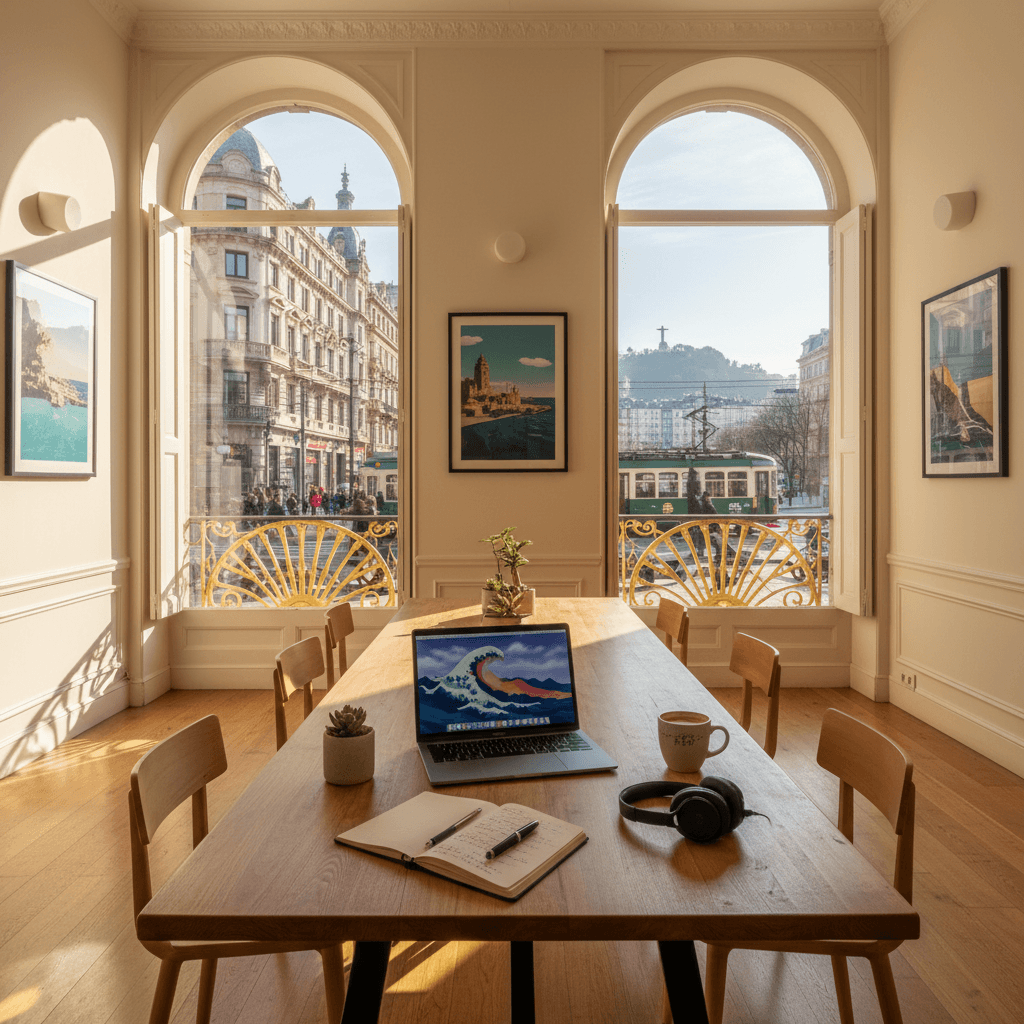
San Sebastián
🇪🇸 Spain
The Culinary Capital with a Coastal Soul
San Sebastián, or Donostia as the locals call it, doesn't feel like your typical Spanish nomad hub. While Valencia and Malaga lean into a high-energy Mediterranean sun-and-sand lifestyle, this Basque beauty offers something more refined. It’s a place where Belle Époque architecture meets the rugged Bay of Biscay, creating a backdrop that feels both historic and impeccably clean. Nomads who land here usually trade the late-night clubbing scenes of the south for a lifestyle centered on wellness, world-class gastronomy, and the great outdoors.
The vibe is undeniably healthy. You'll see locals and expats alike starting their mornings with a surf at Zurriola Beach or a hike up Monte Urgull before settling into a cafe. There’s a quiet confidence to the city; it doesn’t need to shout to get your attention because the views of Santa Clara Island and the scent of grilled seafood do the work. It’s a "slow living" destination in the truest sense, though that luxury comes with a higher price tag than most of Spain.
Where to Plant Your Laptop
Choosing a neighborhood here depends entirely on whether you want the sound of the waves or the smell of pintxos (the legendary Basque tapas) outside your door. Most nomads find themselves gravitating toward these three distinct areas:
- Old Town (Parte Zaharra): This is the city's beating heart. It’s a maze of narrow streets packed with the highest concentration of taverns you’ve ever seen. While it’s the most social area for solo travelers, it can get noisy on weekends. Expect to pay a premium for small, charming apartments near Plaza de la Constitución.
- La Concha: If you’re looking for the quintessential San Sebastián experience, this is it. The promenade is elegant and perfect for long walks. Rents here are among the highest in Spain, often attracting established expats and digital nomads with a mid-to-high range budget.
- Gros (Zurriola Beach): This is the younger, sportier side of town. It’s less formal than the center and serves as the primary surf hub. You’ll find more organic cafes and a slightly more "work-friendly" atmosphere in the local eateries here.
The Cost of the Basque Lifestyle
Let’s be honest: San Sebastián is expensive. It’s one of the few places in Spain where you might feel the pinch if you aren’t earning a solid remote income. To live comfortably here, nomads recommend a monthly budget of at least €3,500. If you’re pushing for a beach-view apartment and frequent Michelin-starred dinners, that number easily climbs past €5,000.
- Rent: You’ll likely spend €1,200 to €1,800 for a decent one-bedroom in a central area. Sharing a flat can bring this down to €700 or €900.
- Dining: Individual pintxos cost between €2 and €4. A mid-range dinner at a local tavern usually runs €25 to €30, while the city’s famous Michelin-starred spots start at €100 and go up quickly.
- Transport: The city is incredibly walkable, but a ride on the Dbus is around €1.95 (standard), €2.65 (night).
- Coworking: Expect to pay between €200 and €400 a month for a dedicated desk, though many nomads prefer the "cafe-office" culture in Gros or the Old Town.
Work, Play, and Connection
Internet connectivity is excellent across the city, which is a major reason Spain continues to top nomad rankings. Whether you're using a local Movistar SIM or an eSIM like Airalo, you won't struggle with video calls. The real challenge is the "work" part of work-life balance. When the sun is out and the surf is up at Zurriola, or when the smell of fresh tortilla de patatas wafts through the Calle Mayor, staying at your desk takes serious discipline.
Socializing revolves around food and movement. You won't find many massive "digital nomad meetups" in the traditional sense. Instead, you’ll meet people while taking surf lessons, joining a group hike, or participating in a txikiteo (a pintxo bar crawl). It’s a sophisticated social scene where a shared love for a good glass of Basque cider or a hike along the coast forms the foundation of most friendships.
Safety is rarely a concern here. Beyond the usual advice to watch your pockets in the crowded tourist streets of the Old Town, the city is remarkably secure. If you need medical care, the Hospital Universitario Donostia provides high-quality services, and pharmacies are easy to find. Just remember that while Spanish is the daily language, learning a few Basque words like "Kaixo" (hello) goes a long way with the locals.
The Price of the Basque Lifestyle
San Sebastian is widely considered the crown jewel of the Basque Country, but that prestige comes with a price tag to match. While Spain is often celebrated as a budget friendly destination for remote workers, this city is the outlier. You should expect to pay a premium for the high quality of life, organic food scene, and world class scenery. For those applying for the Spanish Digital Nomad Visa, keep in mind you will need a proven monthly income of at least €2,850 just to qualify, though living comfortably here usually requires more.
Most nomads find that a monthly budget of €3,500 allows for a solid mid range lifestyle, covering a private apartment and regular social outings. If you are looking for a beach view in La Concha or a modern flat in the Center, your costs can easily climb toward €5,000. Budget conscious travelers can scrape by on €2,500, but this typically involves shared housing and limiting those tempting pintxo crawls.
Housing and Neighborhoods
Rent is your biggest hurdle. Demand is high and inventory is limited, especially in the historic and coastal districts. Expats recommend using platforms like Idealista to scout for long term stays, but be prepared to move fast when a listing appears.
- Old Town (Parte Zaharra): Living here puts you in the heart of the action. It is walkable and surrounded by the city's best taverns, but it can be noisy and crowded. Expect high rents for smaller, older apartments.
- La Concha: This is the most prestigious area. It is perfect for those who want a morning swim at the beach or a visit to the La Perla spa, but you will pay the highest premiums in the city for the privilege.
- Zurriola (Gros): The go to spot for the surf crowd. It has a younger, more active energy and is slightly more functional for daily life, though prices remain steep due to its popularity with the international community.
Eating and Socializing
The culinary scene is the city's main attraction, but it can drain your wallet if you aren't careful. While you can find a single pintxo for €2 to €4, these small plates add up quickly during a night out. A meal at a mid range local tavern usually lands between €20 and €30. If you are looking to indulge in the city's famous Michelin starred dining, expect to pay €100 or significantly more per person.
Groceries are generally affordable, though nomads often note that the local preference for organic and high quality Basque produce drives up the weekly food bill compared to southern Spain. For socializing, a night out at spots like Bataplan Disco or beachside bars will mirror prices found in major European capitals.
Connectivity and Logistics
Reliable internet is a standard across the city, making remote work seamless. While dedicated coworking spaces like those found in Madrid or Barcelona are less common, the cafe culture is strong. You can expect to pay between €200 and €400 a month for a professional desk if you prefer a structured environment over a seaside cafe.
- Transportation: The city is incredibly walkable. For longer trips, the Dbus system is efficient at €1.50 to €2 per ride.
- Mobile Data: Grab a local SIM from Movistar or Vodafone, or use an eSIM app like Airalo for immediate connectivity.
- Healthcare: Access to high quality care at facilities like Hospital Universitario Donostia is excellent. Just remember that your visa requires private insurance coverage.
Ultimately, San Sebastian is about the trade off. You are paying for the ability to surf before work, hike the coastal trails at lunch, and eat some of the best food on the planet at dinner. It is an investment in a specific kind of wellness focused lifestyle that most residents find well worth the extra Euros.
The Solo Traveler: Parte Zaharra (Old Town)
If you want to be in the thick of the action, the Old Town is your base. It is a maze of cobblestone streets tucked between the foot of Mount Urgull and the city center. This is the heart of the world famous pintxos scene, where you can hop from one tavern to another on Calle Mayor. For solo travelers, it is the easiest place to meet people; you just grab a stool, order a €3 glass of txakoli, and start a conversation.
- Vibe: High energy, historic, and social.
- Rent: Expect to pay a premium for small, older apartments.
- Pros: Unmatched food access and walkability.
- Cons: It gets loud at night and crowded during the summer peak.
The Active Nomad: Zurriola Beach (Gros)
Located just across the river, the Gros neighborhood feels younger and more local than the tourist center. It is anchored by Zurriola Beach, the city's premier surf spot. Digital nomads often gravitate here because the energy is more "urban cool" and less "belle époque." You will find plenty of cafes with strong Wi-Fi and organic food spots that cater to a health conscious crowd.
- Vibe: Sporty, laid back, and creative.
- Rent: Mid range, though prices are rising as it becomes more popular.
- Pros: Best surfing in the city and a great craft beer scene.
- Cons: The beach is windier and the waves can be too intense for casual swimmers.
The Long Term Expat: La Concha and the City Center
For those moving to San Sebastián with a larger budget, the area surrounding La Concha Promenade is the gold standard. It features stunning architecture and views of Santa Clara Island. Expats who prioritize wellness love being near the La Perla spa and the flat, scenic walking paths along the bay. It is a refined area where the lifestyle is slower and more focused on the finer things.
- Vibe: Elegant, quiet, and upscale.
- Rent: The highest in the city; 1BR apartments often exceed €1,500.
- Pros: Incredible views and proximity to high end shopping.
- Cons: Can feel a bit "stiff" compared to the grit of Gros or the Old Town.
Families: The Port and Antiguo
While the city center is walkable, families often look toward Antiguo or the quieter edges of the Port area. These spots offer a more residential feel with better access to parks and schools. You are still within a 20 minute walk of the main attractions, but you escape the late night noise of the pintxos bars. It is the best way to enjoy the San Sebastián lifestyle without the constant tourist shuffle.
- Vibe: Safe, community oriented, and relaxed.
- Rent: High, but you often get more square footage than in the Old Town.
- Pros: Close to Ondarreta Beach, which is calmer for children.
- Cons: A bit further from the main coworking hubs and nightlife.
Cost of Living Breakdown
Living here is a luxury experience, and your bank account will feel it. Most nomads find they need a monthly budget of at least €3,500 to live comfortably without constantly checking their balance. While a single pintxo might only cost €2 to €4, a full night of grazing and drinks adds up quickly.
- Budget Tier: €2,500 per month (shared housing and sticking to street food).
- Mid Range: €3,500 per month (private 1BR and regular dining out).
- Comfortable: €5,000+ per month (beachfront views and Michelin starred dinners).
Connectivity and Speed
Spain consistently ranks as one of the best-connected countries in Europe, and San Sebastián is no exception. You won't struggle with lag during Zoom calls here. Most apartments and rentals come standard with high-speed fiber optics, and 5G coverage is excellent across the city center, from the Parte Zaharra to the heights of Monte Igueldo.
For mobile data, picking up a local SIM is straightforward. Major providers like Movistar and Vodafone have storefronts in the city center where you can get set up with a prepaid plan. If you prefer to hit the ground running, nomads typically use eSIM apps like Airalo or Holafly. These are perfect for getting through your first few days before you decide if you need a more permanent local number.
Coworking Spaces and Community
The coworking scene in San Sebastián is intimate but professional. Unlike the massive hubs in Madrid or Barcelona, the spaces here reflect the city's focus on quality of life. You can expect to pay between €200 and €400 per month for a dedicated desk, depending on the level of amenities and location.
- Impact Hub Donostia: Located in the Tabakalera building (a former tobacco factory turned contemporary culture center), this is a favorite for those who want to be surrounded by creatives and social entrepreneurs.
- Local Business Centers: Several smaller hubs near the Port Area cater to expats and professionals who need a polished space for client meetings.
Many nomads find that the community aspect is just as important as the Wi-Fi. While there aren't massive "nomad villages" yet, the surfing community at Zurriola Beach and the hiking groups around the Bay of Biscay are where most remote workers end up networking. It's a city where business often gets done over a glass of cider or a few rounds of pintxos.
The "Pintxo Office" Culture
San Sebastián doesn't have a massive "laptop cafe" culture in the way London or Berlin might. In the Old Town (Parte Zaharra), many of the smaller taverns are standing-room only and focused entirely on the food. Taking up a table with a laptop for four hours during the lunch rush is generally frowned upon.
However, you'll find plenty of success working from the more modern cafes in the Gros neighborhood or near La Concha. These spots often have outdoor seating where you can work with a view of the water. Look for places with "Terraza" signs. Travelers often recommend the cafes near the university district for a more work-friendly atmosphere where the staff won't mind if you stay for a second cafe con leche.
Practical Tips for Remote Work
If you're planning to stay long-term on the Spanish Digital Nomad Visa, remember that you'll need to prove a minimum monthly income of around €2,850. This financial threshold ensures you can handle the city's higher-than-average costs. While the internet is reliable, the "Basque rain" is real. If you're relying on cafe Wi-Fi, always have a backup plan for indoor seating, as the sunny terrace spots disappear the moment the clouds roll in from the Bay.
For those who need to jump between cities, the Dbus system is efficient for getting to your coworking space, but the city is so compact that most nomads just walk or rent a bike. If you're working late, the city is incredibly safe, though it's always smart to keep an eye on your gear in the more crowded tourist spots of the Old Town.
Staying Safe in Donostia
San Sebastián is widely considered one of the safest cities in Spain. You'll feel a sense of security walking home after a late night of pintxos, even in the winding alleys of the Parte Zaharra. The local culture is respectful and community oriented, which translates to very low violent crime rates. Most nomads find that common sense is the only real requirement for staying out of trouble here.
That said, being a high end tourist destination means you shouldn't get too complacent. Pickpockets occasionally operate in crowded areas like La Concha Beach during the peak summer months or the busy squares of the Old Town. Keep an eye on your bag if you're sitting at an outdoor terrace. If you're heading into the surf at Zurriola, don't leave your phone or wallet unattended on the sand; use a waterproof pouch or go with a friend who can watch your gear from the shore.
- Emergency Number: Dial 112 for police, fire, or medical emergencies. This is the standard EU number and operators usually speak English.
- Local Police: You can find the Guardia Municipal stations near the city center if you need to report a lost passport or theft for insurance purposes.
- Night Safety: Solo travelers generally report feeling very safe at night, though it's always better to stick to well lit main thoroughfares like Calle Mayor.
Healthcare for Nomads
The healthcare system in the Basque Country is world class. Whether you're dealing with a surfing injury or a seasonal cold, you'll find the facilities are modern and the staff are highly trained. Spain's healthcare is consistently ranked among the best in the world, and San Sebastián is no exception.
If you're in the city on a Digital Nomad Visa, remember that private health insurance is a mandatory requirement for your residency. This insurance gives you access to private clinics where wait times are shorter and English speaking doctors are more common. Expats often recommend Hospital Universitario Donostia for major concerns, as it is the primary public hospital with a massive range of specialties.
Pharmacies and Minor Ailments
Spanish pharmacies, marked by bright green neon crosses, are your first stop for minor health issues. Pharmacists in Spain have more authority than in many other countries; they can often recommend effective over the counter treatments for ailments that might require a doctor's visit elsewhere. You'll find a farmacia on nearly every major block in the Centro and Gros neighborhoods.
- Farmacias de Guardia: At least one pharmacy in each neighborhood stays open 24 hours a day on a rotating schedule. You can find the list posted on the door of any closed pharmacy.
- Costs: Expect to pay around €5 to €15 for standard medications like antibiotics or high strength painkillers, though some require a local prescription.
- Water Quality: The tap water in San Sebastián is perfectly safe and actually tastes quite good. You don't need to waste money or plastic on bottled water.
Wellness and Prevention
The local lifestyle is naturally geared toward health. Most nomads find themselves walking everywhere, eating fresh organic produce, and spending hours outdoors. If you're looking for a more formal wellness experience, La Perla Talaso-Sport on the beachfront is a local institution. It's a thalassotherapy center where you can soak in heated seawater pools while looking out over the bay. It's an excellent way to recharge if the Atlantic weather gets a bit too grey and chilly during the winter months.
The Walkable City
San Sebastián is a rare urban treat where your own two feet are usually the best way to get around. The city is remarkably compact, especially the stretch between the surf vibes of Zurriola and the elegant promenade of La Concha. Most nomads find they can handle 90% of their daily life without ever touching a steering wheel or a bus handle.
The stroll from the Parte Zaharra (Old Town) to the port area is flat and scenic. If you're living in the center, you'll likely measure distances in "pintxo stops" rather than miles. It’s a city built for people who enjoy a slow morning coffee followed by a brisk walk to a seaside coworking spot.
Mastering the Dbus
When the Basque rain kicks in or you're heading further out to neighborhoods like Antiguo, the Dbus network is your best friend. It’s clean, efficient, and surprisingly punctual. You’ll see the bright green buses everywhere, and they run frequently throughout the day.
- Single tickets: Standard fare €1.95, night fare €2.65
- Payment: You can pay with cash on the bus, but most long-term residents grab a Mugi card. It drops the fare significantly and works across different transport systems in the Gipuzkoa region.
- Apps: Download the Dbus app to check real-time arrivals. It saves you from standing in the wind at the bus stop for twenty minutes.
Cycling and Micro-mobility
The city has invested heavily in "bidegorris," which are dedicated red bike lanes that crisscross the main beach areas and the city center. It’s a very bike-friendly culture, though you'll need some leg strength if you plan on Heading up toward Monte Igueldo or Monte Urgull.
For quick trips, bike rentals are easy to find near the major beaches. If you're staying for a few months, look into the Dbizi electric bike-sharing system. It's perfect for conquering the occasional hill without breaking a sweat before a Zoom call. Electric scooters are also common, though local regulations are strict about keeping them off the pedestrian-only sidewalks.
Getting In and Out
San Sebastián has its own tiny airport (EAS), but it mainly handles domestic flights to Madrid or Barcelona. Most international nomads fly into Bilbao (BIO) or even Biarritz across the border in France. Both are about 1 to 2 hours away depending on your mode of transport.
- Bilbao Airport Bus: The Pesa bus runs directly from Bilbao Airport to the San Sebastián bus station (Donostia Geltokia) every hour. It’s comfortable and has plenty of room for luggage.
- Taxis and Ride-hailing: Uber and Bolt operate here, but they can be pricey for long distances. A taxi from Bilbao to San Sebastián can easily run you €150 or more.
- Trains: The Euskotren (locally known as "El Topo") is a narrow-gauge train that connects the city to smaller coastal towns and the French border at Hendaye. It's slow but incredibly scenic for a weekend day trip.
Water Transport
During the summer months, don't overlook the motorboats (motos) that run from the harbor to Santa Clara Island. It’s a quick, affordable trip that gives you a completely different perspective of the bay. It’s less of a commute and more of a lifestyle perk, perfect for a Saturday afternoon escape from the laptop.
The Bilingual Balance
In San Sebastián, you'll constantly see two names for everything: the Spanish San Sebastián and the Basque Donostia. While Spanish is the primary language for daily business and social life, Euskara (Basque) is the soul of the city. It’s a unique, non-Indo-European language that predates Latin, and you’ll hear it spoken frequently in the Parte Zaharra (Old Town) and by locals in the surfing lineups at Zurriola.
Most nomads find that while English proficiency is moderate in the main tourist hubs and high-end hotels, it's not a given everywhere. In the pintxos bars and local markets, a little effort goes a long way. If you’re coming from a hub like Madrid or Barcelona, you might notice the English levels are slightly lower here, as the city caters heavily to French and domestic Spanish tourists as well as international travelers.
Mastering the Basics
You don't need to be fluent in Basque to get by, but using a few words will instantly earn you respect from the locals. It shows you’re not just another tourist passing through, but someone who appreciates the distinct culture of the Basque Country. Start with these essentials:
- Kaixo (pronounced Kai-sho): Hello
- Eskerrik asko: Thank you
- Agur: Goodbye
- Mesedez: Please
- Goiainka pintxo bat: One pintxo, please
For everything else, standard Spanish (Castellano) is perfectly fine. If you’re planning a long-term stay on a Digital Nomad Visa, you’ll likely need Spanish for administrative tasks, though many legal and immigration services in the city center now offer bilingual support for expats.
Digital Tools and Translation
Since Basque is so linguistically distinct, your typical "guess the word based on the Latin root" strategy won't work. Most travelers recommend downloading Google Translate with both Spanish and Basque available for offline use. It’s particularly helpful for reading menus that might only list daily specials in the local tongue.
For more formal communication, like setting up a coworking membership or viewing an apartment in Gros or Antiguo, stick to Spanish or bring a local friend. Apps like DeepL are often cited by nomads as being more accurate than Google for professional Spanish correspondence when you're dealing with landlords or utility companies.
Social Etiquette and Communication Style
The communication style here is direct but incredibly warm once the ice is broken. In the Parte Zaharra, the "txikiteo" (pintxos crawl) is the ultimate social lubricant. You’ll find that groups are often loud and animated. Don't be intimidated; it’s just the local energy. If you're looking to meet people, the beach areas are your best bet. Zurriola Beach has a younger, more international vibe where English is more common among the surfing community.
Expats often say that the best way to integrate is through food and sports. Joining a local surf school or asking for a wine recommendation at a tavern are natural conversation starters. While the locals are proud of their heritage, they’re generally happy to share it with anyone who shows genuine interest in the Basque way of life.
The Seasonal Rhythm
San Sebastián doesn't follow the sun-scorched rules of Southern Spain. Because it sits on the Bay of Biscay, the weather is defined by an oceanic climate that keeps things lush, green, and occasionally unpredictable. You won't find the 40°C heatwaves of Seville here; instead, you get a temperate, refined atmosphere that suits an active, outdoor lifestyle. Most nomads find the sweet spot for a visit falls between June and September, when the Cantabrian Sea loses its bite and the city truly comes alive.
Summer: Peak Beach and Social Season
July and August are the golden months. Temperatures usually hover between 20°C and 25°C, creating the perfect environment for working from a cafe in the Old Town before hitting La Concha for a swim. This is when the water is at its warmest, though even then, locals describe it as refreshing rather than tropical. It's the best time for social nomads because the pintxos bars spill out into the streets and the nightlife at spots like Bataplán Disco hits its stride.
- Pros: Ideal surfing conditions at Zurriola, boat trips to Santa Clara Island, and the most reliable sunshine.
- Cons: This is the most expensive time to book an apartment on platforms like Idealista, and the crowds in Parte Zaharra can make focused deep work a challenge.
Shoulder Season: The Nomad Sweet Spot
Late May, June, and September are arguably the best times for a long-term stay. The weather is mild enough for hiking the coastal trails, but the heavy tourist traffic has either not arrived or just departed. September is particularly special as the sea remains warm from the summer sun, but the city regains its local, relaxed pace. You'll have better luck finding mid-range housing around €3,500 per month without the summer premium.
Winter: The Rainy Reality
If you're planning a stay between November and March, pack a high-quality raincoat. San Sebastián is one of Spain's rainiest cities. Winters are rarely freezing, but they are damp and grey. Many expats recommend this season only if you're a serious surfer or a foodie who wants easy access to Michelin-starred tables without the three-month waiting list. While the city remains beautiful in a moody, Belle Époque way, the outdoor-centric lifestyle takes a backseat to cozying up in taverns.
- Rainy Season: Late autumn through winter sees the most frequent rainfall.
- Water Temps: The Cantabrian Sea drops significantly, so a thick wetsuit is mandatory for the Zurriola surf crowd.
- Atmosphere: Quiet and authentic, but potentially isolating for solo travelers looking for a high-energy social scene.
When to Visit Based on Your Style
- The Surfer: September to November offers the most consistent swells and manageable winds.
- The Foodie: January and February. It's cider house season (Sagardotegi), a unique Basque tradition that every nomad should experience at least once.
- The Sun-Seeker: July and August are your only guarantees for consistent beach days.
Most travelers agree that while the rain is a factor, it's the price you pay for the stunning, emerald-green landscapes that set the Basque Country apart. Just keep an eye on the forecast and use the rainy days to catch up on your backlog at a local coworking space or dive deep into a long, multi-course lunch.
San Sebastián, or Donostia as the locals call it, is arguably the most polished corner of the Basque Country. It's a city that prioritizes the "good life" over the "hustle," making it a magnet for nomads who value organic food, surfing, and Belle Époque scenery. However, that refinement comes with a literal price; it is consistently one of Spain's most expensive cities, often outpacing even Madrid or Barcelona in terms of real estate and dining costs.
Cost of Living Benchmarks
To live comfortably here, nomads generally suggest a monthly budget of at least €3,500. While you can scrape by on €2,500 in a shared flat, the city's charm is best experienced when you have the wiggle room for spontaneous pintxos crawls and high-quality local groceries.
- Housing: Expect to pay a premium for anything near the water. A one bedroom apartment in a desirable area will likely exceed €1,200 to €1,500 per month. Many long term travelers use Idealista to scout local listings, though competition is fierce.
- Food and Drink: Individual pintxos usually run between €2 and €4. A casual tavern meal sits around €25, while the city's famous Michelin starred spots start at €100 and go up quickly.
- Connectivity and Work: A dedicated desk at a coworking space typically costs between €200 and €400 monthly. High speed fiber is standard, and Spain's mobile data is reliable and affordable.
Choosing Your Neighborhood
Where you park your laptop depends entirely on your tolerance for noise and your love for the ocean.
- Parte Zaharra (Old Town): This is the heart of the social scene. It's packed with historic taverns and shops, but it can get incredibly loud at night. It's perfect if you want to be steps away from the best food, but less ideal if you need a quiet home office.
- La Concha: This area is all about the view. It feels elegant and established. It's home to the La Perla spa and offers a healthy, active vibe, though the rents here are some of the highest in Spain.
- Gros (Zurriola Beach): This is the unofficial nomad headquarters. It's the surf hub of the city, feeling younger and more energetic than the center. It's great for sporty types who want to catch a wave between Zoom calls.
- Centro: If you prefer classic architecture and a bit more breathing room, the center offers a balanced lifestyle. It's professional, walkable, and close to everything without the 2:00 AM noise of the Old Town.
Daily Logistics
Getting around is remarkably easy because the city is so compact. Most nomads find they rarely need anything other than their own two feet to navigate the core. For longer trips, the Dbus system is efficient, with rides costing about €1.50 to €2. If you're heading to the airport, you'll likely fly into Bilbao (BIO) or Biarritz and take a bus or taxi, which takes about an hour or two depending on the connection.
For internet, grab a local SIM from Movistar or Vodafone for the best coverage. If you're arriving from outside the EU, an eSIM via Airalo is a quick way to get online the moment you land. Banking is straightforward for those on the Digital Nomad Visa; many expats use N26 or Revolut for their daily spending to avoid high conversion fees.
Social Life and Culture
Socializing revolves around food and the outdoors. Don't expect a traditional 9 to 5 grind here; the city respects the siesta and values a slow pace. You'll meet people at the beaches, on the hiking trails overlooking the Bay of Biscay, or while standing shoulder to shoulder in a crowded bar in the Old Town.
While Spanish is the primary language, you'll see Basque (Euskara) everywhere. Learning a few Basque phrases goes a long way with locals. Start with "Kaixo" for hello and "Eskerrik asko" for thank you. In the main tourist areas and surf shops, English proficiency is moderate, but having a translation app handy for more rural day trips is a smart move.
Health and Safety
The city is exceptionally safe, though you should keep an eye on your belongings in the crowded pintxos bars of the Old Town where pickpockets occasionally operate. Healthcare is world class. The Hospital Universitario Donostia handles major issues, and pharmacies are easy to find for minor needs. If you're here on the Spanish Digital Nomad Visa, remember that you'll need to maintain private health insurance as part of your residency requirements.
Need visa and immigration info for Spain?
🇪🇸 View Spain Country GuideEasy Landing
Settle in, no stress