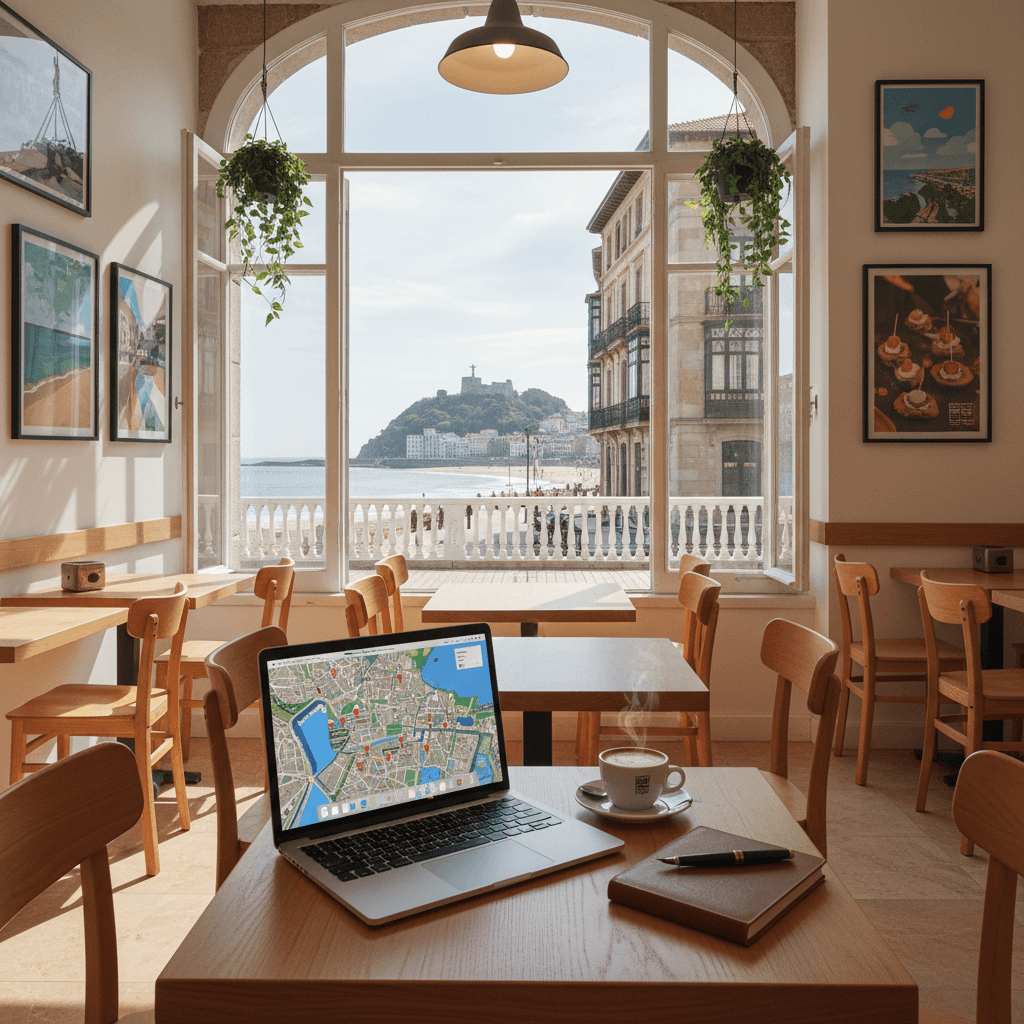
San Sebastián
🇪🇸 Spain
The Culinary Capital with a Coastal Soul
San Sebastián, or Donostia as the locals call it, doesn't feel like your typical digital nomad hub. It lacks the frantic energy of Madrid or the gritty, industrial edge of Berlin. Instead, you get a city that has mastered the art of living well. Nestled in the Basque Country against the Bay of Biscay, it feels like a refined, Belle Époque resort town that decided to become the food capital of the world. It is expensive, sophisticated, and undeniably beautiful.
The vibe here is defined by a slow, intentional rhythm. You'll see locals taking their daily paseo along the crescent moon curve of La Concha Beach, or surfers trekking through the Gros neighborhood toward the waves at Zurriola. People here prioritize quality over quantity in everything, from the silkiness of their cafe con leche to the hours spent hiking the surrounding green hills. It is a place where the "hustle" takes a backseat to the pintxo crawl.
A Tale of Two Beaches
The city's personality is split between its two main sandy stretches. La Concha is the postcard image, framed by elegant white railings and the historic La Perla Spa. It is calm, regal, and perfect for a midday swim to clear your head between deep work sessions. If you want a more rugged, youthful energy, you head across the Urumea River to Zurriola Beach. This is the heart of the nomad and surf scene, where the atmosphere is saltier and the dress code is decidedly more casual.
Between these two lies the Parte Vieja, or Old Town. It is a maze of stone streets packed with the highest concentration of bars you have ever seen. This isn't just a place for tourists; it is the social engine of the city. Expats and locals alike gather here for the evening ritual of moving from one bar to the next, grabbing a single small bite and a glass of cider or Txakoli wine at each stop. It makes meeting people feel effortless and organic.
The Nomad Experience
Living here means trading some of your budget for an unparalleled quality of life. While you might pay more for a small apartment in a classic building, your "backyard" includes some of the best hiking trails in Europe and a food scene that boasts more Michelin stars per square meter than almost anywhere else. It is a healthy, outdoor-centric lifestyle where the air is fresh and the seafood is caught that morning.
- The Social Anchor: Plaza de la Constitución in the Old Town is where everyone eventually ends up for a drink.
- The Work-Life Split: Mornings are for deep work, but 2:00 PM to 4:00 PM is sacred time for a long lunch or a dip in the ocean.
- The Weekend Escape: Santa Clara Island is just a short boat ride or a dedicated swim away, offering a totally different perspective of the skyline.
Don't expect a massive, sprawling metropolis. San Sebastián is compact and walkable. You can cross the entire city center on foot in 20 minutes. This intimacy is exactly what makes it special; after a week, the baristas know your order, and you'll start recognizing the same surfers catching the evening swell. It is a city that invites you to stop rushing and actually enjoy the view.
What Sets It Apart
Most nomad destinations feel like they are trying to cater to you, but San Sebastián remains fiercely itself. The Basque culture is distinct, with its own ancient language and traditions that have nothing to do with the rest of Spain. There is a sense of pride here that is infectious. You aren't just another remote worker in a generic cafe; you are a temporary guest in a city that treats gastronomy like a religion and the sea like a neighbor. If you can swing the higher price tag, the emotional payoff is a sense of belonging in one of the world's most beautiful corners.
The Price of Living in Spain's Culinary Capital
San Sebastián is widely considered one of the most expensive cities in Spain, often rivaling Madrid and Barcelona for the top spot. While the quality of life is undeniably high, you'll feel the pinch in your wallet more than you would in Valencia or Seville. Most digital nomads find that a monthly budget of €2,800 to €3,500 is necessary to live comfortably here, especially if you want to take full advantage of the world class food scene.
The city's prestige and its location between the mountains and the sea mean space is at a premium. You aren't just paying for a roof over your head; you're paying for access to some of the best urban beaches in Europe and a lifestyle that prioritizes leisure and wellness. If you're coming from London or New York, it might feel like a bargain, but compared to the rest of the Iberian Peninsula, it's a luxury destination.
Housing and Rent
Rent will be your biggest hurdle. The market is tight, and short term rentals are heavily regulated. Finding a decent one bedroom apartment in the city center or near the beach usually starts at €1,200 and can easily climb to €1,800 during the peak summer months. Many long term nomads look toward neighborhoods like Gros or Antiguo to find slightly better value, though even these areas have seen prices spike recently.
- One-bedroom apartment (City Center): €1,300 to €1,700 per month
- One-bedroom apartment (Outside Center): €950 to €1,200 per month
- Shared room in a flat: €500 to €750 per month
- Utilities (Electricity, Water, Heating): €120 to €180 per month
Food and Dining
You can spend as little or as much as you want on food, but the temptation to overspend is everywhere. San Sebastián has a higher concentration of Michelin stars per square meter than almost anywhere else, but the real daily cost comes from the pintxo culture. A single pintxo and a small glass of wine (zurrito) will cost you about €4 to €6. A night out hopping between bars in the Old Town can easily run you €40 before you've even had a proper seated dinner.
- Menu del Día (Fixed price lunch): €15 to €25
- Dinner for two at a mid-range restaurant: €60 to €90
- Loaf of fresh bread: €1.50
- Monthly groceries for one: €350 to €450
Transport and Lifestyle
The city is incredibly walkable, which helps offset some of the higher living costs. Most nomads find they rarely need to use the bus system, known as Dbus, though it is efficient and covers the entire city. If you plan on surfing at Zurriola Beach or hiking the trails around Mount Urgull, your entertainment costs will be relatively low, as the best parts of San Sebastián's nature are free to access.
- Monthly gym membership: €40 to €70
- Coworking hot desk: €200 to €300 per month
- Single bus ticket: €1.85 (cheaper with a Mugi card)
- Large beer or glass of cider: €3.50 to €5
Expect to pay a premium for any services or goods in the Casco Viejo (Old Town) and around La Concha. Expats recommend doing your bulk grocery shopping at local markets or supermarkets like Eroski and Mercadona rather than the smaller convenience stores in the tourist zones. While the prices are high, most people living here agree that the safety, cleanliness, and sheer beauty of the city make it a worthwhile investment for a few months of remote work.
For the Food-Obsessed Nomad: Parte Vieja
If you want to be in the thick of the city's legendary culinary scene, the Old Town is your base. It's a maze of narrow streets packed with the highest density of pintxo bars in the world. You'll be steps away from iconic spots like La Cuchara de San Telmo, where the braised beef cheeks are a local rite of passage. It's loud, it's crowded, and the buildings have that classic Belle Epoque charm that looks great on a Zoom background.
- The Vibe: High energy, historic, and smells like grilled seafood and cider.
- Best for: Social butterflies and people who don't mind a bit of street noise at 11 PM.
- Local Tip: Head to Plaza de la Constitución for your morning coffee before the tour groups arrive.
For the Surfing Soul: Gros
Located just across the Urumea River, Gros is the trendy, younger sibling to the Old Town. This is where most digital nomads gravitate because of the proximity to Zurriola Beach. It's the city's primary surf hub, and the atmosphere is noticeably more laid back. You'll find plenty of craft beer bars, organic cafes, and galleries lining the streets behind the Kursaal Congress Centre.
- The Vibe: Surf-chic, hipster-friendly, and slightly more affordable than the center.
- Work Spot: Many nomads post up at the cafes near Plaza Cataluña between surf sessions.
- Must Do: Thursday night is Pintxo Pote in Gros, where you can get a drink and a snack for a few Euros.
For Families and Long-Term Expats: Antiguo
Antiguo sits at the far end of La Concha bay and feels like a self-contained village. It's much quieter than the city center but maintains a very high quality of life. You have Ondarreta Beach right there, which is generally calmer and better for kids than the surf-heavy Zurriola. The main thoroughfare, Calle Matia, is lined with traditional butchers, bakeries, and hardware stores that give it a real community feel.
- The Vibe: Residential, safe, and sophisticated.
- Rent: Expect to pay a premium here, as it's one of the most sought-after postcodes for local families.
- Highlight: Take the vintage funicular up to Monte Igueldo for the best views of the bay.
For Solo Travelers and Luxury Seekers: Centro
The Centro district is where you'll find the grand architecture and high-end shopping. It's the area surrounding the Buen Pastor Cathedral and stretching down to the famous La Concha promenade. If you're looking for a polished experience with easy access to the main bus and train stations, this is it. It's home to the La Perla Spa, a massive thalassotherapy center built during the Belle Epoque that's perfect for a rainy afternoon.
- The Vibe: Upscale, manicured, and very central.
- Housing: Mostly spacious apartments with high ceilings and wrought-iron balconies.
- Practicality: You're within a 10-minute walk of almost everything in the city, making it ideal if you don't want to rely on public transport.
The Cost of Living Reality
San Sebastián is consistently ranked as one of the most expensive cities in Spain. While you get incredible safety and world-class food, your budget will take a bigger hit here than in Valencia or Seville. Most nomads find that a comfortable monthly budget for a one-bedroom apartment in a central area starts around €1,200 to €1,600, depending on the season. A high-end dinner at a Michelin-star spot can easily run €200 per person, but you can still eat well on a budget by sticking to the local pintxo bars where a small plate usually costs between €3 and €6.
Connectivity in the Culinary Capital
San Sebastián isn't just about Michelin stars and surfboards; it's a surprisingly functional hub for remote work if you know where to plant your laptop. The city's infrastructure is modern and reliable, reflecting its status as a premium European destination. You won't struggle with stability here, but you might struggle with the temptation to close your laptop and head to the beach.
Fiber optic internet is available in many areas of the city, with speeds typically ranging from 100-300 Mbps depending on the provider and location. Average speeds reported are around 50-100 Mbps. Even the older buildings in the Parte Vieja have been retrofitted, though the thick stone walls can sometimes play havoc with internal Wi-Fi signals. If you're relying on public Wi-Fi, the "Donostia Kultura" network covers many public squares and libraries, though it's better for checking emails than jumping on a high stakes Zoom call.
For mobile data, Movistar and Orange offer the most consistent 5G coverage throughout the city. If you're staying for a month or more, grab a local SIM or use an eSIM provider like Holafly or Airalo. Expect to pay around €15 to €20 for a generous data package that will keep you connected while you're hiking up Monte Urgull or scouting for the best pintxos.
Coworking Spaces and Hot Desks
The coworking scene in San Sebastián is boutique rather than corporate. You won't find massive WeWork complexes here. Instead, the spaces are community focused and often integrated into the city's creative hubs. Most spaces operate from 9:00 to 19:00, so if you're working for a US based company, you'll need to confirm 24/7 access availability.
- Impact Hub Donostia: Located in the Tabakalera building, this is the most iconic spot for nomads. It's a massive cultural center with a creative atmosphere. Please verify with Impact Hub directly for current daily and monthly pass prices.
- The Social Hub: Located at 11 Otamendi Anaiak Kalea, this is a hybrid hotel and coworking space. It's popular with international travelers and offers a more social, high energy vibe. Please verify current pricing with The Social Hub directly.
- Keler Espazioa: While technically a multipurpose event space, it's a great spot for those who want a modern, open environment. It's often used by local startups and freelancers looking for a professional backdrop.
The Laptop Cafe Culture
San Sebastián takes its coffee and social time seriously. While "laptop lounging" isn't as prevalent as it is in Berlin or Chiang Mai, the surf neighborhood of Gros is your best bet for a work friendly cafe. The vibe here is younger and more accustomed to the digital nomad lifestyle.
- Sakona Coffee Roasters (online only): While the physical cafe has closed, you can still order their specialty roasted coffee online. The owner, Javier Garcia, a five-time Spanish barista champion, continues roasting high-quality beans.
- Simona Cake Shop: A quiet, bright spot with reliable Wi-Fi and plenty of power outlets. It's a favorite for expats who need a few hours of focus in a relaxed setting.
- Old Town Coffee: Located near the center, this spot has a dedicated following. The staff is friendly toward remote workers as long as you're not camping out on a single espresso during the lunch rush.
Practical Tips for Remote Workers
The biggest hurdle for nomads in San Sebastián isn't the internet speed, it's the cost of living and the local schedule. Many businesses still observe a midday break, though coworking spaces and larger cafes stay open. If you need a dead silent environment for recording or intense meetings, the Carlos Santamaria Library at the University of the Basque Country is an excellent, modern resource that locals often recommend.
Most nomads find that the best way to balance work and life here is to front load the day. Start early, hit a coworking space in the morning, and leave your afternoons open for a surf at Zurriola or a hike. The city is small enough that you can get from your desk to the water in under 10 minutes, making it one of the best locations in Spain for a true work life balance.
Keeping it Safe in San Se
San Sebastián is easily one of the safest cities you'll encounter in Spain. While larger hubs like Barcelona or Madrid have notorious reputations for pickpocketing in tourist zones, Donostia (as the locals call it) feels more like a relaxed coastal village than a major urban center. You can walk home alone at 3:00 AM through the Old Town or along the promenade without much worry. The local culture is respectful and family oriented, which translates to a very low violent crime rate.
The biggest "threat" here is actually the ocean. If you're surfing at Zurriola Beach, pay attention to the flags and local warnings. The Bay of Biscay can get moody, and the currents are stronger than they look. If the red flag is up, stay on the sand. On the streets, your main concern is petty theft in crowded pintxo bars. It's easy to get distracted by a plate of gambas and leave your phone on the counter or your bag hanging off a stool. Keep your belongings zipped up and within sight, and you'll likely never have an issue.
Solo female travelers generally find the city very welcoming. The social scene is centered around food and community rather than aggressive nightlife, so the "creep factor" in bars is significantly lower than in many other European cities. If you ever feel uncomfortable, duck into any pharmacy or cafe; the locals are protective of their city's reputation and are usually happy to help.
Healthcare and Medical Services
Spain's healthcare system is world class, and the Basque Country specifically has some of the highest standards in the nation. As a digital nomad, you won't be able to access the public system for free unless you're paying into the Spanish social security system via a work contract or the Digital Nomad Visa. For everyone else, private insurance is the way to go.
Hospital Universitario Donostia is the main public facility, but for those with private insurance like Sanitas or Mapfre, Quirónsalud Donostia is often the preferred choice. It's modern, efficient, and many of the specialists speak excellent English. You can usually get a non urgent appointment within a few days, and emergency room wait times are far shorter than what you'd experience in the US or UK.
- Emergency Number: Dial 112 for all emergencies (police, fire, or medical). Operators usually speak English.
- Pharmacies: Look for the glowing green crosses. Pharmacies (farmacias) in San Sebastián are highly regulated and can provide professional advice for minor ailments.
- Farmacia de Guardia: At least one pharmacy in every neighborhood stays open 24 hours on a rotating schedule. Check the list posted on the door of any closed pharmacy to find the nearest open one.
- Average Private Consultation: Expect to pay between €80 and €120 for a visit to a private specialist if you don't have a local insurance plan.
Practical Wellness Tips
The city's obsession with health is contagious. You'll see locals of all ages swimming in the bay year round, even when the water is bracingly cold. If you're looking for a wellness day, La Perla Spa right on La Concha beach is a local institution. It uses filtered seawater in its pools and has been a fixture of the city since the Belle Epoque. It's the perfect place to reset after a long week of remote work.
Tap water in San Sebastián is perfectly safe to drink and actually tastes quite good. You don't need to waste money or plastic on bottled water. Just carry a reusable bottle and fill up at the many public fountains scattered around the city, especially near the parks and beaches.
Navigating the Pearl of the Cantabrian
San Sebastián is a compact city where the layout encourages you to slow down. Most nomads find that their own two feet are the most reliable mode of transport, especially since the best pintxo bars are tucked away in pedestrianized zones where cars can't reach. You can walk from the surf breaks at Zurriola to the posh boutiques of the Centro in about 20 minutes.
When you need to cover more ground or head to the outer neighborhoods like Antigua, the local infrastructure is top tier. The city is remarkably bike friendly and the bus system is one of the most punctual in Spain. You won't need a car unless you're planning weekend missions into the Pyrenees or across the border to Biarritz.
The Dbus Network
The municipal bus system, known as Dbus, is the backbone of local transit. It's clean, efficient, and runs frequently until around 11:30 PM. On weekends, the "Gautxori" night buses take over, ensuring you can get home safely after a late session at Bataplán Disco.
- Single Ticket: Costs 1.85 EUR if you pay with cash or contactless on board.
- Mugi Card: This is the local transport card and it's a lifesaver. It drops the per-trip price to around 0.95 EUR and works on buses and local trains.
- Top Tip: You can buy and top up Mugi cards at many "Tabacos" shops and newsstands throughout the city.
Cycling and Dbizi
The city invested heavily in "bidegorris," which are dedicated red bike lanes that crisscross the entire metropolitan area. It's often faster to bike than to take the bus during the summer rush. The city's electric bike sharing scheme, Dbizi, is perfect for getting up the steeper hills or quickly reaching La Concha beach from the Gros district.
- Annual Membership: Around 39 EUR for mechanical bikes, or 89 EUR for electric bikes, which is great if you're staying for a few months.
- Occasional Use: You can sign up via the app for short term access, usually costing a few Euros per 30 minute chunk.
- Terrain: While the city center is flat, the electric assist on the Dbizi bikes is a godsend if your rental is up toward Monte Igueldo or Aiete.
Regional Trains: Euskotren and RENFE
For trips outside the city limits, you'll likely use the Euskotren, affectionately called "El Topo" (The Mole) by locals because so much of it is underground. This narrow gauge railway connects San Sebastián to nearby coastal towns and even runs all the way to Hendaye, France, where you can catch TGV high speed trains to Paris.
The main RENFE station (Estación del Norte) handles the long distance lines. If you're heading to Madrid or Barcelona, this is where you'll start. The ride to Madrid takes about 5 hours, though high speed upgrades are constantly in the works to shorten that window.
Walking the Promenades
Living here means embracing the "paseo." The walk along La Concha is legendary, but don't overlook the stretch from the Kursaal building to the end of Zurriola beach. It's the social heart of the city. Expats often joke that you don't need a gym membership because you'll easily clock 15,000 steps a day just by meeting friends for coffee and wandering through the Old Town. Just bring a sturdy umbrella; the Basque country is famous for its "sirimiri," a fine, persistent mist that can soak you through before you realize it's raining.
Taxis and Ridesharing
Don't expect to rely on Uber or Cabify here. The local taxi industry remains dominant and highly regulated. You'll find taxi ranks at major hubs like the bus station and near the Maria Cristina hotel. They are reliable and use meters, but they aren't cheap. A cross town trip will usually run you between 10 EUR and 15 EUR. Most locals only use them for airport runs or when the rain gets particularly heavy.
The Dual Identity: Euskara and Spanish
In San Sebastián, you aren't just in Spain; you are in the heart of the Basque Country, or Euskadi. You'll notice this the moment you step off the bus or train and see signs written in a language that looks nothing like Spanish, French, or Latin. That's Euskara. It's one of the oldest languages in Europe and a massive point of pride for locals. While everyone speaks Spanish fluently, the local soul is tied to Basque.
Most nomads find that Spanish is the primary tool for daily life. If you have a decent grasp of Castellano, you'll navigate the shops in the Antiguo neighborhood or order a round of drinks in Gros without any issues. However, learning a few words of Euskara goes a long way. Dropping a "Kaixo" (hello) or "Agur" (goodbye) instead of "Hola" or "Adios" changes the vibe of an interaction immediately. It shows you aren't just another tourist passing through, but someone who respects the local identity.
English Proficiency and the Digital Nomad Gap
Don't expect everyone to speak English. In the high end boutiques of the Centro or the Michelin starred spots near Concha Beach, you'll find plenty of English speakers. However, in the traditional tabernas of the Casco Viejo, the staff might only speak Spanish and Basque. It's a city where you need to be comfortable with a bit of miming and a translation app on your phone if your Spanish is rusty.
The younger generation and the surfing community around Zurriola Beach generally have better English skills. If you're hanging out at popular nomad haunts or coworking spots, you'll find a multilingual crowd. Still, if you plan on staying for more than a month, enrolling in a basic Spanish course is a smart move to actually integrate into the social scene rather than staying in the expat bubble.
Essential Basque Vocabulary for Your Pocket
- Kaixo: Hello. Use this everywhere from cafes to elevators.
- Eskerrik asko: Thank you. This is the most important word to learn.
- Mesedez: Please.
- Ez: No.
- Bai: Yes.
- Pintxo: The local version of tapas. You'll say this dozens of times a day.
- Zurito: A small beer, perfect for a pintxo crawl.
- Txakoli: The local sparkling white wine, pronounced "cha-ko-lee."
Communication Etiquette and Social Cues
Basque people are famously direct. Don't mistake a lack of small talk for rudeness. In San Sebastián, communication is often efficient and honest. When you're in the Old Town, the etiquette for ordering pintxos is to be assertive but polite. You don't wait for a waiter to approach you; you catch their eye, give your order clearly, and trust the system. They often don't write things down, yet they rarely miss a beat when it's time to pay the cuenta.
Socializing here revolves around the "txikiteo", which is essentially a pub crawl but for wine and small bites. The communication style is loud, lively, and communal. If you're invited to join a group, expect a lot of overlapping conversation. It's a high energy environment where being soft spoken might mean you don't get a word in, so don't be afraid to raise your volume a notch to match the room.
Practical Tools for Staying Connected
For navigating the city and translating menus, Google Translate handles Spanish perfectly, but its Basque translations can be hit or miss. For more accurate Basque nuances, locals sometimes use Elhuyar. For staying in touch with new friends, WhatsApp is the undisputed king. Whether you're joining a local hiking group or a surf meetup at Zurriola, you'll need a local SIM card or an eSIM to keep the messages flowing. Orange and Vodafone have reliable coverage throughout the city, including the hilly outskirts like Mount Igueldo.
The Seasonal Vibe
San Sebastián doesn't follow the typical Mediterranean script. Since it sits on the Bay of Biscay in Basque Country, you're looking at a maritime climate that stays lush and green because, frankly, it rains quite a bit. You'll want to pack a solid raincoat regardless of when you visit, but the trade-off is a city that never feels scorched or dusty.
The peak season runs from June through August. This is when the city is at its most electric, with surfers crowding Zurriola Beach and the sun staying up until nearly 10:00 PM. Temperatures usually hover around 22°C to 25°C (72°F to 77°F), which is perfect for hiking Monte Urgull without melting. Just keep in mind that accommodation prices skyrocket during these months, and the Old Town (Parte Vieja) can feel a bit tight when the tourist crowds peak in August.
The Sweet Spot: Shoulder Season
Most long term nomads prefer September and October. The Atlantic water is at its warmest after soaking up the summer sun, making it the best time for swimming at La Concha. September also hosts the famous San Sebastián International Film Festival, so the city gets a sophisticated, Hollywood-on-the-coast energy. You'll still get plenty of blue-sky days, but the frantic summer pace cools down significantly.
Spring, specifically May and June, is another winner. The flowers in Alderdi Eder Park are in full bloom, and the sidewalk cafes start filling up again. It's less crowded than autumn, though the water is still a bit too brisk for anyone without a thick wetsuit. Expect daytime highs around 18°C to 20°C (64°F to 68°F).
Winter and the "Sirimiri"
From November through March, the city enters its quietest phase. This is when you'll experience the "sirimiri," a fine, persistent Basque drizzle that defines the region. It rarely gets freezing, with lows staying around 8°C (46°F), but the humidity makes the chill sink into your bones.
While it's not beach weather, winter is arguably the best time for foodies. The cider houses (Sagardotegis) in nearby Astigarraga open their doors from January to April, and the pintxo bars are filled with locals rather than tour groups. If you're coming here to work and eat rather than tan, the lower winter rental rates make this a very savvy time to visit.
Quick Weather Breakdown
- Warmest Months: July and August, averaging 24°C (75°F).
- Rainiest Period: November to January, so bring a high quality umbrella that can handle coastal wind.
- Best Surf Conditions: September to November for consistent swells and manageable winds.
- Swimming Season: July through late September, when water temps hit about 21°C (70°F).
If you're planning your trip around specific events, don't miss the Tamborrada on January 20th. It's a 24 hour drum festival that is loud, chaotic, and deeply Basque. For a summer vibe, the Semana Grande in mid-August features nightly international fireworks competitions over the bay that are truly world class.
Getting Around the City
San Sebastián is remarkably compact, making it one of the most walkable cities in Spain. Most nomads find they rarely need a car unless they are heading into the Pyrenees or across the border to Biarritz. For daily commutes, the city is crisscrossed by an excellent network of bidegorris, or red bike paths. You can sign up for Dbizi, the municipal electric bike sharing service, which is a lifesaver given the hilly terrain around neighborhoods like Antiguo.
For longer distances, the Dbus system is reliable and clean. You should grab a Mugi card at any Tabacos shop or newsstand. It costs 5 Euros and significantly drops the price of each journey compared to paying cash. This card also works on the Euskotren, the local train affectionately called El Topo, which connects the city center to the surfing beaches of Zarautz and the French border at Hendaye.
Staying Connected
Internet speeds here are generally fantastic, with fiber optic being the standard in most apartments. You can expect speeds between 300 Mbps and 1 Gbps in the city center. If you are looking for a dedicated desk, Impact Hub in the Tabakalera building is a favorite for its creative atmosphere and high ceilings. Another solid option is The Social Hub, which caters specifically to the remote work crowd and offers flexible daily or monthly passes.
For mobile data, don't rely on roaming if you are staying for more than a week. Pick up a local SIM card from Orange or Vodafone. A prepaid plan with at least 50GB of data usually costs around 15 to 20 Euros per month. Just make sure you bring your passport to the store, as Spanish law requires ID registration for all SIM cards.
Budgeting for the Basque Country
There is no sugarcoating it; San Sebastián is one of the most expensive cities in Spain. Rent will be your biggest hurdle. A decent one bedroom apartment in a central area like Gros or Centro will likely run you between 1,200 and 1,600 Euros per month. If you are on a tighter budget, look toward Egia or Loiola, where prices are slightly more manageable and the vibe is more local.
- Monthly Rent (1-bedroom): 1,100 to 1,700 Euros
- Coworking Desk: 150 to 250 Euros per month
- Daily Menu (Menú del Día): 15 to 22 Euros
- Craft Beer or Glass of Wine: 3 to 5 Euros
- Monthly Gym Membership: 40 to 60 Euros
Language and Local Etiquette
While everyone speaks Spanish, the local language is Euskara. You'll see it on every street sign and hear it in the bars. You don't need to be fluent, but learning a few words like Kaixo (Hello) and Eskerrik asko (Thank you) goes a long way with the locals. English is widely understood in the tourism and tech sectors, but having a functional level of Spanish is necessary for things like signing a rental contract or visiting the doctor.
The social scene revolves around the Pintxo Crawl. Unlike the rest of Spain, where tapas might be free with a drink, here you pay for each individual pintxo. The etiquette is to have one drink and one snack, then move on to the next bar. It's a fast paced way to eat, and it is how most people kick off their evenings before a late dinner around 9:00 PM or 10:00 PM.
Safety and Health
The city is incredibly safe, even late at night. Petty theft exists but is much less common than in Barcelona or Madrid. For healthcare, the Osakidetza (Basque Health Service) is top tier. If you are on a Digital Nomad Visa, you'll eventually integrate into this system, but initially, most expats carry private insurance like Sanitas or Adeslas to meet visa requirements and ensure faster access to English speaking specialists.
Need visa and immigration info for Spain?
🇪🇸 View Spain Country GuideEasy Landing
Settle in, no stress