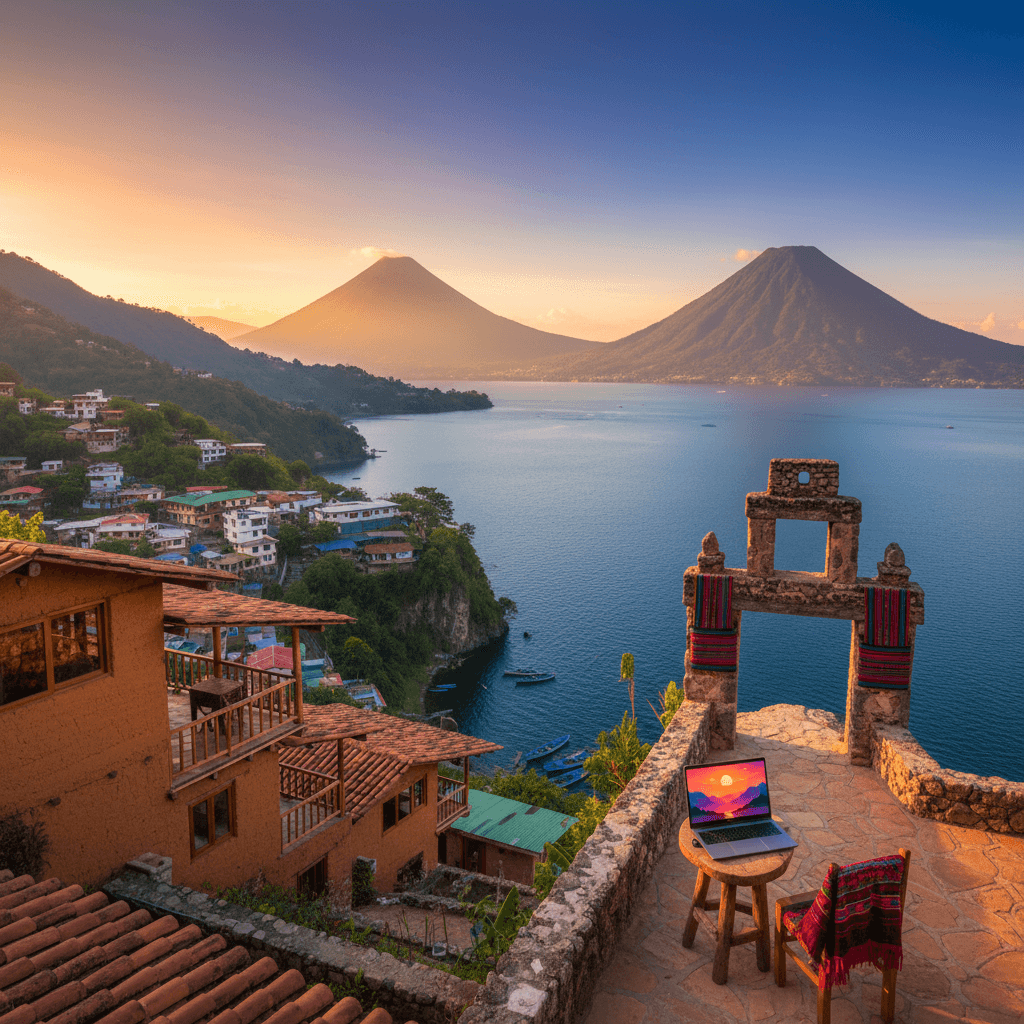
San Marcos La Laguna
🇬🇹 Guatemala
The Spiritual Heart of Lake Atitlán
San Marcos La Laguna isn't just a town; it’s a specific frequency. Tucked against the steep volcanic walls of Lake Atitlán, this is the undisputed spiritual capital of Central America. While neighboring San Pedro is for the party crowd and Panajachel is for the weekend shoppers, San Marcos is where you go to slow down, drop out, and perhaps reconstruct your entire personality. It’s a place where "just being" is the primary occupation, and the local calendar is dictated more by the phase of the moon than the standard work week.
The town’s physical layout mirrors its internal vibe. A narrow, winding stone path known as the Hippie Highway serves as the main artery, connecting the boat docks to the upper village. Walking this path, you’ll pass a dense concentration of yoga shalas, cacao dispensaries, and posters for workshops ranging from lucid dreaming to tantric breathwork. It’s a sensory experience of incense, gardenia, and the distant sound of handpans.
The Nomad Experience
For digital nomads, San Marcos is a beautiful paradox. You’ll find some of the most inspiring "office" views in the world, often looking directly across the water at the San Pedro, Tolimán, and Atitlán volcanoes. However, the infrastructure can be temperamental. Power outages happen, and the WiFi often decides to take its own meditation break. Most successful nomads here treat it as a "deep work" retreat rather than a place for back to back Zoom calls, always keeping a Tigo or Claro SIM card ready as a hotspot backup.
The community is a mix of Maya families who have lived here for generations and a rotating cast of "seekers" and expats. This creates a unique social fabric where you might spend your morning at a traditional Maya cooking class and your afternoon at an ecstatic dance event. While the town is incredibly welcoming, seasoned travelers note the importance of staying grounded and respecting local customs, as the "spiritual tourism" bubble can sometimes feel disconnected from the reality of the local Indigenous community.
Living and Costs
Life here is affordable, though prices have crept up as its reputation grows. Most nomads aim for a monthly budget between $1,200 and $1,800 to live comfortably. This allows for a private apartment, frequent cafe meals, and a steady stream of workshops or yoga passes. If you’re on a tighter budget, sticking to local staples like pupusas and pepián can keep your monthly spend closer to $800.
- Lakeside Living: This is where you’ll find spots like Lush Atitlan and Eagle’s Nest. It’s pricier and can get noisy with boat traffic, but the proximity to the water is unbeatable.
- The Upper Village: Moving uphill toward the Pyramid of the Moon offers a quieter, more authentic experience. The walks are steeper, but the rent is often lower, and the views of the lake are more expansive.
- Daily Rhythms: Most people start their day with a swim at the Reserva Natural del Cerro Tzankujil (the local nature reserve) before heading to Shambala Café or PYRIT Yoga & Café to get some work done.
Why It Sticks
What makes San Marcos different from other nomad hubs like Canggu or Tulum is the lack of pretension regarding "hustle culture." No one cares about your startup here; they care about your morning meditation. Travelers often arrive for a week and stay for three months, caught in the "Atitlán Vortex." It’s a town that rewards the curious and the patient. If you can handle the occasional cold shower and inconsistent internet, you’ll find a level of peace and creative clarity that is increasingly rare in the digital world.
The Price of Paradise
Living in San Marcos La Laguna is a study in balance. While it remains more affordable than the bustling hub of Panajachel or the backpacker party scene in San Pedro, you pay a "spiritual premium" for the wellness lifestyle. Most solo nomads find they can live comfortably on $1,200 to $1,800 USD per month, though budget travelers often squeeze by on $800 if they stick to local markets and basic rooms.
Cash is the undisputed king here. While you might find a few high end retreats that take cards, you will mostly be dealing in Guatemalan Quetzales (Q). Expats recommend making a weekly "ATM run" to Panajachel, as the single ATM in San Marcos is notoriously unreliable and often runs dry just when the weekend crowds arrive.
Monthly Budget Tiers
- The Budget Nomad ($800 to $1,200): You are likely renting a basic room uphill, eating street food like pupusas or tostadas, and keeping your cacao ceremonies to a minimum.
- The Mid Range Resident ($1,200 to $1,800): This covers a private one bedroom apartment with a functional kitchen, daily visits to cafes like Shambala or PYRIT, and a few yoga classes per week.
- The High End Seeker ($1,800+): You are staying in a luxury retreat like Eagle's Nest or Lush Atitlan, eating organic vegan meals for every dinner, and participating in multiple workshops or private healings.
Housing and Utilities
Rent is your biggest variable. Because San Marcos is small, the market moves fast. Most long term residents skip Airbnb and head straight to the San Marcos Community Facebook group to find listings. You can expect to pay anywhere from Q2,000 to Q5,000 ($260 to $650 USD) for a decent studio or small apartment. Prices fluctuate based on how many hills you are willing to climb and whether you want a view of the volcanoes.
Utilities are usually included in short term rentals, but if you are staying long term, keep an eye on your gas and electricity. Propane tanks for hot water and cooking are the norm. WiFi is a separate beast; while many cafes offer it for the price of a coffee, dedicated nomads often pay Q30 to Q50 per day to work from spots with more stable connections. Always have a Tigo or Claro SIM card as a backup, as the local grid can be temperamental during the rainy season.
Food and Dining
Eating in San Marcos is a delight if you love plant based food. Local Maya staples like beans, rice, and fresh tortillas are incredibly cheap, costing between Q20 and Q40 ($2.50 to $5) per meal. If you prefer the international vegan cafes along the Hippie Highway, expect to pay Q50 to Q80 ($6.50 to $10) for a hearty bowl or a specialty sandwich.
- Cacao or Specialty Coffee: Q30 to Q50
- Street Food Snack: Q10 to Q20
- Dinner at an upscale retreat: Q100+ ($13+)
- Weekly Grocery Haul (Local Market): Q200 to Q300
Transportation and Activities
Since the town is almost entirely walkable, your transport costs will mostly involve leaving it. Public lanchas (boats) are the lifeblood of the lake. A one way trip to Panajachel or San Pedro costs Q10 to Q20 for locals and savvy travelers. If you are heading to the airport in Guatemala City, a shared shuttle from Panajachel will run you about Q100 to Q200.
For your "soul work," budget for the extras. A drop in yoga class usually costs around Q60 to Q100, while a full cacao ceremony or an ecstatic dance event can range from Q100 to Q250. These costs add up quickly, so many nomads choose to buy weekly or monthly passes at their favorite centers to keep the budget in check.
The Lakeside (The Digital Nomad Hub)
If you're coming to San Marcos to work, you'll likely spend most of your time near the water. This area stretches from the main public docks toward the western edges of town. It is home to the most reliable work spots like Shambala Café and PYRIT Yoga & Café, where you can grab a coffee for Q30 to Q50 and settle in for a few hours. Nomads often congregate at El Dragón on designated digital nomad days to take advantage of the lakeside breeze and communal energy.
Living here means you're steps away from the lanchas, making it easy to hop to San Pedro or Panajachel for supplies. Rent is higher in this prime real estate, often ranging from $450 to $650 USD for a private studio with a kitchen. While it's the most convenient spot for swimming and socializing, it can get noisy during peak tourist season when the day-trippers arrive. Most professional nomads find the trade-off worth it for the proximity to high-speed routers and the best vegan eats.
Uphill & The Hippie Highway (The Expat Core)
Long-term expats and those deep into the wellness scene usually head "up the hill" along the main stone path known as the Hippie Highway. This is the heart of the town's spiritual identity, home to the Pyramid of the Moon and various meditation centers. The vibe here is noticeably quieter and more focused on personal growth than the lakeside social scene.
Expats recommend this area for its community feel and better value on long-term rentals. You can find basic but charming apartments for Q2,000 to Q3,500 per month if you're willing to walk the steep inclines. The infrastructure can be a bit more temperamental here; power outages happen, and the WiFi might dip during a heavy afternoon rain. It is the perfect spot if your priority is being close to cacao ceremonies, ecstatic dance, and your daily yoga practice.
The Mountain Edges (Families & Slow Travelers)
Families and travelers looking for a truly immersive experience tend to gravitate toward the outskirts and higher mountain edges. These areas offer the most authentic connection to the local Kaqchikel Maya community. You'll find larger homes here that can accommodate children, often with gardens and incredible views of the volcanoes across the water.
Living on the edges requires a bit of stamina. The walks are steep, and you'll be further from the main grocery stalls and cafes. However, it's the quietest part of San Marcos, away from the late-night music of the retreats. Families often appreciate the proximity to nature trails and waterfalls. Just keep in mind that you'll want to be home by dark or carry a good flashlight, as these paths aren't well-lit and can be tricky to navigate at night.
The Village Center (Solo Travelers)
Solo travelers usually thrive right in the thick of the village center. This isn't a "neighborhood" in the traditional sense, but rather the cluster of hostels and small guesthouses near the central basketball court and pharmacies. It's the best place to meet people quickly, as you're never more than a two-minute walk from a street food stall selling Q20 Maya staples or a group heading out for a sunrise hike.
Safety is a major draw here for those traveling alone. Staying in the center means you're always around people and never have to walk down isolated paths at night. While it lacks the "retreat" feel of the uphill areas, it's the most practical choice for anyone who wants to be at the center of the social action without paying the premium prices of the luxury lakeside resorts.
- Budget Solo Stay: $800 to $1,200 per month in the Village Center.
- Mid-range Nomad Life: $1,200 to $1,800 per month Lakeside.
- Upscale Wellness Retreat: $1,800+ per month Uphill.
Making it Work in the "Hippie Capital"
Working from San Marcos requires a shift in mindset. You aren't here for high speed fiber optics or sleek, glass walled offices. Most nomads describe the internet as decent for Guatemala, but it's prone to the occasional afternoon slump or power flicker. You will be able to handle Zoom calls and Netflix most days, but having a backup plan is non negotiable if your job depends on constant uptime.
The town lacks a formal, corporate style coworking space. Instead, the work culture revolves around garden cafes and lakeside porches. Most people find that a mix of a strong local SIM card and a few reliable cafe "offices" is the best way to stay productive while soaking in the volcano views.
Top Spots to Plug In
Since there isn't a dedicated hub, these spots serve as the unofficial headquarters for the town's digital nomad community:
- Shambala Café / PYRIT Yoga & Café: This is the go to for many. It has a cozy, unique vibe and usually charges a daily fee of Q30 to Q50, which typically includes your coffee. It is one of the more reliable spots for a stable connection and a quiet corner.
- El Dragón: If you need a view to keep you motivated, head here. They host digital nomad days right by the lake, making it easy to transition from a spreadsheet to a swim.
- Lush Atitlan: While primarily a hotel, their common areas are often frequented by expats looking for a serene environment away from the main "Hippie Highway" foot traffic.
Mobile Data and Connectivity
Do not rely solely on your Airbnb's WiFi. Even the best routers in town can struggle during a heavy rainstorm. Expats recommend setting up a hotspot immediately upon arrival. You won't find major telco stores in San Marcos, so handle your tech needs in Panajachel before taking the boat over.
- Primary Providers: Tigo and Claro are the two main players. Tigo generally has better coverage around the lake.
- Cost: A starter SIM card costs between Q50 and Q100. You can get a 10GB data plan for about Q100.
- Speed: 3G and 4G signals are surprisingly reliable backups when the local WiFi drops. You can top up your balance easily using the provider's app or at small tiendas in town.
Practical Tips for Remote Workers
If you are planning a longer stay, scour the San Marcos Facebook groups. Many long term rentals don't advertise on Airbnb, and you can often find houses uphill that have specifically installed better internet packages for remote workers. Rent for a decent studio or one bedroom with a kitchen usually runs between Q2,000 and Q5,000 per month.
Try to schedule your most bandwidth heavy tasks for the morning. The weather is usually clearer, and the town's infrastructure seems to hold up better before the afternoon rains or the evening peak usage. If you have a critical meeting that cannot fail, it is often worth taking a Q10 to Q20 lancha over to San Pedro or Panajachel, where the infrastructure is slightly more robust.
Lastly, remember that San Marcos runs on "lake time." If the internet goes out across the whole village, don't stress. It's usually a sign to close the laptop, grab a cacao, and head to the docks for a sunset swim with the rest of the community.
Staying Safe in the Wellness Hub
San Marcos is generally considered one of the safer spots around Lake Atitlan, largely due to its tight-knit community and the spiritual focus of the town. You'll find the atmosphere relaxed, with Maya locals and international seekers sharing the narrow paths of the "Hippie Highway." Most nomads feel comfortable walking the main corridor during the day, where the biggest risk is usually a twisted ankle on the uneven stones rather than anything more sinister.
That said, tourism inequality is a reality here. Expats recommend keeping a low profile with expensive gear and avoiding the outskirts of town or isolated trails after dark. While the central areas are well-traveled, the lighting gets patchy once you head uphill toward the mountain edges. If you're staying in a remote rental, it's smarter to head home before the sun sets or arrange a local contact to walk with you.
- Local Scams: Watch out for overpricing in the more tourist-heavy cafes. Always confirm the price of a lancha or a private ceremony upfront.
- Emergency Contacts: Dial 110 for the National Police or 155 for the Tourist Police (POLITUR).
- Night Safety: Stick to the main paths near the docks and the central yoga schools. Avoid the "Cerro de la Cruz" trail or other mountain hikes alone or late in the afternoon.
Healthcare and Medical Realities
Medical facilities in San Marcos are limited to basic needs. You'll find a few small pharmacies along the main street that stock standard over the counter meds, bandages, and basic antibiotics. For anything beyond a stomach bug or a light scrape, you'll need to leave town. Most travelers head to Panajachel for private clinics or better-equipped pharmacies.
The "Atitlan Belly" is the most common health hurdle for nomads. Even in high-end vegan cafes, water hygiene can vary. Stick to bottled or filtered water, and be cautious with raw salads if you've just arrived. If you do get sick, local pharmacists are very experienced in treating parasites and typical lake-related ailments.
Finding Care and Wellness
For serious emergencies or specialized care, Guatemala City is your best bet, though it's a 3 to 4 hour journey. In a pinch, the fastest way to reach help is taking a private lancha to Panajachel, which takes about 20 minutes, rather than trying to navigate the winding roads by car.
- Pharmacies: Farmacia San Marcos is the go-to for essentials. They can often recommend a local doctor for house calls if you're too sick to move.
- Holistic Healing: Since this is a wellness hub, many nomads use traditional Maya massages or the temazcal (sauna) at Kula Maya for recovery and detox.
- Dental and Vision: You won't find these services in San Marcos. Plan a day trip to San Pedro or Panajachel for dental checkups.
Most long-term residents suggest having a solid travel insurance policy that includes medical evacuation. Since the village is pedestrian-only in many parts, getting to a hospital in an emergency requires coordination, so it's best to have your logistics and insurance details saved offline on your phone.
The Walkable Heart of Wellness
San Marcos is one of the few places where you can truly ditch the wheels. The town is built around a narrow, pedestrian only path known locally as the Hippie Highway. This stone walkway connects the main boat dock to the center of town, and it's where you'll spend most of your time. Because the core is so compact, you can get from a morning meditation session to your favorite lakefront cafe in under ten minutes on foot.
Be prepared for a workout if you're staying away from the water. The geography of San Marcos rises sharply into the mountains. While the lakeside areas are flat and easy to navigate, many long term rentals and popular spots like Eagle’s Nest or Pyramid of the Moon require a steep uphill trek. If you aren't a fan of stairs, aim for housing closer to the Lush Atitlan area.
Mastering the Lancha System
Since there are no roads connecting San Marcos to the major hub of Panajachel, the lake's public boat system, or lanchas, will be your primary mode of regional transport. These public commuters run every 15 to 20 minutes from the main dock. They operate on a hop on, hop off basis, moving counterclockwise around the lake.
- To Panajachel: Expect a 30 to 45 minute ride. This is your route for major grocery hauls, banking, or buying SIM cards at the Tigo or Claro stores.
- To San Pedro: A quick 10 to 15 minute hop across the water. Many nomads head here for a change of pace or more traditional nightlife.
- Pricing: Fares usually range between Q10 and Q25 ($1.30 to $3.25 USD) depending on the distance. Locals often pay less, but for travelers, the prices are generally fixed.
- Schedule: Boats start around 6:30 AM and usually stop running by 5:30 PM or 6:00 PM. If you miss the last public boat, you'll have to hire a private lancha, which can cost Q150 to Q300.
Tuk-Tuks and Local Rides
Unlike the busier streets of San Pedro or Panajachel, tuk-tuks are relatively scarce in San Marcos because the main paths are too narrow for them. You'll find a few waiting at the top of the hill near the basketball court or the main road entrance. They are useful if you're arriving with heavy luggage or moving into an uphill apartment. A short ride within the village boundaries should cost about Q5 to Q10.
Don't count on ride hailing apps here. Uber doesn't exist in the village, and while you might find a driver in Panajachel, they won't be able to reach you in San Marcos. For specialized trips, nomads often use the San Marcos Community Facebook group to find private drivers or shuttle recommendations.
Arriving from the Airport
Getting to San Marcos from La Aurora International Airport (GUA) in Guatemala City is a two step process. Most travelers take a shared shuttle or a private car to Panajachel first. This drive takes about 3 to 4 hours and costs between Q100 and Q200 ($13 to $26 USD) for a shared van.
Once you arrive at the Tzanjuyú dock in Panajachel, you'll transfer to a lancha for the final leg to San Marcos. If you're arriving late at night, it's smarter to stay one night in Antigua or Panajachel rather than trying to navigate the lake after dark, as public boats stop running and the winding mountain roads can be tricky in the rain.
Cycling and Scooters
While some expats rent scooters to explore the road toward San Juan or Santa Clara, it isn't the norm for daily life in San Marcos. The terrain is often too vertical or too narrow for bikes to be practical. If you're itching for a ride, you can sometimes find rentals through local cafes or Facebook listings for roughly Q50 ($6.50 USD) per day, but most nomads find that a sturdy pair of walking shoes is a much better investment.
The Linguistic Landscape
In San Marcos, your communication experience depends entirely on which path you walk. Down the narrow alleys of the "Hippie Highway," English is the unofficial lingua franca. Because the town attracts a global crowd of yoga teachers, healers, and spiritual seekers, you can easily order a vegan latte or book a reiki session without knowing a word of Spanish. However, this creates a bit of a bubble that most long term nomads suggest popping as soon as possible.
The soul of the town belongs to the Kaqchikel Maya people. While Spanish is the primary language for trade and government, you will hear Kaqchikel spoken in the doorsteps of family homes and at the local markets. Most locals are bilingual, though their Spanish might be a second language just like yours. Learning a few words of Kaqchikel, like "Maltiox" (thank you), goes a long way in building genuine rapport with the community that hosts you.
Spanish for Daily Life
While you can survive on English in the wellness retreats, you will need Spanish for the practicalities of nomad life. Dealing with your landlord, negotiating a private boat ride, or buying produce at the stalls requires at least a functional "survival" level of the language. Expats recommend focusing on numbers and food items first, as most transactions are cash based and prices aren't always labeled.
- Daily Interactions: Use "Buenos días" or "Buenas tardes" every time you pass someone on a trail. It is the standard polite greeting here.
- Bargaining: While prices in cafes are fixed, market prices can be flexible. Asking "Cuanto cuesta?" is the starting point, but don't push too hard; the local economy relies heavily on these small sales.
- Digital Tools: Download the Spanish offline dictionary on Google Translate. Cell service can drop when you are deep in the village or out on a hike, so having the data saved locally is a lifesaver.
Communication Logistics
Reliable communication in San Marcos is less about what you say and more about how you stay connected. The town is notorious for "Atitlan time," where appointments are suggestions and the internet is at the mercy of the wind. To keep your work life moving, you should treat your mobile data as your primary lifeline rather than a backup.
- Local SIM Cards: Head to Panajachel immediately upon arrival to get a SIM card. Tigo and Claro are the two main providers. Tigo generally has better coverage around the lake, while Claro often offers cheaper data packages.
- Data Costs: You can usually get a 10GB data plan for around Q100 ($13 USD). You can top these up at small "tiendas" in town that display the Tigo or Claro logos.
- Messaging: WhatsApp is the absolute king of communication. Whether you are joining a local ecstatic dance group, ordering water delivery, or messaging a landlord from a Facebook listing, everything happens through WhatsApp.
Social Etiquette and Integration
Travelers often mention a visible divide between the expat wellness community and the local Maya population. Bridging this gap requires a bit of effort. Locals are generally hospitable and patient with slow Spanish, but they appreciate it when visitors respect traditional customs. This includes asking for permission before taking photos of people or ceremonies and dressing modestly when walking through the residential parts of the village away from the beach.
If you are staying for a month or more, consider hiring a local tutor. There are several independent teachers in town who offer lessons in garden settings for about Q50 to Q80 per hour. It is a productive way to spend your afternoons when the clouds roll in over the volcanoes and the WiFi starts to flicker.
The Eternal Spring Vibe
San Marcos sits in the Guatemalan highlands, which means you're looking at a climate often described as "eternal spring." Most days, temperatures hover comfortably between 15°C and 25°C (59°F to 77°F). It is rarely sweltering and rarely freezing, though the high altitude means the sun is deceptively strong during the day and the air turns crisp the moment the sun dips behind the volcanoes.
For digital nomads, the weather isn't just about comfort; it dictates your productivity. Since many rentals and cafes like Shambala or the porches at El Dragón are semi-open to the elements, you'll want to pack layers. A light fleece or a wool shawl from the local market is the standard "uniform" for chilly mornings spent typing by the lake.
Dry Season: The Peak Nomad Window
The best time to plant your flag in San Marcos is from November through April. This is the dry season, characterized by endless blue skies and the most reliable conditions for outdoor living. If you're planning to hike the Mayan Trail or spend your afternoons kayaking, this is your window. The lake is generally calmer, and the volcanoes are visible in all their glory without the afternoon cloud cover.
From a work perspective, this is also when the infrastructure is most stable. Most nomads find that the internet, while never perfect, suffers fewer hiccups when there aren't tropical downpours interfering with satellite signals or local power lines. Expect higher demand for housing during this time, especially around December and January, so try to book your spot on the San Marcos Facebook community groups well in advance.
Rainy Season: The Slow Down
The rainy season runs from May through October. It doesn't usually rain all day; instead, you'll get gorgeous, sunny mornings followed by massive, predictable deluges in the mid-afternoon. These storms are loud, dramatic, and can occasionally knock out the power for an hour or two. If your job requires back to back Zoom calls, you'll definitely need a Tigo or Claro SIM card with a solid data plan as a backup for these moments.
Travelers often say the rainy season has its own charm. The dust settles, the mountains turn a deep, electric green, and the waterfalls in the local nature reserves are at their most impressive. It is also the "worst" time for those who hate humidity or misty views, specifically June through September. However, if you're on a budget, you'll find that rent prices are more negotiable and the popular yoga retreats are far less crowded.
What to Pack for the Climate
- Light Layers: Think linen for the 25°C afternoons and a sturdy hoodie for the 15°C nights.
- Rain Gear: A high quality waterproof jacket is non-negotiable if you're visiting between May and October.
- Sun Protection: The altitude makes the sun intense. Bring a hat and high SPF, as eco-friendly brands can be pricey in the local shops.
- Footwear: San Marcos is all about steep paths and dirt trails. Bring shoes with good grip, especially for the slippery "Hippie Highway" during a rainstorm.
The Seasonal Rhythm
If you want the absolute sweet spot, aim for February or March. The holiday crowds have thinned out, the weather is consistently dry, and the water temperature in the lake is perfect for a morning swim before you head to PYRIT Yoga & Café to start your workday. You'll get the best of the social scene, from cacao ceremonies to ecstatic dance, without the peak season price hikes on short term rentals.
Living in San Marcos requires a shift in mindset. You are trading high speed fiber optics for volcanic sunrises and a community that measures time in cacao ceremonies rather than calendar invites. While the "Hippie Highway" is the town's heartbeat, getting your logistical ducks in a row before you arrive will save you a lot of headache.
Money and Connectivity
Cash is king here. While some upscale retreats and the occasional vegan cafe might take cards, you will need Quetzales for almost everything else. There are no reliable ATMs in San Marcos that consistently work for foreign cards. Most nomads take the Q20 lancha over to Panajachel once a week to hit the banks there. Use Wise or Revolut to keep your conversion fees low, but always keep a stash of physical cash in your apartment.
The WiFi is decent for basic tasks, but it is prone to "lake time" outages. If you have a high stakes Zoom call, do not rely on your guest house router. Buy a local SIM card from Tigo or Claro in Panajachel before you even get on the boat. A 10GB data plan costs around Q100 and serves as a vital backup when the town's power flickers during a rainy afternoon. For a dedicated workspace, head to Shambala Café or PYRIT Yoga & Café. You can usually snag a spot for Q30 to Q50 a day, which includes your coffee and a more stable connection than most rentals.
Finding a Home
Forget Airbnb for long term stays. You will pay a massive premium there. The best deals are found in the San Marcos Community Facebook group or by checking the physical bulletin boards at local cafes. Most expats look for places with a private kitchen, as eating out every meal at tourist spots gets pricey fast.
- Lakeside Areas: Best for short stays. You are near Lush Atitlan and the docks. Expect to pay Q4,000 to Q6,000 per month. It is beautiful but can get noisy with boat traffic.
- Uphill/Inner Village: This is where the long termers hang out. It is quieter and more authentic. Rents for a decent studio range from Q2,000 to Q4,500.
- The Outskirts: Great for peace and quiet, but remember that San Marcos is steep. If you live high up the mountain, you will be doing a serious leg workout every time you need groceries.
Navigation and Safety
The town is almost entirely walkable, though the "streets" are often just narrow stone paths. Tuk-tuks are rare here compared to San Pedro, so prepare to move on foot. To visit neighboring towns, head to the main dock. Lanchas run every 15 minutes from dawn until about 5:30 PM. After dark, private boats are your only option and they will charge you significantly more.
San Marcos is generally safe, but common sense applies. Stick to the main paths after dark and avoid hiking the trails between villages alone, as petty thefts have happened on isolated stretches. For healthcare, the local pharmacies can handle basic ailments like "Atitlan Belly," but for anything serious, you will need to take a boat to the clinics in Panajachel or a shuttle to Guatemala City.
Local Etiquette
Respect the balance between the spiritual seeker community and the Indigenous Maya residents. Always ask before taking photos of people or ceremonies. A simple "Buenos días" goes a long way. While English is common in the yoga studios, having basic Spanish phrases ready will help you navigate the local markets and build rapport with your neighbors. Most importantly, embrace the slow pace. If the power goes out, it is just the universe telling you to go jump in the lake.
Need visa and immigration info for Guatemala?
🇬🇹 View Guatemala Country GuideOff the Radar
Pioneer territory