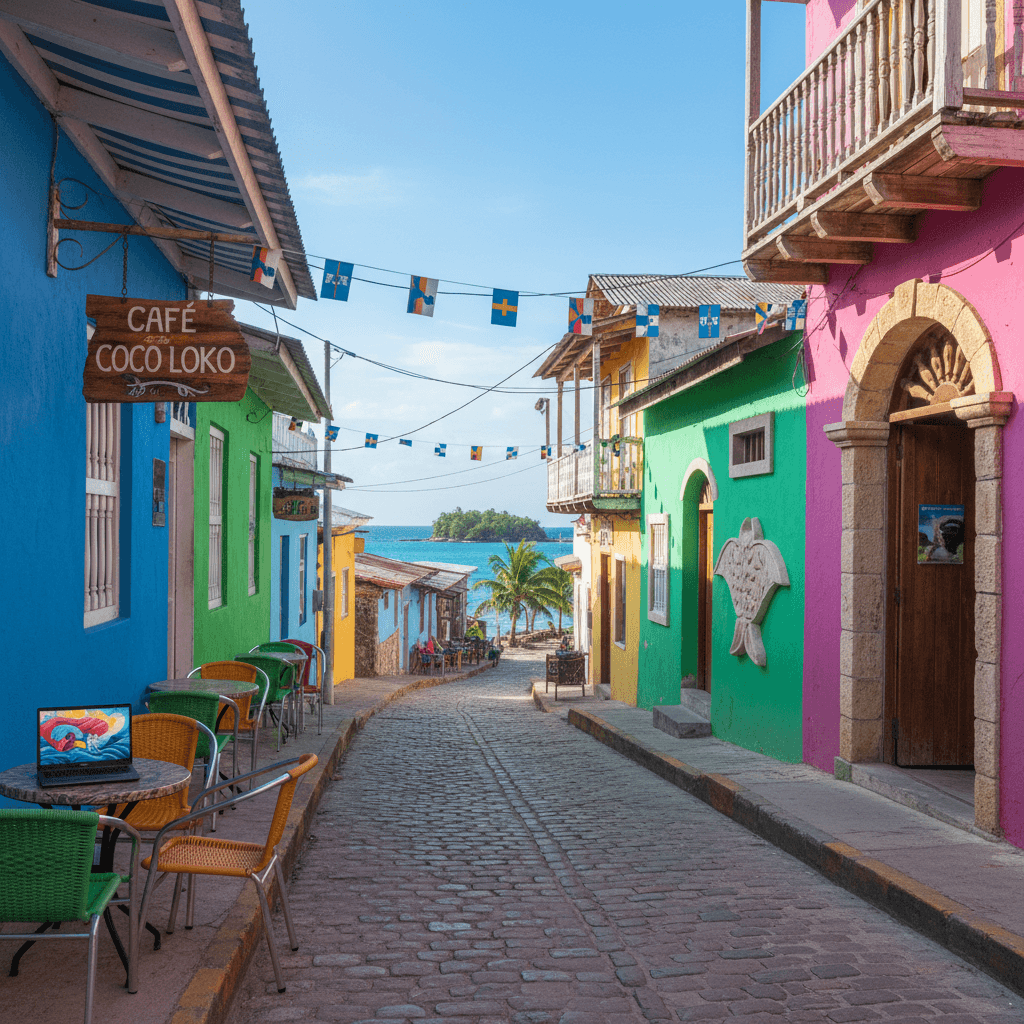
San Andrés
🇨🇴 Colombia
The Island Reality Check
San Andres isn't your typical digital nomad hub. It doesn't have the polished coworking spaces of Medellin or the high speed fiber optics of Bogota. Instead, this seahorse shaped island in the middle of the Caribbean offers a trade off. You get the "Sea of Seven Colors," a stunning gradient of turquoise and deep blue, in exchange for some of the most frustrating internet in Colombia. It is a place for the nomad who wants to slow down, literally and figuratively.
The vibe here is unapologetically Afro Caribbean. You'll hear Raizal locals speaking San Andres Creole, a rhythmic blend of English and West African languages, which sets it apart from the Spanish speaking mainland. The atmosphere is laid back, punctuated by reggae beats and the smell of fried snapper. It feels more like Jamaica or Barbados than South America, providing a unique cultural pocket for those who've spent too much time in the Andean highlands.
The Connectivity Struggle
Let's be blunt about the workflow. If your job requires constant Zoom calls or uploading massive video files, San Andres will test your patience. Most nomads find that hotel and cafe WiFi is unreliable at best. During peak hours, even loading a basic email can take minutes. The workaround is simple but necessary: buy a Claro SIM card immediately. Mobile data is surprisingly stable across the island, and using your phone as a hotspot is often the only way to get through a workday.
Because of these tech hurdles, the nomad community here is small and transient. You won't find organized meetups or Slack channels dedicated to local remote workers. You're more likely to bond with scuba divers and backpackers over a Club Colombia beer at sunset than you are to network with tech founders. It's a destination for "deep work" that doesn't require a connection, or for taking a working holiday where the "work" part is secondary to the "holiday" part.
Life on Two Wheels
The island is tiny, and the best way to experience it is to ditch the air conditioned taxis. Most expats and long term visitors rent a scooter for around 70,000 COP a day, though you can negotiate better weekly rates. There's a single main road that circles the entire island, taking about 90 minutes to complete a full loop at a leisurely pace. It’s a liberating feeling to finish a project, hop on a bike, and be at a world class snorkeling spot like La Piscinita within fifteen minutes.
For daily life, you'll spend most of your time in El Centro. This is the island's heartbeat, where the banks, shops, and main beaches are located. It's crowded and loud, but it's where the infrastructure lives. When the noise of the center gets too much, the southern end of the island offers a much quieter, lush jungle vibe with traditional wooden houses and hidden rocky coves.
Practical Realities
San Andres operates largely on paper money. While larger hotels in the center take cards, the soul of the island is found in small stalls and local eateries that are cash only. There are only about 3 or 4 ATMs in the main town, and they frequently run out of bills or have massive lines, especially on weekends. Smart travelers bring a significant stash of Colombian pesos from the mainland to avoid the "ATM lottery."
- The Atmosphere: Relaxed, Caribbean, and slightly chaotic.
- Best For: Nomads who prioritize diving and beach life over high speed tech.
- Key Transport: Scooters and golf carts are the gold standard for getting around.
- Language: A mix of Spanish, English, and Creole makes it very accessible.
Being here feels like living in a postcard that’s slightly frayed at the edges. It’s beautiful, raw, and occasionally inconvenient. If you can handle the slow internet and the humidity, the reward is a lifestyle defined by the tides rather than your Google Calendar.
The Caribbean Premium
Living on San Andres is notably more expensive than staying in mainland Colombian hubs like Medellin or Cali. Since almost everything from bottled water to building materials has to be shipped or flown in, you will notice a markup on daily essentials. Expect to spend between $1,400 and $2,000 USD per month if you want a comfortable lifestyle with air conditioning and regular meals out.
The island operates on a dual economy. There is the tourist price found in El Centro and along the beach fronts, and then there is the local price found in neighborhoods like San Luis. Carrying cash is mandatory here. While larger hotels and high end boutiques in the duty free zone take cards, the best local eateries, scooter rentals, and grocery stores are cash only. ATMs are clustered in the north, so if you are staying on the south side of the island, you will need to plan your withdrawals carefully.
Accommodation and Utilities
Rent will be your biggest hurdle. There is not much of a long term rental market for foreigners, so most nomads end up negotiating monthly rates on Airbnb or through local Facebook groups. Expect to pay $800 to $1,200 USD for a decent one bedroom apartment with a kitchen. If you want to be in the heart of the action, look in El Centro, but be prepared for noise. For a quieter, more authentic vibe, San Luis is the go to, though you will need a vehicle to get around.
- One bedroom apartment (El Centro): $900 to $1,300 USD per month
- Studio or Guesthouse (San Luis): $700 to $1,000 USD per month
- Electricity and Water: Usually included in short term rentals, but can run $100 to $150 USD if paid separately due to heavy AC usage.
Food and Dining
Groceries are pricey and the selection can be hit or miss depending on when the last cargo ship arrived. Most nomads find themselves eating out more than usual. A simple lunch special, known as a menu del dia, usually featuring fish, coconut rice, and plantains, will cost you about 25,000 to 35,000 COP. If you are dining at the upscale spots along the pedestrian path, expect to pay mainland US prices for dinner and cocktails.
- Local lunch (Menu del dia): $6 to $9 USD
- Dinner for two (Mid range): $40 to $60 USD
- Domestic Beer (Club Colombia): $1.50 to $2.50 USD
- Monthly Grocery Bill: $350 to $500 USD
Connectivity and Transport
Internet is the hidden cost of living here. Because the island's infrastructure is notoriously flaky, you cannot rely on apartment WiFi for important calls. You will need a local Claro SIM card and a hefty data plan as a backup. Budget about $30 to $50 USD monthly for mobile data to ensure you stay online during peak hours when the local grid crawls.
Getting around is best done on two wheels. Renting a scooter monthly is the most cost effective move, usually costing around 70,000 COP per day for short stints, but you can talk this down significantly for a 30 day rental. Public buses are cheap at about 4,000 COP per ride, but they are often packed and lack air conditioning.
- Monthly Scooter Rental: $350 to $450 USD
- Local Bus Ride: $1 USD
- Claro Data Plan (High Tier): $30 USD
The Remote Worker: North End (El Centro)
If you're trying to get any work done, you'll likely end up in the North End. This is the island's commercial heartbeat and the only place where you stand a chance of finding a stable connection. It's the most developed part of San Andrés, packed with duty free shops, banks, and the few reliable ATMs on the island. While the internet is notoriously spotty across the territory, the hotels and apartments here are your best bet for catching a signal.
Living here means you're steps away from Playa Spratt Bight, the main beach. It's convenient but can feel a bit chaotic during peak tourist hours. Most nomads pick this area because it's the only spot where you can walk to a grocery store and a pharmacy in five minutes. You'll want to grab a local Claro SIM card immediately; the 4G data is often more reliable than any hotel router you'll encounter.
- Rent: $800 to $1,200 USD for a decent one bedroom apartment.
- Vibe: Fast paced, convenient, and loud.
- Connectivity: The best on the island, though still frustrating compared to the mainland.
The Long Term Expat: San Luis
For those staying a few months who want to escape the duty free madness of downtown, San Luis is the go to choice. Located on the eastern side of the island, it feels much more authentic. You'll see traditional wooden houses painted in bright Caribbean colors and hear plenty of Raizal Creole being spoken on the porches. It's quieter, cooler, and feels like the "real" San Andrés.
Expats usually move here for the community feel and the proximity to quieter beaches like Cocoplum. You'll need a set of wheels if you live here. Renting a scooter for around 70,000 COP a day is common, though long term residents usually negotiate a monthly rate or just buy a used bike. The trade off for the peace is that you'll be reliant on mobile hotspots for your Zoom calls, as wired infrastructure is thin here.
- Rent: $600 to $900 USD for a house or larger apartment.
- Vibe: Relaxed, cultural, and residential.
- Transportation: A scooter or motorbike is mandatory.
The Solo Traveler: Rocky Cay & Surroundings
If you're traveling solo and looking to meet people, the area around Rocky Cay is a sweet spot. It's located between the North End and San Luis, offering a mix of hostels and boutique stays. The beach here is famous because you can walk through waist deep water all the way out to the cay. It's a natural social hub where people gather to snorkel and drink cold beers at the beach bars.
Solo travelers find this area easier to manage because it's well served by the public buses that circumnavigate the island. You don't necessarily need to rent a vehicle every day to get around. It's a great middle ground for someone who wants to be close to the action but needs a quiet place to sleep at night.
- Daily Cost: Expect to spend $40 to $60 USD a day including food and a hostel bed.
- Vibe: Social, active, and breezy.
- Pro Tip: Bring plenty of cash (Pesos) as many beach bars don't take cards.
Families: La Loma
La Loma is the highest point on the island and offers a different perspective away from the coastline. It's a traditional neighborhood where many local families live, and it's much safer and quieter for kids than the crowded North End. The air is slightly cooler up here, and the views of the "Sea of Seven Colors" are unbeatable. It's a great spot if you're looking for a larger villa with a yard rather than a cramped apartment.
The main downside for families is the distance from the water. You'll be doing a lot of driving in a rented golf cart to get the kids to the beach and back. However, the sense of security and the extra space usually make up for the commute. It's the best place to find a house with a proper kitchen, which is a lifesaver given that dining out every night on the island can get expensive quickly.
- Rent: $1,000 to $1,500 USD for a multi bedroom villa.
- Vibe: Peaceful, green, and family oriented.
- Essentials: Rent a 6 seater golf cart for the easiest family transport.
The Connectivity Reality Check
If your job depends on back to back Zoom calls or uploading massive video files, San Andres is going to test your patience. The island is famous for many things, but high speed fiber optic isn't one of them. Most travelers find that home WiFi is notoriously flaky, often slowing to a crawl during peak evening hours when everyone returns from the beach to stream movies. It is not uncommon for a webpage to take a full minute to load when the network is congested.
To survive here as a nomad, you have to be proactive. Most experienced remote workers skip the hotel WiFi entirely and head straight for a Claro store to grab a local SIM card. The Claro's 4G and 5G mobile data coverage [2] is surprisingly resilient across the island, often outperforming the landline connections found in guesthouses. Expect to pay around 40,000 to 60,000 COP for a decent data package that will keep you online for a couple of weeks.
Coworking and Work-Friendly Spaces
You won't find the sleek, glass walled coworking franchises that dominate Medellin or Bogota here. San Andres is a vacation destination first, which means your "office" will likely be a cafe or your own balcony. Most nomads set up shop in El Centro (the downtown area) because it has the highest concentration of cafes with backup generators and slightly more stable routers.
- Cafe Juan Valdez: Located in the North End, this is the reliable standby. It gets crowded and the AC is often blasting, but the coffee is consistent and the internet is usually functional for basic tasks.
- Gourmet Shop Assho: A more relaxed spot where you can grab a table and work for a few hours. The atmosphere is quieter than the beachfront spots, making it better for deep focus.
- La Regatta: While it is primarily a high end restaurant, if you visit during off peak hours, the views are unbeatable. Just don't expect to stay all day during the dinner rush.
Data Strategies for the Island
Since dedicated coworking spaces are non existent, you need a hardware backup. A unlocked mobile hotspot or a phone with tethering capabilities is your best friend. If you are planning a long term stay, try to negotiate with your Airbnb host specifically about their internet provider. Ask if they use satellite or cable, as cable tends to be slightly more reliable during the tropical storms that occasionally pass through.
For those who need to jump on a call, the quietest time is usually early morning between 7:00 AM and 10:00 AM. The tourists are still at breakfast and the local network hasn't hit its peak load yet. If you have a deadline, do not leave your upload until 7:00 PM, because that is exactly when the island's bandwidth tends to dip.
Digital Nomad Connectivity Checklist
- Primary Provider: Claro (best overall island coverage).
- Backup Provider: Tigo or Movistar (useful if Claro has a localized outage).
- Estimated Mobile Data Cost: 10,000 to 15,000 COP per week for basic 4GB to 10GB plans.
- Power Stability: Power cuts happen occasionally. Always keep your laptop and power banks fully charged.
- Best Work Zone: The North End (El Centro) for proximity to shops and better signal towers.
Ultimately, San Andres is a place where you work to live, not the other way around. Most nomads who spend time here adopt a "burst" work style: get the essential tasks done early in the morning using a mobile hotspot, then close the laptop and head to the water. It is a location for the disciplined worker who can handle a bit of technical friction in exchange for a Caribbean backyard.
Staying Safe on the Island
San Andres generally feels much safer than mainland Colombian hubs like Medellin or Bogota, but it has its own set of rules. The island thrives on tourism, so the local authorities work hard to keep the main areas secure. You can walk around El Centro during the day without a second thought, but you should still keep your wits about you after the sun goes down.
Most petty crime happens in the form of opportunistic theft. If you leave your phone or bag unattended on the sand while you go for a swim at Rocky Cay, there is a good chance it won't be there when you get back. Stick to the busier stretches of beach or use a waterproof pouch for your valuables. When you are out exploring on a scooter or golf cart, don't leave your belongings in the front basket or under the seat when you park.
The southern, more rural parts of the island are beautiful for a day trip, but they get very quiet at night. Expats usually suggest avoiding the backstreets of the San Luis neighborhood and certain inland residential areas after dark. Stick to the main perimeter road if you are heading back to your accommodation late. If you need to get home and don't have your own wheels, try to arrange a taxi through your hotel or a restaurant rather than waving one down on a dark corner.
Health and Medical Care
If you get sick or injured, the Hospital Amor de Patria is the primary medical facility on the island. It can handle most general emergencies, infections, and minor injuries. For anything truly specialized or a major surgical emergency, patients are often stabilized and then flown to the mainland, usually to Barranquilla or Bogota. This is why having solid travel insurance with medical evacuation coverage is non-negotiable here.
For smaller issues like "Caribbean belly," ear infections from diving, or mild heatstroke, there are several private clinics and 24-hour pharmacies in El Centro. Look for Drogueria Inglesa or Droguerias Alemana; they are well-stocked and the pharmacists can often recommend over-the-counter fixes for common ailments. Keep in mind that English is widely spoken due to the Raizal culture, but in a medical setting, having a translation app ready is a smart move.
- Emergency Number: Dial 123 for general emergencies or 156 for the National Police.
- Water Safety: Do not drink the tap water. It is fine for showering, but stick to bottled or filtered water for drinking and brushing your teeth.
- Sun Protection: The equatorial sun is brutal. A "base tan" won't save you here. Use high-SPF reef-safe sunscreen and stay hydrated with suero (electrolyte drinks) found in any corner store.
- Mosquitoes: While malaria isn't a major concern, Zika and Dengue occasionally pop up. Use repellent, especially around dusk if you are staying near the lush interior of the island.
Practical Safety Tips
Cash is king on the island, and while that means you'll be carrying pesos, try not to flash big rolls of bills in public. Use the ATMs located inside the banks in El Centro, like Bancolombia or Davivienda, during daylight hours. These machines are more reliable and less likely to be tampered with than standalone kiosks.
If you are renting a scooter for 70,000 COP a day, wear the helmet. Even if locals aren't doing it, the police do occasionally run checkpoints, and the roads can be slippery with sand or sudden tropical rain. Most nomads find that as long as they respect the local pace and don't go looking for trouble in non-tourist residential zones, San Andres is a relaxing, low-stress place to call home for a few weeks.
The Island Loop
San Andres isn't a massive place, but the way you get around will define your experience. The island is roughly 12 kilometers long, and most of the action is concentrated in El Centro, the northern tip where the shops and hotels sit. If you are staying downtown, your own two feet will do most of the work. For everything else, you need a plan that accounts for the Caribbean heat and the occasional tropical downpour.
Golf Carts and Scooters
This is the quintessential San Andres experience. You will see rows of colorful golf carts parked along the malecon. They are the preferred choice for groups of two or more because they provide some shade and a place to throw your beach gear. Expect to pay around 150,000 to 200,000 COP for a full day rental, though prices fluctuate based on the season and your haggling skills. Always check the battery level or fuel gauge before you drive off the lot.
For solo nomads or couples who want more agility, a scooter is the way to go. Rentals usually hover around 70,000 COP per day. It is the fastest way to zip between the coworking-friendly cafes in El Centro and the quieter south side of the island. Just be mindful of the road conditions; while the main perimeter road is paved and easy to navigate, side streets can be sandy or uneven.
Public Buses
If you are on a budget, the local bus system is surprisingly reliable. These buses circumnavigate the island constantly, and you can usually flag one down just by waving from the side of the road. It is a great way to rub shoulders with locals and get a feel for the island rhythm.
- Fare: Roughly 3,500 COP per ride.
- Route: Most buses follow the main ring road, making it hard to get lost.
- Availability: They run frequently during daylight hours but become scarce after dark.
Taxis and Apps
Taxis are plentiful in the downtown core and near the airport. You won't find meters here, so you must agree on the price before you get in the car. A short trip within El Centro usually costs about 15,000 COP, while a trek to the southern end of the island like San Luis can run 30,000 to 50,000 COP. Taxis are notoriously difficult to find once you leave the main hub, so if you take one to a remote beach, try to arrange a pickup time with the driver or keep a local number handy.
Ride-hailing apps are hit or miss on the island. While you might see them active in mainland cities like Medellin, they aren't a reliable primary option here. Stick to the traditional yellow cabs or the local bus for the most consistent results.
Walking and Biking
Walking is perfect for the North End, where the density of restaurants and shops is high. However, the humidity is no joke. If you plan to walk more than ten minutes, do it early in the morning or after the sun starts to dip. Bicycles are available for rent at many guesthouses and are a fantastic, eco-friendly way to see the coastline, provided you are prepared for a bit of a workout in the sun.
Key Transport Tips
- Cash is King: None of the buses or independent rental kiosks take cards. Always keep small denominations of Colombian Pesos on you for fares.
- Peak Hours: Buses get extremely crowded between 4:00 PM and 6:00 PM when locals are heading home from work.
- Gas Stations: There are only a few spots to fuel up, mostly near El Centro. If you are doing a full lap of the island on a scooter, check your tank before you leave the north.
The Trilingual Island Vibe
San Andres feels different from mainland Colombia the second you step off the plane. While Spanish is the official language, the local Raizal population speaks San Andres Creole, an English based creole that sounds similar to what you might hear in Jamaica or Belize. This makes the island one of the few places in Colombia where you can get by quite well with just English, though the dynamic is nuanced.
Most locals are trilingual, switching between Spanish, English, and Creole depending on who they are talking to. In the main tourist areas of El Centro and along the North End beaches, English is the standard for hospitality. You will have no trouble ordering a Coco Loco or negotiating a boat trip to Johnny Cay in English. However, if you want to build a deeper rapport with the community or handle logistics like long term rentals, Spanish remains the power move.
Navigating the Language Gap
If you are coming from Medellin or Bogota, you will notice the Spanish here has a distinct Caribbean lilt. It is faster and often drops the "s" at the end of words. If your Spanish is shaky, don't sweat it. Most nomads find that the islanders are incredibly patient and often prefer to practice their English with you anyway.
- Spanish: Used for government business, banking, and official paperwork.
- English: Widely spoken in hotels, dive shops, and high end restaurants.
- Creole: The heart of the island. You'll hear it in the residential neighborhoods like San Luis or La Loma. Learning a few phrases like "Wha' gwan?" (What's happening?) goes a long way in showing respect for the local culture.
Staying Connected (The Real Challenge)
Communication isn't just about what you say, it's about how you transmit it. This is the biggest hurdle for anyone trying to work from the island. The local infrastructure is notoriously fickle. Standard hotel and cafe WiFi is often sluggish, sometimes taking several minutes just to load a basic email during peak afternoon hours. You cannot rely on a "Digital Nomad Friendly" tag on a booking site here; you need a backup plan.
The most reliable way to stay online is through a local SIM card. Claro is the undisputed heavyweight on the island. Their 4G and 5G coverage is surprisingly stable even when the landline internet fails. Most expats recommend picking up a SIM at the airport or in El Centro for about 5,000 to 10,000 COP and loading it with a data package. It is much cheaper and more reliable than trying to hunt for a stable WiFi signal in a beach bar.
Key Communication Tips
Because the internet is spotty, WhatsApp is the lifeblood of the island. Whether you are booking a 70,000 COP scooter rental or checking if a restaurant is open, do it via WhatsApp. Don't expect businesses to have updated websites or active email accounts. If you need something done, a voice note or a quick message is the way to go.
When dealing with local services, keep things casual but clear. The pace of life is slower here, and communication reflects that. A "please" and "thank you" (or "por favor" and "gracias") paired with a bit of patience will get you much further than being demanding. If you are heading to the more remote parts of the island, download Google Maps for offline use, as data can drop out unexpectedly when you are tucked away in the lush jungle areas of the interior.
The Sweet Spot for Your Stay
San Andres doesn't follow the typical tropical calendar you might find in mainland Colombia. Because it sits deep in the Caribbean, the weather is defined by a distinct "dry" season and a "wet" season. If you are planning to work from the island, timing your trip is about more than just sunshine; it is about ensuring the infrastructure holds up during storms.
The absolute best window to visit is from late December through April. During these months, the skies stay a brilliant blue, and the humidity drops to a manageable level. This is the peak of the dry season, meaning you can count on those postcard-perfect days for your afternoon snorkel sessions. However, keep in mind that this is also when prices for short-term rentals spike and the beaches near El Centro get packed with vacationers from Bogota and Medellin.
Navigating the Rainy Months
The rainy season typically runs from May through December. October is historically the wettest month on the island. While it rarely rains all day, the downpours are intense and can occasionally knock out the already fragile power grid. For a digital nomad, this is the biggest risk. When the power goes out, the cell towers often get congested, making that Claro 4G backup connection crawl.
If you want to save money, May and September are the "shoulder" months. You will find much better deals on apartments and scooter rentals, which usually run around 70,000 COP per day. The island feels quieter, and you won't have to fight for a seat at the cafes in the north. Just be prepared for a few afternoon thunderstorms that might interrupt your deep-work blocks.
Temperature and Comfort
The temperature is remarkably consistent, hovering between 27°C and 30°C (80°F to 86°F) year-round. It never truly gets cold, but the sea breezes on the east side of the island provide a natural cooling system that is much better than any noisy AC unit. Most nomads prefer staying on the outskirts of the main town to catch these winds.
One thing to keep an eye on is the Atlantic hurricane season, which peaks between August and October. While San Andres is far enough south to miss most direct hits, the indirect tropical depressions can bring several days of heavy wind and gray skies. If your work requires high-stakes video calls, try to avoid booking your stay during the peak of October to minimize the risk of connectivity blackouts.
The Nomad Verdict on Timing
- Best for weather: January to March. Expect 28°C days and very little rain.
- Best for budget: September and October. You can often negotiate long-stay discounts of 20% to 30% on housing.
- Worst for crowds: Holy Week (Semana Santa) and the period from mid-December to mid-January.
- Water visibility: Best from February to May, which is vital if you plan on getting your PADI certification while you are here.
If you can swing the higher costs, aim for a February arrival. You will get the most reliable environment for remote work and the best possible conditions for exploring the reefs once you close your laptop for the day.
Connectivity and Data
Let's address the elephant in the room first. San Andres isn't the place to host a high stakes webinar or manage heavy video uploads. The island's infrastructure relies on satellite links that get bogged down during peak hours. You will often find yourself waiting several minutes just for a basic webpage to load on hotel WiFi.
The workaround used by most remote workers is to skip the WiFi entirely and rely on local data. Grab a Claro SIM card as soon as you land. The 4G reception is surprisingly strong across most of the island, even when the routers are failing. It is still a good idea to front load your heavy tasks before you arrive or save them for your return to the mainland.
Money and Payments
Cash is the undisputed king here. While upscale hotels in El Centro might take plastic, the soul of the island runs on Colombian pesos. You will need physical bills for the best seafood shacks, boat charters to Johnny Cay, and those sunset coco locos on the beach. Most scooter rentals and small shops won't even look at a credit card.
There are about 3 or 4 ATMs in the main town area, but they are notorious for running out of cash or having long lines, especially on weekends. Your best bet is to withdraw a significant amount of pesos in Bogota or Medellin before you hop on your flight. If you do get stuck, look for the Bancolombia or Davivienda machines in the center, as they tend to be the most reliable.
Getting Around the Island
The island is small, but you won't want to walk everywhere in the Caribbean heat. For daily commuting, the public buses are a cheap and authentic way to get around. They circle the island constantly, though they can get pretty packed during the morning and afternoon rush.
For more freedom, rent a scooter or a golf cart. A scooter typically goes for around 70,000 COP per day. If you are traveling with a partner or a couple of friends, the gas powered golf carts are the way to go. You can pick these up in El Centro. They are perfect for a slow lap around the island to find a quiet spot to work from your phone. Taxis are available in the main town, but they become much harder to find once you head south toward San Luis.
Timing Your Day
San Andres operates on island time, but the tourist crowds follow a strict schedule. If you want to enjoy the reef or the popular beaches without a sea of people, you need to be out the door by 7:00 AM or 8:00 AM. By midday, the main spots in El Centro and the surrounding keys get very loud and crowded. Use those peak hours to hunkering down in a shaded spot with your Claro hotspot, then head back out once the day trippers retreat in the late afternoon.
Packing Essentials
- Power Bank: Since you will be relying on your phone for data, a high capacity power bank is a lifesaver.
- Dry Bag: Essential for those boat trips to the keys or if you get caught in a sudden tropical downpour while on a scooter.
- Unlocked Phone: Make sure your device isn't carrier locked so you can swap in that local SIM immediately.
- Physical Pesos: Carry various denominations, as smaller vendors often struggle to make change for large bills.
Need visa and immigration info for Colombia?
🇨🇴 View Colombia Country GuideOff the Radar
Pioneer territory