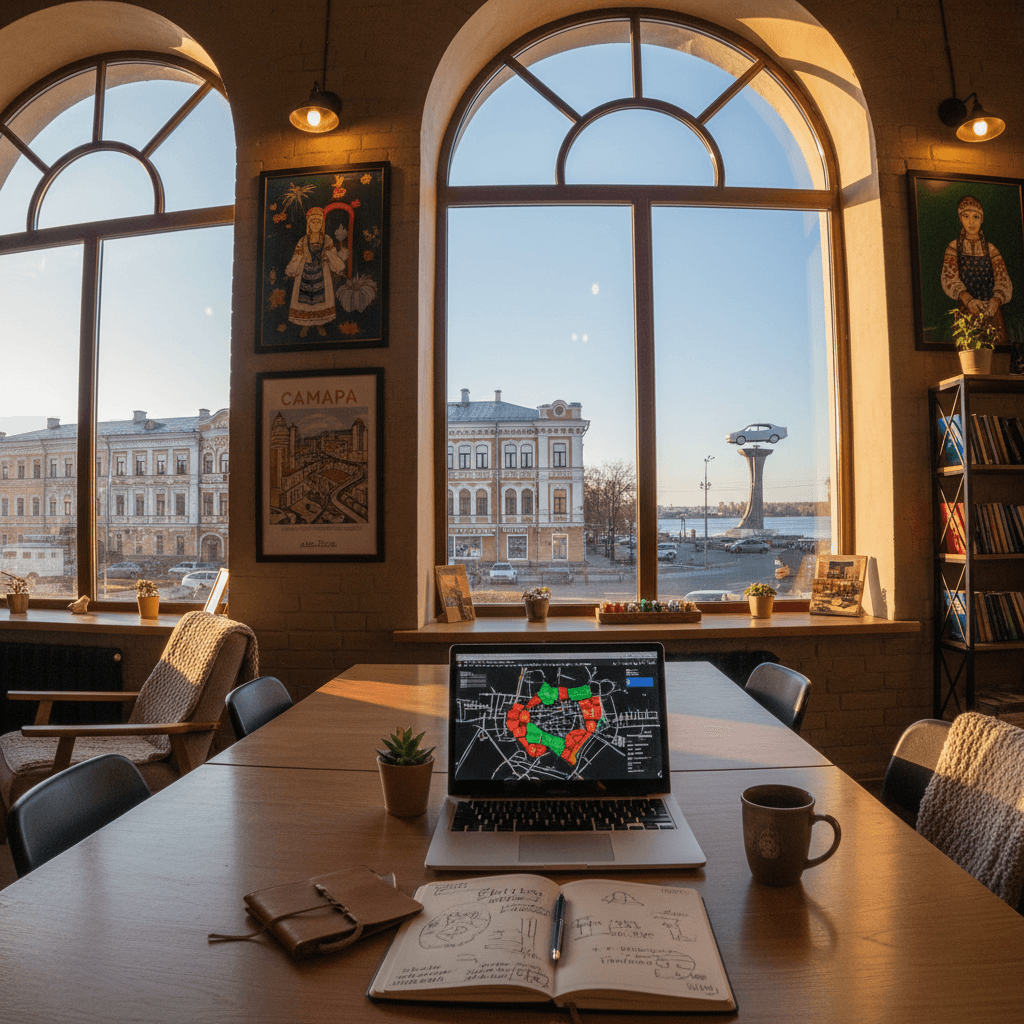
Samara
🇷🇺 Russia
The Volga’s Best Kept Secret
If Moscow is the frantic heart of Russia and St. Petersburg its formal face, Samara is the country’s backyard hammock. It’s a city that trades the high-octane stress of the capitals for a slow-motion, continental rhythm centered entirely around the water. Most nomads arrive expecting industrial grit and Soviet leftovers, but they stay for the five kilometers of sandy beaches and the Art Nouveau mansions that line the historic center.
The vibe here shifts dramatically with the seasons. In the summer, Samara feels more like a Mediterranean resort than a Russian hub. The embankment, or Naberezhnaya, becomes the city’s living room, where you’ll find locals playing volleyball, working from beachside cafes, and watching the sunset over the Zhiguli Mountains. Come winter, the city retreats indoors, shifting the social scene to cozy basement bars and modern coworking hubs while the Volga freezes solid enough to walk across.
The Digital Nomad Experience
Living here is remarkably affordable, especially if you’re earning in a stronger currency. A monthly budget of $550 to $800 covers the basics, while $1,400 buys a high-end lifestyle that would cost triple in Western Europe. You’ll find the internet is surprisingly fast, often hitting 90 Mbps, and public WiFi is everywhere, from the metro to the street-side parks.
The catch is the language barrier. English proficiency is low, so you’ll rely heavily on Yandex Translate to get by. You also need to be tech-savvy regarding connectivity; a VPN is a non-negotiable part of your toolkit to access Western social media and news. Despite the bureaucratic hurdles of the Russian e-visa and banking sanctions, nomads who make the effort find a community that is incredibly welcoming once you break the initial ice.
Where to Plant Your Flag
Choosing the right neighborhood defines your Samara experience. Most solo travelers and nomads head straight for the Embankment area. It’s walkable, packed with the best coffee shops, and gives you instant access to the river. If you prefer a bit more soul and history, the Art Nouveau District in the city center puts you among 19th-century architecture and boutique shops.
- Embankment/Riverside: Best for summer vibes. Rent for a central studio usually runs $300 to $500. It’s touristy in July, but the proximity to the water is worth the premium.
- City Center: Best for long-term stays. It’s safer and more residential with great metro access. Mid-range apartments here hover around $500 to $800.
- Outskirts (near Syzran): Best for extreme budgets. You can find places for $200 to $400, but you’ll face long commutes and a lack of English speakers.
Productivity and Play
When it’s time to buckle down, YellowRockets is the gold standard for coworking. A hot desk goes for about $87 to $108 a month, and they offer free trials if you want to test the seating before committing. The community here is one of the few places you’ll find a high concentration of English speakers and tech entrepreneurs.
Socially, life revolves around the Yandex Go app. It’s your lifeline for everything from $3 taxi rides to ordering late-night food. For a night out, head toward the Cosmos Arena area for larger events or stick to the riverside bars for craft beer and local fish. If you start feeling isolated, check the expat chats on WhatsApp or Slack; there is usually a weekly meetup at a local cafe to help newcomers find their footing.
Practical Realities
Getting around is cheap and efficient. A ride on the metro or bus costs about $0.50, and the vehicles are kept warm and clean even in the depths of January. When you land at Kurumoch International (KUF), avoid the airport touts and use Yandex Go for a $20 to $30 ride into the center.
Safety is generally a non-issue, though it’s wise to avoid poorly lit industrial zones on the outskirts at night. Healthcare is decent in the city center, but make sure your insurance specifically covers Russia. Most importantly, embrace the local pace. Samara isn't a place to rush through a to-do list; it’s a place to work for four hours, grab a coffee, and spend the rest of the day by the river.
The Nomad Budget Breakdown
Samara is one of those rare spots where your dollar stretches surprisingly far without sacrificing the comforts of a major metro area. While the average nomad spend across Russia hovers around $1,411 per month, Samara allows for a much leaner lifestyle if you're savvy. You can realistically get by on a budget tier of $550 to $800 if you're willing to live in the outskirts or share a flat. However, most digital nomads find the $1,000 to $1,400 range to be the sweet spot, covering a private central apartment, plenty of dining out, and a dedicated desk at a coworking space.
Housing and Neighborhoods
Your biggest expense will be rent, and location defines your entire experience here. Expats and short term travelers usually gravitate toward the Embankment (Volga Riverside). It is the heart of the city's social life, especially during the legendary summer months. Expect to pay between $500 and $800 for a mid range studio or one bedroom apartment in this area. If you're looking for something more permanent or budget friendly, the City Center or the Art Nouveau District offers stunning architecture and better access to the metro for about $300 to $500 per month.
For those staying longer than a month, skip the standard hotel sites. Most nomads recommend using Blueground or local platforms like journest.app to find furnished rentals. If you really need to shave down costs, the outskirts near Syzran offer prices as low as $200, though you'll face a much longer commute and a quieter social life.
Eating and Drinking
The food scene is a mix of traditional Volga river culture and modern convenience. You can grab street food for $3 to $5, while a solid meal at a mid range cafe will run you about $10 to $15. If you're celebrating at an upscale spot near the Cosmos Arena, expect to spend $25 to $40 per person.
- Coffee: $2 to $3 for a latte in a nomad friendly cafe.
- Groceries: Budget around $200 per month if you cook at home.
- Delivery: Use the Yandex Go app; it is the go to for food delivery and is incredibly reliable.
Connectivity and Workspace
Internet is fast and cheap, usually averaging 90 Mbps. You'll find free WiFi in almost every cafe and even on public transport. However, a VPN is mandatory here to access many western social media sites and tools. For a professional setup, YellowRockets is the top choice for the remote crowd. Their pricing is straightforward:
- Hot Desk: $87 to $108 per month.
- Dedicated Desk: $111 to $138 per month.
- Day Pass: $6 to $8, and they often offer free trials for newcomers.
Transport and Practicalities
Getting around is remarkably affordable. The public transport system, including the metro, costs about $0.50 per ride and is known for being clean and safe even in the dead of winter. For door to door service, Yandex Go is the local Uber equivalent. Most trips across the city center will cost between $3 and $6. If you're arriving at Kurumoch International Airport (KUF), a ride to the center will set you back about $20 to $30.
Keep in mind that banking can be tricky due to international sanctions. You won't be able to rely on your standard Western debit cards. Most long term residents use local payment systems or the Samaate tax regime for freelancers, which carries a 4% tax on foreign income. Always carry some cash and ensure your health insurance specifically covers Russia before you land.
Nomads and Remote Workers: The Embankment
If you're coming to Samara for the summer, there's really only one place to be. The Embankment, or Naberezhnaya, is the city's pulse. It's home to Russia's longest riverside promenade, where you'll find actual sandy beaches right next to a string of modern cafes and workout stations. Nomads flock here because it feels less like a landlocked industrial city and more like a relaxed coastal retreat.
- Rent: Expect to pay $500 to $800 for a mid range studio or one bedroom apartment with a view.
- Coworking: YellowRockets is the go to spot here, offering hot desks for around $87 to $108 per month with reliable 90 Mbps speeds.
- Vibe: High energy, walkable, and social. It's the best spot to combat the isolation that sometimes hits in provincial Russia.
The main drawback is the price premium and the noise during peak July nights. You're paying for the convenience of walking to your morning coffee and having the Volga River as your backyard. Just remember to keep your VPN active; while the public WiFi in these cafes is decent, you'll need it to access most Western platforms.
Expats and Long Termers: Art Nouveau District
For those sticking around longer than a month, the historical City Center offers a more sophisticated, "European" lifestyle. This area is famous for its stunning Art Nouveau architecture, which gives the streets a distinct character you won't find in Moscow's concrete sprawl. It's slightly set back from the river, meaning it's quieter and feels more like a lived in neighborhood than a tourist zone.
- Rent: Slightly more affordable than the immediate waterfront, ranging from $400 to $700 for quality renovations.
- Transport: Excellent access to the metro and tram lines, making it easy to get across town for $0.50 a ride.
- Daily Life: You'll be near the best grocery stores and local boutiques. Use Yandex Go for grocery deliveries if you don't feel like carrying bags up older stairwells.
Expats recommend this area because it stays active in the winter. While the Embankment can feel a bit desolate when the river freezes over, the Art Nouveau district remains the heart of the city's dining and shopping scene year round.
Families and Budget Seekers: The Outskirts
If you're traveling with a family or trying to keep your burn rate as low as possible, looking toward the outskirts or even the Syzran area is a smart move. These residential zones offer much larger apartments for a fraction of the central prices. You'll find more green spaces, playgrounds, and a slower pace of life that suits those not looking for nightlife.
- Rent: Budget apartments can be found for $200 to $400 per month.
- Food: Local markets are significantly cheaper here than the central cafes. A week of groceries for a family can be very affordable if you shop like a local.
- Safety: Generally safe, though travelers suggest avoiding poorly lit industrial pockets late at night. Stick to the main residential blocks.
The trade off is the commute. You'll rely heavily on Yandex Go, which costs about $3 to $6 for a trip to the center, or the clean and efficient metro system. It's a great way to experience the "real" Samara while keeping your total monthly spend closer to the $550 mark.
Solo Travelers: Near Cosmos Arena
Solo travelers often gravitate toward the newer developments near the Cosmos Arena. Built for the 2018 World Cup, this area is modern, clean, and full of sports facilities and large shopping malls. It's a bit of a trek from the historical soul of the city, but it offers a very "easy" version of Russia with wide streets and English signage left over from the tournament.
- Rent: Modern builds go for $300 to $500.
- Social: Great for meeting people through sports or stadium events. There's a decent concentration of younger, English speaking locals in this area.
- Dining: Plenty of chain restaurants and food courts where you can grab a meal for $5 to $10 without needing advanced Russian skills.
Since English proficiency is generally low across Samara, solo travelers find the modern infrastructure here a bit more navigable. Use Yandex Translate for everything from reading menus to chatting with your landlord; it handles the local nuances much better than other apps.
Connectivity and Speed
You'll find that Samara punches above its weight when it comes to raw internet performance. The average speeds hover around 90 Mbps, and 4G coverage is remarkably stable across the central districts. Most nomads find the public WiFi in the city surprisingly reliable; it's available in almost every cafe along the embankment, on public transport, and even in the metro stations.
There is one major caveat you can't ignore: the digital fence. Because of ongoing restrictions, a robust VPN is a non-negotiable part of your toolkit if you want to access Western social media or specific banking apps. Expats recommend setting this up before you land. For local connectivity, grab a local SIM or eSIM immediately. The Yandex suite of apps, from maps to food delivery, works best when tied to a local number, and providers at Kurumoch International Airport can get you sorted for a few dollars.
Top Coworking Spots
The coworking scene in Samara is small but high quality, centered mostly around the tech and startup communities. It's a far cry from the cramped, corporate offices you might find in larger hubs.
- YellowRockets: This is the gold standard in the city. It's more than just a desk; it's a startup hub where you'll actually meet local entrepreneurs. They offer a free trial day, which is great for testing the vibe before committing.
- Hot Desk: $87 to $108 per month
- Dedicated Desk: $111 to $138 per month
- Meeting Rooms: $6 to $8 per hour
- The Embankment Cafes: During the summer, many nomads skip the office entirely. The riverside is lined with spots that have solid WiFi and plenty of power outlets. It's the best way to soak up the Volga beach atmosphere while clearing your inbox.
The Laptop-Friendly Cafe Culture
If you prefer a bit of background noise, Samara's Art Nouveau District is packed with coffee shops that don't mind you lingering for a few hours. Unlike Moscow, where things can feel rushed, the pace here is slower. Baristas are generally relaxed about remote workers as long as you're ordering the occasional flat white or pastry.
Since English proficiency is quite low in the region, keep Yandex Translate open on your phone. It handles the local nuances much better than other translation apps. Most nomads find that once they've established a routine at a specific cafe, the staff becomes incredibly welcoming, even if there's a language barrier.
Practical Logistics for Digital Nomads
Managing your finances requires a bit of a workaround due to international sanctions. Most foreign cards won't work at the local terminal. Travelers often recommend using local fintech solutions or the self-employed (samozanyatye) tax regime if stays are long term, which carries a low 4% tax rate on foreign income.
For housing, skip the short-term hotel sites and look at Blueground or local listings for stays longer than 30 days. You'll get much better value, often finding central studios for $300 to $500. This leaves plenty of room in the budget for the $10 to $15 mid-range dinners that make Samara such an affordable base.
Staying Safe in the Volga Heartland
Samara generally feels like a safe, sleepy giant compared to the frantic energy of Moscow. Most nomads give the city a solid 7 out of 10 for safety. You'll find the streets are well policed and the atmosphere in the center is relaxed, even after the sun goes down. Street crime is low, though you should keep your wits about you in the industrial outskirts or poorly lit areas away from the river at night.
The public transport system is a major plus for solo travelers. Whether you are hopping on the metro or a local bus, the vehicles are clean, fast, and feel secure. If you are moving around late at night, Yandex Go is the gold standard. It works exactly like Uber, costs between $3 and $6 for most cross-town trips, and provides a digital trail of your journey that adds an extra layer of comfort.
- Emergency Number: Dial 112 for all emergency services.
- Night Safety: Stick to the Embankment and Art Nouveau District after dark.
- Scams: Be wary of unofficial taxis at Kurumoch International Airport; always use the app to book your ride.
Healthcare and Medical Services
Medical care in Samara is decent, but it doesn't always meet Western private hospital standards. In the city center, you will find modern clinics with capable staff, though English proficiency among doctors remains low. Carrying a phone with Yandex Translate is a lifesaver during a consultation. For anything serious, expats often prefer the private facilities in the central districts over the older state hospitals.
Pharmacies are everywhere. Look for the green cross signs; they are usually well stocked with both local and international brands. If you take specific maintenance medication, bring a large supply with you, as some foreign brands can be hard to track down due to trade restrictions. Most basic over the counter meds are incredibly cheap compared to US or EU prices.
Insurance and Administrative Requirements
You cannot skip out on health insurance here. It is a mandatory requirement for your visa, and you will need to show proof of a policy that specifically covers Russia. Because of various international sanctions, many standard global travel insurance plans no longer work. You will need to double check that your provider is still active in the region or purchase a local policy upon arrival.
Digital nomads should also keep their paperwork in order. If you are staying in an apartment for more than seven business days, your host or landlord must register your stay with the migration authorities. It is a bit of a bureaucratic hoop, but it prevents heavy fines or issues when you eventually try to leave the country.
Practical Health Tips
- Tap Water: Don't drink it. Stick to bottled water or high quality filters to avoid stomach issues.
- Winter Prep: The cold is no joke. Temperatures can hit -10°C or lower. Proper thermal layers and insulated boots aren't just fashion choices; they are health necessities to avoid frostbite or hypothermia.
- Vaccinations: Ensure your routine shots are up to date. Some long term expats also recommend a tick borne encephalitis vaccine if you plan on hiking in the Samarskaya Luka National Park during the summer.
Overall, as long as you have your insurance sorted and stay aware of your surroundings in the industrial zones, Samara is a predictable and stable place to live. The local "Samaate" regime for the self employed also makes the administrative side of staying long term much easier for those earning foreign income, provided you can navigate the 4% tax system.
Getting Around the Volga Capital
Samara is surprisingly easy to navigate once you get the hang of the local apps. The city layout is linear, stretching along the river, which makes it hard to truly get lost. Whether you are commuting from a central Art Nouveau apartment or heading to the beach for a sunset session, the transport system is cheap, reliable, and runs like clockwork even when the temperature drops to -10°C.
Public Transport: The Metro and Beyond
The public transit network is the backbone of the city. For about $0.50 per ride, you can hop on buses, trams, or the metro. While the metro system isn't as expansive as Moscow's, it is incredibly clean and safe. It is a lifesaver during the winter months because the stations and trains are kept toasty warm. Most nomads find the trams particularly charming for getting through the City Center, offering a slow look at the local architecture for just a few cents.
Ride-Hailing and Apps
If you aren't in the mood for the bus, Yandex Go is your best friend. It functions exactly like Uber or Lyft and is the gold standard here. You can summon a car, track its progress, and pay through the app. A typical cross-town trip usually costs between $3 and $6. If you are coming from Kurumoch International Airport (KUF), expect to pay around $20 to $30 for the ride into the city center. It’s a much better deal than haggling with the "independent" drivers waiting at the arrivals gate.
Summer Wheels: Bikes and Scooters
When the ice melts and the riverfront comes alive, the Embankment becomes the city's main artery. During the summer, you will see everyone on electric scooters and bicycles. There are several rental apps available that allow you to pick up a scooter near the Volga Riverside and drop it off further down the beach. The center and the riverside are highly walkable, so if you're staying in the Art Nouveau district, you likely won't need a vehicle at all for your daily coffee runs or coworking commutes.
Practical Transit Tips
- Download Yandex Maps: While Google Maps works for basic navigation, Yandex is far more accurate for local bus schedules and house numbers.
- Payment: You can pay for most public transport using a contactless card or phone, but keep some small change or local cash handy just in case.
- Connectivity: Public transport and many stations offer free WiFi, which is great for checking your Slack messages, but remember that a VPN is mandatory to access many Western sites and apps.
- Language: Don't expect the bus drivers or conductors to speak English. Have your destination pulled up on your phone to show them if you get stuck.
Regional Travel
If you want to escape the city for a weekend, the local trains are efficient for visiting nearby spots like Syzran to see the 19th-century architecture. For longer hauls, domestic flights from Kurumoch are frequent and affordable. Just make sure your paperwork and registration are in order if you are staying longer than a week, as you'll need to show your documents when checking into hotels or booking regional travel.
Breaking the Language Barrier
In Samara, the linguistic reality hits you as soon as you step off the plane at Kurumoch International. Unlike Moscow, where you might stumble into an English speaker at every third cafe, Samara is firmly Russian-speaking. English proficiency is notably low, even among the younger crowd in the city center. You'll find that most day to day interactions involve a lot of pointing, smiling, and heavy reliance on technology.
Expats living here suggest learning the Cyrillic alphabet before you arrive. Being able to read signs for the metro or identifying "Apteka" (Pharmacy) on a storefront makes life significantly easier. While it looks intimidating, you can usually get the basics down in a weekend. Once you can read the phonetics, you'll realize many technical and modern words are actually quite similar to their English counterparts.
The Digital Toolkit
Technology is your best friend in the Volga region. Most nomads ditch Google Translate immediately. Yandex Translate is the local gold standard because it handles the nuances of Russian grammar and slang much better than Western apps. It also has a solid offline mode and a camera translation feature that is a lifesaver for reading menus along the embankment or deciphering signs in the Art Nouveau district.
- Yandex Go: This is the local "everything app." You'll use it for ride-hailing (trips usually cost $3 to $6), food delivery, and even checking bus schedules. The interface is available in English, which bypasses the need to explain your destination to a driver.
- VPNs: You can't skip this. To access Western social media or specific work tools, a reliable VPN is mandatory. Most travelers set up at least two different services before entering Russia to ensure they have a backup if one gets throttled.
- Local SIMs: Grab a local SIM or an eSIM as soon as possible. Having a Russian phone number is often required to connect to the free public WiFi found in parks, coworking spaces like YellowRockets, and on public transport.
Cultural Nuances and Communication Style
The communication style in Samara is typical of the Russian heartland: people can seem stoic or even "cold" on the street, but that disappears once you've had a five minute conversation. Don't mistake a lack of smiling for rudeness; it's just the local baseline. Once you initiate a conversation, especially if you try a few words of Russian, people are generally helpful and patient.
In professional settings or at coworking hubs, the vibe is more relaxed than the frantic pace of the capital. If you're working from a cafe near the Cosmos Arena, you'll find the staff is used to nomads, but they'll appreciate it if you use the basic pleasantries. Learning how to say Privet (Hello), Spasibo (Thank you), and Gdye... (Where is...) will get you much further than starting every sentence in English.
Social Circles and Staying Connected
Since the language barrier can be isolating, most nomads find their community through specific digital channels. The expat community isn't massive, but it's tight-knit. Travelers often connect through Telegram channels or dedicated WhatsApp and Slack groups for foreigners in Russia. Coworking spaces like YellowRockets are the best physical spots to meet people who speak English and understand the remote work lifestyle.
If you're here during the summer, the embankment becomes the city's social spine. It's the easiest place to meet people naturally. Whether you're watching a match at the stadium or grabbing a drink at a riverside cafe, the atmosphere is much more open. Many nomads recommend joining at least one weekly group activity, like a local language exchange or a weekend tour to Syzran, to keep the "winter isolation" at bay if you're staying during the colder months.
The Seasonal Rhythm
Samara is a city of two extremes. Because of its continental climate, you'll experience a dramatic shift between a Mediterranean-style summer and a deep, Siberian-style freeze. Most nomads find that the city's personality changes entirely depending on the thermometer. When the ice thaws, the city moves outdoors to the Volga; when the snow settles, life retreats into cozy cafes and heated coworking spaces like YellowRockets.
Summer: The Golden Era (June to August)
This is undeniably the best time to be here. While Moscow remains humid and grey, Samara turns into a riverside resort. Temperatures typically hover between 20°C and 25°C, though heatwaves can push things higher. This is the only time you can fully enjoy the Embankment, which is the longest in Russia. It's packed with pop-up cafes, beach volleyball, and nomads working from laptops under umbrellas.
- The Vibe: Relaxed, social, and outdoorsy.
- Highlights: Swimming in the Volga, sunset boat trips, and outdoor events at the Cosmos Arena.
- Nomad Tip: Rent a scooter via local apps to zip along the riverside; it's the fastest way to beat the heat and get between meetings.
Winter: The Deep Freeze (December to February)
If you aren't a fan of the cold, stay away during these months. Temperatures regularly sit between -5°C and -10°C, and it's not uncommon for them to drop much lower. The city becomes quiet and the Volga freezes over completely. Most expats recommend leaning into the "indoor culture" during this time. The public transport system, including the metro, is famously warm and reliable even in a blizzard, so you won't be stranded.
- The Vibe: Quiet, industrial, and focused.
- Challenges: Short days and biting winds. You'll need a heavy parka and a high-quality VPN, as you'll be spending a lot of time online indoors.
- Nomad Tip: This is the cheapest time for rent. You can often find central apartments for as low as $300 to $400 a month because tourist demand vanishes.
The Shoulder Seasons (Spring and Fall)
April, May, September, and October are transition months. Spring can be messy as the snow melts, often leading to muddy streets. However, September is a favorite for many long-term travelers. The "Velvet Season" brings crisp air and beautiful colors to the Art Nouveau district, with temperatures staying comfortable enough for long walks without the sweltering July heat.
Monthly Temperature Breakdown
- January: Average -10°C. Heavy snow, frozen river, very low outdoor activity.
- April: Average 7°C. The thaw begins; expect rain and mud.
- July: Average 25°C. Peak season, crowded beaches, $15 terrace dinners.
- October: Average 8°C. Quick cooling, beautiful foliage, start of the indoor event season.
The Verdict
Aim for a June arrival. You'll get three months of incredible weather, affordable street food for $3 to $5, and a social scene that's much easier to break into when everyone is outside. If you're planning a six-month stay on a business visa, try to wrap up by late October before the heavy snow makes commuting a chore.
The Price of Living on the Volga
Samara is one of Russia's best-kept secrets for those on a budget. Most nomads find they can live comfortably here for around $1,400 per month, though if you're willing to live like a local, you can scrape by on as little as $550. The city offers a tiered lifestyle that scales with your needs.
- Budget ($550 to $800): You'll likely stay in a shared apartment or a studio in the outskirts, stick to public transport, and eat mostly street food or cook at home.
- Mid-range ($1,000 to $1,400): This gets you a nice one-bedroom near the Embankment, frequent dining out, and a hot desk at a local coworking space.
- Comfortable ($1,800+): Expect a high-end apartment in the Art Nouveau district, private desks, and upscale dining near the Cosmos Arena.
For housing, travelers often look toward Blueground for stays longer than a month. Rent for a central studio usually lands between $300 and $500. If you head toward the outskirts or the Syzran area, prices drop to $200, though you'll trade away the convenience of the city's social hub.
Choosing Your Base
The Embankment/Volga Riverside is the undisputed heart of the nomad scene. It's walkable, packed with cafes, and serves as the city's social spine during the hot summer months. You'll pay a premium for the location, but the proximity to the beach and the Cosmos Arena area makes it worth the extra rubles.
Expats with families often prefer the City Center/Art Nouveau District. It's architecturally stunning and safe, with easy access to the metro. If you're looking for extreme quiet and don't mind a long commute, the outskirts offer the lowest rents, though you'll feel isolated without a car or a solid grasp of the language.
Connectivity and Coworking
Internet speeds in Samara are surprisingly snappy, averaging 90 Mbps. You'll find reliable WiFi in most cafes and even on public transport. However, a VPN is mandatory if you plan on accessing Western social media or news sites. For a professional setup, YellowRockets is the go-to spot. They offer hot desks for $87 to $108 per month and dedicated desks for around $138. If you just need a place for a day, a pass costs about $8, and they often provide free trials for newcomers.
Getting Around and Staying Safe
The public transport system is one of the city's highlights. It's fast, clean, and incredibly cheap at roughly $0.50 per ride. When the winter chill sets in, the heated buses and metro are a lifesaver. For everything else, download Yandex Go. It's the local equivalent of Uber, and most trips across town will only set you back $3 to $6. Transfers from Kurumoch International Airport (KUF) typically cost between $20 and $30 via the app.
Safety is generally a non-issue, with a national score of 7 out of 10. Common sense applies: avoid poorly lit industrial zones at night. Healthcare is decent in the city center, but you must have insurance that specifically covers Russia. In an emergency, dial 112.
Language and Local Life
Don't expect much English here. Russian is the dominant language, so you'll want Yandex Translate on your phone at all times. It handles the nuances of the local dialect much better than other translation apps. Learning basic phrases like Privet (hello) and Spasibo (thanks) will go a long way with the locals.
Socially, the city peaks in the summer. You'll find beach parties along the Volga and nomad meetups organized through WhatsApp or Telegram groups. To avoid the winter blues, many expats join weekly coworking events or local hobby groups. For food, the embankment cafes are the place to be, with a mid-range meal costing between $10 and $15. If you're staying in, Yandex Go handles food delivery quickly and efficiently.
Survival Kit
- Banking: International cards are largely blocked due to sanctions. Carry cash or look into local payment systems. If you're staying long-term, the "samaate" tax regime for the self-employed offers a low 4% tax rate on foreign income.
- SIM Cards: Pick up a local SIM or an eSIM immediately upon arrival. Local apps like Yandex work best when tied to a Russian number.
- Weather: Pack for extremes. July sees temperatures hit 25°C, while January regularly drops to -10°C.
- Day Trips: Take a break from the city by visiting Syzran to see its 19th-century architecture.
Need visa and immigration info for Russia?
🇷🇺 View Russia Country GuideHidden Gem
Worth the effort