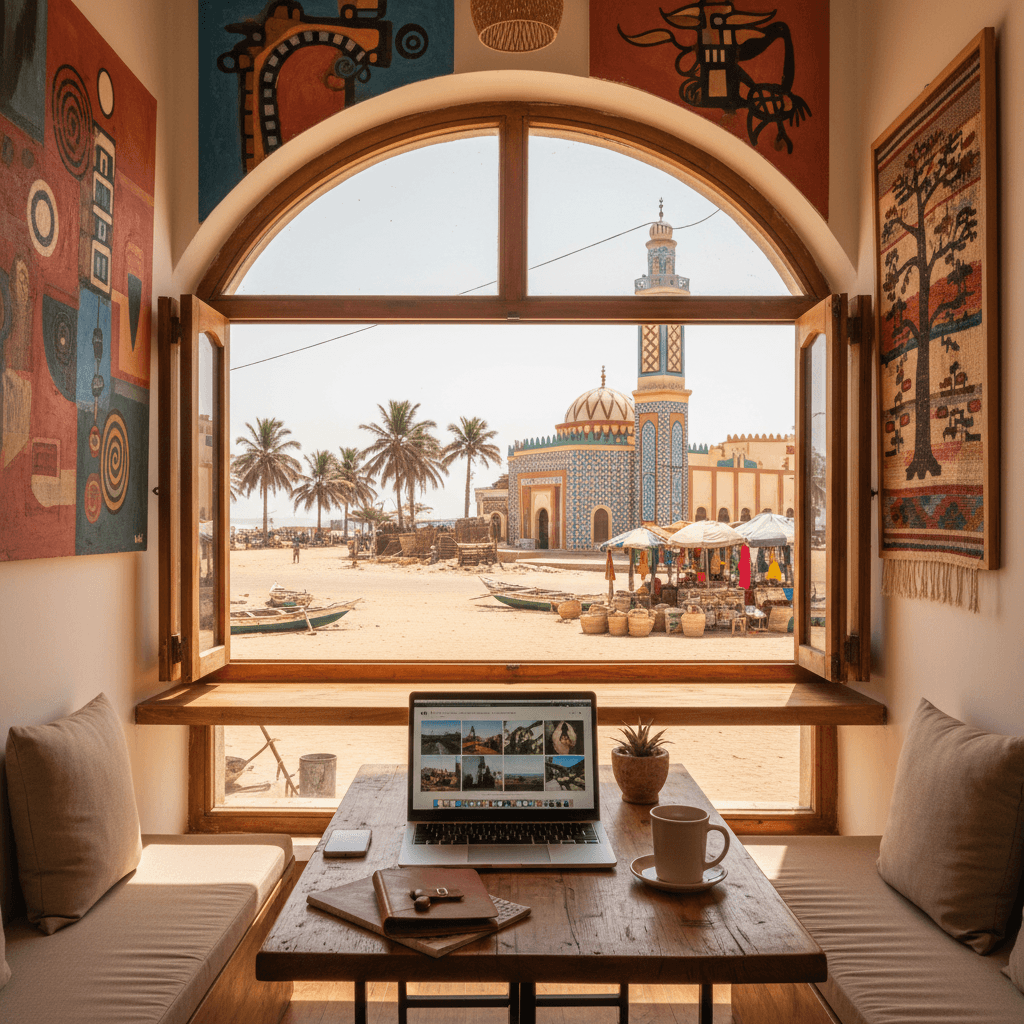
Saly
🇸🇳 Senegal
Saly feels like Senegal taking a deep breath. The beachfront strip is laid-back, touristy in a low-key way and full of palm trees, fish grills and French chatter drifting out of cafés, while the inland streets get quieter, cheaper and more local the farther you go from the water.
Most nomads come here for the beach life and stay for the pace. It’s slower than Dakar, less polished than a Mediterranean resort and honestly that mix is the appeal, though the tradeoff is real: patchy WiFi, fewer workspaces and the occasional power cut that’ll send you hunting for a café with a generator.
Best areas:
- Saly Beachfront: Best for walkability, sea views and easy access to restaurants, but it gets noisy at night and 1BRs often start around 500,000 XOF.
- Guet Na Mbol and inland Saly: Quieter and cheaper, with 1BRs closer to 300,000 XOF, though you’ll rely on taxis more.
- Ngaparou and Somone: Better if you want calmer beaches and a bit more space, just expect a short drive for most errands.
Cost-wise, Saly isn’t dirt cheap, but it’s still far easier on the wallet than Dakar. A solo monthly budget often lands around $1,000 to $1,800 if you’re sensible, while a beach villa lifestyle can push you closer to $3,000 and that includes the little annoyances like taxi rides, cafe workdays and the odd overpriced imported snack.
Food is one of the good parts. Street-side thieboudienne can cost about 1,000 XOF, mid-range seafood dinners usually run 5,000 to 10,000 XOF and a place like La Guinguette or Chez L’Homme Tranquille gives you grilled fish, cold drinks and the smell of charcoal smoke that hangs in the humid air long after sunset.
What daily life feels like: the call to prayer in the morning, scooters buzzing past resorts, sand under your feet by lunch, then a power flicker or a slow-loading page when you’re trying to work. Internet in cafés is, honestly, decent enough for calls at around 20 to 30 Mbps, but don’t expect a proper coworking scene, because there basically isn’t one.
Safety is decent if you’re sensible. Stick to the lit beachfront, keep cash and phones tucked away in markets and don’t assume English will get you far, because French and Wolof run the show here, with a few basic greetings opening more doors than perfect grammar ever will.
Saly isn’t cheap, but it’s still easier on the wallet than Dakar. A solo nomad can get by on about $1,000 a month if they keep things tight, while a more comfortable setup lands closer to $1,800 and a beach villa lifestyle can push you to $3,000 fast. That’s rent, food, taxis and the little leakages that add up, like cold drinks after the heat has you by the throat.
Monthly housing is the biggest swing. A studio or 1BR in the main beach zone usually runs 300,000 to 600,000 XOF and the nicer places near the sand, weirdly, jump past that without much effort because you’re paying for location, sea air and the fact that everything feels a bit easier when the ocean’s right there. Inland in Guet Na Mbol, prices drop, but you’ll trade that for fewer cafés and more taxi rides.
What everyday life costs
- Street food: about 1,000 XOF for thieboudienne or a quick local plate.
- Mid-range meal: 5,000 to 10,000 XOF at places like La Guinguette or Chez L'Homme Tranquille.
- Upscale dinner: 20,000 XOF and up, especially at seafood spots near the water.
- Transport: expect 500 to 2,000 XOF for short taxi or clando hops, though app rides can be pricier.
Food is one of the nicer parts of living here. Fresh fish, grilled prawns and spicy sauce are everywhere and honestly, if you’re not eating local most days, you’re spending more than you need to. Taxis are the annoying part, because Saly is walkable only in pockets, so a cheap rent can get eaten up by back-and-forth trips.
Area by area
- Saly Beachfront: best for walkers and expats, but rent starts higher and nightlife gets noisy.
- Saly Inland, Guet Na Mbol: cheaper and calmer, though you’ll rely on transport more.
- Ngaparou and Somone: quieter, greener and a bit more spread out, which suits people who don’t mind a drive.
WiFi can be a sneaky cost too. There’s no proper coworking scene in town, so many nomads end up café-hopping, paying around 5,000 XOF a day for a seat, decent coffee and internet that’s usually fine until everyone jumps on at once. Power cuts still happen and the fans going silent in the afternoon heat is exactly as unpleasant as it sounds.
If you want a realistic monthly budget, think like this, rent and utilities first, then food, then transport, then a buffer for bad internet, beach drinks and the odd taxi when the sun’s too brutal to walk. Saly can feel affordable, but only if you don’t live like you’re on holiday every day.
Nomads
Saly Portudal beachfront is where most remote workers start and honestly, it makes sense, you can roll out of bed, grab strong coffee and be on the sand in five minutes. It’s walkable, the sea breeze cuts the heat a bit and there’s enough of a French expat crowd that you won’t feel stranded, though the nightlife can get loud when the music starts thumping late.
Expect higher rents here, with decent 1BR places often starting around 500,000 XOF and don’t count on polished coworking spaces, because they’re basically absent. Cafes and beach bars fill the gap, internet is usually fine at 20 to 30 Mbps, then dips when everyone’s online, which, surprisingly, happens right when you’re trying to upload something heavy.
Expats
Guet Na Mbol and inland Saly are the sensible pick if you want more space and less noise. The streets feel calmer, the air smells more like dust and grilled fish than sunscreen and you’re farther from the tourist strip, so prices soften a bit.
- Rent: Around 300,000 XOF for a basic 1BR, more for newer villas.
- Food: Local meals are cheap, street thieboudienne can cost about 1,000 XOF.
- Transport: Taxis and clandos are the norm and Yango works for short hops to Mbour.
It’s quieter, but that quiet comes with trade-offs, fewer shops, less walkability and more time spent sorting out transport when you need anything outside your neighborhood. Still, if you’re staying a few months, this is where your budget stops bleeding so fast.
Families
Families usually do better just outside the beachfront, especially in Ngaparou or Somone, where the beaches are calmer and the traffic noise backs off. The humidity hangs heavy in the afternoon, kids can still run around and you’re close enough to Saly for dinners out without living on top of the late-night scene.
These areas work because they’re less chaotic and frankly, that matters when you’re juggling school routines, groceries and the occasional power cut. You’ll need a car or regular taxi runs, though, because daily life gets annoying fast if you’re depending on walking everywhere.
Solo Travelers
If you’re here alone, beachfront Saly is the easiest landing spot, because restaurants, bars and the main strip are close together, so you won’t spend your first week figuring out transport. It’s social too, with teranga doing a lot of the work, people chat, offer directions and sometimes just drag you into a conversation over tea.
Pick this area if you want nightlife and don’t mind the occasional bassline bleeding into midnight. Skip it if you’re a light sleeper, because once the music kicks up, it can be hard to pretend you’re in a sleepy beach town.
Best overall picks: beachfront for convenience, inland Saly for value, Ngaparou or Somone for quiet. That’s the real split. Choose based on how much noise, driving and rent you can live with, because the wrong neighborhood gets old fast.
Saly’s internet is decent for a beach town, but don’t expect Dakar-level consistency. In resort areas and cafes, speeds usually hover around 20 to 30 Mbps, which is enough for calls, writing and normal work, though a windy afternoon or a power wobble can knock things sideways, honestly, when you least want it.
Orange has the best coverage and that matters more than slick marketing. A 10GB SIM package runs about 5,000 XOF, so most nomads just grab a local SIM at Blaise Diagne Airport or a shop in town and keep a backup hotspot ready, because one café’s WiFi might be fine at 10 a.m. and useless by lunch.
The coworking scene, turns out, is basically non-existent in Saly. No proper desk farms, no polished startup hubs, no big community calendar, just cafes, beach bars and the occasional hotel lobby with a fan that sounds like it’s working too hard.
Best Work Setups in Saly
- Beach cafés and bars: Around 5,000 XOF a day for a seat, WiFi and a cold drink, if the connection’s behaving.
- Hotel lobbies and resorts: Better backup option for calls, though they can get noisy with music, foot traffic and clattering glass.
- Ngaparou or Somone day trips: Quieter spots for focused work, but you’ll need transport and a bit more patience.
If you need reliable coworking every day, use Saly as a base and split time with Dakar when you can. That sounds annoying because it's, but it’s the cleanest workaround, especially if your job depends on long video calls, file uploads or clients who hate “my WiFi dropped” as a sentence.
What Nomads Actually Do
- Hotspot first: Keep your Orange data plan active, then treat public WiFi as a bonus.
- Work early: Mornings are calmer, cooler and less likely to get wrecked by beach traffic or music.
- Have a backup: Power cuts happen, so bring a charged laptop and a battery pack.
Most people who settle here end up working around the friction instead of fighting it. The upside is simple, sea air, cheap seafood and a slower pace that’s weirdly good for deep work, as long as you can live with the occasional outage and the smell of grilled fish drifting in when you’re trying to focus.
Safety & Healthcare
Saly feels safer than Dakar, especially around the beachfront and hotel strips, but don’t get lazy. Petty theft happens, unlit beaches are a bad idea after dark and the noise shifts fast from surf to scooters to the occasional late-night shout, so keep your phone tucked away and walk with a purpose.
Violent crime is low, honestly and most trouble is the annoying kind, not the dangerous kind. Pickpockets like markets and crowded taxi stops and the stretch away from the main resort area gets quiet enough that a solo walk can feel off, especially when the wind’s up and there’s barely anyone around.
If you want the least hassle, stay near Saly Portudal beachfront or one of the better-known expat pockets, because those areas have more lighting, more foot traffic and more people who’ll notice if something looks weird. Inland in Guet Na Mbol is calmer and cheaper, but at night it’s darker, less walkable and frankly a bit too quiet for comfort.
- Best practice: Use taxis after dark, don’t flash cash and skip empty stretches of beach at night.
- Common annoyance: Small theft, bag snatching and the odd hustle near markets or transport stands.
- Emergency number: 151 for ambulances, though response can be slow.
For healthcare, Saly itself is limited. Mbour has the nearest decent public hospital, but for anything serious most expats head to Dakar, where private clinics like Clinique Pasteur are cleaner, faster and still pretty affordable by Western standards, with a basic consult around 15,000 to 25,000 XOF.
Pharmacies are easy to find, which helps a lot for stomach bugs, cuts and mosquito bites and you’ll hear the clatter of medicine bottles and fans humming in most of them. Bring anything you rely on regularly, because the local pharmacy might have it or might shrug and point you to Dakar.
- Routine care: Pharmacies in Saly, minor issues, quick fixes.
- Better care: Mbour for basics, Dakar for specialists and private clinics.
- Bring with you: Prescription meds, sunscreen, antihistamines and mosquito repellent.
Heat and humidity can wear you down faster than you expect, weirdly, especially during the rainy season when the air sticks to your skin and the afternoon storms hammer tin roofs so hard you can’t hear yourself think. Drink more water than you think you need, use repellent every day and don’t mess around with food hygiene if your stomach’s sensitive.
Saly gets around the old-fashioned way, mostly by taxi, clando or your own feet. The beachfront is easy to walk, though the heat, the sand and the random scooter flying past make even a short stroll feel like a small event.
Short taxi rides usually run 500 to 2,000 XOF, depending on distance and how touristy you look and Yango or Heetch can be cheaper and less annoying if you’ve got data. No Uber here. That part’s settled.
Best Ways to Move Around
- Walking: Best along Saly Beachfront, where you can reach restaurants, bars and the water without paying for every errand.
- Taxis and clandos: The default option and honestly the one you’ll use most, especially for trips to Mbour or back from dinner after dark.
- Yango and Heetch: They work in Saly, though driver availability can dip, so don’t leave things to the last second.
- Rented bikes or scooters: Resorts rent them for around 10,000 XOF a day, useful if you want freedom and don’t mind the dust.
Where Movement Is Easiest
Saly Beachfront is the easiest place to live if you hate being trapped. You can walk to cafés, seafood spots and the beach, but you’ll also hear nightlife thumping late, plus the occasional moped and music leaking out into the warm night air.
Saly Inland and Guet Na Mbol are calmer and cheaper, though you’ll probably need transport for almost everything. Apartments are often easier on the budget there and the roads can feel quieter, with fewer tourists and fewer things within walking distance.
Nearby Trips
- Mbour: Easy by taxi or app, usually about 1,500 XOF, good for markets, errands and basic hospital access.
- Ngaparou and Somone: Better for quiet beaches and nature, but you’ll want a car or taxi, because public transport gets patchy.
- Blaise Diagne Airport: Expect roughly 30,000 XOF for a private transfer or app-based ride and more if traffic or timing turns nasty.
Morning traffic is light, then the afternoon heat settles in and everything slows down, so plan extra time if you’re going anywhere important. Bring small cash for drivers, because they won’t always have change and don’t assume a late-night ride will be easy to find once the beach bars empty out.
Saly’s language scene is pretty simple on paper, then slightly messy in real life. French is the official language, Wolof is what you’ll hear most in shops, taxis and beach bars and English only shows up reliably in tourist-facing spots, so don’t expect smooth chats everywhere.
Learn a few phrases and you’ll get farther, honestly, than any fancy app can take you. “Na nga def?” works as a friendly hello, “Jërëjëf” gets you a smile back and “Ñatta?” is the price check that keeps you from getting played.
In the beachfront strip, many hotel staff, restaurant servers and drivers can handle basic English, though the second you move inland the hand signals start doing heavy lifting. Google Translate helps, but it’s clumsy with Wolof, so keep your phone charged and your expectations low, because that cute little language barrier can turn a five-minute errand into a half-hour pantomime.
What To Expect Day To Day
- French: Useful for leases, bills, pharmacies and anything involving paperwork.
- Wolof: The everyday language, especially outside the resort bubble.
- English: Fine in some hotels and beach restaurants, patchy everywhere else.
The sound of Saly is part of the learning curve, too, with muezzin calls at dawn, scooters buzzing past and vendors calling out prices over the surf. People are generally patient when you try, weirdly patient sometimes and that little bit of effort changes the whole interaction, especially when you’re bargaining for fruit, a taxi or a plate of thieboudienne.
Useful Basics
- Hello: “Na nga def?”
- Thank you: “Jërëjëf”
- How much?: “Ñatta?”
- Yes/No: “Waaw” / “Déedéet”
If you’re staying longer than a week, pick up a local SIM and keep your translator app ready, because WiFi can be spotty once you leave the main resort areas. Orange usually has the best coverage and that matters when you’re trying to message a landlord, book a ride or explain that yes, you really do need a receipt.
My take? Don’t be shy, don’t speak too fast and don’t assume everyone wants to switch to English just because you’re a visitor. A couple of Wolof words, a little French and a grin will get you through most situations and in Saly that’s often enough.
Saly stays warm all year and that’s both the selling point and the trap. Daytime highs usually sit between 24 and 32°C, so you’re never packing a coat, but the heat can get sticky fast, especially when the sea air hangs heavy and the breeze drops off.
Best months: January to March. Dry air, blue skies and the kind of beach weather that doesn’t make you sweat through a T-shirt before lunch. Honestly, this is when Saly feels easiest, with warm water, calmer humidity and evenings that are actually pleasant for sitting outside with grilled fish and a cold drink.
December through May is the sweet spot for most visitors. Roads are drier, beach days are reliable and you won’t have to plan your whole week around sudden downpours, which, surprisingly, makes a huge difference if you’re juggling remote work and day trips to Mbour or Somone.
Dry Season, December to May
- Weather: Hot, sunny and dry
- Humidity: Lower, so it feels more manageable
- Why go: Best beach conditions, smoother travel, easier workdays
Rainy season runs from June to November and August is the rough one. Expect muggy afternoons, sudden heavy showers on tin roofs, puddles in the sand and that damp smell that creeps into apartments after a storm, especially if your place doesn’t seal well.
Worst month: August. Rain chances jump hard, power cuts can feel more annoying and the air gets thick enough that even a short walk can leave you drenched. If you hate sweating through your clothes by 10 a.m., skip it.
Rainy Season, June to November
- Weather: Humid, wetter, less predictable
- Best for: Lower crowds, greener surroundings, cheaper stays
- Downside: More mosquitoes, more storms, more frustration with weak WiFi when the weather turns
For digital nomads, January to March is the safest bet. You’ll still want a backup data plan, because internet in Saly can be patchy anyway, but at least you’re not fighting heat, rain and occasional outages all at once. If you want the quietest, most comfortable stretch, go then, stay near the beachfront and don’t book a place that bakes in the afternoon sun.
June and July can work if you don’t mind some rain. September and October are usually the hardest sell, frankly, because the humidity lingers, the showers hit fast and the beach loses some of its easy, lazy charm. Saly’s nice, just don’t come expecting perfect weather every day.
Saly moves at a softer pace than Dakar and that’s the draw. The beachfront is easy, the sea is calm and the downside is obvious: WiFi can be flaky, power cuts happen and if you need a serious coworking setup, you’ll probably end up cafe-hopping instead.
Money-wise, Saly isn’t cheap, but it’s still gentler than Dakar. A basic one-bedroom in the beach zone usually starts around 300,000 XOF, while nicer places near the water can push past 500,000 XOF and more. A meal of thieboudienne from a street spot runs about 1,000 XOF, mid-range seafood dinners sit around 5,000 to 10,000 XOF and a proper splurge can hit 20,000 XOF or higher.
Most nomads keep a monthly budget around $1,000 to $1,800 and if you want a beach villa plus taxis and regular eating out, $3,000 gets used up fast. Honestly, the little costs add up, especially transport and coffee-shop workdays, because paying for a table and a few drinks all day gets old.
Where to stay
- Saly Beachfront: Best for walkability, sea views and easy nights out, but it’s noisier and rents are higher.
- Saly Inland, Guet Na Mbol: Quieter and cheaper, with 1BRs around 300,000 XOF, though you’ll need transport more often.
- Ngaparou and Somone: Good if you want more space and quieter beaches, but you’ll be driving into Saly for dinner or nightlife.
For internet, Orange is usually the safest bet and a 10GB SIM often costs about 5,000 XOF. Resort and café WiFi can hit 20 to 30 Mbps on a decent day, which, surprisingly, is fine for calls, but don’t count on it in every apartment, the signal drops when the power blinks.
Getting around is easy, if you don’t mind taxis. Short rides usually cost 500 to 2,000 XOF, Yango and Heetch work in the area and a transfer from Blaise Diagne Airport can run about 30,000 XOF. There’s no Uber here, so plan on clandos, app cars or walking the beachfront when the heat isn’t brutal.
For money, Wave and Orange Money are the smoothest options, ATMs are around and cash still matters at smaller places. Learn a few French or Wolof basics, greet people properly and use your right hand, because skipping that stuff reads as rude, frankly, even if nobody calls it out.
Safety is decent by West African standards, but don’t wander dark beaches late at night and don’t leave your phone on a café table. Food is one of the best reasons to stay, with seafood joints like La Guinguette and Chez L’Homme Tranquille doing solid plates, while King Night Club and Katmandou Saly handle the late noise if that’s your thing.
Frequently asked questions
How much does it cost to live in Saly as a digital nomad?
How much is rent in Saly, Senegal?
Is the internet good enough for remote work in Saly?
Are there coworking spaces in Saly?
Which area of Saly is best for digital nomads?
Is Saly safe for solo travelers?
What is healthcare like in Saly?
Need visa and immigration info for Senegal?
🇸🇳 View Senegal Country GuideOff the Radar
Pioneer territory