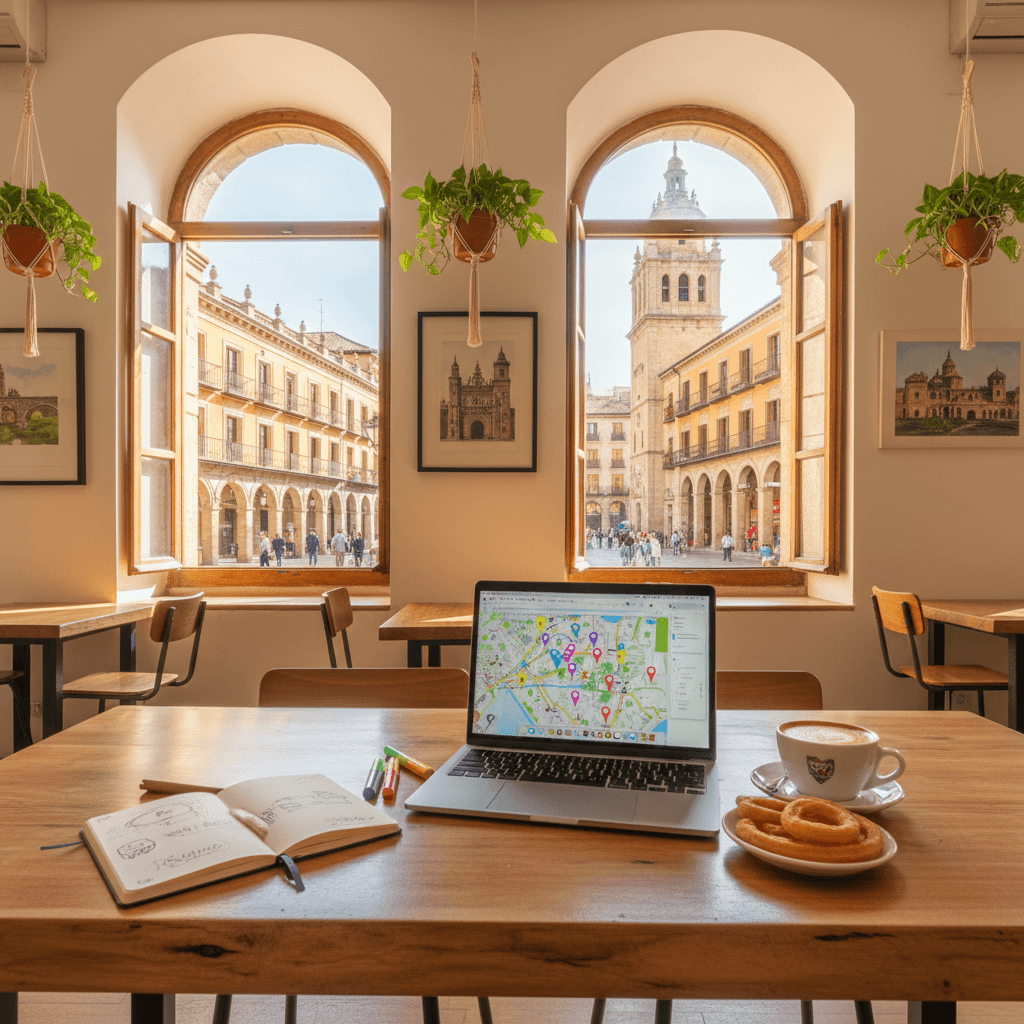
Salamanca
🇪🇸 Spain
The Golden City Experience
Salamanca doesn't just sit there; it glows. Built almost entirely from Villamayor sandstone, the city turns a deep, honeyed gold as the sun sets, creating a backdrop that makes even a quick laptop session at a cafe feel cinematic. It is a place where 800 years of academic history meets a restless, youthful energy. While Madrid is for the hustle and Barcelona is for the beach, Salamanca is for the nomad who wants to actually hear their own thoughts while staying connected to a social pulse.
The vibe here is defined by the university. With thousands of students pouring into the streets every semester, the city stays affordable and energetic, yet it maintains a polished, safe atmosphere that feels more like a large village than a provincial capital. You'll find yourself falling into the local rhythm quickly: productive mornings in a quiet library or cafe, a long lunch, and late nights spent under the arches of the Plaza Mayor, which most travelers agree is the most beautiful square in Spain.
The Cost of Living
Your Euro goes significantly further here than in Spain's coastal hubs. For a mid-range lifestyle, expect to budget around €1,800 per month. If you are keeping things lean, you can get by on €1,200, while a high-end experience with a premium apartment in the historic core will run you €2,500 or more.
- Housing: A studio or one bedroom in the outskirts costs €500 to €700. Moving into the Centro or near the Plaza Mayor bumps that to €700 to €1,200 depending on the view and modern amenities.
- Food & Drink: You can grab a quick tapas lunch for €10, while a nice dinner at a spot like La Cocina de Toño usually lands between €15 and €25.
- Connectivity: A desk at Salamanca Coworking is roughly €150 a month, and a mobile data plan via Saily eSIM starts at about €7 for 3GB.
Where to Plant Your Flag
The city is famously walkable, so you won't need a car. Most nomads gravitate toward Centro for the proximity to the action. It is immersive and beautiful, though the stone buildings can echo with late night student chatter on Thursdays and Fridays. If you need a quieter environment for deep work, Puente Romano near the river offers green space and a more residential feel while staying within a ten minute walk of the cathedral.
For those on a tighter budget, the Garete area near the university campus is the go-to. It is packed with cheap bakeries and lively bars, making it easy to meet people if you are traveling solo. Expats often recommend looking for apartments on Idealista or Fotocasa, but be ready to move fast, as the best spots get snatched up before the autumn semester begins.
Work, WiFi, and Weather
Internet reliability is rarely an issue here. Most cafes and rentals offer speeds around 30 Mbps, which handles video calls without a hiccup. When you need a professional environment, Salamanca Coworking in the city center is the primary hub for the remote community. For a more casual afternoon, the university-affiliated cafes around the Plaza Mayor are great for people-watching between emails.
Timing your stay is vital. Salamanca has a continental climate, which means it gets biting cold in January and scorching in August. The sweet spots are May to June and September to October. During these months, the temperature sits comfortably between 20°C and 25°C, perfect for exploring the nearby walled city of Ávila or the Roman aqueducts in Segovia on your days off.
The Social Landscape
Spanish is the primary language, and while students usually speak decent English, you will want a few phrases of Castilian to navigate the local markets or pharmacies. The social scene revolves around the "dos besos" greeting and late night tapas crawls. If you are looking to connect with other remote workers, check the Punta app or join the Digital Nomads Salamanca group on Facebook. Most nomads find the locals welcoming, provided you respect the afternoon siesta between 2 pm and 5 pm, when the smaller shops close up and the city takes a collective breath.
The Price of Living in the Golden City
Salamanca is one of those rare spots where your budget stretches further without sacrificing the classic Spanish lifestyle. While Madrid and Barcelona prices continue to climb, this university town remains remarkably grounded. Most nomads find they can live a high quality life here for around €1,800 per month, though you can certainly get by on €1,200 if you're mindful of your tapas runs.
Rent is your biggest variable. If you want to wake up to the sandstone glow of the Centro, expect to pay between €700 and €900 for a solid one bedroom apartment. Those looking for premium views or modern renovations near the Plaza Mayor might see prices hit €1,200. If you're on a tighter budget, look toward the outskirts or the university districts where €500 to €700 is the norm.
Monthly Budget Breakdowns
- Budget Tier (€1,200/month): Best for those sharing a flat or living in the outskirts. You'll stick to €5 to €10 street food or university canteen meals and use the €20 to €30 monthly bus pass.
- Mid-Range Tier (€1,800/month): This covers a private apartment in a central neighborhood. You can afford €20 dinners out a few times a week and a full time coworking membership.
- Comfortable Tier (€2,500+/month): This gets you a premium Centro flat, frequent fine dining at spots like Restaurante El Mesón where meals exceed €50, and regular weekend trips to nearby cities like Ávila or Segovia.
Where to Plant Your Flag
The city is incredibly compact, so you'll likely spend more on shoes than on transport. Most expats recommend the Centro for your first few months. It's the heart of the action with the best cafes and the most impressive architecture, though the weekend crowds can get loud. You'll be steps away from the social hub of Plaza Mayor and reliable workspaces.
For a more local, residential feel, Puente Romano is the go to. It's quieter, sits near the river, and offers plenty of green space for morning runs. If you're younger or prefer a high energy environment, Garete is the university district. It's the cheapest area for food and rent, but be prepared for student parties and a less polished vibe.
Connectivity and Workspace
Reliable WiFi is standard across the city, usually averaging 30 Mbps. For a dedicated desk, Salamanca Coworking in the Centro is the top pick for nomads. They offer daily passes for €10 to €15 and monthly memberships for around €150. It's a great spot to meet others and escape the "work from home" isolation.
For mobile data, travelers often suggest skipping the hassle of physical SIM cards. The Saily app provides eSIM plans starting at €6.99 for 3GB. If you need more data for heavy Zoom calls, you can find unlimited plans through local providers like Movistar or Orange at shops throughout the city center.
Day to Day Expenses
- Dining: A casual lunch or a few tapas at La Cocina de Toño usually runs €10 to €15. A mid range three course meal for two is typically around €40 to €50.
- Groceries: Local markets and supermarkets are affordable. Expect to spend about €250 to €300 a month on high quality local produce, Manchego, and wine.
- Transport: A single bus ride is €1.50, but most people just walk. Short Uber or Bolt rides across town rarely exceed €10.
- Digital Nomad Visa: If you're staying long term, the Spanish Digital Nomad Visa requires a minimum monthly income of €2,849. You'll also need to prove at least three months of remote work experience.
Overall, Salamanca offers a productive environment without the financial stress of a major capital. It's a place where you can focus on your projects durante el día and enjoy a €2 glass of wine by a 15th century cathedral by sunset.
For Nomads: The Historic Core (Centro)
If you want to walk out of your apartment and immediately feel like you're on a movie set, the Centro is your spot. This is the heart of the "Golden City," where the sandstone buildings glow at sunset and the Plaza Mayor serves as the city's communal living room. Most nomads gravitate here because the density of cafes with solid WiFi is highest, and you're never more than a five minute walk from a coworking desk.
Salamanca Coworking is the primary hub in this area, offering daily passes for €10 to €15 or monthly memberships around €150. It's a modern space that balances the ancient exterior of the neighborhood with the high speed internet you need for Zoom calls. Travelers often say the "immersive charm" of the narrow cobblestone streets makes the higher rent prices worth it.
- Rent: Expect to pay €700 to €900 for a one bedroom apartment.
- Vibe: High energy, historic, and incredibly walkable.
- Downside: It gets noisy on Thursday and Friday nights when the student population takes over the tapas bars.
For Solo Travelers: Garete (University District)
Located just north of the historic center, Garete is the heartbeat of Salamanca's massive student population. For solo travelers, this is the easiest place to meet people. The area is packed with "tascas" and budget friendly eateries where you can grab a meal for €10. It's less polished than the Centro, but it feels more authentic to the daily life of the city's younger residents.
Socializing here usually revolves around the tapas scene. Expats recommend starting your evening at La Cocina de Toño, where the prices are fair and the atmosphere is lively. If you're looking to connect with other digital nomads, keep an eye on the Punta app or local Facebook groups like "Digital Nomads Salamanca" for meetups that frequently happen in the bars around this district.
- Rent: More affordable, often ranging from €500 to €700 for modest studios.
- Vibe: Youthful, casual, and budget friendly.
- Internet: Reliable 30 Mbps speeds are standard in most rentals and local cafes.
For Families and Expats: Puente Romano
If you need a break from the constant energy of the university crowd, head toward the river. The area around the Puente Romano (Roman Bridge) offers a much more relaxed pace of life. It's characterized by green spaces and parks along the Tormes River, making it the top choice for families or expats planning a long term stay. You still get the views of the Cathedral, but you get them without the 2:00 AM street noise.
This neighborhood feels like a true community. You'll find local pharmacies like Farmacia Palomero Gil or Farmacia María Isabel Herrero nearby and easy access to the Hospital Universitario de Salamanca. While it's a bit further from the main coworking hubs, the city is so compact that you can still walk to the Plaza Mayor in about 15 to 20 minutes. For those who prefer wheels, the SALenBici app or city mobility app for bike rentals around €1 per hour is perfect for riding along the river paths.
- Rent: Premium apartments can go for €900 to €1,200, though larger family units are available.
- Vibe: Quiet, scenic, and residential.
- Transport: While walkable, local buses cost €1.50 per ride if you're heading across town in a hurry.
Practical Logistics for All Neighborhoods
Regardless of where you land, getting set up in Salamanca is straightforward. Most nomads find that a Saily eSIM is the easiest way to get data immediately, with 5GB plans starting around €9.99. If you're staying longer on a Digital Nomad Visa, you'll eventually want a local SIM from Movistar or Orange and a fintech account like Revolut or N26 to avoid ATM fees.
The city is safest during the shoulder seasons of May to June and September to October. During these months, the weather sits comfortably between 20 and 25°C, which is ideal for exploring every corner of these neighborhoods on foot. Just remember the local rhythm: most shops close for a siesta between 2:00 PM and 5:00 PM, so plan your errands accordingly.
Connectivity and Speed
Salamanca might feel like a medieval time capsule, but the digital infrastructure is firmly in the 21st century. You can expect average WiFi speeds of around 30 Mbps across the city. While that isn't lightning fast compared to Madrid, it is remarkably stable. Most nomads find the connection more than sufficient for video calls and heavy cloud uploads without the frustrating drops you might experience in more remote Spanish towns.
For data on the move, skip the hunt for a local shop and grab an eSIM through the Saily app. It is the go-to for most travelers here, offering 3GB for €6.99 or 5GB for €9.99. If you are planning a longer stay and need unlimited data, visit a Movistar or Orange shop in the city center to pick up a physical SIM. Just bring your passport, as Spanish law requires identification for all mobile registrations.
Top Coworking Spaces
The coworking scene in Salamanca is intimate rather than corporate. You won't find massive, anonymous complexes here; instead, the spaces reflect the city's academic and collaborative spirit. The community is tight knit, making it easy to network with local entrepreneurs and other remote workers.
- MContigo Coworking or Work Center Salamanca: Located in the Centro, these are excellent options for the city. They are modern, bright, and filled with ergonomic furniture. A day pass will run you €15 to €20, while a full month costs about €150 to €400. They host regular events, which is a lifesaver if you are trying to break out of the "work from home" bubble.
- University-Affiliated Hubs: Because Salamanca is a major student city, there are numerous study halls and libraries with solid WiFi. While these aren't traditional coworking spaces, they offer a productive, quiet atmosphere for the price of a coffee.
Laptop-Friendly Cafes
If you prefer the hum of a coffee machine to a quiet office, Salamanca's cafe culture is incredibly welcoming. Unlike in some busier capitals, many cafe owners don't mind if you linger for a few hours, provided you keep the coffee and tapas orders coming.
The area around Plaza Mayor is packed with options. While some spots right on the square can be touristy and loud, the side streets hide quiet gems with strong signals. Travelers often recommend the cafes in the Garete district. Since it is the university heart of the city, these spots are used to students with laptops and generally offer the most reliable free WiFi and affordable snacks. A typical mid-day meal at a cafe here will only cost you €10 to €15.
Practical Tips for Working Remotely
The most important thing to remember about working in Salamanca is the siesta. Between 2:00 PM and 5:00 PM, the city slows down significantly. While major coworking spaces stay open, smaller cafes or shops might close their doors. Plan your deep work blocks for these hours when the streets are quiet, then head out for tapas when the city wakes back up in the evening.
If you are here on the Spain Digital Nomad Visa, keep your paperwork handy. You will need to show a monthly income of at least €2,849 to qualify, and having a local address in a neighborhood like Centro or Puente Romano makes the administrative process much smoother. Most expats recommend using N26 or Revolut for your daily expenses to avoid the high currency conversion fees at local ATMs.
Salamanca is one of those rare places where you can walk home at 3:00 AM without looking over your shoulder. The heavy student presence means the streets stay active well into the night, creating a natural sense of safety that most nomads find incredibly refreshing. While larger hubs like Madrid or Barcelona require a bit of street smarts regarding pickpockets, Salamanca feels more like a tight knit community where everyone is looking out for each other.
Staying Safe in the Golden City
Crime rates here are remarkably low. You won't find specific "no-go" zones or neighborhoods to avoid. Most expats and travelers report feeling completely at ease exploring the Centro or the winding alleys near the Roman Bridge at any hour. The biggest "risk" you'll likely face is the occasional rowdy group of university students during the weekend, but even then, the vibe remains festive rather than aggressive.
- Daily Awareness: While violent crime is almost non existent, keep an eye on your phone or laptop if you're working in a crowded cafe in Plaza Mayor. Petty theft is rare but not impossible in high traffic tourist spots.
- Local Authorities: The police are generally approachable and helpful. If you ever find yourself in a pinch, the EU wide emergency number is 112.
- Solo Travelers: Women traveling alone frequently mention that Salamanca is one of the most comfortable cities in Spain for solo nighttime walks.
Healthcare for Nomads
The healthcare system in Salamanca is top tier, anchored by the massive Hospital Universitario de Salamanca. It's a leading facility in the region, so you're in good hands for anything from a minor infection to a serious emergency. For day to day needs, look for the green neon crosses of local pharmacies, like Farmacia Centro, which are ubiquitous and often have staff who speak at least some English.
If you're applying for the Spain Digital Nomad Visa, you'll need to prove you have private health insurance that offers full coverage without co payments. This is a strict requirement for the residency permit, and most nomads opt for providers like Sanitas or Adeslas to meet the criteria. Once you're settled and paying into the Spanish social security system, you may eventually gain access to the public system, but having that private policy is your ticket in.
Practical Health Contacts
- Emergency Services: Dial 112 for immediate medical, fire, or police assistance.
- Primary Care: For non emergencies, visit a Centro de Salud. You'll find these in every neighborhood, from Garete to the outskirts.
- Pharmacy Hours: Most are open during standard business hours, but there is always a Farmacia de Guardia (on call pharmacy) open 24 hours a day. You can find the daily schedule posted on the door of any closed pharmacy.
Expats generally recommend keeping a digital copy of your insurance policy and your passport on your phone at all times. While you likely won't need it, Spanish administrative offices and hospitals are big on paperwork. Most travelers find that the peace of mind provided by the city's safety allows them to focus entirely on their work and enjoying the local culture.
The Golden City on Foot
Salamanca is one of those rare places where your best mode of transport is a sturdy pair of leather boots. The city is remarkably compact, and the historic center is almost entirely pedestrianized. Most nomads find they can get from a morning coffee in the Plaza Mayor to a deep work session at Salamanca Coworking in under ten minutes without ever seeing a car. The golden sandstone streets are flat and easy to navigate, making the daily commute feel more like a scenic stroll than a chore.
Buses and Public Transit
If you decide to base yourself in the quieter outskirts to save on rent, the local bus system is reliable and straightforward. The red city buses run frequently, usually every 10 to 15 minutes on main lines. You can hop on for a flat rate of €1.50 per ride, but if you are staying for a month or more, expats recommend grabbing a rechargeable bus card. A monthly pass costs around €30, which is a steal compared to Madrid prices. It is the best way to reach the larger shopping centers or the Hospital Universitario de Salamanca if you are staying in the northern neighborhoods.
Cycling and Scooters
For those who prefer two wheels, the city has been leaning into greener transit. Use SALenBici or the new city mobility app for public bikes around €1 per hour. While the cobblestones in the ancient core can be a bit bumpy for a scooter, the lanes along the river near Puente Romano are perfect for a sunset ride. It is a popular way for solo travelers to clear their heads after a long day of Zoom calls.
Ride-Hailing and Taxis
When the rain hits between October and March, or if you are heading home after a late night of tapas, Uber and Bolt both operate here. Short trips within the city limits typically range from €5 to €10. Traditional white taxis are also plentiful and can be hailed on the street or found at designated stands near the main plazas. They are generally honest and use meters, so you won't have to worry about the "tourist tax" common in busier hubs.
Getting In and Out
Salamanca has its own small airport, but flights are limited. Most nomads fly into Madrid or Valladolid Airport instead. From Valladolid, you can catch a bus for about €10 that gets you into the city in roughly 90 minutes. If you are coming from Madrid, the high speed Alvia train is the gold standard. It takes about 1 hour and 40 minutes, dropping you off at the station on the northeastern edge of town. From there, a €20 taxi or a quick bus ride will get you to your Airbnb in the Centro.
Regional Exploration
One of the perks of living here is the ease of weekend escapes. The main bus station (Estación de Autobuses) is a hub for regional travel. You can reach the medieval walls of Ávila in about an hour, or head to Segovia to see the Roman aqueduct. These trips are affordable and frequent, allowing you to use Salamanca as a base for exploring the wider Castilla y León region without ever needing to rent a car.
The Purest Spanish in the World
Salamanca is famous for being the home of "pure" Spanish. Locals speak with a clarity and precision that makes this city a magnet for language learners. If you're coming here to sharpen your skills, you've picked the right spot. The accent is standard Castilian, meaning you won't have to deal with the heavy regional dialects found in the south or the bilingual complexities of Catalonia.
While the university population brings a global flair, don't expect everyone to be fluent in English. Students and hospitality staff in the Centro usually speak enough to get by, but shopkeepers and older residents often stick strictly to Spanish. Most nomads find that a basic grasp of the language goes a long way here. It's a city where people appreciate the effort, so try to lead with a "Hola" or "Buenos días" before switching to English.
Staying Connected
You won't have to worry about dropping off the grid. The city's infrastructure is solid, with average WiFi speeds hitting around 30 Mbps. Most cafes around Plaza Mayor and the university district offer reliable connections, though they can get crowded with students during exam seasons. For a more professional setup, Work Center Salamanca or MContigo Coworking are great options, offering flexible day passes around €15-€20.
For mobile data, skip the search for local shops and grab an eSIM before you land. Expats often recommend the Saily app for convenience; you can get 3GB for ~€6 or 5GB for ~€9. If you prefer a physical SIM, head to a Movistar or Orange shop in the city center. They usually have prepaid plans that offer more than enough data for a month of remote work.
Social Circles and Meeting People
Salamanca is a social city, but it moves at a different pace than Madrid. Life revolves around the "tapas crawl." Instead of one big meal, you'll likely spend your evenings moving from bar to bar. This is where most of the city's networking happens. It's informal, loud, and very welcoming.
- Digital Nomads Salamanca: This Facebook group is the best place to find local meetups and housing tips.
- Punta App: Use this to find other remote workers nearby for mid day coffee breaks or weekend trips.
- InterNations: A reliable way to connect with the more established expat community and professionals.
Cultural Nuances to Remember
Communication in Spain isn't just about words; it's about timing and body language. The "siesta" is a real thing here. Between 2:00 PM and 5:00 PM, many smaller shops close up, and the streets go quiet. Don't try to schedule important meetings or errands during this window. It's better to use that time for a long lunch or focused work at your desk.
When meeting someone new in a social setting, the "dos besos" or two cheek kisses is the standard greeting. It can feel a bit intimate if you're from a more reserved culture, but it's the norm here. Also, keep your attire smart casual. Even though it's a student town, Salamantinos take pride in their appearance, especially when heading out to La Cocina de Toño or other popular spots for evening drinks.
Useful Phrases for Your First Week
- ¿Dónde está...?: Where is...? (Perfect for finding those tucked away tapas bars).
- La cuenta, por favor: The bill, please.
- ¿Tienes WiFi?: Do you have WiFi?
- Perdone: Excuse me (Use this to get a waiter's attention or pass through a crowd).
If you're ever stuck, Google Translate or DeepL work perfectly for real time translations. Most menus now have QR codes, which makes it easy to translate ingredients if your Spanish is still a work in progress.
The Seasonal Cycle
Salamanca sits on Spain's high northern plateau, which means it experiences a proper continental climate. Locals often describe the weather here as nine months of winter and three months of hell, though that's a bit of an exaggeration for dramatic effect. In reality, you'll find a city that transitions sharply between crisp, biting winters and dry, intense summers.
Winter arrives in November and sticks around through March. January is the toughest month, with highs barely reaching 10°C and nights frequently dipping toward freezing. It's a dry cold, however, so if you're layered up, the sunny winter days are actually quite beautiful for working from a cafe window in the Plaza Mayor. Rain isn't a massive deal here, but you can expect some light drizzle and overcast skies during the late autumn and early spring months.
Summer hits fast. By July and August, temperatures regularly climb to 32°C or higher. Because the air is so dry, the heat doesn't feel as oppressive as it does in coastal cities like Barcelona, but the sun is fierce. This is when the city slows down; many locals head to the coast, and the student population thins out, giving the streets a quieter, sleepier feel.
The Sweet Spots: When to Visit
If you want the best balance of weather and social energy, aim for the shoulder seasons. Most nomads and expats recommend two specific windows:
- May to June: The weather is nearly perfect, with daily highs between 20°C and 25°C. The university is still in session, so the energy is high, but the summer bake hasn't started yet.
- September to October: This is arguably the best time to be in the city. The heat breaks, the students return, and the light hitting the golden sandstone buildings is spectacular.
Key Dates and Festivals
Timing your stay around the local calendar can change your experience entirely. If you're looking for culture and don't mind the crowds, keep these dates in mind:
- September (Feria de Salamanca): This is the city's biggest celebration. Expect a week of concerts, traditional markets, and bullfighting. It is the liveliest the city gets all year.
- Holy Week (Semana Santa): Usually in March or April, this is a massive deal in Salamanca. The processions through the old stone streets are hauntingly beautiful, though accommodation prices will spike.
- The University Calendar: Remember that Salamanca is a student town. If you arrive in August, the city might feel a bit empty. If you want that famous "vibrant" energy, make sure you're there between September and May.
Practical Packing for Nomads
Because of the temperature swings, your packing list needs to be versatile. If you're visiting in the spring or fall, bring layers. A light jacket is mandatory for the evenings, as even on warm days, the temperature drops significantly once the sun goes down over the Tormes River.
For those planning a winter stay, a heavy coat is a must. The wind can whip through the narrow stone alleys of the Centro, and many older apartments rely on electric heaters rather than central heating, so a warm pair of house slippers and a good hoodie will make your "office days" much more comfortable.
Getting Settled and Connected
Salamanca is one of those rare cities where you can actually afford to live in the historic center without draining your savings. Most nomads head straight for the Centro to be near the Plaza Mayor. Expect to pay between €700 and €900 for a one bedroom apartment here. If you prefer a quieter, more residential vibe, Puente Romano offers green spaces and a slower pace, while the Garete area is the go to for budget conscious solo travelers who don't mind a bit of student noise in exchange for cheaper rent.
Staying connected is straightforward. WiFi speeds average around 30 Mbps, which is plenty for video calls and heavy uploads. If you need a dedicated office, Salamanca Coworking in the city center is the local favorite, costing about €15 to €150 for a day pass or monthly membership. For data on the move, grab an eSIM through the Saily app; 5GB usually runs around €9.99. If you prefer a physical SIM, visit a Movistar or Orange shop once you arrive.
The Monthly Budget
Living here is significantly cheaper than in Madrid or Barcelona. You can live comfortably on a mid range budget of €1,800 per month, though frugal travelers can make it work on €1,200. Here is how the costs generally break down:
- Housing: €500 to €700 for outskirts studios, or up to €1,200 for premium spots in the Centro.
- Food: A casual tapas lunch or street food costs €5 to €15, while a nice dinner at a place like La Cocina de Toño averages €20 to €25.
- Transport: A monthly bus pass is €30, though the city is so compact you will rarely use it.
- Coworking: Budget €150 for a full time desk.
Navigation and Logistics
Salamanca is a walking city. You can cross the main hubs in twenty minutes, and the lack of cars in the historic core makes it a dream for pedestrians. For longer trips, use the BiciSalamanca app to grab a bike for €1 per hour. If you are coming from abroad, you will likely land in Madrid or Valladolid. A bus from Valladolid takes about 90 minutes and costs €10, while a taxi from the local Salamanca airport is roughly €20.
When it comes to the legal side of things, the Spain Digital Nomad Visa is the gold standard. You will need to prove an income of at least €2,849 per month and show you have been working remotely for at least three months. Once you have your NIE, you can open a local bank account, though most expats stick with Revolut or N26 for daily spending to avoid ATM fees.
Lifestyle and Language
The local rhythm takes some getting used to. Many shops close for the siesta between 2 pm and 5 pm, and dinner rarely starts before 9 pm. While younger people and students speak decent English, you will want a few Spanish basics for the pharmacies and local markets. "Dos besos" (two kisses) is the standard greeting, and people tend to dress smart casual; you won't see many locals in gym clothes unless they are actually at the gym.
Safety is a non issue here. It is one of the safest cities in Spain, and nomads frequently report feeling comfortable walking home alone at any hour. For healthcare, the Hospital Universitario de Salamanca is top tier, but you should keep private insurance to satisfy visa requirements and ensure faster service at local clinics like Farmacia Centro.
When to Visit
The sweet spots are May to June and September to October. During these months, the weather sits between 20 and 25°C, perfect for working from a cafe terrace. Avoid January if you hate the cold, as temperatures drop to 1°C, and skip August if you aren't prepared for the dry 32°C heat. If you are here in September, don't miss the Feria de Salamanca for a week of music and traditional festivals.
Need visa and immigration info for Spain?
🇪🇸 View Spain Country GuideEasy Landing
Settle in, no stress