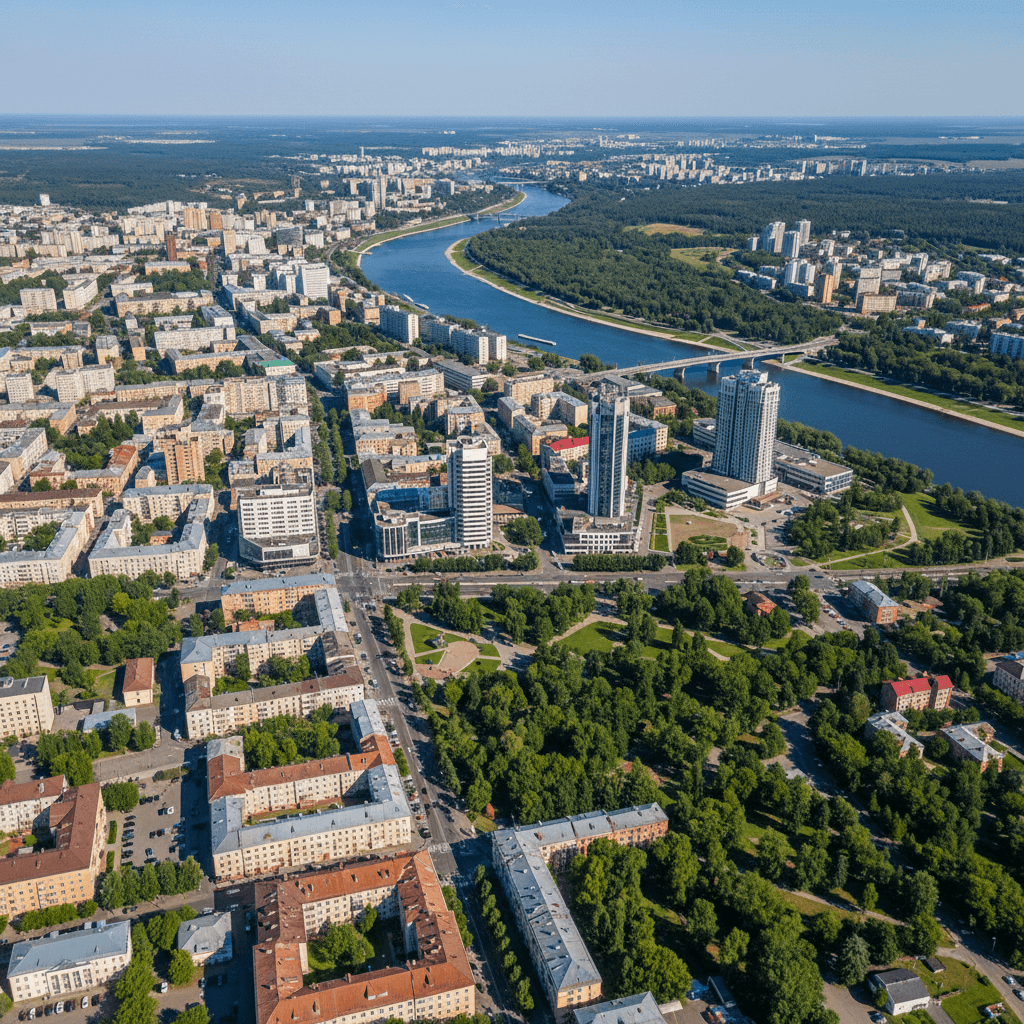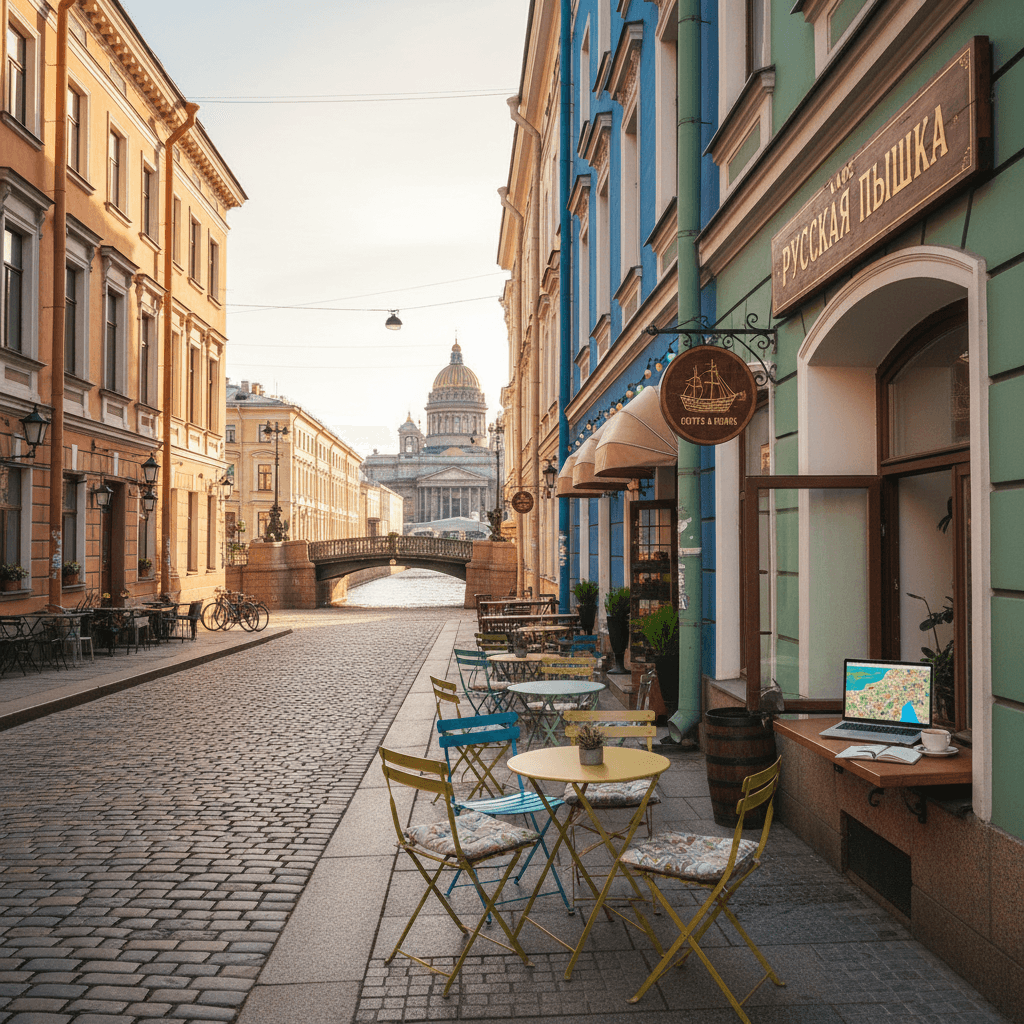
Saint Petersburg
🇷🇺 Russia
The Venice of the North with a DIY Edge
Saint Petersburg doesn't feel like the rest of Russia. If Moscow is the high-octane, corporate engine of the country, Piter, as locals call it, is its moody, poetic, and slightly rebellious sibling. It is a city of massive scale, where imperial palaces and granite embankments meet a gritty, underground creative scene. Most nomads find that while the architecture is strictly classical, the lifestyle is surprisingly progressive and DIY.
The vibe here is defined by a "living museum" aesthetic. You'll spend your afternoons working from high-ceilinged cafes in the Chernyshevskaya area and your evenings at pop-up art galleries or basement bars. It is a city that rewards those who dig beneath the surface. While the grand facades of the Nevsky Prospekt are impressive, the real soul of the city stays tucked away in "anti-cafes" and hidden courtyards where the massive student population keeps the energy young and affordable.
A European Soul in a Russian Body
Expats often describe Saint Petersburg as the most European city in Russia. The layout is manageable, the canals give it a breezy openness, and the culture is more relaxed than the frantic pace of other global hubs. You'll notice a distinct lack of the "hustle at all costs" mentality here. Instead, there's a deep appreciation for the arts, long walks during the White Nights, and a legendary nightlife scene that rivals Berlin for its grit and variety.
For digital nomads, the draw is the combination of high-end infrastructure and a low cost of living. You can live in a furnished, well-located flat for roughly $500 a month while enjoying 200 Mbps fiber optics in premium coworking spaces like Yasnaya Polyana. It’s a place where you can earn in a strong currency and live like royalty, all while surrounded by world-class history.
The Realities of the Ground
Living here isn't without its quirks. The language barrier is the biggest hurdle. While Saint Petersburg is arguably the easiest place in Russia to get by with English, you'll still find that many locals outside the tourist center don't speak it well. You'll rely heavily on apps like Yandex GO for transport and Yandex Maps to find your way around, as Google isn't always the most accurate tool in this part of the world.
The city also demands a bit of patience. If you aren't living directly in the center, commuting can become a chore. The metro is beautiful and efficient, but the city is sprawling. Most successful nomads choose to plant themselves near the Hermitage or in the creative lofts of the Central District to keep everything walkable. It’s a city that requires you to lean into its local digital ecosystem, specifically Telegram, where the best events, underground parties, and "secret" deals are shared in local channels like TripSoup or Fiesta.Ru.
Monthly Budget Breakdown
- Budget Lifestyle: $1,500 to $1,800 per month. This covers a room in a shared flat, plenty of street food, and relying on the metro.
- Mid-Range Nomad: $2,000 to $2,600 per month. This is the sweet spot for most, allowing for a private one-bedroom apartment, a dedicated desk at a coworking space, and regular dining out.
- Comfortable/Premium: $2,600 to $3,500+ per month. This gets you into high-end neighborhoods, upscale dining, and premium fitness clubs.
Ultimately, Saint Petersburg is for the nomad who wants more than just a beach and a laptop. It is for the person who wants to be inspired by their surroundings, who enjoys a bit of cold-weather moodiness, and who wants to experience a cultural heavyweight without the price tag of London or Paris.
The Financial Reality
Saint Petersburg is where you go when you want a high-end European lifestyle without the London or Paris price tag. It is noticeably cheaper than Moscow, especially when it comes to rent and dining out. If you are earning in USD or EUR, your purchasing power here is massive. Most nomads find that a monthly budget of $1,800 to $2,600 covers a very comfortable mid-range lifestyle, including a private apartment in a solid location and plenty of nights out.
For those on a tighter grind, you can get by on $1,500 to $1,800 if you are willing to use public transport and stick to local "stolovayas" (cafeterias) and street food. On the flip side, if you want the high life in premium neighborhoods with upscale dining and memberships at the best coworking spots, expect to spend $2,600 to $3,500+ per month.
Monthly Budget Breakdown
- Housing: A well-furnished one-bedroom flat in a good area typically runs around $500. You will pay more for anything overlooking the Neva or tucked right behind the Hermitage.
- Food and Groceries: Budget $300 to $400 for a mix of grocery runs and eating out. The city is a playground for foodies, so this is where your budget is most likely to creep up.
- Connectivity: A monthly membership at a top-tier coworking space like Yasnaya Polyana costs roughly 17,000 RUB, which converts to about $230 to $280.
- Transport and Tech: Mobile data is famously cheap. Between a SIM card and regular rides on Yandex GO, you will likely spend less than $100 a month on getting around and staying connected.
Housing and Neighborhoods
Rent is your biggest variable. If you want to be within walking distance of the major sights and the best bars, the City Center is the place to be, though you will pay a premium for the convenience. Many creative types and digital nomads gravitate toward the Chernyshevskaya area. It is packed with lofts and "anti-cafes" where you pay for your time rather than your coffee.
If you look further out, prices drop significantly, but be prepared for a commute. Unless you are near a metro station, getting into the center can become a chore. Most expats recommend sticking to the central districts to keep the city's DIY creative spirit within reach.
Day-to-Day Expenses
Eating out is one of the city's greatest perks. You can grab a quick lunch for a few dollars or drop $50 on a multi-course dinner at a trendy fusion spot. For groceries, local chains are affordable, but imported goods will spike your bill. To keep costs down, do what the locals do and use Telegram channels like Fiesta.Ru or TripSoup to find free events, pop-up parties, and dining deals.
When it comes to logistics, the Yandex GO app is your best friend for ride-hailing. It is reliable and cheap. For navigation, Yandex Maps is much more accurate than Google Maps for local business hours and entrance locations. If you are booking accommodation or flights within the country, Ostrovok and Aviasales are the standard tools that generally work well with international cards.
The Creative & Digital Nomad Crowd
If you're coming to Saint Petersburg to work, you'll likely want to be near the Chernyshevskaya area. This neighborhood is the city's unofficial creative hub, packed with lofts, anti cafes, and art spaces. It feels less like a tourist trap and more like a lived in neighborhood for the young and ambitious. Most nomads gravitate here because it's where you'll find Yasnaya Polyana, a top tier coworking space that offers speeds up to 200 Mb/s for around 17,000 RUB a month.
The vibe around Chernyshevskaya is distinctly European, with a DIY spirit that shows up in the underground bars and pop up galleries. It's the kind of place where you can sit in a cafe for hours on a single coffee without getting side eyed. You're close enough to the action of the center but far enough away that the rent won't eat your entire budget. Expect to pay around $500 for a solid, furnished one bedroom flat in this vicinity.
Expats & Long Term Residents
For those looking for a bit more prestige and direct access to the city's architectural heavy hitters, the Golden Triangle (near the Hermitage and Palace Square) is the primary choice. It's the most expensive part of the city, but you're paying for the "Venice of the North" aesthetic. Everything is walkable, and you're surrounded by world class dining and the city's legendary nightlife. However, keep in mind that prices here are premium, and the streets can get crowded with tourists during the White Nights season.
Expats often recommend looking just slightly outside the immediate tourist core to find a balance between character and cost. If you live outside the central districts, you'll definitely need to master the Metro. While signs are in English, the bus system is a bit of a gamble if you don't speak Russian. Stick to Yandex Maps and Yandex GO to get around, as they're much more reliable than Google in this part of the world.
Solo Travelers & Social Butterflies
If you're traveling solo and want to be where the people are, staying near Rubinstein Street or the Nevsky Prospect area is your best bet. Rubinstein is famous for having the highest concentration of bars and restaurants in the city. It's the heart of the social scene. You'll find plenty of fellow travelers and locals willing to chat, especially in the craft beer bars and "time cafes" where you pay by the minute rather than by the drink.
To find the best events, solo travelers should lean heavily on Telegram. Channels like Fiesta.Ru and Kudago are the gold standard for finding underground parties, free gallery openings, and even outdoor activities like forest ice skating rinks. Even if you don't speak the language, a quick run through a translator app will give you the location and time of the best local meetups.
Families & Quiet Seekers
Families or those who prefer a quieter pace often look toward Vasilyevsky Island or the Petrogradskaya Side. These areas offer a more residential feel with wider streets and plenty of parks, while still maintaining that classic Saint Petersburg architectural charm. The internet infrastructure remains excellent here, so you won't sacrifice your work productivity for a bit of peace and quiet.
- Chernyshevskaya: Best for creative energy and coworking.
- The Center: Best for luxury, history, and being in the middle of everything.
- Petrogradskaya: Best for a local feel and quieter evenings.
- Rubinstein Area: Best for foodies and nightlife enthusiasts.
Regardless of where you land, Saint Petersburg remains significantly more affordable than Moscow. A mid range budget of $1,800 to $2,600 a month allows for a very comfortable lifestyle, including a private apartment, frequent dining out, and a dedicated desk at a high end coworking space. If you're earning in USD or EUR, your purchasing power here is incredibly high, making it one of the most cost effective "European" style cities for a long term stay.
Connectivity and Speeds
Saint Petersburg is a digital powerhouse where you rarely have to worry about dropping a Zoom call. Most nomads find the city center is a massive mesh of reliable fiber optics. While some community speed tests show averages around 12 Mbps, these figures are usually skewed by older residential buildings or budget hotels. If you head to a modern apartment or a dedicated workspace, you will easily clock speeds of 200 Mbps or higher.
Mobile data is another win for the budget. It is incredibly cheap and reception holds up even in the deep, ornate metro stations. Local expats recommend picking up a SIM card immediately to use apps like Yandex Maps and Telegram, which are the lifeblood of the city. Most cafes are very laid back about laptops; you can usually nurse a single latte for hours without getting the "check please" glare from staff.
Top Coworking Spaces
The coworking scene here is sophisticated, often leaning into the city's academic and artistic roots. You aren't just getting a desk; you're getting a community of local tech talent and creatives.
- Yasnaya Polyana: This is arguably the most stylish spot in the city. It feels more like a high end library or a private club than a sterile office. A monthly membership here runs about 17,000 RUB (roughly $230 to $280), which gets you 24/7 access and a prestigious address in a beautiful historic building.
- Chernyshevskaya Area Lofts: The neighborhood around the Chernyshevskaya metro station is a magnet for the creative crowd. You will find several "anti-cafes" and lofts here. These operate on a pay per minute or pay per hour model, often including free coffee and biscuits, making them perfect for those who don't want a fixed monthly commitment.
The "Anti-Cafe" Culture
If you find traditional coworking spaces a bit too stiff, Saint Petersburg's anti-cafes are a great alternative. In these spots, you pay for the time you spend rather than the food you consume. It is a popular setup for the city's massive student population and freelance community. It creates a relaxed, DIY vibe where you can work for a few hours, play a board game during a break, and meet local Russians who are usually very keen to practice their English.
Practical Tips for Remote Work
To stay in the loop, you need to live on Telegram. Most of the best working spots, pop up events, and "secret" lofts don't advertise on Google. They post updates on channels like Fiesta.Ru or TripSoup Pro Piter. Even if your Russian is shaky, using a translation app to skim these channels will give you a huge advantage in finding the best quiet corners of the city.
If you are living outside the historic center, be prepared for a commute. While the metro is efficient and beautiful, the best workspaces are concentrated in the central districts. Most nomads recommend finding a flat near the Hermitage or in the Chernyshevskaya district to keep your "office" within walking distance. If you do have to travel, Yandex GO is the go to app for quick, affordable rides when the metro feels too crowded.
Staying Safe in the Piter Flow
Saint Petersburg is generally as safe as any major European capital, but it has its own set of rules. Most nomads feel perfectly comfortable walking through the Central District or Petrogradskaya late at night. The city stays awake during the White Nights of summer, and the constant foot traffic adds a layer of natural security. However, keep your wits about you in crowded tourist spots like the Palace Square or Nevsky Prospect, where pickpockets occasionally look for easy targets.
Common sense goes a long way here. Locals suggest sticking to well lit main streets and avoiding the darker courtyards of older buildings if you aren't familiar with the area. While the atmosphere is progressive, it's wise to avoid political discussions or demonstrations, as these can escalate quickly with local authorities. If you're out enjoying the nightlife on Rubinshteina Street, stick to reputable ride hailing apps like Yandex GO rather than hailing a random car off the street.
- Emergency Numbers: Dial 112 for general emergencies or 103 specifically for an ambulance. Operators in the city center often have a basic grasp of English, but it helps to have a translation app ready.
- Scams to Avoid: Be wary of people offering photos with exotic animals or dressed as historical figures near the Hermitage; they often demand high fees after the photo is taken.
- Solo Travelers: Women generally report feeling safe, though standard precautions apply when using public transport late at night.
Healthcare and Medical Services
The healthcare system in Saint Petersburg is a mix of state run clinics and high end private centers. For digital nomads, private clinics are the gold standard. They look and feel like premium Western hospitals, and many of their doctors speak English. Places like Meditsinsky Tsentr 'Your Doctor' are the top choices for expats because they offer streamlined service and international standards of care.
Pharmacies, marked by a green "Аптека" sign, are everywhere. Many are open 24/7 and stock a wide range of international brands. You'll find that many medications that require a prescription in the US or UK are available over the counter here, though it's always better to bring your specific maintenance meds with you to avoid any brand name confusion.
- Private Consultation: A visit to a specialist at a private clinic typically costs between $40 and $80.
- Health Insurance: Most nomads use international providers like SafetyWing or Genki, but ensure your policy specifically covers Russia, as some providers have changed their terms recently.
- Water Safety: Don't drink the tap water. The city's plumbing is old, and the lead content can be high. Stick to bottled water or high quality filters like Brita or Aquaphor, which are sold in every supermarket.
Practical Wellness Tips
The biggest health challenge for many newcomers isn't a virus, it's the climate. The lack of sunlight in the winter can take a toll on your mental health. Expats often recommend taking Vitamin D supplements and investing in a specialized sun lamp to get through the grey months of November and December. On the flip side, the Banya (Russian sauna) culture is a local secret for staying healthy. Heading to a spot like Degtyarnye Bani is a great way to boost your immune system and socialize with the local creative crowd at the same time.
The Metro System
The Saint Petersburg Metro isn't just a way to get from A to B; it's practically an underground museum. For nomads, it's the most reliable way to beat the city's notorious traffic. You'll find that all major station signs and maps include English translations and Latin lettering, making it surprisingly easy to navigate even if your Cyrillic is rusty.
Trains run like clockwork, usually every 2 to 3 minutes during the day. While the center is highly walkable, you'll likely use the Metro to reach creative hubs like the Chernyshevskaya area. Just keep in mind that the escalators here are some of the deepest in the world, so factor in an extra five minutes just for the descent.
Buses and Marshrutkas
Surface transport is where things get a bit more "local." Standard city buses and trams are plentiful, but unlike the Metro, they rarely have English announcements. If you're venturing out of the historic core, you'll encounter marshrutkas (private minibuses).
These operate on a "stop on request" basis. If you don't speak up, the driver will breeze right past your destination. Expats recommend learning the phrase "Na ostanovke, pozhalujsta" (at the stop, please) to ensure you actually get off where you intended. Without a firm grasp of the language, sticking to the Metro or ride-hailing apps is usually the stress-free choice.
Ride-Hailing and Navigation
Forget the apps you use back home. In Saint Petersburg, Yandex GO is the king of the road. It's the Russian equivalent of Uber and it's incredibly efficient. You can see your fare upfront, and drivers are everywhere, even in the middle of the night. It's often so affordable that many nomads use it as their primary mode of transport when they're tired of walking the long Nevsky Prospekt.
For getting around on foot or checking bus routes, Yandex Maps is significantly more accurate than Google Maps in this part of the world. It provides real-time data on bus locations and more detailed building entrances, which is a lifesaver when you're looking for a specific courtyard loft or "anti-cafe."
Walking the Venice of the North
If you've managed to snag an apartment near the Hermitage or in the Tsentralny district, your best transport assets are your own two feet. The city was designed on a grand scale, so "just a few blocks" can often turn into a twenty-minute trek.
The walkability is high, but the weather is the deciding factor. During the White Nights in summer, walking home at 2:00 AM feels like a dream. In the winter, the sidewalks can get icy and the wind off the Neva river is biting, so you'll find yourself ducking into the Metro or a Yandex car much more often.
Essential Transport Apps
- Yandex GO: The go-to for taxis and ride-sharing.
- Yandex Maps: Superior for walking directions and live bus tracking.
- Telegram: Follow channels like Fiesta.Ru or TripSoup for updates on transport strikes, bridge openings, or pop-up events.
The Bridge Schedule
One unique quirk of Saint Petersburg transport is the opening of the bridges. During the navigation season (typically April to November), the massive drawbridges across the Neva open at night to let large ships pass. If you're on the wrong side of the river after 1:30 AM, you might be stuck there until the bridges close again around 5:00 AM. Always check the nightly schedule if you're planning a late night out at the bars in Rubinstein Street.
The Language Barrier Reality
Saint Petersburg is widely considered the most accessible Russian city for English speakers. Because of its massive student population and status as the country's cultural window to the West, you'll find a higher density of locals who can hold a conversation in English or German compared to Moscow or Siberia. That said, don't expect fluency to be the default once you step out of the tourist center or away from hipster coffee shops.
Most nomads find that younger people in the Chernyshevskaya area or near the university hubs speak enough English to help you out. However, daily interactions at the grocery store, with older landlords, or at government offices will almost certainly require some Russian. It's a city where a little effort goes a long way; learning the Cyrillic alphabet is a weekend project that pays dividends for the rest of your stay.
Navigating the City
The transit system is a bit of a mixed bag for non-speakers. The Metro is surprisingly friendly to outsiders. Every station name is dubbed in Latin letters and signs are bilingual, so you won't get lost underground. The bus system is where things get tricky. Buses don't usually have English announcements or digital signs, making it easy to miss your stop if you aren't glued to your GPS.
If you're using the marshrutka (private minibuses), you'll need to speak up to get out. Use the phrase "Na ostanovke, pozhalujsta" to tell the driver to pull over at the next stop. If you stay silent, they might skip your destination entirely. For stress-free travel, most expats stick to Yandex GO. It's the local equivalent of Uber and allows you to set your destination in the app, bypasses the need for verbal directions, and links directly to your payment method.
Digital Communication and Apps
In Saint Petersburg, Telegram isn't just a messaging app; it's the city's operating system. If you want to find the best underground parties, pop-up art galleries, or free events like ice skating at forest rinks, you have to join local channels. Most of these are in Russian, so you'll be using the "Translate" feature constantly.
- Yandex Maps: This is far more accurate than Google Maps for Saint Petersburg. It shows real-time bus locations and even tells you which subway entrance is closest to your destination.
- DeepL or Google Translate: Essential for deciphering menus in smaller cafes and reading signs in residential neighborhoods.
- Fiesta.Ru & Kudago: These are the go-to Telegram sources for event listings and special offers.
Key Phrases for Your First Week
While you can get by with pantomime and translation apps, keep these local basics in your back pocket to make life smoother:
- Zdrast-vuy-te: Hello (formal). Use this for shopkeepers and officials.
- Privyet: Hi (informal). Perfect for the creative crowd at Yasnaya Polyana.
- Spasibo: Thank you.
- Ya ne govoryu po-russki: I don't speak Russian.
- Schet, pozhalujsta: The bill, please.
Communication here is often more direct than in the US or UK. Don't mistake a lack of small talk for rudeness. Once you break the ice, usually by attempting a few words of Russian, you'll find the local nomad and student community is incredibly welcoming and eager to practice their English with you.
Survival of the Seasons
Saint Petersburg is famous for its dramatic seasonal shifts. You'll experience two entirely different cities depending on when you land. The winter is long, dark, and biting, while the summer is a surreal, nonstop celebration where the sun barely sets. Most nomads aim for the window between late May and early September to catch the city at its peak performance.
The Magic of White Nights
If you can time your arrival for June or July, you'll witness the legendary White Nights. Because of the city's high northern latitude, the sun dips just below the horizon, leaving a twilight glow that lasts until morning. It's a surreal time to be a digital nomad. The streets stay packed, the bridges over the Neva open at 1:30 AM to let ships through, and the energy is electric.
- June Temperatures: Expect highs around 20°C (68°F), though it can spike higher.
- The Vibe: Festivals, rooftop parties, and 24 hour coffee shops.
- The Catch: It's the most expensive time for short term rentals, and you'll definitely need blackout curtains if your flat doesn't have them.
Autumn and the Golden Fall
September is often underrated. The "Golden Autumn" brings crisp air and turns the city's many parks into orange and red landscapes. It's much quieter than the summer rush, and the humidity drops. By October, however, the dampness sets in. Saint Petersburg is notorious for its "pasmurno" (overcast) days. You'll want a high quality waterproof jacket because the rain here is more of a constant, fine mist than a downpour.
Bracing for the Deep Freeze
Winter isn't for the faint of heart. From December through February, temperatures frequently hover between -5°C and -15°C (5°F to 23°F). The wind blowing off the Gulf of Finland makes it feel significantly colder. Daylight becomes a rare commodity, with the sun rising around 10:00 AM and disappearing by 3:30 PM.
Expats who stay through the winter swear by the city's "anti-cafe" culture and cozy lofts like those in the Chernyshevskaya area. It's a season for hunkering down in places like Yasnaya Polyana to get deep work done. Plus, you get to experience the city's canals frozen solid and the massive forest ice rinks that pop up on the outskirts, which are often free or very cheap to access if you follow local Telegram channels like Kudago.
Spring Awakening
April is generally the month to avoid. The snow melts into a slushy mess locally known as "gryaz" (dirt/mud), and the city looks a bit gray before the trees bloom. However, by mid-May, the fountains in Peterhof are switched on, the cafe terraces open up, and the city breathes again. If you're looking for lower rent prices before the summer peak, May is a strategic month to sign a lease.
What to Pack
The weather here is famously unpredictable; locals joke that you can see all four seasons in a single Tuesday. Even in the height of summer, a sudden cold front can drop temperatures by ten degrees. Travelers recommend a layering system rather than one heavy coat. You'll need sturdy, non slip boots for the winter ice and a reliable umbrella for the rest of the year. If you're planning on working from cafes, bring a light sweater even in July, as the stone buildings can stay surprisingly chilly inside.
Staying Connected
Internet in Piter is surprisingly reliable and, compared to Western Europe or North America, incredibly cheap. Most city center apartments come with fiber optics as standard. If you're working remotely, you won't be tethered to your flat; the cafe culture here is massive. Places like Yasnaya Polyana offer a high end coworking experience for about 17,000 RUB (roughly $230 to $280) a month, where you can expect speeds hitting 200 Mbps.
For a more casual vibe, the Chernyshevskaya area is the go to spot. It's packed with "anti cafes" and creative lofts where you pay for your time rather than your coffee. Most nomads find that even mid range coffee shops are perfectly fine with you camping out for a few hours on a single latte.
Navigation and Apps
Don't rely solely on what you use back home. While Google Maps works, Yandex Maps is the gold standard here. It's much more accurate for local business hours and public transport routes. For getting around, Yandex GO is your version of Uber or Lyft. It's cheap, fast, and saves you the headache of explaining directions in broken Russian.
The Metro is a work of art, and luckily for us, the signs are bilingual. You'll see Cyrillic and Latin characters at every station. Buses are a bit trickier because they lack English announcements. If you find yourself on a marshrutka (a private minibus), you'll need to speak up to get off. Just say "Na ostanovke, pozhalujsta" when you're nearing your stop, or the driver might just keep flying toward the end of the line.
Money and Booking
Since the financial landscape for travelers changed recently, you need to be smart about how you book. Use Ostrovok.ru for accommodation; it's the local alternative to major booking sites and reliably accepts foreign bank cards. For domestic flights or hops to nearby regions, Aviasales is the preferred search engine.
Your monthly budget will likely fall between $1,800 and $2,600 for a comfortable mid range lifestyle. This covers a nice one bedroom flat in a solid location (around $500), groceries and dining out ($300 to $400), and a dedicated desk at a coworking space. If you're earning in USD or EUR, your purchasing power goes a long way here.
Social Life and Local Intel
To find out where the actual parties are, you have to get on Telegram. The city’s social life moves through private and public channels rather than Facebook groups. Keep an eye on Fiesta.Ru or Kudago for event listings. These channels are often in Russian, so keep a translation app handy to scout out underground bars or pop up events in the lofts around the center.
The language barrier is real, but Saint Petersburg is easily the most English friendly city in the country. You'll find a massive student population and a DIY creative spirit that makes it easy to meet people if you hang out in the right spots. Locals might seem reserved at first, but once you're in, the hospitality is legendary.
Practical Essentials
- SIM Cards: Pick up a local SIM immediately; data is dirt cheap and reception is strong even in the subway.
- Walking: The center is highly walkable, but if you live outside the historic core, factor in a 20 to 30 minute metro commute.
- Winter Prep: While the search data is thin on weather, remember this is the North. Bring layers and waterproof shoes for the slushy transition seasons.
- Translation: Download the Russian dictionary for offline use in Google Translate. It’s a lifesaver for reading menus in smaller, non touristy joints.
Need visa and immigration info for Russia?
🇷🇺 View Russia Country GuideNomad Haven
Your home away from home
Monthly Budget Estimates
More cities in Russia
Chelyabinsk
🇷🇺 Russia
Krasnoyarsk
🇷🇺 Russia
Kazan
🇷🇺 Russia