Sainshand
🇲🇳 Mongolia
The Gobi’s Quiet Outpost
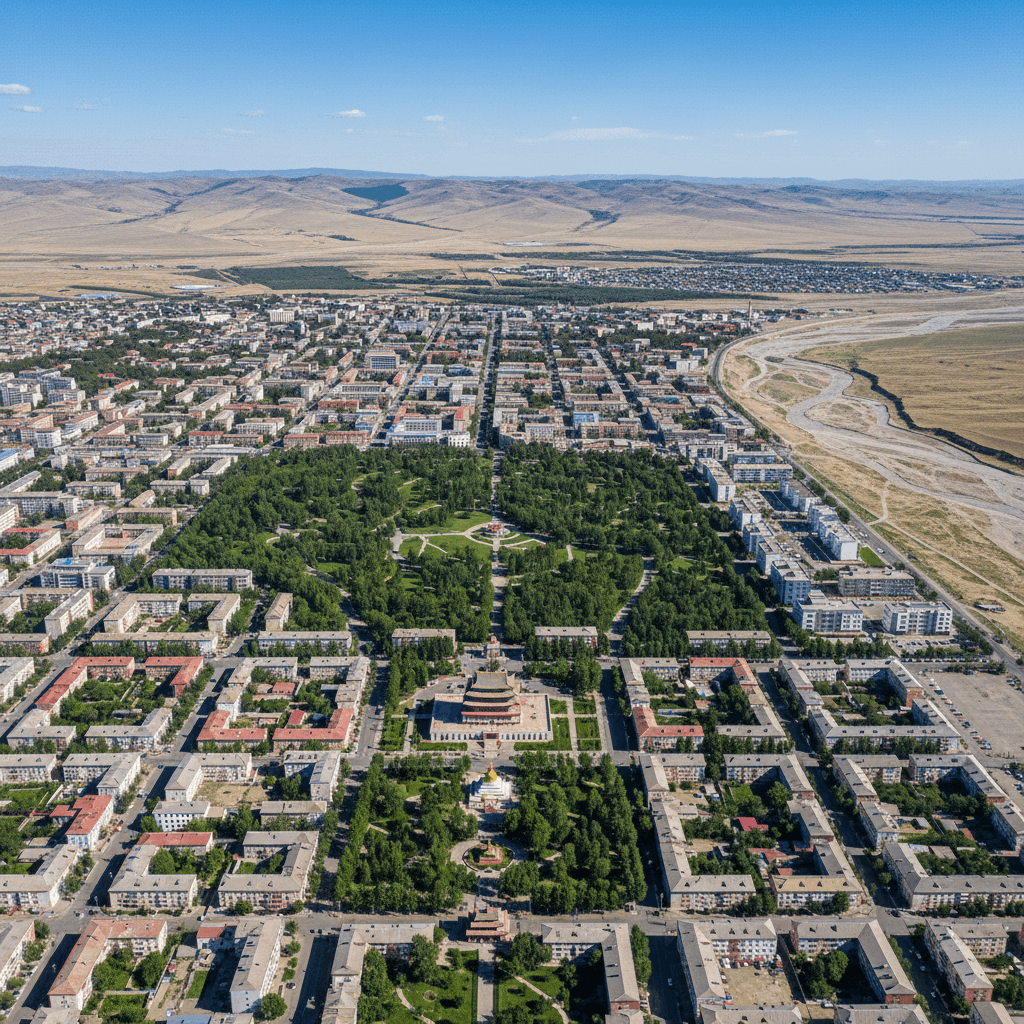
If you are looking for the high energy of a digital nomad hub, Sainshand is not it. This is a place where the wind carries the sound of the desert and the pace of life matches the slow trek of a camel. Located in the heart of the eastern Gobi, Sainshand serves as a gritty, functional provincial capital that feels like a frontier town. It is a stopover on the Trans-Mongolian Railway that most travelers skip, but for a specific type of remote worker, it offers a rare kind of meditative isolation.
The vibe here is stark and unpretentious. You won’t find artisanal coffee shops or glass-walled coworking spaces. Instead, you get low-slung Soviet-style architecture, dusty streets, and a horizon that never ends. It is a town built on the edge of the void, where the silence of the desert is the primary soundtrack. Most people come here for the energy of the nearby Khamariin Khiid monastery or the "energy centers" of the Gobi, but staying in the city itself feels like living in a time capsule of rural Mongolian life.
The Emotional Landscape
Living in Sainshand for a week or two is an exercise in minimalism. There is a strange, haunting beauty in the way the light hits the sand dunes at sunset, turning the landscape a deep copper. You’ll feel a sense of profound solitude that is hard to find in Ulaanbaatar. However, that solitude can quickly turn into frustration if you aren't prepared for the lack of infrastructure. It is a place for deep work, long walks, and early nights.
The locals are reserved but generally hospitable. You will likely be the only foreigner in the grocery store, and English is almost nonexistent. You will need to rely on translation apps and patience. It is the kind of destination that rewards the self-sufficient traveler who finds comfort in wide-open spaces and doesn't mind a bit of dust on their laptop.
Logistics and Reality Checks
Let’s be honest about the digital setup: it’s basic. While 4G coverage from Unitel is surprisingly decent in the town center, you won’t find a dedicated desk to rent. Most nomads work from their hotel rooms or the occasional quiet corner of a local canteen. You are trading high-speed fiber for a view of the Gobi.
- The Weather: It is a land of extremes. In November, temperatures often hover between -5 and 4 degrees Celsius. During the peak of winter, it can plummet to -30, while summers are blistering.
- Connectivity: A 20GB SIM card will cost you roughly 40,000 MNT (about $12 USD). It is reliable enough for emails and basic calls, but don't count on it for heavy video editing or seamless streaming.
- The Social Scene: Non-existent in the traditional sense. Your social life will consist of brief interactions with railway workers, monks, and the occasional adventurous backpacker passing through on the train.
Why Choose Sainshand?
You choose Sainshand because you want to disappear for a while. It is significantly cheaper than Ulaanbaatar, though your spending options are limited anyway. A comfortable monthly budget here would sit around $800 to $1,000, mostly because there simply isn't much to buy. You’ll spend your money on basic meals, train tickets, and perhaps a driver to take you out to the sand dunes or the petrified forests.
It is a destination for the "monk-mode" phase of your journey. If you need to finish a book, design a project, or simply decompress from the chaos of Southeast Asia or Europe, the Gobi provides the perfect, empty canvas. Just don't forget to pack a heavy coat and a very good data roaming plan.
The Reality of Gobi Living
Living in Sainshand is a lesson in extreme minimalism. You won't find the polished infrastructure of Ulaanbaatar here, but your bank account will certainly feel the relief. Because the city is a transit hub for the Trans-Mongolian Railway and a gateway to the Gobi, costs stay low to accommodate locals and domestic travelers rather than international expats.
Most nomads find that a monthly budget of $800 to $1,000 covers a very comfortable lifestyle, simply because there aren't many places to overspend. You're trading high-end amenities for some of the lowest overhead costs in Central Asia. Expect to pay for almost everything in Mongolian Tögrög (MNT), as smaller shops and local guesthouses rarely deal in USD.
Monthly Budget Estimates
- Budget Tier: $700 - $850. This covers a basic guesthouse or local apartment rental, eating primarily at local canteens (guanz), and using the city's minimal transport.
- Mid-Range: $1,100 - $1,300. This allows for a stay in one of the better hotels like the Gobi Sunrise, frequent meals at the more established restaurants, and hiring private drivers for desert excursions.
- The "High Life": $1,800+. It is actually difficult to spend this much in Sainshand unless you are booking luxury ger camps on the outskirts of town every night or paying for constant private transport back to the capital.
Housing and Accommodation
Sainshand doesn't have a formal rental market on sites like Airbnb or local real estate portals. Most long-term stays are negotiated directly with hotel managers or through local connections. You won't find modern studio apartments with floor-to-ceiling windows here.
- Local Apartment (Monthly): $250 - $400. These are usually in older, Soviet-style blocks. They are functional and warm, which is vital when the Gobi wind picks up.
- Hotel Stay (Monthly Rate): $500 - $700. Many travelers recommend negotiating a monthly rate at places like Khur Gobi Hotel. It ensures you have consistent heat and someone who might speak a few words of English.
Food and Groceries
Eating out is remarkably cheap if you stick to Mongolian staples like khuushuur (fried meat pastries) or buuz (steamed dumplings). A hearty meal at a local spot will rarely set you back more than 10,000 to 15,000 MNT ($3 - $4.50).
- Basic Meal: $3 - $5. Found at local eateries near the train station.
- Dinner for two (Mid-range): $20 - $25. This covers a multi-course meal at one of the larger hotel restaurants.
- Monthly Groceries: $150 - $200. Prices for fresh produce can fluctuate depending on the season, as almost everything is trucked in from Ulaanbaatar or China.
Connectivity and Utilities
Since there are no coworking spaces in Sainshand, your "office" will be your hotel room or a quiet corner of a cafe. You'll need to rely heavily on mobile data. A Unitel SIM card with a 20GB data package costs roughly 40,000 MNT ($12) and is generally reliable enough for emails and basic video calls, though speeds rarely exceed 5-10 Mbps.
- Mobile Data (20GB): $12. Unitel and Mobicom are the primary providers.
- Utilities (if renting): $40 - $70. Heating is usually included in apartment costs, but electricity and water are billed separately.
- UBCab / Local Transport: $1 - $3 per trip. While there isn't a robust app presence like in the capital, local taxis are plentiful and cheap for getting across the small city center.
The Bottom Line
You don't come to Sainshand for the coffee shops or the networking events. You come here to disappear into the desert for a month while keeping your burn rate at an absolute minimum. It is one of the few places left where $1,000 makes you feel like a high roller, provided you don't mind a little dust and a lot of solitude.
The Reality of Life in the Gobi
Sainshand is not your typical digital nomad hub. It is a rugged, functional provincial capital in the heart of the Gobi Desert. You won't find a sprawling map of distinct neighborhoods with trendy cafes or gentrified districts. Instead, the city is divided into two primary sections: the Northern (Old) Town and the Southern (New) Town, separated by several kilometers of desert road and the Trans-Mongolian Railway tracks.
Most of the action happens in the Southern section near the train station. This is where you will find the majority of the city's infrastructure, including the few hotels and eateries available. Connectivity is the biggest hurdle here. While Unitel and Mobicom offer LTE coverage that works surprisingly well in the town center, there are no dedicated coworking spaces. You will be working from your hotel room or a quiet corner of a local restaurant.
For Digital Nomads
If you are a nomad, you are likely here for a short stint to experience the desert or visit the Shambhala energy center. Stick to the Southern Town near the railway station. It is the most practical area for accessing transport and the few reliable internet spots. You will want to stay at one of the larger establishments like Hotel Crystal or Khur Gobi Hotel to ensure you have a desk and a somewhat stable Wi-Fi connection.
- Rent: Expect to pay $30 to $50 per night for a decent hotel room, as long term apartment rentals for foreigners are rare.
- Vibe: Industrial, transit focused, and quiet.
- Pro Tip: Buy a local Unitel SIM card with at least 20GB of data for about 40,000 MNT before leaving Ulaanbaatar; it is more reliable than hotel Wi-Fi.
For Solo Travelers
Solo travelers looking for culture should lean toward the Northern Town. This area feels more like a traditional Mongolian settlement and houses the Danzanravjaa Museum. It is quieter and offers a more authentic look at life in a desert outpost. However, you will be doing a lot of walking or relying on local taxis to get between the two halves of the city.
- Atmosphere: Traditional and residential with a local market feel.
- Safety: Very high, though the language barrier is significant. Almost no one speaks English here.
- Transport: Taxis are cheap but you will need to use the UBCab app or have your destination written in Cyrillic.
For Families
Sainshand is a tough sell for families living the expat life. There are no international schools and very few recreational facilities for children. If you are visiting, the Southern Town is still the best bet because it puts you closer to the train station for a quick exit if the desert heat or winter chill becomes too much. The Nomad Land area on the outskirts offers ger stays which can be a fun, short term educational experience for kids.
- Housing: Limited to basic hotels or guesthouses.
- Food: Stick to the main hotels or Modern Nomads for familiar Mongolian and Western fusion dishes. A meal for a family of four will usually run under $40.
- Warning: Dust storms in the spring and extreme cold in the winter make outdoor play difficult for much of the year.
For Expats and Long Termers
True expats in Sainshand are usually here for mining, rail work, or teaching. Most choose to live in the newer apartment blocks in the Southern Town. These buildings offer the most consistent heating and plumbing, which are vital when temperatures drop to -30 degrees Celsius in January. There isn't an "expat neighborhood" per se, but you will likely run into other foreigners at the few larger supermarkets near the station.
- Cost of Living: Extremely low. You can live comfortably on $800 to $1,000 a month, mainly because there are few places to spend money.
- Social Life: Non existent in the Western sense. Your social life will revolve around dinner invites or small gatherings with colleagues.
- Language: Learning basic Mongolian is mandatory here. Without it, even buying groceries becomes a complex game of charades.
Connectivity in the Gobi
If you are planning to get serious work done in Sainshand, you need to set your expectations to "off-grid" mode. This is a remote provincial capital in the heart of the Gobi, and the infrastructure reflects that. You won't find sleek glass offices or ergonomic chairs here. Instead, you will be relying on mobile data and the goodwill of hotel Wi-Fi, which can be spotty at best.
Most travelers find that the local Wi-Fi in Sainshand hotels is fine for checking emails or sending a few Slack messages, but it often struggles with high-definition video calls or large file uploads. If you have a deadline looming, don't count on the hotel router to save you. The city is quiet, and while that is great for deep focus, the technical hurdles require a bit of DIY spirit.
Mobile Data: Your Lifeline
The most reliable way to stay connected is through a local SIM card. Unitel is generally considered the best bet for coverage in the Dornogovi Province. You can pick up a SIM with 20GB of data valid for 15 days for about 40,000 MNT (roughly $12 USD). While LTE is available in the center of Sainshand, speeds typically 10-20 Mbps on LTE in town center, and the signal can drop off quickly once you head toward the sand dunes or the Khamariin Khiid monastery.
- Unitel: Best overall coverage in the Gobi region.
- Mobicom: A solid alternative, though sometimes less consistent in rural patches.
- eSIMs: Convenient for landing in Mongolia, but a physical local SIM usually offers better data rates for long-term stays.
Coworking and Study Spots
There are no dedicated coworking spaces in Sainshand. The concept of a shared office with high-speed fiber and free-flowing espresso hasn't reached this part of the desert yet. If you need a place to sit with a laptop for four hours, your options are limited to your hotel room or a handful of local cafes near the city center.
Expats and long-term travelers in Mongolia usually recommend doing your heavy lifting in Ulaanbaatar before heading south. If you must work while in town, look for larger hotels near the train station or the central square. These spots are more likely to have consistent power and a table where you won't be moved along. Just keep in mind that English proficiency is low here, so using Google Translate to ask for a power outlet or the Wi-Fi password is a must.
The Digital Nomad Reality
Sainshand is a place you visit to disconnect and soak in the silence of the desert, not to run a startup. Most nomads treat it as a 2 to 3 day pit stop on the Trans-Mongolian Railway rather than a long-term base. The isolation is the draw, but it is also the biggest challenge for anyone relying on a stable internet connection.
If your job requires 99.9% uptime, you will find Sainshand stressful. However, if you can work asynchronously and don't mind the occasional turtle-paced connection, the stark beauty of the Gobi provides a backdrop that few other places on earth can match. Just make sure your UBCab app is set up before you arrive and your power banks are fully charged, as the desert has a way of testing your gear.
Staying Safe in the Gobi
Sainshand is a quiet, provincial town where the biggest threat isn't crime, but the environment itself. With a population of about 25,000, it has a small town feel where most people know each other. You won't find the same level of petty theft or street scams common in Ulaanbaatar, but you should still keep your wits about you after dark. Street lighting is sparse, and the terrain can be uneven, making a simple walk home a bit of a trek.
The real safety concern here is the isolation. If you head out into the desert to see the sand dunes or dinosaur fossil sites, you are truly off the grid. Travelers often say that getting lost or having a vehicle breakdown in the Gobi is their biggest fear. Always ensure someone knows your route and never venture deep into the steppe without a local driver or a solid GPS setup. The weather is another factor; temperatures can swing from 4℃ to -5℃ in a single November day, and winter lows often plummet below -30℃.
- Emergency Services: Dial 102 for police and 103 for medical emergencies. Expect limited English proficiency on these lines.
- Personal Safety: Stick to the central areas near the main hotels at night. Stray dogs can be territorial in the outskirts, so give them a wide berth.
- Environmental Risks: Dust storms and extreme cold are the primary hazards. Always carry extra water and high thermal gear if you're traveling between October and April.
Healthcare and Medical Realities
Healthcare in Sainshand is basic and geared toward the local population. While there is a provincial hospital, it isn't equipped for complex procedures or specialized care. For anything serious, you'll likely need to be evacuated to Ulaanbaatar, which is over 500 km away. Most nomads and long term travelers keep a well stocked first aid kit and rely on pharmacies for minor ailments.
Pharmacies in town carry the basics, but many medications are labeled in Mongolian or Russian. Use Google Translate's camera feature to verify what you're buying. If you have specific prescriptions, bring a full supply from home because finding exact matches in the Gobi is nearly impossible. Expats recommend carrying a card with your blood type and any allergies written in Mongolian Cyrillic just in case.
Health Tips for the Desert
- Air Quality: While much better than the coal smoke heavy winters of Ulaanbaatar, Sainshand can be very dusty. If you have asthma or respiratory issues, the dry desert air and occasional dust storms might be a challenge.
- Water Safety: Do not drink the tap water. Stick to bottled water or use a high quality filtration system. Most locals boil their water, but bottled options are cheap and available at small grocery stores.
- Insurance: Make sure your travel insurance specifically covers medical evacuation from remote areas. A standard policy might not be enough if you need a private transport back to the capital.
Overall, Sainshand is a place where you take care of yourself. It's safe in the traditional sense, but the lack of modern infrastructure means you have to be your own first responder for the small stuff. Most visitors find that as long as they respect the climate and stay hydrated, they get through their stay without any major health hitches.
The Logistics of the Gobi
Moving around Sainshand is a lesson in desert minimalism. This isn't a city where you'll be checking a transit app every five minutes. It's a small, functional provincial hub where the paved roads eventually give way to the vast, open tracks of the Gobi. Most of the town is concentrated enough that you can get your bearings on foot, but for anything beyond the central strip, you'll need to adapt to the local rhythm.
Walking and Local Layout
The core of Sainshand is relatively compact. If you're staying near the main square or the train station, you can reach basic amenities, a few local eateries, and the provincial administration buildings within a 15 to 20 minute walk. The terrain is flat but dusty. In the summer, the heat is intense and there's very little shade, while winter brings a biting wind that makes even a short walk feel like an expedition. Most travelers find that walking is fine for errands, but it's not exactly a leisurely stroll.
Taxis and Ride-Hailing
You won't find Uber or specialized international apps here. While the UBCab app is the gold standard in Ulaanbaatar, its utility in Sainshand is hit or miss. Most locals rely on "unmarked" taxis. You essentially stand by the side of the road and point your hand toward the ground. Someone will likely pull over to offer a lift for a small fee, usually around 1,000 to 2,000 MNT for a short trip within the town limits.
- Payment: Always carry small cash denominations in Mongolian Tugrik. Digital payments are growing, but for a quick lift, cash is king.
- Language: Almost no drivers speak English. Have your destination written in Cyrillic or pinned on Google Maps to show them.
- Safety: Stick to the main roads when hailing rides, and if you're solo at night, it's better to have your hotel call a known driver for you.
The Trans-Mongolian Railway
The train station is the lifeblood of Sainshand. It sits on the main line connecting Ulaanbaatar to the Chinese border at Zamiin-Uud. This is the most reliable and comfortable way to reach the city. The journey from Ulaanbaatar takes about 9 to 10 hours. It's an overnight trip that many nomads use to save on a night of accommodation while watching the landscape shift from rolling steppe to arid desert.
Getting to the Sites
The real reason people come to Sainshand is usually located outside the city limits, like the Khamariin Khiid monastery or the famous "Energy Center." There is no public bus to these locations. You have two real options:
- Hire a Driver: You can negotiate a day rate with a local driver, often through your guesthouse or hotel. Expect to pay around 80,000 to 120,000 MNT for a full day of driving to the remote desert sites.
- Group Tours: Occasionally, local operators or guesthouses will bundle travelers together to split the cost of a Russian van (furgon) or a 4x4.
Connectivity on the Move
Don't expect seamless 5G while driving through the dunes. Within Sainshand, a Unitel or Mobicom SIM card will give you decent 4G coverage. A 20GB data package usually costs around 40,000 MNT. However, as soon as you head 10 kilometers out of town toward the desert attractions, the signal will likely drop out entirely. Download your offline maps before you leave your hotel. If you're planning a long-term stay, a local SIM is a requirement because international roaming is prohibitively expensive and often fails in the provinces.
The Language Landscape
In Sainshand, you are stepping into a world where the Mongolian language isn't just the primary way to communicate; it is the only way. While Ulaanbaatar has seen a surge in English proficiency among the younger generation, that trend hasn't quite reached the deep Gobi yet. You'll find that almost everything, from shop signs to menus, is written in Cyrillic script. If you don't speak the language, your phone is going to be your best friend.
Most travelers and the few nomads who pass through here rely heavily on Google Translate. Make sure you download the Mongolian language pack for offline use before you leave the capital, as data can be spotty once you hit the outskirts of town. The visual translation feature is particularly useful for deciphering labels at the local markets or trying to figure out what is in a bowl of tsuivan at a roadside eatery.
Breaking the Barrier
Don't expect the locals to speak English, even in hotels or at the train station. However, the people in Dornogovi are famously patient. If you are trying to buy a train ticket or book a jeep for a desert excursion, a mix of pantomime, pointing, and translation apps usually gets the job done. If you happen to speak Russian, you might find some of the older generation can converse with you, as it was the secondary language for decades.
Nomads who have spent time in rural Mongolia often suggest learning the Cyrillic alphabet. It only takes a few hours to memorize, and once you can sound out words, you'll realize many modern terms are phonetic borrowings. It makes finding a Bank or a Pharmacy much easier when you can actually read the signs.
Staying Connected
Communication isn't just about talking; it's about staying online. In Sainshand, your best bet for a reliable connection is a local SIM card. Unitel is the heavy hitter in this region. You can pick up a physical SIM or an eSIM; the Unitel tourist SIM offers 20GB data for around 22,000-40,000 MNT (~$6-12 USD) valid for 10-30 days depending on plan. While the town center usually has decent LTE coverage, don't expect it to hold up once you head out toward the Khamariin Khiid monastery or the surrounding dunes.
If you need to coordinate rides or talk to guesthouse owners, download UBCab. Even though it is designed for the capital, it is the standard for ride-hailing in the country. You might also find WhatsApp or Facebook Messenger useful for communicating with tour operators, as many local businesses run almost entirely off their Facebook pages rather than traditional websites.
Practical Phrases to Know
- Sain baina uu? (pronounced: sign-ban-oh): Hello. Use this for everyone; it is the standard polite greeting.
- Bayarlala (pronounced: buy-ar-la-la): Thank you.
- Kheden togrog ve?: How much does this cost?
- Zovkhon belen mongo: Cash only. You'll hear this a lot in the smaller shops.
- Angliar yarih khun baina uu?: Is there anyone who speaks English? (Don't hold your breath for a "yes," but it's worth a shot).
Digital nomads usually find that while the language barrier is high, it isn't a dealbreaker for a short stint. Just be prepared for a much slower pace of communication than you're used to in more westernized hubs. If you are planning a longer stay to truly work, you'll likely want to hire a local fixer or guide for the first few days to help set up your logistics.
Survival of the Fittest: The Gobi Climate
Living in Sainshand means making peace with one of the most extreme continental climates on the planet. Since it sits in the heart of the Gobi, you aren't just dealing with seasons; you're dealing with a landscape that tries to bake you in July and freeze you solid in January. The air is bone dry, which makes the heat more bearable but the cold much sharper. If you're planning a stint here, your wardrobe needs to be as versatile as a Swiss Army knife.
The winter months from December to February are genuinely brutal. Temperatures regularly plummet below -30°C. At these levels, the town slows to a crawl, and the wind whipping across the desert plains can make a simple walk to a grocery store feel like a polar expedition. Unless you have a specific reason to be here for the winter solstice, most travelers and remote workers give this window a hard pass.
The Sweet Spot: June through August
The consensus among those who venture into the Dornogovi Province is that summer is the only time to truly enjoy the desert. Between June and August, you'll see daytime highs hovering around 30°C. The skies are famously clear, which is perfect for visiting the nearby Khamariin Khiid monastery or the Shambhala energy center without fighting a blizzard.
Even in the peak of summer, the desert has a way of reminding you where you are. Nights can get surprisingly chilly, so don't ditch the fleece just because the sun was scorching at noon. This is also the period when you'll find the most reliable transport links to Ulaanbaatar, as the roads are clear and the trains are running on their most frequent schedules.
Shoulder Seasons: The Gamble
Spring and autumn in Sainshand are unpredictable. May and September can be beautiful, with mild afternoons that are perfect for hiking the local sand dunes. However, spring is also the season for the Gobi's infamous dust storms. You might wake up to a blue sky and end the afternoon with a face full of grit. November is already deep into the freeze, with samples showing temperatures ranging from -5°C to 4°C, so consider that the official start of the "indoor season."
Best Times for Different Priorities
- For the Best Weather: July is the gold standard. It's hot, dry, and the most active time for local festivals and outdoor exploration.
- For Budget Travelers: Late May or early September. You avoid the peak summer prices for tours while still enjoying manageable 15°C to 20°C days.
- For Photography: October offers incredible light and deep orange sunsets over the Gobi, though you'll need heavy layers for the 0°C nights.
What to Pack
Because the infrastructure in Sainshand is basic, you won't find a local mall to replace gear you forgot. If you're coming in the summer, bring high SPF sunscreen and a wide brimmed hat; the Gobi sun is relentless. If you're brave enough for a spring or fall visit, a high quality windbreaker is mandatory. No matter when you visit, a reliable power bank is a smart move, as the extreme temperatures can drain phone batteries faster than usual when you're out in the steppe.
Connectivity and the Digital Grind
If you're planning to get deep work done in Sainshand, bring your own hardware and a healthy dose of patience. There aren't any coworking spaces here, and you won't find the trendy "laptop friendly" cafes that line the streets of Ulaanbaatar. Most nomads rely on their hotel Wi-Fi, which is usually fine for emails but might struggle with heavy video calls.
Your best bet for staying online is a local SIM card. Pick up a Unitel SIM before you leave the capital or at a local shop. A 20GB data package for 15 days typically costs around 40,000 MNT (roughly $12 USD). While LTE coverage is surprisingly decent in the town center, it drops off the second you head into the desert, so download your maps and offline translators ahead of time.
Budgeting for the Gobi
Sainshand is significantly cheaper than Ulaanbaatar, mostly because there are fewer ways to spend your money. You can get by comfortably on a mid-range budget of $1,000 to $1,200 per month, though most travelers only stay for a few days. Since there isn't a formal rental market for apartments on apps like Airbnb, you'll likely be staying in local hotels or guesthouses. Expect to pay between $30 and $60 per night for a decent room in the center.
Food costs are low if you stick to local spots. A solid meal of mutton dumplings or noodles will run you about $5 to $8. There isn't much of a social scene or nightlife, so your "entertainment" budget will mostly go toward hiring a driver for desert excursions, which can cost around 100,000 MNT per person depending on the distance.
Getting Around and Staying Safe
The town itself is small and relatively walkable, but the desert heat or winter chill usually makes walking a chore. Mongolia's go to ride-hailing app, UBCab, is the standard in the capital, but in Sainshand, you'll often have to rely on local taxis or guesthouse transfers. Since English isn't widely spoken, keep your destination written in Cyrillic or pinned on a map to show the driver.
Safety isn't a major concern here, as the community is small and generally welcoming. The biggest risks are environmental. The Gobi climate is brutal. In November, temperatures hover between -5°C and 4°C, but deep winter can plummet to -30°C. Always carry extra water, a power bank, and high-quality cold-weather gear if you're visiting between October and April.
Survival Tips
- Language: English proficiency is very low. Download the Google Translate offline Mongolian pack. It's a lifesaver for reading menus and basic communication.
- Banking: Carry cash (Tugrik). While some hotels take cards, smaller shops and drivers definitely won't. There are ATMs in the town center, but they can be temperamental with foreign cards.
- Health: There are basic pharmacies for essentials, but for anything serious, you'll need to head back to Ulaanbaatar. If you have specific prescriptions, bring a full supply with you.
- Best Time to Visit: Aim for June through August. The weather is mild and perfect for exploring the nearby sand dunes and monasteries without freezing.
Ultimately, Sainshand works best as a rugged three day detour rather than a long term base. If you need a community of other nomads or high speed fiber internet, keep your headquarters in Ulaanbaatar and just come here when you're ready to unplug and see the desert.
Need visa and immigration info for Mongolia?
🇲🇳 View Mongolia Country GuideWild Card
Expect the unexpected