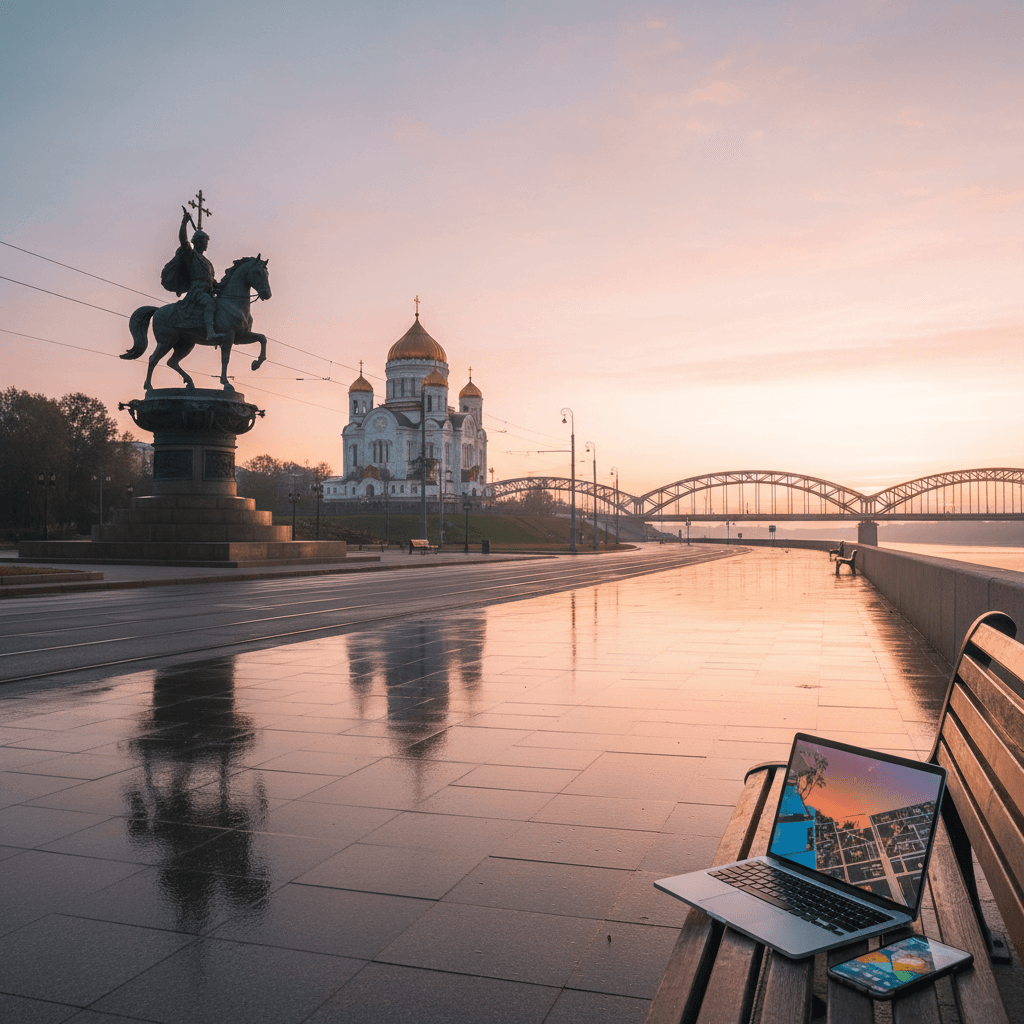
Rostov-on-Don
🇷🇺 Russia
The Soul of the Russian South
Often called the Gateway to the Caucasus, Rostov-on-Don feels worlds apart from the stiff, formal streets of Moscow. It is a city of sun, river breezes, and a certain southern grit that locals take immense pride in. While it might not be the first name on a nomad's list, those who land here find a place that balances a gritty industrial history with an surprisingly lush, green urban core. It is the kind of city where you can spend your morning grinding through emails in a sleek third-wave coffee shop and your afternoon eating grilled fish on a sandy riverbank.
The vibe here is noticeably slower and more hedonistic than the northern capitals. People in Rostov love to eat, they love to be seen, and they love the Don River. The city has a swagger to it, often referred to as Rostov-Papa, a nickname hinting at its historical reputation as a bold, rebellious trade hub. For a remote worker, this translates to a city that stays awake late and offers a high quality of life for a fraction of the cost you would find in Western Europe or even Moscow.
What to Expect on the Ground
Living here as a nomad requires a bit of an adventurous spirit. You won't find a massive English speaking expat bubble, so you will need to get comfortable with translation apps like Yandex Translate. However, the infrastructure is surprisingly robust. While some old data might suggest slow speeds, the reality in the city center is much different. Most modern apartments and cafes offer reliable fiber optic connections, and mobile data is some of the cheapest you will find globally, often costing under $10 for a massive monthly allowance.
- Digital Infrastructure: Expect to use a VPN daily to access Western social media and work tools.
- Local Logistics: Everything runs on apps. Download Yandex Go for cheap rides and Yandex Food for deliveries.
- Payments: Since international cards are hit or miss, most nomads use Ostrovok for bookings and carry cash or set up a local bank account like T-Bank if staying long term.
The Neighborhood Breakdown
Where you park your laptop matters. Rostov is a sprawling city, but for the best experience, you want to stay central. The architecture is a wild mix of crumbling 19th-century merchant houses and shiny new glass towers, giving the streets a textured, lived-in feel.
Kirovsky District
- Rent: $450 to $700 per month for a modern studio.
- Vibe: This is the heart of the action. You are close to Pushkinskaya Street, a massive pedestrian boulevard lined with trees and cafes.
- Best For: Nomads who want to walk everywhere and be near the best coworking spots.
Leninsky District
- Rent: $400 to $650 per month.
- Vibe: A bit more historic and rugged. It’s closer to the Central Market, which is a sensory overload of local produce, spices, and southern hospitality.
- Best For: Those who want a more "authentic" feel and easy access to the riverfront.
The Cost of Living Reality
Your budget goes a long way here. A total monthly spend of $1,200 to $1,600 allows for a very comfortable lifestyle, including eating out frequently and a nice apartment. A solid lunch at a trendy spot like Smetana or a quick coffee at Setter's will usually set you back less than $10. If you are cooking at home using the local markets, your grocery bill will be remarkably low.
The emotional payoff of Rostov is the warmth. It is not just the weather, which stays hot well into September, but the people. Once you break the initial icy exterior, the locals are incredibly curious and welcoming to foreigners. You aren't just another tourist here; you are a bit of a rarity, and that often leads to genuine connections that you just don't get in over-saturated nomad hubs like Lisbon or Bali.
Budgeting for the Southern Capital
Living in Rostov on Don feels like a bargain if you are coming from Western Europe or North America, but it is a step up in price compared to smaller Russian provincial towns. You are looking at a monthly burn rate of roughly $1,500 to $1,650 to live comfortably as a nomad. This covers a nice central apartment, eating out frequently, and keeping a steady supply of caffeine at local cafes. If you are willing to live like a local student, you could probably squeeze by on $900, but you will be sacrificing the convenience that makes the city attractive.
The local currency, the ruble, fluctuates wildly, so it is smart to keep your funds in a stable currency and only convert what you need for the week. Since international banking apps and cards are currently hit or miss, most expats rely on carrying cash or using local apps like Tinkoff or Sberbank once they have a local SIM card and account set up.
Accommodation by Neighborhood
Where you plant your flag matters. The city is divided by the Don River, but you will want to stay on the right bank where the action is. Most nomads gravitate toward the Kirovsky or Leninsky districts. These areas put you within walking distance of the main drag, Pushkinskaya Street, which is the leafy heart of the city.
- Kirovsky District (City Center): This is the premium choice. You are near the best restaurants and the university. Expect to pay $550 to $800 for a modern one bedroom apartment with high speed internet.
- Zapadny (Western Residential): A more local, residential vibe. It is quieter and cheaper, but you will spend more on taxis. Rent here averages $350 to $500 for a decent flat.
- Nakhichevan: An older, atmospheric neighborhood with Armenian roots. It is charming but the housing stock is hit or miss. Prices range from $400 to $600 depending on how recently the place was renovated.
The Daily Grind: Food and Drink
Rostov is the agricultural hub of southern Russia, so the food quality is high and the prices are low. If you cook at home using the Central Market, your grocery bill will be around $250 a month. However, the dining scene is too good to ignore. A solid lunch special (biznes lanch) at a place like Smetana or Grill and Garden will only set you back about $6 to $9.
Coffee is a major part of the social fabric here. A flat white at a specialty shop like Setter's or Surf Coffee costs about $3. If you are heading out for drinks at night, a local craft beer is around $4, while a cocktail at a trendy spot like Shanghai 12 will run you $8 to $10.
Connectivity and Utilities
Internet is one area where you will save significantly. While some reports claim slow speeds, most modern apartments in the center are wired for fiber optic. You can get a 100 Mbps home connection for about $10 a month. Mobile data is equally cheap; a SIM card with 30GB of data usually costs less than $12.
Utility costs are generally low but they do spike in the winter due to heating. Budget about $70 to $100 for electricity, water, and heat. One thing to remember is that a VPN is an absolute necessity for daily life here if you want to access your usual social media or work tools. Factor in another $5 to $10 a month for a reliable service that can bypass local blocks.
Transport and Getting Around
Public transport is cheap but can be a bit of a squeeze during rush hour. A bus or tram ride is less than $0.50. Most nomads skip the bus and use ride hailing apps like Yandex Go. A ten minute cross town trip usually costs between $3 and $5. If you are feeling adventurous, the city is fairly walkable, though the summer heat can make long treks a sweaty endeavor.
- Monthly Gym Membership: $30 to $50
- Cinema Ticket: $5 to $7
- Coworking Desk (Monthly): $120 to $150 at spaces like Mesto
The Urban Core: Best for Nomads
If you want to be where the action is, the Kirovsky District is your best bet. This is the heart of the city, centered around Bolshaya Sadovaya Street and the Pushkinskaya pedestrian boulevard. It is the most walkable part of town, lined with 19th century architecture and plenty of green spaces. Most nomads flock here because you can hop between coffee shops and parks without ever needing a taxi.
The area puts you right in the middle of the city's best food spots. Expect to pay around $600 to $800 for a decent one bedroom apartment in this area, though prices fluctuate based on how modern the renovation is.
- Rent: $600 to $850 per month
- Vibe: High energy, historic, and very walkable
- Top Spot: Pushkinskaya Street for evening strolls and people watching
The Quiet Professional: Best for Expats
The Proletarsky District, specifically the Nakhichevan neighborhood, offers a different pace. Originally a separate Armenian town, it has a distinct architectural style and a slightly more residential feel than the Kirovsky center. It is popular with long term expats who want a bit more space and less noise while staying within a ten minute drive of the main hubs.
Living here gives you easy access to the Nakhichevan Market, where you can get the freshest local produce and spices for much less than the supermarkets. The area feels more authentic and less polished. You will find that your money goes a bit further here, with spacious apartments often starting around $500. It is a great choice if you prefer a neighborhood where the shopkeepers eventually recognize your face.
- Rent: $450 to $700 per month
- Vibe: Traditional, community focused, and authentic
- Top Spot: Karl Marx Square for local events and markets
Space and Safety: Best for Families
Families usually head toward the Zapadny (Western) residential area in the Sovetsky District. It is a massive district designed with families in mind, meaning there are plenty of schools, clinics, and large parks like Skazka Park. The infrastructure here is self contained, so you don't actually have to go downtown for your daily needs.
The apartments here are mostly in newer high rise complexes that offer modern amenities, playgrounds, and underground parking. It is much quieter than the city center, and the air feels a bit cleaner. You can find a large three bedroom apartment for about $750 to $900, which is a steal compared to Moscow or St. Petersburg prices. The Zolotoy Vavilon mall is the local anchor for shopping and weekend entertainment.
- Rent: $700 to $1,100 for family sized units
- Vibe: Quiet, safe, and suburban
- Top Spot: Pleven Park for weekend family outings
Adventure and Nightlife: Best for Solo Travelers
If you are traveling solo and want to meet people, stick to the streets between the River Don embankment and Bolshaya Sadovaya. The area near the Left Bank (Levberdon) has seen a lot of development recently, especially around the new stadium. While the Left Bank is great for weekend beach clubs and restaurants, staying on the North Bank near the riverfront gives you the best of both worlds.
Solo travelers often prefer the Leninsky District. It is gritty in some parts but full of character, especially near the Central Market. This area is home to some of the city's best bars and late night eats. You can grab a craft beer at Golodnyy i Zloy and strike up a conversation with locals easily. It is an affordable area where a small studio can be found for as little as $400, leaving you more budget for exploring the Don River delta.
- Rent: $400 to $650 per month
- Vibe: Edgy, social, and close to the river
- Top Spot: The River Don embankment for sunset drinks
Connectivity and Speed
Russia is famous for high speeds at low prices, and Rostov on Don follows that trend. You can get a local SIM card from providers like MTS or Megafon for around $10 to $15 a month, which usually includes a massive amount of data or even unlimited plans. If you are staying in an apartment, fiber optic connections are the standard. While some older data suggests lower speeds, most modern rentals easily hit 50 Mbps to 100 Mbps.
There is a catch, though. You cannot really work effectively here without a solid VPN. Many Western sites, social media platforms, and news outlets are restricted. Most nomads set up a couple of different VPN services on their laptops and phones before they even land in the country to ensure they have a backup if one gets throttled. Public WiFi is common in the city center, but you will often need a Russian phone number to authenticate via a text message code.
Coworking Spaces in Rostov
The coworking scene in Rostov is smaller than Moscow but offers a much more relaxed vibe. It is concentrated mostly in the Kirovsky and Leninsky districts. These spots are great for escaping the isolation of a rental and meeting local entrepreneurs or developers.
- Mesto: This is a more modern, industrial style space that attracts a younger tech crowd. They have solid coffee, fast internet, and meeting rooms if you need to take a private call. Monthly rates hover around $130.
- IT Park: A government backed initiative that feels a bit more corporate but offers very stable infrastructure and networking events for those in the software industry.
Laptop Friendly Cafes
If you prefer a more social buzz, Pushkinskaya Street is your best bet. It is a long, pedestrian friendly boulevard lined with trees and dozens of cafes. Many of these spots are used to people staying for a few hours with a laptop, provided you keep the coffee orders coming. Setter's is a popular choice for its aesthetic and reliable power outlets. Another solid option is Surf Coffee, which has a reliable "digital nomad" vibe and usually plays decent music that is not too distracting for deep work.
Most cafes in the city center offer free WiFi, but the speed can be hit or miss during the lunch rush. If you have a high stakes Zoom call, it is usually safer to tether to your 4G or 5G phone connection, which is often more consistent than the shared shop network.
Practical Tech Tips
Banking and payments are the biggest hurdles right now. Since major Western credit cards do not work, you will likely be using Ostrovok for your initial accommodation bookings and then switching to cash or a local bank account like Tinkoff or Sber if you are staying long term. Many nomads find it easiest to bring cash in USD or Euros and exchange them at local banks to cover their coworking fees and rent.
- Average Monthly Internet Cost: Around $8 to $12 for home fiber.
- Mobile Data: Roughly $0.50 per GB on prepaid plans.
- VPN Recommendation: Always have at least two paid services installed.
- Power Plugs: Standard European Type C and F.
Rostov on Don might not be the most obvious choice for a remote work base, but the low cost of high speed data makes it surprisingly functional. The city is walkable, the coffee culture is surprisingly developed, and your monthly budget will stretch much further here than in the capital.
Staying Safe in the Southern Capital
Rostov on Don feels a lot more laid back than Moscow, but you still need your wits about you. Most nomads find the city center, particularly around Pushkinskaya Street, to be perfectly safe for evening walks. It is a pedestrian heavy area with plenty of lighting and families out late. That said, it is best to avoid the areas near the Temernik market or the far reaches of the Zapadny district late at night, as these spots can get a bit rowdy.
The most common issues you will face are petty scams or overzealous taxi drivers if you do not use an app. Always download Yandex Go or Uber Russia to get around. It locks in the price so you are not haggling in broken Russian at 2:00 AM. Also, keep a digital copy of your passport and registration on your phone. Local police rarely do random checks on foreigners these days, but having your documents handy saves a lot of headaches if they do.
Healthcare Basics
If you get sick, you have two paths. The state system is free or very cheap, but unless you speak fluent Russian, it is going to be a nightmare to navigate. Most expats and digital nomads head straight to private clinics. The quality of care in these facilities is high, often matching Western European standards, and you can usually find a doctor who speaks at least a little English.
For a quick consultation or blood work, look for Invitro or Gemotest labs. They are everywhere and very efficient. For more serious issues, Medical Center Stolitsa or DA VINCI are reliable private options in the city. A standard GP visit will usually set you back between $20 and $40. If you need a specialist, expect to pay closer to $60.
- Pharmacies: Look for the green cross signs labeled Apteka. Many are open 24/7, and you can buy most things over the counter that would require a prescription elsewhere.
- Emergency Number: Dial 112 from any mobile phone for emergency services. It is the universal number for police, fire, and ambulance.
- Water: Do not drink the tap water. Even locals boil it or buy large 5 liter jugs from the supermarket for about $1.
Insurance and Connectivity
Since many Western insurance providers have paused or limited their coverage here, you should double check your policy before arriving. Some nomads opt for local private insurance plans which can cost around $150 for a few months of comprehensive coverage. It is a small price for peace of mind if you plan on staying for a full 90 day stint.
Safety also means digital safety. Since several social media platforms and news sites are restricted, a reliable VPN is a requirement for working. Most travelers recommend having at least two different VPN providers installed on your laptop and phone, as one might stop working unexpectedly. Reliable mobile data is cheap, usually around $10 a month for a massive data plan from MTS or Beeline, which helps you stay connected and use translation apps in real time.
Practical Tips for Peace of Mind
- Money: Carry some cash in Rubles. While most places in the center take cards, foreign issued cards often fail at local terminals. Use Ostrovok for booking rooms since it accepts various payment methods.
- Language: Download the offline Russian dictionary on Google Translate. Rostov is not Moscow; English proficiency levels are lower here, and being able to translate a medical symptom or a street sign is vital.
- Winter Safety: If you are here in January or February, the real danger is the ice. Sidewalks can become skating rinks overnight, and "black ice" is a frequent cause of trips to the ER.
Public Transport and the Metro Myth
First things first, Rostov on Don doesn't have a metro system. You might see old plans or hear locals joke about it, but for now, you're staying above ground. The city relies heavily on a network of buses, trolleybuses, and trams. The tram system is actually quite charming and covers the central districts well, though it's not exactly high speed. Most nomads stick to the large green buses that run along Bolshaya Sadovaya Street, the city's main artery.
Fares are incredibly cheap, usually around 32 to 39 rubles (roughly $0.35 to $0.45) depending on whether you pay with a transport card or a bank card. If you're staying for more than a week, pick up a Prostor transport card at a kiosk. It'll save you a few rubles per trip and saves you the hassle of fumbling for change with the driver. Just tap your card on the terminal near the door when you board.
The Ride Share Standard
While the buses are functional, most expats and nomads living here default to Yandex Go. It's the local equivalent of Uber and it's remarkably efficient. You can choose different tiers, from Economy to Business, and even in peak traffic, a cross town trip rarely exceeds 400 to 600 rubles (about $4.50 to $7.00). Outside of rush hour, short hops within the center are often less than $2.50.
The app is available in English, which is a lifesaver if your Russian is still at the "privet" stage. It also lets you link a local bank card or pay in cash. If you're coming from the airport, Platov International, expect to pay around 1,200 to 1,500 rubles for the 45 minute drive into the city center. It's a much better option than the shuttle buses if you have luggage.
Walking and Micromobility
Rostov is a surprisingly walkable city if you stay within the Kirovsky or Leninsky districts. The grid layout of the center makes navigation simple. Pushkinskaya Street is a pedestrian friendly boulevard lined with trees and cafes, perfect for getting from one side of the center to the other without dodging traffic. It's the primary social hub for the city and where you'll spend most of your time on foot.
For quicker trips, electric scooters are everywhere. Brands like Whoosh and Urent dominate the sidewalks. You'll need their respective apps to unlock them. Prices usually start with a 50 ruble base fee and then about 6 to 9 rubles per minute. Just be careful on the older side streets; the pavement can be uneven and the curbs are often high.
Navigating the Don River
Since the city is built on the high right bank of the Don River, you might find yourself wanting to cross over to the Left Bank (Levberdon). This area is home to the Rostov Arena and several park zones. While you can walk across the Voroshilovsky Bridge, it's a long trek. Most people take a quick bus or a taxi to reach the beaches and recreation areas on the other side. During the summer, small pleasure boats also operate from the embankment, though these are more for sightseeing than actual commuting.
Practical Connectivity Tips
- Offline Maps: Download the 2GIS app. It is much more detailed for Russian cities than Google Maps, showing exact building entrances and even which side of the bus to get off on.
- Payment: While many terminals accept contactless payment, keep some cash on you for the smaller marshrutkas (private minibuses) that still operate on some suburban routes.
- Traffic: Avoid the Malinnogo and Voroshilovsky bridges during the 8:00 AM to 10:00 AM and 5:00 PM to 7:00 PM windows, as gridlock is common.
The Language Gap
Expect a bit of a reality check when you land in Rostov. Unlike the polyglot hubs of Western Europe, English proficiency here is quite low. While younger people and university students in the Kirovsky District might catch a few phrases, the average shopkeeper or bus driver likely won't speak any English at all. You'll need to get comfortable with being a bit of a mime during your first week.
The local dialect has a distinct southern lilt. It's often faster and more melodic than the Russian you'll hear in Moscow. Locals are generally patient with foreigners, but they'll respect you a lot more if you can manage basic greetings and numbers. Learning the Cyrillic alphabet is a nonnegotiable task; without it, you won't even be able to read the signs for the Marshrutka (minibuses) or find your way around the Central Market.
Tech-Enabled Communication
Your smartphone is your best friend in Rostov. Download Yandex Translate immediately. It tends to handle Russian grammar and context better than Google Translate. The offline dictionary feature is a lifesaver when you're in the basement of a cafe with spotty reception. Most nomads use the image translation feature to decipher menus at local spots like Smetana.
For getting around, Yandex Go is the standard for ride hailing. It removes the need for verbal negotiations with drivers, which is where most language barriers become stressful. You just pin your location, see the price upfront (usually around 200 to 400 rubles for a cross town trip), and the driver knows exactly where to go.
Staying Connected
Russia has some of the cheapest mobile data in the world, and Rostov is no exception. You can pick up a SIM card from providers like MTS, Megafon, or Beeline for roughly $10 to $15 a month. This usually gets you a massive amount of data, often 50GB or even unlimited packages. You'll need your passport to register the SIM at any of the kiosks found in malls like Gorizont.
Public WiFi is common in the city center, especially along Pushkinskaya Street. Most cafes will have a password posted on the wall or the menu. However, keep in mind that many public networks require a Russian phone number for SMS authentication. Once you're logged in, speeds are generally reliable for basic tasks, though a dedicated workspace will always be better for heavy video calls.
Digital Tools and Workarounds
Living as a nomad here requires a bit of digital gymnastics. Because of current restrictions, many Western websites and social media platforms are blocked. A high quality VPN is a standard part of the toolkit for everyone in the expat community. Most people keep two different VPN providers active just in case one gets throttled or blocked. Without one, you'll lose access to your usual workflow tools and social circles.
For local communication, Telegram is the undisputed king. It's not just for messaging; it's how you'll find out about local events, join neighborhood groups, or even order food from boutique kitchens. If a business doesn't have a website, they almost certainly have a Telegram channel or a VKontakte page. If you need to reach a landlord or a local fixer, don't bother with email; send a message on Telegram or WhatsApp instead.
Practical Communication Tips
- Download Yandex Maps: It's far more accurate for Rostov's public transport schedules and building entrances than any other map app.
- Carry a Power Bank: Between translation apps and VPNs, your phone battery will drain twice as fast as usual.
- Use Voice Messages: If your Russian is shaky, sending a short voice note on Telegram allows the recipient to use a translation tool on their end more easily than a live phone call.
- Learn the "No": In Rostov, a "no" is often just the start of a negotiation or a sign that you need to ask a different way. Don't take a blunt response personally.
The Southern Rhythm: What to Expect
Rostov on Don is often called the Gateway to the Caucasus, and its climate reflects that southern soul. Unlike the stereotypical frozen tundra people imagine when they think of Russia, Rostov deals with a continental climate that leans heavily into hot, dry summers and surprisingly manageable winters. If you are coming from Northern Europe or the US Midwest, you will find the local weather a pleasant departure from the gray skies you are used to.
The city operates on a distinct seasonal cycle. You will notice the pace of life shifts significantly between the humid heat of July and the crisp, clear days of October. For nomads, this means your choice of arrival date will dictate whether you spend your afternoons working from an air conditioned cafe on Pushkinskaya Street or strolling through the parks with a laptop in hand.
The Sweet Spots: Spring and Autumn
Most expats and long term travelers agree that May, June, September, and October are the prime months to be here. During these windows, temperatures hover between 18°C and 25°C (64°F to 77°F). It is the perfect middle ground where you can enjoy the outdoor seating at spots like Setter’s or Caffeine without breaking a sweat or needing a heavy parka.
September is particularly special in the Don region. The harvest is in, the local markets are overflowing with seasonal produce, and the intense summer humidity has finally broken. The city feels energized as students return to the universities and the cultural calendar kicks into high gear. You will get plenty of sunlight, rarely see rain, and can comfortably work from the many public benches along the Don River embankment.
Surviving the Southern Summer
If you arrive in July or August, be prepared for the heat. Temperatures frequently climb above 30°C (86°F) and can occasionally spike to 38°C (100°F). The air gets heavy, and the sun is relentless. During these months, the city slows down in the mid afternoon, much like a Mediterranean siesta culture. Locals tend to retreat indoors until the sun starts to dip.
For a digital nomad, a high quality AC unit in your apartment is a non negotiable requirement during this period. You will also want to scout out coworking spaces or larger cafes that prioritize climate control. The upside of summer is the river life; the city beaches and boat tours become the primary social hubs once the workday ends around 6:00 PM.
The Winter Reality
Winter in Rostov is shorter and milder than in Moscow or Saint Petersburg, but it is not exactly tropical. From December through February, you can expect average highs around 0°C, lows -5°C. While the city does get snow, it often turns to slush quickly due to the fluctuating humidity. It is a gray, damp kind of cold that gets into your bones if you aren't wearing the right layers.
The benefit of visiting in the off season is the price. Short term apartment rentals on platforms like Ostrovok often see a dip in demand, and the indoor cafe culture is cozy and welcoming. However, if you struggle with seasonal affective disorder or shorter daylight hours, the winter months might feel a bit isolating compared to the lively summer atmosphere.
Seasonal Breakdown for Nomads
- Best for Outdoor Work: May and September. Low rainfall, moderate temperatures, and long daylight hours make park working viable.
- Best for Budget Travelers: January and February. You will find the lowest rates on accommodation, though you will spend more on heating and indoor entertainment.
- Best for Socializing: June to August. The riverfront is at its peak, and the city stays awake well past midnight with festivals and outdoor events.
- Peak Rainfall: June. Surprisingly, early summer brings the most rain in the form of heavy, short lived thunderstorms. Always carry a light waterproof shell if you are commuting to a coworking space.
Ultimately, if you want the quintessential Rostov experience, aim for the late spring. You will catch the city as it blooms, the prices are still stable before the summer domestic tourism rush, and the weather is arguably some of the best in the entire country for staying productive while exploring.
Getting Connected and Staying Online
Internet in Russia is surprisingly affordable and fast, but you have to know the workarounds. Most nomads find that a local SIM card is the first thing they need. You can pick one up from providers like MTS or Megafon for about $10 to $15 a month, which usually includes a massive amount of data. While the city infrastructure is solid, you'll definitely need a reliable VPN. Many Western social media platforms and news sites are restricted, so having a couple of different VPN services installed before you arrive is a smart move.
For a dedicated workspace, head to Coworking Rubin. This spot is popular with the local tech crowd and offers stable connections. Expect to pay around $10 to $12 for a day pass. If you prefer the cafe vibe, Setter's and Surf Coffee are reliable choices with plenty of outlets and a culture that doesn't mind you hovering over a laptop for a few hours.
Money and Budgeting
The financial landscape has changed significantly, so don't rely on your Western Visa or Mastercard. Most travelers now use Ostrovok for booking accommodation since it accepts international cards. Once you're on the ground, you'll likely need cash or a local bank account. Many expats recommend opening a Tinkoff or Sberbank account if you're staying long term, as you can transfer funds via crypto or specific peer to peer services.
Rostov is generally more affordable than Moscow, but prices have crept up lately. Here is a quick breakdown of what to expect for monthly expenses:
- One Bedroom Apartment: $450 to $700 depending on the proximity to Bolshaya Sadovaya Street.
- Monthly Groceries: $250 to $350 if you shop at local markets like the Central Bazar.
- Dinner for Two: $30 to $50 at a mid range spot like Onegin.
- Public Transport: $0.40 per bus or tram ride.
Navigation and Language
Getting around the city is fairly straightforward. Download Yandex Go immediately; it is the local equivalent of Uber and works flawlessly for both rides and food delivery. Public transport consists of buses, trolleybuses, and marshrutkas (private minibuses). While the marshrutkas are a bit chaotic, they are the fastest way to get to the outskirts. A ride costs roughly 32 rubles, and you can usually pay by tapping a card or phone if you have a local bank setup.
English proficiency isn't widespread once you leave the trendy coffee shops. You'll want to have Yandex Translate or Google Translate with the offline Russian pack downloaded. Learning the Cyrillic alphabet is a weekend project that pays off immensely when you're trying to read street signs or menus at a local stolovaya.
Safety and Health
Rostov is a major hub and generally feels safe during the day and evening in central areas like Pushkinskaya Street. Like any large city, keep your wits about you at night near the main train station. For healthcare, private clinics like Gippokrat or Standard are the go to for expats. A standard consultation will run you about $20 to $40. Most pharmacists speak a little English and can help with basic ailments, but keep your prescription names handy in Russian just in case.
Weather Realities
The climate here hits both extremes. Summers are scorching, often staying above 30°C (86°F) for weeks in July and August. If you're sensitive to heat, make sure your rental has a functioning "conditsioner" (AC). Winters are biting and windy due to the proximity to the river, with temperatures frequently dropping to -10°C (14°F). The best times to visit are May, June, and September, when the city is green and the sidewalk cafes are in full swing.
Need visa and immigration info for Russia?
🇷🇺 View Russia Country GuideEasy Landing
Settle in, no stress