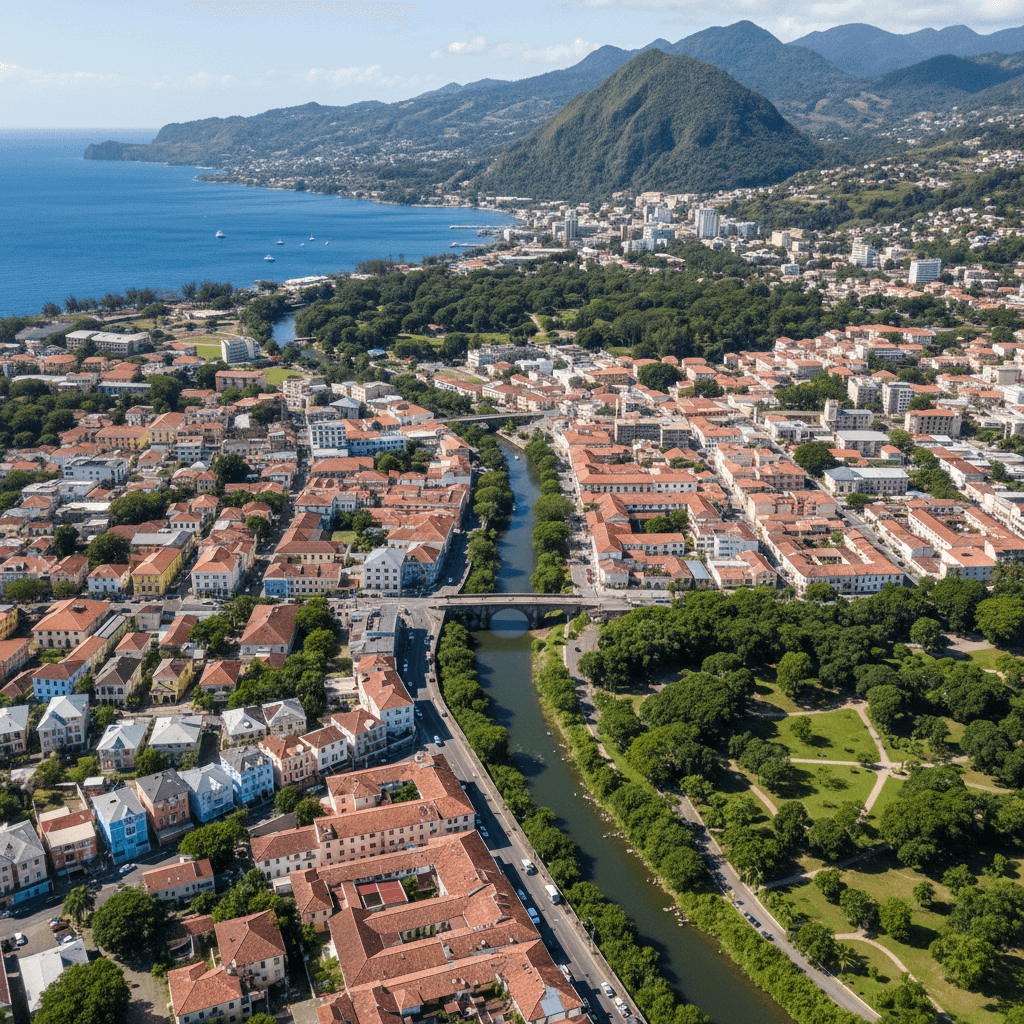
Roseau
🇩🇲 Dominica
Roseau doesn't try to impress you. There's no glitzy waterfront development, no rooftop bars with bottle service, no coworking spaces with cold brew on tap. What you get instead is a small Caribbean capital that smells like rain-soaked earth and frying plantains, where the pace of life is, honestly, slower than you might be ready for.
That slowness is the point. Dominica bills itself as the Nature Island and Roseau is its low-key, slightly scruffy hub. The rainforest pushes right up to the edge of town, volcanic hot springs sit a short drive away and the Roseau Market on a Saturday morning is one of those genuinely good experiences where vendors shout prices in Kwéyòl and the callaloo is still steaming. It's not performative. It's just how things work here.
For digital nomads and expats, the appeal is real but specific. Monthly costs can come in around $1,000 USD if you're disciplined and the lack of tourist infrastructure that frustrates some people is exactly what keeps prices low. You won't find a curated nomad scene here, the Facebook expat groups are small and the meetups are sporadic, but you will find a genuinely affordable base with access to some of the most dramatic nature in the Caribbean.
The frustrations are real too, don't romanticize them. Power outages happen, internet speeds are inconsistent outside of a few hotels and if you need reliable 50 Mbps for back-to-back video calls you'll spend your first week stress-testing every cafe in town. Nightlife is tame, the downtown streets near Bayfront get loud and chaotic during market hours and the humidity in rainy season is the kind that clings to everything including your laptop.
What makes Roseau different from other budget nomad destinations is the absence of the usual trappings, there's no digital nomad bubble here, no Instagram-optimized street art, no smoothie bowls. Turns out that's either a dealbreaker or the whole reason you came. Most people who stay longer than a month fall into the rhythm of it: morning market runs, afternoon work sessions, weekends at Trafalgar Falls. It's a quiet life, frankly and that's not a criticism.
Come for the affordability and the nature. Stay because the pace, weirdly, starts to feel like exactly what you needed.
Roseau won't drain your savings. A solo nomad living reasonably well spends around $1,000 to $1,500 USD a month and if you're willing to eat from market stalls and take minibuses everywhere, you can push that down closer to $800.
Rent is the biggest variable, it shapes your whole budget depending on where you land. A studio or one-bedroom in Canefield or Dame Marie runs $181 to $255 USD a month, which is, honestly, hard to beat for a Caribbean capital. Downtown Roseau costs more, expect $350 to $450 for the same space, but you're walking distance from the market, the waterfront and most of the good cheap food.
Food is cheap if you eat like locals do. Street stalls at Roseau Market sell callaloo, grilled fish and roti for around $7 USD, the smell of frying plantain and wood smoke hits you before you even see the vendors. A sit-down meal at a mid-range spot runs $7 to $15, a nicer dinner for two at somewhere like the Garraway Hotel eatery lands around $55. Cook at home and your food costs drop fast, local produce is fresh and inexpensive.
Here's a rough breakdown by budget tier:
- Budget ($800 to $1,000/mo): Cheap one-bedroom in Canefield or Dame Marie, market food daily, minibuses only
- Mid-range ($1,000 to $1,500/mo): Downtown one-bedroom, mix of cooking and eating out, occasional taxi
- Comfortable ($1,500+/mo): Better apartment, dining out regularly, car rental for island access
Minibuses cost $1.84 to $3.85 USD per ride, turns out that's genuinely workable if you're based downtown. Taxis are pricey by comparison, airport to Roseau runs $35 to $50 USD. Utilities and internet together add another $86 to $133 a month, though power outages can be frequent enough to be genuinely annoying rather than just occasional inconveniences.
No ride-hailing apps exist here. Weirdly, that's fine once you get used to flagging down minibuses, but factor in taxi costs if you're planning day trips regularly, they add up quicker than you'd expect.
Roseau is small. You can walk most of it in twenty minutes, which means neighborhood choice is less about distance and more about what kind of daily life you want around you. Three areas do most of the heavy lifting for newcomers and they suit different people pretty clearly.
Digital Nomads: Canefield
Canefield sits just north of the city center, close to the airport and it's honestly the most practical base if you're here to work. Rent for a studio runs $181 to $255 USD a month, which is hard to argue with. The trade-off is that it's quiet to the point of being a little dull, there's not much to eat within walking distance, so you'll be cooking most nights or hopping a minibus into town for around $2.
The area's calm, though and calm has real value when you're on deadline. No honking tuk-tuks, no market noise bleeding through your window at 6am.
Solo Travelers and First-Timers: Downtown Roseau
Downtown is where the island actually smells and sounds like the Caribbean, salt air mixing with frying fish, vendors calling out at the Roseau Market, rain hammering corrugated rooftops in the afternoon. It's walkable, central and you won't need transport for most daily errands. Rent climbs to $350 to $450 USD here, which is still cheap by any reasonable standard.
The downside is real, it gets crowded and loud and the Bayfront area at night isn't somewhere you want to be wandering without purpose. Stay alert around Old Market Square, keep your phone in your front pocket and you'll be fine.
Expats and Families: Dame Marie
Dame Marie is residential, genuinely quiet and where a lot of longer-term expats end up once they've figured out they don't need to be near everything all the time. It's safe, the neighbors actually know each other and the pace is slow in a way that turns out to feel intentional rather than sleepy. The catch is you'll need your own transport, taxis or a rental car, because the main sights and the market aren't walkable from here.
Most families find that trade-off worth it. Most short-term visitors don't.
Connectivity in Roseau is, honestly, functional but fragile. Speeds average 15 to 30 Mbps on a decent day, which handles video calls and file uploads without much drama, though power outages can knock you offline without warning and there's no predicting when they'll hit.
Digicel is the better pick for most of the island. Their 4G coverage reaches further into Roseau's neighborhoods and fiber plans at home can push up to 250 Mbps if you're renting long-term. Flow works better in the northwest, so your choice depends on where you're staying.
For a SIM, head to the Digicel or Flow stores on King George V Street in Downtown Roseau. Cards run $4 to $6 USD, then add a data bundle on top, typically $7 to $15 for 1 to 5GB. The airport has options too, turns out, but the in-town stores have more bundle choices and staff who'll actually walk you through setup.
Dedicated coworking spaces don't really exist here. That's the honest answer. Most nomads end up working from their accommodation or staking out a corner at a hotel lobby or cafe, Fort Young Hotel being the most reliable option with decent WiFi and enough ambient noise to feel like you're not completely isolated. Buy a drink, settle in, nobody's rushing you out.
Cafes will sometimes charge a small access fee, around $5 USD, it varies by place and day. Always run a speed test before you commit to a spot for the afternoon, speeds can swing wildly between the same four walls depending on how many people are connected.
- Best SIM: Digicel, King George V Street, $4 to $6 USD plus data bundle
- Data bundles: $7 to $15 USD for 1 to 5GB
- Best hotel WiFi: Fort Young Hotel, Downtown Roseau
- Coworking day pass: $10 to $20 USD where available, mostly informal arrangements
- Average speeds: 15 to 30 Mbps; fiber home plans up to 250 Mbps
If reliable, uninterrupted internet is non-negotiable for your work, Roseau will test your patience. Most nomads make it work, but you'll want a backup data plan ready because the grid here doesn't care about your deadline.
Roseau is, honestly, one of the safer Caribbean capitals for travelers and nomads. Petty theft happens, mostly pickpocketing around Bayfront and Old Market Square when it's crowded and loud with vendors calling out and motorbikes threading through foot traffic. Keep your phone in a front pocket, don't flash expensive gear and you'll be fine during the day.
After dark is a different calculation. Unlit side streets away from the center get genuinely sketchy, not dangerous in a dramatic sense, but the kind of dark where you realize nobody would see anything happen. Stick to lit areas, get home before midnight and you won't have issues. There's no major neighborhood to blacklist outright, police presence is visible around tourist spots and violent crime targeting foreigners is rare.
Healthcare is where things get honest and a little uncomfortable. Princess Margaret Hospital handles emergencies and basic surgery, it's functional, but expats and long-term nomads are blunt about its limits. Cash upfront is standard, the equipment is dated and anything complex, a cardiac event, serious trauma, a procedure requiring specialist care, means medical evacuation. That's not a worst-case scenario, that's the realistic expectation you should plan around.
Travel insurance with medical evacuation coverage isn't optional here, it's the single most important thing you pack. Medevac to Barbados or Martinique runs into the thousands, the kind of bill that wrecks a year of budget travel in one afternoon.
- Emergency number: 999
- Main hospital: Princess Margaret Hospital, Roseau (emergencies, basic surgery)
- Pharmacies: Several in central Roseau, well-stocked for common medications
- Insurance: Get medical evacuation coverage before you arrive, not after
Pharmacies throughout Roseau are, turns out, surprisingly well-stocked for a small capital. Common medications, basic wound care, over-the-counter treatments, you can find most of what you'd need without much trouble. For anything prescription-based, bring enough supply from home to cover your stay plus a buffer, because sourcing specific drugs locally can be a slow and frustrating process.
The overall safety picture is genuinely decent. Stay aware, don't wander unlit streets at night, sort your evacuation insurance before you land.
Getting around Roseau is, honestly, pretty simple once you accept that it runs on island time. There's no Uber, no ride-hailing app of any kind and the minibus schedule is more of a suggestion than a timetable.
Minibuses are the backbone of local transport. They run between Roseau and Portsmouth for roughly $1.50 to $3.85 USD, depart when they're full and generally stop running around 6pm. You'll hear them before you see them, reggae thumping, horn tapping at anyone who looks like they need a ride. Flag one down on the main road, pay the driver or conductor, done.
Taxis exist but they're not cheap, a 5-mile trip runs around $29 USD and the airport transfer into Roseau will cost you $35 to $50 USD depending on who you negotiate with. Pre-arrange your airport pickup if you're arriving late, because turning up at Canefield Airport after dark without a plan is a genuinely frustrating experience. There's not much there.
Downtown Roseau itself is walkable. Most of what you need, the Bayfront market, the pharmacies, the banks on King George V Street, it's all within 15 minutes on foot. The streets are narrow and the heat clings, so mornings are the time to move. By early afternoon the pavement radiates and most people slow down accordingly.
If you're planning day trips to Trafalgar Falls or the Carib Territory, you'll want a rental car. Avis and Budget both operate out of Roseau and Canefield, rates start around $40 to $60 USD per day and you'll need a local driving permit on top of your license, which costs about $12 USD and takes maybe 20 minutes to sort at the traffic department. Drive on the left, the roads are narrow and winding, take them seriously.
- Minibus (Roseau to Portsmouth): $1.50 to $3.85 USD, no fixed schedule
- Taxi (5 miles): ~$29 USD
- Airport to Roseau: $35 to $50 USD
- Car rental: from ~$40 to $60 USD/day plus $12 USD local permit
- Scooters/bikes: limited availability, not a reliable option
Expats who stay longer than a month almost always end up renting a car, it opens up the whole island, the minibuses just don't go everywhere you'll want to.
English is the official language and you'll have no trouble getting by in Roseau. Proficiency is high, especially in markets, hotels and any place that regularly sees tourists or expats. That said, Kwéyòl is the soul of everyday conversation here.
Kwéyòl is a French-based Creole and honestly, it's spoken more widely than most visitors expect. You'll hear it between vendors at the Roseau Market, between neighbors chatting across fences, in the low murmur of minibus passengers heading toward Canefield. It's not a barrier, it's just the texture of daily life and locals genuinely warm up when you make even a small effort with it.
A few phrases worth knowing:
- "Bonjou" , hello (good morning)
- "Bonswa" , good evening
- "Mèsi" , thank you
- "Koman ou yé?" , how are you?
Nobody expects fluency. But dropping a "Bonjou" at a market stall instead of jumping straight into English? That small thing, turns out, opens doors faster than any amount of money or charm.
For deeper translation needs, Google Translate handles Kwéyòl reasonably well, though it's imperfect with regional expressions and the phonetic spelling varies from person to person, so don't rely on it for anything where precision actually matters. Download it offline before you arrive because internet reliability in Roseau is, frankly, inconsistent enough that you won't always have a signal when you need it.
Communication style here is unhurried. Don't expect rapid-fire responses or brisk customer service, the pace is slow and that's not going to change because you're in a hurry. Locals are warm but not performatively so, they respond well to patience, eye contact and a genuine greeting before you get to whatever you're asking for.
Phone-wise, both Digicel and Flow SIM cards work fine for calls and WhatsApp, which is the primary messaging platform for everything from landlord communication to local business inquiries. Get a local SIM early, it makes coordination dramatically simpler and WhatsApp groups are weirdly central to how information moves around this island.
Roseau sits in the tropics, so the temperature doesn't swing dramatically across the year. You're looking at 23 to 31°C pretty much always, with that heavy, wet heat that, honestly, clings to you the moment you step outside. The real variable isn't temperature, it's rain and that's what should drive your timing.
The dry season runs December through May. January, February and March are the sweet spot: lower humidity, fewer storms and enough sunshine to actually enjoy the rainforest without feeling like you're swimming through it. Expats who've been here a few years tend to time their arrivals for January if they can and it's easy to see why once you've experienced a September downpour.
Rainy season kicks in around June and peaks hard in September and October. We're talking 14-plus wet days in a single month, the kind of rain that hammers tin roofs so loud you can't hear yourself think and the very real possibility of a hurricane passing through. Dominica took a direct hit from Hurricane Maria in 2017, it's not a hypothetical risk. Travel insurance isn't optional if you're visiting between August and October.
That said, even the dry season gets afternoon showers. This is, turns out, one of the wettest islands in the Caribbean, which is exactly why it's so green. Pack a light rain jacket regardless of when you go.
Best months to visit: January, February, March, April
- January to March: Driest months, lower humidity, ideal for hiking Trafalgar Falls or the Boiling Lake trail without the mud becoming a problem
- April to May: Still manageable, rain starts creeping back in but it's sporadic
- June to August: Wetter and muggier, cheaper flights and accommodation though, so budget travelers often gamble on it
- September to October: Worst of it. Hurricane risk is real, infrastructure gets stressed, some guesthouses close
- November to December: Transitional, conditions improving, a reasonable shoulder season if your dates are flexible
Most nomads planning a longer stay aim for the November to April window, it's simply more predictable. Skip September entirely unless you genuinely don't have a choice.
Roseau runs on its own rhythm and honestly, fighting it will just frustrate you. The pace is slow, the bureaucracy is real and things don't always work the way you'd expect. Come prepared and you'll be fine, show up assuming it runs like a major city and you won't.
Money
ATMs are widespread downtown, though they run out of cash on weekends more often than you'd think. Use Wise or Revolut to avoid brutal conversion fees, the National Bank of Dominica handles most standard transactions if you need in-person banking. Card acceptance is patchy outside hotels and larger restaurants, carry EC dollars for markets and minibuses.
SIMs and Connectivity
Pick up a Digicel SIM on King George V Street for around $4 to $6 USD, then add a data plan ($7 to $15 for 1 to 5GB). Digicel has better 4G coverage across most of Roseau, Flow works better if you're staying northwest. Home fiber can hit 250 Mbps with Digicel, but mobile speeds are, turns out, closer to 15 to 30 Mbps on a typical day.
Getting Around
Minibuses are cheap ($1.50 to $3.85 USD per ride) but they don't run fixed schedules, they leave when they're full. Taxis have no meters, so agree on a price before you get in. Airport to Roseau runs $35 to $50 USD, there's no Uber or ride-hailing here. If you're planning day trips to Trafalgar Falls or the Carib Territory, renting a car from Avis or Budget in Canefield makes sense, just get the local driving permit and remember they drive on the left.
Safety and Health
Daytime in Roseau is genuinely relaxed, petty theft happens around Bayfront and Old Market Square but it's not aggressive. Avoid unlit streets after dark, it's not dramatic advice, it's just common sense in any unfamiliar city. Princess Margaret Hospital handles emergencies, but for anything serious, evacuation is the honest answer. Carry travel insurance that covers medical evacuation. Emergency number is 999.
Culture and Weather
Greet people warmly, handshakes and eye contact go a long way, modest dress is appreciated outside the beach. English is official and widely spoken, Kwéyòl pops up in markets and casual conversation. "Bonjou" and "Mèsi" will earn you genuine smiles, weirdly more so than most places. Rainy season runs June through November, with September being frankly brutal, plan longer stays around the dry season (December to May) if you can.
Need visa and immigration info for Dominica?
🇩🇲 View Dominica Country GuideHidden Gem
Worth the effort