Rome
🇮🇹 Italy
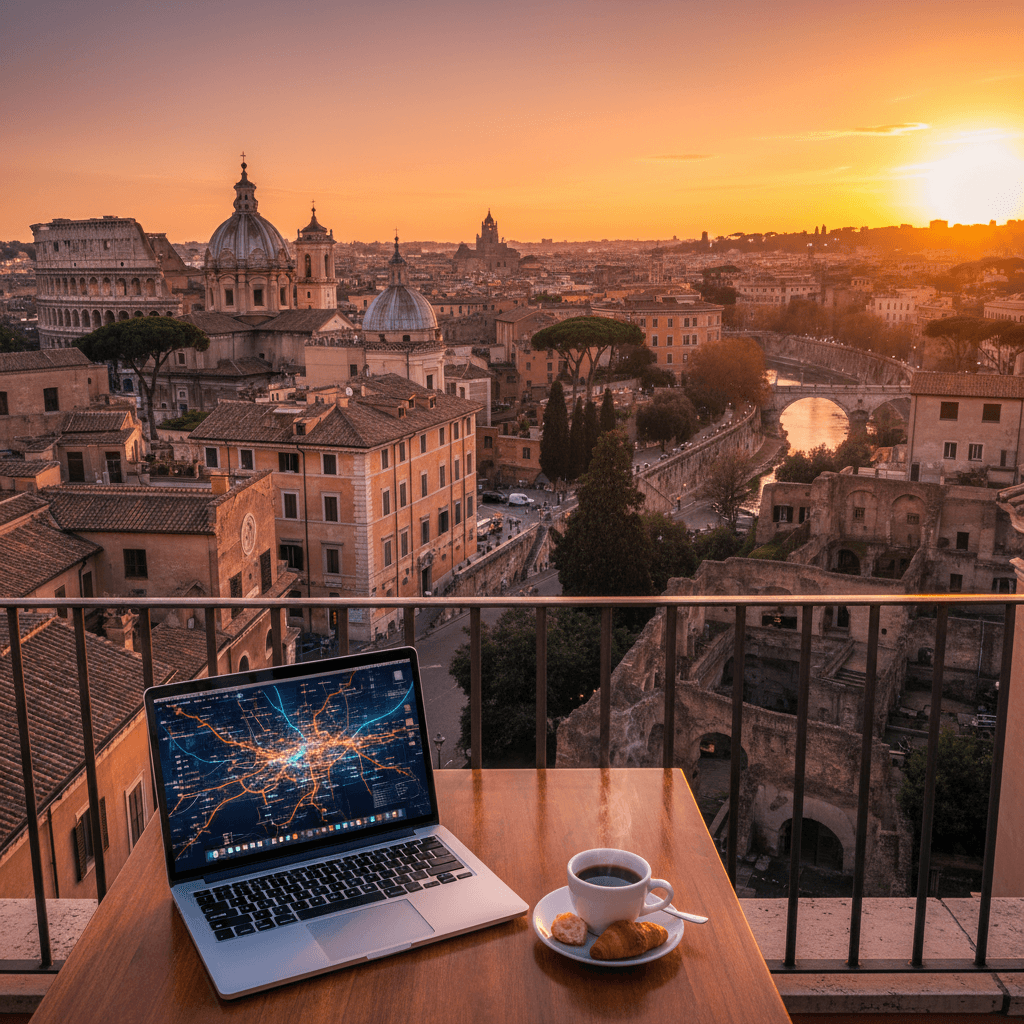
Rome feels like living inside a museum that never learned to sit still. You get marble statues, church bells, scooter engines, laundry strung over alleyways and then a perfect plate of cacio e pepe, all before lunch. It’s beautiful, messy, loud and frankly a bit rude in the best and worst ways.
The center is wildly walkable, so most nomads spend their days on foot, drifting from the Colosseum to Monti to Trastevere, with detours for espresso and a lot of accidental sightseeing. Crowds are a constant, the sidewalks get tight and summer heat can cling to you like wet fabric, but the payoff is that everyday errands can feel weirdly cinematic.
Expect this vibe:
- Historic: Ancient ruins, 900-plus churches, Renaissance palazzi and little pockets of daily life pressed right up against them.
- Social: Aperitivo matters here and people stay out late talking over noisy piazzas and clinking glasses.
- Chaotic: Horns, delayed buses, spotty public WiFi and the occasional petty theft headache, so keep your guard up.
Where nomads actually settle
Trastevere is the easy crowd-pleaser, bohemian, walkable, full of bars and dinner spots, though it gets touristy and loud at night. Monti feels a little cooler and more central, with boutiques and cafes that suit laptop life, while Prati is calmer, safer and pricier, which works better if you want less noise and more routine.
- Trastevere: Best for nightlife and social energy, not for early sleep.
- Monti: Best for central access and a stylish base.
- Prati: Best for a quieter, polished feel near the Vatican.
- Testaccio: Best value, more local and still good for food.
- Pigneto: Cheaper and rougher around the edges, with some safety concerns after dark.
Money adds up fast. A shared room can start around €700 to €1,200 depending on the area, while a decent one-bedroom in central Rome often pushes past €1,200 and coworking usually lands around €100 to €300 a month. Food is still a joy, though, because you can grab pizza al taglio cheaply or sit down for a proper meal and spend €50 to €80 for two without trying very hard.
Rome works best if you like character more than convenience. The public transport is fine, the bureaucracy is maddening and the WiFi in cafes can be shaky, but the city gives you late-night walks past lit-up ruins, the smell of exhaust and fried dough and a daily sense that history is sitting right next to your table.
Rome isn’t cheap and it gets pricier fast once you want a decent apartment and a neighborhood that doesn’t rattle all night with scooters and sirens. A solo nomad can scrape by on about €1,400 to €1,800 a month with a shared room and cheap meals, but most people who stay longer spend closer to €2,000 to €2,500 and central comfort usually starts above €3,000. Not a bargain.
Rent is the part that bites. Centro Storico and Prati are the easiest on the eyes and the hardest on your wallet, while Trastevere is a little cheaper but loud, crowded and full of late-night foot traffic, cigarette smoke and glasses clinking outside bars. Outside the center, places like Testaccio can feel saner, honestly, with better value and less tourist chaos.
Typical monthly housing costs
- Centro Storico: €1,200 to €1,800 for a studio or 1BR
- Prati: about €1,000 to €1,500, though good flats go fast
- Trastevere: €800 to €1,200, with noise as the tax you pay
- Testaccio: €700 to €1,100, which, surprisingly, still gets you into a decent area
Food can be cheap if you keep it simple. A slice of pizza al taglio, a suppli or a quick plate at a no-frills spot usually lands around €12 to €26, while dinner for two at a mid-range trattoria runs about €50 to €80, with the smell of garlic, frying oil and espresso drifting out onto the street. Go upscale and the bill climbs quickly, especially once wine gets involved.
Transport is manageable, though the buses can be maddeningly late and the metro gets packed. A monthly pass is about €35, taxis add up fast and the center is walkable enough that many nomads just use their feet, then curse the hills in summer heat. Coaster, Impact Hub Roma and Office 21 are the coworking names people actually mention, with hot desks starting around €100 and climbing past €300 depending on how polished you want the space.
- Street food: €12 to €15 for a light meal
- Mid-range dinner for two: €50 to €80
- Monthly transport pass: €35
- Coworking: €100 to €300+
Phone and internet costs are reasonable, but free cafe WiFi is often spotty, weirdly slow or both, so most nomads keep an eSIM or local SIM as backup. If you want a stable setup, budget for that extra line item, because nothing kills a workday faster than a dropped call and a buzzing room full of coffee cups. Rome’s cost of living isn’t brutal, but it’s absolutely higher than people expect once they add rent, transport and a few too many aperitivi.
Nomads
Start with Trastevere if you want nights that spill into the street, aperitivo that runs late and a place where you can walk home under the smell of fried supplì and exhaust. It’s loud, crowded and frankly a bit much on weekends, but most nomads still pick it first because the energy is real and the bars are easy to meet people in.
- Trastevere: Best for solo nomads, nightlife, food, walkability, rent usually around €800 to €1,200 for a small place.
- Testaccio: Better value, more local, less glossy and you’ll usually find quieter streets and slightly saner rents, roughly €700 to €1,100.
- Pigneto: Cheaper and scrappier, with a younger crowd, though some streets feel edgy after dark and the vibe isn’t for everyone.
Expats
Prati is the easy pick if you want clean streets, calmer evenings and faster access to the Vatican side of town, though the price stings, honestly. It feels more ordered than central Rome, which, surprisingly, matters a lot when you’re dealing with deliveries, paperwork and the usual Italian bureaucracy that loves making simple things annoying.
- Prati: Safe, elegant, good for longer stays, with rents often around €1,200 to €1,700 for a studio or one-bedroom equivalent.
- Monti: Central, stylish, good cafes and boutiques, but you’ll pay more for the privilege and deal with more foot traffic.
- Centro Storico: Gorgeous, yes, but expensive and tourist-heavy, with rents often landing around €1,200 to €1,800.
Families
Families usually do better in Prati or outer central areas where the streets are a little wider, the noise drops at night and school runs don’t involve dodging scooters. The center can feel magical for a month, then the constant horns, cobbles and tourist drag start wearing thin.
- Prati: Best overall for families, near services, shops and decent public transport.
- Testaccio: Local, practical and more affordable than the postcard neighborhoods, though it feels less polished.
- Monti: Good if you want central living, but space is tighter and prices climb fast.
Solo Travelers
Trastevere wins for meeting people, no contest, but it’s noisy enough that light sleepers should think twice. Monti is the safer bet if you want cafes, galleries and easier daytime wandering without the full party spillover and you’ll still be close to everything that matters.
- Trastevere: Best social scene, busiest nights, not the quiet choice.
- Monti: Trendy, central, easy to explore on foot.
- Pigneto: Budget-friendly and characterful, though you’ll want to stay alert late at night.
Skip the romantic idea that every Roman neighborhood feels the same. It doesn’t and the difference between a charming evening and a miserable one can be a single noisy street, a bad commute or a rent payment that makes your stomach turn.
Rome’s internet is decent in pockets, frustrating in others. In central neighborhoods, broadband can hit 60+ Mbps and 5G is often much faster, but public WiFi still drops out at exactly the wrong moment, usually when you’re sending a big file and the café is loud with cups clattering and scooters buzzing outside.
The smart move is simple, get a proper SIM or eSIM and treat café WiFi as a bonus. Vodafone and TIM are the usual picks for more stable 5G and most nomads keep a backup on their phone because free WiFi in Rome, honestly, can be spotty, slow or weirdly locked behind a clunky login screen.
Best coworking spots
- Coaster: Around €100 to €180 for a hot desk, with hourly options if you only need a few focused hours.
- Impact Hub Roma: Starts around €300+, good if you want events, people to meet and a more start-up feel.
- Office 21: Near Piazza Navona, pricing varies—contact directly for current rates.
- Regus Popolo and Barberini: Polished and predictable, with pricing available upon request; some people love the consistency while others find it a bit corporate.
- Spaces Viale dell’Arte: In EUR, pricing varies—contact directly for day pass or monthly rates.
Most nomads like the coworking options more than the cafés, because cafés are fine for a few hours but they get noisy fast, with espresso machines hissing, waiters calling out orders and too many people doing the laptop stare. If you need calls, pick a coworking space, not a cute bar in Trastevere.
Where to work from
- Ex Circus: Good for a short session, but don’t expect silence.
- Materia: Solid for laptop work, though seating can be hit or miss.
- Pimm’s: Handy for meeting people, not great for deep work.
- Cafe Letterario: More social than productive, still useful in a pinch.
Prati, Monti and central parts of Trastevere are the easiest places for a workday because you’ve got better connectivity, more English and fewer dead zones. Outside the center, the signal can still be fine, but don’t assume a pretty apartment means a good upload speed.
If you’re staying longer, budget about €100 to €300 a month for coworking, more if you want a glossy desk in the middle of everything. Not cheap. But if your livelihood depends on stable internet, it beats trying to work through Rome’s heat, street noise and one more dropped Zoom call.
Rome feels safe enough in the center, but don’t get lazy. Pickpockets work the crowds around Termini, the Colosseum and packed buses and the worst stuff usually happens when everyone’s shoulder-to-shoulder, phones out, bags open, tourist maps waving in the heat.
Night gets sketchier fast in Esquilino around Piazza Vittorio, plus Torpignattara, Ponte Mammolo, Rebibbia and Corviale, so I’d skip wandering there after dark unless you know the area well. Honestly, central Rome is mostly a petty-theft problem, not a violent-crime one, which means a zipped bag, front pocket and a bit of attention go a long way.
Neighborhood Safety Snapshot
- Trastevere: Busy, loud and fine in the main streets, but watch your phone after aperitivo.
- Prati: One of the calmest picks, cleaner streets, better for late returns.
- Monti: Central and walkable, though crowded and easy pickings for thieves near transit.
- Pigneto: Cheaper and more local, frankly a mixed bag at night.
Healthcare’s the bright spot. The public system, SSN, is high quality for residents and private clinics are easy to find if you’ve got expat insurance, usually somewhere in the €60 to €120 a month range, depending on coverage and age. Pharmacies are everywhere and the green cross outside really does mean you’re never far from cough syrup, bandages or a pharmacist who can point you in the right direction.
For emergencies, call 112. That’s the number for police and ambulance and it works across Italy, so keep it saved before you need it, because when something goes wrong you don’t want to be fumbling through your notes while sirens echo off stone streets.
Healthcare Basics
- Public care: Strong for residents with SSN registration.
- Private care: Easier for short stays if you’ve got insurance.
- Insurance: Often needed for visas and honestly worth having.
- Pharmacies: Wide coverage, helpful staff, quick advice for minor issues.
If you’re a nomad, don’t gamble on medical paperwork. Carry proof of insurance, keep your passport copy handy and know where the nearest pharmacy and urgent care are, because Rome can feel relaxed one minute and maddening the next, with summer humidity clinging to your skin and bus brakes screeching in the background.
My take, keep your guard up in transit hubs, stay smart after dark and don’t overthink the rest. Most people get by just fine here, but the city rewards people who pay attention.
Rome is easy to cross on foot, but it’ll make you work for it. The center is compact and gorgeous, then you hit scooter noise, tram rattles and sidewalks that suddenly disappear, so most nomads end up mixing walking with the metro, buses and the occasional taxi.
The public system runs on ATAC, with Metro A and B doing the heavy lifting, plus buses and trams filling the gaps, though delays and crowding can be annoying. A one-way ticket is €1.50 and a monthly pass remains €35, though as of July 2025, prices for multi-day passes have increased (with the 48-hour pass at €15, 72-hour at €22, and weekly at €29). Google Maps usually gets you close enough, and ProBus helps when the bus stops pretending to exist.
Best Ways to Get Around
- Walk: Best in Centro Storico, Monti, Trastevere and around the Pantheon, but bring good shoes because the cobblestones are rough and the heat can hit like a wall in summer.
- Metro and buses: Cheap and useful for longer hops, though they’re often packed, late or just weirdly inconsistent during peak hours.
- Taxis and ride-hailing: FreeNow is the app people actually use and it’s handy late at night or when you’re hauling luggage across town.
- Bikes and scooters: Bird and Lime work for short trips, but Rome’s traffic can feel chaotic, so don’t expect a relaxing ride.
For airport runs, the Leonardo Express from FCO is the sane choice at about €14, while a FreeNow taxi usually lands in the €50 to €70 range depending on traffic and time of day. Honestly, that taxi fare can sting, but after a long flight and a baggage-clutching sprint through Termini, it’s sometimes worth every euro.
Central Rome is very walkable, noisy and full of life, with espresso smells, exhaust fumes, church bells and mopeds buzzing past at all hours. Outside the center, hills make everything slower, so if you’re staying in Prati, Testaccio or Pigneto, expect to plan a bit more instead of just drifting from one place to another.
Where Nomads Usually Land
- Trastevere: Great for walking, nightlife and food, though the crowds and noise can wear you down fast.
- Monti: Central and stylish, with easy access to sights and cafes, but it isn’t cheap.
- Testaccio: Better value, more local and a solid pick if you want a real neighborhood feel.
- Prati: Calm, polished and near the Vatican, though it’s pricier than it looks on paper.
If you need a quick mobile backup, get a local SIM or eSIM. Coverage is usually solid in central areas and that matters because public WiFi in cafes can be spotty, frankly, especially when the room is full and everyone’s trying to work over a single overused connection.
English is fine in central Rome, especially around tourist zones, coworking spots and cafes near the center, but once you drift into outer neighborhoods, don’t expect everyone to switch for you. Italians will usually try, though sometimes they’ll do it with a sigh, a shrug or a look that says you should’ve practiced more.
That said, you can get by with very little Italian at first. Ciao, grazie and quanto costa? go a long way and honestly, those three phrases will save you from a lot of awkward pointing and guessing while ordering coffee, asking for directions or checking prices at a market stall.
The real issue is speed, not goodwill. Romans talk fast, interrupt each other and fill the air with hand gestures, scooters buzzing past, espresso cups clinking and the occasional honk from a driver who thinks red lights are suggestions.
How English Works in Rome
- Central areas: English is usually enough in hotels, coworking spaces, tourist restaurants and many cafes.
- Outside the center: Expect more Italian and fewer people willing to stretch their English.
- Best backup: Google Translate, it’s the difference between smooth and messy.
- Language help: Scambio or language exchanges, are easy to find through apps and local groups.
If you’re staying a while, learn a few basics early, because service improves fast when people see you making the effort. Buongiorno before noon, buonasera after and please don’t skip thank you, it matters more here than most newcomers expect.
Useful apps help too, especially when menus are handwritten, a taxi driver speaks at full speed or your landlord texts in rapid Italian and expects an answer immediately. Weirdly, the simplest phrase can be the most effective one and in Rome that’s often enough to keep things moving.
Practical Phrases
- Hello: Ciao or buongiorno in more formal situations.
- Thanks: Grazie.
- How much? Quanto costa?
- Excuse me: Scusi.
- I don’t understand: Non capisco.
For nomads, the good news is that coworking staff and many younger locals speak enough English to handle daily stuff, but the language gap shows up fast in admin, rentals and anything bureaucratic, which can be maddening. If you’re planning to stay beyond a short visit, start learning Italian now, because Rome’s charm comes with paperwork and paperwork doesn’t care about your accent.
Rome’s weather is pretty simple on paper, then annoying in real life. Summer is brutally hot, with sticky air that hangs over the cobblestones and makes the city smell like exhaust, sunscreen and espresso all at once, while winter is cool and damp enough that you’ll want a proper coat, not just a hoodie.
Best months: April to May and September to October. That’s when the temperature sits around 15 to 21°C, the light looks great on the ruins and you can actually walk across the city without arriving sweaty and irritated.
July and August are the months most nomads regret, honestly. The heat sits in the streets, the pavements radiate back at you and when the buses are late, which they often are, you end up trapped in a crowded, noisy, slightly cranky version of Rome that feels less romantic than advertised.
When to go
- April to May: My top pick, mild weather, long daylight and the city feels alive without being slammed by peak-season crowds.
- September to October: Still warm, better for outdoor dinners and long walks through Trastevere, Monti and the Centro Storico.
- November to March: Cheaper and calmer, but expect gray skies, rain and chilly mornings on cold tile floors.
- July to August: Skip if you can, the heat and humidity are exhausting and August is especially punishing.
Rain shows up most in autumn and winter, with November usually the wettest stretch. Pack shoes that can handle slick streets, because Rome’s stone sidewalks get slippery fast and the wind can turn a mild day into something weirdly cold once the sun drops.
Seasonal feel
- Spring: Best balance of weather, energy and walkability.
- Summer: Great for late dinners and nightlife, terrible for midday sightseeing.
- Autumn: My favorite for longer stays, because the city slows down a bit without going dull.
- Winter: Good for budget travelers, though the shorter days can feel gray and heavy.
If you’re working remotely, spring and early fall make the most sense. You can spend mornings in a café near Monti or Prati, then actually want to walk home and that matters in a city where a ten minute stroll can turn into an hour of detours, church bells, scooter noise and one more gelato stop.
Bottom line: go in April, May, September or October if you want Rome at its best. July and August are a test of patience and winter works only if you like quiet streets, lower prices and a little drizzle with your pasta.
Rome looks romantic until you try to work through a lunch rush on a sputtering café WiFi signal or drag a suitcase over cracked cobblestones while scooters buzz past and someone yells from a double-parked van. The city’s magic is real, but so is the grime, the noise and the occasional rude shopkeeper, honestly, so plan with that in mind.
Money runs hot here. A shared room can start around €700 in tougher outer areas, while a decent 1BR in Trastevere or Monti often lands closer to €800 to €1,500 and central spots like Centro Storico or Prati can climb higher fast. Monthly transport is about €35, coworking usually runs €100 to €300 and a simple lunch can still eat €12 to €15 before you know it.
Where to stay
- Trastevere: Best for nightlife and walkability, but it gets loud, crowded and very touristy after dark.
- Monti: Central and stylish, with good cafés and shops, though rents bite harder here.
- Prati: Safer-feeling, cleaner and close to the Vatican, but the prices are steep.
- Testaccio: Better value, more local and a smart pick if you want food culture without the Centro Storico markup.
For internet, don’t trust every café’s promise of free WiFi, because it’s often spotty and slow when the room fills up and the espresso machine hisses nonstop. Most nomads keep a Vodafone or TIM SIM or an eSIM backup, which, surprisingly, saves a lot of grief when your video call starts freezing.
Safety is mixed. Central Rome feels fine in daylight, but pickpockets love Termini, the Colosseum area and crowded buses, so keep your phone zipped away and don’t flash a wallet. At night, skip Esquilino, Torpignattara, Ponte Mammolo, Rebibbia and Corviale unless you know exactly where you’re going.
Getting around
- Metro and buses: Cheap and workable, though delays happen and buses can be packed like sardines.
- FreeNow: The taxi app most people use when they’re done waiting.
- Bird or Lime: Handy for short hops, if the streets aren’t too chaotic.
- Walk: The center is made for it, but wear proper shoes, those stones chew up flimsy soles.
Daily life runs on small habits. Say “buongiorno” when you walk into shops, expect aperitivo around 6 to 8 pm and keep the noise down after 10 pm because neighbors will hear everything through thin walls and open courtyards. For apartments, check Idealista, HousingAnywhere, Spotahome or Immobiliare, then view in person, because scams do happen and glossy photos can lie.
Need visa and immigration info for Italy?
🇮🇹 View Italy Country GuideEasy Landing
Settle in, no stress
Monthly Budget Estimates
More cities in Italy
Salerno
🇮🇹 Italy
Padua
🇮🇹 Italy
Lecce
🇮🇹 Italy