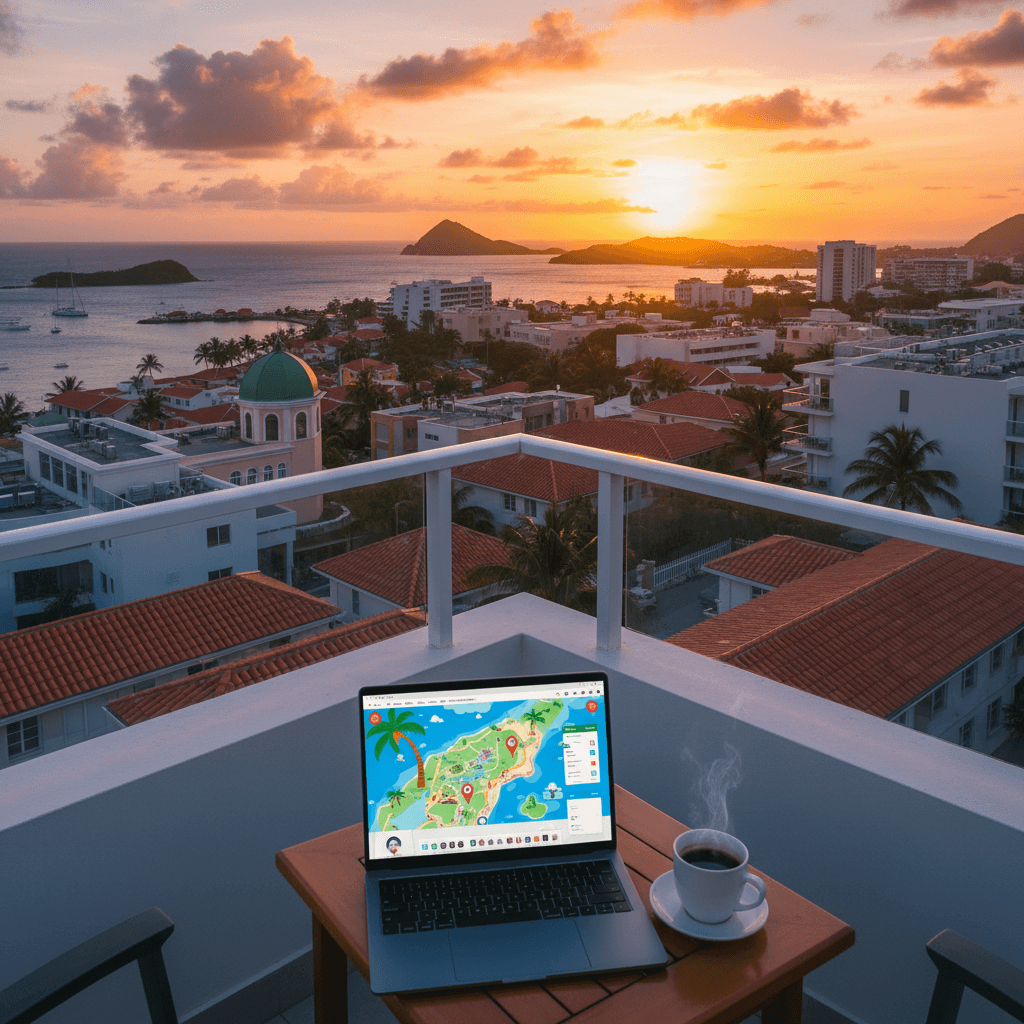
Rodney Bay
🇱🇨 Saint Lucia
Rodney Bay is, honestly, Saint Lucia's most livable corner. It's where the marina smells like salt and outboard fuel, where Friday nights pulse with soca from Gros Islet's Jump-Up and where you can eat a roti for $5 USD then sit at a proper steakhouse two streets over. It doesn't feel like one thing. That's the point.
The cultural mix here is genuinely unusual. African, French and English influences layer on top of each other in ways you don't expect, so the food, the patois, the architecture, even the way locals greet you all carry this warm, slightly unpredictable energy. Expats who've been here a while say it took a month to stop feeling like a tourist and start feeling like a resident, which is faster than most Caribbean islands allow.
What sets Rodney Bay apart from other nomad spots in the region is the combination of walkability and actual infrastructure. The village core, marina, Reduit Beach and most of your daily errands sit within a 15-minute walk of each other, which sounds minor until you've spent time on islands where everything requires a car. Minibuses run constantly for $1 to $2 USD, ride-hailing apps like Horizon Rides and Allez are reliable, the coworking scene at Orbtronics is real and functional, not a glorified cafe with a printer.
That said, it's not all polished. Some corners of the village collect litter, mosquitoes are a genuine nightly annoyance rather than an occasional nuisance and a few stretches feel weirdly neglected given how much development surrounds them. Nobody's pretending otherwise.
The vibe skews social and outward-facing. Solo nomads tend to find their footing quickly here because the expat community is active on Facebook groups and the bar scene creates natural overlap with other long-termers. Families and remote workers who want quiet tend to drift toward Rodney Heights, which is residential, secure and close enough to the village without being inside the noise.
Weather is warm year-round, 27 to 29°C most days, though the rainy season from June through November brings real downpours and occasional hurricane watches. December through April is the sweet spot, dry and breezy, the kind of mornings that make it hard to open your laptop before 10am.
Saint Lucia isn't cheap. Most nomads are surprised by that, especially compared to Southeast Asia or Latin America, but Rodney Bay specifically skews toward the pricier end of Caribbean living because it's the island's expat and tourist hub, which means landlords and restaurant owners know exactly what the market will bear.
Rent is, honestly, the biggest variable. A studio or one-bedroom in Rodney Heights or the village core runs $500 to $850 USD per month on a longer-term lease, though short-term furnished options through Airbnb or StLuciaEstates.com can hit $120 a night plus a 12.5% tax and service charge that stings more than you'd expect.
Food costs depend entirely on how you eat. Street food at places like Liz Roti or the Triangle BBQ stalls runs $5 to $8 a meal and the roti, turns out, is some of the best cheap eating on the island. A sit-down lunch at Rituals Cafe is around $15, dinner for two at an upscale spot climbs past $55, that gap between street food and restaurant dining is wider here than most places.
Getting around is cheap, minibuses are $1 to $2 a ride and cover most of Rodney Bay well, though the ride-hailing apps Horizon Rides and Allez are more reliable if you're carrying a laptop or heading somewhere specific, expect $10 to $20 per trip. Coworking at Orbtronics Innovation Hub near Gros Islet costs $15 a day or $150 a month for a hot desk, which is genuinely reasonable for what you get.
Here's a realistic monthly budget breakdown:
- Budget ($1,500/month): Shared studio, street food daily, minibuses only, no coworking
- Mid-range ($2,500/month): Private one-bedroom, mix of cafe meals and cooking, occasional rides, coworking a few days a week
- Comfortable ($4,000+/month): Larger apartment, regular dining out, full-time coworking desk, taxis
The mid-range figure is, weirdly, where most nomads end up landing after a month or two of adjusting. Budget living is doable but takes discipline, comfortable living creeps up fast because the food and nightlife scene makes it easy to spend. Factor that in before you book.
Rodney Bay isn't one neighborhood, it's honestly a cluster of distinct zones that suit very different lifestyles and picking the wrong one will cost you more than just rent.
For Digital Nomads
Rodney Bay Village is where most nomads land and for good reason. You can walk to the marina, Reduit Beach and a dozen restaurants without touching a minibus, the Orbtronics Innovation Hub in the Rodney Bay Commercial Center offers hot desks at $15/day or $150/month, and dedicated desks at $440/month, and the Friday night Jump-Up parties mean your social calendar doesn't require effort.
It's noisy, though. The smell of fry fish and exhaust mixes in the evening air near the Triangle street food strip and if you're a light sleeper, the bar thump will find you, especially on weekends. Still, most nomads find the tradeoff worth it for the sheer convenience.
For Expats and Professionals
Rodney Heights sits just above the village, quieter and more residential, with monthly rents running $500 to $850 for a one-bedroom. It's less walkable, you'll need a ride-hailing app like Horizon Rides or Allez for most errands, but expats who've settled here recommend it for the calm and the central location between the village and the beaches.
Higher rents, turns out, don't always mean better infrastructure, some streets aren't well lit, so factor that in if you're arriving after dark.
For Budget Travelers and Solo Nomads
Gros Islet is the honest budget pick. Rents are lower, the vibe is more local than tourist and Orbtronics Innovation Hub in the Rodney Bay Commercial Center offers hot desks at $15/day or $150/month, and dedicated desks at $440/month if you need a proper setup. It's less polished, the streets can feel a bit rough in patches and it's farther from Reduit Beach, but the Friday Jump-Up is practically on your doorstep.
For Families
Rodney Heights wins again here, it's secure, it's quiet and the proximity to both the village and the beach means you're not sacrificing convenience for calm. Short-term options run around $120/night plus a 12.5% tax and service charge, which adds up fast, so families planning longer stays should look at monthly leases through StLuciaEstates.com or FinalRentals.lc to bring costs down meaningfully.
Connectivity in Rodney Bay is, honestly, better than you'd expect from a small Caribbean island. Download speeds through Digicel's 4G LTE average around 62 Mbps, while Flow's fixed broadband can reach 85.6 Mbps in areas with proper infrastructure. That's enough for video calls, cloud uploads and the occasional large file transfer without wanting to throw your laptop into the sea.
Pick up a SIM at the airport or any local shop, Digicel and Flow both sell tourist starter packs for $10 to $20 and coverage across Rodney Bay Village and Rodney Heights is solid. Drops happen, they're not frequent enough to be a real problem, but don't count on strong signal once you're hiking out toward Pigeon Island.
For dedicated workspace, Orbtronics Innovation Hub is the only real option on this end of the island and turns out it's a genuinely useful spot. It sits in the Rodney Bay commercial area near Gros Islet, so you're a short minibus ride from the village.
- Hot desk: $15/day or $150/month
- Dedicated desk: $440/month
- Boardroom: $30/hour
- Extras: 3D printing, tech tools, reliable AC
The monthly hot desk rate is, weirdly, one of the more affordable coworking prices you'll find in the Eastern Caribbean, the dedicated desk is harder to justify unless you're staying long-term and need a permanent setup. Most nomads doing a one or two month stint just go hot desk and call it done.
Cafe working is a real alternative. Rituals Cafe in Rodney Bay Village has decent WiFi and tolerates laptop campers reasonably well over a $15 lunch, it's not a dedicated workspace but it does the job on slower days. The hum of the AC, the smell of coffee, the occasional cruise-ship tourist wandering past the window, it's a perfectly fine backup when you want a change of scene.
One honest caveat: power outages happen. They're not daily, but they're not rare either. A small UPS or a well-charged battery pack is worth having and Orbtronics does have backup power, which is a real selling point during rainy season.
Rodney Bay is, honestly, one of the safer spots in the Caribbean for travelers and nomads. Stick to well-lit areas around the marina and village center, travel in groups at night and don't flash expensive gear or jewelry. That's the basic calculus. Solo walks down unlit stretches after midnight are where things get uncomfortable, so just don't do it.
There's no single neighborhood in Rodney Bay that's a hard no, but common sense applies, the tourist zones are polished and well-patrolled, the quieter back streets less so. Expats here will tell you the vibe is generally welcoming, locals are friendly, crime targeting tourists is low. Still, petty theft happens, keep your bag close at the Friday Jump-Up in Gros Islet especially, it gets crowded and chaotic in the best way.
For emergencies, dial 911 or reach police directly at 999. Both work.
Healthcare
Healthcare is decent, not world-class. Tapion Hospital in Castries is the go-to for anything serious, it's about a 20-minute drive south and handles most medical needs competently, though you wouldn't want to be there for complex surgery if you have options. Bring your prescriptions from home, getting a new script filled locally takes time and the formulary is limited.
Pharmacies in Rodney Bay Village and Gros Islet are well-stocked for everyday needs, most open Monday through Saturday. Paracetamol, antihistamines, basic wound care, no problem. Travel insurance is non-negotiable here, turns out the cost of a medical evacuation to Barbados or Miami without coverage is the kind of number that ruins trips and bank accounts simultaneously.
Health Nuisances
- Mosquitoes: Real and persistent, especially near stagnant water; pack DEET-based repellent and use it daily
- Sun: The UV index here is brutal year-round, SPF 50 isn't overcautious, it's just correct
- Water: Tap water is generally treated, most nomads and expats drink bottled anyway
- Litter and drainage: Some areas smell after heavy rain, weirdly more noticeable near the village edges than the marina strip
Bottom line: Rodney Bay won't stress you out the way some Caribbean capitals do, it's manageable, the risks are predictable and a little situational awareness goes a long way.
Rodney Bay is, honestly, one of the easier places to get around in the Caribbean. The village core is walkable, the beach is close and you've got real transport options beyond waving down a taxi.
Minibuses run Rodney Bay routes for EC$2.50 to EC$8.00 depending on distance (approximately $0.93-$2.96 USD), with fares set by government regulation. This sounds great until you're standing in the heat waiting for one that's full, then another, then a third. They're not on a schedule, they fill up and go, so budget extra time if you've got somewhere to be.
For anything faster or more predictable, two ride-hailing apps cover the area well: Horizon Rides and Allez. Most trips within Rodney Bay and over to Gros Islet run $10-20 USD, drivers are generally reliable and you don't have to negotiate a price before getting in, which is a genuine relief. Expats tend to default to these apps for anything after dark or when they're carrying gear.
Bike and scooter rentals are available near the marina if you want more flexibility, turns out they're a decent option for short hops to Reduit Beach or Pigeon Island without paying ride-hailing prices every time. That said, the roads aren't always smooth, keep that in mind.
Getting to and from Hewanorra International Airport (UVF) in the south is a longer haul than most people expect. It's roughly 90 minutes away.
- Shuttle bus (St. Lucia A1): Around $75 USD, shared, takes about 1 hour 20 minutes
- Allez or Horizon Rides: Private, more flexible on timing, costs more but worth it with luggage
There's also George F.L. Charles Airport in Castries, much closer to Rodney Bay, it handles regional inter-island flights and is frankly the better option if you're hopping between islands.
Parking exists if you rent a car, though the village gets congested on weekends. Most nomads who stay longer than a month eventually rent a car for day trips, but for daily life in Rodney Bay itself, the apps and your own two feet cover most of what you need.
English is the official language and proficiency is, honestly, high across the board. You won't struggle to communicate anywhere in Rodney Bay, whether you're ordering roti at Liz Roti, haggling at the marina or sorting out a lease in Rodney Heights. That said, you'll hear Kweyol (Saint Lucian Creole) constantly, it's the language locals actually use with each other and knowing even a handful of phrases changes how people treat you.
Kweyol sounds like French filtered through a Caribbean rhythm, warm and fast, with words that blur together in ways that'll throw you at first. Don't panic. Most locals will switch to English the moment they sense confusion, no fuss about it.
A few phrases worth learning:
- Bonjou , hello / good morning (use it constantly, locals notice and appreciate it)
- Bonswa , good evening
- Mesi , thank you
- Souple , please
- Kote pwevit-la ya? , where's the bathroom?
- Sa ou fè? , how are you?
Greeting people with "Bonjou" before launching into a request isn't just polite, it's the social contract here. Skip it and you'll get served, but the interaction will feel cooler than the air-conditioned grocery store you're standing in. Expats who've been around a while are pretty consistent on this point.
Written communication is entirely in English, so signs, menus, contracts and government forms are all straightforward. Google Translate handles Kweyol reasonably well for written text, turns out it's more useful for reading handwritten market signs than for real-time conversation, where the spoken dialect moves too fast for the app to keep up.
Saint Lucian English has its own rhythm and idioms. Locals speak quickly, drop syllables and use "eh" as a sentence-ender in ways that take a week or two to calibrate to. It's not a barrier, just an adjustment and most nomads find they're fully comfortable within the first few days.
Phone and data coverage in Rodney Bay is solid with both Digicel and Flow, so WhatsApp calls and voice notes work fine for staying in touch locally. Most business communication happens over WhatsApp, not email, keep that in mind.
Rodney Bay sits at roughly 27 to 29°C year-round, so the temperature itself isn't really the variable you're planning around. Rain is.
The dry season runs December through April, with January to March seeing as little as 76 to 113mm of rainfall. Those months are, honestly, about as close to perfect as Caribbean weather gets: low humidity, consistent sun and the kind of warm breeze off the marina that makes it hard to close your laptop and go inside. Most nomads time their first stint here around January or February and you'll understand why the moment you step outside.
Then there's the rainy season, June through November. September and October are the worst of it, with rainfall hitting 182 to 269mm and that's when the humidity really starts to cling to you. It's not just wet, it's heavy and thick, the kind of air that makes a ten-minute walk feel like a workout. Hurricane season overlaps this window too, June through November, so if you're risk-averse about that sort of thing, factor it in.
That said, the rainy season isn't a write-off. Storms tend to come in hard and fast, then clear, you'll still get full mornings of sun most days. Prices drop noticeably, crowds thin out and the island feels more like itself. Expats who've been here a while often prefer the shoulder months of May or November for exactly that reason.
A few things to keep in mind when timing your trip:
- Best months: December through April for sun, low rain and peak beach conditions
- Worst months: September and October bring the heaviest rain and the most hurricane activity
- Budget window: May through June and late November offer lower accommodation rates with decent weather
- Peak crowds: December through February, especially around Christmas and New Year, so book early
One thing that catches people off guard: even in the dry season, you'll get the occasional afternoon downpour. It passes quickly, the streets smell like wet earth and frangipani for about twenty minutes and then it's done. Don't let it throw your plans, it won't last.
Pick up a Digicel or Flow SIM the moment you land, either at the airport or at any phone shop in Rodney Bay Village. Data packs run $10-20 USD and coverage is, honestly, solid across the bay area. Don't rely on hotel WiFi for serious work, get your own connection sorted on day one.
For banking, ATMs at Bank of Saint Lucia and RBC are the most reliable options locally. Wise works well for transfers, most expats use it to avoid the brutal conversion fees at exchange counters, it's one of those things you'll wish someone told you before your first withdrawal.
Finding a place takes a bit of legwork. Airbnb has plenty of listings, but StLuciaEstates.com and FinalRentals.lc tend to have better long-term rates and more direct contact with landlords. Short-term rentals carry a 12.5% tax and service charge on top of the listed price, so budget accordingly.
Getting to Rodney Bay from Hewanorra Airport (UVF) in the south takes about an hour and twenty minutes. The St. Lucia A1 Shuttle runs for around $75 USD, the Allez and Horizon Rides apps are weirdly good for on-demand rides and usually come in cheaper if you book ahead. Once you're settled, minibuses handle most day-to-day movement for EC$2.50 to EC$8.00 per ride depending on distance.
Saint Lucia's Live It digital nomad visa is worth looking into if you're planning a longer stay. It lets you work remotely while living legally on the island, check the official immigration site for current income requirements and documentation.
A few cultural things that'll save you some awkward moments:
- Greetings matter: Say "Bonjou" or at least good morning before asking for anything. Skipping it reads as rude, locals notice.
- Tipping: 10,15% is standard at restaurants, don't skip it.
- Pace: Things move slowly here. Turns out that's not a flaw, it's just how the island operates, fighting it will only frustrate you.
- Day trips: Pigeon Island is a short ride up the causeway, good hiking and beach access, skip the overpriced tour packages and just go independently.
Mosquitoes are a genuine annoyance, especially near the lagoon at dusk. Pack repellent, it's not optional.
Need visa and immigration info for Saint Lucia?
🇱🇨 View Saint Lucia Country GuideEasy Landing
Settle in, no stress