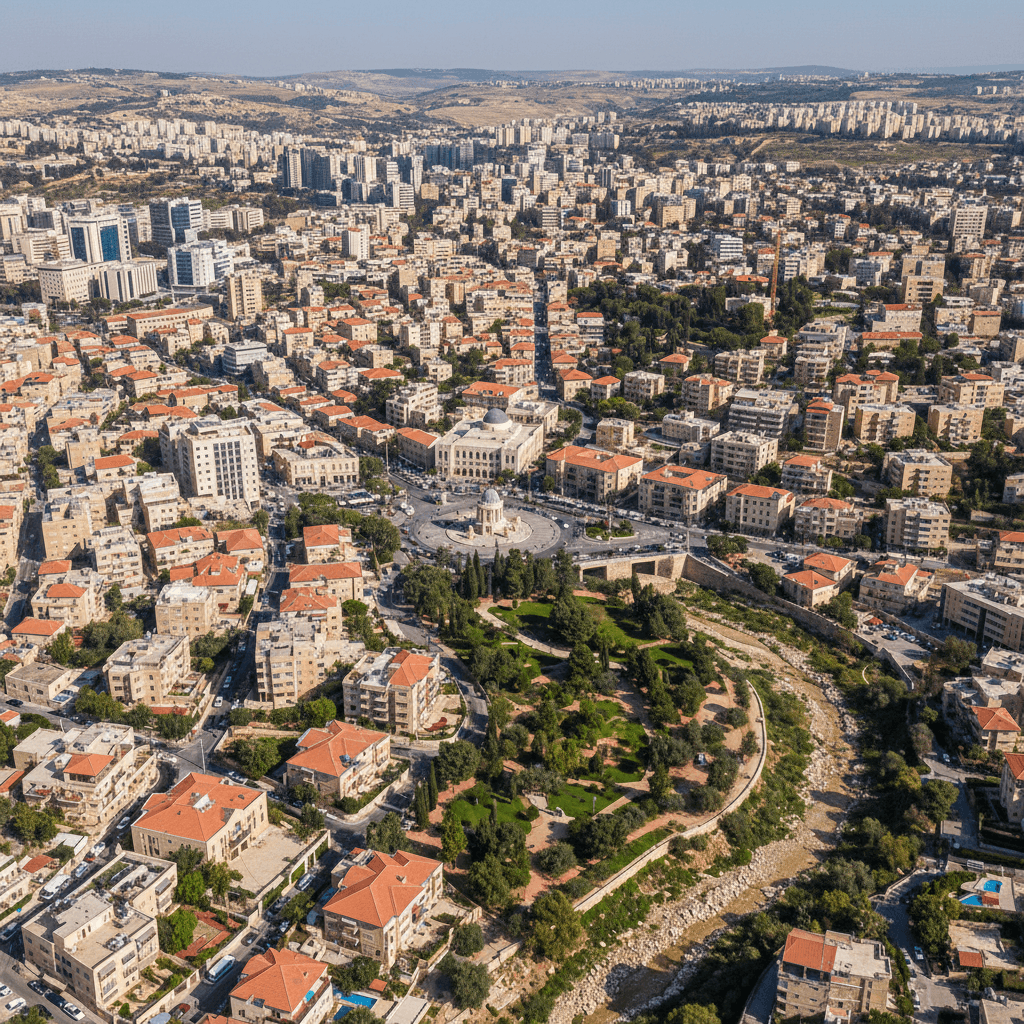
Ramallah
🇵🇸 Palestine
Ramallah is the beating heart of the West Bank, but it doesn't feel like the dusty, ancient relic many expect. It is a cosmopolitan outlier, a place where political gravity meets a surprisingly loud nightlife. As the seat of government and the base for hundreds of international NGOs, it draws a specific kind of nomad; those who want to be where the action is, even if that action is complicated. It is less conservative than Bethlehem or Hebron, meaning you can spend your morning at a high-end cafe and your evening at a bar with local craft beer and dancing.
Living here means balancing a high-energy city pace with deep community roots. You'll feel the tension of checkpoints and the weight of history, but you'll also experience an intensity of hospitality that's rare elsewhere. Most nomads find the city incredibly welcoming, though you need to be comfortable with a bit of chaos and a landscape that can change based on the political climate. It is a place for the curious and the resilient, not just the sun-seeker.
Cost of Living
While Jerusalem is notoriously expensive, Ramallah is much kinder to your wallet. You can live a comfortable, middle-class life here for a fraction of what you'd spend just a few miles south. Cash is still the primary way to pay for almost everything, though you can use cards in upscale Al-Masyoun hotels and restaurants.
- Budget Tier: $800 to $1,200 per month. This covers a room in a shared flat, plenty of street food, and public transport.
- Mid-range Tier: $1,500 to $2,000 per month. This allows for a private 1BR apartment, frequent restaurant meals, and a few weekend trips.
- Comfortable Tier: $2,500+ per month. You'll be living in the best neighborhoods with a modern apartment and private car services.
- Housing: A central 1BR goes for $300 to $600, while luxury spots in Al-Masyoun hit $700 or more.
- Food: Street falafel or shawarma costs $2 to $5. A nice dinner at a mid-range grill runs about $15.
The Neighborhood Breakdown
Where you stay determines your daily vibe. Most foreigners gravitate toward the center for convenience, but the outskirts offer a quieter, more residential feel.
Manara Circle & Al-Tireh
- The Vibe: The absolute center of the universe in Ramallah. It is loud, walkable, and packed with English speakers.
- Pros: You are steps away from the best cafes, bars, and shops. It is the easiest place to meet people.
- Cons: It can be noisy at all hours and rents are higher than the city average.
Al-Masyoun
- The Vibe: The posh, "diplomatic" district. It is uphill, breezy, and filled with modern apartment blocks.
- Pros: It is significantly quieter and feels very safe. Many of the city's best upscale restaurants are here.
- Cons: You'll likely need to rely on taxis or a longer walk to get to the historic center.
Old City
- The Vibe: Authentic and historic. It is near the Tourist Information Center and full of character.
- Pros: The cheapest rent and the best traditional food.
- Cons: Infrastructure like high-speed internet can be hit or miss in older buildings.
Work & Connectivity
Internet speeds usually hover between 20 and 50 Mbps. While you won't find a massive coworking chain, the cafe culture is strong. Places like those near Manara Circle are accustomed to people on laptops. For a dedicated desk, expect to pay $100 to $200 a month. For mobile data, pick up a SIM from Jawwal or Ooredoo for about $10 to $20; it will get you 20GB of data which is usually enough for backup. Just remember that from January 1, 2026, you'll need to have your Electronic Travel Authorization sorted before you even arrive.
Getting Around
You'll quickly learn the "serveece" system. These are shared taxis that run set routes for $0.50 to $2. They are the lifeblood of the city. For longer hauls to Bethlehem or Jericho, head to the main bus station. Everything in the center is walkable, though the hills will give your legs a serious workout. If you're coming from the airport in Tel Aviv, expect a 2 to 3 hour journey involving a checkpoint, costing between $50 and $100 for a private taxi.
The Social Scene
Ramallah's social life revolves around food and conversation. You'll spend hours over tea or coffee. Expats and local activists often gather at the EcoHostel or cafes near the Mahmoud Darwish Museum. Don't skip the nightlife; Ramallah has a legitimate bar scene that surprises most first-timers. For a quiet afternoon, the gardens around Yasser Arafat's tomb or the local galleries provide a much-needed break from the city's frantic energy. Just remember to dress modestly when you're outside the bars and respect local customs, especially during Ramadan.
The High-Level View
Ramallah is the cosmopolitan heartbeat of the West Bank, and for nomads, it provides a much softer landing than most expect. While it carries the weight of being a political and NGO hub, the day to day reality is surprisingly accessible. It is significantly more affordable than Jerusalem, allowing your budget to stretch much further while still enjoying a lifestyle of cafes, late night bars, and a deep cultural scene.
Most nomads find they can live quite comfortably on $1,500 to $2,000 a month. If you are sticking to a tighter budget, you can get by on $800 to $1,200 by prioritizing street food and shared housing. For those who want a high end experience in a modern apartment with all the bells and whistles, expect to spend $2,500 or more.
Housing and Neighborhoods
Rent will be your biggest variable. Most travelers and NGO workers gravitate toward three specific areas depending on their priorities.
Al-Masyoun
- The Vibe: Upscale, quiet, and residential with modern builds and great views.
- Monthly Rent: $700+ for a 1BR apartment.
- Pros: High safety standards, quieter nights, and newer infrastructure.
Manara Circle & Al-Tireh
- The Vibe: The central hub where everything happens. It is walkable, English-friendly, and packed with nightlife.
- Monthly Rent: $500 for a 1BR.
- Pros: Immediate access to cafes and coworking; very social for solo travelers.
The Old City
- The Vibe: Historic and authentic, located near the Tourist Information Center.
- Monthly Rent: $300 to $400 for basic setups.
- Pros: Cheapest eats in the city and a truly local feel.
Eating and Drinking
Palestinian cuisine is a highlight of living here, and it caters to every price point. You can grab a quick falafel or shawarma wrap on the street for $2 to $5. If you are sitting down at a mid-range grill or a trendy cafe, expect to pay $10 to $15 per person.
For a splurge, upscale fusion restaurants or high end spots serving traditional Nablus-style kanafeh will run you $20 to $40. Unlike more conservative cities in the region, Ramallah has a legitimate bar scene. A night out is manageable, though alcohol carries a bit of a premium compared to groceries.
Connectivity and Coworking
The internet is reliable enough for most remote work, with speeds averaging 20 to 50 Mbps in professional spaces. Coworking culture is growing, and you can usually find a desk for $5 to $10 a day or $100 to $200 a month. Local cafes near Manara Circle are very welcoming to laptops if you're just looking for a few hours of work over coffee.
For mobile data, grab a SIM card from Jawwal or Ooredoo. You'll pay about $10 to $20 for a 20GB monthly plan. It is best to handle this at a shop in the city center to ensure everything is configured correctly for your phone.
Transportation and Practicalities
Ramallah is highly walkable in the center, but you'll eventually need the "serveece," which are shared taxis. These cost between $0.50 and $2 per ride and are the lifeblood of local transit. If you prefer more structure, a monthly transport pass is roughly $30.
When it comes to banking, ATMs are everywhere and generally play nice with international cards like Wise or Revolut. Cash is still king for small purchases and street food, so keep some shekels on hand. For arrivals, remember that as of January 1, 2026, you'll need to have your Electronic Travel Authorization sorted before you land.
Healthcare is solid, with the Palestine Medical Complex providing quality care in the city. Pharmacies are easy to find and well-stocked for common needs. For any logistical hurdles, the Ramallah Tourist Information Center is a great resource for updated routes and local advice.
For Digital Nomads and Solo Travelers
If you want to be where the action is, focus your search on Al-Tireh and the area surrounding Manara Circle. This is the city's heartbeat. It's the most walkable part of Ramallah, packed with cafes where you can flip open a laptop without getting a second glance. Most nomads gravitate here because it's English-friendly and puts you within striking distance of the best nightlife in the West Bank.
You'll find a mix of modern apartments and older stone buildings. A decent one-bedroom apartment in this central hub usually runs around $500 a month. While it's the most convenient spot, it can get loud during the day due to traffic and local commerce. If you're looking for a community vibe, check out EcoHostel nearby. Even if you aren't staying there, it's a great place to meet other travelers and get the pulse of the city. For work, you can grab a SIM card from Jawwal or Ooredoo for about $10 to $20 to ensure you have a backup for the 20-50 Mbps speeds found in local cafes.
- Monthly Rent: $450 to $600
- Vibe: High energy, social, and very walkable
- Best for: Networking, nightlife, and proximity to coworking spots
For Long-Term Expats and Families
Al-Masyoun is widely considered the prestige neighborhood of Ramallah. It sits on a hill, offering cooler breezes and some of the best views in the city. This is where you'll find the diplomatic crowd, NGO directors, and upscale residential complexes. It’s significantly quieter and cleaner than the city center, making it the top choice if you have kids or just need a silent environment to focus.
The trade-off for the peace and quiet is the price and the hills. You’ll likely pay $700 or more for a modern apartment here. It’s also less walkable than Manara; while you can walk down into the center, you’ll probably want to take a $1 or $2 shared taxi (serveece) to get back up the hill. The neighborhood is home to several high-end restaurants and the Palestine Medical Complex is easily accessible if you need healthcare services.
- Monthly Rent: $700 to $1,000+
- Vibe: Professional, quiet, and secure
- Best for: Families, peace-seekers, and those with a higher budget
For Culture Seekers and Budget Travelers
The Old City (Haret al-Dar) is the place to be if you want an authentic Palestinian experience. Located near the Tourist Information Center and the Municipality, this area is characterized by narrow alleys, Ottoman-era architecture, and some of the most affordable street food in town. You can grab a massive plate of falafel or shawarma for $2 to $5.
Living here is a bit of a squeeze. The infrastructure isn't as modern as Al-Masyoun, and you might find the internet a bit more temperamental in the thick stone buildings. However, for solo travelers who want to be immersed in the local culture rather than an expat bubble, it's unbeatable. It’s also the best spot for quick access to the central bus station for day trips to Jerusalem or Jericho.
- Monthly Rent: $300 to $450
- Vibe: Historic, crowded, and traditional
- Best for: History buffs, photographers, and budget-conscious travelers
Neighborhood Quick Comparison
- Manara/Al-Tireh: Best for social life and cafe culture. Expect to pay $500 for rent and $15 for a mid-range dinner.
- Al-Masyoun: Best for luxury and quiet. Rent starts at $700. It’s the safest bet for families but requires more taxi rides.
- Old City: Best for low costs and history. Rent can be as low as $300, and you're steps away from the most authentic markets.
Regardless of where you land, remember that Ramallah is a community-driven city. People are incredibly welcoming, and you'll likely be invited for tea by your neighbors within the first week. Just keep in mind that as of January 1, 2026, you'll need to have your Electronic Travel Authorization sorted before you arrive to stay compliant with local regulations.
The Connectivity Landscape
In a city as politically and socially active as Ramallah, staying online isn't just a convenience; it's how the city functions. While you won't find the fiber-optic speeds of Tallinn or Seoul here, the infrastructure is surprisingly resilient. Most cafes and apartments offer speeds between 20 and 50 Mbps. This is generally enough for video calls and standard remote work, though you might notice a dip during peak evening hours when the local student population hits the web.
For a reliable setup, look for accommodations through platforms like NomadStays, which vet their listings for high-speed WiFi. If you're renting a private apartment in Al-Masyoun or Al-Tireh, always ask for a speed test before signing. Local providers are getting better, but the hilly terrain can sometimes interfere with signal strength depending on which side of the building you're on.
Coworking Spaces and Community Hubs
Ramallah doesn't have a massive "coworking" brand presence, but it has a sophisticated cafe culture that serves the same purpose. Because the city is the center for international NGOs and tech startups, seeing a laptop in a coffee shop is completely normal. Expect to pay between $5 and $10 for a day's worth of workspace in a local hub, or $100 to $200 for a monthly membership if you want a dedicated desk.
- Ramallah Tourist Information Center (TIC): Located right near the Municipality, this is your first stop for the most current list of active workspaces. They can provide updated contact info for smaller, niche hubs that don't always show up on Google Maps.
- Manara Circle Cafes: The area around the lions is packed with spots where you can post up for hours. It's noisy and energetic, perfect if you thrive on "body doubling" and city sounds.
- Al-Tireh Cafes: This neighborhood is more polished and quiet. It's where you'll find expats and local professionals working on grants or coding projects. The WiFi here is often the most stable in the city.
Mobile Data and SIM Cards
Don't rely solely on public WiFi. You'll want a local SIM card immediately to handle navigation and translate signs on the fly. You can pick these up at the airport or at various shops in the city center. Prices are very reasonable, usually around $10 to $20 for a 20GB monthly data package.
- Jawwal: The primary local provider with the widest coverage across the West Bank.
- Ooredoo: A strong alternative that often competes on price and data bundles.
- Top-up tip: You can buy "scratch cards" for credit at almost any small grocery store or "dukan" in the city. Just look for the provider's logo in the window.
Practical Tips for Remote Workers
The work week in Palestine typically runs from Sunday to Thursday, with Friday being the main day of rest. While many places stay open on Saturdays, Friday morning is the quietest the city will ever be. It's the best time to catch up on deep work without the distraction of Ramallah's famous traffic honking.
Power outages are rare in central Ramallah compared to other parts of the region, but they can happen during heavy winter storms in January or February. Most modern apartment buildings in Al-Masyoun have backup generators, but it's always smart to keep a charged power bank and a mobile hotspot ready. Most nomads find that a combination of a Jawwal SIM and a decent cafe connection is more than enough to stay productive while soaking in the local hospitality.
Navigating the Local Pulse
Ramallah is the beating heart of Palestinian life and arguably the most liberal city in the West Bank. While it feels cosmopolitan and energetic, the security situation is dynamic. Most nomads find the city itself quite safe for day to day life, especially in central hubs like Manara Circle or Al Tireh. The atmosphere is community focused, and you will likely find locals going out of their way to ensure you feel welcome.
That said, being a nomad here requires more situational awareness than in Lisbon or Bali. You should keep a close eye on local news and avoid checkpoints at night, as these are the primary areas where tensions can flare. While the city is generally secure, it is wise to stick to well lit, central zones after dark. Travelers often say that joining a local tour during your first week is the best way to understand the geography of the occupation and learn which routes are best for daily travel.
Healthcare and Medical Facilities
If you get sick, you are in the right place. Ramallah is the medical hub for the region, and the quality of care is generally high. The Palestine Medical Complex is the main public facility in the city, but there are also several private clinics that expats and NGO workers prefer for shorter wait times and modern equipment.
Pharmacies are everywhere and very well stocked. You can find most over the counter medications easily, and many pharmacists speak excellent English. If you have a specific prescription, it is still smart to bring a supply with you, though you will find that local equivalents are usually available and very affordable.
- Emergency Police: Dial 100
- Ambulance/Red Crescent: Dial 101
- Fire Department: Dial 102
Entry Requirements & Legalities
The paperwork for Palestine is unique because there is no dedicated digital nomad visa. You enter through Israeli controlled borders, which means you are subject to their immigration laws. Starting January 1, 2026, visitors from visa exempt countries must apply for an Electronic Travel Authorization (ETA) before arrival. This is a digital system, so make sure your approval is printed or saved on your phone before you hit the border.
Most nomads enter on a standard 90 day tourist stay. Be prepared for questions at the airport or land borders about your itinerary. It is often smoother to mention your interest in historic sites and cultural tourism. Once you are in Ramallah, there is no further registration required with local authorities, but always keep your passport and entry slip on you when traveling between cities, as you will need them for checkpoints.
Practical Safety Tips
While the political situation is heavy, street crime is remarkably low. You can walk through most neighborhoods at night without the typical worries of pickpocketing or mugging found in European capitals. However, respect for local customs goes a long way in maintaining that safety. Dressing modestly is appreciated, even in the more "Westernized" bars of Al Masyoun.
For the most up to date info on the ground, the Ramallah Tourist Information Center near the Municipality is an invaluable resource. You can reach them at 1800 10 11 01. They can give you the latest on road closures or any local events you should be aware of. Most expats also recommend joining local Facebook groups or hanging out at EcoHostel to get real time updates from other internationals living in the city.
Insurance and Logistics
Standard travel insurance sometimes has "excluded zone" clauses for the West Bank, so read your policy's fine print carefully. Look for providers that specifically cover "Type A" areas or regions with travel advisories. Having a local SIM card from Jawwal or Ooredoo is also a safety essential; having 4G access at all times ensures you can use maps and translation apps if you find yourself in an unfamiliar neighborhood or at a closed checkpoint.
Ramallah is surprisingly walkable, especially if you base yourself near the Manara Circle. Most of the city's energy, from the NGO offices to the late night bars, is concentrated in a central core that you can easily cover on foot. However, the city is built on hills, so a quick ten minute walk can often turn into a serious leg workout. When the incline or the summer heat gets to be too much, the local transport system is efficient and incredibly cheap once you understand the unwritten rules.
The Serveece Culture
The backbone of Palestinian transport is the serveece. These are shared taxis, usually yellow minivans, that follow set routes. You won't find a formal map of these routes, but they generally congregate at the central bus station near the vegetable market. You just hop in, wait for the van to fill up, and pay the driver directly. A single ride within the city usually costs between $0.50 and $2. It is a social way to travel; don't be surprised if your seatmate strikes up a conversation or offers you a piece of gum.
- Payment: Cash is king. Pass your coins forward to the driver through other passengers if you are sitting in the back.
- Hailing: You can flag them down anywhere along their route with a simple hand wave.
- Etiquette: It is polite to leave the front seat for women if the back is crowded, though Ramallah is more relaxed about this than other West Bank cities.
Private Taxis and Ride Hailing
If you prefer a direct route without the stops, private taxis are everywhere. Look for the yellow cars with taxi signs. Most rides within the city limits should cost around $3 to $5, but it is always smart to agree on the price before you pull away. While Careem and Uber have a presence in the region, their availability in Ramallah can be hit or miss. Most expats find it easier to just use a local taxi app or keep the WhatsApp number of a driver they trust.
Intercity Travel and Checkpoints
Moving between cities like Bethlehem, Jericho, or Nablus is straightforward. Large buses and shared vans depart regularly from the main stations. A trip to Jerusalem is a daily reality for many, but you need to account for the checkpoints. The Qalandia checkpoint is the primary crossing; it can take anywhere from 20 minutes to two hours depending on the time of day and the political temperature. Always keep your passport and your Electronic Travel Authorization (required from January 1, 2026) on you at all times.
Arrival from the Airport
Since Palestine doesn't have its own functioning commercial airport, you'll likely fly into Ben Gurion (TLV). Getting to Ramallah from there involves a bit of logistics. You can take a private taxi directly to the city for roughly $50 to $100, though some Israeli taxis won't cross into Palestinian Authority territory and might drop you at a checkpoint where you'll need to switch to a Palestinian cab. Alternatively, take the train to Jerusalem and catch a bus or serveece from the East Jerusalem bus station for a much lower price.
Practical Navigation Tips
Google Maps works reasonably well for general geography, but it often struggles with the nuances of checkpoints and road closures. For the most up to date info on which roads are open or which serveece goes where, the Ramallah Tourist Information Center near the Municipality is your best resource. Most nomads find that after a week of living here, they stop looking at maps and start navigating by landmarks like the Arafat Tomb or the Al-Tireh neighborhood cafes.
- Walking: Best for the central hub and Old City.
- Serveece: Ideal for budget travel to Al-Masyoun or nearby villages.
- Monthly Pass: While not a physical card, regular commuters budget about $30 a month for transit.
- Safety: Avoid hanging around checkpoints at night or during times of visible tension.
The Linguistic Landscape
In Ramallah, you'll find a linguistic atmosphere that's far more international than the rest of the West Bank. Because the city serves as the administrative and NGO heart of Palestine, English is widely spoken among young professionals, aid workers, and staff in the service industry. You won't have much trouble ordering a flat white in Al-Tireh or discussing rent in Al-Masyoun using English alone.
That said, the local soul is found in Palestinian Arabic. It's a melodic, Levantine dialect that's relatively easy on the ears. While you can get by with English in the cosmopolitan bubbles, learning a few phrases goes a long way in building rapport. Locals take immense pride in their hospitality; a simple "Shukran" (thank you) often leads to a long conversation or an invitation for tea.
Essential Phrases for Your Kit
Most nomads find that a handful of words can break the ice in the Old City or when haggling for a $2 falafel wrap. Here are the basics to keep in your pocket:
- Marhaba: Hello (The universal opener)
- Shukran: Thank you
- Min fadlak (to a man) / fadlik (to a woman): Please
- Yalla: Let's go / Hurry up (You'll hear this constantly in traffic)
- Kam?: How much?
- Wayn...?: Where is...?
Digital Communication and Connectivity
Staying connected is straightforward, but you need to pick the right provider. The two main local players are Jawwal and Ooredoo. You can pick up a SIM card at most corner shops or at the airport before you head toward the checkpoint. Expect to pay around $10-$15 for 12-24GB based on current bundles.
While 4G is the standard, speeds can be temperamental depending on your proximity to certain zones. In central cafes near Manara Circle, you'll generally find stable WiFi hitting 20 to 50 Mbps. If you're planning on heavy video calls, it's worth checking if your apartment has a dedicated fiber line, as some older buildings in the Old City might struggle with thick stone walls blocking signals.
Apps and Practical Tools
Google Translate is your best friend here, especially the camera feature for translating menus or signs in more traditional neighborhoods. Make sure to download the Arabic offline pack. For getting around, Careem is the go-to ride-hailing app, though many expats still prefer the "serveece" (shared taxi) system for its efficiency and $0.50 price tag.
WhatsApp is the undisputed king of communication. Whether you're booking a table at a mid-range grill or chatting with a landlord about a $500 studio, don't bother with emails or standard texts. Most business is conducted through voice notes and quick messages on the platform.
Cultural Nuances in Conversation
The political situation is part of daily life, and people are generally open to discussing it if you're respectful and willing to listen. However, it's usually better to let your host lead the conversation. You'll find that Palestinians are incredibly direct but also very polite. Small talk often involves asking about your family and your impressions of the food. If you're unsure about something, the Ramallah Tourist Information Center near the Municipality is a great resource; they're English-friendly and can help with specific logistical questions or route planning.
Key Contacts for the Transition
- Emergency Police: 100
- Ambulance: 101
- Entry Requirement: Electronic Travel Authorization (Required from January 1, 2026)
The Seasonal Rhythms
Ramallah sits high in the central hills of the West Bank, which gives it a distinct Mediterranean climate that feels far more refreshing than the humid coast or the sweltering heat of Jericho down in the valley. If you're planning a stint here, you'll find the weather dictates the social energy of the city. Summers are social and dry, while winters bring a quiet, rainy chill that often catches unprepared travelers off guard.
Most nomads aim for the sweet spots of spring and fall. These shoulder seasons offer the best balance for exploring the hilly streets of the Old City or hiking the nearby trails without breaking a sweat or getting soaked.
Spring: March to May
This is arguably the most beautiful time to be in Palestine. The hillsides turn a brilliant green, and wildflowers bloom across the terraces. Temperatures hover comfortably between 20°C and 25°C, making it perfect for walking from your apartment in Al-Masyoun to the cafes around Manara Circle.
- Vibe: Refreshing and energetic.
- Pros: Ideal hiking weather; outdoor seating at cafes becomes the norm.
- Cons: Popular with tour groups, so sites like the Mahmoud Darwish Museum might be busier.
Summer: June to August
Expect hot, dry days with temperatures peaking between 25°C and 35°C. While it sounds intense, the lack of humidity makes it manageable, and the evenings in Ramallah are famous for being cool and breezy. This is when the city truly comes alive at night. You'll find the bars and rooftops packed until the early hours as locals and expats escape the daytime sun.
- Vibe: High energy and festive.
- Pros: No rain; the best time for rooftop drinks and late-night social scenes.
- Cons: Midday heat can be draining; occasional dust storms from the desert.
Fall: September to November
As the summer heat fades, the air turns crisp. Temperatures mirror the spring, usually staying in the low 20s. This is also the olive harvest season, a massive cultural event across the West Bank. If you're lucky, you can join a local community for a day of picking, which is a great way to experience the hospitality the region is known for.
- Vibe: Grounded and cultural.
- Pros: Perfect light for photography; the olive harvest experience.
- Cons: The first rains usually arrive in late October or November, sometimes bringing sudden downpours.
Winter: December to February
Winter in Ramallah is surprisingly cold. While temperatures usually stay between 10°C and 15°C, the humidity and stone architecture mean the chill gets into your bones. It rains frequently during these months, and the city occasionally sees a dusting of snow that shuts everything down for a day or two. Many apartments don't have central heating, so you'll be relying on portable gas or electric heaters.
- Vibe: Quiet and cozy.
- Pros: Very few tourists; the cheapest time for short-term rentals.
- Cons: Rainy and gray; indoor spaces can feel damp and cold.
Timing Your Entry
Beyond the thermometer, you need to keep an eye on the calendar for two major things: Ramadan and the new travel regulations. During Ramadan, the pace of the city slows down significantly during the day, with many cafes closing until sunset. However, the post-iftar celebrations are incredible.
On the logistics side, keep in mind that starting January 1, 2026, you'll need to secure an Electronic Travel Authorization before you arrive. Most nomads recommend sorting this at least a few weeks before your flight to avoid any hiccups at the border. If you're looking for the absolute best window, aim for late April or early October. You'll get the best of the Mediterranean climate and the most vibrant social atmosphere the city has to offer.
Navigating the Hub
Ramallah is the beating heart of the West Bank, serving as the political and cultural capital for Palestinians. It feels worlds apart from the more conservative cities like Hebron or Nablus. You'll find a cosmopolitan mix of NGO workers, local artists, and international students. The city has a surprisingly active nightlife with bars and social clubs, though it still maintains a deep sense of community and traditional Arab hospitality.
The pace here is energetic. Most nomads find the blend of ancient history and modern chaos addictive. While the political situation requires you to stay informed, the day to day reality for most expats is one of safety and warmth. People will go out of their way to help you find a bus or share a meal, making it an easy place to build a social circle quickly.
Cost of Living
Living here is significantly cheaper than Jerusalem, though price hikes are common in expat heavy areas. Most nomads budget between $1,500 and $2,000 per month for a comfortable lifestyle that includes a private apartment and frequent dining out.
- Studio or 1BR Apartment: $300 to $600 in central areas; $700+ in upscale Al Masyoun.
- Coworking: $100 to $200 per month.
- Street Food: A solid shawarma or falafel wrap costs $2 to $5.
- Mid-range Meal: Expect to pay $10 to $15 at local grills.
- Transport: Shared taxis (serveeces) are the lifeblood of the city at $0.50 to $2 per ride.
Where to Set Up Base
Choosing a neighborhood depends on how much you value quiet versus convenience. Most digital nomads gravitate toward the center for the walkability.
Manara Circle and Al Tireh
- The Vibe: The absolute center of the action. It is walkable, loud, and surrounded by the best cafes and shops.
- Pros: High English proficiency, great for people watching, and close to everything.
- Cons: Can be noisy and traffic is often at a standstill.
- Rent: Roughly $500 for a decent one bedroom.
Al Masyoun
- The Vibe: The "posh" side of town. It is where you find modern apartment blocks and high end restaurants.
- Pros: Quieter streets, better views, and very safe.
- Cons: You'll need taxis to get to the center; it's less "authentic" feeling.
- Rent: Expect to pay $700 or more.
Old City
- The Vibe: Historic and gritty with narrow stone alleys.
- Pros: Incredible architecture and the cheapest local eats in town.
- Cons: Infrastructure can be older; fewer dedicated workspaces.
Staying Connected
Internet speeds generally hover between 20 and 50 Mbps. While most cafes near Manara Circle are laptop friendly, serious workers head to local coworking spots or use verified listings on NomadStays to ensure their WiFi won't drop during a meeting. For mobile data, pick up a SIM from Jawwal or Ooredoo. A 20GB monthly plan usually runs about $10 to $20. You can find these shops easily at the border crossings or in the city center.
Getting Around and Safety
The city is very walkable, especially between Manara and the Old City. For longer distances, look for the yellow shared taxis. There isn't a reliable version of Uber here, though Careem works occasionally. If you're coming from Ben Gurion airport, expect a 2 to 3 hour journey involving a checkpoint. It usually costs between $50 and $100 for a private transfer.
Safety is generally high for foreigners, but you should avoid checkpoints at night and stay away from political demonstrations. The local police can be reached at 100 and ambulances at 101. For health needs, the Palestine Medical Complex is the primary facility in the city.
Practical Logistics
Cash is king here. While ATMs are everywhere, many smaller shops and taxis won't take cards. Wise or Revolut cards work well for withdrawals with lower fees. Regarding paperwork, there is no specific digital nomad visa. You'll likely enter on a standard tourist bridge or airport permit. Starting January 1, 2026, you must complete an Electronic Travel Authorization before you arrive.
The best time to visit is Spring (March to May) when the hills are green and temperatures sit around 20 to 25°C. Winters are surprisingly cold and rainy, so if you're visiting in January, make sure your apartment has a reliable heater; many older buildings don't have central heating.
Need visa and immigration info for Palestine?
🇵🇸 View Palestine Country GuideHidden Gem
Worth the effort