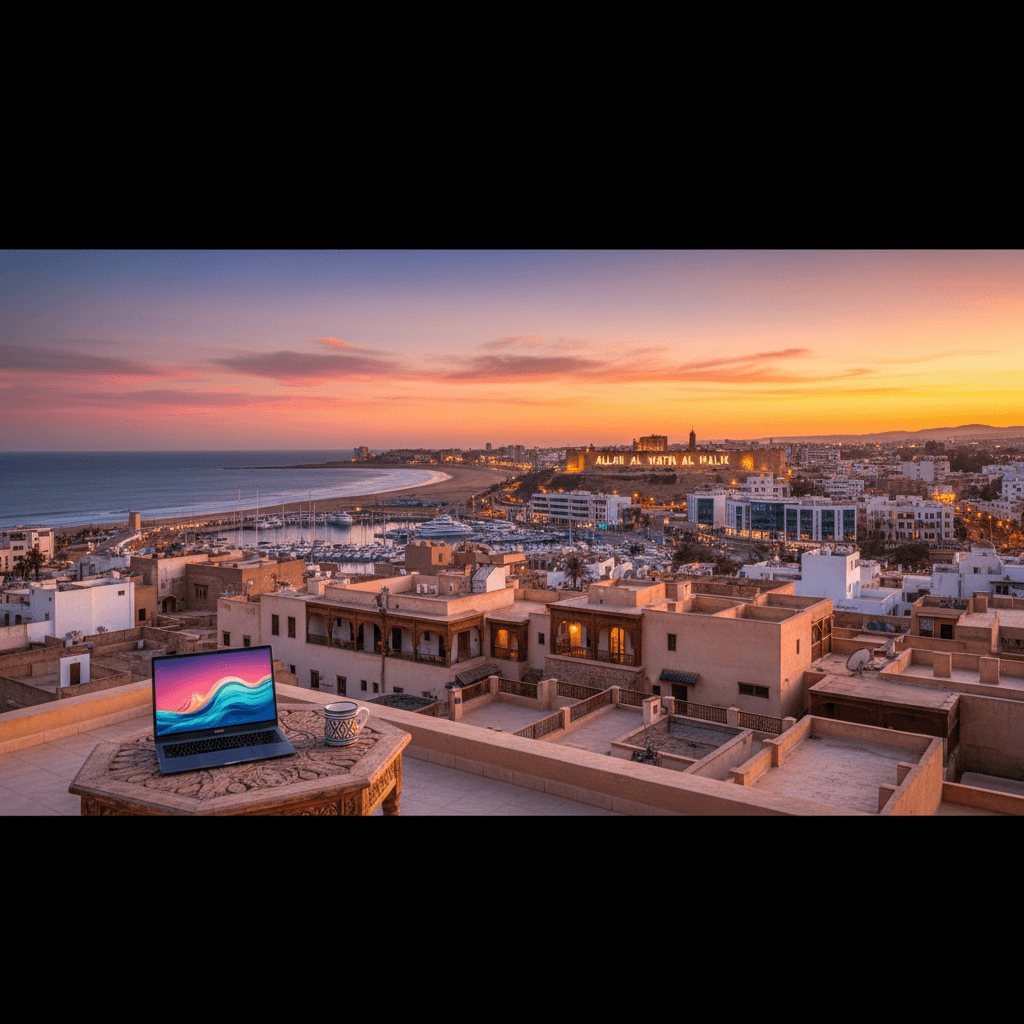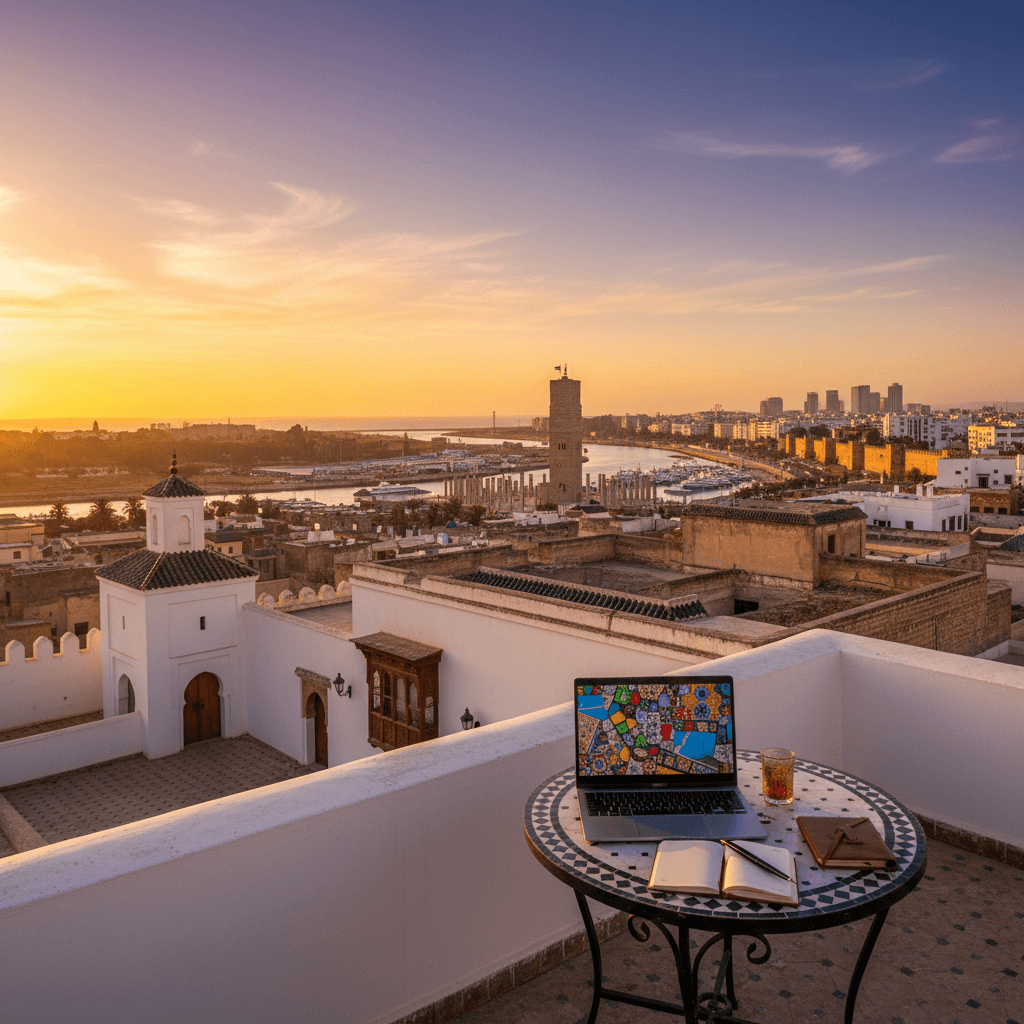
Rabat
🇲🇦 Morocco
The Professional Heart of the Maghreb
Rabat is the city for nomads who want the Moroccan experience without the relentless sensory overload of Marrakech. It feels organized, clean, and surprisingly quiet. As the nation's capital, it trades chaotic souks for wide, palm-lined boulevards and a professional atmosphere that makes it easy to actually get work done. You'll find a polished blend of UNESCO heritage sites like the Kasbah of the Oudaias sitting right next to sleek, modern tech hubs.
The vibe here is laid-back but productive. It’s the kind of place where you can spend your morning answering emails from a high-speed coworking space and your afternoon walking through the Andalusian Gardens or watching the Atlantic waves hit the sea wall. Most nomads find that while it lacks the wild nightlife of Casablanca, it offers a level of safety and infrastructure that's hard to beat in North Africa.
Cost of Living Breakdown
Your dirhams go a long way here, especially if you step away from the luxury hotels. Most nomads find the "underpriced quality of life" to be one of Rabat's biggest draws. Expect to spend between 15,000 and 20,000 MAD per month for a comfortable, mid-range lifestyle.
- Budget Tier: 8,000 to 12,000 MAD. This covers a studio near the medina edges for 2,500 to 4,000 MAD, eating 20 MAD street tagines, and using the tram system.
- Mid-Range Tier: 15,000 to 20,000 MAD. This allows for a nice apartment in Agdal for 4,500 to 7,000 MAD, frequenting cafes like Dar Naji, and a dedicated desk at a coworking space.
- Comfortable Tier: 25,000+ MAD. Aim for the luxury villas of Souissi (8,000+ MAD), private transfers via Yassir, and high-end dining.
Where to Set Up Your Base
Rabat’s neighborhoods are distinct, so where you live defines your social life. Agdal is the undisputed nomad favorite. It’s walkable, packed with modern cafes, and home to most of the city's tech firms. If you want to be where the action is, this is it.
Hay Riad and Souissi are the expat heavyweights. These areas are incredibly safe and green, though they feel more suburban and quiet. They're perfect if you have a family or just want a peaceful retreat. For those on a budget or seeking historical charm, the Medina and Kasbah offer stunning views and cheap stays, though the WiFi can be spotty and the narrow streets get crowded with tourists.
Hassan sits somewhere in the middle. It’s home to the famous Hassan Tower and has a great cafe culture for working, though traffic can be a bit more intense than in Agdal.
Internet and Productive Spaces
Rabat claims the title for the fastest internet in Morocco, with speeds often hitting 25 to 50 Mbps. If you’re a heavy uploader, you’ll want to stick to Agdal or the business districts where 5G is most reliable. Mobile data is cheap and easy; grab a SIM from Maroc Telecom or Orange for about 50 to 100 MAD for 20GB.
- Technopark Rabat: 1,000 MAD per month. This is the city's startup heart, great for networking and monthly pitch nights.
- The Cowork Factory: 1,500 MAD per month. Known for hosting community events and workshops.
- Le 18: A more creative, boutique vibe for those who find traditional offices a bit too stiff.
Navigation and Safety
Getting around is remarkably stress-free. The tram system is efficient and costs only 6 MAD, while ride-hailing apps like Roby and Yassir are the preferred way to move at night, usually costing 20 to 50 MAD. Walking is the best way to soak in the city, especially in the central districts.
Safety is rarely a concern here. It’s widely considered Morocco’s safest large city. Women traveling solo generally feel comfortable, though it’s always smart to use ride-hailing apps after dark rather than flagging street taxis. For healthcare, the Cheikh Zaid University Hospital offers high-quality care, and pharmacies are everywhere, with 24/7 options in Agdal.
The Social Scene
Don't come to Rabat for the clubs; come for the conversation. The social life revolves around long cafe sessions and language exchanges. You can meet people through Meetup.com or at Le 18 workshops. While the nightlife is subdued, the beach clubs to the south and the bars in Agdal provide enough variety for a weekend out. If you're here during Ramadan (typically March or April), remember to be respectful of local fasting customs, as the city's pace slows down significantly during the day.
The Price of Professionalism
Rabat sits in a unique spot for Morocco. It lacks the tourist inflated prices of Marrakech but commands a premium over smaller coastal towns because of its status as the administrative heart of the country. Nomads generally find it offers an underpriced quality of life, especially for those who value modern infrastructure and 5G connectivity over chaotic souks. You get a polished, organized environment that feels more like Southern Europe than North Africa, but at a fraction of the cost.
Most digital nomads should budget between 15,000 and 20,000 MAD per month for a comfortable, mid range lifestyle. This covers a modern apartment in a tech friendly neighborhood, daily cafe visits, and a dedicated desk at a coworking space. If you are on a tighter budget, sticking to the edges of the Medina and eating street food can bring your costs down to roughly 8,000 to 12,000 MAD, though you might sacrifice some of the reliable WiFi found in the newer districts.
Monthly Budget Breakdowns
To help you plan your stay, here is how the costs typically shake out across different lifestyles:
Budget Tier
- Rent: 2,500 to 4,000 MAD for a modest studio near the Medina or older parts of Hassan.
- Food: Street food like tagines or kebabs for 20 to 40 MAD per meal.
- Transport: Local buses at 4 MAD per ride and plenty of walking.
- Workspace: Working from local coffee shops with free WiFi.
- Total: 8,000 to 12,000 MAD.
Mid-Range Tier (The Nomad Sweet Spot)
- Rent: 6,000 to 12,000 MAD for a furnished 1BR in Agdal or Hay Riad.
- Food: A mix of home cooking and meals at Agdal cafes for 80 to 150 MAD.
- Transport: Regular use of ride hailing apps like Roby or Yassir for 20 to 50 MAD per trip.
- Workspace: A hot desk at Technopark or The Cowork Factory for 1,000 to 1,500 MAD.
- Total: 15,000 to 20,000 MAD.
Comfortable Tier
- Rent: 8,000+ MAD for luxury apartments in Souissi or high end Agdal buildings.
- Food: Dining at upscale spots like Dar Naji with daily checks of 250+ MAD.
- Transport: Private transfers and frequent intercity trains to Casablanca.
- Workspace: A dedicated office at WeWork or Regus for 2,500+ MAD.
- Total: 25,000+ MAD.
Neighborhoods and Where to Land
Where you live in Rabat dictates your daily experience more than in most cities. Expats and nomads gravitate toward Agdal because it is the city's heartbeat for work. It is walkable, packed with modern cafes, and home to the most reliable fiber optic connections. You will pay more here, with studios starting around 4,500 MAD, but the convenience of having everything from Technopark to 24/7 pharmacies within a ten minute walk is hard to beat.
If you prefer a quieter, more suburban feel, Hay Riad is the go to for families and long term expats. It is green and safe but requires a car or frequent ride hailing to get around. For those who want the classic Moroccan aesthetic, the Medina and Kasbah offer historic charm and ocean views at lower price points. Just be aware that WiFi can be spotty behind those thick stone walls, and the narrow alleys mean you will be doing a lot of walking.
Connectivity and Practicalities
Rabat currently claims the crown for the fastest internet in Morocco. You can expect average speeds between 25 and 50 Mbps, with 5G now common in Agdal and the business districts. A local SIM card from Maroc Telecom or Orange is cheap; 50 to 100 MAD will get you roughly 20GB of data. If you prefer to hit the ground running, an eSIM from Holafly is a popular choice for unlimited data, though it costs more than local options.
Banking is straightforward with widespread ATMs. Most nomads use Wise or Revolut to avoid heavy conversion fees, though keep some cash on hand for smaller shops and street food stalls. For long term housing, check Avito.ma or local Facebook groups like Rabat Expats, but be prepared to pay a small commission if you use an agent to secure a spot in the more competitive Agdal market.
Agdal: The Digital Nomad Hub
If you're coming to Rabat to work, Agdal is likely where you'll end up. It's the most modern district, packed with tech companies, international brands, and a cafe culture that feels more European than North African. It's incredibly walkable, and you'll find the highest concentration of English speakers here.
- Rent: Expect to pay 4,500 MAD to 7,000 MAD for a decent one bedroom apartment.
- Vibe: Fast paced and professional. It's the best spot for networking at Technopark or Coworkinn Rabat, where memberships run around 1,500 MAD.
- Food: Tons of mid range options like Dar Naji for traditional plates or modern bistros where a meal runs 80 to 150 MAD.
Most nomads find the internet here to be the most reliable in the city. You've got 5G coverage in many pockets, and cafes are generally cool with you sticking around for a few hours with a laptop.
Hay Riad & Souissi: The Expat & Family Choice
Expats with families or those on a higher budget usually gravitate toward Hay Riad or the neighboring Souissi. These areas are sprawling, green, and quiet. You'll need a car or a ride hailing app like Roby or Yassir to get around, as things are spread out, but the trade off is a high quality of life and proximity to international schools.
- Rent: Prices start around 6,000 MAD in Hay Riad and can easily climb past 8,000 MAD for luxury villas in Souissi.
- Vibe: Suburban, safe, and very polished. It's where the city's diplomats and wealthy locals live.
- Healthcare: This is the best part of town for medical access, near facilities like Cheikh Zaid University Hospital.
While it lacks a "street life" feel, it's perfect if you want a quiet home base away from the city center. There's plenty of green space for morning runs, which is a rarity in many Moroccan cities.
Hassan: The Sweet Spot for Solo Travelers
Solo travelers who want to be close to the landmarks but need a functional workspace often choose Hassan. It sits right between the historic Medina and the modern Agdal. You're within walking distance of the Hassan Tower and the tram line, making it easy to zip across the city for 6 MAD.
- Rent: Slightly more affordable than Agdal, with apartments often found for 4,000 MAD.
- Vibe: Old world charm meets administrative efficiency. It's busy during the day but settles down nicely at night.
- Social: Great for meeting people in local cafes or creative spots like Le 18.
The traffic can get a bit loud during rush hour, but the central location makes it the most convenient base for exploring. You're never more than a ten minute walk from a reliable pharmacy or a grocery store.
The Medina & Kasbah: Budget & History Seekers
If you're on a tighter budget or want the "authentic" Morocco, the Medina and the Kasbah of the Oudaias are your best bets. Living here means navigating narrow alleys and historic riads. It's beautiful, but it comes with logistical challenges like spotty WiFi and a lack of modern supermarkets.
- Rent: You can find rooms or small traditional houses on the edges for 2,500 to 4,000 MAD.
- Vibe: Traditional, touristy in parts, but very affordable. The views of the Atlantic from the Kasbah are unbeatable.
- Food: This is the land of 20 MAD tagines and 5 MAD street snacks.
Travelers often say the Medina is great for a short stay, but the noise and lack of professional coworking spaces can make long term remote work difficult. If you choose this area, invest in a Maroc Telecom SIM card with a fat data plan to use as a hotspot when the riad WiFi fails.
Connectivity in the Capital
If you've struggled with spotty connections in Marrakech or the rural south, Rabat will feel like a breath of fresh air. It currently holds the title for the fastest internet in Morocco, with fiber optic speeds reaching 50 Mbps in modern hubs and 5G coverage expanding across major districts. Most nomads find the reliability here mimics European standards, making it the top choice for those with heavy video call schedules or large file uploads.
For your mobile setup, skip the airport lines and grab a SIM card from Maroc Telecom or Orange in the Agdal neighborhood. A local SIM usually costs around 50 to 100 MAD, and you can load up 20GB of data for a similar price. If you prefer the convenience of an eSIM, Holafly provides unlimited data packages that work seamlessly across the city's 4G and 5G networks.
Top Coworking Spaces
Rabat is a professional city, and its coworking scene reflects that. You won't find many "laptop on a beanbag" vibes here; instead, expect sleek offices and networking events with local tech founders.
- Technopark Rabat: Located in Agdal, this is the heart of the city's startup scene. At 1,000 MAD per month, it is the most affordable professional option and great for those looking to attend monthly pitch nights.
- The Cowork Factory: A solid middle ground at 1,500 MAD per month. They host frequent community events, which is helpful since the nomad social scene in Rabat can be a bit more reserved than in other cities.
- Le 18: This spot leans more toward the creative crowd. It's a great place for workshops and meeting residents who are more involved in the arts than the tech sector.
The Cafe Culture
If you prefer the "cafe office" lifestyle, focus your search on the Agdal and Hassan neighborhoods. Unlike the tourist heavy cafes in the medina, the spots in Agdal are designed for long stays. You'll see plenty of students and remote workers parked with laptops for hours.
The WiFi in these cafes is generally stable enough for basic tasks, though always have your hotspot ready as a backup during peak lunch hours. In the Medina or Kasbah, the thick stone walls of traditional riads often kill WiFi signals, so if you are staying in a historic building, verify the router placement before you commit to a long term stay.
Practical Logistics for Remote Work
The city's layout makes it easy to balance work and life. Most nomads recommend living in Agdal because you can walk between your apartment, your coworking space, and a dozen high quality cafes without ever needing a taxi. If you do need to move between neighborhoods, use the Roby or Yassir apps. These ride hailing services are more reliable than flagging down a street taxi and usually cost between 20 and 50 MAD for a cross city trip.
Power outages are rare in the capital, but it's smart to keep a power bank charged. If you need to handle banking or fintech, Wise and Revolut cards work at most modern ATMs, though carrying some cash in Dirhams (MAD) is still necessary for smaller street food stalls or traditional markets.
A Capital Built on Calm
Unlike the high energy of Marrakech or the industrial grit of Casablanca, Rabat feels remarkably composed. It is easily the safest major city in Morocco, largely because it serves as the administrative heart of the kingdom. You will notice a heavy security presence around government buildings and palaces, which translates to a low-stress environment for pedestrians. Most expats and nomads find they can walk through neighborhoods like Agdal or Hay Riad at night without the hyper-vigilance required in other global capitals.
Street harassment exists but is significantly toned down here. Women living solo often report a much more respectful atmosphere than in the tourist hubs of the south. While the Medina and Kasbah are generally safe during the day, the narrow alleyways can get dark and confusing after hours. It is better to stick to the wider, well-lit boulevards of the new city or use ride-hailing apps if you are out late.
Staying Healthy and Medical Care
Rabat is the best place in the country to be if you need medical attention. The city is home to several high-caliber facilities that meet international standards. Expats frequently recommend Cheikh Zaid University Hospital for specialized care and emergencies. If you are looking for private clinics, you will find plenty of modern options in Hay Riad and Agdal where many doctors speak fluent French and often English.
- Pharmacies: These are everywhere. Look for the glowing green crosses. In neighborhoods like Agdal, there is always a 24/7 pharmacy on duty; check the schedule posted on the door of any closed pharmacy to find the nearest open one.
- Water Safety: While the tap water in Rabat is technically treated, most nomads stick to bottled water or high-quality filters to avoid "traveler's tummy." Use bottled water for brushing your teeth if you have a sensitive stomach.
- Emergency Numbers: Dial 19 for the police in urban areas and 15 for an ambulance or fire services.
Practical Safety Tips
The biggest "danger" you will likely face is petty theft in crowded markets or the occasional aggressive taxi driver. Using apps like Roby or Yassir solves the taxi issue, as it provides a digital trail and set pricing, usually between 20 and 50 MAD for cross-town trips. It is a much more relaxed way to get around than haggling on a street corner.
Rabat is a conservative city at its core. Dressing modestly is not just a sign of respect, it is a safety strategy that helps you blend in and avoid unwanted attention. For men and women alike, keeping shoulders and knees covered is the standard in most residential areas. During Ramadan, expected around February and March in 2026, be extra mindful of local customs; eating or smoking in public during daylight hours is a major faux pas and can lead to uncomfortable confrontations.
Healthcare Costs and Insurance
Medical costs are reasonable compared to Western Europe or North America, but they add up quickly without coverage. A standard consultation with a GP might cost 200 to 300 MAD, while a specialist could be 400 to 600 MAD. Most nomads use international providers like SafetyWing or Genki, as there is no specific digital nomad visa that grants access to the local public system. Always keep your receipts, as private clinics usually expect upfront payment in cash or by card before they will process insurance paperwork.
Moving through Rabat feels different from the sensory overload of Marrakech or the sprawl of Casablanca. It is a city that respects your personal space, characterized by wide boulevards and a distinct sense of order. Most nomads find the city exceptionally manageable, largely because it is built for a professional lifestyle rather than just tourism.
The Tram and Public Transit
The crown jewel of Rabat's infrastructure is the tramway. It is clean, reliable, and connects the modern hub of Agdal with the historic Hassan district and across the river to Salé. Tickets cost 6 MAD per ride. If you are staying for a month or more, grab a rechargeable Irtiyah card to skip the kiosk lines. While there is an extensive bus network with fares around 4 MAD, the tram is the preferred choice for anyone looking to avoid traffic during peak hours.
Ride-Hailing and Taxis
Street taxis come in two flavors: the blue "Petit Taxis" for local hops and "Grand Taxis" for set routes between neighborhoods. However, many expats and nomads now bypass the street hail entirely in favor of apps. Roby and Yassir are the dominant players here. Expect to pay between 20 and 50 MAD for most trips within the city center. These apps provide a layer of safety and price transparency that makes getting home after a late dinner in Agdal much simpler.
Walking and Micromobility
Rabat is a surprisingly walkable city, especially in the central "v" formed by the Medina, Hassan, and Agdal. The sidewalks are generally well maintained, and the Atlantic breeze keeps things cool even in the summer. For those who want to move faster, services like RENTS.ma offer scooter rentals starting around 50 MAD per day, though availability is primarily focused on the flatter, modern parts of town. Just be mindful that while the boulevards are wide, drivers can be assertive, so keep your wits about you at major intersections.
Regional Connections
One of the best perks of living in Rabat is the Al Boraq high-speed train. You can get from Rabat Agdal station to Tangier in about 1 hour and 20 minutes, or reach Casablanca in under an hour. It makes weekend trips incredibly easy. If you are flying in, Rabat-Salé Airport (RBA) is about 30 minutes from the center. A private transfer via Yassir will cost you between 150 and 250 MAD, a fair price for a stress free arrival.
Neighborhood Logistics at a Glance
- Agdal: The most walkable hub for nomads. You can reach WeWork, Technopark, and dozens of high speed WiFi cafes on foot.
- Hay Riad: Spacious and green but spread out. You will want to rely on ride-hailing apps here as it is less pedestrian friendly for daily errands.
- The Medina: Entirely car free. You will be walking everywhere, and while it is atmospheric, the narrow alleys mean your taxi will have to drop you at the gates.
Most long term residents suggest focusing your life around the tram lines. It minimizes the need for a car and keeps the best of the city's professional and historic districts within a 15 minute radius. It is a refreshing change of pace for anyone used to the logistical hurdles of other North African hubs.
The Linguistic Landscape
In Rabat, your ears will catch a sophisticated mix of Arabic and French. As the administrative heart of the country, the city feels more formal than the coastal surf towns. Most locals speak Darija, the Moroccan Arabic dialect, which is quite different from the Modern Standard Arabic you might hear on the news. It’s fast, rhythmic, and borrows heavily from French and Spanish.
French is the unofficial second language here. It’s used in business, higher education, and most professional settings. If you have even a basic grasp of French, you’ll find life in neighborhoods like Agdal and Hay Riad significantly easier. Menus, street signs, and official documents are almost always bilingual in Arabic and French.
English is definitely on the rise, especially among the younger tech crowd and staff at coworking spaces like Technopark or The Cowork Factory. However, it isn't universal. While you can get by with English in high-end cafes or international hotels, you’ll hit a language barrier quickly at the local souks in the Medina or when chatting with taxi drivers. Most nomads find that learning a few key Darija phrases goes a long way in building rapport.
Mastering the Basics
You don't need to be fluent to survive, but showing effort earns respect. Expats recommend keeping a few phrases in your back pocket for daily interactions:
- Salam Alaikoum: The standard greeting. Use it everywhere.
- Chukran: Thank you.
- Bshhal?: How much? (Vital for the markets).
- Shnu smiytek?: What is your name?
- Lla chukran: No thank you (Useful for politely declining offers).
For deeper immersion, many nomads use the Tandem app to find language exchange partners in the city. If you prefer a classroom setting, there are several cultural centers in the Hassan district that offer Darija and French intensives for foreigners.
Digital Tools and Communication
Rabat is arguably the best-connected city in Morocco. You’ll find 4G and 5G coverage is remarkably stable, especially if you stick to the main hubs. For your phone, grab a SIM card from Maroc Telecom, Orange, or Inwi at the airport or any small shop. A starter kit/tourist SIM costs around 50-100 MAD, with 20GB plans for 150-250 MAD. If you want to skip the physical card, Holafly offers reliable eSIM options with unlimited data for Morocco.
Google Translate is your best friend here, but make sure to download the French and Arabic packs for offline use. The camera feature is particularly handy for translating printed menus that haven't been converted to English yet. For getting around, ride-hailing apps like Roby or Yassir are better than street taxis because you can set your destination in the app, bypassing any potential language confusion or price haggling.
Cultural Nuances in Conversation
Communication in Rabat is rooted in politeness. Greetings are rarely rushed; it’s common to ask about someone’s health and family before getting down to business. When meeting someone for the first time, a light handshake with the right hand is the norm. If you’re invited into a local home, remember that the left hand is traditionally considered unclean, so try to use your right hand for eating or handing over items.
During Ramadan, expected around February and March in 2026, the city's rhythm changes completely. While Rabat remains professional, the pace slows down significantly during the day. Being mindful of these shifts and offering a simple Ramadan Mubarak will be greatly appreciated by the locals you interact with daily.
The Sweet Spot: Spring and Fall
If you're looking for the perfect balance of work and play, aim for March through May or September through November. During these windows, the Atlantic breeze keeps the air crisp and the temperatures hover between a comfortable 20°C and 25°C. It’s the ideal climate for walking from your Agdal apartment to a morning meeting at Technopark without breaking a sweat.
Spring is particularly stunning as the Andalusian Gardens and the green spaces in Hay Riad come into full bloom. Nomads often prefer these shoulder seasons because the city feels alive but not sweltering. You can comfortably spend your afternoons working from an outdoor cafe terrace in Hassan or exploring the Kasbah of the Oudaias after your deep-work sessions.
Summer: Coastal Relief
While inland cities like Marrakech can become oppressive in the summer, Rabat remains manageable. From June to August, temperatures usually stay between 25°C and 30°C. The coastal location is a lifesaver here; the ocean mist often rolls in during the mornings, keeping things cool until midday.
Expats tend to flock to the beach clubs south of the city or take weekend trips to the surfing hubs during this time. Just be aware that while the weather is great, the city can feel a bit more crowded with domestic tourists. If you’re sensitive to heat, the modern infrastructure in neighborhoods like Agdal means reliable air conditioning is much easier to find than in the older parts of town.
Winter: The Rainy Season
Winter in Rabat, running from December to February, is mild but damp. You’ll rarely see the thermometer dip below 10°C, with daytime highs around 15°C to 20°C. However, this is when the city gets most of its rain, averaging 50mm to 80mm per month.
The main challenge for nomads during winter isn't the cold outside, it's the lack of central heating in many traditional Moroccan buildings. If you’re booking a long term stay in the Medina or older parts of Hassan, check if your host provides space heaters. Most modern apartments in Hay Riad or Souissi are better equipped for the chill. It's a quieter time for the social scene, but the fastest internet in Morocco stays just as reliable when you're hunkered down inside.
The Ramadan Factor
When planning your arrival, check the calendar for Ramadan, expected around February and March in 2026. This month significantly changes the city's rhythm. Many cafes and restaurants close during daylight hours, and the pace of professional life slows down considerably. While it's a fascinating time to witness local traditions and enjoy the nightly Iftar feasts, it might be frustrating if you rely on working from cafes during the day.
Quick Seasonal Breakdown
- Spring (March to May): The goldilocks zone. Perfect for walking, outdoor coworking, and sightseeing. Expect 20-22°C.
- Summer (June to August): Warm but breezy. Great for beach trips; seek out Agdal for the best AC. Expect 25-30°C.
- Fall (September to November): Clear skies and thinning crowds. Very similar to spring and highly recommended for new arrivals. Expect 22-25°C.
- Winter (December to February): Cool and rainy. Bring a waterproof jacket and ensure your apartment has a heater. Expect 15-18°C.
The Local Vibe: Professionalism Meets the Atlantic
Rabat is the quiet overachiever of Morocco. While Marrakech grabs the headlines with its chaos and colors, Rabat offers a polished, organized alternative that feels more like a European capital with a North African soul. It is exceptionally safe, surprisingly green, and arguably the most functional city in the country for remote work. You will find wide boulevards, a reliable tram system, and a distinct lack of the "hustle" that can make other Moroccan cities feel draining.
Cost of Living Breakdown
Your budget in Rabat depends heavily on whether you want the historic charm of the Medina or the modern convenience of the tech hubs. Most nomads find the quality of life here underpriced compared to Southern Europe.
- Budget Tier: Expect to spend 8,000 to 12,000 MAD monthly. You will likely live on the edges of the Medina, eat 20 MAD street tagines, and work from laptop friendly cafes rather than dedicated offices.
- Mid-range Tier: This is the sweet spot at 15,000 to 20,000 MAD. This covers a modern studio in Agdal for around 6,000 MAD, a dedicated coworking desk, and frequent meals at mid-range spots like Dar Naji.
- Comfortable Tier: At 25,000+ MAD, you are looking at luxury apartments in Souissi, private car transfers, and high end dining every night.
Where to Plant Your Flag
Each neighborhood has a specific personality. Choosing the right one determines your daily "friction" level with the city.
- Agdal: The undisputed nomad favorite. It is walkable, packed with modern cafes, and home to the best coworking spaces. Rent for a 1BR usually starts around 4,500 MAD.
- Hay Riad: This is where the international schools and embassies are. It is quiet, safe, and very green, though you will feel a bit isolated from the city center without a car.
- The Medina & Kasbah: Best for short stays if you want ocean views and historic architecture. However, the WiFi is notoriously spotty inside thick stone walls, and it can feel a bit touristy for long term living.
- Hassan: A great middle ground. It is more affordable than Agdal and keeps you close to the Hassan Tower and the main train station.
Internet and Productive Spaces
Rabat quietly claims the title for the fastest internet in Morocco. You can expect averages between 25 and 50 Mbps, with 5G now widely available in Agdal and Hay Riad. If you need a professional environment, Technopark Rabat is the go-to for startups and costs about 1,000 MAD a month. For a more corporate feel, WeWork and Regus in Agdal offer reliable infrastructure starting at 2,200 MAD. If you prefer a creative atmosphere, Le 18 hosts workshops and nomad meetups that make networking much easier.
Getting Around and Staying Connected
The city is highly walkable, but when you need to cover distance, use the Yassir or Roby apps. These ride hailing services cost between 20 and 50 MAD for most city trips and save you the trouble of negotiating with street taxis. For data, grab a Maroc Telecom or Orange SIM at the airport; 50 MAD usually gets you 20GB of data. If your phone supports it, a Holafly eSIM is a seamless way to stay connected the moment you touch down.
Practical Realities
While Rabat is modern, local customs still matter. Dress modestly, especially when entering the Medina, and be mindful of Ramadan if you are visiting in March or April. Most nomads enter on a 90 day visa free stay. There is no official digital nomad visa yet, so if you want to stay longer, you will need to look into residency or do a quick "visa run" to nearby Europe. For healthcare, the Cheikh Zaid University Hospital is top tier, and pharmacies in Agdal are open 24/7 for minor issues.
Need visa and immigration info for Morocco?
🇲🇦 View Morocco Country GuideEasy Landing
Settle in, no stress
Monthly Budget Estimates
More cities in Morocco
Imsouane
🇲🇦 Morocco
Ouarzazate
🇲🇦 Morocco
Essaouira
🇲🇦 Morocco