Querétaro
🇲🇽 Mexico
The Vibe: Mexico’s Sophisticated Middle Ground
If Mexico City is a chaotic, high energy masterpiece and Tulum is a boho jungle party, Querétaro is the refined, stable cousin who actually has their life together. It feels distinctively middle class and safe, offering a multicultural atmosphere that trades beach clubs for colonial plazas and high speed fiber optics. You won’t find many "digital nomad" uniforms here; instead, you’ll find a mix of tech professionals, young families, and retirees enjoying a city that feels both historic and impressively modern.
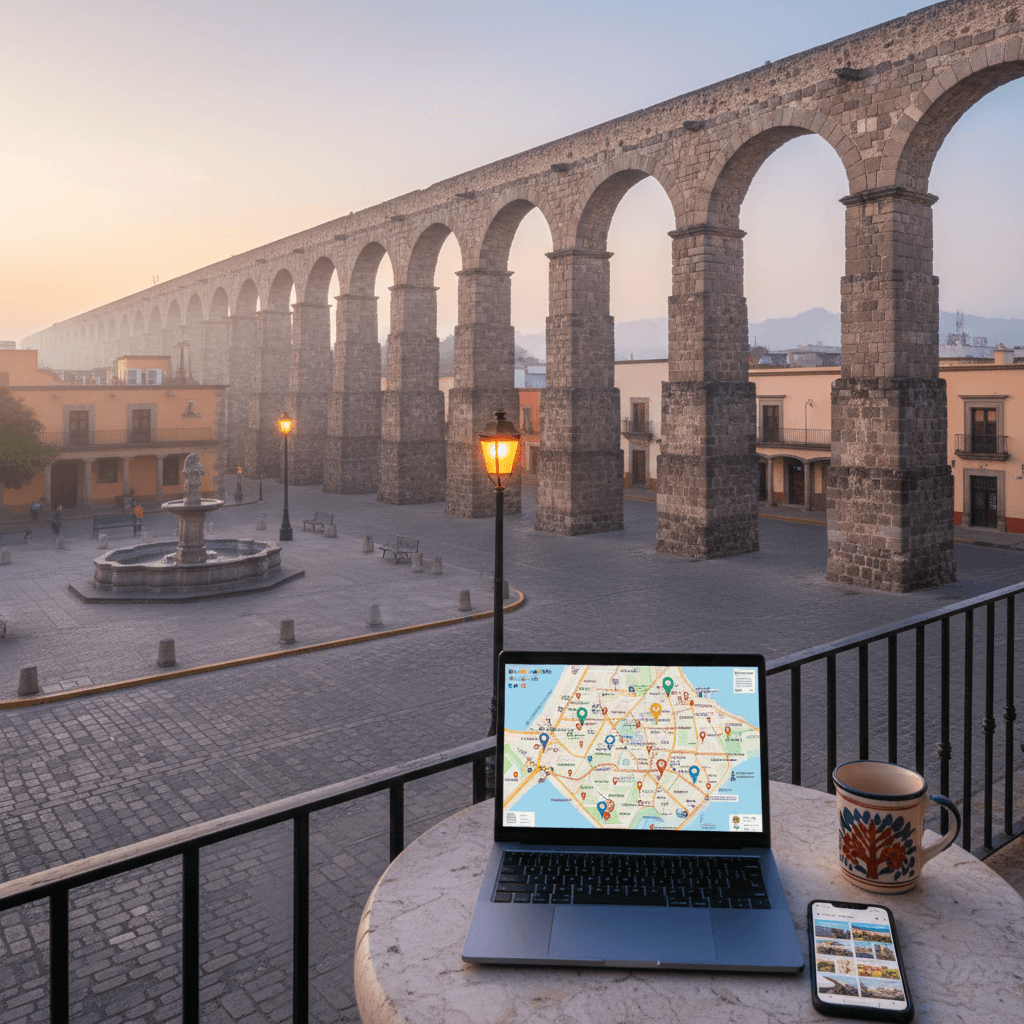
The emotional experience of Querétaro is one of relief. There is a sense of security here that’s hard to find in other Mexican hubs. You can walk through the UNESCO listed historic center at night, past lit up fountains and 18th century arches, without the hyper vigilance required in larger metros. It is quiet, clean, and intentional. While it lacks the "edge" some travelers crave, it replaces it with a high quality of life and a community that values stability over spectacles.
Living Costs & Tiers
Your budget goes surprisingly far here, especially considering the modern infrastructure. While prices have crept up, they remain significantly lower than the US or Europe. Most nomads find they can live a very comfortable lifestyle for about half of what they’d spend in a major Western city.
- Budget Tier: $1,200 to $1,800 USD per month. This covers a modest studio in Centro, plenty of $2 to $5 USD street food, and public transit.
- Mid Range Tier: $2,000 to $2,500 USD per month. This is the sweet spot. It allows for a nice apartment in a modern neighborhood, frequent dining at $15 USD bistros, and a full time coworking membership.
- Comfortable Tier: $3,000+ USD per month. At this level, you’re looking at luxury condos in Zibatá, private healthcare, and upscale dining that would cost triple in New York or London.
The Neighborhood Breakdown
Where you stay depends entirely on whether you value colonial charm or technical reliability. The city is split between the old world and the new tech corridor.
Centro Histórico
- The Draw: Walkable, stunning architecture, and the heart of the social scene. You’re steps away from museums and the famous Mirador de los Arcos views.
- The Trade off: Internet can be spotty in thick walled colonial buildings, and it gets loud during festivals.
- Rent: Expect to pay $400 to $600 USD for a basic studio.
Juriquilla & Zibatá
- The Draw: This is the suburban tech hub. It’s where you’ll find the fastest internet, often hitting 250 Mbps. It’s packed with international schools, shopping malls, and green spaces.
- The Trade off: It is car dependent. You’ll be spending $5 USD per Uber ride every time you want to visit the historic center.
- Rent: Modern 1BR apartments typically run $500 to $800 USD.
Work, Connectivity, and Community
Querétaro is a dream for remote workers who need to stay "on" during US business hours. The citywide standard is 100 to 200 Mbps, making Zoom calls a non issue. When you need to get out of the house, Nest and La Fábrica are the go to coworking spaces. They cost between $100 and $200 USD a month and act as the primary social hubs for entrepreneurs and expats.
The social scene is more "dinner party" than "rave." You’ll find a strong community on Facebook and Meetup groups, but most connections happen organically in cafes or at the coworking spots. It’s a great place to meet people who are building businesses rather than just passing through on a gap year. If you need a break from the screen, the Sierra Gorda mountains are close enough for weekend hiking, providing a rugged escape from the city’s polished exterior.
Practical Logistics
Getting around is simple. Uber and Didi are the gold standard here, with most cross city rides costing under $5 USD. The local buses are even cheaper at roughly $0.50 USD, though they take some practice to master. Spanish is the primary language; while you’ll find English speakers in spots like Nest or upscale restaurants in Juriquilla, having a translation app and basic phrases ready is a must for daily life.
Safety is a major selling point. Expats consistently rank Querétaro as one of the safest cities in Mexico. Healthcare follows suit, with modern hospitals and pharmacies that offer high quality care at a fraction of US prices. It’s the kind of place where you can focus on your work and your life without the constant background noise of safety concerns or infrastructure failures.
The Price of Balance
Querétaro is the sweet spot for nomads who want the perks of a major city without the premium price tag of Mexico City or the inflated "tourist tax" of the Riviera Maya. You'll find a stable, middle class economy here that keeps prices predictable. Most single travelers can live quite well on $2,000 to $2,500 USD a month, while those on a tighter budget can make $1,200 to $1,800 USD work by sticking to local markets and central studios.
Housing and Neighborhoods
Your biggest expense will be rent, and the price varies wildly depending on whether you want colonial charm or modern fiber optics. Most digital nomads choose between the historic core and the northern suburbs.
- Centro Histórico: This is where you'll find the UNESCO beauty and walkability. You can expect to pay $800 to $1,200 USD for a studio or small 1BR. While it's great for solo travelers who want to be near the action, keep in mind that older buildings sometimes have thicker walls that can mess with WiFi signals.
- Juriquilla and Zibatá: These northern suburbs feel more like Southern California. They offer the fastest internet in the city, often hitting 250 Mbps. Expect to pay $500 to $800 USD for a modern 1BR. It's safer and quieter, but you'll definitely need to rely on Uber or a car rental to get around.
Eating and Drinking
The food scene is one of the city's biggest draws because the quality rivals the US at about half the cost. You can grab street tacos or a quick gordita for $2 to $5 USD. If you're sitting down at a mid-range spot in Centro, expect to pay $8 to $15 USD for a solid meal with a drink. Upscale dining at the trendy spots near Los Arcos will usually land between $20 and $40 USD per person.
Grocery shopping is affordable if you stick to local chains like Chedraui or La Comer. Expats often mention that even with the convenience of Amazon delivery and modern supermarkets, their monthly grocery bill stays significantly lower than back home.
Transport and Connectivity
Getting around is cheap as long as you aren't commuting from the suburbs multiple times a day. Public buses are a steal at about $0.50 USD, but most nomads prefer ride-hailing apps for safety and convenience. An Uber or Didi across town usually costs between $3 and $5 USD. If you're arriving at the airport (QRO), a ride to the center will set you back $15 to $25 USD.
For work, the infrastructure is reliable. Dedicated coworking spaces like Nest or La Fábrica charge between $100 and $200 USD for a monthly hot desk. These spots are the best way to meet the local entrepreneur community and ensure you have a backup if your home internet flinches.
Daily Essentials and Lifestyle
- Mobile Data: A Telcel or AT&T SIM card with a decent data package is easy to top up for a few dollars. Many travelers use Airalo for eSIMs to get connected the second they land.
- Healthcare: This is a major selling point for long term residents. Private consultations are high quality and far more affordable than in the US. Even with expat insurance, out of pocket costs for pharmacies and clinics are manageable.
- Entertainment: Most museums in Centro are inexpensive or free on certain days. Nightlife is more about low key bars and craft beer than massive clubs, so your social budget won't take a huge hit on the weekends.
For Solo Travelers and History Buffs: Centro Histórico
If you want to step out of your door and be surrounded by UNESCO-listed colonial architecture, Centro is where you belong. It is the heart of the city, dominated by pink sandstone buildings, pedestrian plazas, and the famous Los Arcos aqueduct viewpoint. It is the most walkable part of Querétaro, making it perfect if you don't want to deal with car rentals or long Uber rides just to get a coffee.
Living here means you are steps away from the best museums and a massive variety of restaurants. While it's the most atmospheric area, the streets can get noisy on weekends and the thick stone walls of older buildings sometimes mess with WiFi signals. Most travelers find that the trade-off for the "authentic" Mexico experience is well worth it.
- Monthly Rent: $400 to $600 USD for a studio or small apartment.
- Vibe: High energy, walkable, and visually stunning.
- Best for: People who want culture and nightlife within a five-minute walk.
For Digital Nomads and Tech Workers: Juriquilla
Located about 20 minutes north of the center, Juriquilla feels like a different world. It is a modern, upscale suburb that has become the de facto hub for the city’s remote work crowd. If your job depends on high-speed fiber optics, this is your best bet; internet speeds here regularly hit 250 Mbps.
The neighborhood is packed with shopping malls, golf courses, and international food chains. It lacks the historic soul of Centro, but it makes up for it with convenience and infrastructure. You will likely need to use Uber or Didi to get around, as it is not a walkable district, but the proximity to coworking spaces like Nest and La Fábrica keeps the professional community tight-knit.
- Monthly Rent: $500 to $800 USD for a modern 1BR.
- Vibe: Suburban, polished, and tech-focused.
- Best for: Heavy internet users and those who prefer a quiet, modern lifestyle.
For Expats and Families: Zibatá
Zibatá is one of the newest "planned" communities in the region and has quickly become a favorite for long-term expats and families. It is built with security and green space in mind, featuring parks, walking trails, and its own golf course. It feels very safe and middle-class, offering a buffer from the more chaotic parts of the city.
Families appreciate the proximity to international schools and the quiet nights. Since it is a newer development, everything is clean and functional, though you'll definitely need a car to get into the city center for sightseeing. Expats often choose this area because it offers a high quality of life for a fraction of the cost of similar neighborhoods in the US or Europe.
- Monthly Rent: $600 to $900 USD for larger apartments or small houses.
- Vibe: Secure, family-oriented, and quiet.
- Best for: Families and retirees who prioritize safety and modern amenities.
At a Glance: Cost and Logistics
Regardless of the neighborhood you choose, Querétaro remains one of the most affordable high-growth cities in Mexico. A single nomad can live comfortably on $2,000 to $2,500 USD per month, while those on a tighter budget can get by on $1,200 to $1,800 USD if they stick to local markets and street food.
- Street Food: $2 to $5 USD for a solid meal like gorditas or tacos.
- Mid-range Dining: $8 to $15 USD per person.
- Coworking: $100 to $200 USD for a monthly hot desk.
- Transport: Uber rides across town usually cost between $3 and $5 USD.
Connectivity Infrastructure
You won't have to hunt for a signal here. Querétaro is a major tech hub for Mexico, and that translates to some of the most stable internet in the country. Speeds typically range between 100 and 200 Mbps in the city center. If you need even more bandwidth for heavy uploads or video editing, the newer residential developments like Juriquilla and Zibatá frequently offer fiber optics reaching 250 Mbps.
While the Centro Histórico is beautiful, its thick stone colonial walls can be a natural enemy to WiFi signals. If you're staying in an older Airbnb, ask the host for a Speedtest screenshot before you book. Most nomads find that the suburbs offer the most consistent speeds, but the central areas are perfectly fine if you're working from a modern cafe or a dedicated office space.
Top Coworking Spaces
The coworking scene is professional and caters more to entrepreneurs and remote tech workers than the "backpackers with laptops" crowd you might see in Tulum. Prices generally fall between $100 and $200 USD per month for a hot desk.
- ADN Business Center: This professional space offers a corporate environment with high-end amenities and reliable infrastructure, making it ideal for those who need a quiet, productive atmosphere.
- El 27 Coworking: A popular choice for those seeking a more central location, this space provides a comfortable environment with all the essentials for remote work and a steady community of local professionals.
Cafes and Work-Friendly Spots
If you prefer the "cafe crawl" style of working, the Centro Histórico is your best bet. Most cafes are used to people staying for a few hours, provided you keep the coffee and pastries flowing. You'll find reliable WiFi and plenty of outlets at places like Cao Cao Cafe or any of the specialty roasters near the Plaza de Armas.
Travelers often say the work-life balance here is easier to manage because the city isn't as chaotic as Mexico City. You can finish your deep work by 4:00 PM and be sitting in a plaza with a $3 USD craft beer five minutes later. Just keep in mind that many smaller local cafes might not have air conditioning, so look for spots with high ceilings or outdoor patios during the warmer months of April and May.
Mobile Data and SIM Cards
Don't rely on your home roaming plan unless it's specifically included. For the best local coverage, Telcel is the undisputed king in Querétaro. You can pick up a SIM card at any OXXO convenience store for about $5 USD and load it with a "Sin Límite" data package. A 5GB plan usually costs around $15 USD and will last you a few weeks.
If you have a newer phone, using an eSIM via Airalo is the most convenient way to get online the second you land at the airport (QRO). It's slightly more expensive than a local SIM but saves you the hassle of finding a shop. Most nomads recommend keeping a Telcel SIM as a backup hotspot in case your apartment WiFi has a rare hiccup.
Summary of Costs
- Hot Desk Monthly: $100 to $200 USD
- Day Pass: $10 to $20 USD
- Specialty Coffee: $3 to $5 USD
- Local SIM (10GB): $20 to $25 USD
A Safe Haven in Central Mexico
Querétaro stands out as one of the most secure cities in Mexico, maintaining a stable, middle class atmosphere that lacks the edge found in larger hubs like Mexico City or the tourist chaos of Cancun. Most nomads find they can walk the Centro Histórico freely, even after the sun goes down. The city feels more like a lived in community than a transient vacation spot, which contributes to its low crime rates and general sense of order.
While the city is incredibly safe, standard urban common sense still applies. Travelers often say that sticking to well lit areas in the historic center at night is the way to go. You won't find many "no go" zones here, but the residential suburbs like Juriquilla and Zibatá are particularly known for their gated security and family friendly environments. It is the kind of place where you can pull out your laptop in a cafe or walk with your phone out without feeling like a target.
World Class Medical Care
One of the biggest draws for long term expats and retirees is the quality of healthcare. The private hospitals here are modern, featuring state of the art equipment and specialists who often trained in the US or Europe. You will find that the costs are a fraction of what you would pay north of the border, yet the care is frequently more personalized.
- Hospital Moscati: Located in Juriquilla, this is a top tier facility known for its high tech infrastructure and English speaking staff.
- Hospital Star Médica: A reliable private hospital in the city area with a wide range of specialists.
- Pharmacies: You will see Farmacias del Ahorro or Farmacias Similares on almost every corner. Many have an adjoining doctor's office where you can get a basic consultation for about $3 to $5 USD.
Emergency Services and Insurance
If things go sideways, the emergency number is 911. Response times in the city center and major suburbs are generally quick. For anything beyond a minor scrape, expats recommend having a solid international health insurance policy or a local private plan. While public healthcare exists, the private system is where you will find the speed and English proficiency most nomads require.
Many local clinics and specialists accept out of pocket payments via credit card, and you will find that a typical specialist visit costs between $40 and $70 USD. If you need routine lab work or imaging, places like Laboratorio Chopo offer professional services at prices that make it easy to maintain your health without breaking the bank.
Water and Environmental Health
Like most of Mexico, you should not drink the tap water here. Stick to the 20 liter jugs, known as garrafones, which cost about $2 to $3 USD and can be delivered to your door. For cooking, most nomads use filtered or bottled water to be safe. The air quality is generally good, though the high altitude and dry climate mean you will need to stay hydrated and use plenty of moisturizer and sunscreen until your body adjusts to the 1,800 meter elevation.
The Walkable Core
If you're staying in the Centro Histórico, your own two feet are your best asset. The historic center is a UNESCO site designed for wandering, with pedestrian only plazas and narrow colonial streets that make cars more of a nuisance than a help. Most nomads find they only need wheels when they're heading to a coworking space like Nest or La Fábrica, or venturing out to the suburbs.
For quick trips across the center, you'll spot bike and scooter rentals scattered around. They're a solid choice for reaching the Mirador de los Arcos without breaking a sweat. Just keep an eye on the cobblestones; they're charming but can be a bit unforgiving on smaller wheels.
Ride-Hailing and Taxis
For anything beyond a twenty minute walk, Uber and Didi are the gold standards here. They're incredibly affordable and generally safer and more transparent than flagging a random taxi on the street. A typical ride across town usually costs between $3 and $5 USD.
- Uber: The most reliable app for expats and nomads. Drivers are plentiful, and the app works exactly as it does in the US or Europe.
- Didi: Often slightly cheaper than Uber, though the interface can sometimes be less intuitive for non Spanish speakers.
- Radio Taxis: If you don't have data, you can call a dispatched taxi. Make sure to agree on the price before the wheels move, as they don't always use meters.
The Public Bus System
Querétaro has an extensive bus network that's surprisingly efficient for such a growing city. It's the cheapest way to get around, with fares sitting around $0.50 USD. While it's a great way to save money, the routes can be confusing for newcomers. Most travelers recommend using Google Maps to track bus lines in real time, but be prepared for some crowding during peak morning and evening commute hours.
Reaching the Suburbs
If you've opted for the faster internet and modern apartments in Juriquilla or Zibatá, your transport needs change. These areas are much more spread out and car dependent. You'll likely find yourself relying on ride hailing apps daily or even considering a long term car rental if you're staying for several months. Expect to pay $10 to $15 USD for a one way trip from these northern suburbs back down to the historic center.
Airport Transfers
Getting from Querétaro International Airport (QRO) to your accommodation is straightforward. You have two main options:
- Authorized Airport Taxis: You'll find kiosks inside the arrivals hall. They charge a flat rate based on your destination zone, typically ranging from $20 to $30 USD.
- Uber: You can call an Uber from the airport, though you might need to walk a short distance from the main terminal exit to meet your driver. A ride to Centro usually lands between $15 and $25 USD depending on the time of day.
If you're arriving from Mexico City, many nomads skip the flight and take a luxury bus like Primera Plus. The trip takes about three hours, costs around $25 USD, and drops you at the central bus station (Terminal de Autobuses de Querétaro), where you can easily grab a quick Uber to your final stop.
The Language Barrier
In Querétaro, Spanish is the undisputed king of daily life. Unlike the heavily Americanized corridors of Playa del Carmen or Cabo, this is a city that feels authentically Mexican. Most nomads find that while you can get by with English in high end cafes, boutique hotels in the Centro Histórico, or tech hubs like Juriquilla, you will definitely hit a wall at the local tianguis (open air markets) or when dealing with utility providers.
Expats recommend arriving with at least a functional grasp of basic Spanish. If you are staying in the suburbs like Zibatá, you will encounter more bilingual locals due to the high concentration of international schools and multinational corporations. However, if you want to truly integrate into the community, learning the local rhythm of speech is your best bet for a smooth experience.
Practical Tools for Getting By
While you brush up on your verb conjugations, technology will be your best friend. Most travelers rely on a few specific tools to bridge the gap:
- Google Translate: Use the camera feature for menus and the offline Spanish pack for when you are exploring the Sierra Gorda mountains where signal is spotty.
- WhatsApp: This is the primary communication tool for everything from booking a haircut to chatting with your landlord or ordering water delivery.
- SpanishDict: A favorite among long term residents for understanding regional Mexican slang that standard translators might miss.
Connectivity and SIM Cards
Communication isn't just about what you say, it's about being reachable. Querétaro has excellent infrastructure, but you need the right setup. Most nomads suggest grabbing a local SIM card immediately rather than relying on expensive roaming plans.
- Telcel: This is the gold standard for coverage. You can buy a SIM at any OXXO convenience store for about $5 USD and top it up with "Amigo" packages. A $10 USD for 3GB data pack is a common option for staying connected.
- AT&T Mexico: A solid runner up, often found in major malls like Antea Lifestyle Center. It works well within the city but can be less reliable if you head out to the surrounding vineyards.
- Airalo (eSIM): If your phone supports it, this is the easiest way to have data the second you land at QRO airport. It is slightly more expensive than a local SIM but saves you the hassle of finding a shop on day one.
Social Nuances
Communication in Querétaro is often wrapped in politeness. You will notice locals always use greetings like "Buenos días" or "Provecho" (said when someone is eating). Jumping straight into a business question or a price negotiation without a polite greeting is often seen as slightly abrasive.
In coworking spaces like Nest or La Fábrica, the vibe is multicultural and English is much more common. These are the best spots to find your "tribe" if your Spanish is still a work in progress. Most nomads find that locals are incredibly patient and will appreciate any effort you make to speak their language, even if you are just stumbling through a taco order.
Essential Phrases for Daily Life
You don't need to be fluent to survive, but having these phrases on hand will make your first week much easier:
- ¿Cuánto cuesta?: How much does it cost? (Essential for the markets).
- La cuenta, por favor: The bill, please.
- ¿Habla inglés?: Do you speak English? (Always ask this in Spanish first; it is more polite).
- ¿Dónde está el baño?: Where is the bathroom?
- ¿Me puede ayudar?: Can you help me?
The Sweet Spot: October to May
If you're looking for that perfect high altitude spring weather, aim for the window between October and May. During these months, the city settles into a dry, comfortable rhythm. You can expect daytime highs between 20°C and 28°C (68°F to 82°F), which is ideal for working from a patio in Centro or walking the hills of Juriquilla without breaking a sweat.
The evenings during this period get surprisingly crisp. Because Querétaro sits at about 1,800 meters, the temperature can drop to 5°C or 10°C (40°F to 50°F) once the sun goes down. Most apartments in the city don't have central heating, so nomads usually recommend packing a solid hoodie or a light down jacket for those early morning coffee runs to places like Moser Cafe-Kultur.
The Rainy Season: June to September
The summer months bring the rain, usually peaking in July and August. It isn't typically a gray, depressing drizzle that lasts all day. Instead, you'll get bright, sunny mornings followed by heavy afternoon downpours and spectacular thunderstorms. If you're planning to spend your weekends hiking in the nearby Sierra Gorda, this is the trickiest time to visit as trails can get muddy and slick.
While the rain keeps the dust down and turns the surrounding mountains a brilliant green, it can occasionally mess with WiFi stability in older parts of the Centro Histórico. If your job depends on being online for five hours of back to back calls, travelers often suggest staying in modern hubs like Zibatá during the summer, where the infrastructure is newer and more resilient to storms.
The "Avoid" Window
There isn't really a terrible time to be here, but April and May are the hottest months. Before the rains arrive to cool things down, temperatures can spike above 30°C (86°F). Since air conditioning isn't a standard feature in many mid range rentals, you might find yourself escaping to air conditioned coworking spaces like Nest or La Fábrica to stay productive during the afternoon heat.
Seasonal Events and Vibe
Timing your stay around specific holidays adds a lot of flavor to the experience. September is massive because of Mexican Independence Day; the plazas in the center turn into one giant party. December is also a favorite for expats, as the city is decked out in lights and the weather stays dry and sunny during the day, even if you need a heavy coat for the nightly festivities at the Plaza de Armas.
- Peak Season (Best Weather): November to March. Expect clear blue skies and cool nights.
- Shoulder Season: April to May. It's the warmest part of the year, so check if your Airbnb has fans.
- Rainy Season: June to September. Great for seeing the landscape turn green, but keep an umbrella in your bag.
Most long term residents agree that October is the ultimate sweet spot. The rains have ended, the landscape is still green, and the oppressive heat of the spring hasn't arrived yet. It's the perfect time to snag a monthly membership at a coworking space and explore the city on foot.
What You'll Spend
Querétaro is a relief for anyone used to the price tags in Mexico City or Tulum. You can live a high quality life here for a fraction of US or European costs, with most single nomads finding a sweet spot between $2,000 and $2,500 USD per month for a comfortable, mid range lifestyle. If you're on a tighter budget, you can get by on $1,200 to $1,800 USD by sticking to local markets and modest studios.
- Studio in Centro Histórico: Expect to pay $400 to $600 USD. These often have thick stone walls and colonial charm but might have spottier WiFi.
- 1BR in Juriquilla or Zibatá: These modern suburbs run $500 to $800 USD. You're paying for security, newer builds, and significantly faster internet.
- Dining: A quick street food lunch costs about $2 to $5 USD. A nice sit down dinner in a mid range spot usually lands between $8 and $15 USD.
- Transport: Most Uber or Didi rides across town cost between $3 and $5 USD.
The Neighborhood Breakdown
Choosing where to drop your bags depends on whether you want "Old Mexico" or "New Tech." The Centro Histórico is a UNESCO site and the heart of the social scene. It is incredibly walkable and filled with museums and plazas. It is perfect for solo travelers who want to be steps away from the action, though it can get noisy on weekends.
For those staying longer or working heavy hours, Juriquilla and Zibatá are the top picks. These suburbs feel more like master planned communities. They offer the most reliable internet, often reaching 250 Mbps, along with international schools and modern shopping malls. The downside is you'll definitely need a car or a healthy Uber budget to get around, as they aren't walkable like the center.
Remote Work Infrastructure
The city is a tech hub, so the infrastructure is generally solid. You'll find speeds of 100 to 200 Mbps in most modern apartments. If your home connection fails, head to Nest or La Fábrica. These are the two most popular coworking spaces, costing between $100 and $200 USD a month. They are great spots to meet other entrepreneurs and avoid the "nomad bubble" fatigue.
For mobile data, grab a Telcel or AT&T SIM card. You can find them at the airport or any OXXO convenience store. If your phone supports it, an Airalo eSIM is a seamless way to get connected the moment you land.
Staying Safe and Healthy
Querétaro consistently ranks as one of the safest cities in Mexico. It has a stable, middle class atmosphere that lacks the edge of some larger border or coastal cities. While you should always keep your wits about you in the Centro at night, most expats report feeling perfectly secure walking around. The healthcare here is excellent, with modern hospitals that cost significantly less than those in the US. For any immediate issues, 911 is the standard emergency number.
Getting Around
The QRO Airport is about a 30 minute drive from the city center, and an Uber will usually cost you $15 to $25 USD. Once you're in the city, the public buses are cheap at around $0.50 USD, but they can be confusing for newcomers. Most nomads stick to Uber or Didi for longer trips across town. If you're staying in the historic core, your own two feet are your best asset; everything is close together and the streets are beautiful to explore on foot.
The Social Scene
Don't expect the wild, late night party culture of the Caribbean coast. Querétaro is more about low key wine bars, craft breweries, and long lunches. The expat community is large and welcoming, but it's more grounded, consisting of families and professionals rather than "party nomads." Look for Querétaro Digital Nomads groups on Facebook or Meetup to find local gatherings. While Spanish is the main language, you'll find plenty of English speakers in the coworking spaces and upscale restaurants in Juriquilla.
Climate and Timing
The weather is mild and spring like for much of the year. The best time to visit is from October to May, when the days are dry and temperatures hover between 20°C and 28°C (68°F to 82°F). The rainy season hits from June to September, which can occasionally disrupt outdoor plans, though the rain usually comes in short, heavy bursts in the late afternoon.
Need visa and immigration info for Mexico?
🇲🇽 View Mexico Country GuideEasy Landing
Settle in, no stress