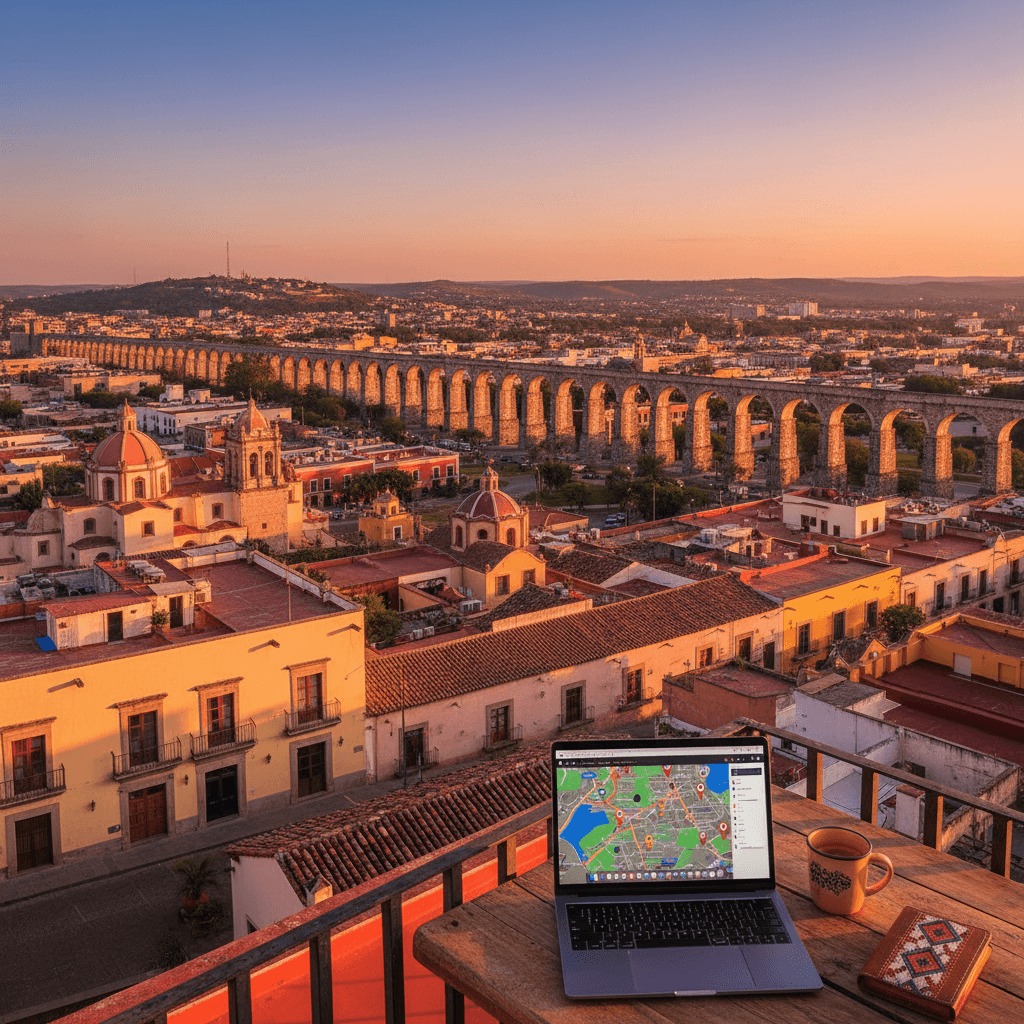
Querétaro
🇲🇽 Mexico
The Balanced Alternative
While Mexico City gets the fame and Tulum gets the Instagram tags, Querétaro is quietly winning over the crowd that actually wants to live well without the chaos. It feels like a city that has its act together. You get a UNESCO protected colonial center that looks like a movie set, but just fifteen minutes away, there are tech hubs and gated communities that feel like Silicon Valley. It is polished, safe, and leans into a middle class stability that is rare in other nomad hotspots.
The vibe here is less about partying until sunrise and more about a high quality of life. You'll spend your mornings working from a cafe in the Centro Histórico, surrounded by pink sandstone arches and baroque churches, then head to a modern gym in the suburbs by the afternoon. It's a place where things work: the internet is fast, the streets are clean, and the air is clear. For nomads who are tired of the "gritty" travel experience, Querétaro is a breath of fresh air.
Cost of Living Breakdown
Your budget goes surprisingly far here, especially if you are coming from the US or Europe. You can live a very comfortable life on $1,500 to $2,000 USD a month, while solo travelers on a tighter leash can get by on roughly $1,000 USD if they stick to local markets and older apartments in Centro.
- Housing: Expect to pay $400 to $600 USD for a basic studio in the center. If you want a modern high rise with a pool in Juriquilla or Zibatá, prices jump to $800 to $1,200 USD.
- Food: Street tacos will cost you $2 to $4 USD. A nice dinner at a sit down restaurant in Centro usually lands between $15 and $25 USD per person.
- Transport: Ubers are the way to go, costing $3 to $5 USD for most cross city trips. If you live in the suburbs, you might eventually want a car rental, which runs about $300 USD a month.
Where to Plant Your Flag
Choosing a neighborhood depends entirely on whether you value "vibe" or "infrastructure." Most nomads split their time between the two.
Centro Histórico
This is the heart of the city. It is walkable, packed with museums, and has the best social scene. The downside is that the colonial buildings can be noisy and the plumbing is sometimes as old as the architecture. Best for those who want to be in the middle of the action.
Juriquilla & El Refugio
These are the northern suburbs. They are quiet, green, and extremely safe. You'll find the best coworking spaces like Nest or La Fábrica here, along with fiber optic internet reaching 250 Mbps. It feels like a suburban bubble, so you will definitely need the Uber app on speed dial.
The Digital Nomad Experience
The community here is growing fast. Unlike the transient crowds in Cancun, the people you meet in Querétaro tend to stay for months or years. You'll find them at La Fábrica, which is a massive repurposed factory that now houses offices, gyms, and cafes. Day passes usually run about $10 to $15 USD.
Reliability is the big draw. You aren't going to lose power in the middle of a Zoom call because of a tropical storm. Between the reliable infrastructure and the 100 to 200 Mbps speeds common in most rentals, it is an easy place to be productive. When you're off the clock, the Sierra Gorda mountains are nearby for hiking, and the Mirador de los Arcos offers the best sunset view in the city.
Safety and Logistics
Safety is rarely a concern here. It is consistently ranked as one of the safest cities in Mexico. You can walk around Centro at night with a laptop in your bag and feel perfectly fine, though standard city smarts still apply. For healthcare, the hospitals are modern and significantly cheaper than anything in the US, making it a favorite for long term expats and retirees.
The weather is another win. It is a mild highland climate, staying between 15°C and 28°C (59°F to 82°F) most of the year. The rainy season hits from June to October, but even then, it’s usually just a quick afternoon shower. If you’re looking for a base that feels like a "real" city rather than a tourist trap, this is it.
The Price of Balance
Queretaro is currently hitting a sweet spot for those who want Mexican heritage without the logistical headaches of Mexico City or the inflated "tourist tax" of the Riviera Maya. It is a middle class stronghold where your dollar stretches significantly further than in the US or Europe, but you aren't sacrificing infrastructure to get those savings. Most solo nomads find they can live well on $1,200 to $1,500 USD a month, while families opting for the high end gated communities usually land closer to $2,500 USD.
The local economy is stable and tech driven, which keeps prices consistent. You won't find the wild seasonal price swings common in beach towns. Instead, you get a predictable cost of living that allows for long term planning, whether you are renting a colonial loft or a modern suburban apartment.
Monthly Budget Breakdowns
Your biggest variable here is housing style. The city is split between the historic charm of the center and the ultra modern suburbs to the north.
The Budget Nomad ($800 to $1,200 USD/mo)
- Rent: $400 to $600 USD for an older studio or 1BR in or near Centro Histórico.
- Food: Heavy focus on street food like $3 USD tacos and local markets like Mercado de la Cruz.
- Transport: Mostly walking and the occasional $0.50 USD bus ride.
- Workspace: Working from laptop friendly cafes or a basic hot desk.
The Mid Range Professional ($1,500 to $2,000 USD/mo)
- Rent: $700 to $1,000 USD for a modern apartment in El Refugio or Zibatá.
- Food: A mix of home cooking and mid range dining at $10 to $15 USD per meal.
- Transport: Frequent Ubers, averaging $4 USD per trip across town.
- Workspace: A dedicated desk at Nest or La Fábrica for roughly $200 USD a month.
The Comfortable Expat ($2,500+ USD/mo)
- Rent: $1,200 USD and up for a large house in Juriquilla with a pool and gym access.
- Food: Regular fine dining in Centro and high end grocery shopping at City Market.
- Transport: Leasing a car for $300+ USD a month to handle suburban commutes.
- Extras: Includes private international school fees and premium health insurance.
Connectivity and Remote Work
Internet reliability is one of the city's strongest selling points. In newer developments like Zibatá and Juriquilla, fiber optic speeds of 250 Mbps are standard. Even in the older buildings of Centro, 100 Mbps is common, though you should check the thick stone walls for signal dead zones before signing a lease.
Coworking culture is thriving here. Nest and La Fábrica are the go to spots, offering day passes for $10 to $15 USD. These spaces act as social hubs for the growing community of entrepreneurs and remote workers. For mobile data, travelers often grab a quick eSIM from Airalo for their first few days, then swap to a local Telcel SIM at any Oxxo for better rates, usually around $15 USD for 5GB.
Daily Expenses and Practicalities
Healthcare is high quality and affordable, with modern hospitals that attract expats from all over the country. A standard consultation often costs a fraction of what you would pay in the US. For daily movement, Uber is the gold standard for safety and convenience, typically costing $3 to $5 USD for most trips within the city. If you are staying in the suburbs, factor in the cost of a rental or purchase, as these areas aren't designed for pedestrians.
Dining out remains one of the best values in Queretaro. You can grab a quick lunch at a market for $5 USD or enjoy a multi course dinner at an upscale spot in Centro for $30 USD. Because the city isn't overrun by tourists, the prices reflect what local professionals pay, giving you a much more authentic financial experience than you would find in San Miguel de Allende or Tulum.
For Solo Travelers and History Buffs: Centro Histórico
If you want to step out of your door and immediately feel the pulse of the city, the Centro Histórico is your spot. It is a UNESCO-listed maze of colonial architecture, pedestrian walkways, and plazas that stay lively well into the evening. You will be within walking distance of the best museums, markets, and the iconic aqueduct.
- The Vibe: Culturally immersive, social, and walkable. You will find yourself working from cafes like Moser Cafe-Kultur or grabbing cheap tacos at local markets for $2 to $4 USD.
- Housing: Mostly older colonial homes and boutique apartments. Expect to pay between $400 and $600 USD for a studio or one bedroom.
- The Trade-off: It can get noisy on weekends, and older buildings might lack the modern insulation or high-speed fiber optics found in the suburbs.
For Digital Nomads and Tech Entrepreneurs: Juriquilla
Located on the northern edge of the city, Juriquilla has evolved into a sophisticated tech hub that feels worlds away from the colonial center. It attracts a crowd that prioritizes high performance and modern amenities. It is home to many of the city's international schools and tech offices, making it a reliable base for those who need top-tier infrastructure.
- The Vibe: Professional, quiet, and polished. It is the kind of place where you can rely on 250 Mbps internet and easy Amazon Mexico deliveries.
- Housing: Modern high-rises and gated communities. Rents are higher here, often starting at $1,200 USD for premium units with pools and gyms.
- The Trade-off: You will absolutely need a car or a healthy Uber budget. It feels more like a suburban office park than a traditional Mexican town.
For Expats and Long-Term Residents: El Refugio and Zibatá
These master-planned communities are the go-to for expats who want a "plug-and-play" lifestyle. They offer a middle ground between the price of the center and the luxury of Juriquilla. Many residents here are remote workers who enjoy the security of gated entries and the abundance of green spaces.
- The Vibe: Safe, family-oriented, and extremely modern. There is a strong sense of community, and you will find plenty of English speakers and organized expat meetups.
- Housing: Modern apartments and houses ranging from $700 to $1,000 USD. These usually include access to shared amenities like coworking lounges and fitness centers.
- The Trade-off: It lacks the "authentic" Mexican feel of the Centro. You are trading historic charm for convenience and safety.
For Families: The Modern Suburbs
Families generally gravitate toward Zibatá or the newer sections of Juriquilla. The draw is simple: safety, space, and proximity to international schools. Querétaro is widely considered one of the safest cities in Mexico, and these neighborhoods reinforce that reputation with 24/7 security and private parks.
- Healthcare: Modern hospitals and pharmacies are concentrated near these residential hubs, and many doctors speak English.
- Daily Life: Groceries are affordable, and a mid-range family dinner will typically cost between $8 and $15 USD per person.
- Transportation: Most families opt for a car rental or purchase, which runs about $300 USD per month, as public buses are less frequent in these gated areas.
Practical Logistics for All Areas
Regardless of where you land, getting around is straightforward. Uber is the gold standard for safety and convenience, with most rides across town costing between $3 and $5 USD. For those staying long-term, grabbing a Telcel SIM card at any Oxxo for about $15 USD will give you enough data to navigate while you get your home internet settled. If you are working remotely, coworking spaces like Nest or La Fábrica offer day passes for $10 to $15 USD, which is a great way to meet the local nomad community without committing to a monthly $200 USD membership right away.
Connectivity and Speed
You won't have to hunt for a signal here. Querétaro is a legitimate tech hub, and the infrastructure reflects that. Most apartments in the Centro Histórico easily hit 100 to 200 Mbps, which is plenty for seamless Zoom calls or uploading large files. If you move further out to the modern suburbs like Juriquilla or Zibatá, speeds often reach 250 Mbps over fiber optic lines.
The reliability is high, though the occasional afternoon thunderstorm during the rainy season (June to October) can cause brief flickers. Most nomads find that a basic backup plan, like a local SIM card, is more than enough to stay online 24/7. For your phone, grab an Airalo eSIM for about $5 USD to get through your first few days. Once you're settled, head to an Oxxo and pick up a Telcel physical SIM. Around $15 USD will get you 5GB of data and a local number, which is handy for using apps like Uber or ordering on Amazon Mexico.
Top Coworking Spaces
The coworking scene is surprisingly robust, often feeling more professional and less "backpacker" than what you might find in Tulum. You'll find a mix of local entrepreneurs, remote tech workers, and international expats.
- Nex Offices: Located in the modern Juriquilla district, this professional space offers high-speed internet and a corporate environment. Expect similar pricing to other premium hubs, with plenty of private booths for calls.
- el27 Coworking: Another excellent option in Juriquilla, this spot has a massive amount of character. It's great for networking and often hosts events for the local startup community.
- Suburban Hubs: In gated communities like El Refugio, many modern apartment complexes actually include private coworking lounges, gyms, and pools in the rent, which can range from $700 to $1,000 USD per month.
The Cafe Culture
If you prefer a change of scenery without the monthly fee, Querétaro has a deep cafe culture. Unlike some cities where laptops are frowned upon, many spots in the Centro are very welcoming to remote workers as long as you keep the coffee flowing. Most cafes offer free WiFi with your purchase, and you'll usually find plenty of power outlets tucked under the tables.
The vibe in these cafes is generally quiet during the mornings, though they can get lively during the late afternoon "comida" hours. If you need total silence, stick to the dedicated coworking spaces or your home office. For those living in the suburbs, you'll likely need a car to reach the best coffee shops, but in the Centro, everything is walkable and within a ten minute stroll from most rentals.
Digital Nomad Community
One of the biggest draws for 2025 and 2026 is the growing social scene. It isn't just about the internet; it's about the people. The community here is often described as more stable and multicultural than the transient crowds in coastal Mexico. You'll find active Facebook groups for expats and nomads where people organize weekend trips to the Sierra Gorda mountains or meetups at local markets. It's a "middle class" style of remote work life, where people prioritize a high quality of life and safety over constant partying.
Peace of Mind in the Bajío
Querétaro stands out as one of Mexico's most secure urban centers. Unlike the chaotic energy of Mexico City or the tourist heavy vibes of the coast, this city feels distinctly middle class and orderly. Most expats and digital nomads describe the atmosphere as relaxed and predictable, which is exactly why it has become a magnet for families and long term remote workers in 2025.
The city's safety is rooted in its economic stability. You'll notice a heavy presence of tech professionals and a growing international community, which contributes to a low rate of petty crime. While you should still use common sense, like keeping your phone tucked away on crowded buses, the general feeling in neighborhoods like Juriquilla or Zibatá is one of total comfort. Even in the Centro Histórico, you'll find locals and travelers walking to dinner well after dark without a second thought.
- Emergency Services: Dial 911 for any immediate police, fire, or medical needs.
- Street Safety: Stick to well lit main thoroughfares in the Centro at night. While violent crime is rare, occasional opportunistic theft can happen in secluded spots.
- Reliable Transit: Use Uber for late night trips. Rides usually cost between $3 and $5 USD and provide a digital paper trail that adds an extra layer of security.
World Class Medical Care
Healthcare is a major selling point for those moving here from the US or Europe. You aren't just getting lower prices; you're getting access to modern facilities that often rival or exceed what you'd find back home. The city is packed with specialized clinics and large, high tech hospitals that handle everything from routine checkups to complex surgeries.
Expats frequently praise the "bedside manner" of local doctors, many of whom trained abroad and speak excellent English. If you're living in the suburbs like El Refugio, you'll find modern pharmacies and clinics just minutes away. For major procedures, the savings are significant, often costing a fraction of US prices while maintaining international standards.
- Top Facilities: Hospitals like Hospital Moscati in Juriquilla offer cutting edge tech and bilingual staff.
- Pharmacy Access: Farmacias are on almost every corner. For basic meds, you can often consult a doctor in a small office attached to the pharmacy for about $2 to $5 USD.
- Insurance: Most nomads use SafetyWing for travel medical coverage, but if you're staying long term on a residency visa, look into local private insurance providers to access the best private hospitals.
- Dental Care: Querétaro is a popular spot for dental work. High quality cleanings or fillings are incredibly affordable, making it easy to keep up with maintenance without breaking the bank.
Staying Healthy and Hydrated
The highland climate is mild and pleasant, but the altitude and sun can catch you off guard. Querétaro sits at about 1,800 meters (5,900 feet), so you might feel a bit winded during your first few days. Drink plenty of water and take it easy on the mezcal until you've adjusted.
As with most of Mexico, don't drink the tap water. Stick to bottled water or the large 20 liter jugs (garrafones) delivered to your apartment. Most modern rentals in Zibatá or Juriquilla come with filtration systems, but it's always best to ask your host or landlord first. When eating out, the food hygiene standards in the city are generally very high, especially in the established cafes and restaurants in the Centro.
Querétaro is a city of two halves. If you're staying in the Centro Histórico, your own two feet are your best asset. The colonial core is a grid of cobblestone streets and pedestrian plazas where everything from the local markets to the Mirador de los Arcos is within a twenty minute stroll. However, once you venture toward the modern hubs like Juriquilla or Zibatá, the logistics change completely. These suburbs are built for cars, and you'll need a different strategy to bridge the gap between the historic charm and the high tech northern districts.
Ride-Hailing and Taxis
For most nomads, Uber is the gold standard here. It's reliable, safe, and incredibly affordable compared to US or European prices. A typical cross town trip usually costs between $3 and $5 USD. If you're heading to the airport (QRO), expect to pay between $15 and $25 USD for the 30 to 45 minute drive, depending on traffic. Didi is also available and sometimes slightly cheaper, but Uber remains the favorite for its consistent vehicle quality and ease of use.
The Bus System (Qrobús)
The local bus system, known as Qrobús, is surprisingly efficient for a city of this size. It's the cheapest way to get around at $0.55 USD (11 MXN) per ride. You'll need a rechargeable smart card, which you can pick up at various kiosks and convenience stores like Oxxo. While the buses are great for hitting the main thoroughfares, they can get incredibly crowded during the afternoon rush, and the routes might feel a bit opaque if your Spanish isn't strong. Most expats use the Moovit app to track routes and timing in real time.
Walking and Biking
In the center, walking isn't just a way to get around; it's the main event. The city has invested heavily in pedestrian zones, making it easy to hop between cafes and coworking spots like Nest or La Fábrica. For those who want more speed, bike and scooter rentals are accessible via apps in the central districts. Just keep in mind that the historic cobblestones can be brutal on small wheels, so stick to the paved bike lanes where possible.
Regional Travel
If you're looking to head out of town for a weekend in the Sierra Gorda mountains or a day trip to San Miguel de Allende, the Terminal de Autobuses de Querétaro (TAQ) is your hub. Mexico’s long distance buses are often more comfortable than first class flights. Travelers frequently use the Busbud app to book seats on Primera Plus or ETN lines. These buses feature reclining seats, WiFi, and individual screens, making the journey to Mexico City or neighboring states a breeze.
Driving and Car Rentals
If you've settled into a gated community in the suburbs, you'll likely want your own wheels. Renting a car costs roughly $300 USD per month, though insurance can push that higher. Driving in Querétaro is generally less chaotic than in Mexico City, but the local "Retornos" (U-turns) can be confusing for newcomers. Parking in the Centro is notoriously difficult and expensive, so most residents in the outskirts take an Uber when they want to spend an evening in the historic heart of the city.
Arrival Logistics
- Airport Transfer: Grab an Uber from QRO for the most seamless experience; it's much cheaper than the official airport taxis.
- Connectivity: Download Airalo for an immediate eSIM upon landing, then head to an Oxxo to grab a Telcel physical SIM for better long term rates, usually around $15 USD for 5GB.
- Navigation: Google Maps is highly accurate for both driving and walking directions throughout the city.
The Spanish Reality
In Querétaro, Spanish isn't just the official language; it's the heartbeat of daily life. Unlike the bubble of Playa del Carmen or the tourist strips of Puerto Vallarta, this is a "real" Mexican city where the local tongue dominates. You'll find that English proficiency varies wildly depending on where you hang out. In the Centro Histórico or the tech heavy suburbs of Juriquilla, many younger professionals and service staff at upscale spots speak decent English. However, once you step into a local market or a neighborhood pharmacy, you'll need at least a baseline of Spanish to get by comfortably.
Most nomads find that while they can survive with hand gestures and a smile, the experience opens up significantly with a little effort. Locals are famously polite and patient; they'll appreciate you trying to string a sentence together. If you're planning to stay for more than a month, consider it an opportunity to practice. The city's middle class vibe means you'll encounter many bilingual locals in coworking spaces like Nest or La Fábrica, but don't expect the person selling you street tacos to be fluent.
Communication Tools and Apps
Technology bridges the gap where your vocabulary fails. Since you'll likely be using Uber for most trips outside the walkable center, the app handles the "where to" part for you, though a polite "Hola, buenas tardes" goes a long way. For everything else, keep these tools ready:
- Google Translate: Use the camera feature for menus in traditional cantinas or reading signs at the local market. It's also a lifesaver for translating WhatsApp messages from your landlord.
- WhatsApp: This is the universal communication tool in Mexico. Whether you're booking a hair appointment, ordering water delivery, or talking to a new friend from a meetup, it happens here.
- Airalo: If you want data the second you land at QRO airport, an eSIM is the way to go. It's usually around $6 USD for 1GB to get you through the first few days.
- Telcel: For a longer stay, expats recommend grabbing a physical SIM at any Oxxo. You can get a $13 USD for 5GB tourist plan, which makes navigating and calling local businesses much easier.
Essential Phrases for Your First Week
You don't need to be fluent to be respectful. Start with these basics to smooth over your daily interactions:
- ¿Cuánto cuesta?: How much does it cost? (Perfect for the markets).
- La cuenta, por favor: The check, please.
- ¿Cuál es la contraseña del WiFi?: What is the WiFi password? (You'll use this a lot in Centro cafes).
- ¿Dónde está el baño?: Where is the bathroom?
- Con permiso: Excuse me (used when squeezing past someone in a crowded market).
Social Etiquette and Connection
Communication in Querétaro is wrapped in a layer of formality and warmth. It's common to greet everyone when entering a small shop or a cafe. A simple "Buenas" or "Hola" is expected. If you're looking to meet people, the nomad community here is growing fast and is often described as more grounded than the scenes in Tulum.
Expats and digital nomads tend to congregate in Facebook groups or at local coworking hubs. If you're staying in Zibatá or El Refugio, the community is very tech oriented, and you'll find plenty of English speakers among the international families and entrepreneurs. In Centro, the vibe is more artistic and bohemian. Regardless of where you land, showing a genuine interest in learning the language is the fastest way to turn a casual acquaintance into a local connection.
The Sweet Spot: High Altitude and Mild Temps
Querétaro sits at a high elevation in the central Mexican highlands, which creates a climate that feels like a permanent spring. You won't find the sweltering, humid heat of the coast here. Instead, expect daily temperatures to hover between 15°C and 28°C (59°F to 82°F) throughout the year. It is the kind of weather where you will want a light jacket for the crisp mornings in the Centro Histórico, but you will be comfortably in a t-shirt by lunchtime.
The city sees plenty of sunshine, but the air stays dry and manageable for most of the year. This makes walking the colonial streets or hiking near the Los Arcos aqueduct a breeze compared to the heavy air of Mexico City or the tropical heat of Tulum. Most nomads find the climate one of the biggest draws for long-term stays, as you rarely need to blast the AC or huddle near a heater.
When to Plan Your Trip
If you want the absolute best experience, aim for the dry season between November and May. During these months, the sky is a deep blue, the humidity is non-existent, and daytime temperatures sit at a perfect 20°C to 25°C. It is the prime time for digital nomads to set up on the outdoor patios of cafes like La Fábrica or Nest without worrying about a sudden downpour ruining their laptop.
- November to February: The coolest months. Nights can dip down to 7°C (45°F), so make sure your Airbnb has extra blankets. Days are sunny and gorgeous.
- March to May: The warmest window. Temperatures can peak around 30°C (86°F). It is dry and dusty, but great for lounging by the pools in suburban Juriquilla or Zibatá.
- June to October: This is the rainy season. You will see afternoon thunderstorms that roll in quickly and leave just as fast. July is typically the wettest month, with average highs around 24°C.
The Seasonal Trade-off
The rainy season from June to October is often the least favorite for travelers, but it has its perks. The surrounding hills and the Sierra Gorda mountains turn a lush, brilliant green. If you don't mind a bit of humidity and planning your outdoor meetings for the morning, you can often find better deals on mid-range rentals in El Refugio during this time.
Most expats recommend avoiding the peak of the rainy season if you are planning to do a lot of regional travel. The roads into the mountains can get tricky with heavy rain. However, for those focused on deep work and city life, the rain is rarely a dealbreaker. It usually hits in the late afternoon, leaving the evenings fresh and cool for a walk through the Plaza de Armas.
What to Pack
Since the temperature swings significantly between day and night, layering is your best friend. Even in the height of summer, a cool evening breeze is common. Travelers often regret not bringing a solid pair of walking shoes, the cobblestones in the Centro are beautiful but unforgiving. If you are arriving during the dry months, a good moisturizer and lip balm are essential, as the highland air can be quite dehydrating.
For those staying in the modern suburbs like Zibatá, you might want swimwear for the community pools, but for the most part, the Queretaro dress code is smart-casual. It is a bit more conservative and polished than the beach towns, reflecting its status as a growing tech and business hub.
Getting Settled and Staying Connected
Queretero is one of those rare places where the infrastructure actually keeps up with the hype. If you are landing at QRO airport, skip the bus and grab an Uber for about $15 to $25. It is a 40 minute ride that saves you a lot of headache with luggage. Once you are in the city, the internet situation is excellent. Most modern apartments in the suburbs like Zibata or Juriquilla easily hit 250 Mbps, while Centro averages around 100 Mbps.
For your phone, grab an Airalo eSIM before you land to handle the initial navigation. Once you have your bearings, head to any Oxxo convenience store and pick up a Telcel SIM. You can get 5GB of data and a local number for roughly $15. If you need a professional desk, Nest and La Fabrica are the top picks for coworking. They offer day passes for $10 to $15 and have the kind of reliable power and backup systems you need for heavy Zoom days.
Budgeting for the Highland Life
Your cost of living here depends entirely on whether you want colonial charm or suburban luxury. Generally, a solo nomad can live well on $1,200, while a family or couple looking for high end amenities should budget $2,500+.
Centro Historico (The Heart)
- Best For: Walkability and culture.
- Rent: $400 to $600 for a 1BR in an older building.
- Pros: You won't need a car; you are steps away from markets and nightlife.
- Cons: It gets loud on weekends and the thick stone walls can sometimes muffle WiFi signals.
Zibata / El Refugio (The Modern Suburbs)
- Best For: Families and remote workers who want quiet.
- Rent: $700 to $1,000 for modern condos.
- Pros: Gated security, pools, gyms, and the fastest internet in the city.
- Cons: Completely car dependent; it feels more like a manicured California suburb than Mexico.
Juriquilla (The Tech Hub)
- Best For: Entrepreneurs and long term expats.
- Rent: $1,200+ for larger homes or luxury apartments.
- Pros: Close to international schools and high end shopping.
- Cons: Higher price point and a bit of a commute to the historic center.
Safety and Health
Expats generally feel much safer here than in Mexico City or the border towns. It is a middle class, stable environment where you can walk the Centro streets at night without much worry, though you should still use common sense regarding flashy jewelry or phones. For healthcare, the private hospitals are world class and significantly cheaper than US equivalents. If you just have a cold or a minor scrape, look for a Consultorio attached to a local pharmacy; you can see a doctor for a few dollars without an appointment.
Getting Around
If you stay in Centro, your feet are your best transport. The city is famous for its Aqueduct and Mirador de los Arcos, which are easily reachable on foot. For longer trips, Uber is the gold standard, usually costing between $3 and $5 for a cross town ride. Buses are cheap at $0.50, but the routes can be confusing for newcomers. If you plan on living in the suburbs long term, you will likely want to rent a car for around $300 a month, as ride hailing wait times can add up out there.
Language and Local Customs
While tech workers and younger locals in Centro often speak great English, you will want Google Translate for menus and market stalls. A little Spanish goes a long way here. Locals are exceptionally polite; expect to greet people with a warm "Hola" or "Buenos dias" before jumping into a transaction. When dining out, a 10 to 15% tip is standard. For banking, most nomads use Wise or Revolut to pull pesos from ATMs, which are found on almost every block in the main tourist and business zones.
Need visa and immigration info for Mexico?
🇲🇽 View Mexico Country GuideNomad Haven
Your home away from home