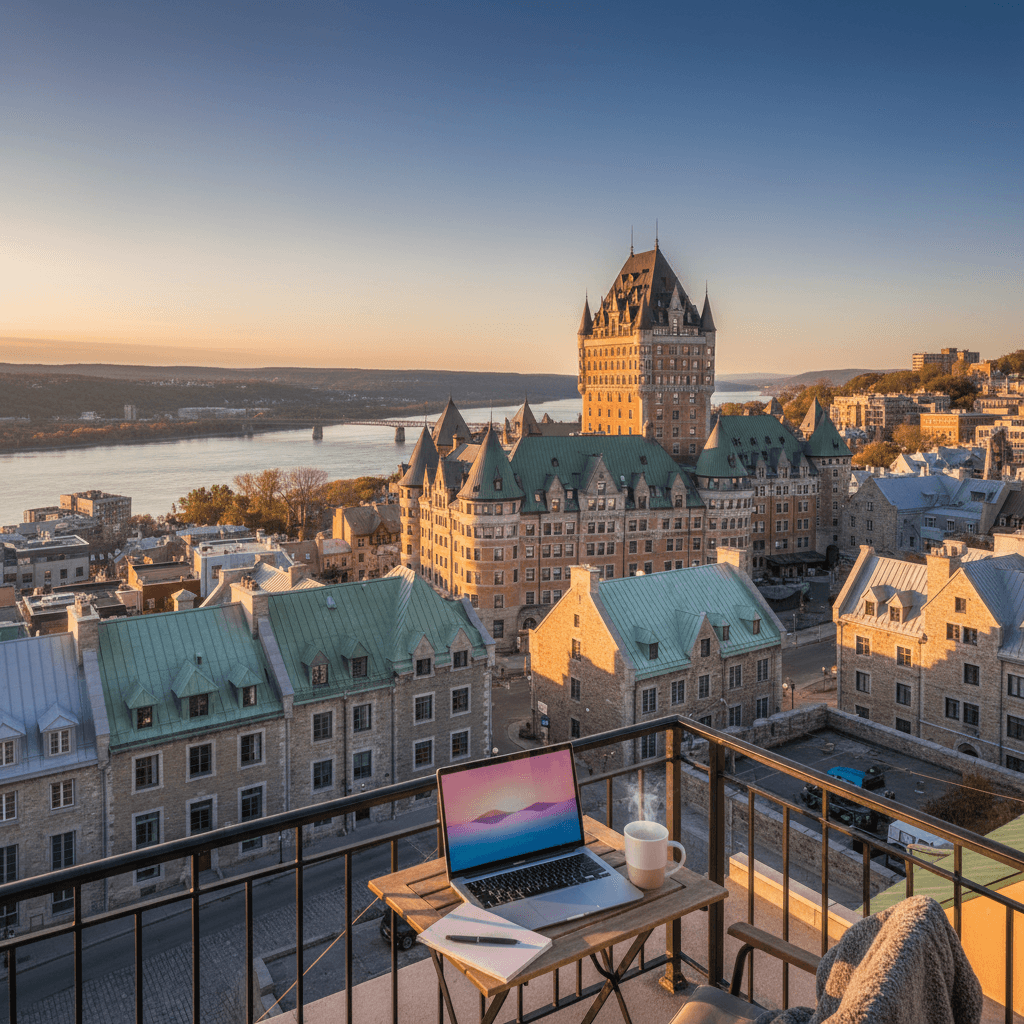
Quebec City
🇨🇦 Canada
Quebec City feels more like a European small city than a Canadian capital and that’s the whole charm. Old Quebec is cobblestoned, steep and genuinely pretty, with church bells, heels clicking on stone and cafés spilling onto narrow streets, but the city also runs on fast internet, decent buses and a workday rhythm that suits nomads who want calm without total isolation.
It’s bilingual, though French matters more than a lot of newcomers expect. In the tourist core, you’ll get by in English, but step into Saint-Roch or Saint-Jean-Baptiste and you’ll hear French first, then English if you’re lucky, so a few phrases go a long way, honestly, especially when you’re dealing with landlords, pharmacies or a greasy late lunch.
Not cheap. Not Toronto either. A solo nomad can live on about US$1,500 to US$2,100 a month depending on housing, while a more comfortable setup pushes past US$3,000 once you add a private apartment, coworking and regular meals out, which, surprisingly, still feels reasonable compared with Vancouver or downtown Toronto.
Best areas to base yourself
- Saint-Roch: Best for nomads and expats, with cafés on Rue Saint-Joseph, cheaper rents and a real working-city feel, though nightlife can get noisy.
- Saint-Jean-Baptiste: Best for a more bohemian stay, with trendy shops and studios around 690 CAD, but the hills will have your calves complaining.
- Vieux-Québec: Great for short stays and postcard views, though it’s crowded and pricier, especially in peak season.
- Upper Town and Grande Allée: Better for a polished, quieter base near government buildings, hotels and restaurants, but rents climb fast.
The working setup is solid. Internet is fast, WiFi is common and places like Espace Grande Allée give you proper desks, printing and a calmer vibe than trying to work through espresso machine hiss and lunch chatter in a café, though plenty of people do exactly that.
Day to day, the city feels safe in the center and very walkable, but winter changes the mood fast. December through February can be brutally cold, with sharp wind, gray snowbanks and sidewalks that crunch under your boots, so if you hate darkness and freezing air on your face, pick a shoulder season instead.
Good for slow living. Bad for nightlife. There are bars and cabarets, sure, but this isn’t a 2 a.m. party city and that’s part of the appeal for a lot of remote workers who’d rather finish dinner, stroll home past glowing windows and hear the river wind than fight for a club entry line.
Quebec City feels cheaper than it looks. About US$1,695 a month covers a one-person budget with rent and that usually buys you a much calmer life than Toronto or Vancouver, though winters can chew through your heating bill and your patience, honestly.
A decent one-bedroom in the center runs around US$863, while you’ll see places outside the core closer to US$743. Studios in Saint-Jean-Baptiste can start near 690 CAD, which, surprisingly, still gets snapped up fast because the area’s walkable and central, with cafes, stair-heavy streets and that old stone feel that makes the morning commute less depressing.
Typical Monthly Costs
- Budget: about US$1,500, if you’re sharing housing and keeping meals simple.
- Mid-range: around US$2,100, which is what most nomads seem to settle into.
- Comfortable: US$3,000+, if you want your own place, regular dinners out and fewer compromises.
- Lunch: a mid-range meal is about US$17.50 and a McDonald’s run lands near US$11.
- Dinner for two: roughly US$60, before drinks and tip.
- Transit: the RTC monthly pass is about 100 CAD, cheap enough that people actually use it.
- Coworking: Espace Grande Allée starts around 45 CAD per day.
Saint-Roch is the practical pick, because rents are friendlier, cafes line Rue Saint-Joseph and the neighborhood has enough tech and arts energy to keep you from feeling stranded. Saint-Jean-Baptiste is better if you want a bohemian base, but the hills are no joke, your legs will complain and grocery bags feel twice as heavy on slushy days.
Where the Money Goes
- Old Quebec: beautiful, walkable and pricey, so short stays make more sense than long ones.
- Saint-Roch: better value, good for nomads and close to work-friendly cafes.
- Upper Town / Grande Allée: safer, more polished and usually more expensive.
- Utilities and winter costs: expect extra heat, dry indoor air and more cash leaving your account when the snow really settles in.
Food and daily life stay reasonable if you cook at home, but the city can still feel pricey once you start adding cafe lunches, poutine cravings and the odd Uber when the bus is late and the wind cuts through your coat. Quebec City isn’t cheap-cheap, it’s just sane by Canadian standards and that’s why a lot of expats stick around.
Quebec City feels easiest when you pick the right neighborhood first. The center is compact, the buses are fine and the old stone streets are lovely until winter hits and your boots start crunching through slush. Not cheap. Not either.
Nomads
Saint-Roch is the default for most remote workers and honestly, it makes sense, because the rents are friendlier than the tourist core, the cafés on Rue Saint-Joseph are built for laptop lingering and the whole area has that slightly scruffy, artsy energy that keeps things interesting without feeling chaotic. The downside is noise, especially when the bars spill out and scooters buzz past at midnight.
- Best for: Remote workers, expats, anyone who wants easy café access
- Rent: Lower than Old Quebec, with studios and small apartments that don’t sting quite as hard
- Vibe: Walkable, practical, a little edgy
Saint-Jean-Baptiste is better if you want a more bohemian street feel, trendy restaurants and a central base, though the hills will test your calves fast. A studio there can start around 690 CAD and the neighborhood has that lived-in buzz of bakery smells, bus brakes and people chatting in French on the sidewalk.
Expats
Upper Town and Grande Allée suit expats who want a safer, more polished pocket near the parliament and hotels, with less daily hassle and easier access to restaurants and services. It feels tidier than Saint-Roch, frankly, but you’ll pay for it and the rent jump can be annoying if you’re staying longer term.
- Best for: Professionals, families, longer stays
- Rent: Higher than Saint-Roch or Saint-Jean-Baptiste
- Vibe: Upmarket, calm, formal in places
French matters more here, weirdly enough, because once you drift away from the tourist center, English drops off fast. If you’re planning to settle in, this area works well with Quebec City’s strong internet, decent transit and the kind of everyday convenience that makes apartment life less annoying.
Families
Families usually do best in Upper Town or quieter parts near Grande Allée, where streets feel safer and the pace is slower, though the prices are still stubbornly high. Old Quebec is pretty, but the crowds, cobblestones and constant foot traffic can get old fast if you’ve got a stroller and groceries.
Solo Travelers
Vieux-Québec is the easiest choice for short stays, because you can walk everywhere, grab dinner without thinking and spend your evenings hearing church bells, bar chatter and the scrape of winter boots on stone. It’s expensive, crowded and a bit touristed out, so don’t stay there if you want a real local rhythm.
- Best for: Short visits, first-timers, photo-heavy trips
- Downside: Higher prices and lots of tourists
- Move around: Bus 80 and RTC routes make switching neighborhoods easy
Quebec City’s internet is, honestly, better than a lot of bigger North American cities. Most places in the center have fast WiFi, mobile coverage is solid and you can usually get a home plans can run around $40 USD a month, which feels almost unfair once you’ve paid Toronto rent.
The coworking scene is small but practical. Espace Grande Allée is the name most nomads mention, with modern desks, printing and a location that’s handy for lunch or after-work drinks and if you just need a laptop and coffee, Saint-Roch cafes usually work fine, though the music can get loud and the chairs can be murder on your back after two hours.
Best Work Areas
- Saint-Roch: Best for nomads who want cafes, artsy energy and lower rents, plus it’s easy to walk everywhere.
- Saint-Jean-Baptiste: Good for solo workers who like a bohemian feel, trendy spots and central access, though the hills will make you sweat in summer and curse in winter.
- Vieux-Quebec: Great for short stays and postcard views, but it’s crowded, pricey and weirdly touristy once the cruise groups roll in.
- Grande Allée: Better if you want a polished, central base near offices, hotels and formal coworking.
Mobile data is easy to sort out. Fizz and Public Mobile are common picks and you can usually grab a SIM at 7-Eleven or Couche-Tard, then you’re online for roughly $20 to $50 CAD depending on how much data you want. Turnouts like that make daily life simple, frankly, especially if you’re moving around the city on buses or foot.
Quebec City is built for people who work in chunks. The center is walkable, cafes are close together and when the weather’s decent you’ll hear bus brakes, church bells and skate wheels on stone sidewalks, then smell espresso, butter and cold river air. Winter changes the whole equation, though, because your fingers go numb in minutes and hopping between coworking spots starts feeling like a planning exercise.
What Nomads Usually Pay
- Coworking day pass: About 45 CAD.
- Monthly transit pass: 72 CAD.
- Budget monthly total: Around $1,500 USD with shared housing.
- Comfortable monthly total: $3,000+ USD if you want private space and more meals out.
If you’re here for a month or two, Quebec City works well, because the internet’s dependable, the city center is compact and you won’t burn much time getting around. If you need 24-hour nightlife and endless coworking options, skip the hype, this place is calmer than Montreal and a lot more French than most first-timers expect.
Quebec City feels calm on the surface, then winter hits and reminds you it’s still Canada. Overall, it’s a safe place to base yourself, especially if you stay in the center, but the tradeoff is real, the cold can bite hard and the French-only pockets outside touristy areas can be awkward if you’re lazy about language.
Central neighborhoods like Saint-Roch, Saint-Jean-Baptiste, Vieux-Quebec and Upper Town are where most nomads feel comfortable walking at night and honestly, that’s where you want to be if you’re new in town. Saint-Roch is busy without feeling sketchy, Vieux-Quebec is polished but packed with tourists and the outer suburbs can feel quieter in a way that’s nice until you realize you’re farther from the action and basic services.
Where to stay
- Saint-Roch: Good for remote workers, cafés and daily errands, though late-night noise can spill out from bars and the street gets a bit rough around the edges.
- Saint-Jean-Baptiste: Trendy, central and walkable, with studios starting around 690 CAD, though the hills will make your legs complain fast.
- Vieux-Quebec: Beautiful and easy to explore on foot, but pricier and crowded, especially when cruise visitors are in town.
- Upper Town / Grande Allée: Safer-feeling and more upscale, with good access to the parliament area, though rents climb quickly.
Healthcare is decent, though the system can be slow when you actually need it. Hospitals are there, pharmacies are everywhere and 911 works the way you’d expect, but ER overcrowding is a real headache, so don’t assume you’ll be seen quickly if you walk in with a non-urgent problem.
Most expats keep a basic pharmacy kit at home, because waiting around in a cold clinic lobby is miserable and the fluorescent lights don’t help. Bring your regular meds, use Pharmaprix or Jean Coutu for everyday stuff and if you need a doctor, try to sort out a regular family physician early, because, weirdly, that’s where the friction starts.
Practical safety habits
- At night: Stick to main streets and well-lit blocks, especially after bars close.
- Weather: Ice and black slush make sidewalks nasty in winter, so wear proper boots, not cute ones.
- Emergencies: Call 911 for urgent help and keep your address saved in your phone.
- Language: French helps a lot in clinics, pharmacies and outside the core, so don’t wing it.
The city’s safest feel comes from being prepared, not from pretending nothing goes wrong. Carry insurance, know where the nearest pharmacy is and don't get too relaxed just because Old Quebec looks storybook-perfect, the cobblestones are slippery, the wind gets sharp off the river and that quiet evening stroll can turn into a very cold mistake.
Quebec City is built for walking, then punished by winter for it. The center is compact, the streets in Old Quebec and Saint-Jean-Baptiste are easy to cross on foot and you’ll hear boots scraping on snow, buses hissing at stops and the occasional taxi idling outside a café with the smell of espresso drifting out.
For most nomads, the best setup is simple, live central and skip the car. The RTC bus system covers the city well, a monthly pass runs about 100 CAD and a single ticket is 2.76 CAD, which, surprisingly, is cheaper than a lot of people expect for a city this comfortable. Bus 80 is handy for Saint-Roch and airport transfers and Uber is available when you don’t feel like waiting in slush.
Best Areas for Getting Around
- Saint-Roch: Flat enough to walk, packed with cafés and work spots, good if you want errands, lunch and coworking all in one zone.
- Saint-Jean-Baptiste: Central and lively, though the hills will make you sweat in summer and curse in February.
- Vieux-Quebec: Super walkable, but crowded and pricier, so it’s better for short stays than a long nomad base.
- Upper Town, Grande Allée: Easy access to government buildings, hotels and restaurants, though getting anywhere feels a bit more formal and more expensive.
Bikes work well in warmer months and the city is compact enough that many daily trips don’t need transit at all. Bike lanes aren’t perfect everywhere, but they’re good enough to make a run for groceries, a coworking session or a riverfront ride feel painless and honestly that matters when the alternative is sitting in traffic that barely exists anyway.
Getting from YQB airport into town is straightforward, about 13 km and most people either take an Uber or hop on the bus depending on luggage and weather. In summer, that’s easy, in January, with wet snow blowing sideways and your gloves already damp, you’ll probably pay for the ride.
Quick Transit Notes
- RTC bus pass: About 100 CAD per month.
- Taxi or Uber: Useful for late nights, airport runs and frozen sidewalks.
- Walking: Best in the center, less fun on steep streets or during ice storms.
- Biking: Good for spring through fall, much less charming once the roads turn to gray slush.
If you’re choosing a base, pick for daily life, not romance. Saint-Roch is the practical winner, Saint-Jean-Baptiste feels more local and Old Quebec looks gorgeous but can get annoying fast when tour groups clog the sidewalks and prices creep up just because the postcard view is good.
Quebec City feels French first, Canadian second and that matters when you’re trying to get work done, find an apartment or ask for help at a café. In Old Quebec, you’ll hear church bells, scooter engines and a lot of French at the counter, though most people in the center switch to English fast enough. Outside the tourist core, French takes over, so learning a few basics saves you time and awkward moments.
Say hello in French. Start with “Bonjour,” then “Merci,” and you’ll usually get warmer service, better patience and fewer blank stares. It sounds simple, but locals notice and frankly it opens more doors than perfect grammar ever will.
Where English Helps Most
- Old Quebec: Easiest for short stays, hotels, tours and restaurants, staff usually speak English well.
- Saint-Roch: Techie, younger and more bilingual than people expect, especially in cafés and coworking spots.
- Saint-Jean-Baptiste: More local and less touristy, so French helps a lot more here.
- Grande Allée: Fine for visitors and expats, though the vibe is pricier and a bit polished.
The coworking scene, turns out, is easy to deal with, because places like Espace Grande Allée have solid WiFi, printing and enough English to keep your day moving. Internet is fast, often 50 Mbps or better and home plans can run around $40 USD a month, so most nomads don’t end up hunting for a café signal like they do in smaller Canadian towns.
That said, language friction is real. If your French is shaky, renting an apartment, handling utility calls or dealing with Quebec-specific paperwork can feel like a slow grind and honestly that’s where expats get annoyed fastest.
Useful Phrases
- Bonjour: Hello, use it first.
- Merci: Thank you, always worth saying.
- Je parle un peu français: I speak a little French.
- Parlez-vous anglais? Do you speak English?
For phone data, Fizz and Public Mobile are the names people keep mentioning, with plans often landing around $20 to $50 CAD depending on how much data you want. Use Google Translate, keep a French phrasebook handy and don’t rely on English outside the center, because once you’re buying groceries or asking directions in a neighborhood like Saint-Jean-Baptiste, the city gets a lot less forgiving.
Weather & Best Time to Visit
Quebec City has real seasons, not that fake-soft version some places sell. Summer sits around 20 to 25°C, the air feels warm but rarely punishing and the stone streets in Old Quebec smell like rain, кофе and a little exhaust from delivery vans.
June through August is the easiest window, especially if you want long walks, patio drinks and a city that feels alive without getting chaotic. It’s also when the UNESCO core is at its prettiest, though frankly the tourist crowds can make Rue du Petit-Champlain feel packed and a bit performative.
Winter is serious here. December through February often drops to -10 to -20°C, snow piles up and the wind off the river can cut right through good gloves, so if you hate icy sidewalks and dark afternoons, don’t romanticize it.
April to May and September to October are the sweet spot for most nomads, because prices are saner, the city’s calmer and you still get decent walking weather, though September can be wet and the rain has that cold, persistent sound on metal awnings. September averages around 90 mm of rain, so pack a shell and shoes that dry fast.
Seasonal breakdown
- Summer: Best for first-timers, patios, festivals and day trips, though accommodation books up fast.
- Fall: Gorgeous light, cooler air, fewer crowds and honestly the best time for long café sessions in Saint-Jean-Baptiste.
- Winter: Cheap-ish stays and pretty snowfall, but the cold is brutal and getting around with slushy boots gets old quickly.
- Spring: Shoulder-season deals and softer temperatures, but the thaw can be muddy, gray and weirdly depressing.
If you want the best mix of comfort and value, aim for late May, early June or late September. You’ll still hear church bells, see cyclists threading through narrow streets and get that crisp Quebec light without paying peak summer prices or freezing your face off in January.
Skip a pure winter trip unless you actually like cold. The city handles snow well, but your fingers won’t care and after a few weeks of gray skies and frozen sidewalks, even a good poutine doesn’t fix everything.
Quebec City feels easy on the wallet if you’re not chasing a glossy downtown life, with a one-bedroom in the center around US$863 and decent studios in places like Saint-Jean-Baptiste starting much lower. Not cheap, though. Once you add groceries, a transit pass and the occasional cafe day, most nomads land around US$1,500 to US$2,100 a month and a more comfortable setup climbs past US$3,000 fast.
Restaurants are pleasant but they add up, so locals often keep lunch simple and spend on dinner when they actually want to sit down and linger. A McDonald’s run is about US$11, a mid-range lunch hovers around US$17.50 and a dinner for two can hit US$60, which, surprisingly, doesn’t buy anything fancy in the nicer parts of town.
Where to base yourself
- Saint-Roch: Best for nomads who want cafes, artsy streets and lower rents, though the night noise can get annoying.
- Saint-Jean-Baptiste: Good for solo travelers and remote workers, with bohemian energy, trendy shops and steep hills that will remind you you’re alive.
- Vieux-Quebec: Gorgeous and walkable, but crowded and pricier, so I’d only stay here for a short stint.
- Upper Town, Grande Allée: Safer-feeling and polished, though you’ll pay for the address.
Internet is, honestly, one of the city’s best surprises, because wifi is strong in most central apartments and mobile coverage stays solid across town. Fizz is the cheap pick for SIMs, around US$19 a month for straightforward data plans and coworking spaces like Espace Grande Allée give you proper desks, printing and a quieter backup when your cafe gets too loud.
Getting around is simple if you stay central. The RTC bus pass runs about 72 CAD a month, Bus 80 gets you toward Saint-Roch and the airport side and Uber works when the cold hits your face like a slap, especially in January when the sidewalks go crunchy and the wind smells like snow and exhaust.
French helps a lot, more than some visitors expect. You’ll hear plenty of English in tourist zones, but outside Old Quebec people switch fast, so a basic bonjour and merci go a long way and frankly, they save you from sounding rude when you’re just tired.
Practical stuff is straightforward, though a little old-school in places. Cards are widely accepted, Wise or Revolut makes life easier, Kijiji is where lots of apartment hunting happens and tipping 15 percent is the normal move, no drama.
- Weather: Summer is mild, winter is brutal and February can feel like your eyelashes might freeze.
- Day trip: Montmorency Falls is the easy escape when you need air and don’t want to plan much.
- Healthcare: Good overall, but ERs can be crowded, so don’t expect speed if you end up there.
Need visa and immigration info for Canada?
🇨🇦 View Canada Country GuideEasy Landing
Settle in, no stress