Qingdao
🇨🇳 China
The Vibe: Red Tiles, Green Trees, and Blue Seas
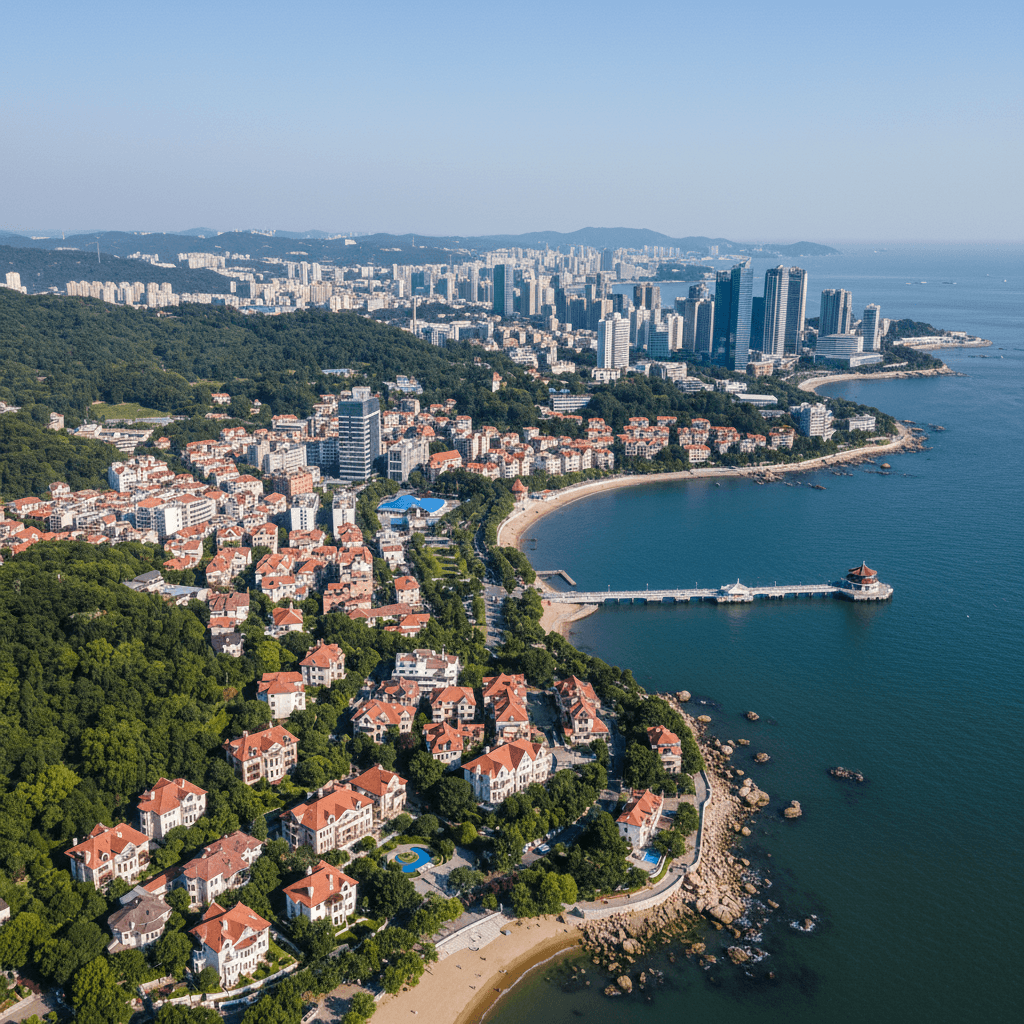
Qingdao doesn't feel like the rest of China. Walking through the Shinan District, you'll see half-timbered houses and red-tiled roofs that look like they were plucked straight from Bavaria and dropped onto the Yellow Sea coast. It's a city defined by its dualities: the rigid history of German colonial architecture clashing with the chaotic energy of a Chinese seaside resort.
The pace here is noticeably slower than the frantic hum of Shanghai. There's a salt-air breeze that encourages you to linger over a plastic bag of fresh Tsingtao beer, a local quirk where vendors pour draft brew directly into bags for you to carry home. It’s unpretentious and a bit rowdy, especially during the August Beer Festival when the city transforms into a massive, foam-covered party.
Digital nomads often describe the "Qingdao vibe" as a mix of work and play that leans heavily toward the latter. You might spend your morning grinding through emails in a quiet cafe near the Protestant Church, but by 3:00 PM, you're likely joining the crowds at No. 1 Bathing Beach. Just be prepared for the "human soup" experience during peak summer months; the beaches are beautiful, but they are rarely private.
Cost of Living Breakdown
While it isn't as dirt-cheap as rural Yunnan, your dollar stretches much further here than in the Tier 1 hubs. Most nomads find they can live a very comfortable lifestyle on $1,300 to $1,500 per month.
- Housing: A modern one-bedroom apartment in the desirable Shinan District typically runs between $600 and $800. If you head east to the more upscale Laoshan District, expect to pay $900 or more for sea views.
- Food: Street food like grilled squid or seafood skewers will only cost you $1 to $3. A sit-down meal at a local brewery pub usually lands between $8 and $15.
- Connectivity: Since you'll need a rock-solid VPN (like Astrill) to bypass the Great Firewall, factor in about $20 to $30 monthly for premium service plus $15 for a local SIM with plenty of data.
- Transport: The subway is incredibly cheap at about $0.30 per ride, while a 20-minute Didi (China's Uber) usually costs under $5.
The Nomad Reality Check
Qingdao is a fantastic "secondary" destination, but it comes with a steep learning curve. English proficiency is low, even compared to Beijing. You'll rely heavily on WeChat for everything from paying for groceries to translating menus. If you don't have Alipay set up before you arrive, you'll find the cashless society nearly impossible to navigate.
The community is small and decentralized. You won't find a dedicated "Nomad House" here. Instead, you'll meet people at Tsingtao Brewery pubs or during weekend hikes up Laoshan Mountain. It’s a city for the self-sufficient worker who prefers seafood and hiking over networking events and co-living seminars.
The air quality is generally better than in the northern industrial heartland, with AQI levels usually staying in a healthy range, though winter can bring occasional spikes. The best time to be here is May through October. Once November hits, the coastal wind turns biting, and the city enters a quiet, chilly hibernation that's less ideal for those seeking a social scene.
The Cost of Coastal Living
Qingdao sits in a sweet spot for the wallet. It's significantly more affordable than the high-octane environment of Shanghai, but it carries a slightly higher price tag than the backpacker havens of Yunnan province. Most nomads find that a monthly budget between $1,350 and $1,500 covers a comfortable lifestyle, including a private apartment, frequent dining out, and the occasional weekend getaway to Laoshan Mountain.
The local economy runs almost entirely on WeChat Pay and Alipay. You'll need to link your international card to these apps immediately upon arrival, as cash is becoming a rarity and many small vendors won't have change for large bills. While the cost of living is low, don't forget to factor in the "nomad tax" of a high-quality VPN subscription, which is a non-negotiable expense for staying connected to the outside world.
Accommodation by District
Rent will be your biggest variable. Prices fluctuate based on how close you are to the Yellow Sea and whether you're looking for a modern high-rise or a charming, albeit drafty, colonial-style building.
- Shinan District: This is the heart of the action near the Badaguan scenic area. A decent one-bedroom apartment here usually runs between $600 and $800 per month. It's the most walkable part of the city, so you'll save on transport but pay a premium for the view.
- Laoshan District: Popular with long-term expats and families, this area offers more space and greenery. Expect to pay $900 or more for an upscale apartment. It's quieter and cleaner, but you'll rely more on Didi rides to get to the historic center.
- Shibei District: If you're on a tighter budget, Shibei offers a more "local" feel with one-bedroom units often found for $400 to $500. The trade-off is more congestion and fewer English-speaking neighbors.
Food and Drink
Eating out is where Qingdao really shines. You can feast on street-side seafood skewers or a bowl of spicy clams for $2 to $4. If you prefer a sit-down meal at a mid-range spot or one of the brewery-owned pubs near the Tsingtao Museum, expect to pay around $10 to $15 per person.
Grocery shopping at local markets is incredibly cheap, but most expats find themselves using apps like Meituan for food delivery. A typical delivery fee is less than a dollar, and the convenience is hard to beat when you're deep in a work session. For those who need their caffeine fix, a latte at a specialty coffee shop near the Protestant Church will cost about $3.50.
Transport and Connectivity
Getting around won't break the bank. The subway system is modern and efficient, with most rides costing less than $1. If you're in a hurry, Didi (the local version of Uber) is the way to go. A 20-minute cross-town trip usually costs between $3 and $6.
- Mobile Data: A local SIM from China Unicom or China Mobile with 20GB of data costs roughly $15 to $20.
- Coworking: Coworking desks available from ~600 CNY ($85)/month in local spaces.
- Utilities: Internet, electricity, and water for a standard apartment usually total around $60 to $80 monthly, though heating costs can spike during the chilly winter months from December to February.
Overall, Qingdao offers a high quality of life for a fraction of the cost of Western coastal cities. You'll get the sea breeze, world-class seafood, and a fascinating architectural backdrop without the financial stress of Beijing or Hong Kong.
For Solo Travelers and Short-Term Nomads: Shinan District
If you want to be where the action is, Shinan is your best bet. This is the heart of the city, stretching along the coastline and housing the iconic German colonial architecture. It is the most walkable part of Qingdao, and you can easily hop between the Tsingtao Beer Museum, the Protestant Church, and the historic Badaguan area.
Most nomads settle here because it feels the least isolated. You are close to the main beaches, though be warned that they get incredibly packed during the summer months. You won't find much personal space on the sand, but the energy is unbeatable. The dining scene is dense with seafood joints and small pubs serving beer in plastic bags, a local quirk you have to try at least once.
- Rent for a 1BR: $600 to $800 per month.
- Atmosphere: High energy, touristy, and very scenic.
- Connectivity: Best area for finding cafes with decent Wi-Fi, though you still need a solid VPN like Astrill to get any real work done.
For Expats and Long-Term Remote Workers: Laoshan District
Located to the east, Laoshan is where you go when you're tired of the city crowds. It is much greener and quieter, framed by the mountains and the sea. This area has a more polished, suburban feel compared to the gritty urban core. It is the preferred spot for expats who want a view of the ocean without the constant noise of tour groups.
While it is less walkable than Shinan, the air quality is often slightly better here. You will likely rely on Didi to get around, as the distances between the sculpture parks and residential complexes are significant. It is a great home base if you prefer hiking Laoshan Mountain on your weekends rather than bar-hopping in the city center.
- Rent for a 1BR: $900+ for upscale or ocean-view apartments.
- Atmosphere: Relaxed, affluent, and nature-focused.
- Top Spot: The area near Sculpture Park offers a great balance of coastal views and modern amenities.
For Budget-Conscious Nomads: Shibei District
Shibei is the functional, urban engine of Qingdao. It lacks the coastal glamour of the other districts, but it makes up for it with significantly lower prices. This is where you'll find the most authentic local markets and the cheapest street food. If you are trying to keep your monthly burn under $1,300, this is the place to look for an apartment.
The trade-off is the environment. Shibei is more industrial and can feel a bit congested. Air quality spikes can hit 95 AQI here more frequently than on the coast. However, for a digital nomad who spends most of their time in their apartment or local noodle shops, the savings are worth it. You are still a quick subway or Didi ride away from the beaches when you need a break.
- Rent for a 1BR: $400 to $500.
- Food Costs: Seafood skewers and local dumplings for $1 to $3.
- Vibe: Gritty, local, and unpretentious.
For Families and Slow Travelers: Near Ocean Entertainment City
Families often gravitate toward the newer developments near the eastern end of the coastline. These areas offer wider sidewalks, better-maintained parks, and proximity to the Underwater World aquarium. It feels safer and more organized than the older parts of the city center.
The infrastructure here is modern, with large shopping malls that house international grocery brands. This makes the transition easier if you aren't ready to fully commit to local wet markets for every meal. You'll find plenty of open spaces for kids to run around, and the proximity to the August Beer Festival grounds means you're close to the festivities without being trapped in the middle of them.
- Transport: Very accessible via the expanded subway system.
- Daily Life: Use apps like HelloBike for short trips along the boardwalk for about $1 a day.
- Pro Tip: Link your international card to Alipay or WeChat Pay before you arrive, as this area is almost entirely cashless.
The Reality of Staying Connected
Working from the "Beer City" requires a bit of a mental shift. Unlike the tech-heavy hubs of Shenzhen or the international polish of Shanghai, Qingdao’s internet infrastructure feels more like a coastal town trying its best. You can expect average speeds between 8 and 35 Mbps, though it often dips to a sluggish 9 Mbps depending on your neighborhood.
The Great Firewall is your biggest hurdle here. Since Google, Slack, and WhatsApp are blocked, a reliable VPN is your lifeline. Most nomads in China swear by Astrill as the gold standard for stability, but expect to pay a premium of $20 to $50 a month for a high-quality service and fast fiber. Without it, you're essentially cut off from the Western web.
For mobile data, don't wait until you're in the city. Grab a SIM card at the airport from China Unicom or China Mobile. Tourist SIMs offer 20GB for around 250-300 CNY (~$35-42) [6]. Make sure you have Alipay or WeChat Pay set up immediately; the city is almost entirely cashless, and you'll even use these apps to scan QR codes for e-SIMs or data top-ups.
Coworking and the Cafe Scene
If you're looking for a dedicated coworking brand like WeWork, you're out of luck. Qingdao hasn't quite caught up to the global nomad trend, and there aren't many formal spaces catering specifically to remote workers. Most people end up working from their apartments in the Shinan District or hunting for quiet corners in local cafes.
The cafe culture is charming but hit-or-miss for productivity. The areas around the old German churches in Shinan have some beautiful spots, but the Wi-Fi is often unreliable or requires a Chinese phone number to log in. If you plan to work from a cafe, bring your own hotspot. Local shared desks from ~600 CNY ($85)/month, but most nomads find that sticking to a "work-from-home" setup is less stressful.
Connectivity Costs and Specs
- Average Fiber Speed: 8 to 35 Mbps (unstable during peak hours)
- VPN Cost: $20 to $30 per month for premium reliable services
- Local SIM Card: 250-300 CNY (~$35-42) for a 20GB monthly plan
- Coworking Desk: From ~600 CNY ($85)/month (mostly local business centers)
- Cafe Coffee: $3 to $5 for a decent latte
Practical Workflow Tips
Since English levels are quite low, even in the business districts, keep Pleco and the WeChat translation tool handy. If you're trying to set up home internet, you'll likely need a local friend or a helpful landlord to navigate the China Telecom menus. Most expats recommend living in Shinan near Badaguan for the best balance of scenic views and decent signal strength.
One final tip: the air quality can fluctuate between 34 and 95 AQI. On high pollution days, the hazy sky can actually interfere with satellite-based signals or just make the outdoor cafe experience miserable. Keep an eye on your weather app and have a backup indoor workspace ready for those "grey" days.
Keeping Healthy and Safe in the Beer City
Qingdao is one of the more relaxed coastal cities in China, and for the most part, you can wander the streets at 2:00 AM without looking over your shoulder. Violent crime is exceptionally low. Most nomads find the biggest "danger" is actually the uneven pavement in the old German quarter or the aggressive crowds at the beach during the August Beer Festival.
While the city feels secure, you should stay alert in heavy tourist zones like Shinan District. Pickpocketing isn't rampant, but it can happen in packed markets or near the Zhanqiao Pier. If you're heading out to the beaches at night, stick to well lit areas. The coastline near Laoshan can get quite dark and isolated, so it's better to explore those trails with a buddy or during daylight hours.
Air Quality and Environment
The ocean breeze usually keeps the air fresher than in Beijing or Jinan, but Qingdao isn't immune to smog. AQI levels generally fluctuate between 34 and 95. On days when the wind blows from the industrial north, you might see those numbers spike. Expats recommend keeping a few KN95 masks handy for high pollution days, though you'll find the air is remarkably crisp most of the spring and autumn.
Water safety is another factor. Don't drink the tap water. Even locals boil it, but as a nomad, you're better off buying large jugs of bottled water or using a high quality filter. For swimming, stick to designated areas like No. 1 Bathing Beach. Be wary of sea algae blooms, which occasionally turn the water bright green in the summer. It's harmless to humans but makes for a very messy swim.
Navigating the Healthcare System
If you get sick, you'll find the medical care in the city center is reliable. Qingdao Municipal Hospital is the standard choice for foreigners. They have experience dealing with expats and can usually facilitate English speaking staff in their international department. If you have a minor ailment, pharmacies are everywhere, but you'll need WeChat or Pleco to translate your symptoms to the pharmacist.
- Emergency Services: Dial 120 for an ambulance.
- Payment: Most hospitals require payment upfront via Alipay or WeChat Pay. Make sure your international card is linked and working before you ever need a doctor.
- Translation: In a medical pinch, real time voice translation is a lifesaver since English levels among nurses can be hit or miss.
Pharmacies and Prescriptions
Most basic medications are available over the counter, but if you have a specific prescription, bring a large supply from home. Chinese pharmacies might have a different brand name or a slightly different formulation. Travelers often say that showing a photo of the chemical name in Chinese helps the staff find what you need quickly. Look for the green OTC sign on storefronts in neighborhoods like Shibei for the best prices on essentials like ibuprofen or saline spray.
Safety Apps and Digital Tools
Your phone is your primary safety tool in Qingdao. Since the city is almost entirely cashless, having a working VPN like Astrill and a local SIM card is a safety requirement, not a luxury. If you lose access to your digital wallet, you're effectively stranded.
- Didi: Use the English version of the Didi app for all transport. It tracks your ride via GPS and has an emergency button that alerts local authorities.
- Weather Apps: Keep an eye on AirVisual for real time AQI updates so you know when to stay indoors.
- Insurance: Most nomads here opt for SafetyWing or World Nomads, but double check that your policy covers "High Risk" activities if you plan on doing some of the more rugged hikes in the Laoshan mountains.
The Daily Commute: Buses and the Metro
Qingdao is surprisingly easy to navigate once you get your head around the local apps. The city has poured money into its subway system over the last decade, and it shows. It is clean, fast, and incredibly cheap. Most rides will only set you back about $0.30 to $1.00 depending on how far you are heading. If you are staying in the Shinan District, the metro is your best friend for avoiding the surface level traffic that tends to bottle up around the old German Governor’s Residence.
The bus network is even more extensive, covering almost every corner of the Shibei and Laoshan districts. A standard ride is roughly $0.30. While it is efficient, the buses can get packed during the morning rush. Most nomads prefer the metro for its air conditioning and English signage, which is much clearer than what you will find on the local bus routes.
Mastering the Didi Habit
For most expats and nomads, Didi is the default way to get around. It is the Chinese version of Uber and it is integrated directly into Alipay and WeChat. You don't even need a separate app if you have your payment platforms set up. A typical cross-town trip usually costs between $2 and $5. It is often more convenient than hunting for a traditional taxi, especially since you can input your destination in English and avoid any language barriers with the driver.
If you are arriving at Qingdao Jiaodong International Airport (TAO), a Didi or taxi to city center costs around 140-200 CNY (~$20-28). It takes roughly an hour depending on traffic, but it is the most stress-free way to get your luggage to your apartment or hotel without wrestling with the train transfers.
Two Wheels and Walking
Shinan is one of the few areas in a major Chinese city that actually feels walkable. The coastal paths near the beaches and the winding streets of the old town are best explored on foot. If you need to cover more ground, keep an eye out for the bright blue or yellow shared bikes from HelloBike or Meituan. You can unlock these with a quick QR scan in your payment app for about $1 per day.
The city has also seen an uptick in electric scooters. While they are great for zipping between cafes in the hilly areas, be careful on rainy days. The coastal humidity can make the roads slick, and local traffic follows its own set of unwritten rules. Most long-termers recommend sticking to the bike lanes and staying alert at intersections.
Practical Transport Tips
- NFC Payments: You can use the transport mini-programs inside Alipay to generate a QR code for the bus and metro. No need for physical cards or exact change.
- Peak Hours: Avoid the coastal roads in Shinan during the August Beer Festival. Traffic slows to a crawl and Didi prices can surge.
- Navigation: Since Google Maps is unreliable behind the firewall, download Amap (Gaode) or use the map feature within WeChat. They are far more accurate for local bus timings.
- Walking Gear: Qingdao is hillier than Shanghai or Beijing. If you are planning to spend the day exploring the architecture near the Protestant Church, wear shoes with decent grip.
The Language Barrier
Expect a significant shift if you are coming from Shanghai or Beijing. In Qingdao, Mandarin is the universal language, and English proficiency is notably lower. While staff at high end hotels in the Shinan District might speak some English, your local noodle shop owner or Didi driver almost certainly won't.
The local Qingdao dialect (Qingdaohua) adds a unique flavor to the city. It is famous for its "th" sounds, which makes it sound a bit like the speaker has a lisp to those used to standard Mandarin. You don't need to learn the dialect, but mastering a few standard Mandarin basics like Nǐ hǎo (hello), Xièxiè (thanks), and Duōshǎo qián? (how much?) will get you a lot of respect at the street markets.
Digital Survival Tools
Since English is sparse, your smartphone is your lifeline. Most nomads rely heavily on Pleco for dictionary lookups and HelloChinese for quick learning. For real time interactions, the translation feature built directly into WeChat is the gold standard. You can long press any Chinese message to translate it instantly, which is how most expats communicate with landlords or colleagues.
Visual translation is equally important. Use the camera function in Baidu Translate or Google Translate (if your VPN is active) to read menus at seafood stalls or signs at the Qingdao Railway Station. Without these, even a simple task like buying a bottle of Tsingtao at a convenience store can become a game of charades.
The Great Firewall and Connectivity
The biggest communication hurdle isn't the spoken word, it's the digital one. China's Great Firewall blocks most Western platforms including Slack, WhatsApp, Google, and Instagram. To stay connected with clients or family, a high quality VPN is mandatory. Expats in the city generally recommend Astrill as the most reliable option for 2025 and 2026, though it's smart to have a backup like LetsVPN installed before you arrive.
Internet speeds in Qingdao typically hover between 8 and 35 Mbps. While this is fine for standard Zoom calls, the latency caused by a VPN can make things feel sluggish. If you're planning to work from a cafe near the Protestant Church or a rental in Laoshan, always check the signal strength first. Most cafes offer free WiFi, but you will often need a Chinese phone number to receive an SMS code for access.
Practical Communication Tips
- Get a Local SIM: Head to a China Mobile or China Unicom branch at the airport or in the city center. A tourist SIM with 20GB data costs around 250-300 CNY (~$35-42). You will need your passport for registration.
- Digital Payments: Communication in shops is often silent because everyone uses Alipay or WeChat Pay. Link your international Visa or Mastercard to these apps as soon as you land. You just scan a QR code, enter the amount, and show the confirmation screen.
- Address Cards: Keep your home address and major landmarks written in Chinese characters on your phone or a physical card. Telling a taxi driver "May Fourth Square" in English likely won't work, but showing the characters Wǔsì Guǎngchǎng will.
- Join WeChat Groups: This is how the small nomad community in Qingdao functions. Ask around at popular spots like the Tsingtao Brewery pubs for invites to expat or "Buy/Sell" groups. These are the best places to get real time help when translation apps fail you.
The Sweet Spot: May through October
If you're planning a stint in Qingdao, timing is everything. Most nomads aim for the window between May and October. During these months, the city sheds its winter coat and the coastal breeze actually feels like a perk rather than a punishment. May and June are particularly pleasant, with temperatures hovering between 15°C and 23°C. It's the perfect weather for working from a cafe terrace in the Shinan District without your laptop overheating or your fingers freezing.
October is the sleeper hit for long term stays. The summer crowds have thinned out, the humidity drops, and you'll get crisp, clear days with highs around 21°C. It's the best time for hiking Laoshan Mountain or exploring the German architecture around Badaguan without dodging selfie sticks at every turn.
The Summer Surge and August Chaos
July and August are the peak of the "Beer and Beach" season. Temperatures climb to about 29°C or 30°C, but the humidity makes it feel much stickier. This is also when the rainy season hits its stride. You can expect sudden downpours, so keep an umbrella in your bag if you're commuting to a workspace.
The Qingdao International Beer Festival runs from late July through mid-August, and the city transforms. While the atmosphere is electric, it's a polarizing time for digital nomads.
- Pros: Incredible nightlife, rowdy outdoor beer tents, and a chance to see the city at its most energetic.
- Cons: Accommodation prices in areas like Shinan can double, and the beaches become so packed you'll struggle to find a square foot of sand for a towel.
Survival Guide for Winter
Winter in Qingdao, running from December through February, isn't for the faint of heart. While it's a coastal city, it gets a biting, dry cold from the north. Temperatures often dip to -2°C and can occasionally plummet to -6°C during cold snaps. The "sea breeze" becomes a sharp wind that makes walking between subway stations a bit of a marathon.
Air quality also becomes a factor in the colder months. While the coastal location helps clear the air faster than in Beijing, the AQI can spike up to 95 or higher. Expats living here generally invest in a good air purifier for their apartments and keep an eye on the AirVisual app before heading out for a run. On the plus side, rent is significantly cheaper, and you'll have the historic streets and seafood joints all to yourself.
Seasonal Packing and Air Quality
Packing for Qingdao requires a bit of strategy. For the summer, breathable fabrics are your best friend. For the winter, don't underestimate the wind chill; a heavy, windproof parka is a requirement, not a suggestion.
- Spring/Fall: Light layers, a denim jacket, and comfortable walking shoes for the hilly Shinan streets.
- Summer: High SPF sunscreen (the coastal sun is deceptive) and an umbrella for the July rains.
- Winter: Thermal base layers and a high quality face mask for days when the AQI is less than ideal.
Connectivity and the Great Firewall
Living in Qingdao means dealing with China's unique internet ecosystem. You won't get far without a high quality VPN; most nomads rely on Astrill or Shadowsocks to access Slack, Google, and WhatsApp. Expect average speeds between 8 and 35 Mbps. While fiber is common in high end rentals in Laoshan, the Great Firewall adds latency that can make video calls frustrating without a solid proxy.
Skip the roaming and head straight to a China Unicom or China Mobile outlet. You can grab a 20GB tourist data plan for about $10 to $20. You'll need your passport for registration. For daily work, the cafe scene in the Shinan District is your best bet, though dedicated coworking spaces are rare. Most people post up in coffee shops near the old German churches or use hotel lobbies for more reliable bandwidth.
Money and Digital Payments
Cash is nearly extinct here. You need Alipay or WeChat Pay to do anything from buying a $0.30 bus ticket to paying for a $15 seafood dinner. Both apps now allow you to link international Visa or Mastercard accounts. It's smart to set these up before you land. Once you're settled, you'll use these apps for Didi (the local Uber) and Ele.me for food delivery.
Navigating the City
Qingdao is surprisingly easy to get around. The subway system is modern and clean, but Didi is so affordable that many nomads use it exclusively. A typical cross town trip costs between $2 and $5. If you're staying in the hilly parts of Shinan, walking is great for the views but tough on the legs. For a more local experience, HelloBike rentals cost about $1 a day and are perfect for cruising the coastal paths when the weather is clear.
Health and Safety
Qingdao is remarkably safe for solo travelers and night owls. Crime is very low, though you should still keep an eye on your belongings in the thick of the August Beer Festival crowds. The biggest health concern isn't safety, it's the air quality. AQI levels usually hover between 34 and 95. It's rarely as bad as Beijing, but it's worth keeping a mask handy for those hazy winter days.
If you get sick, Qingdao Municipal Hospital is the standard choice for expats. Pharmacies are on almost every corner, but English is rarely spoken. Have Pleco or WeChat Translate ready on your phone to show the pharmacist what you need. Most minor ailments can be handled with a quick translation and a few Yuan.
When to Go
Timing your stay is everything. May to October is the sweet spot. The weather is mild, the beer is flowing, and the ocean breeze keeps the humidity manageable. July and August are the peak of the tourist season; the beaches get so packed you'll struggle to find a spot for your towel. Winters are a different story. From December to February, temperatures can drop to -6°C, and the coastal wind is biting. Unless you love a moody, empty seaside town, stick to the warmer months.
Language and Local Life
Don't expect much English outside of high end hotels. Learning basic Mandarin phrases for "how much" (Duōshǎo qián?) and "thank you" (Xièxiè) will change your entire experience. Locals are generally friendly and patient with translation apps. To find a community, look for InterNations gatherings or search for local WeChat groups through Reddit; the expat circle is small but tight knit, often revolving around the brewpubs in the Shinan and Laoshan districts.
Need visa and immigration info for China?
🇨🇳 View China Country GuideHidden Gem
Worth the effort