Pursat
🇰🇭 Cambodia
The Authentic Khmer Slow-Burn
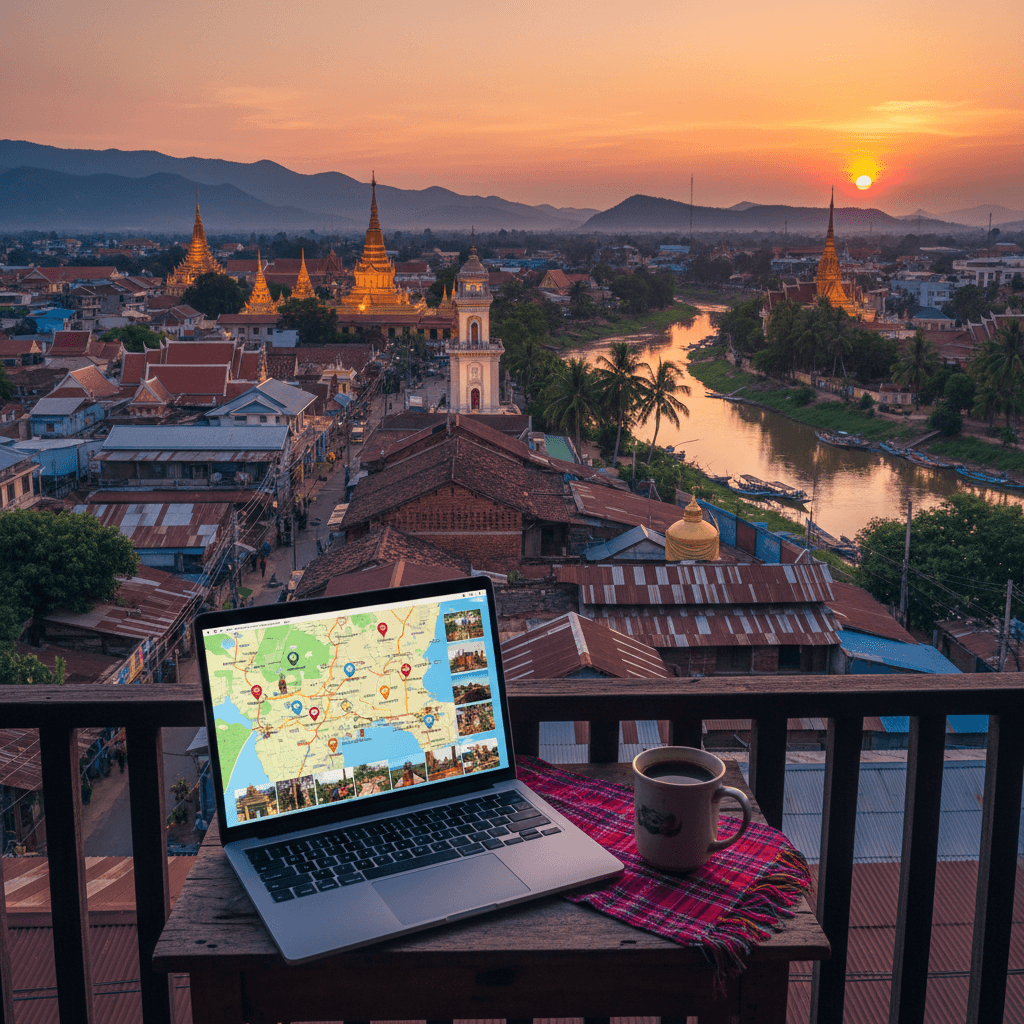
Pursat isn't the kind of place that shows up on a digital nomad's radar by accident. While Phnom Penh is busy chasing high-rises and Siem Reap is curating its boutique aesthetic, Pursat remains unapologetically itself. It is a quiet, dusty provincial capital where the rhythm of life is dictated by the sunrise and the seasonal flow of the river. You won't find sleek glass coworking spaces or avocado toast here. Instead, you get a front row seat to authentic Cambodian life at a fraction of the cost found in the bigger hubs.
The vibe is undeniably slow. Most nomads who land here are looking for a "deep work" retreat or a total break from the expat bubble. It feels like a town caught in a different decade, where the locals are genuinely curious about your presence and the lack of commercialization means your interactions are rarely transactional. It's peaceful, but it can feel isolating if you aren't prepared for the quiet. You'll spend your afternoons sipping iced coffee at a riverside stall rather than networking at a tech meetup.
The Trade-Off: Reality Check
Living here requires a bit of grit. The internet can be temperamental, especially when the monsoon rains hit in September and October. English proficiency is low, so you'll be relying heavily on Google Translate and hand gestures at the local market. If you need a high-speed fiber connection for back to back video calls, Pursat might stress you out. But if your work is asynchronous and you value a lifestyle where $800 a month makes you feel like royalty, this is your spot.
Living Costs & Logistics
Your dollar goes incredibly far here. Since there aren't many "expat-priced" establishments, you'll be paying what the locals pay. Most travelers recommend staying near the Riverside or the Town Center to keep life simple.
- Riverside: This is the most scenic part of town. It is quiet and walkable, with several guesthouses offering rooms for $10 to $20 a night. It's perfect for short stays, though the dust from the roads can be a nuisance in the dry season.
- Town Center: Best for those staying longer. You're closer to the central markets and the bus stops. While it's noisier, it's where you'll find the most reliable "laptop-friendly" cafes.
Monthly Budget Estimates
- Budget Tier ($500 to $800): You'll be staying in local guesthouses, eating almost exclusively at street stalls where a bowl of nom ya costs $1.50, and getting around on foot or via moto taxis.
- Mid-Range ($800 to $1,200): This gets you a decent air-conditioned apartment for around $300, a rented scooter for $100 a month, and plenty of budget for weekend trips to the Cardamom Mountains.
- Comfortable ($1,200+): You'll be living in the best available housing and eating at the few "upscale" Khmer restaurants in town without ever checking the price.
Why Pursat Hits Different
What makes Pursat unique is the lack of a "scene." In other cities, you're often surrounded by other nomads complaining about the WiFi. In Pursat, you're surrounded by people going about their lives. It forces you to integrate. You'll learn the names of the vendors at the market and find yourself invited to a local beer garden for a $0.50 Angkor beer before you know it. It’s a destination for the self-sufficient traveler who wants to trade the comforts of home for a genuine sense of place.
If you get restless, the proximity to the Cardamom Mountains offers some of the best raw nature in Southeast Asia. And if the isolation gets too heavy, a $5 bus ride will have you in the artsy cafes of Battambang in about an hour. Pursat isn't a forever home for most nomads, but for a month of focused work and cultural immersion, it's a rare, unpolished find.
If you are looking to stretch your budget to its absolute limit while experiencing a side of Cambodia that hasn't been polished for tourists, Pursat is the place to be. It is significantly cheaper than the major hubs, with costs running about 30% to 50% lower than what you would pay in Phnom Penh or Siem Reap. You can live comfortably here on $700 to $1,000 per month, provided you are happy with local comforts rather than luxury condos.
The Monthly Breakdown
- Budget Tier ($500 to $800): Perfect for the minimalist nomad. You will be staying in local guesthouses, eating mostly street food, and getting around on a bicycle or by foot.
- Mid-Range ($800 to $1,200): This covers a decent private apartment or a higher end guesthouse with air conditioning, daily cafe visits for work, and a rented scooter for weekend trips.
- Comfortable ($1,200+): Since Pursat lacks high end infrastructure, spending this much usually means you are eating at the best spots in town every night and taking private taxis to nearby cities like Battambang frequently.
Accommodation is your biggest saving. While you won't find Western style apartment complexes with gyms and pools, local guesthouses and basic apartments in the town center or along the Riverside area are incredibly affordable. Expect to pay between $150 and $250 for a basic studio, while $400 can get you the best available housing in the province.
Daily Expenses and Food
Eating out is often cheaper than cooking for yourself. Street food is the backbone of the local economy; a bowl of nom ya or a plate of ginger chicken and rice usually costs between $1.50 and $2.00. If you head to a sit down Khmer restaurant, a full meal with a drink rarely tops $8. Since there aren't many "upscale" options, your food bill stays naturally low.
Transport is equally inexpensive. Moto taxis are the standard way to get around for $1 or $2 per trip. If you want more freedom, expats often recommend renting a scooter for about $100 per month. Just keep in mind that ride hailing apps like Grab haven't made it here yet, so you will need to negotiate with local drivers or stick to the walkable Riverside district.
Remote Work Costs
Since there are no dedicated coworking spaces in Pursat, your office will likely be your porch or a local cafe. Most nomads find that the cost of "renting" a desk is simply the price of a $2 coffee. To stay connected, locals suggest a Cellcard SIM. A monthly data plan with 25GB of data costs around $4, or 40GB for $6, which is a necessary backup for when the cafe WiFi inevitably slows down during a rainstorm.
Living here requires a bit of a pioneer spirit, but the financial payoff is clear. You are trading convenience and high speed infrastructure for a very low burn rate and a truly authentic Khmer lifestyle.
Nomads and Solo Travelers
If you are heading to Pursat to get some deep work done while staying off the grid, the Riverside area is your best bet. It is the most scenic part of town, offering a bit of breeze and quiet away from the main highway transit noise. You will find several basic guesthouses here where a room costs between $10 and $20 per night. It is perfect for those who prioritize a view and a morning walk over being right next to a supermarket.
The downside for nomads is the infrastructure. You won't find any dedicated coworking spaces here. Most travelers set up shop in local cafes near the river. While the WiFi is usually free, it can be spotty during the rainy season from May to October. Most solo residents rely on a Cellcard SIM as a backup, which usually runs about $5 to $10 for a solid monthly data package. It is a "work from your porch" kind of town rather than a "laptop in a trendy cafe" kind of town.
- Rent: $150 to $250 for a basic monthly guesthouse stay.
- Vibe: Peaceful, dusty, and incredibly authentic.
- Connectivity: 5 to 15 Mbps; best to work early before the afternoon heat and potential power dips.
Expats and Long-Termers
For those planning to stay a few months, the Town Center near the Phsar Thmei (New Market) is the more practical choice. This isn't a typical expat enclave because Pursat doesn't really have one, but living here puts you within walking distance of the main markets and the bus stops. You will have easier access to pharmacies and the local provincial hospital if you need basic medical care.
Housing in the center consists mostly of traditional Khmer apartments or rooms above shops. You can often find a basic one bedroom for around $200 to $300 a month by asking around locally or checking Cambodian Facebook groups. There are no major rental platforms here, so you will need to do some boots on the ground scouting. Living in the center means you are close to the best street food stalls where a bowl of Nom Ya noodles costs just $1.50.
- Rent: $250 to $400 for better quality local apartments.
- Convenience: High access to groceries, hardware stores, and transport to Battambang.
- Noise Level: Moderate to high; expect early morning market activity and motorbikes.
Families
Families often find the outskirts of the Town Center or the quieter residential pockets just south of the market to be the most comfortable. These areas offer a bit more space and are slightly removed from the heavy dust of the main roads. Since there are no international schools or western style malls, families living here are usually looking for total cultural immersion.
Safety is a highlight in these residential pockets. Local life is slow, and neighbors generally look out for one another. For groceries, you will be doing most of your shopping at the wet markets, as large western supermarkets haven't arrived yet. If you need a break from the rural pace, the one hour bus ride to Battambang is an easy weekend escape for better dining and more amenities.
- Rent: $400+ for a larger house or multi bedroom unit.
- Transport: Most families rent a scooter for about $100 a month to get around easily.
- Healthcare: Basic needs are met in town, but expats recommend heading to Phnom Penh for anything serious.
The Connectivity Reality
Working from Pursat means trading high speed fiber for a slower, more intentional pace. You won't find the 100 Mbps lines common in Phnom Penh here. Instead, expect average speeds around 10 to 15 Mbps. It's plenty for emails, Slack, and the occasional Zoom call, but you'll want to keep your camera off during the rainy season. When the tropical downpours hit between May and October, the local infrastructure often takes a hit, leading to intermittent lag or brief power flickers.
Since dedicated coworking spaces don't exist in Pursat yet, your mobile hotspot is your best friend. Local nomads swear by Cellcard for the most reliable coverage in western Cambodia. You can pick up a SIM card at the central market for about $5, and a $10 top-up usually nets you around 20GB of data for the month. Smart is a decent backup, but Cellcard tends to hold its signal better when you're exploring the outskirts near the Riverside.
Where to Set Up Your Laptop
Without a formal "hub," the work day in Pursat revolves around laptop friendly cafes. Most of these are open air, so you'll be dealing with the ambient sounds of motorbikes and market chatter. It's a social environment, but it can be a bit loud for serious client presentations.
- Market Area Cafes: The small coffee shops surrounding the main municipal market are your best bet for functional WiFi. You can usually snag a table for the price of a $1.50 iced coffee.
- Riverside Guesthouses: Many nomads prefer working from the common areas of guesthouses along the Steung Pursat River. The breeze keeps things cool, and the WiFi is generally reserved for guests, meaning less competition for bandwidth.
- Local Bakeries: Look for the newer, air conditioned bakeries near the town center. While they don't market themselves as workspaces, they offer the most "office-like" environment with stable power outlets and slightly faster pings.
Digital Nomad Survival Tips
Because Pursat lacks the established nomad infrastructure of Siem Reap or Battambang, you have to be a bit more self reliant. Expats in the region recommend carrying a power bank and a universal adapter, as older guesthouses might have loose or outdated sockets. If you have a heavy meeting day, consider taking the 1.5-hour bus to Battambang, where the cafe scene is more robust and the internet is significantly more stable.
If you need a more professional setup like Suzy Time Café in the capital, you're looking at a 3 to 3.5 hour bus ride, so plan your work sprints accordingly.
The lack of a formal community means you won't find weekly nomad meetups or networking events. You'll likely be the only person with a laptop in the cafe. Embrace the isolation; it's part of the draw for those who find the bigger cities too distracting. Just make sure your Google Translate Khmer pack is downloaded for offline use, as technical support at local shops will likely be a game of charades and digital translation.
Staying Safe in Pursat
Pursat is a breath of fresh air if you are coming from the high energy chaos of Phnom Penh. It is a quiet, rural town where the crime rate is remarkably low. Most nomads find the locals to be incredibly welcoming, and the risk of petty theft or scams is significantly lower here than in the big tourist hubs. You can generally walk around the Riverside or Market areas without looking over your shoulder.
That said, the biggest safety risks are actually environmental. Street lighting is sparse once you leave the main town center, so it is best to avoid wandering down unlit rural roads after dark. If you are out late, stick to the populated areas near the markets. Travelers often say the most dangerous thing in town is the traffic, though even that is manageable compared to the capital. Since there is no Grab service here, you will be relying on local moto taxis. Always agree on a price before you hop on, usually $1 to $2 for a short trip within town.
- Emergency Numbers: Dial 117 for police, though English speakers are rare on the line.
- Solo Safety: It is very safe for solo travelers, but keep a low profile regarding expensive tech in open-air cafes.
- Nightlife: Stick to the local beer gardens where the atmosphere is social but generally respectful.
Healthcare and Medical Needs
Healthcare in Pursat is basic. The provincial hospital in the center of town can handle minor ailments, basic stitches, or common infections. However, for anything serious, expats recommend making the trip to Battambang, which is about 1 hour away, or heading 4 hours south to Phnom Penh for international standard clinics.
Pharmacies are easy to find near the Central Market. You can pick up most common medications for between $1 and $5 without a prescription. It is a good idea to stock up on basic first aid and stomach meds before you arrive, as specific Western brands might be hard to track down in the local stalls.
- Travel Insurance: This is non-negotiable here. Make sure your policy covers medical evacuation to Bangkok or Phnom Penh in case of an emergency.
- Pharmacies: Look for the green cross signs near the market; pharmacists usually speak very limited English but are used to helping travelers.
- Water Safety: Never drink the tap water. Stick to bottled water, which costs about $0.25 for a small bottle at any local shop.
Practical Wellbeing Tips
The heat can be intense, especially during the dry season from December to February. Dehydration is a common issue for newcomers. Most nomads find that keeping a steady supply of electrolytes from the local pharmacies helps with the adjustment to the humidity.
If you need an ambulance, do not wait for a public one. Expats usually arrange private transport or a taxi for a faster trip to a better facility in a neighboring city. For everyday health, the local markets are full of fresh fruit and vegetables, making it easy to maintain a healthy diet for under $5 a day if you are cooking for yourself.
Getting Around Pursat
Pursat is a compact, slow-paced town where your feet or a simple set of wheels will get you almost everywhere. The town center is surprisingly manageable on foot, especially if you're staying near the riverside or the main market. However, the tropical heat usually makes walking a short-lived ambition, so you'll want to get familiar with the local transport quirks quickly.
Local Transit and Ride-Hailing
Unlike the tech-heavy streets of Phnom Penh or Siem Reap, you won't find Grab or PassApp operating here. Pursat relies on the old-school method of flagging down a moto-taxi. These drivers are usually hanging out near the markets or major intersections. A short trip across town typically costs between $1 and $2. It helps to have a general idea of where you're going or a pin on your map, as English levels among drivers are quite low.
- Moto-Taxis: Expect to pay $1.50 for most local hops. Always agree on the price before you hop on the back.
- Bicycle Rentals: Many guesthouses along the river offer basic bikes for about $2 per day. It's the best way to explore the dusty side roads at your own pace.
- Scooter Rentals: For total freedom, you can rent a scooter for $5 to $10 per day. If you're staying for a month or more, some locals might negotiate a long-term rate around $100.
Regional Connections
Since Pursat doesn't have a functional airport, you'll likely arrive or depart via the highway. The town sits right on National Highway 5, making it a convenient midpoint between the capital and the Thai border. Most nomads use the reliable bus network or shared taxis to move between cities.
- To Phnom Penh: The journey takes about 3 to 3.5 hours and costs between $7 and $9 depending on the bus company.
- To Battambang: This is a quick 1-hour trip for about $3, making it a popular weekend getaway for those needing a bit more "city life."
- To Siem Reap: Expect a 5 to 6-hour trek by bus. Prices usually start around $11.
The Railway Option
The train is a scenic, albeit slow, alternative for getting into Pursat. The Royal Railway line connects Phnom Penh to Poipet, with a stop right in town. It's rarely the fastest choice, but it's a favorite for travelers who want to see the Cambodian countryside without the stress of highway traffic. Tickets are cheap, often under $7, and the carriages are generally air-conditioned and comfortable.
Practical Navigation Tips
The town layout is straightforward, centered mostly around the river and the Phsar Thmey market area. While the main roads are paved, the side streets can get incredibly dusty in the dry season and muddy during the monsoon. If you're driving yourself, be extra cautious during the September and October rains when localized flooding can turn a quick market run into a genuine adventure. Most expats recommend keeping a stash of small Riel notes for transport, as breaking a $20 bill with a moto-taxi driver is nearly impossible.
Getting by in Khmer Country
In Pursat, you aren't in the polished tourism bubble of Siem Reap. The primary language here is Khmer, and while you'll find a handful of English speakers at the larger guesthouses or the provincial hospital, the local markets and street food stalls operate almost entirely in the native tongue. Most travelers find that English proficiency drops off significantly once you leave the town center.
You'll want to get comfortable with the basics before you arrive. Locals are incredibly patient and genuinely appreciative when they see a foreigner making an effort. Start with Susay dei for hello and Arkun for thank you. If you're heading to the central market to grab some fruit or a quick lunch, knowing Tee neea chmuoy dai? (how much?) will save you a lot of miming and calculator tapping.
Digital Tools for the Rural Nomad
Since you won't find many translated menus or English signs here, your phone is your best friend. Expats in Cambodia swear by the Google Translate app, but there's a catch in Pursat: the internet can be spotty, especially during the monsoon rains in September and October. Download the Khmer offline pack before you leave a high speed zone so you can translate signs and menus without a signal.
For more complex interactions, like discussing a scooter repair or a long term room rental, the voice to voice translation feature is a lifesaver. It isn't perfect, but it gets the job done. Many younger locals are starting to use translation apps themselves to communicate with the few nomads who pass through, making for some slow but friendly conversations over a $0.50 iced coffee.
Communication Etiquette
The way you communicate non verbally is just as important as the words you use. Cambodians are generally soft spoken and value a gentle approach. The Wai, a traditional greeting where you place your palms together in a prayer like gesture, is the standard way to show respect. The higher your hands, the more respect you're showing, though for most daily interactions, keeping them at chest level is perfect.
Body language has its own set of rules here that you need to keep in mind. Travelers often forget that the head is considered sacred while the feet are the lowest, dirtiest part of the body. Never point your feet at anyone, especially at a Buddha statue or an elder, and avoid touching anyone on the head. If you're working from a local cafe, be mindful of how you're sitting; tucking your feet under you or keeping them flat on the floor is the polite way to go.
Staying Connected
Because English is limited, having a reliable data plan is your safety net. Most nomads recommend picking up a Cellcard SIM. You can find these at small phone shops near the market for about $5. It’s much easier to show a local a photo of what you’re looking for on a screen than to try and explain it in broken Khmer. Expect to pay around $4-$6 a month for a solid data package (25-40GB), which helps bridge the gap when your guesthouse WiFi inevitably takes a break.
- Khmer Hello: Susay dei
- Khmer Thank You: Arkun
- Essential App: Google Translate (Offline Mode)
- Local SIM: Cellcard (Approx. $5 to $10)
The Seasonal Rhythm
Pursat follows the classic Cambodian tropical cycle, but because it's tucked between the Tonle Sap lake and the Cardamom Mountains, the weather impacts daily life more than it does in the paved-over sprawl of Phnom Penh. You'll experience two distinct seasons: the dusty, sun-drenched dry season and the lush, humid monsoon. For anyone trying to maintain a remote work schedule, the distinction between these two isn't just about whether you need an umbrella; it's about whether your internet connection will stay stable during a lightning storm.
The Peak Window: November to February
This is the sweet spot. Most travelers and expats aim for this window because the humidity drops to manageable levels and the thermometer stays between 25°C and 32°C (77-90°F). It is the most comfortable time for exploring the riverside or taking a moto out to the nearby Cardamom foothills without melting.
- Vibe: Clear blue skies and cooler evenings that actually make outdoor dining pleasant.
- Work Factor: This is the most reliable time for digital work. Power outages are less frequent than in the height of the hot or rainy seasons.
- Prices: While Pursat doesn't see the massive price hikes of Siem Reap, guesthouses near the market might fill up faster, so booking a few days ahead is smart.
The Shoulder Heat: March to May
By March, the heat starts to crank up, often peaking in April. Temperatures frequently hit 35°C (95°F) or higher. The landscape turns a bit brown and dusty, and the air can feel heavy. If you aren't a fan of sweating through your shirt by 9:00 AM, you'll want to ensure your accommodation has reliable air conditioning rather than just a ceiling fan. This is also the time of Khmer New Year in mid-April, which is a fantastic cultural experience but means the town mostly shuts down for a week of celebrations.
The Monsoon: June to October
The rains usually arrive in June and peak around September and October. In Pursat, the monsoon isn't usually a constant drizzle; it's more of a dramatic, daily afternoon downpour. The surrounding countryside turns an incredible, vivid green, which is great for photographers, but the town's infrastructure can struggle.
- The Flood Factor: Pursat is prone to localized flooding during heavy bursts. Some roads near the river can become muddy or impassable for a few hours.
- Connectivity: Heavy storms often lead to short power flickers or internet drops. If you have a deadline, nomads recommend having a Cellcard SIM loaded with data as a hotspot backup.
- Budget: You can find the best long-term rental deals during these months, as demand is at its lowest.
The Best Time to Visit
If you want the best of everything, aim for December or January. The weather is predictable, the roads are dry, and the local markets are at their most active. If you're on a tight budget and don't mind the occasional tropical deluge, the early rainy season in June or July offers a beautiful, lush perspective of rural Cambodia without the extreme heat of April.
Connectivity and Power
Internet in Pursat is a bit of a gamble. While the town is slowly catching up, you can expect average speeds around 10 Mbps. It is enough for emails and basic tasks, but video calls might lag, especially when the monsoon rains hit. Since there are no dedicated coworking spaces, your best bet is setting up in laptop friendly cafes near the central market. Most of these spots offer free WiFi, but the connection can be patchy.
- SIM Cards: Pick up a Cellcard SIM as soon as you arrive. It is the most reliable provider in the province. You can get 20GB of data for about $5 to $10 a month at small phone shops in the town center.
- Backup Plan: Always keep your phone hotspot ready. Power outages happen occasionally during the wet season, and having a pre-loaded SIM will save your workday.
Money and Banking
Cash is king here. While you will see ATMs from major banks like ABA or Canadia Bank in the town center, they primarily dispense USD. Most local vendors prefer US Dollars for larger purchases and Cambodian Riel for small street snacks or moto rides. Use Wise or YouTrip to manage your transfers, but always keep a few hundred dollars in cash on you just in case a machine is out of service.
Getting Around the Province
Pursat is small enough to navigate on foot if you stay near the riverside, but you will want wheels for anything else. There is no Grab or PassApp service here yet. You will have to rely on traditional moto taxis, which usually cost between $1 and $2 for a short trip across town. If you are staying for a month, many nomads recommend renting a scooter for around $100 a month or $5 to $10 per day.
- Bicycles: Many guesthouses rent basic bikes for $2 a day. It is the best way to explore the dusty backroads without the noise of an engine.
- Intercity Travel: To get to Phnom Penh or Siem Reap, use the local bus lines like Sorya. Tickets are cheap, usually $5 to $8, and the trip takes about four to five hours.
Health and Wellness
For minor ailments or a quick prescription, local pharmacies are everywhere and very affordable, with most basic meds costing under $5. The provincial hospital in the center can handle basic issues, but it is not equipped for major emergencies. If something serious happens, expats usually head to Battambang, where a $5-$6 bus ride will have you in the artsy cafes of Battambang in about 1.5 hours, or all the way to Phnom Penh for international standard care.
Cultural Etiquette
People in Pursat are incredibly friendly but more traditional than those in the big cities. Dress modestly when visiting temples or government buildings. Always remove your shoes before entering someone's home, and try to use the Wai greeting, a small bow with your hands together, when meeting elders. Avoid pointing your feet at people or religious statues, as it is considered quite disrespectful in Khmer culture.
Best Time to Visit
The sweet spot for living here is between December and February. The weather is dry, and temperatures sit comfortably between 25°C and 32°C. Avoid September and October if you can; the heavy rains often lead to local flooding and make the dirt roads nearly impassable for scooters.
Need visa and immigration info for Cambodia?
🇰🇭 View Cambodia Country GuideOff the Radar
Pioneer territory