Pune
🇮🇳 India
The Deep Exhale
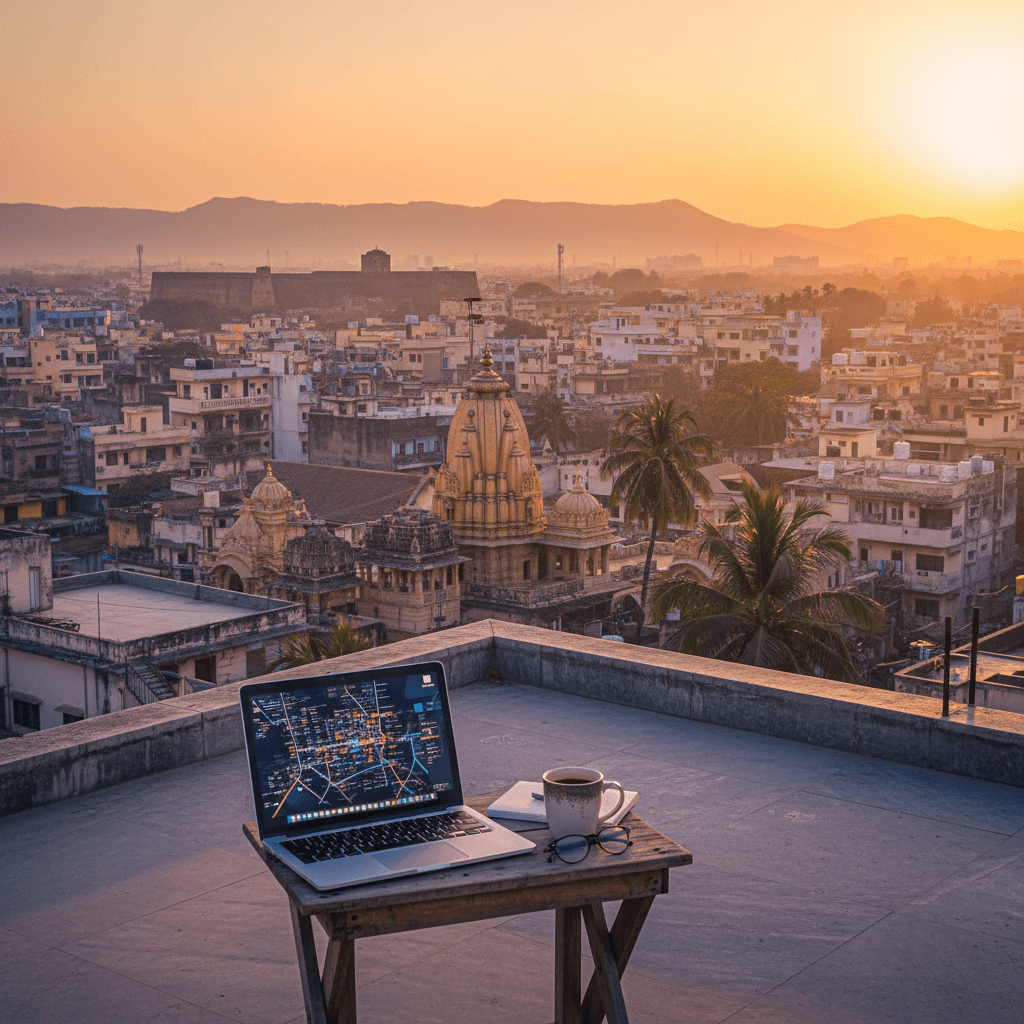
If Mumbai is a high stakes sprint, Pune is the cool down lap you actually enjoy. For nomads who have spent time in India’s more frantic metros, arriving here feels like a physical release of tension. It is often described as a deep exhale, a place where the mornings are actually quiet and the pace of life invites you to establish a routine rather than just surviving the day. It has managed to hold onto a sense of stability that is becoming rare in India’s rapidly developing tech hubs.
The city has a distinct personality shaped by its dual identity as an academic powerhouse and an IT giant. You will find a unique blend of old school Maharashtrian culture and a modern, tech forward energy. It is not trying to be a global playground like Bali or Lisbon; instead, it offers a grounded, authentic lifestyle where you can actually focus on your work without the constant pressure of a high octane social scene.
What Draws the Remote Crowd
The biggest draw is the balance between infrastructure and affordability. You get the reliable high speed internet and modern amenities of a tier one city, but your monthly budget goes significantly further than it would in Bangalore or Mumbai. Nomads frequently mention the quality of housing here. It is common to find modern, high rise apartments with sweeping views of the surrounding hills for a fraction of what you would pay for a cramped studio in other major hubs.
- Lower overhead: Rent and daily expenses are notably lower than in India’s other primary tech cities.
- Reliable Infrastructure: Stable power and fast fiber optics are the standard, not the exception.
- The Climate: While much of India swelters, Pune stays relatively pleasant for most of the year, especially during the monsoon when the nearby Western Ghats turn a lush, electric green.
- Professional Vibe: The massive IT presence means the city is full of people who understand the remote work lifestyle.
The Social Trade Off
Pune is not a city that shouts at you. The social scene is quieter and more localized than the international buzz of a place like Goa. You won’t find a massive, organized expat community or a new nomad meetup every night of the week. Instead, social life revolves around the growing cafe culture and specific coworking hubs like Friyey Space, which cleverly transitions from a productive workspace during the day into a social lounge at night.
For some, this lack of "international noise" is a downside. For others, it is the city’s greatest strength. It allows you to actually integrate into the local rhythm. You will find yourself becoming a regular at a neighborhood cafe or joining a weekend trek into the hills with local professionals rather than staying inside a nomad bubble.
Cost of Living Breakdown
While prices fluctuate, Pune remains one of the most accessible urban centers for those earning in foreign currencies. A typical monthly budget for a comfortable nomad lifestyle usually lands between $1,000 to $1,600, though you can live quite well on much less if you lean into local habits.
- Budget Living: Sticking to street food, local transport, and shared living in areas like Hinjewadi can keep your costs remarkably low.
- Mid Range: A private one bedroom apartment in a solid neighborhood like Baner, combined with regular restaurant meals and a dedicated coworking desk, is the standard for most expats.
- Premium: Upscale dining in Koregaon Park and a luxury apartment with a gym and pool will still feel like a bargain compared to Western standards.
Choosing Your Base
Where you plant your flag matters. Pune is sprawling, and each neighborhood caters to a different type of resident.
Hinjewadi
- Best For: Budget conscious nomads and techies.
- Vibe: This is the heart of the IT industry. It is packed with young professionals, affordable shared housing, and plenty of cheap, high quality food stalls.
Koregaon Park
- Best For: Remote employees and couples seeking greenery.
- Vibe: Often considered the most prestigious address in the city, it offers a mix of old trees, boutique cafes, and a more relaxed, upscale atmosphere.
Baner and Aundh
- Best For: Stability seekers and long termers.
- Vibe: These areas strike a perfect middle ground. They are residential, safe, and offer excellent infrastructure without the industrial feel of the tech parks or the high price tags of the city center.
Ultimately, Pune is for the nomad who is tired of the "scene" and wants to get some real work done in a place that feels like a home rather than a transit lounge. It is a city of routine, hills, and quiet productivity.
The Price of Balance
If you're coming from Mumbai or Bangalore, Pune feels like a massive discount on your lifestyle without the usual trade-offs. It is one of the most budget-friendly tech hubs in India, allowing you to live comfortably on a fraction of what you'd spend in Western Europe or Southeast Asian hotspots like Singapore. Most nomads find that their money goes much further here, especially when it comes to high-quality housing and daily services.
A monthly budget of $1,800 to $2,500 puts you at the top tier of local living, covering a premium apartment, daily dining out, and a dedicated desk at a top-tier workspace. However, many remote workers manage perfectly well on significantly less, especially if they lean into the local food scene and shared housing options.
Accommodation & Rent
Rent is where Pune really shines. You can snag a modern apartment with floor-to-ceiling windows and sweeping city views for a price that would barely get you a closet in London. While prices fluctuate based on the neighborhood, the value for money remains consistent across the board.
- Hinjewadi: Best for those on a strict budget. Since it's the primary IT hub, there's a huge supply of studio apartments and shared housing. You'll find plenty of young professionals here, keeping the vibe energetic and the rent low.
- Koregaon Park & Baner: These are the upscale choices. Expats and long-term nomads gravitate here for the greenery and the density of high-end cafes. Expect to pay a premium, but you'll be within walking distance of the city's best social spots.
- Aundh: A middle-ground favorite for couples and people who want a quiet, stable suburban feel without being too far from the action.
Eating & Socializing
Your food budget in Pune can be as small or large as you want it to be. The city has a deep-rooted cafe culture, and the "student city" legacy means there are endless spots for cheap, delicious meals. If you're eating like a local in areas like Hinjewadi, a solid meal can cost just a few dollars.
Even at mid-range restaurants in Koregaon Park, a dinner for two rarely breaks the bank. Most nomads find that $10 to $15 covers a very nice meal with drinks at a trendy spot. If you prefer cooking at home, local markets are incredibly affordable, though imported goods at high-end supermarkets carry the usual heavy price tags.
Coworking & Connectivity
Pune's infrastructure is built for the tech industry, so you aren't going to struggle with outages or turtle-speed uploads. Coworking is remarkably accessible, with daily passes starting as low as $5.
Friyey Space is the local go-to. They have a clever model where they operate as productive workspaces during the day and transition into social lounges at night. They offer "super-saving" packages that include perks like unlimited tea and coffee, which helps keep your daily overhead predictable. They even offer a 3-day free trial, so you can test the Wi-Fi and the chair ergonomics before committing to a monthly membership.
Monthly Budget Estimates
To help you plan, here is how the costs typically break down based on your lifestyle choices:
Budget Nomad
- Estimated Monthly Spend: $800 to $1,200
- Housing: Shared apartment or modest studio in Hinjewadi.
- Food: Mostly street food, local tiffin services, and home cooking.
- Workspace: Working from home or low-cost cafes.
Mid-Range Professional
- Estimated Monthly Spend: $1,500 to $2,200
- Housing: Private 1BR apartment in Baner or Aundh.
- Food: A mix of local spots and weekend restaurant dining.
- Workspace: Part-time coworking membership or frequent cafe hopping.
Premium Resident
- Estimated Monthly Spend: $2,500 to $3,500+
- Housing: High-end serviced apartment in Koregaon Park with amenities.
- Food: Regular upscale dining and international cuisine.
- Workspace: Full-time dedicated desk at a premium coworking hub and private transport.
The High-Life Seeker & Social Nomad: Koregaon Park
If you want to be where the action is, head straight to Koregaon Park, or KP as locals call it. It is the city's most cosmopolitan pocket, characterized by leafy lanes, upscale boutiques, and a high concentration of expats. While the rest of Pune feels like a quiet suburb, KP has a pulse that stays steady after dark.
- The Vibe: Banyan trees shading expensive real estate and the city's best sidewalk cafes.
- Work & Play: You are never more than five minutes from a high speed Wi-Fi connection. Most nomads here bounce between high end cafes and the neighborhood's boutique gyms.
- Cost: This is Pune's most expensive zip code. Expect to pay a premium for a 1BR apartment, though you still get significantly more space than you would for the same price in Mumbai.
The Career-Focused Techie: Hinjewadi
Hinjewadi is the engine room of Pune's IT industry. It is a massive tech park that has birthed its own ecosystem of housing and entertainment. It is not the most "charming" part of town, but it is incredibly practical if you are looking to network with developers or keep your overhead low.
- The Vibe: Corporate, busy, and young. The area is packed with professionals under 30, which means the local food scene is dominated by affordable, delicious street food and quick service haunts.
- Practicality: You'll find plenty of co-living setups and shared apartments here. It is the best place to find a $5 per day desk at a coworking space like Friyey, which is a local favorite for its "cowork by day, lounge by night" model.
- Best for: Budget-conscious nomads who want to be surrounded by the tech community.
The Long-Termer & Stability Seeker: Baner & Aundh
For those planning to stay for six months or more, Baner and Aundh are the gold standard. These neighborhoods offer a "real life" feel that is hard to find in the more transient areas. They are clean, organized, and feel safe for solo travelers and couples alike.
- The Vibe: Residential but trendy. You get wide roads, modern apartment complexes with gyms and pools, and plenty of green space.
- Daily Life: These areas strike a perfect balance. You have access to organic grocery stores and high end health clinics without the chaotic noise of the city center.
- Work: Baner has seen a massive influx of coworking spaces recently, making it a top choice for remote employees who need a dedicated office environment outside their apartment.
The Budget Traveler & Student at Heart: Viman Nagar
Located near the airport, Viman Nagar is a energetic mix of students and young professionals. It is a highly walkable neighborhood compared to the rest of the city, with several malls and food courts clustered together. It is a great middle ground if KP feels too expensive and Hinjewadi feels too far out.
- The Vibe: Casual and energetic. Because of the nearby colleges, the cafes are designed for long stays with laptops and the prices are kept competitive.
- The Perks: You are close to the airport and have easy access to Phoenix Marketcity, one of the largest malls in India, which is great for air-conditioned shopping on hot afternoons.
- Social Scene: It is easy to meet people here. The bars are less "exclusive" than those in Koregaon Park and much more welcoming to someone showing up solo for a beer.
Reliability and Speed
Pune is a major player in India's tech corridor, so you aren't going to struggle with connectivity here. Most high end apartments in areas like Koregaon Park or Baner come equipped with fiber optic lines. You can expect speeds ranging from 50 Mbps to 200 Mbps on standard home plans. If you're planning to run heavy Zoom calls or upload large video files, the infrastructure is robust enough that you won't be constantly hunting for a backup hotspot.
Mobile data is also incredibly cheap and reliable. Most nomads pick up a local SIM from Airtel or Jio. You'll get 5G coverage in nearly every corner of the city, and it's common to use your phone as a tethering device when the power occasionally blinks during the monsoon season. Most modern apartment complexes have power backup, but it's always smart to check if your specific unit is covered before signing a lease.
Top Coworking Spots
The coworking scene in Pune is practical and budget friendly. While it lacks the flashy, high priced aesthetic of Mumbai's premium clubs, it offers high utility and a genuine community of developers and entrepreneurs.
- 91springboard: Located in areas like Yerwada, this is a staple for those who want a more traditional corporate environment with private cabins and meeting rooms. It's great for networking with local startups.
- WeWork: For those who want familiarity and premium amenities, WeWork has a strong presence in Magarpatta and Futura. It's the most expensive option but offers the most consistent "international" office vibe.
Costs and Memberships
Pune is one of the most affordable tech hubs in Asia for office space. You can get a hot desk for as little as $6-10 per day at local spots. Monthly memberships generally fall into these brackets:
- Budget Coworking: $60-100 per month for a hot desk at local brands.
- Mid Range: $80 to $120 per month for dedicated desks in professional hubs.
- Premium: $150+ per month for global brands with all the bells and whistles.
The Cafe Culture
If you prefer the "laptop and a latte" lifestyle, Pune has a massive cafe culture thanks to its huge student population. Most cafes are very relaxed about remote workers staying for a few hours as long as you're ordering. Koregaon Park is the capital of this scene, filled with leafy outdoor spots and quiet corners. Many of these cafes offer spectacular views of the city's greenery or the Mula-Mutha river. Just keep in mind that while the Wi-Fi in cafes is generally okay for emails, you'll want a dedicated coworking space or a home fiber line for any heavy lifting.
Working by Neighborhood
Where you choose to work often depends on your industry and budget. Hinjewadi is the massive IT park where you'll find the most tech professionals, but it can feel a bit like a concrete jungle. Baner and Aundh offer a better balance for remote employees and couples who want a mix of quiet residential streets and modern office spaces. Koregaon Park remains the top choice for nomads who want to walk from their apartment to a trendy cafe and then to a coworking space all within a ten minute radius.
The General Safety Scene
Pune is widely considered one of the safest major cities in India. It lacks the aggressive edge of Mumbai and the chaotic sprawl of Delhi, making it a favorite for solo travelers and female nomads. Most people find they can walk around neighborhoods like Koregaon Park or Aundh after dark without much worry, though the usual common sense applies: stick to well lit streets and avoid empty industrial zones late at night.
The city has a massive student population and a thriving tech workforce, which creates a respectful, educated environment. While petty theft or "foreigner pricing" at local markets can happen, violent crime is rare. If you're staying in Hinjewadi, be mindful of the heavy traffic and construction zones; the biggest physical risk here isn't crime, it's the uneven sidewalks and the occasional rogue scooter on the shoulder.
Healthcare Standards
You're in good hands here. Pune is a major center for medical tourism, meaning the private hospitals are top tier and often staffed by doctors who trained in the UK or the US. For anything serious, skip the public clinics and head straight to a private facility. They are efficient, clean, and surprisingly affordable if you're paying in USD or Euros.
Top Hospitals for Nomads:
- Jupiter Hospital (Baner): High end facility, very popular with expats living on the west side of the city.
- Jehangir Hospital (Near Pune Station): One of the oldest and most trusted names, known for excellent specialized care.
- Ruby Hall Clinic: A massive multi specialty hospital with a solid reputation for emergency services.
- Sahyadri Hospitals: They have multiple branches across the city, making them a convenient go to for routine checkups or minor issues.
Pharmacies and Prescriptions
Pharmacies, or "chemists," are on almost every street corner. Most are open from 9:00 AM to 10:00 PM, but you'll find 24 hour pharmacies attached to the major hospitals mentioned above. Many medications that require a strict prescription in the West are available over the counter here, but it's always better to have your paperwork handy just in case.
For quick deliveries, most nomads use apps like Apollo 24/7 or Tata 1mg. You can upload a prescription and have your meds delivered to your apartment or coworking space within a few hours. It's incredibly convenient when you're feeling under the weather and don't want to brave the afternoon heat.
Emergency Basics
While we hope you never need them, keep these numbers saved in your phone. English is widely spoken by emergency operators and hospital staff, so communication shouldn't be a barrier.
- National Emergency Number: 112 (The all in one number for police, fire, and ambulance)
- Police: 100
- Ambulance: 102
Staying Healthy
The biggest health hurdle for newcomers is usually "Delhi Belly," which can happen in Pune too. Stick to bottled or filtered water, even for brushing your teeth if you have a sensitive stomach. Most high end apartments and coworking spaces like Friyey Space provide RO (Reverse Osmosis) filtered water, which is perfectly safe to drink. When it comes to street food, follow the crowds. If a stall in Hinjewadi has a long line of locals, the food is likely fresh and safe to eat.
The air quality is generally better than in North India, but it can get dusty during the dry season. If you have asthma or respiratory issues, keep an eye on the AQI levels during the peak of winter. Most nomads find the pleasant climate for the rest of the year keeps them feeling much more energetic than they would in the humid coastal cities.
The Daily Commute
Pune is often called a quieter alternative to Mumbai, but don't let that fool you into thinking the streets are empty. While the pace is more relaxed, the traffic can still get thick during peak hours. Most digital nomads find that the city is best navigated using a mix of app based rides and local rickshaws. It is a city where having a smartphone with a local SIM is your best tool for getting from your apartment in Koregaon Park to a meeting in Baner.
Ride Hailing and Rickshaws
For most expats and travelers, Uber and Ola are the gold standards. They eliminate the need to haggle over prices and provide a layer of safety with GPS tracking. You can book everything from a small hatchback to a more comfortable sedan. If you are in a hurry and traveling solo, Uber Moto is a popular choice to zip through gridlock at a fraction of the cost.
The iconic three wheeled auto rickshaws are everywhere. While they are supposed to run on a meter, many drivers will try to quote a flat rate, especially near malls or transit hubs. It is usually better to stick to the apps for rickshaws too, as it guarantees a fair price. A typical short trip across a neighborhood usually costs between $1 and $2.
Public Transit and the Metro
Pune Metro lines are expanding, with major IT corridor expected operational mid-2026. It is particularly useful if you are staying near the city center and need to get across town quickly. Tickets are incredibly cheap, often less than $0.50 per trip.
Local buses, run by the PMPML, are the backbone of transport for locals. They are very affordable but can be incredibly crowded and difficult to navigate if you don't speak the local language or know the specific routes. Most nomads skip the bus in favor of the comfort and reliability of private rides.
Walkability and Neighborhood Vibes
Pune isn't a city you can walk from end to end, but certain pockets are very pedestrian friendly. Most nomads prefer to live, work, and socialize within a single "hub" to minimize travel time. Here is how the main areas stack up for those on foot:
- Koregaon Park: This is arguably the most walkable neighborhood. The lanes are shaded by massive trees, and you'll find cafes, boutiques, and coworking spaces like Friyey all within a 15 minute stroll.
- Hinjewadi: This is a massive IT park. It is not built for walking between blocks, so you will likely need a rickshaw or a company shuttle to get around here.
- Baner and Aundh: These areas have decent sidewalks by Indian standards and a high density of amenities, making them great for those who like to run errands on foot.
Two Wheelers and Rentals
If you are staying for a few months, consider renting a scooter. It is how the locals get around, and it gives you the ultimate freedom to explore the outskirts or head to the hills on weekends. Monthly rentals for a standard scooter like a Honda Activa usually run between $60 and $90. Just be prepared for the chaotic driving style, and always wear a helmet, as police are strict about it in most zones.
Getting to Pune
The Pune Airport (PNQ) is located in Lohegaon. It is a compact airport, and getting out is usually quick. There is a dedicated zone for app based cabs right outside the terminal. A ride from the airport to Koregaon Park or Viman Nagar typically takes 15 to 30 minutes and costs around $4 to $7 depending on the time of day. If you are coming from Mumbai, many travelers prefer the Cool Cab shared taxis or the Shivneri luxury buses, which take about 3 to 4 hours and drop you off at the main railway station or Swargate.
The Local Linguistic Landscape
In Pune, you'll find a linguistic blend that reflects its status as both a traditional cultural capital and a modern tech hub. Marathi is the local language and the heartbeat of the city. While you don't need to be fluent to get by, the locals take immense pride in their tongue. Speaking even a few words of Marathi can instantly transform you from a generic tourist into a respected guest.
Hindi serves as the common ground for many. Because Pune attracts students and IT professionals from every corner of India, Hindi is widely understood and spoken in shops, markets, and by delivery drivers. If you've spent any time in Northern India, your language skills will translate perfectly here.
Is English Enough for Nomads?
English proficiency in Pune is remarkably high, especially in the neighborhoods nomads frequent. In spots like Koregaon Park or Baner, you'll find that staff at cafes, coworking spaces like Friyey, and high end restaurants speak English fluently. Most digital nomads find they can navigate 90% of their daily life using only English.
The city is a major educational center, often called the Oxford of the East. This means the younger population and the professional class are very comfortable communicating in English. You won't have trouble explaining your coffee order or discussing technical requirements at a service center. However, the "last mile" of communication can sometimes be tricky. Rickshaw drivers or local vegetable vendors might only have a functional grasp of English, so having a few phrases or a translation app ready is a smart move.
Essential Phrases to Know
While you can survive on English, tucking these Marathi phrases into your back pocket will earn you plenty of smiles and better service at the local markets.
- Namaskar: A respectful greeting (Hello).
- Kasa ahes? (to a male) / Kashi ahes? (to a female): How are you?
- Mala mahit nahi: I don't know.
- Kiti jhale?: How much? (Crucial for market shopping).
- A आभार (Aabhar): Thank you.
- Nako: No / I don't want it (Very useful for declining persistent street hawkers).
- Ho: Yes.
Communication Tools and Connectivity
Don't rely on your home SIM card's roaming. It's expensive and often spotty. Most expats recommend picking up a local SIM from Airtel or Jio as soon as you arrive. You can find kiosks at the airport, though getting one at a branded store in the city is often faster. You'll need your passport and a couple of passport sized photos for the registration process.
WhatsApp is the undisputed king of communication in Pune. From your landlord and your yoga instructor to the local grocery delivery service, everyone uses it. If you're trying to book a service or ask a business a question, don't bother with email. Send a WhatsApp message instead, you'll likely get a response in minutes.
For those moments when you're stuck in a deep conversation with a local vendor who doesn't speak English, Google Translate is your best friend. The app's camera feature is particularly helpful for reading signs or menus in Marathi, though most menus in nomad friendly areas will already be in English.
Social Etiquette and Non-Verbal Cues
Communication in Pune isn't just about words. You'll quickly notice the famous Indian Head Wobble. It's a versatile gesture that can mean "yes," "I understand," or "okay." It takes a bit of time to calibrate, but generally, a slight tilt from side to side is a positive sign of acknowledgement.
Punitis, as the locals are known, are generally polite but can be direct. If you're invited to someone's home, it's common to remove your shoes at the door. When communicating in a professional or social setting, a soft "no" is often preferred over a blunt one. If someone says "I will try," it might be a polite way of saying it's unlikely to happen. Learning these subtle cues will make your stay much smoother.
The Seasonal Sweet Spot
Pune is famous for its "Goldilocks" climate. It rarely suffers from the oppressive, sticky heat of Mumbai or the bone chilling winters of Delhi. Most nomads agree that the best window to visit is between October and March. During these months, the air is crisp, the mornings are cool enough for a light sweater, and the afternoons stay around a comfortable 24°C to 28°C (75°F to 82°F).
This is when the city really comes alive. You can work from a rooftop cafe in Koregaon Park without breaking a sweat, and the weekends are perfect for trekking to nearby forts like Sinhagad. If you're planning a stint here, aim to arrive in late October just as the monsoon humidity clears out.
The Monsoon Experience
From June to September, Pune transforms. The surrounding Western Ghats turn an impossible shade of neon green, and the dust of the city gets washed away. It doesn't usually rain constantly like in the coastal regions, but you'll get heavy afternoon bursts that can turn the streets into a bit of a mess.
Expats who enjoy a moody, cozy vibe love this time of year. However, if you rely on walking or scootering to a coworking space like Friyey, the rain can be a logistical headache. Infrastructure in areas like Hinjewadi can struggle with drainage, so expect your commute times to double during a heavy downpour. It's the best time for weekend trips to Lonavala, but perhaps the most frustrating time for daily urban life.
Handling the Heat
The "avoid" list is short, but April and May are the heavy hitters. Temperatures often climb toward 38°C (100°F). While Pune's heat is much drier than the coast, it's still intense enough to keep you indoors from noon until 5 PM. If you're here during the summer, an apartment with high quality air conditioning isn't just a luxury, it's a requirement for productivity.
The silver lining of the summer months is the mango season. You'll find the legendary Alphonso mangoes everywhere, and the city feels a bit quieter as schools go on break and locals head to the hill stations to escape the sun.
What to Pack
Since the weather shifts significantly, your suitcase needs to be versatile. Locals tend to dress in smart casual layers, and you'll want to do the same to handle the transition from hot streets to heavily air conditioned offices.
- Light cottons and linens: Your daily uniform for most of the year.
- A light jacket or hoodie: Necessary for those surprisingly chilly December mornings and aggressive AC in malls.
- Solid rain gear: If you're here in July, a sturdy umbrella is better than a raincoat, which will just make you sweat in the humidity.
- Good walking shoes: Pune is relatively walkable in pockets like Aundh or Baner, but the pavement can be uneven.
The Digital Nomad Calendar
If you want the peak experience, book your stay for November through February. You'll get the best working conditions, the most active social scene, and the lowest chance of your laptop getting caught in a flash flood. Plus, the electricity grid is generally more stable during the dry months, meaning fewer interruptions to your Zoom calls.
Getting Connected and Staying Productive
Internet reliability is rarely an issue in Pune. Most modern apartments in areas like Baner or Koregaon Park come with high speed fiber connections. If you're working remotely, you'll find the infrastructure here feels a bit more stable than the chaotic pace of Mumbai.
For those who need a dedicated office vibe, Friyey Space is the local favorite. They have a clever business model where they use restaurant spaces as coworking hubs during the day and transition back to lounges at night. It's a great way to save money, with day passes starting as low as $5. They currently have three locations across the city and offer perks like unlimited tea, coffee, and a 3 day free trial if you want to test the waters before committing to a membership.
Budgeting for the Pune Lifestyle
Pune is famously easier on the wallet than Bangalore or Mumbai. While your total spend depends on how much you indulge in the craft beer scene, most nomads find they can live comfortably on a fraction of what they'd spend in Western hubs.
- Budget Tier: If you're eating street food and staying in shared housing in Hinjewadi, you can get by on a very lean budget.
- Mid-Range: Expect to spend between $2,400 and $3,600 per month for a private one bedroom apartment, frequent restaurant meals, and a steady coworking membership.
- Premium: Upscale living in Koregaon Park with all the amenities usually sits at the higher end of that range, but you'll get a lot of luxury for your money.
Choosing Your Base
Where you park your suitcase depends entirely on your work life. The city is spread out, so picking the right neighborhood saves you from the notorious evening traffic.
Hinjewadi
- Best for: Techies and budget travelers.
- The Vibe: It is the city's massive IT hub. It's packed with young professionals, which means plenty of affordable PGs (Paying Guest accommodations) and cheap local eateries.
Koregaon Park / Baner / Aundh
- Best for: Digital nomads and couples seeking stability.
- The Vibe: These areas are where you'll find the "deep exhale" Pune is known for. Koregaon Park is leafier and more upscale, while Baner and Aundh offer a great mix of modern apartments and quiet cafes.
Health and Entry Basics
The city has largely moved past the strict travel era, but it's always smart to keep digital copies of your vaccination records handy. While the local healthcare system is robust with several private hospitals, you should always have your own travel insurance sorted before arrival. Most expats find that private clinics in the central neighborhoods are efficient and easy to navigate for routine checkups or prescriptions.
The Social Scene
Don't expect the frantic networking energy of a place like Bali. Pune is quieter and more routine oriented. You'll meet people through coworking spaces or the local food scene rather than massive organized nomad meetups. It's a city for people who actually want to get work done during the day and enjoy a solid meal at a local lounge in the evening without the pressure of a 24/7 party culture.
Need visa and immigration info for India?
🇮🇳 View India Country GuideNomad Haven
Your home away from home