Puli
🇹🇼 Taiwan
The Geography of Calm
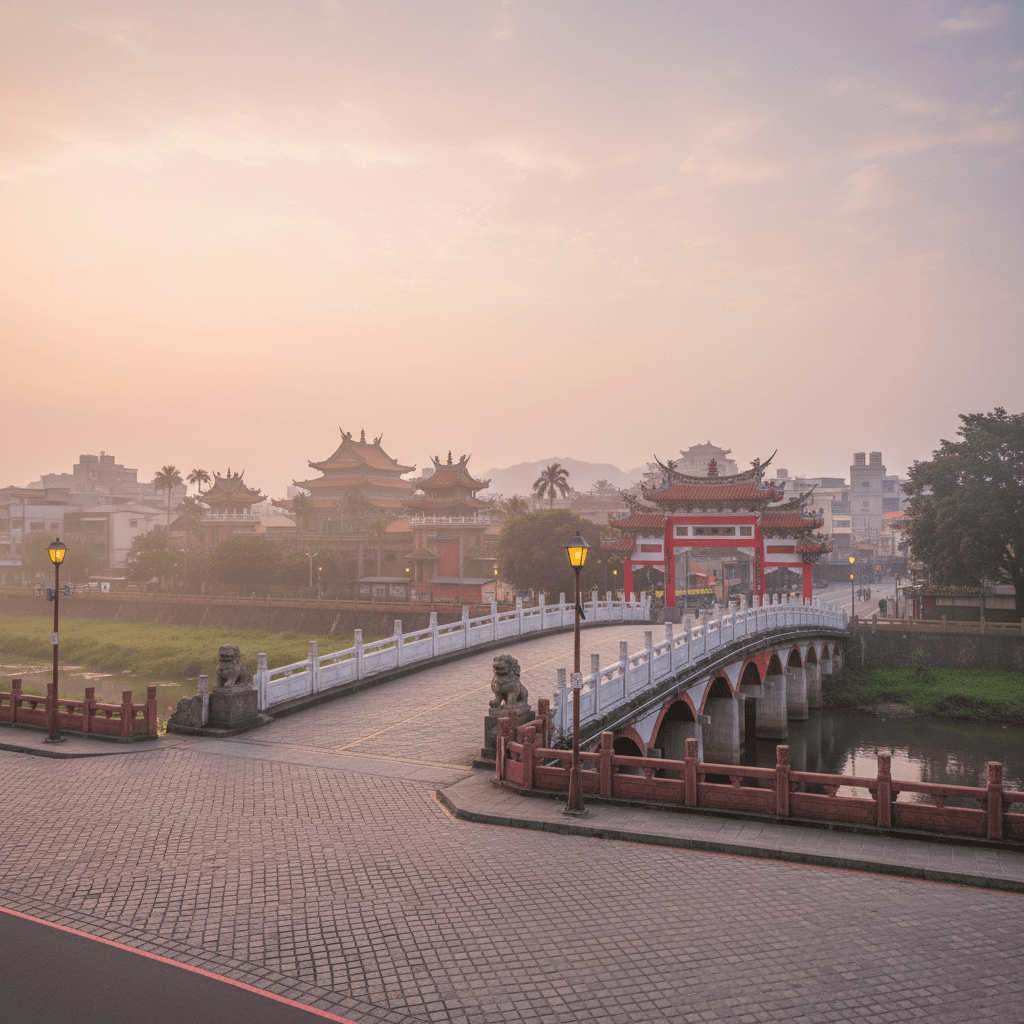
Puli sits at the literal heart of Taiwan, tucked into a green basin surrounded by the central mountain range. While Taipei feels like a high speed chase through a neon forest, Puli operates at the pace of a slow bicycle ride. It is the gateway to the mountains, but for the nomadic community, it is increasingly becoming a destination for deep work and decompression. You are far from the coastal humidity here, and the air has a crisp, mountain quality that makes you want to leave the laptop behind for a hike.
The vibe is decidedly unpretentious. You won't find the sleek, glass-fronted skyscrapers of Xinyi. Instead, you get low rise buildings, traditional markets, and a local population that is genuinely curious about the few foreigners who linger longer than a weekend. It is a place where people know their neighbors, and after a week at a local cafe, the owner will likely remember your coffee order without you saying a word.
The Nomad Experience
Most nomads who land here are looking for an alternative to the "city stress" of the northern hubs. It attracts a specific type of traveler: those who value nature over nightlife and prefer a quiet evening at a craft brewery to a 4:00 AM club session. The presence of iPuli Hostel has anchored the scene, providing a reliable home base with fast WiFi and dedicated coworking areas. It is the primary social hub where you will meet other remote workers plotting their next scooter trip to Sun Moon Lake.
The town feels like a collection of small moments rather than a list of tourist attractions. It is the smell of woodsmoke in the morning, the sound of scooters buzzing toward the hills, and the sight of paragliders drifting down from Tiger Mountain. It is a functional town that serves the local agricultural community, which gives it an authentic, lived in feel that many coastal tourist traps lack.
What Sets Puli Apart
- Mountain Access: You are minutes away from some of the best hiking and paragliding in East Asia. The mountains aren't just a backdrop; they are your backyard.
- The Water Quality: Puli is famous across Taiwan for its spring water. This sounds like a minor detail until you realize it is the reason the local Shaoxing wine and paper making industries thrive. It also makes for a great cup of tea.
- Central Connectivity: While it feels remote, you are only about 1 hour from Taichung by bus, giving you easy access to the High Speed Rail when you need a dose of big city energy.
- Affordability: Your New Taiwan Dollar goes significantly further here than in Taipei or Kaohsiung, especially when it comes to fresh produce and local eats.
Living here feels like being let in on a secret. While the tour buses roar through on their way to the high altitude tea plantations of Cingjing or the shores of Sun Moon Lake, the nomads in Puli are content to stay behind. They are the ones sitting in quiet cafes, enjoying the 200 Mbps+ internet speeds and the view of the clouds rolling over the peaks. It is a place that rewards those who slow down and stop treating Taiwan as just a series of transit stops.
The emotional experience of Puli is one of grounding. You come here when your nervous system needs a break but your career requires you to stay online. It is the perfect middle ground between the isolation of the high mountains and the chaos of the urban sprawl. If you can handle the quieter pace and the lack of English signage compared to the capital, you will find a community that is welcoming, affordable, and incredibly peaceful.
Puli sits in a sweet spot for nomads who want the convenience of Taiwan without the Taipei price tag. Since it's a mountain town rather than a coastal metropolis, your dollar stretches significantly further here. You can comfortably get by on $1,000 to $1,300 USD per month if you're living like a local, though bumping that to $1,600 USD buys a much more cushioned lifestyle with frequent trips to nearby Sun Moon Lake or Cingjing Farm.
Housing and Accommodation
Rent is your biggest saving compared to the north. While Taipei studios often start at $800 USD, you can find modern, furnished apartments in Puli for $350 to $500 USD. Most digital nomads gravitate toward the area near National Chi Nan University or the town center for proximity to food and shops. If you're staying short term, iPuli Hostel is the go to spot for the remote work crowd, offering monthly rates that are far cheaper than booking night by night.
- Studio Apartment: $350 to $550 USD per month
- Guesthouse/Hostel Monthly Rate: $400 to $600 USD
- Utilities (Water, Electricity, Trash): $50 to $80 USD depending on AC usage
Food and Dining
Puli is famous for its water quality, which shows up in the local food scene, particularly the rice noodles and water bamboo. Eating out is incredibly affordable. A solid meal at a local noodle shop or a vegetarian buffet will run you about $3 to $5 USD. Even at more established sit down restaurants, you'll rarely spend more than $15 USD for a heavy dinner. If you're a coffee enthusiast, expect to pay about $3 to $5 USD for a high quality pour over at the specialty cafes popping up around the town center.
- Local Meal (Noodles/Rice Plate): $2.50 to $5 USD
- Mid-range Dinner: $10 to $18 USD
- Craft Coffee or Boba Tea: $2 to $5 USD
- Weekly Groceries: $40 to $60 USD
Transport and Connectivity
The town is compact enough that many nomads just walk or use a bicycle. However, renting a scooter is the move if you want to explore the surrounding mountains. A monthly scooter rental usually costs around $100 to $150 USD. For getting out of town, the bus to Taichung is frequent and cheap, costing roughly $5 to $7 USD each way. High speed internet is standard, and a monthly unlimited 5G SIM card from providers like Chunghwa Telecom costs about $20 USD, which is a steal for the speeds you get.
Daily Lifestyle Costs
Gym memberships and co-working costs are lower here than in the major cities. While dedicated co-working spaces are still limited, many nomads use the facilities at iPuli or set up in quiet cafes for the cost of a latte. For fitness, the local sports centers or university gym passes are very budget friendly. A night out usually involves craft beers or local snacks rather than expensive clubbing, keeping your entertainment budget manageable.
- Scooter Rental (Monthly): $120 USD
- Unlimited Data SIM: $15 to $25 USD
- Gym Pass: $20 to $40 USD per month
- Beer at a Local Bar: $4 to $7 USD
For Digital Nomads: The Town Center
If you want to be within walking distance of your morning caffeine and a reliable desk, stay as close to the Puli Station and the main Zhongshan Road corridor as possible. This is the heartbeat of the town where the convenience of urban Taiwan meets the slower pace of Nantou County. You will find the highest concentration of cafes with power outlets and the town's most famous nomad hub, iPuli Hostel.
- The Vibe: Practical, central, and surprisingly social. You are near the night market and the main bus lines that take you to Sun Moon Lake or Cingjing Farm.
- Coworking: iPuli Hostel provides dedicated desks and high speed internet, often reaching 100 Mbps or more, which is a rarity in more rural mountainous areas.
- Cost: A monthly stay in a private room or a small studio here usually runs between $400 and $600 USD.
For Long-Term Expats: The North District (Near Puli Brewery)
Expats who have settled in Puli for more than a few months tend to migrate slightly north of the immediate center, toward the Puli Brewery and the residential pockets near Puli Junior High School. It is quieter here, the streets are wider, and you get a much stronger sense of community. You are still only a five minute scooter ride from the action, but you escape the noise of the main transit trucks passing through town.
This area feels more like a neighborhood and less like a transit hub. It is common to see expats frequenting the local Third Market in the mornings to grab fresh produce and local street food. It is the best place to find a proper apartment lease rather than a short term guest house.
- Rent: You can find spacious two bedroom apartments for roughly $450 to $700 USD per month.
- Local Life: Close to the Puli Farmers Association and several larger grocery stores like PxMart.
For Families: The Suburban South (Near National Chi Nan University)
Families often prefer the southern outskirts of town, heading toward the National Chi Nan University campus. This area offers a much higher ratio of green space and cleaner air. The university campus itself is massive and serves as a de facto park where kids can run around on the grass, which is a luxury in many Taiwanese towns.
The housing here is often more modern, with newer gated communities and townhouses. While you will definitely need a scooter or a car to get into the center of Puli for errands, the trade off is a peaceful environment and proximity to the Taomi Eco-Village, which is great for weekend family outings.
- Atmosphere: Educational, quiet, and surrounded by rolling hills and betel nut trees.
- Accessibility: About a 10 to 15 minute drive from the town center.
For Solo Travelers: The East End (Near Feeling18)
If you are traveling alone and want to be where the tourists and weekenders mingle, the area around the Feeling18 Chocolate Factory is your best bet. It is the most "boutique" part of Puli. There are several high end hostels and small guesthouses tucked into the alleys here. It is walkable, safe, and has a steady stream of foot traffic that makes it feel less isolated than the sleepy residential corners.
Solo travelers enjoy this spot because it is easy to meet people at the various dessert shops and outdoor seating areas. You are also closer to the Geographic Center of Taiwan monument, which marks the start of several hiking trails that offer a great view of the valley without requiring a full day trek.
- Accommodation: Boutique guesthouses average $35 to $60 USD per night, with monthly discounts often available for solo explorers.
- Safety: Very high, with well lit streets and plenty of late night convenience stores like 7-Eleven and FamilyMart on every other corner.
Connectivity and Speeds
Puli sits in a geographic basin surrounded by mountains, but its digital infrastructure is surprisingly robust. You will find that the town benefits from Taiwan's high national standards for fiber optic internet. Most dedicated nomad accommodations and modern cafes clock in at speeds between 60 Mbps and 150 Mbps, which is more than enough for video calls and heavy uploads.
For mobile data, the coverage is exceptionally reliable even as you head toward the outskirts of town. Chunghwa Telecom is the gold standard here, offering the most consistent signal if you plan on taking your laptop to the nearby hills. You can pick up a prepaid SIM card at the airport upon arrival or at local 7-Eleven and FamilyMart stores, though you will need two forms of ID for the latter.
Coworking and Work-Friendly Spaces
Puli does not have the sprawling, corporate coworking hubs you might find in Taipei or Taichung. Instead, the scene is intimate and integrated into the local hostel and cafe culture. iPuli Hostel is the primary anchor for the nomad community here. It functions as a hybrid space where you can find dedicated desks, ergonomic seating, and a community of like-minded remote workers. It is the best place to land if you want to skip the trial and error of finding reliable WiFi.
If you prefer a cafe environment, the local coffee scene is sophisticated. Many spots are used to students from the nearby National Chi Nan University hunkering down with laptops. Look for independent roasteries near Zhongshan Road. While these places generally welcome workers, it is polite to order a fresh drink or snack every couple of hours. Expect to pay around $120 to $180 TWD for a high quality pour-over coffee.
Practical Remote Work Tips
- Power Outlets: Taiwan uses the same Type A and B plugs as the United States and Canada. Most modern cafes in Puli have outlets available, but they are often clustered around specific tables.
- The Convenience Store Office: Do not overlook the 7-Eleven or FamilyMart locations. Many in Puli are massive, two-story buildings with clean seating areas, free WiFi, and power outlets. They are perfect for a quick hour of emails.
- The Afternoon Lull: Be aware that some smaller, family-run cafes in Puli may close for a few hours between lunch and dinner, usually from 2:00 PM to 5:00 PM. Plan your deep work sessions accordingly.
Digital Nomad Community
The community in Puli is smaller and more tight-knit than the coastal cities. You won't find hundreds of people on Slack channels here. Instead, connections happen organically at iPuli or during weekend trips to Sun Moon Lake. Most nomads choose Puli because they want a slower pace and easier access to nature, so the social scene tends to revolve around hiking, cycling, and tea culture rather than tech meetups.
For staying connected to the wider expat community in Taiwan, LINE is the essential app. Almost all business and social coordination happens through LINE groups. If you are staying for more than a week, ask the staff at your accommodation if there is a local group chat for events or shared transport. It is the fastest way to get real-time info on everything from weather alerts to the best new work spots.
Staying Safe in the Basin
Puli is arguably one of the safest spots in Taiwan. Since it is a smaller town nestled in a mountain basin, it lacks the chaotic energy of Taipei or Taichung. You'll find that the local community is tight knit and generally very welcoming to foreigners. Petty crime like pickpocketing is almost unheard of here, and most nomads feel perfectly comfortable walking home alone after a late night study session at a cafe.
The biggest safety concerns aren't people, but nature and traffic. Like the rest of Taiwan, Puli is prone to earthquakes. Most modern buildings are built to high standards, but it is smart to familiarize yourself with the exits in your apartment. If you are heading into the surrounding mountains for a hike, always check the weather first. Heavy rains can lead to landslides on the smaller mountain roads, especially those leading toward Cingjing Farm or Hehuanshan.
When it comes to getting around, keep your wits about you on a scooter. Traffic in the town center can be unpredictable. While it is not as aggressive as the major cities, drivers sometimes treat stop signs as suggestions. Always wear a helmet and keep a close eye on the blue trucks that frequent the agricultural roads around the outskirts of town.
Healthcare and Hospitals
For a town of its size, Puli has surprisingly robust medical facilities. This is largely because it serves as a hub for the surrounding mountain villages. You won't have to trek all the way to Taichung for most medical issues. The two main facilities in town can handle everything from a standard checkup to emergency services.
- Puli Christian Hospital: This is the primary choice for most expats and nomads. It is located on the north side of town and is well known for having English speaking staff. They have a wide range of departments and an efficient emergency room.
- Taichung Veterans General Hospital (Puli Branch): Another reliable option located on the eastern edge of the town. It is a large public facility that offers affordable care and modern equipment.
If you have a minor ailment like a cold or a small scrape, look for local clinics marked with a blue and white cross. These are everywhere and are much faster than going to the hospital. You can usually walk in without an appointment and be out in thirty minutes. Pharmacies are also plentiful, and pharmacists can often recommend over the counter fixes for basic issues.
Insurance and Costs
If you are in Puli on a standard tourist landing or a short term visa, you won't be eligible for Taiwan's National Health Insurance (NHI). You definitely need a solid private travel insurance policy. However, even without insurance, out of pocket costs for healthcare in Taiwan are remarkably low compared to the US or Europe.
- General Consultation: Expect to pay between $15 and $30 USD for a walk in visit at a private clinic.
- Dental Cleaning: A basic cleaning and checkup usually runs around $40 to $60 USD without insurance.
- Prescriptions: Most common medications are highly subsidized or naturally cheap, often costing less than $10 USD for a week's supply.
Most hospitals and clinics in Puli expect payment in cash, though the larger hospitals will take local credit cards. Keep all your receipts and medical reports if you plan to file a claim with your insurance provider back home. Most doctors are happy to provide an English version of your diagnosis if you ask nicely.
The Geography of Puli
Puli is unique because it's a flat basin surrounded by massive mountains. It serves as the gateway to the Central Mountain Range and Sun Moon Lake, which means the layout is fairly compact compared to the sprawling coastal cities. Most of your daily life will happen within a 3 kilometer radius of the town center, making it one of the more manageable spots in Taiwan for those who don't want to deal with a complex subway system.
Mastering the Two-Wheel Life
If you want to live like a local, you need a scooter. Public transit within Puli is sparse, and while there are local buses, they don't run on a schedule that suits a flexible remote work lifestyle. Most nomads rent a 125cc scooter for around $400 to $500 TWD per day for short trips, but you can negotiate monthly rates between $3,000 and $4,500 TWD if you're staying long term. Just make sure you have an International Driving Permit that specifically covers motorcycles, as police in Nantou County do check.
For those who prefer human power, the flat terrain of the basin is perfect for cycling. While Puli doesn't have the ubiquitous YouBike stations you'll see in Taipei or Taichung yet, many hostels like iPuli provide bikes for guests. It takes about 15 minutes to cross the main part of town on a bike, and it's the best way to explore the small alleys where the best noodle shops are tucked away.
Walking and Ride-Sharing
Walking is viable if you stay near the Puli Bus Station or the Zhongshan Road corridor. This area is packed with convenience stores, banks, and grocery spots. However, sidewalks are often used for scooter parking or shop displays, so you'll frequently find yourself walking on the edge of the road. It's safe, but you need to keep your wits about you.
Don't count on Uber here. The app might open, but you'll rarely find a driver nearby. Instead, keep a local taxi number saved in your phone. A ride across town usually costs between $100 and $200 TWD. Most drivers don't speak English, so having your destination written in Chinese characters or pinned on a map is a lifesaver.
Connecting to the Rest of Taiwan
Since Puli doesn't have a train station, the Nantou Bus system is your lifeline to the outside world. The Puli Bus Station is the central hub for the entire region. You'll find yourself here at least once a week if you like to explore.
- To Taichung: Buses run every 20 to 30 minutes. The express bus takes about 50 minutes and costs around $130 TWD. This is your link to the High Speed Rail (HSR) and the rest of the island.
- To Sun Moon Lake: It's a quick 30 minute ride. Perfect for a morning trip before you start your deep work session.
- To Cingjing Farm: These buses head up into the high mountains. It takes about 70 to 90 minutes and offers some of the best views in the country.
Practical Transit Tips
You absolutely need an EasyCard or iPass. You can buy these at any 7-Eleven or FamilyMart for $100 TWD and top them up with cash. You'll use this to tap on and off every bus, and it saves you the hassle of carrying exact change. Most nomads also rely heavily on Google Maps for bus timings, though the Bus+ app is often more accurate for real time arrivals in the Nantou hills. If you're planning to head into the mountains for hiking, always check the weather and road conditions first, as landslides can occasionally block the main routes after heavy rain.
Getting Around the Language Barrier
While Taipei feels increasingly international, Puli is a place where you'll really want to have your translation apps ready. Mandarin Chinese is the primary language here. You'll find that younger residents and staff at digital nomad hubs like iPuli Hostel usually speak decent English, but the local noodle shop owners and market vendors often stick to Mandarin or Taiwanese Hokkien.
Don't let that intimidate you. The locals in Nantou County are known for being incredibly patient with foreigners. Most nomads find that a friendly smile and a few basic phrases go a long way. If you're planning to stay for more than a week, learning how to say "hello" (nǐ hǎo), "thank you" (xiè xiè), and "I want this" (wǒ yào zhège) will make your daily life much smoother.
Must-Have Apps and Tools
Communication in Puli happens almost entirely through LINE. Whether you're booking a local tour, joining a community meetup, or even messaging a landlord, you'll need a LINE account linked to a local number. It's the undisputed king of communication in Taiwan, far surpassing WhatsApp or Messenger in utility.
For navigating menus and signs, Google Lens is your best friend. Many of the best eateries in Puli don't have English menus, so being able to point your camera at a chalkboard and get a rough translation is a lifesaver. For actual conversation, Microsoft Translator or Google Translate work well, though they can sometimes struggle with the specific nuances of Taiwanese Mandarin.
- LINE: For all social and professional networking.
- Google Maps: Reliable for bus schedules and finding remote cafes.
- Pleco: The gold standard dictionary app if you're serious about learning characters.
Staying Connected
You won't have to worry about the internet. Taiwan has some of the fastest speeds in the world, often averaging around 217 Mbps. In Puli, even the smaller guesthouses usually offer stable fiber connections. If you're working remotely, the WiFi at iPuli Hostel is specifically optimized for nomads who need to jump on video calls without lag.
I highly recommend picking up a local SIM card at the airport when you land. Chunghwa Telecom has the best coverage in the mountainous areas surrounding Puli, which is vital if you plan on hiking or exploring the nearby Sun Moon Lake. You can get an unlimited data plan for 30 days for about $30 USD (roughly 1,000 TWD). Having a local number also allows you to use the public iTaiwan WiFi hotspots found in government buildings and libraries.
Social Etiquette and Non-Verbal Cues
Communication here is polite and often indirect. People rarely say a flat "no" to a request; they might say something is "a bit difficult" or "not very convenient" instead. Learning to read these subtle cues helps avoid awkward social situations. When you're paying for things, it's polite to hand over your cash or credit card with both hands, a small gesture that shows respect and is widely appreciated in more traditional towns like Puli.
The Geography of Comfort
Puli sits in a unique topographical sweet spot. Unlike the coastal cities that get battered by typhoons or the northern hubs that turn into damp, grey basements during the winter, Puli is cradled by the Central Mountain Range. This basin location acts as a natural shield. You'll find that the air here is often still and the climate is significantly more temperate than what you'd experience in Taipei or Kaohsiung.
The town doesn't suffer from the same level of oppressive humidity that defines much of Taiwan. While it's still a subtropical environment, the elevation of about 450 meters provides a slight reprieve. It's just enough to take the edge off the summer heat and keep the winter mornings crisp rather than bone-chilling.
When to Plan Your Stay
If you're looking for the absolute peak of Puli living, aim for the window between October and December. This is the sweet spot for digital nomads. The rainy season has tapered off, the sky is frequently a clear, deep blue, and the temperature hovers around a comfortable 22°C to 26°C. It's the kind of weather where you can sit on the patio at iPuli Hostel with a laptop all afternoon without breaking a sweat or needing a heavy coat.
Spring, specifically March and April, is the runner-up. The surrounding hills turn an intense shade of green, and the local flora starts to pop. However, you'll want to keep an eye on the "plum rain" season which typically starts in May. These aren't just light showers; they are persistent, heavy downpours that can last for days, making those mountain scooter trips a bit treacherous.
Managing the Extremes
Summer in the basin, from June to August, can get sticky. Temperatures often climb to 32°C or higher. While the mountains provide some breeze, the air in town can feel stagnant in the mid-afternoon. Most nomads shift their schedules during these months, getting their outdoor exploring done before 10:00 AM and retreating to air-conditioned cafes or coworking spots until the sun starts to dip.
Winter, running from January through February, is surprisingly dry but can feel colder than the thermometer suggests. Because most buildings in Puli lack central heating, a 12°C night feels much colder indoors. Locals and long-term expats swear by electric blankets and Uniqlo Heattech. It's rarely "freezing," but you'll definitely want a solid fleece for the evenings.
Seasonal Local Highlights
- October to January: Best visibility for paragliding off Hutou Mountain. The air is stable and the views of the basin are clearest.
- February to March: Cherry blossom season in the nearby mountains. It brings more domestic tourists, so expect higher prices for short-term stays.
- July to August: Peak season for local fruit. You'll find the best passion fruit and water bamboo in the markets, which Puli is famous for across Taiwan.
Most travelers find that even in the height of summer or the depths of winter, Puli remains one of the most liveable spots on the island. The lack of extreme wind and the protection from the worst of the typhoon season make it a reliable base for anyone working remotely on a long-term basis.
Getting settled in Puli requires a bit more intentionality than landing in Taipei. Since this is a mountain basin town rather than a metropolitan hub, your success depends on mastering the local rhythm and digital infrastructure. Most nomads find that while the pace is slower, the logistical hurdles are manageable if you set up your toolkit early.
Connectivity and Remote Work
Internet speeds in Taiwan are generally world class, often averaging around 217 Mbps. In Puli, you won't find a coworking space on every corner like you would in the Xinyi district. Most remote workers anchor themselves at iPuli Hostel. It is the primary hub for the digital crowd, offering dedicated desks and reliable WiFi that can handle video calls without lag.
Outside of the hostel, the cafe culture serves as your secondary office. Look for spots near National Chi Nan University or the town center. If you plan on working from local coffee shops, always carry a backup power bank and a local SIM card with unlimited data. You can pick up a FarEasTone or Chunghwa Telecom SIM at the airport upon arrival for roughly $30 USD for a 30 day unlimited plan. This ensures you stay connected even when the local shop's router decides to take a nap.
Essential Apps and Navigation
You cannot survive in Puli, or Taiwan in general, without LINE. It is the everything app here. You will use it to book hair appointments, talk to your landlord, and join local community groups. If a business has a phone number, they likely have a LINE account associated with it.
- Google Maps: Highly accurate for bus schedules and finding those small noodle shops tucked away in alleys.
- YouBike: While Puli is walkable, the yellow rental bikes are great for quick trips across town. You will need an EasyCard to unlock them.
- Uber Eats and Foodpanda: Both operate in Puli, which is a lifesaver when you are deep in a flow state and cannot leave your desk.
- Google Translate: Use the camera feature for reading menus, as English signage is less common here than in the coastal cities.
Money and Payments
Taiwan is still surprisingly cash heavy, especially in smaller townships. While 7-Eleven and FamilyMart accept mobile payments and cards, the best beef noodle shops and market stalls only take cash. Most expats recommend opening a Cathay United or Post Office account if staying long term, but for shorter stays, an EasyCard is your best friend. You can load it with cash at any convenience store and use it for buses, trains, and even some supermarkets.
The Taiwan Digital Nomad Visa (officially the Gold Card) is a great option if you earn over $5,000 USD monthly. It combines a work permit and residency, making it much easier to sign a long term apartment lease in Puli. If you are here on a standard tourist entry, keep in mind you may need to show a return ticket when boarding your flight to Taiwan.
The Convenience Store Life
You will quickly realize that 7-Eleven and FamilyMart are the pillars of society. Beyond snacks, you can pay your utility bills, print documents, ship and receive packages, and call a taxi from the kiosks. In a town like Puli, these stores often serve as the most reliable landmarks and late night workspaces when everything else has closed by 9:00 PM.
Transportation Tips
Puli is the gateway to Sun Moon Lake and Cingjing Farm. The Nantou Bus terminal is the main transit point. If you plan to explore the surrounding mountains, consider renting a scooter. You will need an International Driving Permit that specifically covers motorcycles. If you don't have one, stick to the buses or the Taiwan Tourist Shuttle, which connects Puli to the major scenic spots for a few dollars per trip.
Need visa and immigration info for Taiwan?
🇹🇼 View Taiwan Country GuideHidden Gem
Worth the effort