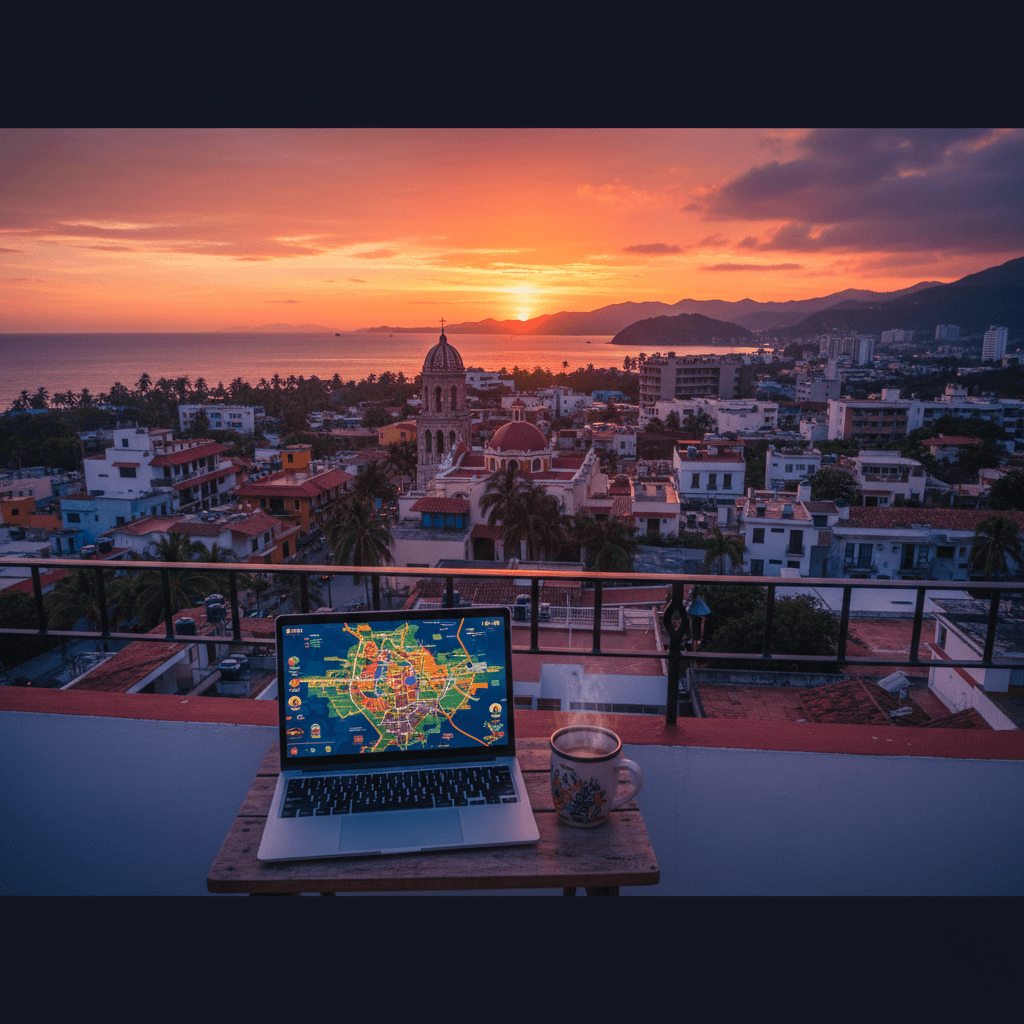
Puerto Vallarta
🇲🇽 Mexico
Puerto Vallarta hits a sweet spot that most coastal hubs miss. It manages to feel like a proper city with high speed fiber optics and modern hospitals while maintaining the soul of a Mexican pueblo. You'll find yourself walking down cobblestone streets in the Zona Romántica, dodging a rogue bougainvillea branch, only to step into a cafe where the internet is faster than what you have back home. It is less chaotic than Mexico City and far more authentic than the purpose built resort rows of Cancun.
The vibe here is defined by the Sierra Madre mountains dropping straight into the Pacific. This geography creates a compact, vertical layout where ocean views are the standard, not the luxury. For nomads, the emotional draw is the transition from "work mode" to "beach mode" which usually takes about five minutes. It’s a place where you can finish a Zoom call at 5:00 PM and be sitting on a plastic chair in the sand with a $3 beer by 5:10 PM.
The Neighborhood Breakdown
- Zona Romántica (Old Town): This is the heart of the action. It’s the most walkable part of the city and the epicenter of the LGBTQ+ scene. Expect to pay a premium here, with one bedroom apartments ranging from $1,000 to $1,500. It’s loud, social, and perfect if you want to be steps from the Los Muertos beach.
- 5 de Diciembre: Frequently shortened to 5D, this is where the savvy long termers are moving. It’s steeper and more "local," but the rents are softer, typically $500 to $800. You’re still within walking distance of the Malecón but far enough away to sleep without earplugs.
- Versalles: This is the city's emerging foodie district. It’s inland and lacks a beach, but it’s packed with trendy cafes and coworking potential. It feels more like a residential neighborhood than a tourist zone, making it a favorite for those staying 3 to 6 months.
The Cost of Living Reality
While Mexico is generally affordable, Puerto Vallarta has seen a price hike recently. Most single nomads should budget around $2,000-$2,900 per month to live comfortably in 2026. If you’re living like a local, eating $5 tacos from street stands and using the $0.50 blue buses, you can squeeze by on $1,200. However, if you want a pool, AC, and regular dinners at the upscale spots in the Hotel Zone, you’ll easily cross the $2,500 mark.
The Remote Work Scene
Internet reliability has drastically improved. Providers like Telmex and Totalplay now offer speeds up to 1,000 Mbps in most central neighborhoods. While dedicated coworking spaces are still catching up to the demand, the cafe culture is elite. The Green Place in 5 de Diciembre is a staple for nomads, offering quiet air conditioned rooms and solid 47 Mbps speeds. Most people rely on Telcel SIM cards for backup, which you can grab at any OXXO for about $10.
The best time to be here is the dry season from December to April. The air is crisp, the whales are jumping in the bay, and the social calendar is full. The summer months from June to October are a different beast. The humidity is intense, and the afternoon rainstorms are cinematic. Many nomads flee during this time, but those who stay enjoy lower rents and a much quieter, greener version of the city.
Ultimately, people come for the sunsets but stay for the community. There is a deep rooted expat and nomad network here that makes it incredibly easy to find your footing. Whether it’s through Facebook groups or meeting people at a beachside volleyball game, you won't be anonymous for long.
The Monthly Bottom Line
Puerto Vallarta sits in a sweet spot for nomads who want Pacific coast living without the astronomical price tags of Cabo or the over-saturated market of Tulum. On average, a single person living a comfortable, mid-range lifestyle should budget around $1,831 USD per month. If you're coming from a major US or European city, your money goes significantly further here, though prices have climbed about 20% to 30% since early 2023 as infrastructure improved.
Budget-conscious travelers can scrape by on $1,200 to $1,600 by sticking to local neighborhoods like Versalles, eating at taco stands, and using the local bus system. If you want a luxury condo with an ocean view in Conchas Chinas and frequent upscale dining, expect your monthly burn to exceed $2,500.
Housing and Neighborhoods
Rent is your biggest variable and depends entirely on your proximity to the beach. Most nomads hunt for apartments on Facebook Marketplace or through local agents at Take Me To Puerto Vallarta to avoid the "Airbnb tax."
- Zona Romantica: This is the heart of the action. Expect to pay $1,000 to $1,500 for a one-bedroom. It's walkable and social, but you pay a premium for the location.
- 5 de Diciembre & Versalles: These are the rising stars for remote workers. You can find modern one-bedrooms for $500 to $800. It’s quieter, more authentic, and has the best cafe-to-resident ratio in the city.
- Hotel Zone & Conchas Chinas: These areas cater to families and high-earners. Modern condos with gyms and pools start at $1,500 and go up quickly.
Food, Drink, and Socializing
The food scene is where Puerto Vallarta really shines. You can eat incredibly well regardless of your budget. Most nomads mix street food with occasional sit-down meals to keep costs balanced.
- Cheap Eats: A solid meal of street tacos or ceviche from a local stand runs $3 to $5.
- Mid-range Dining: A nice dinner at a local cafe or fusion spot in Versalles usually costs between $10 and $15.
- Fine Dining: Upscale beachfront spots on the Malecón will run you $20 to $40 per person, including a cocktail.
- Groceries: Shopping at local mercados and chains like Farmacia Guadalajara or Ley is affordable, though imported goods at specialty stores will spike your bill.
Connectivity and Workspace
While many apartments now offer fiber optic speeds ranging from 50 to 1,000 Mbps via Telmex or Totalplay, it’s still smart to have a backup. A Telcel SIM card with a 20GB to 100GB data plan costs between $10 and $30 and is easily topped up at any OXXO store.
Dedicated coworking spaces are still catching up to the demand, so most nomads work from laptop-friendly cafes. The Green Place Cafe in 5 de Diciembre is a favorite, offering air conditioning and reliable WiFi for the price of a $3-5 latte. For those needing a formal office environment, monthly memberships at local hubs typically cost between $150 and $300.
Transportation
If you stay in the central zones, you'll rarely need a car. The city is highly walkable, and the infrastructure for bikes and scooters is improving. For longer trips, Uber and Didi are the gold standard for safety and transparent pricing. A typical ride across town costs between $5 and $10. If you're feeling adventurous, the local buses are a steal at $0.50 per ride and can even take you all the way to the airport.
For Digital Nomads: 5 de Diciembre and Versalles
If you're looking for the sweet spot between local life and a solid workspace, 5 de Diciembre is where most nomads land. It's an uphill neighborhood just north of the city center that feels lived-in rather than manufactured. You'll find $700 to $1,200 for a 1BR in 2026, and the WiFi is generally reliable enough for video calls. Many remote workers congregate at The Green Place Cafe, where a $5 coffee buys you access to air conditioning and 47 Mbps speeds.
Versalles is the city's emerging culinary hub. It's slightly further from the beach but packed with trendy cafes and fusion restaurants. It's quieter than the tourist zones, making it ideal if you need to focus during the day. Expect to pay around $700 for a modern studio. Most people here use Uber or Didi to get to the beach, which usually costs about $5 to $10 per trip.
- The Vibe: Authentic, food-focused, and productive.
- Internet: Strong fiber optic availability via Telmex or Totalplay.
- Social Life: High concentration of other remote workers in local cafes.
For Solo Travelers and LGBTQ+ Nomads: Zona Romantica
The Zona Romantica (or Old Town) is the heartbeat of Puerto Vallarta. It's the most walkable part of the city, meaning you won't need a car or even a bike to get around. This area is world-famous for its inclusive atmosphere and intense nightlife. You're steps away from Los Muertos Beach and dozens of coworking-friendly spots, though the noise levels can be high if your balcony faces a main street.
Convenience comes at a premium here. Rent for a 1BR often starts at $1,000 and can easily climb higher during the peak season from December to April. Solo travelers love it because it's nearly impossible to feel lonely; you can join a Facebook group meetup or head to a beach bar and meet people instantly. Just keep an eye on your budget, as dining out here averages $15 to $25 per meal.
- The Vibe: High energy, social, and incredibly welcoming.
- Safety: Very safe for solo residents, with heavy foot traffic and well-lit streets.
- Walking Score: 10/10; everything is within a 15 minute stroll.
For Families and Upscale Expats: Hotel Zone and Conchas Chinas
If you're bringing the kids or just want a quieter, luxury experience, the Hotel Zone offers high-rise condos with 24/7 security and private pools. It's close to CMQ Hospital and large grocery stores like La Comer, which makes daily logistics much easier for families. Expect to pay $1,500 or more for a multi-bedroom unit with ocean views.
Conchas Chinas is often called the Beverly Hills of Puerto Vallarta. It's located just south of the Zona Romantica on a steep hillside. It's stunningly beautiful but very car-dependent. Expats who live here usually prioritize privacy and views over being near the action. While it's one of the most expensive areas, the peace and quiet are unmatched in the city.
- Rent: $1,500 to $3,000+ for premium properties.
- Amenities: Modern gyms, private parking, and proximity to international schools.
- Transport: You'll likely want a rental car or a dedicated driver.
For Budget Travelers: Emiliano Zapata and Fluvial Vallarta
Those looking to stretch their pesos often look toward Emiliano Zapata or Fluvial Vallarta. These areas offer a much more traditional Mexican lifestyle. You can find street tacos for $3 to $5 and local markets where groceries are significantly cheaper than in the tourist hubs. Rent in these pockets can drop as low as $400 to $600 if you're willing to negotiate a long term lease in person.
The trade-off is the distance. You'll be taking the $0.50 local bus or an Uber to get to the Malecón or the beach. Safety is generally good, but nomads recommend avoiding long walks alone after 10 PM in the more residential outskirts. It's a great choice if you want to practice your Spanish and avoid the "expat bubble."
- Food: Incredible local markets and affordable family-run fondas.
- Savings: Potential to live comfortably on $1,200 a month.
- Connectivity: WiFi can be hit or miss; always ask for a speed test before signing a lease.
Connectivity Standards
Puerto Vallarta has come a long way from the spotty beach WiFi of a decade ago. Most modern apartments in neighborhoods like Versalles and Zona Romantica now come equipped with fiber optic connections from providers like Telmex or Totalplay. You can regularly expect speeds between 50 Mbps and 1,000 Mbps, though it's always smart to ask your host for a speed test screenshot before signing a lease.
If you're planning to work from a balcony overlooking the Pacific, keep in mind that the thick concrete walls typical of Mexican construction can eat your signal. Many nomads bring a travel router or a long ethernet cable to stay stable during Zoom calls. For those venturing further out to the southern beaches where infrastructure is thinner, Starlink has become the go-to backup for reliable satellite internet.
Top Coworking Spots
The coworking scene here is more boutique than corporate. You won't find massive WeWork floors, but you will find community focused spaces that lean into the coastal lifestyle. These spaces usually run between $150 and $300 USD per month for a dedicated desk.
- The Green Place (5 de Diciembre): This is a favorite for deep work. It features quiet, air conditioned rooms and a solid vegan cafe downstairs. Nomads report consistent speeds of 47 Mbps down, and a day pass usually costs the price of a few coffees, roughly $10 to $15 USD.
- Vallarta Cowork (Zona Romantica): Located right in the heart of the action, this spot is perfect if you want to be steps away from the beach for a post work swim. It offers ergonomic chairs, coffee, and a community of remote workers that makes networking easy.
- Joint Coworking Hotel and Apartments: A newer addition that caters specifically to the work and play crowd, offering high speed internet and a professional environment right in the middle of Old Town.
The Cafe Office Culture
Puerto Vallarta has a massive cafe culture, and most owners are happy to let you linger if you're buying food and drinks. The Versalles neighborhood is currently the "it" spot for this, as it's less touristy and more focused on local foodies and remote workers. Look for spots with "laptop friendly" signs or plenty of power outlets.
Expect to pay around $3 to $5 USD for a high quality latte. Most nomads find that working from cafes in the morning is great, but they retreat to air conditioning by 2:00 PM when the humidity kicks in, especially during the summer months. Always have a backup plan, like a mobile hotspot, as power flickers can happen during the heavy tropical rainstorms from June through October.
Mobile Data and SIM Cards
Don't rely on your home roaming plan unless it's specifically included. Local SIM cards are cheap and the coverage is excellent throughout the bay. Telcel is the undisputed king of coverage in Mexico, followed by AT&T.
- Where to buy: You can pick up a SIM card at any OXXO convenience store or Telcel kiosk for about $5 to $10 USD.
- Costs: Prepaid plans (called "Paquetes Amigo") usually cost between $10 and $30 USD per month. A $20 USD plan typically gets you plenty of data and unlimited social media usage.
- Topping up: Use the Mi Telcel app or just walk into any OXXO and ask for a "recarga."
Practical Tips for Remote Workers
If you're doing a lot of video calls, try to book a place in 5 de Diciembre or Versalles. These areas are slightly shielded from the heavy "tambora" music and loud beach crowds of the Zona Romantica. Also, keep an eye on the power outlets. While Mexico uses the same Type A and B plugs as the US and Canada, older buildings might not have three hole grounded outlets. Carrying a small adapter can save you a headache on your first day.
Staying Safe on the Bay
Puerto Vallarta remains one of Mexico's safest bets for remote workers. The city feels more like a collection of small towns than a sprawling metropolis, and the heavy presence of the Tourist Police in white and blue uniforms helps keep things orderly along the Malecón and beach areas. Most nomads feel perfectly comfortable walking through Zona Romantica or 5 de Diciembre after dinner, though common sense still applies.
While violent crime rarely affects the expat community, petty theft is the main thing to watch for. Don't leave your MacBook unattended at a beach club while you go for a swim, and keep an eye on your phone if you're out late at the bars in Olas Altas. If you're staying in Fluvial Vallarta or the outskirts, locals suggest taking an Uber or Didi after 10 PM rather than walking through poorly lit residential streets.
- Areas to watch: Stick to the well lit corridors of the Hotel Zone and Old Town at night. Avoid the industrial zones at the far north end of the city after dark.
- Emergency Numbers: Dial 911 for immediate help or 089 to reach the tourist police specifically.
- Transport Safety: Stick to Uber or InDriver for late night rides. They're tracked, cheap, and usually arrive in under five minutes.
Healthcare and Hospitals
The quality of medical care here is a major draw for long term stays. Many doctors in the private hospitals trained in the US or Canada and speak excellent English. You won't struggle to find a specialist who understands your needs without a translator.
For emergencies or high quality urgent care, CMQ Hospital is the gold standard for nomads. They have locations in both the Hotel Zone and Basilio Badillo in Old Town. These facilities are modern and private, so you'll need insurance or the ability to pay upfront, though costs are a fraction of what you'd see in the US. A standard consultation usually runs between $40 and $70 USD.
- Pharmacies: You'll see Farmacia Guadalajara and Farmacia Similares on almost every corner. Many have an on site doctor who can give you a basic consultation and a prescription for about $3 to $5 USD.
- Water Safety: Don't drink the tap water. While the city has a decent filtration system, the pipes in older buildings in 5 de Diciembre aren't reliable. Stick to the big 20 liter garrafones (water jugs) delivered to your door for about $2 USD.
- Insurance: Most nomads carry a policy like SafetyWing or Genki, which are widely accepted for reimbursement at the private clinics.
If you're heading out for a hike toward Colomitos or taking a boat to Yelapa, keep a small first aid kit with you. The tropical sun is often the biggest health risk; stay hydrated and don't underestimate the 90 degree humidity during the summer months.
The Walkability Factor
Puerto Vallarta's layout is a gift to anyone who hates being stuck in traffic. If you're staying in the Zona Romantica or 5 de Diciembre, your primary mode of transport will be your own two feet. The Malecón, a mile long boardwalk, connects the northern and southern tourist hubs and is perfectly paved for walking or morning jogs. Most nomads find they only need wheels when they're grocery shopping or heading to a meeting in a different neighborhood.
Ride-Hailing and Taxis
Uber and Didi are the gold standards here for convenience and safety. They're incredibly affordable, with most trips within the city limits costing between $5 and $10 USD. While traditional yellow taxis are everywhere, they don't use meters. You'll need to agree on a price before you get in, which usually ends up being more expensive than an Uber. One pro tip: if you're coming from the airport, walk across the pedestrian bridge to the other side of the highway to catch an Uber. It'll cost you about $15 to $25 USD to get to Old Town, whereas airport taxis often charge double that for the same trip.
For those looking for the cheapest possible ride, InDriver is also popular. It allows you to bid on your fare, though it's generally better for locals or those who know the standard rates well enough not to get overcharged.
Navigating the Blue and Green Buses
The local bus system is surprisingly efficient once you get the hang of the signs on the windshields. The local buses cost about $0.65-$0.80 USD per ride with new 2026 subsidized card and can take you almost anywhere, from the Marina all the way down to Mismaloya. Look for buses marked "Centro" to get downtown or "Walmart" if you need the big shopping centers. Just be prepared for a bumpy ride; the cobblestone streets in the older parts of town make for a "free massage" every time you board.
Two Wheels: Bikes and Scooters
Cycling is picking up steam, especially along the flatter coastal areas. You can rent a bike or scooter for $5 to $10 USD per day. The Mi Moto app is a solid choice for quick rentals. While the beach paths are ideal for a leisurely ride, be careful on the side streets. The combination of slick cobblestones and erratic traffic means you should always wear a helmet and keep your eyes peeled for potholes.
Regional Travel
If you're planning a day trip to the surf breaks in Sayulita or the quiet beaches of San Pancho, you have three main choices:
- Compostela Buses: These depart from near the Walmart across from the cruise ship terminal. They cost about $3 USD and take 60 to 90 minutes.
- Private Car: An Uber to Sayulita usually runs around $40 to $60 USD depending on the time of day.
- Water Taxis: To reach southern beaches like Yelapa or Animas, which aren't accessible by road, you'll head to the Los Muertos Pier. Expect to pay $20 to $40 USD for a round trip.
At a Glance: Transport Costs
- Local Bus: $0.65 to $0.80
- Short Uber/Didi Trip: $5 to $10
- Airport Transfer (via Bridge): $15 to $25
- Daily Scooter Rental: $10
Navigating the Local Lingo
You won't need to be fluent in Spanish to survive a month in Puerto Vallarta, but your experience will be much richer if you try. In the main nomad hubs like Zona Romantica and the Hotel Zone, English is the unofficial second language. Most staff at cafes, high end restaurants, and boutique hotels speak it well, often at about 80% fluency. You can easily order your avocado toast or negotiate a monthly gym membership without breaking out a dictionary.
That said, the vibe changes once you head into more local neighborhoods like Versalles or 5 de Diciembre. While these areas are becoming more popular with remote workers, the shopkeepers and street food vendors usually stick to Spanish. Most nomads find that a friendly "Hola" and a bit of effort go a long way. If you're staying for the full 180 day tourist stay, learning the basics will save you money and help you make friends beyond the expat bubble.
Digital Communication and Connectivity
Staying connected is rarely an issue here. For your phone, skip the international roaming plans and head straight to an OXXO convenience store. You can pick up a Telcel or AT&T SIM card for about $5-6 USD. Most expats recommend the Telcel "Amigo" plans because the coverage is solid even when you're taking a day trip to Sayulita or hiking to Las Animas. You can top up your data through the Mi Telcel app or at any corner store for $10 to $30 a month.
For day to day interactions, WhatsApp is king. Whether you're booking a hair appointment, messaging your landlord, or joining a local nomad meetup, everything happens on this app. If your Spanish is shaky, use the Google Translate app with the offline mode downloaded. It's a lifesaver when you're trying to explain a specific plumbing issue to a maintenance worker or reading a menu at a local fonda.
Key Phrases for the Nomad Lifestyle
While "taco" and "tequila" are universal, having a few specific phrases in your back pocket makes life smoother. Travelers often say that lead-ins are the most important part of Mexican etiquette; always start an interaction with a "Buenos días" or "Buenas tardes" before asking for what you need.
- "¿Cuál es la contraseña del WiFi?" (What is the WiFi password?): You'll use this at every cafe from The Green Place to the beach clubs.
- "¿Cuánto cuesta?" (How much does it cost?): Use this at the markets or when hailing a local taxi.
- "La cuenta, por favor" (The check, please): Remember that servers in Mexico won't bring the bill until you ask for it; it's considered polite to let you linger.
- "¿Aceptan tarjeta?" (Do you accept cards?): While many places in the tourist zones do, smaller spots in Fluvial Vallarta are cash only.
Cultural Nuances
Communication in Puerto Vallarta is generally warm and indirect. If you're used to the bluntness of New York or London, you might find the local style a bit soft. People here value politeness and "small talk" before getting down to business. If you're negotiating a long term rental in Conchas Chinas, spend five minutes chatting about the weather or the city before talking about the price. It builds the "confianza" or trust that makes everything move faster in the long run.
If you're looking to level up your skills, there are several language schools in Old Town that offer intensive courses. Many nomads spend their first two weeks taking morning classes before hitting their laptops in the afternoon. It's a great way to meet people and ensures you aren't just another tourist passing through.
The Sweet Spot: December to April
If you're looking for that postcard-perfect weather, aim for the window between December and April. This is the dry season, and it's easily the most popular time for nomads to descend on neighborhoods like Zona Romantica and 5 de Diciembre. You'll get consistent sunshine and daytime highs sitting comfortably between 28°C and 32°C (82-90°F).
The nights during these months are refreshing, dropping down to about 20°C (68°F). You might actually want a light hoodie for evening walks along the Malecón. Because the humidity is low, it's the best time for hiking to Colomitos beach or working from outdoor cafe patios without breaking a sweat. Just keep in mind that since everyone wants to be here during the winter, rental prices for apartments and Airbnbs usually peak.
The Shoulder Season: May and November
May and November are the transition months. Many long term expats prefer these times because the crowds thin out, but the weather hasn't turned fully "extreme" yet. In May, you'll feel the humidity start to creep up, and temperatures begin to hover around 30°C to 33°C.
November is particularly great because the jungle is still lush and green from the rains, but the storms have mostly subsided. It's a solid time to snag a better deal on a mid range 1BR in Versalles before the high season rush hits in December.
Surviving the Rainy Season: June to October
From June through October, Puerto Vallarta transforms. It gets hot, sticky, and very wet. Most nomads who stay through the summer find that air conditioning isn't just a luxury, it's a requirement for survival. Temperatures stay in the 30s, but the humidity makes it feel much hotter.
- The Rain Pattern: Most days start sunny, allowing you to get your morning coffee at The Green Place or hit the beach early. The clouds usually roll in by late afternoon, leading to massive, spectacular tropical thunderstorms in the evening.
- Hurricane Risk: While direct hits are rare because of the city's location tucked inside Banderas Bay, you should still monitor weather apps during this window.
- The Perks: If you don't mind the heat, this is when you'll find the lowest rent prices and the quietest cafes. The mountains turn a deep, electric green that you won't see in the winter.
What to Pack and When to Book
If you're planning a stay for 2025 or 2026, try to book your accommodation at least three to four months in advance if you're arriving in January. The "nomad trail" is getting busier every year, and the best spots in 5 de Diciembre with fiber optic internet go fast.
For clothes, think breathable linens and cottons year round. If you're coming during the rainy season, a high quality waterproof phone case and a sturdy umbrella are more important than a rain jacket, as it's usually too warm to wear extra layers. Most travelers find that a pair of solid sandals and one pair of sneakers for hiking the jungle trails will cover all your bases.
Connectivity and Tech Setup
Staying connected in PV is easier than it used to be. Most apartments in 5 de Diciembre and Zona Romantica now come with fiber optic internet from Telmex or Totalplay, often hitting speeds between 50 and 1,000 Mbps. If you're working from a cafe, The Green Place in 5 de Diciembre is a favorite among remote workers; it has dedicated air-conditioned rooms and reliable 47 Mbps speeds. A coffee there will run you about $3 to $5.
For your phone, grab a Telcel SIM card at any OXXO convenience store as soon as you land. You can get a starter kit for about $10, and most nomads opt for the "Paquete Amigo" which offers plenty of data for around $15 to $30 per month. It's smart to keep a few pesos on your account so you can use apps like InDriver or Uber when you're away from WiFi.
Money and Banking
While many upscale restaurants in the Hotel Zone take cards, Puerto Vallarta is still very much a cash-heavy town, especially for those $3 street tacos or local bus fares. Use bank-affiliated ATMs like HSBC or Santander rather than the standalone machines on the street to avoid skimming and high fees. Expats here swear by Wise or Revolut for transferring money and keeping exchange fees low.
- Daily Budget: Plan for $40 to $60 if you're eating out and using ride-hailing apps.
- Tipping: Standard practice is 10% to 15% at sit-down restaurants.
- ATM Strategy: Withdraw larger amounts less frequently to minimize the $5 to $7 transaction fees.
Navigation and Transport
The city is surprisingly walkable if you stay in the central cores. If you're based in Zona Romantica, you'll rarely need a car. When you do need to cover distance, Uber and Didi are very reliable and typically cost between $5 and $10 for a cross-town trip. For a more local experience, the blue buses cost about $0.50 and can take you all the way to the airport or the botanical gardens.
If you're heading to the airport (PVR), an Uber usually costs around $15 to $25 from the south side. Just remember that Uber drivers sometimes have specific pickup points just outside the airport gates due to local taxi regulations. If you're feeling adventurous, the Mi Moto app allows for quick scooter rentals for about $10 a day, which is perfect for dodging traffic on the cobblestone streets.
Health and Safety
Puerto Vallarta is generally safe, but common sense goes a long way. Stick to well-lit areas in Zona Romantica and the Malecón after dark. Many nomads suggest avoiding solo walks in Fluvial Vallarta or the northern industrial zones after 10 PM. If you run into trouble, the tourist police are usually nearby and very helpful.
For medical needs, CMQ Hospital in the Hotel Zone is the gold standard for expats. It's a private facility with high-quality care and English-speaking staff. You'll find a Farmacia Guadalajara on almost every major corner for prescriptions or basic supplies. In any emergency, dial 911 or contact the tourist police at 089.
Language and Local Etiquette
You can get by with English in the main tourist hubs, where about 80% of staff are fluent. However, learning a few phrases like "¿Cuánto cuesta?" (how much?) or "la cuenta, por favor" (the bill, please) will earn you a lot of respect. Most locals appreciate a polite "buenos días" when you enter a shop or cafe. During the rainy season from June to October, don't be surprised if businesses close briefly during heavy afternoon downpours; it's just part of the local rhythm.
Need visa and immigration info for Mexico?
🇲🇽 View Mexico Country GuideEasy Landing
Settle in, no stress