Puerto Montt
🇨🇱 Chile
The Gateway to the Wild
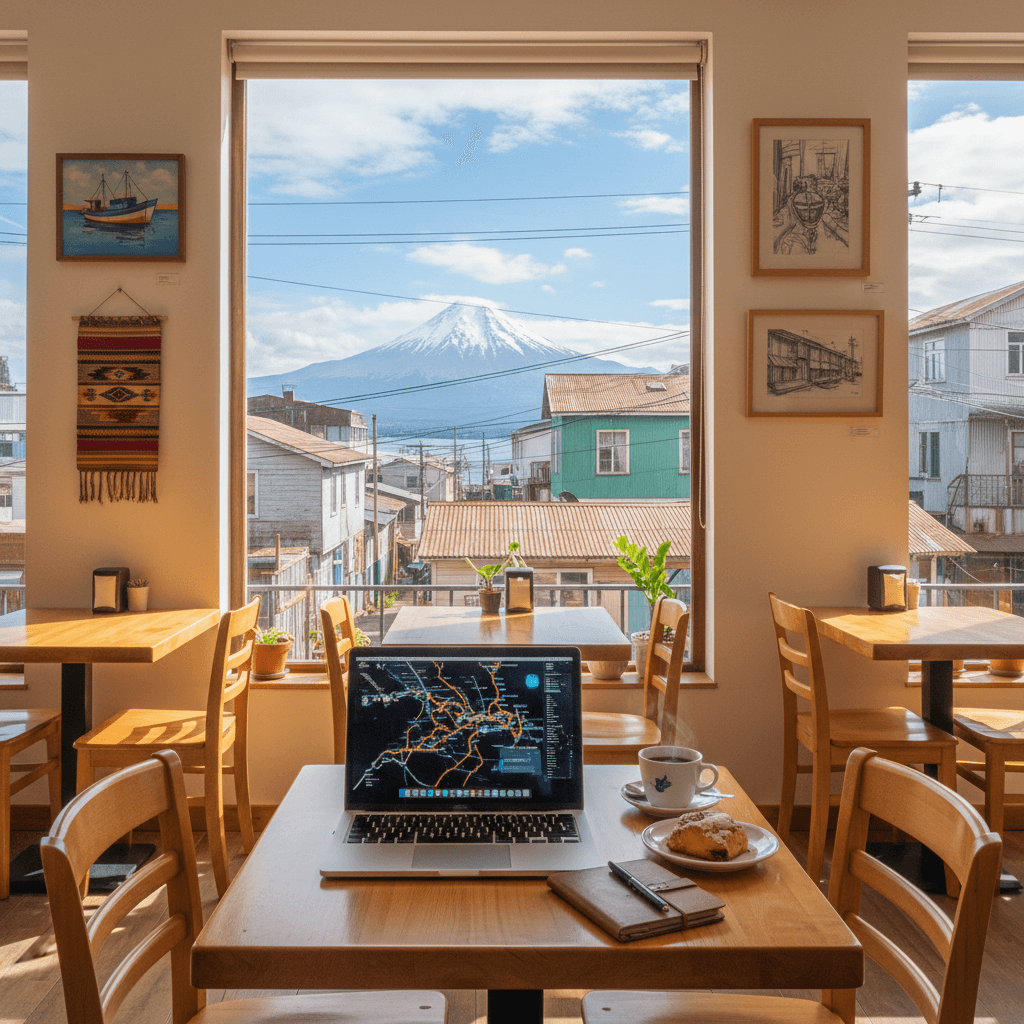
Puerto Montt is the kind of place that feels like it's perpetually standing on the edge of something much bigger. It isn't the polished, cosmopolitan hub of Santiago or the bohemian art gallery of Valparaíso. Instead, it’s a rugged, functional port city that serves as the literal springboard into the Chilean Patagonia and the Lake District. You come here for the salt air, the smell of woodsmoke, and the looming presence of the Osorno volcano on the horizon.
The vibe is distinctly blue collar and unpretentious. In the city center, you'll find a brisk commercial energy where locals move with purpose between fishing docks and transit hubs. It's a city of transit; nomads often use it as a strategic base to gear up before heading into the fjords or taking the ferry to Chiloé. While it lacks a massive, organized digital nomad community, it offers a refreshing authenticity for those tired of "nomad bubbles."
The Emotional Landscape
Living here feels like being part of an expedition. There is a specific kind of atmospheric moodiness to Puerto Montt, especially when the mist rolls in over the water. It can feel lonely if you’re looking for a party, but it’s deeply rewarding if you find peace in nature. Most travelers find that the city itself has an "urban grit" that contrasts sharply with the nearby alpine beauty of Puerto Varas, located just 20 minutes away. You’ll likely spend your workdays in a cozy cafe overlooking the Reloncaví Sound and your weekends lost in the temperate rainforests.
What Nomads Love and Hate
Digital nomads are drawn here by the infrastructure. Chile has some of the fastest internet in South America, and Puerto Montt is no exception. You can get reliable fiber optics with speeds between 50 and 100 Mbps for about $30 a month. The cost of living is also a major draw, with a comfortable lifestyle possible for around $1,200 a month, which is significantly cheaper than the capital.
On the flip side, the weather is a common complaint. It rains frequently, especially from May to October, and the city can feel a bit gray during the winter months. If you thrive on networking events and dedicated coworking spaces, you might find the scene here a bit thin. You’ll have to be proactive about meeting people, often connecting with fellow travelers at the bus terminal or in the seafood markets of Angelmó.
A Strategic Basecamp
The city’s personality is defined by its role as a logistics hub. It’s where you go to get things done. Need a 5G SIM card from Entel for $15? You’ll find it here. Need to book a multi day ferry through the fjords? This is the spot. While many nomads choose to sleep in the prettier, more expensive Puerto Varas, savvy long termers often stay in Puerto Montt to save on rent, which typically runs $300 to $500 for a central studio.
- The Seafood: You haven't lived until you've tried a $10 bowl of curanto at the Angelmó market. It's a smoky, hearty shellfish stew that defines the local palate.
- Connectivity: Despite its remote feel, the 4G and 5G coverage is excellent, making it easy to work from almost anywhere in the urban core.
- The Outdoors: You are within striking distance of Alerce Andino National Park and the Vicente Pérez Rosales National Park, making it a playground for hikers and kayakers.
Ultimately, Puerto Montt is for the nomad who prefers hiking boots over high heels. It’s a place for those who want to experience the "real" Chile, complete with its rainy afternoons, bustling fish markets, and the constant, magnetic pull of the southern wilderness.
The Bottom Line
Puerto Montt is one of the more affordable gateways to the Chilean wilderness. While it lacks the high-end polish of Santiago, your dollar stretches significantly further here. Most nomads find they can live comfortably on about $1,200 per month, though budget-conscious travelers can scrape by on $800 to $1,000 if they stick to shared housing and local empanada stands.
If you're coming from North America or Europe, the biggest surprise won't be the price of a beer, but the cost of housing relative to the local average income of around $600 to $1000. You'll be paying a premium for modern amenities and high-speed fiber, but it's still a bargain compared to the prices you'll find twenty minutes away in the touristy enclave of Puerto Varas.
Monthly Budget Tiers
- The Budget Backpacker ($800 to $1,000): You're staying in a shared house or a basic hostel in the Centro district, cooking most meals with fresh finds from the Angelmó market, and using the public bus system for everything.
- The Mid-Range Nomad ($1,200 to $1,500): This covers a private one-bedroom apartment, frequent dining out at seafood spots like Mesón El Compadre, and a few weekend trips into the Lake District.
- The High-End Expat ($1,800+): You'll likely be living in a modern apartment in Pelluco or even a lakeside condo in Puerto Varas, taking Ubers frequently, and dining at upscale spots like Club de Yates.
Housing and Utilities
Rent is your primary expense. A standard studio or one-bedroom apartment in the city center typically runs between $300 and $500. If you want those iconic volcano views or proximity to the more "nomad-friendly" cafes in Puerto Varas, expect that starting price to jump to $600 or more.
Internet is surprisingly reliable and affordable. Home fiber connections with speeds between 50 and 100 Mbps will cost you roughly $25 to $35 per month. Most expats recommend setting up a local SIM card with Entel or Movistar for about $15 to ensure you have 5G backup when the winter storms roll in.
Food and Dining
Eating like a local is the best way to keep your budget intact. You can grab a massive empanada or street snack for $2 to $5. A mid-range dinner featuring the region's famous salmon or a traditional curanto stew usually lands between $10 and $15. If you're heading out for a nice date night with wine, plan on spending closer to $30 per person.
Groceries are reasonably priced, especially if you shop at the local ferias. A liter of milk is about $1.20, and a loaf of fresh bread is under $2.00. Imported goods will always carry a heavy tax, so stick to Chilean labels to save cash.
Transportation
The city is quite walkable if you stay near the Centro or Angelmó areas. For longer hauls, the public buses are a steal at about $1 per ride. They are the lifeline for nomads heading to the airport or nearby hiking trails. Uber is active here and reliable; a typical trip from the bus terminal to the airport costs around $8.50. If you're planning on exploring the deeper fjords, keep a separate budget for the ferries, which vary in price depending on the length of the haul.
For Digital Nomads: Centro (Downtown)
If you're in Puerto Montt to work, you'll likely want to stick to the Centro. It's the most practical base for anyone relying on high speed fiber or 5G mobile signals. Most nomads find the convenience of being within walking distance of the bus terminal and ferry ports outweighs the grit of the urban center. It's the best spot for short term stays before heading deeper into Patagonia.
- Rent: Expect to pay between $300 and $500 for a decent studio or one bedroom apartment.
- Vibe: Fast paced, commercial, and functional.
- Best for: Reliable internet, proximity to transport, and quick access to cafes like Cafe Haussmann for a work session.
For Expats and Long-Termers: Puerto Varas
Technically a separate town just 20 minutes north, Puerto Varas is where most expats actually choose to live. It's significantly more picturesque than Puerto Montt, sitting right on the shores of Lake Llanquihue with clear views of the Osorno Volcano. The infrastructure is excellent, and while it lacks a massive coworking scene, the cafe culture is much more "work friendly" than the industrial vibe of the city center.
- Rent: Prices are higher here, often starting at $600 and climbing quickly for lake views.
- Vibe: Upscale, scenic, and relaxed with a distinct German heritage.
- Best for: A higher quality of life, better dining options, and a small but active international community.
For Solo Travelers: Angelmó
Solo travelers looking for a more authentic coastal experience often gravitate toward the Angelmó district. It's famous for its stilted houses and the massive seafood market where you can grab a bowl of curanto for about $10. It's a bit touristy during the day, but it feels more like the "real" Chile than the modern downtown. It's affordable and puts you right at the gateway for boat trips to the nearby islands.
- Rent: Very affordable, with local guesthouses and small apartments in the $300 range.
- Vibe: Traditional, salty, and colorful.
- Best for: Seafood lovers, photographers, and those on a budget.
For Families: Pelluco and Alerce
If you're traveling with a family and need more space or a quieter environment, look toward Pelluco or Alerce. Pelluco is the city's main beach area; it's quieter during the week and offers a nice break from the downtown noise. Alerce is more of a residential suburb that has grown rapidly. Both areas offer more "house" style living rather than cramped apartments, though you'll definitely want to use Uber or the local buses (about $1 per ride) to get into the city center.
- Rent: Mid range, usually around $450 to $600 for larger multi bedroom units.
- Vibe: Residential, suburban, and safe.
- Best for: Peace and quiet, beach access, and a local neighborhood feel.
Practical Neighborhood Comparison
- Best for Walkability: Centro. You won't need a car for daily errands or catching the bus to the airport.
- Best for Safety: Puerto Varas or Pelluco. While Puerto Montt is generally safe, the downtown can feel a bit sketchy at night.
- Best for Budget: Angelmó. You'll find the cheapest local eats and lower rent prices here.
- Best for Connectivity: Centro. This is where you'll find the most consistent fiber optic connections for remote work.
Connectivity and Speeds
Chile consistently punches above its weight in global internet rankings, and Puerto Montt is no exception. You can expect reliable fixed fiber optic connections reaching 50 to 100 Mbps in most central apartments and hotels. This makes it a solid base for video calls or heavy uploads before you head further south into the more signal-starved reaches of deep Patagonia.
Mobile data is equally impressive. The city has 4G and 5G coverage that remains stable throughout the urban core and out toward the Angelmó seafood markets. If you need a local SIM, Entel and Movistar are the most reliable providers in the south. You can pick up a prepaid chip for about $10 to $20 that includes roughly 50GB of data. For those who prefer the convenience of an eSIM, Holafly works well here, with unlimited data packages ranging from $20 to $50 depending on your stay length.
The Coworking Scene
If you are looking for a sleek, glass-walled WeWork with free kombucha, you won't find it here. Puerto Montt lacks dedicated, nomad-specific coworking spaces. Most remote workers treat the city as a "work-from-home" hub or a pit stop between adventures. If you need a professional environment, your best bet is to book an Airbnb in the Centro district where fiber is standard, or look for business-oriented hotels near the waterfront.
For a change of scenery, nomads often head 20 minutes north to Puerto Varas. It has a more developed tourism infrastructure and a slightly more "laptop-friendly" atmosphere. While still lacking a major coworking brand, the cafes there are much more accustomed to people staying for a few hours with a computer.
Laptop-Friendly Cafes
The cafe culture in Puerto Montt is functional rather than trendy. You'll find plenty of spots to post up for a few hours, provided you order a coffee and a kuchen (the local German-style cake). Prices for a temporary "day pass" via coffee and snacks usually run around $5 to $8.
- Librería y Café Sotavento: A favorite for those who need a quieter, more academic atmosphere. It feels more like a library than a busy bistro.
- Marley Coffee: Found in various spots around the center and malls, these offer predictable Wi-Fi and plenty of power outlets.
Practical Tips for Remote Work
The biggest hurdle for working here isn't the bandwidth; it's the weather. Puerto Montt is notoriously rainy. If you're staying in a budget apartment, check if they have "combustión lenta" (wood-burning stoves) or electric heating. Being cold and damp is the fastest way to ruin a productive workday.
Power outages are rare in the city center but can happen during heavy winter storms in July or August. Most nomads recommend keeping a charged power bank and a mobile hotspot ready just in case. If the Wi-Fi at your rental drops, the 4G signal is usually strong enough to act as a reliable backup for a few hours of work.
Cost Summary for Digital Nomads
- Home Fiber (Monthly): $25 to $35
- Local SIM (50GB): $10 to $20
- Cafe Session (Coffee + Snack): $5 to $10
- eSIM (Monthly Unlimited): $20 to $50
Personal Safety and Local Vibes
Puerto Montt is generally a safe, stable base for remote work, but it lacks the polished feel of its neighbor, Puerto Varas. Most nomads find the city center and the Angelmó market area perfectly fine during the day, though it has an industrial, gritty edge. You'll want to keep your wits about you in crowded spots like the main bus terminal, where petty theft and pickpocketing occasionally happen.
Expats recommend staying off the streets in the Centro district late at night if you're alone. While violent crime is rare, the city's role as a major transit hub means there's a lot of turnover in the crowds. Use common sense: don't flash your MacBook at an outdoor cafe in a high traffic area, and keep your phone tucked away while walking. If you're heading out for drinks at the bars along the waterfront, grab an Uber back to your apartment instead of walking through dark side streets. It usually costs less than $9 and saves you the hassle.
Healthcare Infrastructure
Chile has some of the best healthcare in South America, and Puerto Montt is the primary medical hub for the entire Lake District. You'll find a solid mix of public and private options. Most nomads and expats opt for private clinics like Clínica Universitaria Puerto Montt or Clínica Puerto Montt for faster service and more English speaking staff.
If you're staying long term on a digital nomad visa, you'll likely deal with the private insurance system (Isapres) or the public one (Fonasa). For shorter stays, a good international travel insurance policy is a must. You can expect to pay around $40 to $60 for a standard consultation at a private clinic. Pharmacies are everywhere, with Farmacias Ahumada and Cruz Verde being the most reliable for over the counter needs and prescriptions.
Emergency Contacts
It's smart to have these numbers saved before you head south into Patagonia, where cell service can get spotty. The local emergency dispatchers usually speak Spanish, so having a translation app ready or knowing basic phrases is helpful.
- Police (Carabineros): 133
- Ambulance (SAMU): 131
- Fire Department (Bomberos): 132
Environmental Awareness
Safety here isn't just about crime; it's about the elements. Puerto Montt is the gateway to the fjords, and the weather can turn aggressive quickly. If you're planning day trips to Volcán Osorno or hiking in Parque Nacional Alerce Andino, always check the mountain forecasts. The terrain is rugged, and the "Gateway to Patagonia" nickname is no joke. Even in the city, the rain can be torrential from May through October, making sidewalks slippery and driving conditions tricky on the steep hills near the coast.
Tap water in Puerto Montt is generally considered safe to drink, which is a huge plus for your budget and the environment. Most long term residents drink it straight from the tap without issues, though if you have a sensitive stomach, a basic charcoal filter will do the trick.
The Logistics of Getting Around
Puerto Montt serves as the primary transit artery for southern Chile. While the city center is gritty and industrial, its transport network is remarkably efficient, connecting you to the fjords, the volcanoes of the Lake District, and the remote stretches of Patagonia. Most nomads find that while they might live in the quieter outskirts or nearby Puerto Varas, they'll inevitably pass through the city's central hubs to get anywhere else.
Public Buses and Micros
The backbone of local travel is the "micro" system. these small, colorful buses crisscross the city and are the most affordable way to move between the downtown core and neighborhoods like Pelluco or Angelmó. A single ride usually costs around $1, and you'll pay the driver in cash as you board. It's helpful to keep small change on hand for these trips.
For longer distances, the Terminal de Buses (located right on the waterfront) is your go-to. From here, you can catch frequent shuttles to Puerto Varas for about $2. These run every 15 to 20 minutes and take roughly half an hour. If you're heading further afield to places like Frutillar or Ensenada, this terminal is where you'll find the regional carriers.
Ride-Hailing and Taxis
Uber is active and widely used throughout Puerto Montt and is generally considered more convenient than traditional taxis for nomads. A ride from the city center to the El Tepual Airport typically costs about $8.50. It's a reliable option if you're carrying gear for a trek or arriving late at night when bus services thin out.
Traditional taxis are also available, often found waiting near the mall or the bus station. They use meters, but it's always smart to confirm the estimated price before you pull away. Expect to pay a bit more than Uber rates for the same distance.
Regional Connections: Ferries and Flights
Since Puerto Montt is the gateway to the south, your "commute" might occasionally involve a boat. The ferry terminal at La Arena, about 45 kilometers south of the city, is the starting point for the Carretera Austral. If you're planning to explore Chiloé Island or the remote fjords, you'll be booking passage through companies like Navimag or Transmarchilay.
- Airport Transfers: Aside from Uber, Andres Tour and Turisbus offer shuttle services from El Tepual Airport to downtown for $2 to $5 per person.
- Walking: The downtown grid and the coastal promenade near Angelmó are easily walkable. However, the city is hilly, so expect a bit of a workout if you're staying in the upper residential tiers.
- Cycling: You can find bike rentals near the waterfront for about $10 a day. While the city streets are busy, the coastal road toward Pelluco offers a more scenic and manageable ride.
Key Transport Costs at a Glance
- Local Micro Bus: $1 per trip
- Shuttle to Puerto Varas: $2 each way
- Uber to Airport: $8.50 average
- Full Day Bike Rental: $10
- Inter-city Bus to Santiago: $25 to $40 depending on seat class
Expats often recommend skipping the car rental unless you're planning an extensive road trip down the Carretera Austral. For daily life, the combination of micros for short hops and the excellent inter-city bus network for weekend escapes is usually more than enough. If you do drive, keep in mind that parking in the Centro can be a headache, and the rainy weather makes the steep hills slippery during the winter months from May to October.
The Linguistic Landscape
Spanish is the heartbeat of Puerto Montt, but it comes with a distinct local flavor. Chilean Spanish is famous for being fast, dropping the "s" at the end of words, and using a heavy dose of local slang called chilenismos. While you'll find moderate English proficiency in high end hotels or tour agencies heading to Patagonia, the everyday reality at the Angelmó seafood market or the local Farmacias Ahumada is strictly Spanish.
Most nomads find that getting by with "Spanglish" works for a weekend, but for a month long stay, you'll want the basics down. Locals are generally patient, but they won't automatically switch to English. Having a translation app with an offline Chilean Spanish dictionary is a lifesaver when you're negotiating a ferry ticket or explaining a specific ingredient at a restaurant.
Key Phrases for the Lake District
To sound less like a tourist and more like a seasoned expat, you'll need to sprinkle in a few local terms. Here are the essentials for your first week:
- ¿Cachai?: This is the Chilean version of "You know?" or "Get it?" You'll hear it at the end of almost every sentence.
- Al tiro: This means "right away" or "immediately," though in practice, it might still take a few minutes.
- ¿Cuánto cuesta?: "How much does it cost?" Use this at the stalls in Angelmó when eyeing the local crafts.
- La cuenta, por favor: "The bill, please." Necessary for those long seafood lunches.
- Fome: If something is boring or uninspiring, it's fome.
Communication Tools and Apps
Staying connected is rarely an issue here. Chile has some of the fastest internet in South America, and Puerto Montt's urban core is well served. For mobile data, most expats recommend grabbing a local SIM card from Entel or Movistar. You can usually get a card with 50GB of data for around $10 to $20, which is far cheaper than international roaming plans.
If you prefer a digital approach, Holafly eSIMs are a popular choice for nomads who want to be online the second they land at El Tepual Airport. These typically run between $20 and $50 for a month of service. For actual communication, WhatsApp is the undisputed king. Whether you're booking a table at Club de Yates or messaging an Uber driver, everything happens through WhatsApp.
Practical Tips for Expats
If you're planning to stay long term, you'll eventually need to deal with Chilean bureaucracy or healthcare. In these settings, English is rare. Expats often recommend bringing a Spanish speaking friend or hiring a local fixer for banking appointments or complicated medical visits. For daily errands, Google Translate handles the heavy lifting, especially the camera feature for reading menus or signs at the bus terminal.
Travelers often say that making an effort goes a long way. Even a clumsy "Hola" or "Gracias" opens doors. If you're looking to practice, head to the smaller cafes in nearby Puerto Varas, where the atmosphere is a bit more relaxed and the staff are often happy to chat with remote workers during the quiet afternoon hours.
The Seasonal Sweet Spot
Puerto Montt doesn't do "tropical." If you're coming here, you're embracing the rugged, misty spirit of the Lake District. The local weather is famously temperamental, often delivering four seasons in a single afternoon. For digital nomads planning a stint here, timing is everything, especially if your "office" involves a laptop and a view of the Osorno volcano.
The undisputed best time to visit is during the Southern Hemisphere summer, from December to February. This is when the region finally dries out and temperatures hover between a comfortable 15°C and 25°C (59°F to 77°F). It is the prime window for hiking the surrounding national parks or taking the ferry through the fjords without being hunkered down inside a cabin. Expect long daylight hours that let you clock out at 6:00 PM and still have plenty of sun for a trip to the Angelmó seafood markets.
The Rainy Reality
If you arrive between May and October, bring a high quality raincoat and a sturdy pair of boots. This is the heart of the rainy season, with July usually being the wettest and coldest month. Temperatures often dip to 5°C (41°F), and the humidity makes it feel even crispier. While the rain creates a moody, beautiful atmosphere, it can make regional travel to places like Chiloé Island or Petrohué Falls a logistical headache.
Most nomads find the shoulder seasons, October to November and March to April, to be a smart compromise. You'll avoid the peak tourist crowds and the highest accommodation prices of January, while still catching enough clear days to enjoy the outdoors. Just be prepared for the occasional "Patagonian surprise" storm that might keep you trapped in a cafe for the afternoon.
Packing and Planning by the Numbers
The climate here dictates your lifestyle more than in Santiago or Valparaíso. You aren't just packing for a city; you're packing for an expedition hub. Here is what to expect across the calendar:
- High Season (December to February): Expect the most sunshine and the highest prices. This is when the city feels most alive, but you'll need to book your stays in advance as travelers use the city as a launchpad for Patagonia treks.
- Shoulder Season (March to April / October to November): Crisp air and changing colors. Great for photographers and those who prefer a quieter vibe. You can often snag better deals on monthly rentals during these windows.
- Low Season (May to September): Heavy rains and grey skies. This is "deep work" season. If you don't mind staying indoors by a heater with a coffee, you'll have the city to yourself, but many outdoor tour operators shut down or run limited schedules.
The "Sur" Microclimate
Expats often joke that Puerto Montt has its own personality when it comes to wind. Even on a sunny day, the breeze coming off the Reloncaví Sound can be biting. Layers are your best friend here. Most locals rely on technical outdoor gear rather than high fashion; a North Face or Patagonia shell is practically the city uniform. If you're planning to work from the nearby, more scenic Puerto Varas, keep in mind that being right on the lake makes it feel a few degrees cooler than the commercial center of Puerto Montt.
Regardless of when you land, keep a weather app like AccuWeather or Windy handy. They are surprisingly accurate for tracking the rain fronts moving in from the Pacific, helping you decide whether to head to the office or head for the hills.
Connectivity and Workspace
Chile has some of the fastest internet in South America, and Puerto Montt is no exception. You can expect home fiber speeds between 50 and 100 Mbps. While the city lacks the dedicated coworking hubs you find in Santiago, the local cafe culture fills the gap. Most nomads set up shop in local spots or use their accommodation as a primary base.
For mobile data, don't rely on international roaming. Pick up a local SIM from Entel or Movistar for about $10 to $20, which usually nets you 50GB of data. If you prefer to hit the ground running, an eSIM through Holafly works well here, though it costs more at $20 to $50 per month. Mobile 4G and 5G coverage is surprisingly resilient, even as you head toward the outskirts.
Cost of Living Breakdown
Living here is significantly more affordable than in the capital. A mid range monthly budget typically sits around $1,200, though you can scrape by on $800 if you stick to shared housing and street food. If you want a more comfortable lifestyle with a private apartment and frequent dinners out, plan for $1,800 or more.
- Housing: A central one bedroom apartment averages $300 to $500. If you want those iconic lake views in nearby Puerto Varas, expect to pay $600 or more.
- Food: Quick bites like empanadas cost $2 to $5. A fresh seafood lunch at the Angelmó market runs about $10 to $15, while a high end dinner might reach $30.
- Transportation: Local buses are a steal at $1 per ride. An Uber from the airport into the city center typically costs around $8.50.
Navigation and Safety
The city core is compact and walkable, but you'll likely use the bus terminal often as it's the primary gateway for Patagonia expeditions. For getting around town, Uber is active and reliable. If you're planning to explore the surrounding volcanoes or lakes, renting a car is often better than relying on tour buses, giving you more freedom for deep work breaks in nature.
Safety is generally not a major concern, but keep your wits about you in the Centro and Angelmó areas, especially after dark. Petty theft happens in crowded markets. Healthcare is high quality; pharmacies like Farmacias Ahumada are everywhere, and private clinics offer excellent care. Keep the emergency numbers 131 for an ambulance and 133 for police saved in your phone just in case.
When to Go
The weather in the Lake District is famously temperamental. If you hate the rain, avoid May through October, as July brings heavy downpours that can make the city feel a bit gloomy. The sweet spot is December through February. During these summer months, temperatures hover between 15°C and 25°C, making it the perfect time for hiking the Osorno volcano or kayaking the fjords.
Language and Social Life
Spanish is the default here. While you'll find English speakers in the larger hotels and tourist agencies, you'll need basic Spanish for the grocery store, banks, and healthcare. Use apps like Google Translate with offline maps downloaded.
The nomad scene is still emerging, so don't expect organized meetups every night. Most expats connect through Facebook groups or Internations. If you're looking for a more social atmosphere, many travelers recommend spending your evenings in Puerto Varas, just 20 minutes away, which has a more established community of remote workers and better lakeside bars.
Need visa and immigration info for Chile?
🇨🇱 View Chile Country GuideHidden Gem
Worth the effort