Puerto Escondido
🇲🇽 Mexico
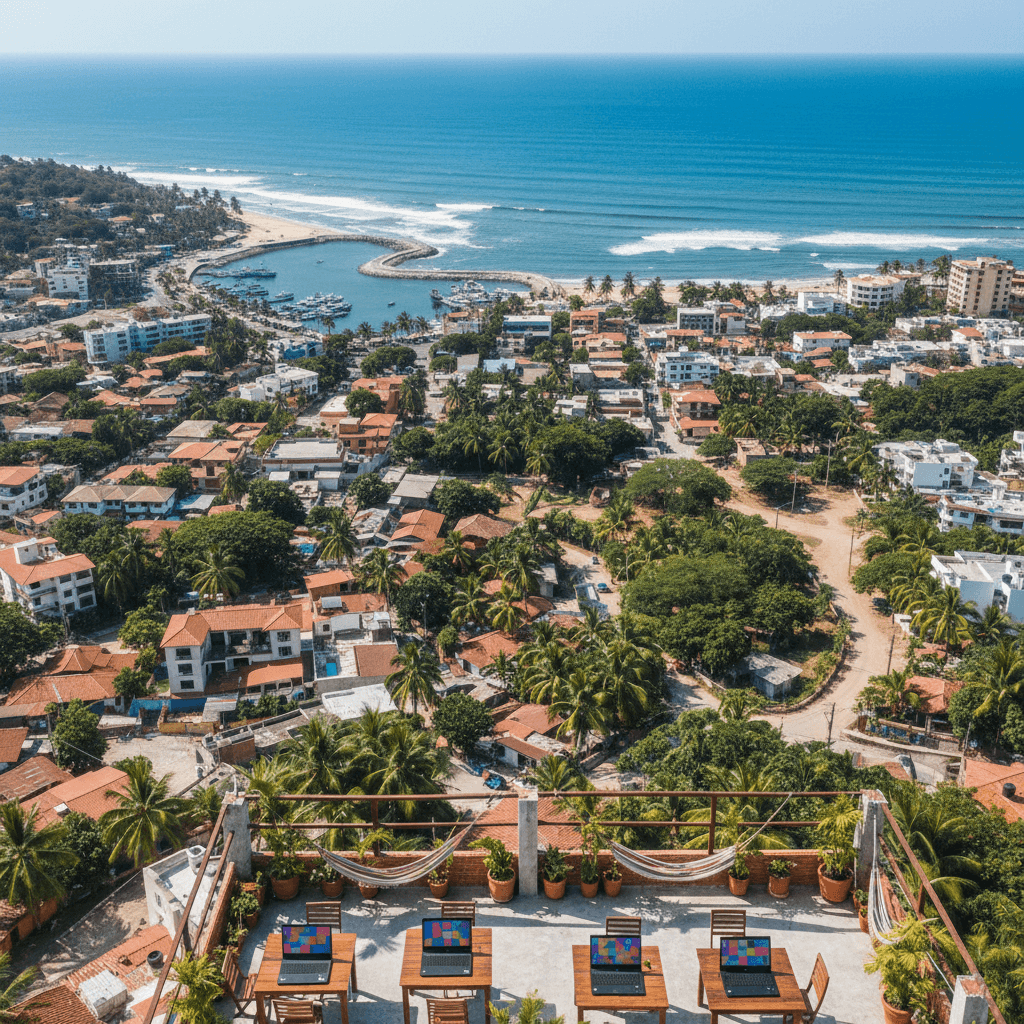
Puerto Escondido is where Mexico's raw Pacific coast meets a digital nomad community that’s traded business casual for board shorts and barefoot mornings. Unlike the polished, all inclusive resorts of Cancun or the high energy sprawl of Playa del Carmen, Puerto remains a place of unpaved roads, legendary surf breaks, and a pace of life dictated by the tides. It feels authentic because it is; you’ll find world class barrel waves at Zicatela right next to small colonial neighborhoods where life hasn't changed much in decades.
The Local Atmosphere
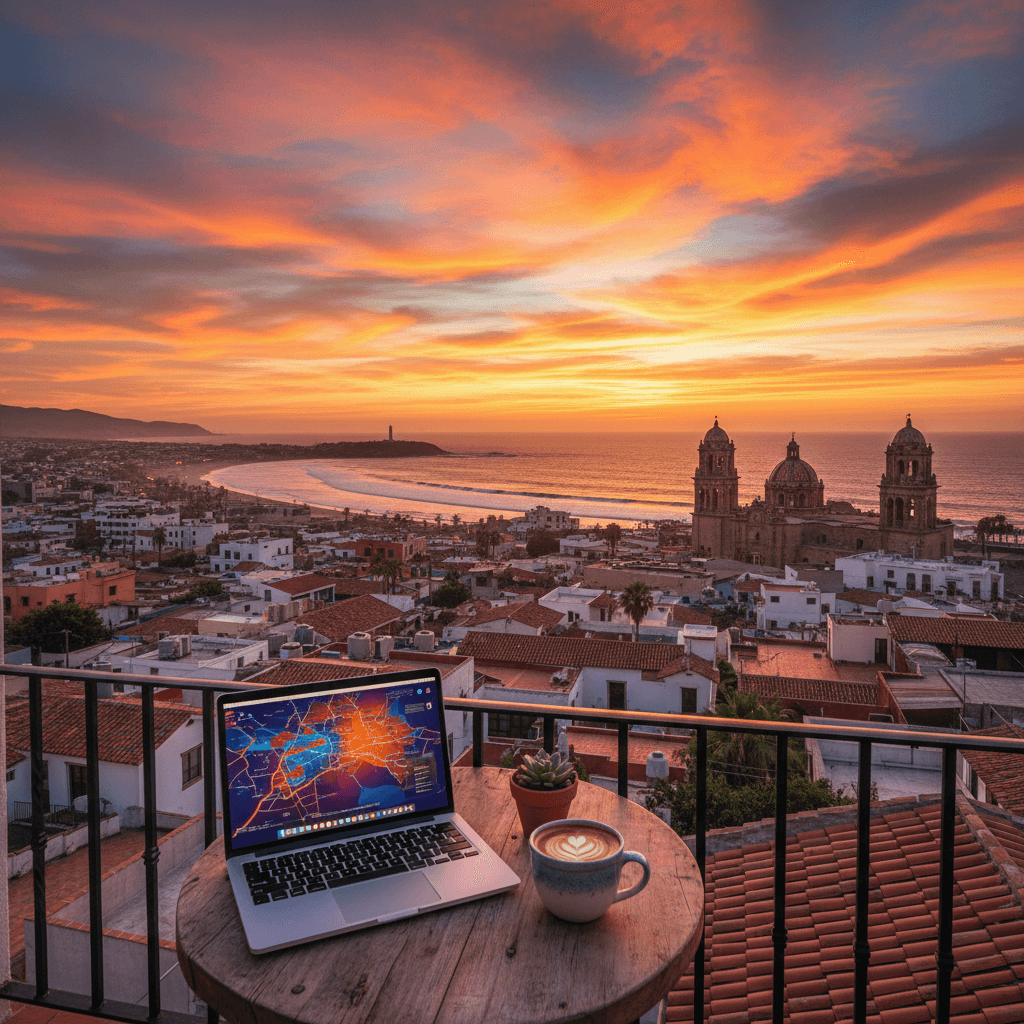
The vibe here is a specific blend of grit and relaxation. You’ll spend your mornings dodging potholes on a scooter and your afternoons watching the horizon turn neon pink with a mezcal in hand. It’s a town that rewards people who don't mind a little sand in their laptop keyboard. While it's growing fast, the community remains tight knit, often made up of nomads who rotate between here and Sayulita, chasing the best swell and the most reliable WiFi.
Most people come for the surf, but they stay for the community. There’s an unpretentious energy in the air that makes it easy to meet people. Whether you’re grabbing a smoothie bowl in La Punta or working from a beach club in Zicatela, the social barrier is low. You’ll find yourself part of a group of remote workers and surfers who value sunset rituals as much as hitting their deadlines.
Cost of Daily Life
Living here is generally more affordable than the Riviera Maya, but you’ll need to carry cash. Most local vendors, markets, and taco stands don't take cards, and ATMs can be temperamental. Expect to spend based on your comfort level:
- Budget: 15,000 to 20,000 MXN per month. This covers a studio in Rinconada for 8,000 to 12,000 MXN, eating street tacos for 50 MXN, and using 10 MXN colectivos to get around.
- Mid-range: 25,000 to 35,000 MXN per month. You’ll likely stay in La Punta with rent around 12,000 to 18,000 MXN, eat at nice cafes for 200 MXN, and use a coworking space.
- Comfortable: 40,000+ MXN per month. This allows for an upscale 1BR for 20,000+ MXN, frequent dinners at high end spots for 400+ MXN, and a private scooter rental for 1,500 MXN a month.
The Neighborhood Breakdown
Choosing where to drop your bags determines your entire experience. Each pocket of town has a distinct personality.
La Punta
- Best for: Social nomads and solo travelers.
- The Vibe: The heart of the nomad scene. It’s walkable, dusty, and full of vegan spots, yoga studios, and laptop friendly cafes.
- The Downside: It gets crowded during peak season and the infrastructure is always playing catch up.
Zicatela
- Best for: Pro surfers and nightlife seekers.
- The Vibe: Home to the "Mexican Pipeline," this stretch is iconic. It’s more developed than La Punta with beach clubs and a vibrant bar scene.
- The Downside: The waves are too dangerous for casual swimming, and it can get quite hot and loud.
Rinconada
- Best for: Families and those wanting a quiet, residential feel.
- The Vibe: A charming area with boutiques and calmer beaches like Playa Carrizalillo nearby. It’s much slower and more relaxed.
- The Downside: You’ll find fewer coworking options and less of that typical nomad "buzz."
The Digital Nomad Reality Check
The biggest hurdle here is the internet. While things are improving thanks to the new highway and more Starlink installations, outages still happen. Most seasoned nomads recommend Selina in Zicatela or Ñuu in Centro for reliable desks and call cabins for 250 MXN a day. To stay safe, grab a Telcel SIM card and use the "paquete amigo 20" for an hour of unlimited hotspotting when the house WiFi inevitably blips during a meeting.
Despite the occasional tech frustration, Puerto Escondido remains one of the safest and most soul satisfying spots in Mexico. It’s a place where the heat of the day, the salt in the air, and the slow pace of the Oaxacan coast force you to actually enjoy the life you’re working so hard to fund.
Puerto Escondido is often touted as a more affordable alternative to Playa del Carmen, but don't let the rustic dirt roads fool you. While it remains cheaper than the Caribbean coast, prices have climbed alongside its popularity. You can still live on a shoestring here, but most remote workers find themselves spending more to secure the two things that aren't always guaranteed: air conditioning and reliable fiber-optic internet.
Cash is king in Puerto. While some upscale spots in Zicatela might take a card, the vast majority of your daily transactions, from street tacos to surf lessons, will require Mexican Pesos. ATMs in La Punta often run out of cash by the weekend, so savvy nomads head into the town center early to stock up for the week.
Monthly Budget Tiers
The Budget Traveler (15,000 to 20,000 MXN)
This lifestyle is for those who don't mind a bit of sweat and a lot of local flavor. You'll likely be staying in a basic studio in Rinconada or a shared house.
- Housing: 8,000 to 12,000 MXN for a simple studio.
- Food: Sticking to street food (50 MXN tacos) and local markets.
- Transport: Using the colectivos for 10 to 20 MXN per ride.
- Workspace: Working from laptop-friendly cafes for the price of a coffee.
The Mid-Range Nomad (25,000 to 35,000 MXN)
Most digital nomads fall into this bracket. It allows for a private apartment in the heart of the action and regular meals out.
- Housing: 12,000 to 18,000 MXN for a 1-bedroom in La Punta or Zicatela.
- Food: Mixing home cooking with mid-range cafe meals (150 to 300 MXN).
- Transport: Occasional taxis or ride-hailing (50 to 100 MXN per trip).
- Workspace: A daily pass at a coworking space like Spaces for 290 MXN.
The Comfortable Expat (40,000+ MXN)
If you want luxury, Starlink internet, and a pool to escape the afternoon heat, expect to pay a premium.
- Housing: 20,000+ MXN for an upscale apartment with modern amenities.
- Food: Frequent dinners at high-end mezcal bars and beach clubs (400+ MXN).
- Transport: A monthly scooter rental for about 1,500 MXN.
- Workspace: A dedicated monthly coworking membership for 1,500 MXN.
Daily Expenses and Lifestyle Costs
Eating out is one of the highlights here. You can grab a quick breakfast at a local stall for under 100 MXN, while a trendy smoothie bowl in La Punta will run you closer to 200 MXN. If you're looking to save, the local markets are great for fresh produce, but keep in mind that imported goods at the supermarket come with a high price tag.
Staying connected is a hidden cost. Many nomads use the Telcel "paquete amigo 20" which gives you an hour of unlimited hotspot for 20 MXN. This is a lifesaver for important Zoom calls when the house WiFi inevitably flickers. If you are serious about work, factor in at least 1,000 to 2,000 MXN a month for transport and data backups to keep your productivity high.
Overall, Puerto Escondido offers a high quality of life for a fraction of what you would spend in the US or Europe. The community here is built on a "work hard, surf hard" mentality, and while the infrastructure is still catching up, the low cost of leisure makes it a trade-off most are happy to make.
For the Digital Nomad: La Punta
La Punta is the undisputed heart of the remote work scene in Puerto Escondido. It's where you'll find the highest concentration of barefoot-friendly cafes, vegan smoothie bowls, and people taking Zoom calls in linen shirts. The vibe here is social and high-energy, making it the easiest place to land if you're arriving solo and want an instant community.
Most nomads aim for La Punta because it's the most walkable pocket of town. You can spend your morning at a coworking space like Spaces, which offers reliable fiber-optic internet and private call cabins for around 290 MXN a day or 1,500 MXN a month. After work, the sunset ritual on the beach is non-negotiable. Just be prepared for the crowds; as the town's popularity has spiked, this area can feel a bit packed during the peak season from November to May.
- Monthly Rent: 12,000 to 18,000 MXN for a decent 1BR
- Vibe: Social, surf-centric, and laptop-friendly
- Internet: Better than average, but still look for Starlink or "Fiber" signs
For the Serious Surfer and Nightlife Seeker: Zicatela
If you're here for the legendary Mexican Pipeline, Zicatela is your base. This stretch of beach is famous for massive waves that are strictly for experts, but the neighborhood itself caters to anyone who wants to be in the middle of the action. It's grittier and hotter than La Punta, but it's where the best beach clubs and late-night mezcal bars are located.
Expats and long-term travelers often choose Zicatela because it feels more established. You'll find a solid mix of traditional Mexican eateries and upscale dining where a meal might run you 400 MXN or more. While it's noisier at night, the convenience of being steps from the sand and the main strip of bars is a major draw. Since the waves are often too dangerous for a casual swim, many residents here prioritize buildings with a pool.
- Monthly Rent: 12,000 to 20,000+ MXN depending on proximity to the water
- Vibe: High energy, professional surf culture, and party hubs
- Top Perk: The best sunsets and front-row seats to world-class surfing
For Families and Quiet Seekers: Rinconada
Rinconada offers a completely different pace. Located on a cliffside strip above Playa Carrizalillo, this neighborhood is much calmer and more manicured than the dusty streets of La Punta. It's the preferred spot for families and older expats who want a quiet night's sleep but still want to be within walking distance of boutique shops and Mediterranean-style bistros.
The main draw here is the access to calmer swimming bays. While Zicatela's waves can be intimidating, the turquoise waters of Carrizalillo are perfect for beginners and kids. You won't find many dedicated coworking spaces here, so you'll likely be working from your rental or a quiet cafe. Budget-conscious travelers often find better deals on studios here, sometimes as low as 8,000 MXN, if they're willing to stay a few blocks back from the main strip.
- Monthly Rent: 8,000 to 15,000 MXN for budget to mid-range stays
- Vibe: Relaxed, residential, and charming
- Best For: Swimming, families, and those who find La Punta too chaotic
For the Budget-Conscious Solo Traveler: Centro and Bacocho
If you want to live like a local and stretch your pesos, look toward the town center or the residential area of Bacocho. Centro is where the colectivos (local shared trucks) buzz through constantly, costing only 10 to 20 MXN a ride. It's the best place to find street tacos for 50 MXN and shop at the local markets where prices aren't inflated for tourists.
Bacocho is a bit further out but offers a clean, suburban feel with wide streets and the famous turtle release program at Playa Bacocho. It's a great middle ground if you want peace and quiet but don't mind a 10-minute scooter ride to reach the nomad hubs. Many travelers find that renting a scooter for about 1,500 MXN a month makes living in these peripheral neighborhoods much more viable.
- Monthly Rent: 6,000 to 12,000 MXN
- Vibe: Authentic, local, and spacious
- Transportation: A scooter or heavy use of taxis (50 to 100 MXN) is usually necessary
The Reality of Connection
Puerto Escondido is a place where you come for the waves and stay for the community, but the internet has historically been the town's biggest challenge. While the recent completion of the highway from Oaxaca has brought better infrastructure, connectivity remains "fair" at best in most residential areas. If you rely on basic hostel WiFi, you're going to struggle with video calls. The humidity and occasional salt spray can wreak havoc on local routers, making outages a common part of the "Punta" lifestyle.
The game-changer for most nomads in 2025 is Starlink. Before booking an Airbnb or long-term studio, always ask the host if they have fiber-optic or satellite internet. If they don't, you'll need a backup plan. Most experienced remote workers keep a Telcel SIM card handy. You can use the Telcel Amigo Internet por tiempo: 1 hour unlimited for 10 MXN. It's the most reliable way to hotspot through a critical Zoom meeting when the house WiFi inevitably blips.
Top Coworking Spots
Because home internet is so hit-or-miss, the coworking scene in La Punta and Zicatela has become the social hub for the digital nomad community. These spaces offer the stability you won't find at a beach club.
- Selina (Zicatela): While it leans more toward the "party hostel" side, the dedicated coworking area is reliable and popular with the younger surfer crowd. It’s a great spot if you want to network and find a group for sunset drinks immediately after logging off.
- Rinconada Cafes: If you're staying in the quieter Rinconada neighborhood, you won't find many formal coworking offices. Instead, nomads congregate in the local cafes. It's a slower pace, but the connection is usually decent enough for emails and light admin work.
The Laptop Cafe Culture
Puerto Escondido has a very relaxed "barefoot and laptop" vibe. In La Punta, you'll see people working from open-air cafes surrounded by tropical plants and sand floors. It’s idyllic, but keep in mind that many of these spots don't have air conditioning. If you're sensitive to the heat, you'll want to aim for an early morning session before the midday sun hits 35°C (95°F).
Always check the "laptop policy" before settling in. Some smaller cafes in La Punta have started restricting laptop use during peak brunch hours to keep tables turning. If you're looking for a spot to settle in for four hours, stick to the larger beach clubs in Zicatela or the established nomad hubs in La Punta where seeing a MacBook is the norm. Just remember to bring a screen privacy filter; the glare from the Pacific sun is no joke.
Practical Connectivity Tips
- Cash is King: Even at coworking spaces, the card machines can go down if the internet flickers. Always have enough Mexican Pesos on hand to pay for your day pass or your coffee.
- Power Surges: Tropical storms during the rainy season from June to October can cause brief power cuts. Keep your devices charged and consider a small power bank for your phone.
- VPN: Using a VPN is highly recommended when jumping between public cafe networks in town to keep your data secure.
- Timing: If you have high-bandwidth tasks like uploading large video files, try to do them early in the morning or late at night when the local network load is lower.
Staying Safe on the Coast
Puerto Escondido is widely considered one of Mexico's safest coastal hubs. Unlike the larger cities or the more commercialized stretches of the Riviera Maya, the vibe here is distinctly community oriented. Most nomads feel comfortable walking through La Punta or Zicatela at all hours, though the usual common sense applies. Avoid walking alone on isolated stretches of beach at night, and keep an eye on your belongings when you're distracted by the sunset.
The biggest physical threat isn't crime; it's the Pacific Ocean. The waves at Playa Zicatela are legendary for a reason. They are powerful, heavy, and intended for professional surfers. Even if you're a strong swimmer, the undertow can be treacherous. If you want a casual dip, stick to Carrizalillo or the beginner friendly breaks at the far end of La Punta.
- Emergency Services: Dial 911 for any immediate police, fire, or medical assistance.
- Local Scams: These are rare, but always confirm the price of a taxi before getting in to avoid the "tourist tax."
- Solo Travelers: Women traveling alone generally report feeling safe, but it's smart to stick to the main restaurant strips after dark.
Healthcare and Medical Facilities
Healthcare in Puerto is reliable for minor issues and routine checkups, but it isn't a major medical hub. For anything serious, most expats and long term travelers head to Oaxaca City or Mexico City. That said, you'll find several private clinics and small hospitals in the center of town that can handle stitches, infections, or stomach bugs.
Pharmacies are everywhere. You'll see Farmacias del Ahorro and Farmacias Similares on almost every major corner. They are great for basic first aid, and many have a "consultorio" next door where you can see a doctor for about 50 to 100 MXN without an appointment. It's a lifesaver if you pick up a tropical bug or need a quick prescription.
- Hospitals: The General Hospital is available for emergencies, but private clinics like Clinica Angel del Mar are often preferred by nomads for their faster service and English speaking staff.
- Payment: Almost all medical facilities expect payment in cash (Pesos) upfront. Even if you have international insurance, you'll likely need to pay out of pocket and file for reimbursement later.
- Water Safety: Do not drink the tap water. Stick to bottled water or the 20 liter "garrafones" that most rentals provide. Use purified water even for brushing your teeth if you have a sensitive stomach.
Practical Wellness Tips
The heat and humidity are no joke, especially between June and October. Dehydration and heat exhaustion hit newcomers hard. Keep a bottle of electrolytes (found at any OXXO) handy and wear reef safe sunscreen to protect the local marine life while you're in the water. Mosquitoes are also part of the package here; Dengue is occasionally present in the region, so use repellent during the "golden hour" at dusk when they are most active.
For those staying long term, it's worth noting that the dust in La Punta can cause respiratory irritation during the dry season. Many nomads find that staying slightly further back from the unpaved main roads helps. If you have specific chronic conditions, bring a 90 day supply of your medications, as specific brands can be harder to track down in the smaller Oaxacan pharmacies.
Getting Around Puerto Escondido
Puerto Escondido isn't a city where you'll be checking Google Maps for subway times. Life here moves at a slower pace, and the layout is spread across several distinct beach pockets. While the new highway from Oaxaca City has made the town more accessible, the local infrastructure remains charmingly rustic. You'll mostly rely on a mix of walking, the local "colectivo" trucks, and scooters to bridge the gap between your coworking space in La Punta and the big waves of Zicatela.
The Colectivo Experience
If you want to live like a local and keep your budget tight, the colectivos are your best friend. These are usually pickup trucks with a canopy and benches in the back, or small vans, running up and down the main coastal highway. They are incredibly frequent and cost between 10 and 20 MXN per ride. Just wave one down, hop in the back, and tap on the roof or signal the driver when you want to get off. It’s the most authentic way to move between the town center and the beach neighborhoods.
Taxis and Ride-Hailing
While you won't find the major global ride-sharing apps dominating the streets here, taxis are everywhere. They are generally affordable, with most short trips within town or between neighborhoods like Rinconada and La Punta costing between 50 and 100 MXN. Always confirm the price with the driver before you get in, as meters aren't the standard. If you’re arriving at the airport, expect to pay a premium of 200 to 400 MXN for a private taxi, though shared airport shuttles are a cheaper alternative for solo travelers.
Two-Wheeled Freedom
For digital nomads staying longer than a week, renting a scooter is the gold standard for independence. It allows you to skip the wait for colectivos and explore further reaches like Playa Bacocho or the bioluminescent lagoon at Manialtepec on your own schedule.
- Monthly Scooter Rental: Expect to pay around 1,500 MXN for a long-term arrangement.
- Daily Rates: Usually range from 300 to 500 MXN for short-term visitors.
- Parking: Generally easy and free, though you should always use the provided locks.
Walkability by Neighborhood
How much you'll need transport depends heavily on where you plant your surfboard. Puerto is a collection of villages rather than one cohesive walkable unit.
- La Punta: Highly walkable. You can get from your studio to the surf and the Spaces coworking hub entirely on foot. The roads are mostly unpaved sand, so leave the fancy shoes at home.
- Zicatela: The main strip is a long, flat walk filled with bars and cafes. It’s easy to navigate on foot, but it gets incredibly hot during midday.
- Rinconada: A quiet, paved neighborhood that is very walkable for families and those looking for a relaxed breakfast at a local boutique cafe.
Practical Transit Tips
The heat is a major factor in how you'll choose to move. Walking three blocks in the 35°C (95°F) midday sun feels a lot longer than it looks on a map. Most nomads do their walking in the early morning or after sunset, relying on taxis or scooters during the peak heat. Also, keep small change on you. Drivers rarely have change for 500 peso notes, and having 10 and 20 MXN coins ready for the colectivo will make your life much easier.
The Language Balance
Puerto Escondido is a tale of two worlds when it comes to communication. In the nomad hubs of La Punta and Zicatela, English is the unofficial second language. You can walk into almost any cafe or coworking space and order a flat white or book a surf lesson without knowing a word of Spanish. However, the town maintains a deeply authentic Oaxacan soul. Once you step away from the beach clubs and into the local markets or hop on a colectivo, the English safety net disappears quickly.
Most remote workers find that while they can survive on English alone, their experience is limited to the "expat bubble." To really get things done, like negotiating a long term rental or explaining a specific mechanical issue with a scooter, you'll need at least some functional Spanish. Locals are generally patient and appreciative when you try, even if you're just butchering the basics.
Communication Tools and Gear
Since the internet can be famously flaky here, your phone is your lifeline. Don't rely on your home country's roaming plan; it's often slow and unreliable in the Oaxacan heat. Expats and short term nomads alike recommend grabbing a Telcel SIM card immediately. It has the best coverage in the region, especially in the Rinconada and La Punta areas.
- Telcel Amigo Internet por tiempo packages: These are a local favorite for nomads needing a quick fix. You can get 1 hour of unlimited data for 10 MXN or 4 hours for 20 MXN. It’s the perfect backup for when your hostel WiFi dies right before a Zoom call.
- Google Translate: Download the Spanish dictionary for offline use. It’s a lifesaver in the Benito Juárez market where signal can be spotty and you're trying to identify a specific type of dried chili.
- WhatsApp: This is the primary way everything happens in Puerto. From booking a table at a popular restaurant to messaging your landlord about a leaky faucet, you’ll need a Mexican number or a linked account to stay in the loop.
Key Phrases for Nomad Life
You don't need to be fluent to be respectful. Beyond the standard greetings, there are a few specific phrases that will make your daily life much smoother in the cafes and streets.
- ¿Cuál es la contraseña del WiFi? (What is the WiFi password?): You’ll ask this at every cafe in Zicatela.
- ¿Aceptan tarjeta? (Do you accept card?): Most places are cash only, so ask this before you sit down to avoid an awkward walk to the ATM.
- ¿Cuánto cuesta el pasaje? (How much is the fare?): Use this when jumping on a colectivo to the town center; it should usually be between 10 and 20 MXN.
- Me gustaría una mesa con enchufe. (I would like a table with a power outlet.): Vital for those long afternoons working from a beach bar.
Social Dynamics and Networking
The social language of Puerto Escondido is informal and laid back. Networking doesn't happen in suits; it happens in board shorts at Spaces coworking or over a mezcal in La Punta. If you're looking to meet other remote workers, the community is very active on social media groups. Many nomads rotate between here and Sayulita, so the "surfer-DN" scene is tight knit but welcoming. If you show up at a turtle release or a yoga class, you'll likely meet people who are in the same boat, trying to balance a 40 hour work week with the perfect swell.
One thing to keep in mind is the "mañana" culture. Things move slower here. If a technician says they will arrive at noon to fix your fiber optic line, they might mean 2:00 PM, or they might mean tomorrow. Learning to communicate with patience rather than frustration is perhaps the most important language skill you can develop in Puerto Escondido.
The Sweet Spot: November to May
If you want the classic Puerto Escondido experience, aim for the dry season between November and May. This is when the humidity drops to manageable levels and the sky stays a consistent, brilliant blue. For digital nomads, this window is ideal because power outages and internet flickers, often triggered by heavy tropical storms, are far less frequent.
Temperatures during these months usually hover between 28°C and 35°C (82-95°F). Even at night, it rarely dips below 25°C, so you can leave the sweaters at home. This is also the peak season for the social scene in La Punta and Zicatela. You’ll find the coworking spaces like Spaces in La Punta at their liveliest, filled with remote workers who migrate here to escape the northern winter.
Surfing Seasons and Swell
Your "best time" depends heavily on your relationship with the ocean. Puerto Escondido is a world-class surf destination, but the waves change character throughout the year. Experienced surfers usually arrive between May and August, when the South Pacific sends massive swells toward Zicatela, creating the legendary "Mexican Pipeline."
- Beginners and Intermediates: Stick to the winter months, specifically December through March. The waves at La Punta are more forgiving and the water is crystal clear.
- Pro Level: The monster waves peak in June and July. Even if you don't surf, watching the pros tackle 20-foot faces from the safety of a beach club is a local pastime.
- Nature Lovers: If you're here for the wildlife, December to March is prime whale-watching season. You can also join turtle releases at Playa Bacocho almost year-round, though peak nesting occurs in late fall.
The Rainy Season Reality
The rainy season runs from June through October. Unlike some tropical spots where it rains for twenty minutes and stops, Puerto can experience intense, lingering storms, especially in September and October. This is the "low season," and while prices for long-term rentals in Rinconada or La Punta might drop, there are trade-offs.
Expect higher humidity that makes 30°C feel like 40°C. Mosquitoes become a serious factor, so you'll need to stock up on repellent. For nomads, the biggest hurdle is the infrastructure. Heavy rains can lead to "brownouts" or knock out local towers, making a Starlink connection or a Telcel "paquete amigo" hotspot backup a necessity for anyone with a deadline.
What to Pack for the Coast
Puerto Escondido is unapologetically casual. You'll spend most of your time in flip-flops or barefoot. Most nomads find that a "less is more" approach works best for the Oaxacan coast.
- Breathable Fabrics: Linen and light cotton are your best friends. Avoid heavy denim; it never feels dry in the humidity.
- Sun Protection: The sun here is aggressive. Bring reef-safe sunscreen to protect the local ecosystem and a high-quality hat.
- Tech Essentials: A portable power bank and a universal adapter are smart additions. If you're planning to work from cafes, a laptop cooling pad can prevent your hardware from throttling in the midday heat.
- Health Kit: Pack plenty of mosquito repellent and basic rehydration salts. The heat and the local "Oaxaca belly" can sneak up on you if you aren't careful.
Connectivity and the Digital Grind
Internet in Puerto Escondido has historically been the biggest hurdle for remote workers, but the situation is changing. While standard hotel and hostel WiFi can still be spotty, many dedicated rentals and cafes now utilize Starlink or fiber optic connections. Most nomads find that having a backup plan is a requirement, not a suggestion. Pick up a Telcel SIM card and use the paquete amigo 20, which gives you an hour of unlimited hotspot for 20 MXN. It is a lifesaver for those unexpected Zoom calls when the house net drops.
For a guaranteed stable environment, head to Spaces in La Punta. It is the go-to hub for the community, featuring private call cabins, ergonomic desks, and bottomless coffee. You can grab a daily pass for 290 MXN or commit to a monthly membership for 1,500 MXN. If you prefer a more casual barefoot vibe, the cafes in La Punta and Zicatela are laptop friendly, though you should always test the speed before ordering your first latte.
Money and Budgeting
Cash is king here. While upscale restaurants and beach clubs in Zicatela might take cards, you will need Mexican Pesos for almost everything else, including street food, colectivos, and local markets. ATMs in La Punta often run out of cash by the weekend, so expats recommend heading into the town center early in the week to stock up. Expect to pay a small fee at the machine, usually around 30 to 100 MXN.
Your monthly burn rate depends heavily on your neighborhood and lifestyle choices:
- Budget: 15,000 to 20,000 MXN. This covers a basic studio in Rinconada, plenty of 50 MXN street tacos, and using colectivos to get around.
- Mid-range: 25,000 to 35,000 MXN. This allows for a 1BR apartment in La Punta, daily cafe visits, and several coworking passes.
- Comfortable: 40,000+ MXN. At this level, you are looking at high end rentals, frequent dinners at upscale mezcal bars, and a private scooter rental.
Getting Around
The town is spread out, but the main hubs are very walkable. To move between neighborhoods, jump on a colectivo, the local shared trucks, for just 10 to 20 MXN. They run frequently along the main coastal road. Taxis are also plentiful and usually cost between 50 and 100 MXN for a trip within town limits. If you are staying for a month or more, renting a scooter for roughly 1,500 MXN per month gives you the most freedom to explore further beaches like Tierra Blanca.
Weather and Packing
The heat is relentless, with temperatures rarely dipping below 25°C (77°F) even at night. The dry season runs from November to May, which is the prime window for both surfing and working without worrying about power outages during tropical storms. If you visit during the rainy season between June and October, expect high humidity and dramatic afternoon downpours. Pack breathable linens, reef safe sunscreen to protect the local ecosystem, and a heavy duty mosquito repellent, as the bugs can be fierce at dusk.
Safety and Health
Puerto Escondido is widely considered one of the safest coastal towns in Mexico. Most travelers feel comfortable walking through La Punta or Zicatela at night, but it is still wise to avoid unlit, isolated beach stretches after dark. For minor health issues, local pharmacies are everywhere and can often provide basic consultations. In an emergency, dial 911. For anything serious, you will likely need to head to the hospitals in the main town area, so ensure your travel insurance is up to date and covers medical evacuations.
Finding a Home
If you are looking for long term stays, start your search in Rinconada for a quieter, residential feel, or La Punta if you want to be in the center of the nomad action. Studios and one bedroom apartments generally range from 8,000 to 20,000 MXN depending on how close you are to the sand. Many nomads recommend booking a few nights in a hostel first and then walking the neighborhoods to look for "Se Renta" signs, as the best deals are rarely listed on major booking platforms.
Need visa and immigration info for Mexico?
🇲🇽 View Mexico Country GuideHidden Gem
Worth the effort
Monthly Budget Estimates
More cities in Mexico
Mazatlán
🇲🇽 Mexico
Querétaro
🇲🇽 Mexico
San Cristóbal de las Casas
🇲🇽 Mexico