Pucón
🇨🇱 Chile
The Adventure Capital of the South
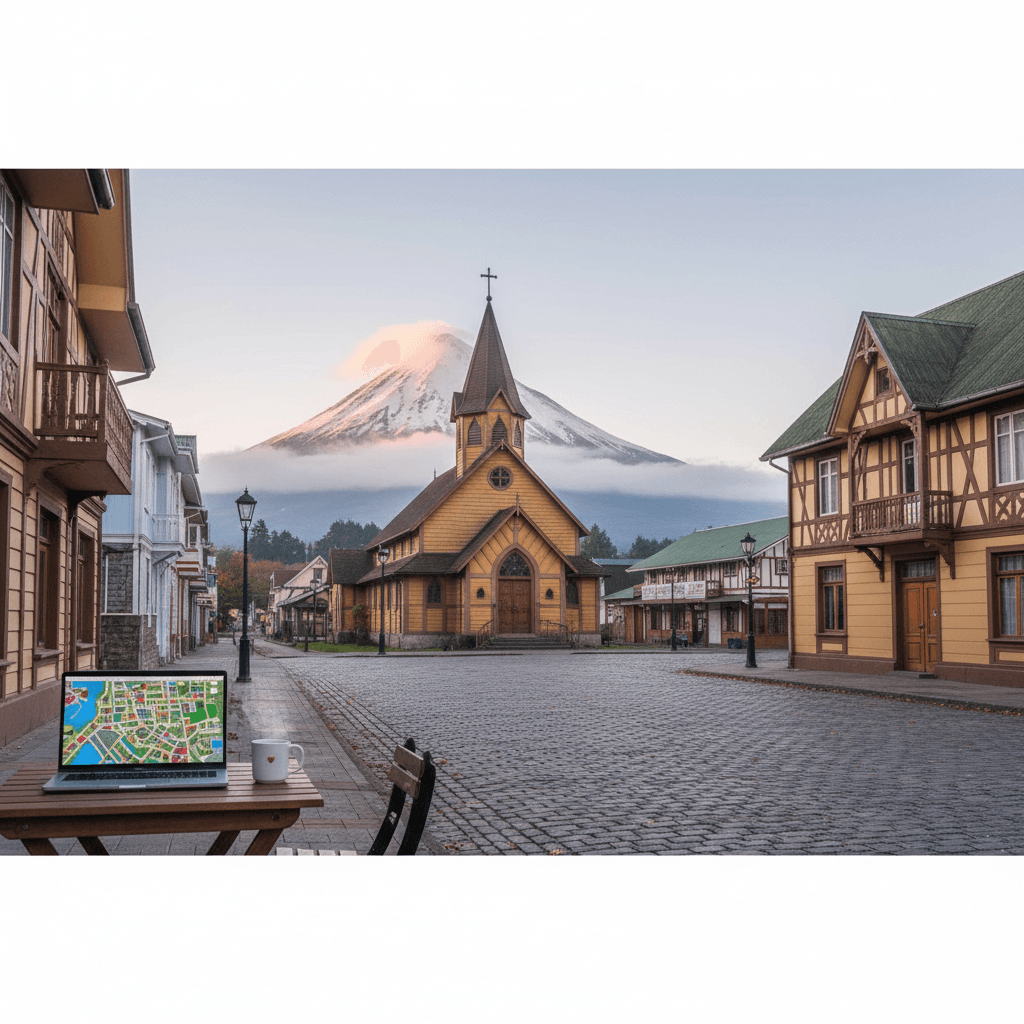
Pucón doesn't just sit in nature; it lives within it. Nestled at the foot of the Villarrica Volcano, one of South America's most active peaks, the town feels like a base camp with better coffee and faster internet. It's a place where you can spend your morning on a Zoom call and your afternoon sliding down a glacier or soaking in a thermal spring. For nomads in 2025, it represents a shift away from the urban sprawl of Santiago toward a lifestyle defined by the seasons and the elements.
The vibe here is high energy but unpretentious. You'll see mountain bikes leaning against craft brewery walls and digital nomads working from lakeside cafes with mud on their hiking boots. It's a real town of approximately 27,000 residents, meaning it maintains a soul during the off-season, though it transforms into a high-octane tourist hub during the Chilean summer. Travelers often say the air here just feels different, a mix of lake breeze and the faint, sulfurous reminder that you're living in the shadow of a literal giant.
What to Expect
Life in Pucón revolves around the lake and the volcano. The downtown core is compact enough that you can walk across it in about 15 minutes, making it one of the most accessible bases in the Lake District. While it lacks the massive coworking hubs found in Medellin or Lisbon, the local infrastructure has caught up with the remote work trend. Most nomads find that the reliable fiber optic connections in local rentals and hostels like those found through Workaway make up for the lack of dedicated office spaces.
- The Draw: Unrivaled access to the outdoors. You have the Villarrica summit, rafting on the Trancura River, and the ancient Araucaria forests of Huerquehue National Park all within a short drive.
- The Trade-off: It’s a small town. If you need a different high-end sushi spot every night or a massive tech networking scene, you might feel the walls closing in after a month.
- The Crowds: January and February see a massive influx of domestic tourists. If you prefer a quieter pace, the shoulder seasons of March to May or October to November are the sweet spots.
The Living Experience
The cost of living here reflects Pucón's status as a premier destination. Expect to pay 20% to 50% more than you would in Santiago for housing and dining. A mid-range lifestyle typically sits between $1,500 and $2,500 per month. While the town is walkable, having a car or a sturdy mountain bike is the key to unlocking the surrounding region. Most expats recommend renting a vehicle if you plan to stay more than a few weeks, as the best secret spots and trailheads aren't always served by the local buses.
Socially, the town is welcoming but Spanish-heavy. While tour operators and high-end hotels speak English, your day-to-day life at the grocery store or the local "feria" (handicraft market) will go much smoother with some basic Spanish. The community is a blend of rugged locals, adventure sport professionals, and a growing number of remote workers who have traded the city for the mountains. It's the kind of place where your weekend plans are dictated by the weather report and the volcano's current alert level.
Safety and Connectivity
Pucón is remarkably safe, even for solo travelers. Petty theft exists, as it does in any tourist town, but the general atmosphere is one of community trust. For connectivity, Entel and Movistar are the go-to providers for 5G coverage, and data plans are affordable, usually around $10 to $20 a month. You won't find yourself disconnected unless you're deep in the national parks, which, for many who choose Pucón, is exactly the point.
The Cost of Adventure
Living in Pucón comes with a "tourist tax" that you won't find in the more industrial cities of central Chile. Because it is the country's premier adventure hub, prices here typically run 20% to 50% higher than in Santiago. You are paying for the privilege of having a volcano in your backyard and a lake at your front door.
For a digital nomad living a modest life, expect to spend between $1,000 and $1,500 USD per month. This budget covers a bed in a high-quality hostel or a shared apartment, plenty of street food like empanadas or completos, and local bus fare. If you want your own space and regular dinners out, a mid-range lifestyle will land between $1,500 and $2,500 USD.
Monthly Budget Breakdowns
- Budget Tier ($1,000 to $1,500): Best for those who don't mind shared living. Expect $300 to $500 for a room, $5 to $8 per quick meal, and limited paid tours.
- Mid-Range ($1,500 to $2,500): The sweet spot for most nomads. Budget $600 to $900 for a private studio or small cabin, $10 to $15 for restaurant meals, and a few hundred dollars for weekend excursions.
- Comfort Tier ($2,500+): High-end living. Upscale lakeside rentals start at $1,000 and can climb much higher during the January peak. Expect to pay $20 to $30 for nice dinners with wine.
Housing and Neighborhoods
The real estate market in Pucón is seasonal and aggressive. If you arrive in January or February, prices double and availability vanishes. Savvy nomads often book for the shoulder seasons, March to May or October to November, to snag better deals on long-term stays.
Downtown and Playa Grande
- Rent: $600 to $850 for a central apartment.
- Vibe: High energy, walkable, and close to the bars.
- Pros: You won't need a car. Everything from the grocery store to the tour agencies is within a 15 minute walk.
Lakeside and Outskirts
- Rent: $900 to $1,400+ for scenic views.
- Vibe: Quiet, secluded, and natural.
- Pros: Better views of Villarrica and easier access to the forest trails, but you will almost certainly need to rent a car or scooter.
Daily Expenses and Connectivity
Groceries are fairly standard for Chile, though fresh produce is best bought at the local fairs rather than the supermarkets. A liter of milk is about $1.20, and a local beer in a bar will set you back $4 to $6. For your phone, grab a SIM card from Entel or Movistar. A solid data plan for the month costs roughly $10 to $20 and generally offers reliable 4G or 5G speeds in the town center.
While Pucón doesn't have a massive selection of dedicated coworking spaces yet, many nomads work from laptop-friendly cafes or adventure-oriented hostels. Factor in about $100 to $200 a month for "work-from-anywhere" costs, including coffee and the occasional day pass at a local workspace. If you plan on exploring the surrounding national parks, car rentals start around $40 per day, which is often cheaper than booking multiple individual tours if you have a small group.
Most travelers find that while Pucón isn't the cheapest base in South America, the quality of life and the sheer volume of outdoor activities make it worth the extra investment. Just be sure to bring a "buffer" in your budget for those spontaneous volcano climbs or hot spring visits that inevitably pop up.
The Solo Nomad: Downtown and Playa Grande
If you're landing in Pucón without a car and want to be in the thick of the action, the downtown core near Playa Grande is your best bet. This is the heart of the adventure scene where you can walk across town in about 15 minutes. Most nomads gravitate here because the proximity to tour agencies, cafes, and the lakefront makes it easy to balance a work block with a quick afternoon swim or a sunset beer.
Living here means you're steps away from the handicraft fair and the main nightlife strip. You'll find plenty of hostels and apartments that offer reliable fiber internet, though dedicated coworking spaces are still a rarity. Most people set up shop in local cafes or shared lounge areas. The tradeoff for this convenience is the noise; during the peak summer months of January and February, the central streets stay loud well into the night.
- Rent: expect to pay $600 to $900 for a studio or one bedroom apartment.
- Vibe: energetic, social, and highly walkable.
- Best for: networking with other travelers and easy access to volcano trekking groups.
Expats and Long-Termers: Lakeside and La Poza
Expats who plan to stay for a season or longer often move slightly away from the central bustle toward the Lakeside or the La Poza area. These neighborhoods offer a more residential feel with stunning views of Lake Villarrica and the catamaran docks. It's quieter than downtown but still close enough to walk in for groceries or a meal.
This area feels a bit more upscale and "permanent" than the hostel heavy center. You'll find better equipped kitchens and more spacious living areas, which are a must if you're cooking at home to avoid the 20% to 50% tourist premium at local restaurants. It's a calmer base for those who want the lake breeze without the late night music from the bars.
- Rent: high end apartments can go for $1,000 to $1,500 per month.
- Vibe: scenic, breezy, and relaxed.
- Best for: remote workers who need a quiet environment and those staying 3+ months.
Families: The Outskirts and Camino al Volcán
Families usually find the downtown area a bit too cramped and noisy. Instead, they look toward the Outskirts or along Camino al Volcán. These areas offer larger homes with yards and direct views of the Villarrica Volcano. It feels more like living in a forest than a town, providing plenty of space for kids to run around.
The catch is that you'll absolutely need a car. While local buses run along the main roads, they aren't convenient for school runs or grocery hauls. Being out here puts you closer to the trailheads and the higher altitude forest, but you'll be paying for the peace with a 10 to 15 minute drive into town for every errand. Most families find the trade worth it for the safety and the mountain air.
- Rent: houses typically range from $1,200 to $2,000 depending on the view and acreage.
- Vibe: private, nature focused, and suburban.
- Best for: those with children or anyone who prefers a 4x4 over a pair of walking shoes.
The Nature Purist: Near the Hot Springs
For travelers who are in Pucón specifically for the "wild" factor, looking at properties further out toward the Hot Springs (Termas) or the Ojos del Caburgua is common. This isn't a neighborhood in the traditional sense, but rather a collection of cabins and eco lodges scattered in the woods. It's the ultimate escape for those who want to wake up to the sound of waterfalls instead of traffic.
Connectivity can be hit or miss here, so you'll want to verify the 4G signal or Starlink availability before committing. It’s the perfect spot if your "office" is a hammock and your commute is a hike. Be prepared to pay for car rentals starting around $40 a day, as you'll be far from the central supply hubs.
- Cost: cabin rentals vary wildly, but budget at least $1,200 for something comfortable.
- Vibe: rustic, secluded, and adventurous.
- Best for: writers, artists, or nomads who want to be as close to the trails as possible.
Connectivity and Speed
While Pucón is famous for its rugged terrain, the internet infrastructure is surprisingly modern. Most long term rentals and hostels now offer high speed fiber optic connections. You can generally expect download speeds between 100 Mbps and 300 Mbps in the town center, though this can dip during the peak summer months of January and February when the tourist population swells.
If you're planning to work from the outskirts or near the base of the volcano, don't rely on the Wi-Fi alone. The signal can get spotty once you leave the main grid. Most digital nomads use a local SIM card as a backup. Entel and Movistar are the most reliable providers in the Lake District, offering 4G and 5G coverage that holds up well for video calls. You can pick up a prepaid SIM in town for about $5 to $10 USD, and data plans usually run around $15 to $20 USD per month for a generous allowance.
Coworking Spaces and Work Culture
Pucón doesn't have the massive, corporate coworking hubs you'll find in Santiago. The scene here is much more intimate and integrated into the local hospitality culture. Many nomads gravitate toward specialized "work-stay" hostels that prioritize desk space and stable routers. You'll find that the community is small but active; it's easy to meet other remote workers during the morning coffee rush before everyone heads out for an afternoon hike.
Because there aren't many dedicated, standalone coworking offices with public daily rates, many travelers treat the town's cafes as their unofficial offices. The vibe is generally welcoming to laptops as long as you're ordering food or coffee. It's a common sight to see people coding or designing with a view of the volcano in the background. Just keep in mind that Pucón is an adventure town first; by 5:00 PM, the focus shifts quickly from spreadsheets to craft beers and planning the next day's rafting trip.
Best Cafes for Remote Work
If you need a change of scenery from your rental, the downtown area has several spots where you can settle in for a few hours. Look for places near the Playa Grande or the main square, where the infrastructure is most consistent.
- Café Berlín: A well-documented spot known for its cozy atmosphere and reliable connection, making it a popular choice for those needing to get through a few hours of work.
- Trawen: Located on the main strip, this restaurant and cafe offers a spacious environment and a solid menu, ideal for a working lunch.
- Cassis: This is a local staple. While it can get noisy during the lunch rush, it's great for casual tasks and has plenty of power outlets if you snag the right seat.
- La Poza Area: Several smaller bistros near the waterfront offer a quieter atmosphere during weekday mornings, perfect for deep work sessions.
Practical Tips for Digital Nomads
Power outages aren't frequent, but they can happen during heavy winter storms or high demand periods. A portable power bank and a solid data plan for tethering are smart investments. If you have a critical meeting, it's always better to take it from a central location rather than a remote cabin in the woods.
- Local SIM Cost: $10 to $20 USD for a monthly data package.
- Average Fiber Speed: 150+ Mbps in the town center.
- Peak Season: December to March; expect slower public Wi-Fi due to crowds.
- Best Provider: Entel generally has the best reach in the Araucanía region.
Expats often recommend bringing a universal adapter, though Chile uses the Type C and L plugs common in Europe. If you're coming from North America, you'll definitely need one. Most nomads find that as long as they stay within the walkable town core, the "office" view is hard to beat anywhere else in South America.
Safety in the Adventure Capital
Pucón maintains a reputation as one of the safest towns in Chile for solo travelers and digital nomads. Because the local economy relies so heavily on tourism, there is a strong community incentive to keep the streets secure. You can generally walk through the downtown core or along Playa Grande at night without issue, though it is always smart to keep an eye on your belongings in crowded bars or at the handicraft fair.
Most safety concerns here are actually environmental rather than criminal. Since you are living at the foot of Villarrica Volcano, one of South America's most active peaks, you should familiarize yourself with the town's volcanic traffic light system. Green means normal conditions, Yellow indicates increased activity, Orange means eruption likely or occurring, and Red is the highest alert level restricting all access. Local authorities have clearly marked evacuation routes throughout the town, identifiable by bright signs, so just take a mental note of the one nearest your accommodation.
- Petty Theft: While rare, keep your phone and wallet secure in the main tourist plazas, especially during the high season from December to February.
- Adventure Risks: If you are heading out for canyoneering or hiking the Villarrica summit, always go with a certified guide. Weather shifts quickly in the Lake District, and what starts as a sunny morning can turn into a whiteout by noon.
- Emergency Numbers: Save 131 for an ambulance and 133 for the Carabineros (police) in your phone before you arrive.
Healthcare Facilities and Services
For a town of 30,000 people, Pucón is well equipped for day to day medical needs. You will find several farmacias (pharmacies) clustered around the main square and O'Higgins street that carry most standard medications. If you need a specific prescription, bring the original bottle or a digital copy of your script, as pharmacists are generally helpful but follow Chilean regulations strictly.
For minor illnesses or injuries, there are private clinics in town like Clínica Pucón. These facilities are modern and accustomed to seeing international visitors. Expect to pay around $50 to $80 USD for a basic consultation. Most expats recommend having a solid travel insurance policy that covers high altitude activities if you plan on skiing or climbing, as those costs can climb quickly if specialized transport is needed.
Serious Medical Emergencies
While Pucón handles the basics well, serious trauma or complex surgeries usually require a transfer to Temuco, which is about 90 minutes away. Temuco is the regional capital and home to large, high tech hospitals like Clínica Alemana. If you have a chronic condition that requires specialist visits, you might find yourself making that drive once a month.
- Tap Water: The tap water in Pucón is generally safe to drink and tastes excellent because it comes from mountain sources. Most nomads drink it straight without any issues.
- Sun Protection: The ozone layer is thinner over southern Chile. Even on cloudy days, the UV index is high. Grab a high SPF sunscreen at a local pharmacy like Cruz Verde or Ahumada.
- Health Insurance: If you are staying long term, look into SafetyWing or World Nomads, specifically checking that they don't exclude "extreme sports" which often includes basic volcano hiking in their fine print.
Getting Around Pucón
Pucón is remarkably compact. If you're staying in the town center, your own two feet are your best asset. You can walk from the Playa Grande beach to the main square or the monastery lookout in about 15 minutes. Most nomads find the core area so manageable that they only look for wheels when they're heading out to the volcano or the hot springs.
Public Transport and Ridesharing
Local buses and "micros" are the go-to for budget-conscious travelers. They run frequently between Pucón and Villarrica, as well as to nearby attractions like the Huerquehue National Park. While there isn't a complex subway or tram system, these buses are reliable and cheap, usually costing just a few dollars per trip.
- Ridesharing: Uber exists here but it's often sparse. Don't rely on it for a 4:00 AM airport run. Most expats recommend using local taxi apps or simply heading to the taxi stands near the main square.
- Airport Shuttles: Since Araucanía Airport (ZCO) is about 90 minutes away, pre-booked shuttles are the standard. Expect to pay between $20 and $50 depending on whether you're in a shared van or a private car.
Wheels for Rent
For true freedom, you'll want your own transport, especially if you're staying in the outskirts or planning to hit the ski slopes. Having a car lets you bypass the rigid schedules of tour agencies, which is a major plus if you're trying to fit a hike between Zoom calls.
- Car Rentals: Prices generally start around $40 per day. If you're visiting during the peak summer months of January and February, book well in advance as the fleet in town is limited.
- Bikes and Scooters: You'll find several rental shops along O'Higgins, the main strip. Mountain bikes usually run $10 to $20 per day. It's a great way to reach the nearby waterfalls without the hassle of parking a car.
Navigating the Region
While the town is walkable, the surrounding geography is rugged. Moving between the lake, the forest trails, and the volcano base requires a bit of planning. Most nomads suggest bundling your errands or social outings. If you're heading to the Termas (hot springs) for the afternoon, check the bus schedules early, as the last return trips often leave before sunset.
If you're staying for a month or more, consider a long-term bike rental. The terrain is relatively flat within the town limits, and it's often faster than driving through the summer traffic that clogs the narrow streets during high season.
The Language Landscape
Spanish is the heartbeat of Pucón. While the town is a major international tourism hub, don't expect the high levels of English you might find in Santiago's Providencia or luxury resorts in the Caribbean. In the downtown core, particularly within tour agencies like Summit Chile or high-end hotels near Playa Grande, you'll find plenty of bilingual staff. Outside of those specific bubbles, you're going to need at least a functional grasp of Spanish to handle daily life.
Expats living here long-term often mention that while you can "get by" with hand gestures and a smile at the local feria (handicraft market), your social life will be severely capped without the local tongue. Most nomads find that a few weeks of intensive study makes a massive difference in how they're treated by the locals, who are generally friendly but appreciate the effort.
Navigating "Chileno"
Chilean Spanish is notorious across Latin America for its speed and unique slang. Locals in the Araucanía region speak fast and often drop the "s" at the end of words. You'll hear the word "cachai?" (meaning "you get it?" or "you know?") at the end of almost every sentence. Another staple is "po", which is added to "si" or "no" for emphasis. If someone tells you something is "bacán," they're saying it's cool or awesome.
Travelers often say the local accent takes a few days to tune into, even if you're already fluent in Spanish. If you're struggling, just ask them to speak "más lento, por favor." They're used to tourists and are usually happy to slow down the pace.
Practical Communication Tools
Because Pucón is tucked away in the Lake District, you can't always rely on a perfect data connection when you're out exploring the trails near Villarrica Volcano. Most nomads recommend a specific setup to keep communication seamless:
- Google Translate: Download the Spanish language pack for offline use. The camera feature is a lifesaver for translating menus at smaller local eateries or reading posted notices at the bus station.
- WhatsApp: This is the primary way everything gets done in Chile. From booking a rafting trip to messaging a landlord about a studio rental, you'll need a local number or a data plan to stay in the loop.
- SpanishDict: Many expats prefer this over Google for more accurate Chilean-specific conjugations and slang definitions.
Connectivity and SIM Cards
To keep these tools running, you'll want a local SIM card immediately. You can pick these up at small convenience stores or pharmacies in the center of town. Entel and Movistar are the heavy hitters here. Most nomads suggest Entel for better coverage if you plan on heading out to the hot springs or deeper into the forests. You can usually grab a prepaid data plan for around $10 to $20 USD per month, which provides plenty of gigabytes for navigation and translation apps.
Social Etiquette
Communication in Pucón is as much about body language as it is about words. A single kiss on the right cheek is the standard greeting between women, or between a man and a woman, even if you've just met. Men usually stick to a firm handshake. When you're entering a small shop or a cafe, a quick "Hola, buenas tardes" is expected. Skipping the greeting can come across as rude, even in a busy tourist town. If you're working from a cafe, it's polite to ask "¿Tienen Wi-Fi?" before you settle in with your laptop, even if there's a sign in the window.
The Sweet Spot: December to March
If you're looking for the quintessential Pucón experience, aim for the southern hemisphere summer. From December through March, the town transforms into a high-energy hub for hikers and lake lovers. Expect daytime highs between 20°C and 30°C (68°F to 86°F). These are the prime months for summiting Villarrica Volcano or spending your afternoons at Playa Grande.
January and February are the peak of the Chilean holiday season. The town gets crowded, prices for short-term rentals can spike by 30% or more, and the main street, Avenida O'Higgins, feels like a constant parade. Most nomads prefer March; the weather stays warm, the families head back to Santiago, and you'll have a much easier time snagging a quiet table at a local cafe to get some work done.
Winter and the Ski Season
From June to August, the vibe shifts entirely. Temperatures hover between 5°C and 15°C (41°F to 59°F), and the snow line drops low enough to open the ski center on the slopes of the volcano. It's a unique setup where you can spend the morning skiing and the afternoon soaking in one of the many nearby hot springs like Termas Geométricas.
While the winter scenery is stunning, it's also the wettest time of year. Pucón is in the Lake District, which means it earns its lush green landscape through significant rainfall. If you're planning a winter stay, make sure your accommodation has a solid heating system, ideally a wood-burning stove or "combustión lenta," which is the local standard for staying cozy.
The Shoulder Seasons
Spring (October and November) and Autumn (April and May) are the wildcards. These months are perfect for those who prioritize peace and lower costs over guaranteed sunshine.
- October to November: The wildflowers are blooming and the rivers are at their highest, making this the best window for white-water rafting.
- April to May: The ancient Araucaria forests turn brilliant shades of red and orange. It's arguably the most photogenic time for photographers and trail runners.
- Rain Factor: Be prepared for unpredictable downpours. A high-quality waterproof shell isn't just a suggestion here; it's a daily requirement.
Practical Realities for Nomads
Because the weather can change in a heartbeat, flexibility is your best friend. Many travelers find that booking outdoor excursions like the volcano trek requires a two or three-day window to account for wind or cloud cover. If the port is closed due to high winds, the boats won't go out on Lake Villarrica, but that's usually the perfect excuse to head to the nearby forests where the canopy offers some protection.
Expats living here year-round suggest keeping an eye on the "puelche," a warm, dry wind that comes from the east. It can send temperatures soaring unexpectedly, even in the shoulder seasons. No matter when you visit, the sun at this latitude is incredibly strong. Even on cloudy days, you'll want to keep the sunscreen handy if you're spending the day outside.
Connectivity and Workspace
While Pucón doesn't have a massive selection of dedicated coworking hubs, the town is well-wired for remote work. Most nomads rely on high-speed fiber optics available in modern rentals and hostels like Workaway spots. If you need a change of scenery, the local cafe culture is welcoming to laptops, provided you're ordering coffee and snacks. For mobile data, grab a SIM card from Entel or Movistar. You can pick these up in town for about $10 to $20 a month, which usually covers enough data for hotspotting in a pinch.
Budgeting for the Lake District
Pucón carries a "resort town" premium. Expect to pay about 20% to 50% more here than you would in Santiago. Most mid-range nomads find that a monthly budget between $1,500 and $2,500 allows for a comfortable lifestyle including a private studio and frequent excursions.
- Budget Tier ($1,000 to $1,500): Best for those staying in shared housing or hostels ($300 to $500) and sticking to street food like empanadas that cost $5 to $8.
- Mid-Range ($1,500 to $2,500): Covers a private 1BR apartment ($600 to $900) and regular dinners out at $10 to $15 per meal.
- Comfortable ($2,500+): Allows for upscale lakeside rentals ($1,000+) and professional guided tours which add another $100 to $200 to your monthly overhead.
Navigation and Transport
The town core is incredibly compact. You can walk from the main square to Playa Grande or the handicraft fair in under 15 minutes. For anything outside the center, you'll want wheels. Local buses are cheap and reliable for reaching nearby trailheads, but they don't run late. Uber is hit-or-miss here, so most expats keep a few local taxi numbers in their phones.
If you're staying for a month or more, renting a car is the best way to see the waterfalls and hot springs on your own schedule. Expect to pay around $40 per day for a basic rental. For getting in and out of the region, Araucanía Airport (ZCO) is about 90 minutes away. A shuttle or private transfer to Pucón usually costs between $20 and $50.
Safety and Health
Pucón is widely considered one of the safest spots in Chile for solo travelers. Petty theft happens, particularly at the beach or near the bus station, so don't leave your gear unattended while you're swimming. For medical needs, there are clinics and pharmacies clustered around the main square that can handle minor illnesses or hiking scrapes. For anything serious, you'll likely be transported to a larger hospital in the regional capital. Dial 131 for an ambulance or 133 for the police.
When to Go
The seasons dictate the vibe here. December to March is the peak summer window. It's the best time for hiking the volcano and enjoying the lake, with temperatures hitting 20°C to 30°C. However, it gets crowded and noisy. If you prefer a quieter pace, the shoulder seasons in late spring or autumn are beautiful, though you'll need a good raincoat. June to August is for the skiers, as the Villarrica Volcano transforms into a winter playground, though many of the hiking trails become inaccessible without professional gear.
Language and Social Life
Spanish is the primary language. While tour operators and high-end hotel staff usually speak English, you'll want a translation app for grocery shopping or chatting with local vendors. The social scene revolves around the outdoors. Most nomads meet through group rafting trips or volcano climbs. In the evenings, the bars along the main strip become the go-to spots for a Pisco Sour and a chance to swap stories with other travelers.
Need visa and immigration info for Chile?
🇨🇱 View Chile Country GuideEasy Landing
Settle in, no stress