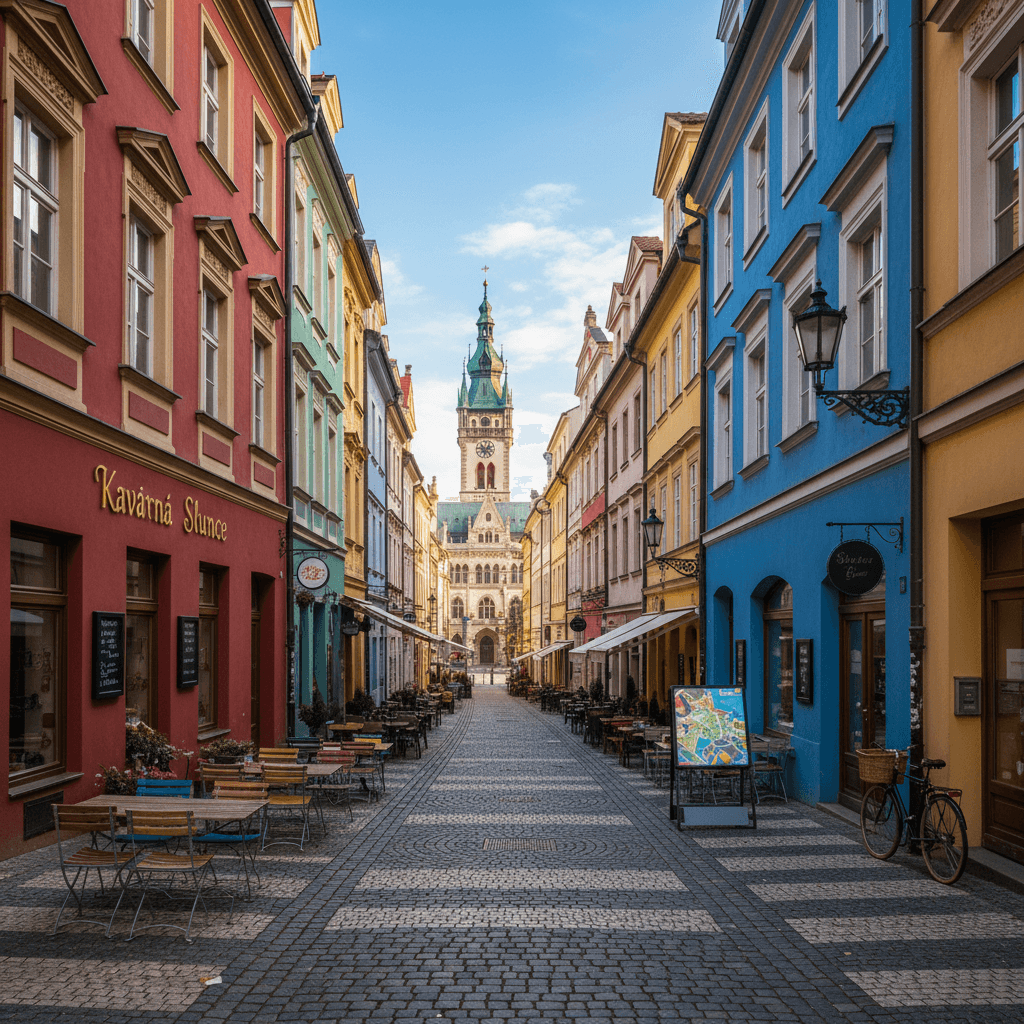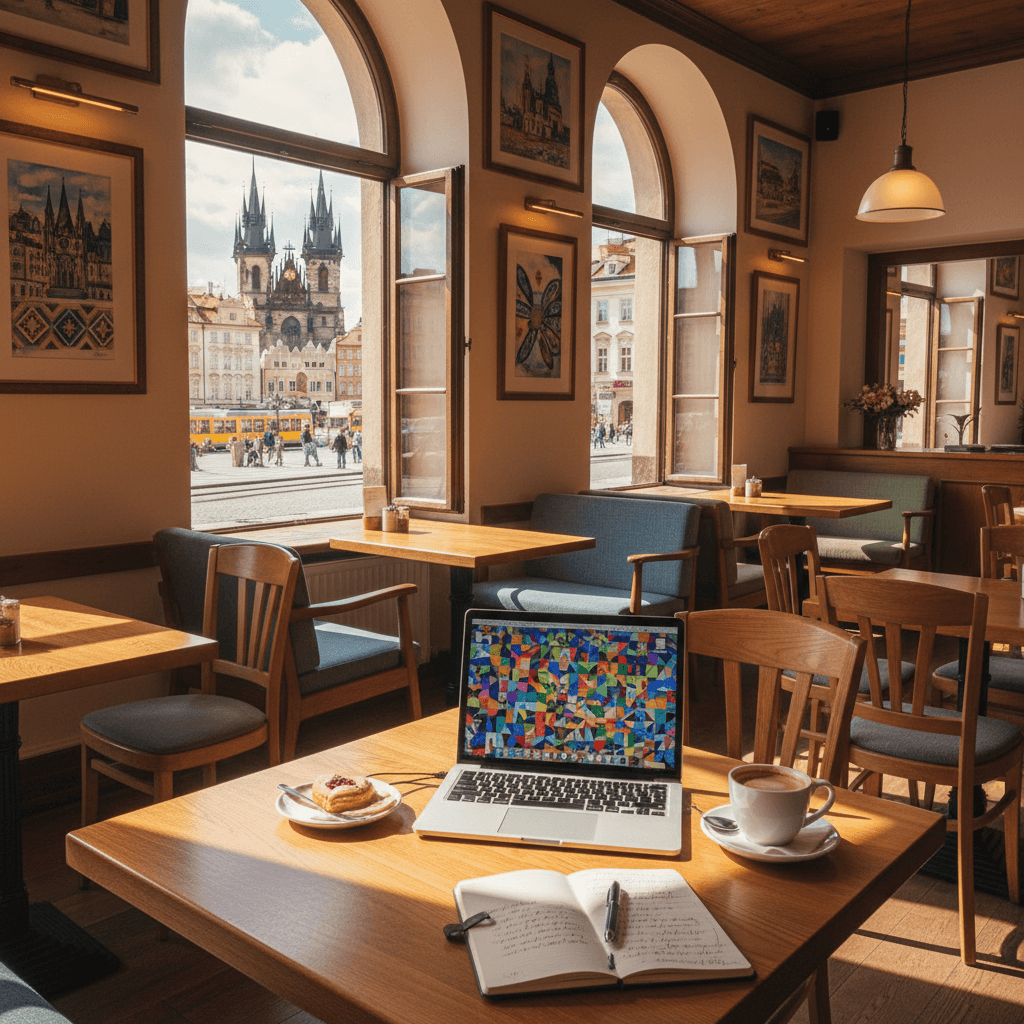
Prague
🇨🇿 Czech Republic
The City of Spires and Screens
Prague feels like a fever dream where Gothic spires meet ultra fast fiber optics. It is one of the few places in Europe where you can spend your morning working from a 14th century café and your afternoon attending a high tech networking event in a converted industrial warehouse. Most nomads find that the city strikes a rare balance between old world majesty and the raw, functional efficiency needed for a productive remote life.
The vibe here is relaxed but intentional. While tourists swarm the Charles Bridge, the nomad community gravitates toward the leafy streets of Vinohrady or the gritty, artsy corners of Žižkov. You will notice a distinct lack of the frantic energy found in London or Paris. Instead, Prague offers a steady, reliable rhythm. The internet is exceptionally fast, averaging over 150 Mbps, and the public transport system is often cited by expats as the best they have ever used.
The Financial Reality
Prague is no longer the dirt cheap backpacker haven of the nineties, but it remains remarkably affordable compared to Western Europe. A monthly budget of $1,500 allows for a comfortable lifestyle, while $2,500 puts you in a luxury apartment with daily upscale dining. Local salaries hover around $1,000, so your purchasing power as a nomad goes a long way.
- Budget Tier ($1,200/month): Shared housing in Žižkov, plenty of street food like $4 trdelník, and a $25 monthly transit pass.
- Mid-range Tier ($1,800/month): A private 1BR in Vinohrady for €600 to €900, regular meals at spots like Gourmet Pauza, and a dedicated desk at a coworking space.
- Comfortable Tier ($2,500+/month): A central Old Town flat for €1,200, frequent fine dining in Malá Strana, and weekend trips to Český Krumlov.
Where to Plant Your Laptop
Choosing a neighborhood is the most important decision you will make here. Each district has a completely different personality, and the trade-offs are real.
Vinohrady
- The Vibe: The undisputed nomad capital. Think wide boulevards, international bistros, and plenty of green space.
- Pros: Huge expat community, walkable to the center, and home to La Bohème Café.
- Cons: Rent is higher than the outskirts.
Žižkov
- The Vibe: Gritty, rebellious, and packed with more pubs per square mile than almost anywhere else.
- Pros: Affordable studios for €500 to €700 and a truly local, unpolished feel.
- Cons: It is less "pretty" than the rest of the city.
Old Town (Staré Město)
- The Vibe: Living inside a postcard.
- Pros: You are steps away from everything and the nightlife is legendary.
- Cons: Tourist crowds can be suffocating in June through August and rents are at a premium.
Productivity and Connection
The café culture here is serious business. You aren't just tolerated with a laptop; you are expected. Spots like Café Letka and Maze Coffee Lab are staples for the remote crowd. If you need a more professional setup, Impact Hub Prague and WorkLounge offer memberships starting around €100. For those staying long term, the Zivnostensky list (freelance permit) is the standard path to a digital nomad visa, though the bureaucracy can be a bit of a headache.
Socializing happens over $2 beers in beer gardens like Letná or through active groups on Expats.cz. English proficiency is very high among younger Czechs, so you won't struggle to make friends or order dinner. There is a directness to the local communication style that some find cold at first, but it is actually just a lack of fluff. Once you are in, the community is incredibly loyal.
The Logistics of Life
Safety is rarely a concern here. Beyond basic awareness for pickpockets in Old Town, Prague is one of the safest capitals in the EU. For healthcare, Motol University Hospital provides high quality care, and pharmacies are on almost every corner. Getting around is seamless with the Bolt or Uber apps, but the tram system is so efficient you will rarely need them. If you want to explore further, the Airport Express bus gets you to the terminal in 30 minutes for just $2.
The emotional experience of Prague is one of grounded inspiration. You will find yourself working more efficiently because the infrastructure just works, leaving more time to watch the sunset over the Vltava river with a Pilsner in hand. It is a city that respects your hustle but insists you enjoy the view.
The Bottom Line on Prague
Prague remains one of the most enticing hubs in Europe because it manages to feel like a high-end capital without the eye-watering price tags of London or Paris. The average monthly cost for a digital nomad sits around $1,500, though you can easily scale that up or down depending on your lifestyle. While locals often live on closer to $1,000, your budget will likely be higher due to short-term rental premiums and a penchant for the city's excellent café scene.
The currency is the Czech Koruna (CZK), and while cards are accepted almost everywhere, it's smart to keep a few coins for public restrooms or smaller street stalls. Most nomads use Revolut or Wise to handle conversions and avoid the notorious exchange booths in the city center.
Monthly Budget Tiers
- The Budget Nomad ($1,200): You'll likely be staying in a shared apartment or a studio in Žižkov, eating plenty of €3 to €5 street food like trdelník or sausages, and relying strictly on the €25 monthly transit pass.
- The Mid-Range Professional ($1,800): This covers a private one-bedroom in a trendy spot like Vinohrady, daily co-working access, and regular dinners out at mid-range spots where a meal costs €10 to €15.
- The Comfortable Expat ($2,500+): Expect a premium central apartment, upscale dining in Malá Strana where meals exceed €30, and frequent use of ride-hailing apps like Bolt or Uber.
Where to Plant Your Laptop
Housing is your biggest expense and the market is competitive. Using Flatio is a popular move for nomads because they specialize in mid-term, flexible stays without the headache of a standard year-long lease. Prices vary wildly by district.
Vinohrady
- Rent: €600 to €900 for a studio.
- Vibe: The expat favorite. It's leafy, packed with international cafés, and very walkable.
- Best for: Community and networking.
Old Town (Staré Město)
- Rent: €800 to €1,200.
- Vibe: Beautiful but chaotic. You're in the heart of the Gothic architecture, but you'll be fighting tourist crowds every time you leave your front door.
- Best for: Social butterflies and short stays.
Žižkov
- Rent: €500 to €700.
- Vibe: Gritty, artsy, and unpolished. It has the highest density of pubs in the city and a much more "local" feel.
- Best for: Keeping costs low while staying close to the action.
Productivity and Connection
The internet in Prague is remarkably reliable, averaging 106.8 Mbps. You won't struggle to find a signal, and mobile data is affordable. Grab a SIM from Vodafone or O2 for about €10 to €20 a month for a generous data package. If you need a dedicated desk, WorkLounge Diamant offers limited access starting at $55 a month, while Impact Hub and Opero are the go-to spots for a more professional environment.
Café culture is where Prague really shines for remote workers. You can spend an afternoon at Café Letka or La Bohème Café without being hassled, provided you keep the coffee and snacks flowing. For a more traditional vibe, Kavarna Liberal and Café Pavlac are staples in the nomad community.
Getting Around and Staying Safe
The public transport system is legendary. The metro, trams, and buses are punctual and clean. A monthly pass is a steal at €25, and the city is highly bikeable if you use apps like Rekola or Lime. For airport transfers, the Airport Express bus is only €2, though a Bolt will cost you around €20 if you're carrying heavy luggage.
Safety is rarely a concern here. Prague is frequently cited as safer than most other EU capitals. Your biggest worry will be pickpockets in the Old Town or around Charles Bridge, particularly during the peak summer months of June through August. Healthcare is high quality, with facilities like Motol University Hospital offering English-speaking services. Just make sure you have your insurance sorted before you arrive.
Practical Logistics
If you're planning to stay long-term, look into the Digital Nomad Visa, which is often processed via a freelancer permit known as a živnostenský list. It's a bit of a bureaucratic hurdle, but it's the standard path for non-EU citizens in IT or marketing. For day-to-day life, remember that tipping 10% is the norm in restaurants, and it's customary to take your shoes off when visiting someone's home. English is widely spoken by anyone under 40, so you'll have no trouble getting by while you slowly master "Dobrý den" and "Děkuji."
Nomads and Remote Workers: Vinohrady and Letná
If you're looking for the quintessential nomad experience, Vinohrady is usually the first stop. It sits just east of the center and feels like a neighborhood designed for laptop life. You'll find a massive international community here, supported by a dense concentration of specialty coffee shops like La Bohème Café and Café Jen. Rent for a one bedroom typically lands between €600 and €900, which is a bit higher than the outskirts but worth it for the walkability. Most nomads find the proximity to Riegrovy Sady park perfect for a sunset beer after a day at Locus Workspace or Impact Hub.
For a slightly more local, creative vibe, Letná is the go to alternative. It's perched on a hill overlooking the river and feels less polished than Vinohrady, which many remote workers prefer. The area is anchored by Café Letka and Kavárna Liberál, where you can work for hours if you keep the coffee orders coming. It's central but relaxed, and the massive Letná Park provides some of the best views of the city's spires without the Old Town crowds.
- Vinohrady Pros: High density of expats, English is everywhere, incredible parks, best café culture.
- Letná Pros: Artsy atmosphere, great pubs, less "touristy" than the center, easy tram access.
- Top Coworking: WorkLounge Diamant (memberships from $55/month), WeWork, and Node5.
Expats and Long Term Residents: Malá Strana
Expats who prioritize aesthetics and a quieter pace often gravitate toward Malá Strana, the "Lesser Town." It's undeniably beautiful, filled with Baroque palaces and cobblestone side streets that lead up to the castle. Living here feels like being inside a movie set, though you'll have to navigate hilly terrain and a higher volume of tourists on the main thoroughfares. It's a favorite for those with a larger budget who want upscale dining and immediate access to green spaces like Kampa Park.
While the rent is higher and the grocery options are fewer than in residential districts, the quality of life is top tier. You're surrounded by embassies and government buildings, which keeps the area safe and well maintained. It's a neighborhood for people who want to soak in the history of Prague rather than the nightlife of the newer districts.
- Vibe: Scenic, historic, and surprisingly quiet at night.
- Dining: Home to many of the city's high end restaurants and hidden courtyard cafés.
- Trade-off: Higher costs and a bit of a climb if your apartment is closer to the castle.
Budget Conscious and Solo Travelers: Žižkov
Solo travelers looking to stretch their budget without sacrificing a social life should head to Žižkov. Historically a working class district, it's now known for having the highest density of pubs per capita in Europe. Rent is significantly cheaper here, often between €500 and €700 for a studio. It's a bit grittier and less "fairytale" than the rest of Prague, but the community is tight and the nightlife is authentic.
The transport links are excellent, with trams running 24/7 to get you back from the center in ten minutes. Solo travelers often recommend Žižkov because it's easy to meet people in the local pubs or at Cobra, a popular bar and bistro. It's the best place to find a €2 beer and a €10 meal while still being within walking distance of the main train station.
- Budget: Monthly costs can stay around €1,200 if you live here.
- Social Life: Endless local dive bars, artsy venues, and the Palác Akropolis for live music.
- Practicality: Use the Flatio app for flexible, mid term stays without the hassle of a standard lease.
First Timers and Short Stays: Old Town (Staré Město)
If you're only in Prague for a few weeks and want to be in the thick of it, the Old Town is the place to be. You'll be steps away from the Astronomical Clock and the Charles Bridge. Everything is walkable, and the architecture is breathtaking at every turn. However, most long term nomads avoid living here because of the noise and the "tourist tax" on food and services. Rent for a central apartment can easily hit €1,200 or more.
Living here means dealing with crowds from June to August, but you'll have the best access to the metro hubs at Můstek and Muzeum. It's ideal for those who want to maximize their sightseeing time and don't mind the energetic, sometimes chaotic, atmosphere of a major European tourism hub.
- Best For: Walkability, nightlife, and historic landmarks.
- Convenience: Near all major metro lines and the Airport Express bus.
- Warning: Watch out for pickpockets in crowded squares and avoid the overpriced "trdelník" stands right on the main square.
Connectivity and Infrastructure
Prague is a heavy hitter when it comes to digital infrastructure. You can expect reliable, high speed internet across the city, with average speeds hovering around 106.8 Mbps. Fiber optics are common in residential areas like Vinohrady and Žižkov, so if you are booking through Flatio or Airbnb, you will likely have enough bandwidth for seamless video calls.
Staying connected on the go is easy and affordable. You can pick up a SIM card from Vodafone, O2, or T-Mobile for between €10 and €20 per month. Most nomads opt for unlimited data plans to avoid hunting for Wi-Fi, though public hotspots are everywhere. Free Wi-Fi is standard in most parks and public squares, and the coverage remains excellent even when you are riding the metro underground.
Top Coworking Spaces
The coworking scene here is mature and diverse, catering to everyone from solo freelancers to scaling startups. If you want a global community and predictable amenities, WeWork and Impact Hub Prague are the go-to choices. Both host regular networking events and workshops that make it easier to meet people when you first arrive.
- WorkLounge: This is a favorite for those seeking a professional environment. Their Diamant location offers memberships starting at around €100-160/month depending on access. It is professional, sleek, and situated right in the heart of the city.
- Locus Workspace: This spot has a more intimate, community focused vibe. It is popular with long term expats and researchers who prefer a quiet environment over a loud, trendy office.
- Opero: Located near Old Town, this space is stunning. It is housed in a historic building and feels more like a private club, making it a great choice if you need to impress clients or just want to work in a beautiful setting.
- Node5: Situated in Smíchov, this space leans toward the tech and startup crowd. It is gritty, functional, and full of people building the next big thing.
The Café Working Culture
Prague has a legendary café culture that dates back centuries, and modern nomads have fully embraced it. Unlike some European cities where laptops are frowned upon, many Prague cafés are "laptop friendly" as long as you are respectful. The general rule is to order something every 90 to 120 minutes to keep your seat.
For a focused morning session, Café Letka in the Letná district is unbeatable for its natural light and aesthetic. If you prefer a more traditional, grand atmosphere, Café Slavia offers views of the National Theatre and plenty of space. For a more modern, industrial vibe, head to Cobra or Kavarna Liberal.
If you need a reliable chain with fast Wi-Fi and plenty of power outlets, Cross Café is the local equivalent of Starbucks but with better coffee. Other nomad favorites include La Bohème Café for its incredible interior design and Maze Coffee Lab for those who take their beans seriously. If you need total silence, the Municipal Library or the National Library at Klementinum provide beautiful, quiet spaces for deep work.
Practical Tips for Remote Workers
If you are planning to stay long term, many nomads eventually transition from tourist status to a živnostenský list (trade license). This freelancer permit is the backbone of the local digital nomad visa and allows you to live and work in the Czech Republic legally. Note that the bureaucracy can be a bit slow, so most expats recommend hiring an agency like Move To Prague to handle the paperwork.
For daily logistics, download Bolt or Uber for quick rides, and use Lítačka to manage your monthly public transport pass, which costs about €25. If you are working late and don't want to cook, Dáme jídlo is the local go to for food delivery from almost any restaurant in the city.
Staying Safe in the Golden City
Prague consistently ranks as one of the safest capitals in Europe, often feeling more secure than London or Paris. Most nomads find they can walk through the city at 2:00 AM without a second thought. The general vibe is relaxed, and the city’s air quality and food safety standards are high, meaning you won't have to worry about the basics while you're working from a café in Vinohrady.
The main thing to watch for is petty crime in high traffic tourist zones. Pickpockets tend to congregate around Old Town Square, the Charles Bridge, and the Astronomical Clock. It's best to keep your bag in front of you in these areas, especially during the crowded summer months from June to August. Travelers often say that while the city is safe, the local police are strict about jaywalking and public nuisance, so stick to the crosswalks to avoid a surprise fine.
If you find yourself in a bind, the emergency numbers are easy to remember. Dial 112 for the general EU emergency line, which usually has English speaking operators, or 158 specifically for the police. You won't find many "no-go" neighborhoods here, though some expats suggest being more observant around the main train station (Hlavní nádraží) late at night, as it attracts a more transient crowd.
Healthcare and Medical Support
The healthcare system in the Czech Republic is high quality and efficient. If you're here on a long term freelancer permit (živnostenský list), you'll likely be part of the state insurance system. For shorter stays, most nomads rely on private travel insurance like SafetyWing or World Nomads. If you need a doctor, look for facilities that cater to the international community to ensure there's no language barrier.
- Motol University Hospital: This is one of the largest and best equipped hospitals in the city, with many English speaking specialists.
- Nemocnice Na Homolce: Another top choice for expats, known for its high standard of care and modern equipment.
- Pharmacies (Lékárna): You'll find these on almost every corner. Look for the green cross sign. Many are open 24/7 in the city center if you need emergency supplies.
For minor ailments, you can usually walk into a pharmacy and get what you need. However, keep in mind that many medications that are over the counter in the US or UK might require a prescription here. It's always a good idea to bring a small supply of your specific brands if you're picky about your meds.
Wellness for the Digital Nomad
Prague is a very walkable city, which helps keep your activity levels up between Zoom calls. If you're feeling the strain of the "digital" part of nomad life, the city has plenty of green spaces like Letná Park or Riegrovy Sady for a mental reset. The tap water is perfectly safe to drink, so you can save money and plastic by refilling your bottle at any sink.
If you're staying for more than a month, consider getting a Lítačka card for public transport. It costs about $25 per month and covers all trams, metros, and buses, making it easy to get to medical appointments or gyms across the city. Most nomads find the combination of reliable transport and accessible healthcare makes Prague a very low stress base for remote work.
The Gold Standard of Public Transit
Prague is famously walkable, but its public transportation system is the real hero of the nomad experience. It is consistently ranked among the best in the world for efficiency and coverage. The network of metros, trams, and buses is so synchronized that you rarely wait more than five minutes for a connection during the day.
Most nomads skip the single tickets and go straight for the monthly pass. At roughly €25 (550 CZK), it provides unlimited access to every mode of transport within the city limits. You can buy these at major metro stations or via the Lítačka app, which is the easiest way to manage your fares and routes on the fly. The metro has three lines (A, B, and C) that get you across the city fast, while the iconic red trams are better for scenic commutes through neighborhoods like Vinohrady or Malá Strana.
Walking and Cycling
If you are staying in the center or Old Town, your own two feet are usually the fastest way to get around. The city is incredibly compact, though the cobblestones can be brutal on your joints; leave the flimsy shoes at home. For those who prefer two wheels, Rekola (the local pink bikes) and Lime scooters are everywhere. Most nomads find the €1 unlock fee and €0.10 per minute rate reasonable for quick hops between coworking spaces like WorkLounge and your favorite café.
While the city center is bikeable, be prepared for some serious hills if you are heading up to Letná or certain parts of Žižkov. The bike lane infrastructure is improving, but you will often find yourself sharing the road with trams and cars, so stay alert.
Ride-Hailing and Taxis
Avoid flagging down traditional taxis on the street, especially in tourist heavy areas, as overcharging is a known headache. Instead, stick to apps for transparent pricing. Bolt and Uber are the dominant players here. A typical ride from the city center to a residential neighborhood like Vinohrady usually costs between €6 and €10.
Getting to and from Václav Havel Airport
Prague’s airport is about 30 to 45 minutes from the city center depending on traffic. You have three main ways to make the trek:
- The Airport Express (AE) Bus: This is the most direct public option, costing 200 CZK (~€8) and dropping you off at the Main Railway Station (Hlavní nádraží).
- Public Bus 119: The cheapest route. Take the 119 bus to the Nádraží Veleslavín station, where you can hop on the Green Metro line (Line A) to reach the center.
- Ride-Hailing: A Bolt or Uber from the airport typically costs around €20. It is convenient if you have heavy luggage or are arriving late at night.
Navigation Apps to Download
To move like a local, you will want these apps on your home screen immediately:
- Lítačka: For buying transit passes and checking live tram schedules.
- Mapy.cz: Many expats prefer this over Google Maps for its superior offline maps and precise walking paths through Prague’s many parks.
- Bolt: Usually offers slightly better rates than Uber in the Czech Republic.
The beauty of Prague’s layout is that even if you miss the last metro around midnight, the night trams take over. These "900-series" trams run all night long, ensuring you are never actually stranded, no matter how late your networking event or pub crawl lasts.
The Language Barrier (Or Lack Thereof)
You'll find that getting by in Prague is remarkably easy if you speak English. Among the younger generation and the city's massive tech and business sectors, English proficiency is exceptionally high. Most nomads find they can order coffee at Cafe Tone, negotiate a desk at WorkLounge, or handle a doctor's visit at Motol University Hospital without knowing a word of the local tongue. It's a city that has professionalized its international appeal, so you won't feel stranded in a sea of unintelligible signs.
That said, once you step outside the tourist bubbles of Old Town or the expat hubs of Vinohrady, things get a bit more "local." Older residents and staff in traditional Žižkov pubs might not speak English. While it's rarely a dealbreaker, having a translation app ready is a smart move. Locals generally appreciate a direct communication style; don't mistake brevity for rudeness, it's just the way things work here.
Mastering the Basics
While you can survive on English alone, learning a few Czech phrases goes a long way in building rapport with your neighborhood barista or landlord. Czech is a Slavic language and can be notoriously difficult to master, but a little effort is always respected. Start with these basics:
- Dobrý den: Hello (formal, used during the day)
- Ahoj: Hi/Bye (informal, used with friends)
- Děkuji: Thank you
- Prosím: Please / You're welcome
- Kolik to stojí?: How much does it cost?
- Pivo, prosím: A beer, please (arguably the most important phrase in the country)
Digital Communication Tools
Prague is a tech-forward city, and you'll rely on a handful of apps to bridge any remaining communication gaps. Most expats recommend downloading DeepL or Google Translate for real-time menu translations or reading official documents. For logistical communication, the following apps are standard in the nomad community:
- Dáme jídlo: The go-to for food delivery when you don't feel like navigating a menu in person.
- Rekola or Lime: Essential for renting bikes and scooters to zip around the city.
- Bolt or Uber: Reliable ride-hailing that removes the need to explain your destination to a driver.
- Expats.cz: A vital English-language resource for news, job listings, and community forums.
Social Etiquette and Networking
The social language of Prague often revolves around its café and pub culture. If you're looking to meet people, Meetup.com is active with weekly workshops and social hours. Coworking spaces like Impact Hub and WeWork are the primary hubs for professional networking, often hosting events that bring the international and local communities together.
When you're invited to a local's home, remember the unspoken rule: remove your shoes at the door. It's a small gesture that shows you understand the local customs. In restaurants, a 10% tip is the standard way to communicate satisfaction with the service. If you're staying long-term and need to navigate the bureaucracy for a živnostenský list (freelancer permit), consider hiring a relocation agency; the "language" of Czech paperwork is one even seasoned nomads struggle to translate on their own.
The Seasonal Cycle
Prague is a city of extremes when it comes to the calendar. You'll experience a temperate continental climate where the four seasons are distinct and unapologetic. Most nomads agree that timing your arrival is the difference between a productive, scenic stay and feeling trapped in a crowd of selfie sticks or a deep freeze.
The peak of summer, specifically June through August, brings the best weather but the worst logistics. Temperatures usually hover between 20°C and 28°C, though heatwaves can push things higher. This is also the rainiest time of year, so expect sudden afternoon thunderstorms. While the parks like Letná are at their best, the Old Town becomes nearly impassable due to tourist volume. If you're working remotely, you might find the noise and crowds a distraction during these months.
Winter, from December to February, is a different beast entirely. It’s cold, with averages between -2°C and 5°C, and the sky often stays a flat grey for weeks. However, if you don't mind the chill, rent prices in neighborhoods like Žižkov can be more negotiable, and the Christmas markets in December provide a massive boost to the social scene. Just be prepared for short days; the sun sets before 4:30 PM in the depths of January.
The Sweet Spots: Shoulder Season
If you want the "Goldilocks" version of Prague, aim for May, June, or September. These months offer mild temperatures between 10°C and 18°C, which is perfect for walking between coworking spaces like Opero or WorkLounge. The light is beautiful for photography, the beer gardens are open, and the city feels like it belongs to the locals and residents again.
- Spring (April to May): The city wakes up and the greenery in Vinohrady returns. It's affordable and lively without being overwhelming.
- Autumn (September to October): The fall colors in the parks are stunning. It’s arguably the best time for deep work, as the summer chaos has faded but the weather is still dry enough for outdoor café sessions at spots like Café Letka.
What to Pack and When to Go
Your packing list depends heavily on your start date. If you're arriving in the shoulder seasons, layers are your best friend. The mornings are crisp, but the afternoons can get surprisingly warm. For those brave enough for a Czech winter, a heavy coat and waterproof boots are non-negotiable, as the cobblestones get slick with slush and ice.
Most expats recommend avoiding July and August if you value personal space. If you have to be there during the summer, consider basing yourself further out in Letná or Vinohrady to escape the brunt of the tourism. For those on a budget, February is usually the cheapest month for short-term rentals on platforms like Flatio, though you'll need to stay caffeinated to beat the winter blues.
Monthly Climate Breakdown
- May and June: Ideal balance. 15°C to 22°C. Great for networking events and outdoor social life.
- July and August: Hot and crowded. 25°C+. Prices for everything from Airbnbs to bike rentals peak.
- September and October: The nomad favorite. 12°C to 18°C. Crisp air and manageable crowds.
- November to March: The quiet period. -5°C to 7°C. Perfect for those who prefer cozying up in laptop-friendly cafés like Kavarna Liberal.
Getting Settled and Staying Connected
Prague is a dream for remote workers because the infrastructure just works. You can land at Václav Havel Airport and be in the city center in 30 minutes for about €2 using the Airport Express bus. If you have heavy bags, Bolt and Uber are reliable and usually cost around €20 to most central hubs. Once you arrive, grab a local SIM from Vodafone, O2, or T-Mobile. You can find these at the airport or in vending machines for €10 to €20, which typically gets you a month of unlimited data.
The internet here is impressively fast, averaging 106.8 Mbps. Most nomads skip the expensive hotel Wi-Fi and head straight to "laptop-friendly" cafes. In Letná, check out Café Letka or Cobra. If you are in Vinohrady, La Bohème Café and Café Jen are local favorites. For deep work, the city has a heavy-hitting coworking scene. Impact Hub, Opero, and Locus Workspace are top choices, while WorkLounge Diamant offers limited access memberships starting around €100/month. If you prefer a quiet library vibe, the Municipal Library and the National Library at Klementinum offer stunning backdrops for the price of a small registration fee.
Cost of Living and Budgeting
Your money goes significantly further here than in London or Paris. A comfortable monthly budget is around $1,500 to $1,800, though you can scrape by on $1,200 if you stick to shared housing and street food. For payments, cards are accepted almost everywhere. Most expats use Wise or Revolut to avoid bank fees, especially since the local currency is the Czech Koruna (CZK), not the Euro.
Neighborhood Breakdown
- Vinohrady: The nomad capital. It is packed with international cafes and parks. Expect to pay €600 to €900 for a one-bedroom apartment.
- Žižkov: Grittier and more artsy. It has the highest density of pubs and lower rents, usually between €500 and €700.
- Old Town (Staré Město): Beautiful but chaotic. Rents jump to €800 or €1,200, and you will be fighting tourist crowds every time you leave your front door.
- Letná: Perfectly balanced. It is close to the center with massive green spaces and a relaxed, local feel.
Transport and Practicalities
The public transport system is one of the best in Europe. A monthly pass costs roughly €25 and covers all metros, trams, and buses. The city is also surprisingly bikeable; use the Rekola or Lime apps to grab a ride for about €1 plus a small per-minute fee. For food, if you don't feel like going out, download the Dáme jídlo app for local delivery.
While Czech is the official language, you will get by fine with English, especially with anyone under 40. Learning a few basics like Dobrý den (hello) and Děkuji (thank you) goes a long way with the locals. When dining out, a 10% tip is standard. Also, if you are invited to a local's home, remember to take your shoes off at the door; it is a major cultural faux pas to wear them inside.
Safety and Long-Term Stays
Prague is exceptionally safe, often ranking higher than most US and EU capitals. Just keep an eye on your phone and wallet in heavy tourist spots like the Charles Bridge. If you have a medical issue, Motol University Hospital provides high-quality care, and pharmacies (Lékárna) are on almost every corner. For those looking to stay longer than a 90-day tourist stint, the "živnostenský list" (freelancer trade license) is the standard route for a Digital Nomad Visa, specifically catering to IT and marketing professionals.
When to Go
The sweet spot is May, June, or September. The weather is mild, ranging from 10°C to 18°C, and the summer crowds haven't peaked. Avoid December through February unless you love the cold; temperatures often hover around -2°C, and the sky can stay grey for weeks at a time.
Need visa and immigration info for Czech Republic?
🇨🇿 View Czech Republic Country GuideNomad Haven
Your home away from home
Monthly Budget Estimates
More cities in Czech Republic
České Budějovice
🇨🇿 Czech Republic
Pilsen
🇨🇿 Czech Republic
Ostrava
🇨🇿 Czech Republic