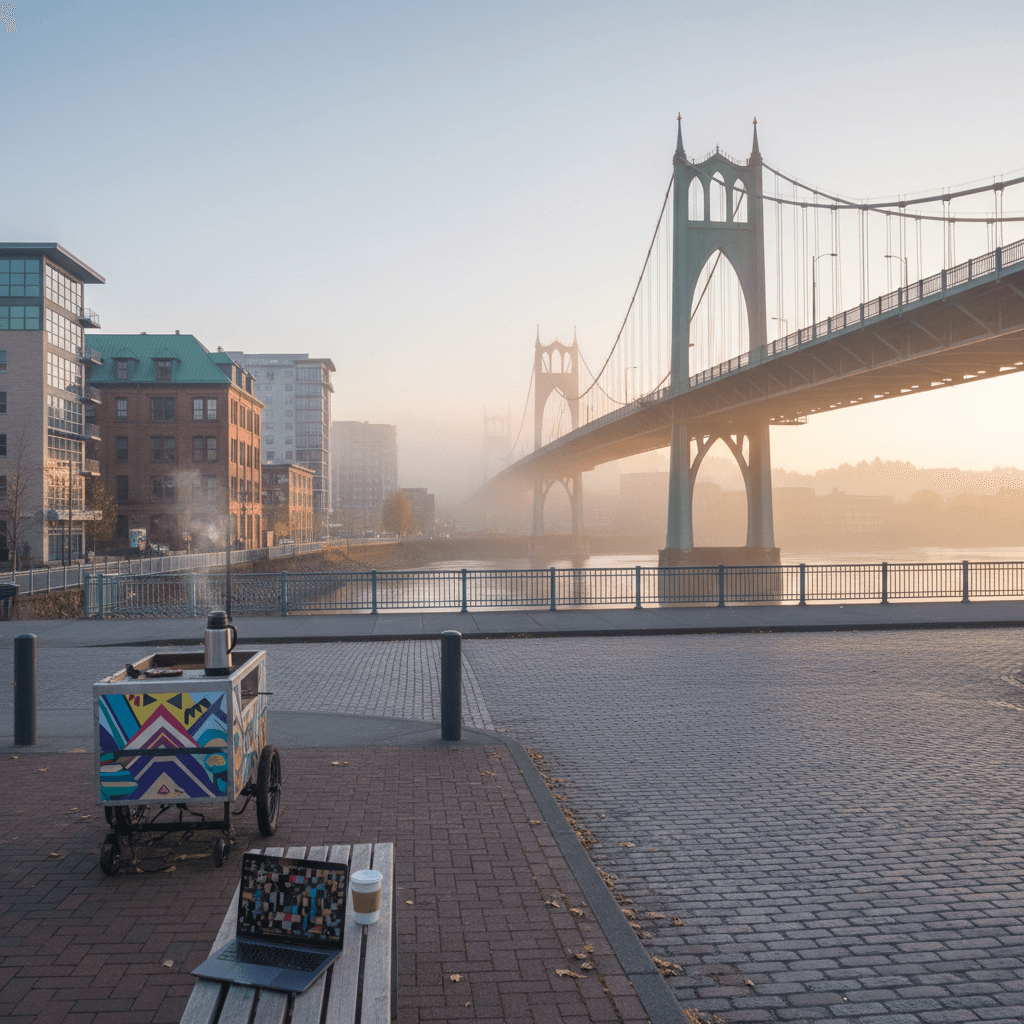
Portland
🇺🇸 United States
The Pacific Northwest Spirit
Portland doesn't feel like a typical American metropolis. It’s a city that has mastered the art of being both laid back and intensely creative. Known as the City of Roses, it’s a place where you’ll see tech founders in flannel shirts biking to meetings and where the smell of rain on Douglas firs mixes with the aroma of freshly roasted coffee. It’s a community built on sustainability, inclusivity, and a fierce DIY ethos that makes it a natural home for the nomadic crowd.
The pace here is slower than New York or San Francisco. People prioritize their afternoon hikes in the Columbia River Gorge as much as their inbox. For digital nomads, the draw is the seamless blend of high speed infrastructure and immediate access to the wild. You can spend your morning on a 100 Mbps connection and your afternoon lost in the 5,200 acres of Forest Park. It's an environment that rewards curiosity and a good pair of waterproof boots.
Cost of Living and Budgeting
Portland isn't a budget destination, but it offers a high quality of life for the price. While costs are higher than the US national average, the lack of sales tax helps balance the scales. Most nomads find that a monthly budget of $4,000 allows for a comfortable lifestyle in a central neighborhood with frequent dining out.
- Budget Nomad: ~$2,500 per month. This covers a room in a shared house, plenty of $10 food cart meals, and a TriMet pass.
- Mid-range Nomad: ~$4,000 per month. This includes a private 1BR apartment, a dedicated coworking desk, and mid-range dining.
- Comfortable Nomad: $6,000+ per month. This buys a luxury loft in the Pearl District, frequent upscale dinners, and weekend trips to the coast.
Where to Plant Your Flag
Each neighborhood has a distinct personality, so where you stay will define your experience. The city is divided by the Willamette River, with the west side leaning more commercial and the east side feeling more residential and artsy.
Pearl District
- The Vibe: Polished, industrial, and central. It’s the go to for nomads who want walkability and high end amenities.
- Rent: Expect to pay $1,800 to $2,500 for a modern studio or 1BR loft.
- Pros: Best concentration of coworking spaces and galleries. Very walkable.
- Cons: Can feel a bit "corporate" compared to the east side; street noise is common.
Hawthorne and Alberta Arts
- The Vibe: Bohemian and community focused. Hawthorne is quirky and established, while Alberta is vibrant and artsy.
- Rent: Ranges from $1,500 to $2,200 for apartments or backyard cottages.
- Pros: Incredible cafe culture and local boutiques. Very bike friendly.
- Cons: Parking is a nightmare; Alberta can get crowded during street fairs.
Work Culture and Connectivity
The coffee shop culture is the backbone of the local remote work scene. You’ll see laptops at almost every table at Coava Coffee or Never Coffee. If you need a more professional setup, the coworking scene is robust. WeWork Pioneer Place offers a ~$40 day pass for those needing a central office environment. For mobile data, travelers usually grab a T-Mobile eSIM via Airalo for around $20 to stay connected on the move.
The Practical Realities
The weather is the biggest talking point. From November through March, the city is draped in a persistent, misty gray. It’s rarely a downpour, but the lack of sun can be a grind for those used to tropical nomad hubs. However, the summers are spectacular, with temperatures averaging a perfect 82°F in July.
Getting around is easy without a car. The TriMet light rail and bus system is efficient, costing about $2.80 per ride. Portland is also one of the most bike friendly cities in the world. You can grab a Biketown electric bike for $1 plus $0.35 per minute to zip between meetings. For safety, the city is generally welcoming, though it’s wise to stay alert in Old Town Chinatown after dark. For healthcare, you’re in good hands with OHSU, which is a world class medical facility.
Socially, it’s a city of niches. Whether you’re into foraging, indie music at the Doug Fir Lounge, or the legendary food cart scene, you'll find your people. Most expats recommend joining local hiking groups or attending coworking happy hours to break the ice. It’s a city that expects you to be yourself, as long as you remember to recycle.
Portland has a reputation for being the more affordable sibling to Seattle or San Francisco, but the gap is closing. While you'll get more square footage and better coffee for your dollar here than in California, the cost of living sits comfortably above the US national average. Most nomads find that the trade-off is worth it for the immediate access to the Columbia River Gorge and a food scene that punches way above its weight class.
Monthly Budget Tiers
- The Budget Nomad ($2,500): You're likely looking at a room in a shared house in neighborhoods like Hawthorne or Alberta. You'll stick to Portland's legendary food carts, use a TriMet pass for transit, and work from cafes or public libraries.
- The Mid-Range Professional ($4,000): This covers a private 1BR apartment in a solid neighborhood, a dedicated desk at a coworking space like Alchemy Collective, and dining out at mid-range spots a few nights a week.
- The Comfortable Resident ($6,000+): At this level, you're looking at a high-end loft in the Pearl District, frequent upscale dinners at places like Tasty n Alder, and perhaps a car rental for weekend trips to Mt. Hood.
Housing and Neighborhoods
Rent is your biggest variable. Portland is a city of distinct neighborhoods, each with its own price tag and personality. Travelers often say that where you live completely dictates your experience of the city.
Pearl District
- Vibe: Central, polished, and very walkable.
- Monthly Rent: $1,800 to $2,500 for a studio or 1BR.
- Pros: Best coworking access (Pioneer Place) and easy streetcar access.
Hawthorne
- Vibe: Bohemian, artsy, and laid back.
- Monthly Rent: $1,500 to $2,000.
- Pros: Excellent cafe culture and a more "authentic" local feel.
Alberta Arts District
- Vibe: Community-focused and creative.
- Monthly Rent: $1,600 to $2,200.
- Pros: Great for those who want a mix of families and young professionals.
Food and Drink
You can eat exceptionally well in Portland without spending a fortune if you know where to go. The food cart culture is a lifesaver for the budget-conscious nomad. A solid meal at a cart like Nong's Khao Man Gai will run you $10 to $15. If you're heading to a mid-range sit-down restaurant, expect to pay $20 to $30 per person before drinks. Upscale dining easily clears $50 per head. Don't forget that tipping 15% to 20% is the standard here, even for casual service.
Connectivity and Coworking
Internet reliability is rarely an issue, with citywide speeds often exceeding 100 Mbps. For those who need a professional environment, day passes at spaces like NedSpace or Pioneer Place Coworking cost between $25 and $40. Monthly memberships generally fall between $200 and $400. If you prefer the cafe route, Coava Coffee and Never Coffee are favorites for their reliable WiFi and work-friendly atmospheres.
Transport and Utilities
If you stay in the central core, you don't need a car. A monthly TriMet pass for the bus and MAX light rail is about $100. For quick trips, Biketown rentals cost $1 to unlock plus $0.10 per minute. If you're renting a long-term apartment, set aside roughly $150 to $200 for basic utilities including electricity, heating, and water. For your phone, an eSIM from a provider like Airalo is a quick fix at $20 for 10GB, though a local T-Mobile prepaid SIM at $40 offers better data packages for heavy users.
Best for Nomads and Expats: The Pearl District
If you want to be in the thick of it, the Pearl District is where most remote workers land. It is a former industrial zone turned into a sleek neighborhood of converted lofts and cobblestone streets. It feels very polished compared to the rest of the city, which makes it an easy transition for expats arriving from major global hubs.
- Rent: Expect to pay between $1,800 and $2,500 for a modern studio or one bedroom apartment.
- Coworking: There are several flexible workspaces in the area, with a typical day pass costing around $30.
- Vibe: Very walkable, high end dining, and plenty of galleries. It can get noisy at night, but the convenience is hard to beat.
Most nomads spend their afternoons at Coava Coffee or Never Coffee. These spots have reliable WiFi and a serious appreciation for bean quality that defines the local culture. You are also steps away from the MAX light rail, making it easy to get to the airport for $2.80 without needing a car.
Best for Solo Travelers: Hawthorne
For those who prefer a bohemian atmosphere over glass high rises, Hawthorne is the soul of Southeast Portland. It is less about corporate coworking and more about vintage shops, indie bookstores, and a relaxed, artsy community. Solo travelers find it easy to meet people here because the social scene revolves around casual pubs and food cart pods.
- Rent: More approachable than the Pearl, with units typically ranging from $1,500 to $2,000.
- Dining: You can grab a world class meal at the Nong's Khao Man Gai food cart for about $15.
The downside is that parking is a nightmare. If you are staying here, skip the rental car and use a Biketown electric bike for about $0.35 per minute. The neighborhood is incredibly bike friendly, and you will fit right in with the locals.
Best for Families: Alberta Arts District
Alberta is diverse, creative, and has a strong sense of community that appeals to expats moving with children. It feels like a small town tucked inside a city. There are plenty of parks for kids to run around in, and the streets are lined with murals and local installations that keep things interesting for all ages.
- Rent: Family sized units or small houses usually go for $1,600 to $2,200.
- Social: The Last Thursday street fair is a major draw, though it can get crowded.
- Nightlife: Spots like Bye and Bye offer a great atmosphere that is still laid back enough for an early evening drink.
While the area is gentrifying quickly, it maintains a gritty, authentic edge. Families appreciate the proximity to local markets and the fact that most amenities are within a ten minute walk.
Best for High End Living: Nob Hill
Also known as the Alphabet District, Nob Hill is the choice for expats who want safety, quiet, and Victorian charm. It is upscale and feels very established. You will find tree lined streets and high end boutiques along NW 21st and 23rd Avenues. It is arguably the most "European" feeling corner of the city.
- Rent: Prices are on par with the Pearl District, often exceeding $2,200 for premium spots.
- Healthcare: You are very close to OHSU, which is the top rated hospital in the region.
- Atmosphere: Very safe and well lit, making it a preferred choice for those who enjoy late evening walks.
Nomads here often split their time between local cafes and the downtown coworking spaces, which are only a short streetcar ride away. It is the perfect middle ground if you want easy access to the city center but prefer to sleep in a quiet, residential pocket.
Connectivity in the Rose City
Portland is a dream for remote workers who value high speed reliability without the frantic pace of San Francisco or Seattle. You can expect citywide speeds to average 100+ Mbps, which is more than enough for seamless video calls while the rain patters against your window. Most rentals and Airbnbs come standard with high speed fiber or cable, and public infrastructure is generally robust.
For mobile data, don't overthink it. Most nomads skip the physical SIM card hunt and use eSIM apps like Airalo. You can snag 10GB of data for about $20. If you prefer a local provider for better coverage during weekend trips to Mt. Hood, head to a T-Mobile or Verizon store. A prepaid plan with 10GB usually runs around $40 and gives you a local number, which helps for booking restaurant reservations or using local apps.
Top Coworking Spaces
The coworking scene here is community focused rather than corporate. You'll find plenty of flannel and craft coffee, but the desks are ergonomic and the networking is genuine.
- NedSpace: A long standing favorite for startups and solo entrepreneurs. They offer various locations with day passes generally ranging from $25-$40. It's known for a slightly more tech heavy crowd if you're looking to talk shop with developers.
The Cafe Culture
Portland practically invented the modern coffee shop work session. While some spots have "no laptop" policies on weekends to encourage socializing, most are welcoming to nomads during the week. You'll see half the city working out of cafes at any given time.
Coava Coffee is a local legend. The industrial aesthetic and massive tables make it easy to spread out with your gear. If you want something more experimental, Never Coffee offers a creative environment and solid WiFi for a few hours of deep work. Just remember the local etiquette: buy a drink every couple of hours and tip your barista 15 to 20 percent.
Nomad Logistics and Networking
Finding your tribe in Portland is relatively easy because people actually want to talk to you. Expats and long term travelers often recommend joining the Portland Digital Nomads group on Meetup. It's a low pressure way to find people who understand the struggle of time zones and tax residency.
Travelers often say the best networking happens organically. If you're a fan of the outdoors, join a PNW hiking group on Facebook. You'll meet plenty of tech workers and creatives on the trails who are happy to share tips on the best quiet work spots in the city. Most nomads find that a mix of one or two days in a coworking space and the rest of the week in neighborhood cafes provides the perfect balance of productivity and local flavor.
Staying Safe in the City of Roses
Portland is generally a welcoming place for remote workers, defined by a strong sense of community and well lit streets. Most neighborhoods feel like a collection of small villages where people look out for one another. You'll find that the city's reputation for being laid back extends to its safety, though it still requires the standard awareness you would bring to any major American metro area.
While the city is largely walkable and safe, travelers and locals alike suggest being more cautious in Old Town Chinatown after the sun goes down. This specific area can feel isolated at night, and it's often better to stick to busier corridors like the Pearl District or Northwest 23rd if you're out late. If you're heading home after a late night set at the Doug Fir Lounge or a few drinks in Alberta, using a ride hailing app like Uber or Lyft is a common and affordable choice.
Property crime, specifically car break ins, is the most frequent issue nomads report. If you're renting a car for a weekend trip to the Columbia River Gorge or Mt. Hood, never leave bags, tech, or even small items visible in the seats. It's a simple habit that prevents the vast majority of headaches for visitors.
- Emergency Services: Dial 911 for immediate help.
- Non-Emergency Police: Call 503-823-0000 for reporting incidents without immediate danger.
- Personal Safety: Stick to well trafficked areas like Hawthorne or Nob Hill during evening hours.
World Class Healthcare Access
One of the perks of basing yourself in Portland is the access to top tier medical facilities. The city is home to OHSU (Oregon Health & Science University), which is consistently ranked as one of the best hospitals in the country. It's perched on a hill overlooking the city and is the go to spot for specialized care or emergencies.
For more routine needs or urgent care, Providence Portland Medical Center is highly reliable and centrally located. Most digital nomads find that urgent care clinics, such as ZoomCare, are the most convenient option for non emergencies like a sinus infection or a minor injury. They offer transparent pricing and you can usually book an appointment online within an hour or two.
Pharmacies are incredibly easy to find. CVS and Walgreens are on nearly every major corner in the city center and the inner east side. If you need a prescription filled, these chains are your best bet for speed and insurance compatibility.
- Top Hospital: OHSU (World class research and trauma center).
- Reliable Alternative: Providence Portland Medical Center.
- Quick Care: ZoomCare clinics for same day appointments.
- Pharmacy Chains: CVS, Walgreens, and Rite Aid.
Practical Health Tips for Nomads
If you're arriving during the rainy season between November and March, the lack of sunlight can be a real adjustment. Many long term expats recommend taking a Vitamin D supplement to combat the "gray days" blues. The air quality is usually excellent, but stay informed during the late summer months, as wildfire smoke can occasionally drift into the valley, making high quality masks or indoor coworking spaces like NedSpace a necessity for a few days.
For those without US based insurance, expect to pay around $150 to $250 for a standard urgent care visit out of pocket. It's always a smart move to have a travel insurance policy that covers medical expenses, as US healthcare costs are notoriously high without coverage.
Portland is one of those rare cities where you can genuinely survive, and even thrive, without a car. It is built on a human scale, favoring pedestrians and cyclists over highway traffic. Whether you are commuting from a loft in the Pearl District or heading out for a weekend hike, the transit infrastructure is intuitive and reliable.
Public Transit: TriMet
The backbone of the city is TriMet, which operates the bus system and the MAX Light Rail. It is remarkably efficient for a mid-sized US city. A single ride costs $2.80, but most nomads find the $100 monthly pass to be the best value if they are staying for a full season. You can pay using the Hop Fastpass app on your phone, which works across buses, the MAX, and the Portland Streetcar.
- MAX Light Rail: The Red Line is your best friend for airport transfers. It runs directly from PDX Airport to downtown in about 40 minutes for just $2.80.
- Portland Streetcar: This is perfect for short hops between the Pearl District, Nob Hill, and South Waterfront. It is slower than the MAX but covers the central neighborhoods extensively.
- Buses: While the trains stay mostly central, the bus network is what gets you into the heart of residential hubs like Hawthorne or Alberta.
Cycling and Scooters
Portland consistently ranks as the most bike friendly city in the United States. You will see dedicated bike lanes everywhere, and drivers are generally conditioned to look out for cyclists. If you aren't bringing your own wheels, Biketown is the local bike share program. These bright orange electric bikes are scattered across the city and usually cost $1 plus $0.35 per minute.
Electric scooters from companies like Lime and Spin are also ubiquitous. They are great for "last mile" transit when you get off a bus and still have ten blocks to go. Just remember that riding on the sidewalk is a big no-no here; stick to the bike lanes or the street.
Ride Hailing and Walking
Uber and Lyft are the dominant ride hailing apps. A trip from the airport to the city center typically runs between $30 and $40, depending on the time of day. Within the central neighborhoods, a quick ten minute ride usually stays under $15.
If you choose your base wisely, you might not need any of the above for your daily routine. Neighborhoods like The Pearl and Nob Hill are incredibly walkable. You can easily hit Pioneer Place Coworking or grab a coffee at Coava without ever stepping foot on a bus. Travelers often say that walking is the best way to stumble upon the city's famous food cart pods.
Exploring Beyond the City
While the city core is easy to navigate on foot, you will want a different strategy for nature trips. To reach the Columbia River Gorge or Mt. Hood, renting a car for the day is the most flexible option. Some shuttle services exist for popular hiking trailheads during the summer for around $50, but having your own vehicle is better for reaching the more secluded spots. Parking in the city can be a headache, especially in Hawthorne, so only rent a car on the days you actually plan to leave the city limits.
The Local Vernacular
English is the undisputed king in Portland. You will find that the local accent is remarkably neutral, often referred to as the standard Pacific Northwest dialect. It is clear, easy to understand, and lacks the heavy drawls or sharp vowels found in other parts of the United States. For native speakers, it is a frictionless environment; for those learning English, it is an ideal place to practice because locals are generally patient and speak at a moderate pace.
While English dominates, Portland has a growing Spanish speaking population, particularly in the service industry and agricultural sectors on the city outskirts. You will notice bilingual signage in many public buildings and transit hubs. Most nomads find that knowing a few basic Spanish phrases like ¿Dónde está? for directions or Gracias for service helps, though it is by no means a requirement for getting by.
Communication Style and Social Etiquette
Portland’s social vibe is famously laid back but polite. There is a specific brand of "Pacific Northwest Nice" that you will encounter. People are friendly in passing and will often strike up a conversation about the weather or your bike gear, but they also value their personal space. It is a culture of inclusivity where people are careful with their language to ensure they are being respectful and welcoming to all backgrounds.
The city has a strong streak of environmentalism that bleeds into how people communicate. Do not be surprised if a barista gently reminds you about composting or if a neighbor strikes up a chat about the best bike lanes. It is a community that wears its values on its sleeve, so being mindful of local customs, like recycling properly and tipping 15 to 20 percent at restaurants, goes a long way in building rapport.
Digital Tools and Connectivity
Staying connected is rarely an issue here. Most nomads rely on a mix of high speed WiFi and local SIM cards to keep their workflow steady. If your phone supports eSIM technology, apps like Airalo are the go to choice for travelers, offering around 10GB of data for roughly $20. If you prefer a physical card, you can head to a T-Mobile or Verizon store to grab a prepaid plan for about $40 a month.
For translations or navigating more complex interactions, the standard suite of apps works perfectly.
- Google Translate: The gold standard for quick signage translation using the camera feature.
- DeepL: Preferred by many expats for more nuanced or professional text translations.
- TriMet Tickets: While not a language app, this is the primary tool for communicating with the city’s transit system.
Networking and Meeting People
If you are looking to break out of the "nomad bubble," the language of the city is often found in its shared interests. Locals connect over hiking, craft beer, and indie music. You will find that the best way to practice the local lingo and make friends is through specific interest groups rather than just "networking" events.
- Meetup.com: Look for the Portland Digital Nomads group for social mixers.
- Coworking Spaces: Spaces like NedSpace host happy hours where the vibe is more social than corporate.
- Facebook Groups: Search for "Portland Expats" or "PNW Hikers" to find weekend plans and community advice.
In short, communication in Portland is about being direct but kind. Whether you are ordering a $15 bowl of chicken and rice at Nong’s Khao Man Gai or discussing a project at Never Coffee, a relaxed attitude and a "please" and "thank you" will serve you better than any complex vocabulary.
The Seasonal Rhythm
Portland is a city defined by its relationship with the sky. If you are coming here, you need to embrace the "Big Gray." From November through March, the city settles into a steady, misty drizzle. It rarely pours, but the dampness is persistent. Temperatures during these months hover around 40°F to 45°F, and while snow is rare, a few days of ice can occasionally shut the city down. Most nomads find this the toughest time to stay motivated, though the local cafe culture makes for a cozy remote work environment.
The clouds usually break by late May, ushering in what locals consider the best window of the year. From June through September, the Pacific Northwest is arguably the most beautiful place in the country. Expect dry, sunny days with highs in the low 80s and cool, crisp evenings that dip into the 50s. It is the perfect climate for biking to a food cart pod or hitting the trails in Forest Park without breaking a sweat.
When to Plan Your Arrival
For the best experience, aim to land in Portland between July and September. This is the peak of the "City of Roses" identity. The International Rose Test Garden is in full bloom, the curb-side patios are packed, and the outdoor night markets are in high gear. You will pay a premium for short-term rentals during this window, but the trade-off is 15 hours of daylight and zero rain gear requirements.
If you are on a tighter budget, October and May are the "shoulder season" sweet spots. The weather is unpredictable, you might get a week of sun or a week of mist, but the autumn colors and spring blooms are spectacular. Travelers often recommend these months because apartment availability opens up and the hiking trails in the Columbia River Gorge are less crowded than in mid-summer.
The Winter Survival Guide
If you decide to hunker down during the winter months, do what the locals do: lean into the "indoor-outdoor" lifestyle. Expats recommend investing in a high-quality waterproof shell rather than an umbrella, which marks you as a tourist immediately. The darkest months (December and January) are when the city's creative energy moves into the coworking spaces and basement bars.
The upside of a Portland winter is the proximity to Mt. Hood. Just an hour drive away, you can escape the valley rain for world-class skiing and snowboarding. Many digital nomads spend their weekdays working from NedSpace overlooking Pioneer Courthouse Square and their weekends in the snow, making the gray January days much more bearable.
Climate Quick-Look
- Warmest Months: July and August (Avg high 82°F).
- Rainiest Months: November through January (Expect rain 20+ days per month).
- Coldest Month: January (Avg low 34°F).
- Best for Outdoor Lovers: July to September for hiking; January to March for skiing.
Avoid late August and early September if you are sensitive to air quality. In recent years, wildfire season has occasionally brought smoke into the Willamette Valley. Most modern apartments and coworking spaces like NedSpace have high-end filtration, but it can limit your outdoor plans for a week or two.
Getting Settled and Budgeting
Portland has a reputation for being more affordable than Seattle or San Francisco, but don't let that fool you into thinking it's cheap. It's a mid to high cost city where quality of life comes at a premium. Most nomads find that a monthly budget of $4,000 allows for a comfortable lifestyle, including a private one bedroom apartment and regular meals out. If you're looking to keep costs closer to $2,500, you'll likely need a shared housing setup and a steady diet of food cart tacos.
For housing, the Pearl District is the go-to for many expats who want a walkable, loft-style environment, though you'll pay $1,800 to $2,500 for the privilege. Hawthorne offers a more relaxed, bohemian vibe with rents closer to $1,500 to $2,000, while the Alberta Arts District is perfect if you want a community-focused, creative atmosphere. Use sites like Zillow or Craigslist for long-term stays, but check Airbnb for monthly discounts if you're only staying a few weeks.
Workspace and Connectivity
The coffee shop culture here is legendary, and you won't have trouble finding reliable internet. Most locals see average speeds of 100+ Mbps, making video calls a breeze. If you need a dedicated desk, Portland has some excellent coworking options:
- NedSpace: A solid downtown option with a ~$30 day pass.
For those who prefer working from cafes, Coava Coffee and Never Coffee are reliable spots with great WiFi and even better beans. To stay connected on the move, travelers recommend grabbing a T-Mobile or Verizon eSIM via the Airalo app for about $20, or picking up a prepaid SIM at the airport for roughly $40.
Navigation and Transport
You don't need a car in Portland. The TriMet system is one of the best in the country, featuring buses and the MAX light rail. A single ride is $2.50, and a monthly pass runs between $100 and $130. Getting from PDX Airport to the city center is easy on the MAX Red Line, taking about 40 minutes for a few dollars, whereas an Uber will set you back $30 to $40.
The city is famously bike-friendly. You can use the Biketown rental program for $1 to unlock plus $0.10 per minute. Most neighborhoods are highly walkable, but if you're heading out at night, standard ride-hailing apps like Uber and Lyft are ubiquitous. Just be aware that parking in neighborhoods like Hawthorne can be a headache if you do decide to rent a vehicle.
Health, Safety, and Local Customs
Portland is generally safe, but like any major US city, it has its quirks. Travelers often suggest avoiding isolated pockets of Old Town Chinatown after dark. For medical needs, OHSU is a top-rated facility, and Providence Portland Medical Center is highly reliable. You'll find a CVS or Walgreens on almost every major corner for quick pharmacy needs.
Locals are big on sustainability, so carry a reusable water bottle and expect to recycle or compost your waste. The dress code is almost always casual, even at nicer restaurants. When dining out, remember that tipping 15% to 20% is the standard expectation. If you're looking to socialize, check out the "Portland Digital Nomads" group on Meetup.com or join a PNW hiking group to meet people while exploring the Columbia River Gorge.
Weather Realities
Expect rain. From November through March, the city sees about 50 to 60 days of precipitation. It's rarely a downpour, usually more of a persistent mist, but you'll want to invest in a quality rain shell. Summer is the reward for the grey winters, with July highs averaging 82°F (28°C) and plenty of sunshine. Most nomads agree that May through October is the sweet spot for visiting when the parks are at their peak.
Need visa and immigration info for United States?
🇺🇸 View United States Country GuideEasy Landing
Settle in, no stress