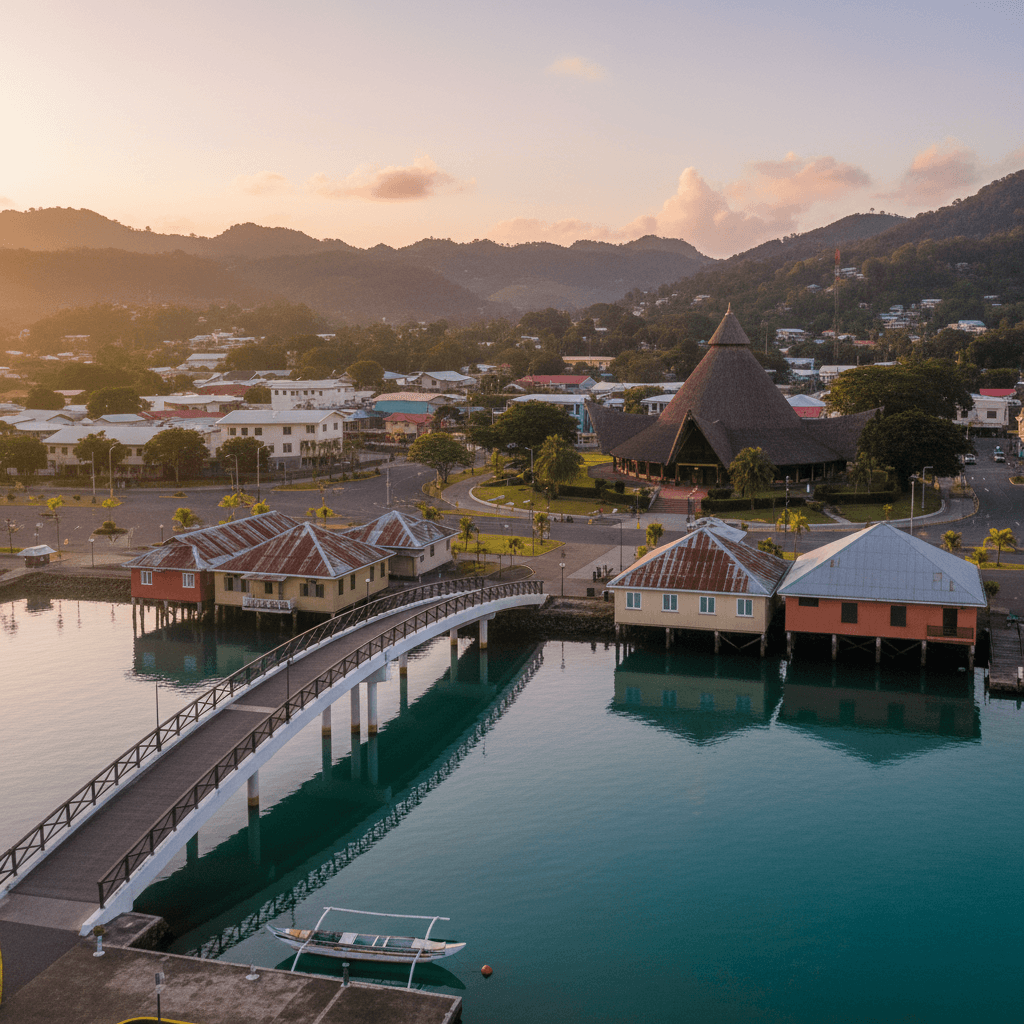
Port Vila
🇻🇺 Vanuatu
Port Vila feels slow in a way that can be lovely or maddening, depending on how badly you need things to work right now. The lagoon is bright, the air is thick and salty and the town runs on a pace that makes even simple errands feel slightly improvised.
That’s the charm. The downside is real too, the internet can crawl along at 0.5 to 27 Mbps and when the trade winds die down, the humidity just sits on your skin like a wet shirt.
What makes Vila different from a lot of nomad spots is the mix of village life, French-British leftovers and daily kava culture, all packed into a small city where people still greet each other properly. You’ll hear tinny music from taxis, market chatter, roosters and the slap of flip-flops on hot pavement, then suddenly you’re at the waterfront watching the light go gold over the water.
It isn’t a polished remote-work machine. Honestly, it’s more of a beautiful compromise, one where you get reef swims, friendly locals and a genuine island rhythm, while also paying a premium for groceries, dealing with patchy Wi-Fi and learning patience fast.
Where Most Nomads Base Themselves
- Seaside: Best balance for most people, with waterfront views and easy access, though rents run higher and it can feel a bit touristy.
- Mele: Good if you want a calmer setup and lower rent, with 1BR places often around 30,000 to 70,000 VUV.
- Nambatu: Cheaper and more local, but you’ll trade that for fewer amenities and a longer hop into the center.
- City Center: Handy for markets and errands, noisy though and you’ll pay for the convenience.
Expect about $3,000 to $3,400 a month all-in if you’re living comfortably and yes, that stings because local wages don’t stretch anywhere near the same way. A cheap meal might cost $4.50 to $9, a decent taxi ride can still feel annoyingly expensive and a coworking desk usually lands somewhere between $45 and $145 a month.
The social scene is small but warm, turns out and people actually notice when you show up a second time. If you want company, Yumiwork and Port Vila Coworking Hub are better bets than a random cafe with weak Wi-Fi and if you want the real local feel, head to a kava circle and listen more than you talk.
Port Vila isn’t slick. It’s sweaty, scenic, a little expensive and sometimes frustrating, but if you like ocean air, real community and a place that still feels human, it gets under your skin.
Port Vila isn’t cheap and it doesn’t pretend to be. A single nomad usually lands somewhere around $3,000 to $3,400 a month with rent included, though you can squeeze it down if you’re happy sharing a place, eating street food and riding the buses with the windows down and the humidity already clinging to your shirt.
Budget life starts around $1,000 to $2,000 if you keep things tight, mid-range runs about $2,500 to $3,500 and a comfortable setup pushes past $4,000 fast, especially once you add taxis, better housing and the occasional meal at a nicer spot by the water. Honestly, the city can feel cheap for a few things, then sting you on the next grocery run.
Typical Monthly Rent
- Seaside: $450 to $900 for a studio or 1BR, plus the sea breeze and expat traffic
- Mele: $270 to $630, more relaxed and usually better value
- Nambatu: $180 to $450, the budget pick, plain and simple
- City Center: roughly $1,300, pricier and noisier than most first-timers expect
Food is manageable if you stay local. Street food and simple meals often cost $4.50 to $9, mid-range plates sit around $13 and resort dining climbs quickly, with the smell of grilled fish, oil and charcoal hanging in the evening air near Waterfront spots and market stalls.
Everyday Costs
- Meals: 500 to 1,000 VUV for local food
- Transport: 150 to 500 VUV on buses, taxis can be around $5 for short hops
- Coworking: about $45 to $145 a month
- Internet: home plans usually land around 2,000 to 5,000 VUV a month
The coworking scene, turns out, is one of the better parts of living here, with places like Yumiwork, Vanuatu Coworking Space and Port Vila Coworking Hub giving you a fighting chance at a stable connection. WiFi in cafes is hit or miss and the internet can be maddeningly slow, so if your work depends on heavy video calls, don’t kid yourself.
Seaside and Mele tend to be the sweet spots for nomads who want decent access without paying top dollar, while Nambatu works for tighter budgets and people who don’t mind being farther out. Skip the expensive central options unless you really want the convenience, because in Port Vila, every extra comfort shows up on the bill pretty fast.
Nomads
Start with Seaside if you want the easiest daily life, because you’re close to the waterfront, cafés and the few coworking options that actually feel set up for remote work. The rent stings, though, with one-bedroom places often sitting around $450 to $900 and the internet is, honestly, slow enough to make a video call feel like a gamble. Not cheap.
City Center works if you like being near markets, bakeries and the noise of minivans honking outside your window, but you’ll trade peace for convenience. Yumiwork and Vanuatu Coworking Space are the safest bets for getting things done, since café WiFi in Port Vila can be patchy and a rainy afternoon on a tin roof sounds nicer than it's when your upload stalls at 3 percent. Bring patience.
Expats
Mele is the smart pick for many expats, especially if you want more space, a calmer pace and rents that usually land around $270 to $630 for a one-bedroom. It’s close enough to town for errands, but far enough out that the evenings feel quieter, with cicadas buzzing and less of the traffic grind you get near the center. Some people love that.
Seaside still pulls in expats who want a more social feel, but it’s touristy and pricier and you’ll pay for that water view every month. If you’re staying long-term, check housing through local Facebook groups and be ready to move fast when a decent place appears, because good rentals go quickly and the paperwork can be clunky.
Families
Erakor Lagoon is the best fit for families with a bigger budget, since it’s calmer, scenic and better for water time than for daily errands. The downside is obvious, it’s expensive and getting into town for school runs or shopping means planning around taxis or a car. That adds up.
Mele is the more practical family choice, with a relaxed feel, easier access to the center and enough room to breathe without paying luxury prices. You won’t get a huge nightlife scene, which, frankly, is part of the appeal when you’ve got kids and you’d rather hear rain on the windows than scooters at midnight.
Solo Travelers
Nambatu is the budget move for solo travelers, with some of the cheapest rentals in Port Vila, often around $180 to $450 for a one-bedroom. It’s more local, less polished and a little farther out, so you’ll rely more on buses or short taxi rides, but that’s the trade if you’d rather keep cash in your pocket. Worth it, if you don’t need polish.
Pango Peninsula suits solo travelers who care more about beaches and snorkeling than nightlife, though you’ll need transport and a bit of self-sufficiency. Seaside also works if you want a friendlier social scene and the nomad community, turns out, is small enough that you’ll keep seeing the same faces at cafés, coworking desks and Friday drinks.
Port Vila’s internet is, honestly, a mixed bag, fast enough for email, Slack and basic calls, then it falls on its face the moment you try to push video, uploads or anything that needs real stability. Average mobile speeds 5-40 Mbps, broadband up to 134 Mbps with Starlink, which means your morning Zoom can work fine one day and turn into pixel soup the next, especially when rain drums on the roof and everyone in town is online at once.
Local SIMs are easy to buy at the airport or in town and that’s the move most nomads make first. Digicel and Vodafone are the main names you’ll hear, with prepaid bundles like 15GB for about 3,000 VUV or smaller monthly packs around $20, but don’t expect mainland-level consistency, because once you leave the strongest signal zones, the bars can drop fast.
Best Coworking Options
- Yumiwork: Central, modern and the most polished option, with hot desks and memberships around $45 to $90 a month.
These spaces matter because cafe WiFi can be flaky and frankly, sitting at Emily’s Cafe or Blue Marlin sounds nicer than it often works out. You get coffee, a sea breeze and the clatter of cups, but you also get patchy connections, random slowdowns and the kind of humidity that makes your laptop feel warm before you’ve even opened it.
If you’re staying longer, a home plan can cost roughly $18 to $45 a month, though speeds and uptime depend on your address more than the brochure. Seaside and Mele tend to be the sweet spots for nomads, while Nambatu is cheaper but a little rougher around the edges and if you need a dependable call line, carry a backup SIM and don’t trust one provider alone.
My take, skip trying to work from random waterfront tables all day, because Port Vila’s internet will eventually embarrass you. Use a coworking space for anything serious, keep downloads for late night and treat the town like a place where you work around the connection, not against it.
Port Vila feels relaxed in the daytime, then a bit quieter and darker fast once the sun drops. The good news, honestly, is that it’s generally safe for tourists and nomads, with low violent crime and no big no-go zones in the center, but petty theft does happen in crowded spots and you shouldn’t stroll around alone at night.
Most people here are friendly, the streets smell faintly of sea air, diesel and grilled fish and you’ll hear scooter engines, kids shouting and the occasional kava circle winding down. Still, keep your phone out of sight, use a bag that zips and don’t leave laptops or cash sitting in a cafe while you wander off for a swim.
What to watch for
- Petty theft: The main risk, especially in markets, taxis and busy waterfront areas.
- Night walking: Avoid it if you can, particularly on poorly lit streets.
- Weather: Cyclone season can get rough and rain on tin roofs gets loud, fast and relentless.
- Beach common sense: Don’t leave valuables unattended, even if the beach looks sleepy.
For healthcare, Vila Central Hospital handles routine stuff and it’s fine for minor injuries, infections, stitches or a fever that won’t quit. For anything serious, though, people usually look at evacuation to Australia or New Zealand, because the local system just doesn’t have the depth for major trauma or complicated specialist care.
Pharmacies are widespread, which, surprisingly, makes basic meds easier to find than many visitors expect and you can usually sort out antibiotics, painkillers or prescription refills without much drama. Ambulance is 115, police is 111 and if you’re doing anything active, diving, hiking, scooter riding, keep those numbers saved before you need them.
Practical healthcare tips
- Clinic first: For small problems, ask a local or expat where to go, they’ll often know the fastest option.
- Insurance: Get coverage that includes medical evacuation, because that’s the expensive part.
- Pharmacy basics: Bring any specific meds you rely on, don’t assume every brand is stocked.
- After-hours care: Night options are limited, so plan ahead if you’ve got ongoing treatment.
My blunt take, skip any fantasy that Port Vila is a place to play it loose with health or safety. It’s workable, even easy, if you’re sensible, but if you get badly hurt or seriously ill, the island vibe ends quickly and the logistics get expensive.
Port Vila is small enough that you can cross the center on foot, but the heat, humidity and the occasional rough pavement make that feel better before lunch than after. The town hums with minibuses, scooters and the odd taxi horn and the whole system runs on a loose island rhythm, not a timetable.
Public buses are the cheapest way to get around. Look for minivans with a B plate, flag one down roadside and pay in exact change, usually 150 to 500 VUV depending on distance. They’re cheap and mostly reliable, though the route logic can feel random the first few times, honestly.
Taxis exist, but they’re not always the default move. ReGor Riders app for ride-hailing and a short trip can run around $5 for 3 km, while airport taxis and hotel shuttles usually land in the $5 to $10 range, which, surprisingly, isn’t terrible if you’ve got luggage and sweat dripping down your back.
Best ways to move around
- Walking: Best in the center, especially for markets, cafes and waterfront stops.
- Minibuses: Cheap, frequent and the local default for longer hops.
- Taxis or ReGor Riders: Better at night or when it’s raining hard and the roads smell like wet dust and exhaust.
- Scooters and bikes: Available centrally, usually around $9 to $18 a day, but the roads can be uneven and traffic is casual in that slightly unnerving way island traffic tends to be.
Most nomads skip cars unless they’re planning regular beach runs or side trips. You don’t need one for daily life in Port Vila and parking plus fuel just adds hassle, frankly, to a city that’s already easy to cover in short bursts.
Neighborhoods and movement
- City Center: Walkable, noisy, convenient.
- Seaside: Easy access to the waterfront, good for taxis and buses.
- Mele: Slightly out of town, so expect more rides and less spontaneous walking.
- Nambatu: Cheapest for housing, but you’ll lean on buses more.
After dark, keep it simple. Use a taxi, stay on lit streets and don’t assume you’ll find a bus at the exact minute you want one, because the system doesn’t work like that. The upside is that Port Vila never feels like a hard city to read, it just feels slow, warm and a bit improvised, with kava breath, salty air and engines idling at the curb.
English gets you by in Port Vila, though Bislama is the language that actually smooths things over. People switch fast between English, Bislama and a bit of French and honestly, the accent can catch you off guard at first because it’s soft, clipped and full of local rhythm.
Don’t expect everyone to speak perfect English outside hotels or offices. In shops, on buses and at markets, Bislama carries the day and that’s where a few phrases make a big difference, especially when the generator hum is loud, the rain’s hammering on tin roofs and you’re trying to ask for change or directions without sounding rude.
Learn these first:
- Halo, hello.
- Olsem wanem?, how are you?
- I gud, I’m good.
- Mi no save, I don’t know.
- Plis talem slo, speak slowly.
The best move is to keep your English simple, then sprinkle in a little Bislama. People usually warm up fast when you try and weirdly, a clumsy halo does more than polished tourist English ever will, especially with taxi drivers, market sellers and neighbours who’ve got no patience for long explanations.
Communication tips:
- Speak slowly. Locals appreciate it.
- Use exact prices. Cash is still king.
- Don’t overcomplicate things. Short sentences work best.
- Use Google Translate. It handles Bislama pretty well.
For digital work, Port Vila can be frustrating. Internet speeds are, honestly, patchy and often slow enough to make video calls painful, so most nomads lean on Yumiwork, Vanuatu Coworking Space or Port Vila Coworking Hub when they need a stable connection, quiet air-con and fewer interruptions from barking dogs or roadside honking.
If you’re calling locally, you’ll mostly deal with Digicel or Vodafone SIMs and it’s smart to buy one at the airport or in town right away. Texts and basic browsing usually work fine, but heavy uploads, big downloads and live meetings can get ugly fast, so plan your workday around that reality, not around the brochure version of the island.
Useful habits:
- Carry cash. Small bills help.
- Ask twice if needed. People won’t mind.
- Use Bislama in villages. It shows respect.
- Keep messages short. Mobile data isn’t generous.
Port Vila feels warm all year, but the weather changes the mood fast. The sweet spot is May to October, when southeast trades take the edge off the humidity and you get more blue-sky days, cooler evenings and less of that sticky, shirt-clinging heat.
Dry season is the easy choice, honestly. Daytime temperatures usually sit around 25 to 28°C, rain is lighter and you can actually plan a beach trip without watching storm clouds roll in over the lagoon, which, surprisingly, makes a huge difference when you’re trying to work and swim in the same week.
Not cheap. Not cool. Not empty. November to April is the wet season and it can feel brutally muggy, with heavy downpours drumming on tin roofs, puddles in the road and the occasional cyclone threat that makes everyone keep an eye on the forecast.
What each season feels like
- May to October: Best weather for most visitors, less rain, easier island day trips and better sleeping conditions if you don’t love waking up in a sweat.
- November to April: Hotter, wetter and more unpredictable, so expect sudden showers, sticky afternoons and the kind of humidity that makes a short walk feel longer.
- Year-round: Temperatures stay fairly steady, usually in the low to high 20s Celsius, so you’re packing for warmth either way, just with a rain jacket or without one.
If you’re coming to work remotely, aim for the dry months and book flexible accommodation. Internet in Port Vila is already patchy enough, so you don’t need cyclone-season weather making power cuts and signal drops even more annoying.
July and August are especially popular and the town feels a bit busier then, with more expats, more travelers and more noise from buses, dogs and the odd generator kicking in after a storm. April and May are a nice shoulder-season compromise, warmer seas, fewer crowds and still a decent chance of clear mornings for snorkeling or a trip out to Mele Cascades.
Best time by travel style
- Remote workers: May to October, because the weather is calmer and you’ll have fewer days ruined by rain.
- Beach lovers: May to September, when the heat is manageable and the water still feels properly tropical.
- Budget travelers: Late wet season can be cheaper, but you’re gambling with storms and soggy logistics.
My take, skip the worst of the wet season unless you’ve got a very loose schedule. Port Vila is at its best when the air feels warm instead of heavy, the trade winds are moving and you can hear waves, roosters and church singing instead of rain hammering the roof.
Port Vila feels easy until you try to work like a normal person. The heat hangs on your skin, scooters buzz past and the WiFi, honestly, can go from fine to useless fast.
Get a local SIM the day you land. Digicel, Telecom and Vodafone all sell prepaid plans and the airport kiosk is the cleanest first stop, because hunting around town after a long flight is just annoying.
- SIM cards: Airport kiosks and mobile shops sell starter packs from about $9, with data plans roughly $5.50 to $27.
- Banking: Use BSP or National Bank ATMs, carry cash in VUV and keep Wise or Revolut handy, since fintech support is thin.
- Housing: Airbnb and Facebook expat groups are the usual move and they move faster than local listings in many cases.
- Transport: Public buses are cheap and simple, but keep exact change, because drivers usually won’t make a fuss and you shouldn’t either.
Most nomads end up in Seaside, Mele or Nambatu. Seaside is easier if you want cafés, water views and a short ride to the center, Mele is calmer and a bit cheaper, while Nambatu is the budget pick, though you’ll trade convenience for fewer services.
Neighborhoods at a glance
- Seaside: Best for solo nomads, rent is higher, around $450 to $900 for a one-bedroom.
- Mele: Good for a quieter setup, usually $270 to $630 for a one-bedroom.
- Nambatu: Cheapest option, often $180 to $450, but you’ll be farther out.
For internet, don’t expect miracles. Yumiwork is the safest bet for getting real work done, Port Vila Coworking Hub has ocean views and cafés like Emily’s or Blue Marlin are fine for a coffee stop, but the connection can die when you need it most, which, surprisingly, is usually during a call.
Daily life is pretty straightforward if you keep it local. Eat laplap, grab street food for about $4.50 to $9 and take buses instead of taxis when you can, because the small savings add up fast in a place where rent, imported groceries and rideshare-free transport still sting.
Safety is decent in the center, still keep your bag close in crowds and don’t wander around alone after dark. For healthcare, Vila Central Hospital covers basics, pharmacies are easy to find and if something serious happens, evacuation to Australia or New Zealand is the real plan.
People are friendly, but they expect respect. Take your shoes off when you enter a home, dress modestly in villages and if you’re invited to a kava circle, clap three times before and after, it’s a small thing that goes a long way.
Need visa and immigration info for Vanuatu?
🇻🇺 View Vanuatu Country GuideOff the Radar
Pioneer territory