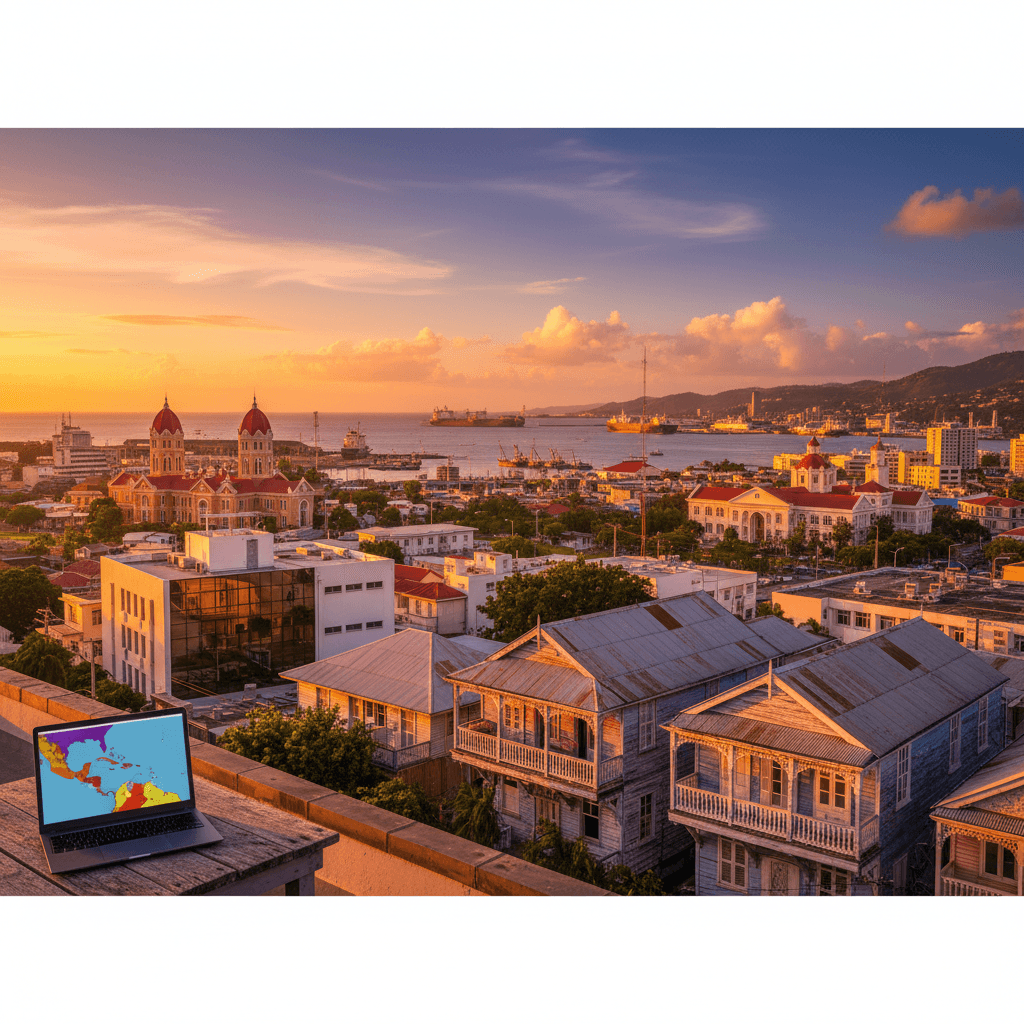
Port of Spain
🇹🇹 Trinidad and Tobago
Port of Spain doesn't feel like anywhere else in the Caribbean. It's louder, messier, more intense and honestly more interesting than the resort-island version of the region that most people picture. The smell of curry and exhaust hits you the moment you step outside, steelpan drifts out of open windows on weekend mornings and the whole city seems to operate on its own schedule, one that accelerates dramatically around Carnival in February and March then settles back into a humid, unhurried groove.
The cultural mix here is genuinely unlike anything nearby. African, Indian, Creole and European influences don't just coexist, they've fused into something distinct: the food, the music, the way people talk, the way they socialize. Locals call hanging out "liming," and they're good at it, most nomads find that making friends here happens faster than expected.
That said, it's not frictionless. Traffic is, frankly, maddening in ways that'll test your patience on a daily basis, power cuts happen often enough to disrupt a workday if you're not prepared and some parts of the city require real awareness about where you are after dark. It's not a place where you can switch off your judgment.
Cost-wise, Port of Spain sits around $1,300 to $1,800 a month for one person including rent, which undercuts most of the Caribbean significantly. That's not nothing. Street food runs $5 to $9, a decent one-bedroom in Woodbrook lands around $600 to $850 and coworking starts at roughly $15 a day. Budget travelers can get by on less, comfortable setups cost more, but the floor is genuinely low for a capital city with this much going on.
The internet is, turns out, solid enough for remote work, averaging 44 to 100 Mbps across most central neighborhoods, though peak-hour slowdowns are real and outages do happen. Weirdly, the connectivity is one of the things nomads consistently praise once they've settled in.
What makes Port of Spain stick with people isn't the beaches or the low costs, it's the feeling of being somewhere with its own strong identity. It's not performing for tourists, it doesn't need to and you feel that the second you arrive.
Port of Spain is, honestly, more affordable than most Caribbean capitals, but it's not cheap either. A single person can get by on $800 to $1,100 a month if they're careful, renting a studio in the outer areas, eating roti from street vendors and taking maxi-taxis everywhere. Push that to a comfortable mid-range lifestyle and you're looking at $1,200 to $1,500, which covers a decent one-bedroom in Woodbrook, sit-down meals a few times a week and the occasional Uber when the heat gets to you.
Rent is the biggest variable. Studios in outer neighborhoods run around $442 a month, a central one-bedroom in Woodbrook or St. Clair lands closer to $600 to $850 and anything in a gated community or prime spot pushes past $842, sometimes well past it. Most expats say Facebook Marketplace and local expat groups are the best places to find listings, not the formal agencies.
Food costs stay low if you lean into the local stuff. Street vendors and roti shops charge $5 to $9 a meal, the smell of curry and fresh bread hitting you before you even spot the cart. Mid-range restaurants in Woodbrook run $9 to $20 a head, upscale dinners for two will cost $40 or more. Groceries are reasonable, though inflation has been biting into food and transport costs lately, most nomads notice it within the first few weeks.
- Transport: Around $52 a month on maxi-taxis and buses; Uber rides run $9 to $10 for a short trip
- Internet: Home broadband around $50 a month, speeds between 44 and 100 Mbps
- Coworking: Spaces Port of Spain charges roughly TTD 100 per day (about $15); Regus Invaders Bay starts around $380 a month
- SIM card: Digicel or bmobile starter packs cost $8 to $12 for 5GB, available at Piarco Airport
Utilities and unlimited data add another $50 or so monthly, it adds up faster than the headline numbers suggest. A realistic all-in budget for one person is closer to $1,300 to $1,500, not the bottom-line $800 you'll see floated online. Still well below Barbados or the Cayman Islands, which is, turns out, exactly why nomads keep coming back.
Port of Spain's neighborhoods vary wildly in feel, safety and price, so picking the wrong one will grind on you fast. Here's where different types of people actually end up happy.
Digital Nomads: Woodbrook
Most nomads land in Woodbrook and honestly, it makes sense. It's walkable by Port of Spain standards, packed with restaurants and rum bars and the mid-range rent of $500 to $700 a month doesn't hurt. You'll smell jerk chicken and hear soca bleeding out of a bar before noon, it's that kind of neighborhood.
The downside is real though. Weekends get loud, parking is a genuine headache and the street noise doesn't care about your 9 a.m. call. Still, the social payoff is worth it for most people who want to actually meet other nomads and locals.
Expats and Long-Term Residents: Westmoorings and St. Clair
Expats who've been here a while tend to migrate toward Westmoorings or St. Clair. Gated communities, quieter streets and noticeably better security make the higher rent, which starts around $700 and climbs quickly, feel justified. Westmoorings sits close enough to the coast that you get a breeze, which, surprisingly, makes the humidity feel less suffocating.
It's calmer here, turns out that's exactly what most expat families want. The trade-off is you'll need a car or reliable ride-hailing for almost everything.
Families: Maraval
Families tend to gravitate toward Maraval, an upscale, quieter suburb with good shopping and a relaxed pace that's frankly hard to find closer to the center. It's car-dependent, costs run higher than Woodbrook and it won't satisfy anyone craving urban energy. But for families prioritizing space and calm over convenience, it works well.
Budget Travelers and Short Stays: Downtown and Woodford Square
Downtown is the cheapest option and the most culturally dense, street food for $5, colonial architecture, Woodford Square right there. Don't linger after dark east of Charlotte Street though, that's not a suggestion, it's a genuine safety concern flagged by the Canadian government's travel advisory.
Solo travelers on short trips can make downtown work during daylight hours, just stay alert and get back to a safer area before sunset.
Speeds here run 50 to 140 Mbps on a decent connection, with major providers like Flow and Digicel+ consistently delivering 130+ Mbps. Peak-hour slowdowns are still real, and power outages do happen, and if you're on a deadline when the lights flicker, it's genuinely frustrating.
The coworking scene is small but functional. Regus at Invaders Bay is the most established option, running around $380 a month for a hot desk, it's corporate and quiet, which suits some people fine. Spaces Port of Spain charges roughly TTD 100 a day (about $15) and ESG Business Suite runs similar rates. Davinci Meeting Rooms works if you need an hourly setup for calls, starting around $25 per hour for coworking or $44/hr for day offices. None of these are buzzing creative hubs, turns out Port of Spain's nomad infrastructure is still catching up to the culture.
Cafes fill the gap. Woodbrook has the most options for working over coffee, the WiFi tends to hold up and the ambient noise is a mix of soca from someone's phone and the smell of doubles frying nearby. Not glamorous, but it works.
For mobile data, pick up a SIM from Digicel or bmobile at Piarco Airport or any major mall, you'll need your passport and about $10 to $12 for a starter pack with 5GB. Monthly plans range from around $20 for basic data up to $155 for larger bundles with calls included. Digicel's coverage is, weirdly, more consistent in the suburbs; bmobile tends to edge ahead downtown. Either way, having a local SIM as a backup when the coworking WiFi dips is just smart.
- Regus Invaders Bay: Hot desks from ~$380/month, private offices available, reliable AC and infrastructure
- Spaces Port of Spain: TTD 100/day (~$15), flexible drop-in, decent WiFi
- ESG Business Suite: Similar day rates, smaller and quieter
- Davinci Meeting Rooms: From $25/hour, good for client calls or short focused sessions
- Digicel SIM: $10 to $12 starter, plans up to $155/month with calls
- bmobile SIM: Comparable pricing, stronger downtown signal
Most nomads end up splitting time between a coworking space for focused mornings and a Woodbrook cafe for afternoons. It's not a perfect setup, but it gets the job done.
Port of Spain is a city where understanding the local layout is key to a smooth experience. Neighborhoods like Woodbrook, St. Clair and Westmoorings are where most visitors spend their time, and daytime movement there is generally comfortable. You will notice the shift in atmosphere as you move between different districts, so staying aware of your surroundings is always recommended. At night, many residents and visitors prefer using ride-hailing apps to get around the city safely.
A few habits newcomers often adopt:
- Transport: Ride-hailing is a popular choice after dark for reliable door-to-door service.
- Valuables: Keep phones and jewelry discreet when walking in unfamiliar areas.
- Emergency number: 999 for police, fire and ambulance.
Healthcare is more layered than you'd expect for a city this size. Port of Spain General Hospital handles 24/7 trauma and emergencies as a public facility, but wait times can be long as the facilities are often stretched. If you've got travel insurance or private coverage, you may prefer St. Clair Medical Centre. It's private, insurance-friendly and offers a high standard of care. West Shore Medical is a private hospital option for healthcare needs. Pharmacies are widespread across Woodbrook and St. Clair, so filling a prescription isn't a hassle.
Travel insurance is highly recommended, as it can be the difference between a manageable situation and a very expensive one. Private facilities like St. Clair Medical Centre can be costly out of pocket, while the public hospital is free but often slower, making coverage an important consideration.
Expats who've been here a while describe it as a city where you learn the local rhythm and then relax into it. By using the right transport and staying informed about different neighborhoods, most days feel completely normal.
Getting around Port of Spain is, honestly, a mixed bag. The city has decent public transport options, but traffic congestion is a genuine daily frustration and walkability outside the main centers is pretty limited.
The backbone of local transport is the maxi-taxi system, color-coded minivans that run set routes for around $1 to $2 a ride, departing from City Gate terminal downtown. They're cheap and frequent, they're also loud, packed and stop constantly. PTSC buses cover similar routes and cost about the same; buy tickets ahead when you can because the queues move slowly.
For anything more direct, Uber and Bolt both operate here, turns out they're genuinely useful rather than a luxury. A five-mile ride runs roughly $9 to $10, which adds up if you're commuting daily but beats the stress of street taxis, which most expats and nomads skip entirely because pricing isn't always transparent. Hotel taxis are a safer bet if you need one.
Getting in from Piarco Airport is straightforward. It's 21 kilometers from the city center, Uber or a taxi will run you $20 to $30 depending on traffic and traffic at peak hours can turn that 30-minute ride into an hour, so plan accordingly.
A few things to know before you start moving around:
- Walkability: Woodbrook is the most pedestrian-friendly neighborhood, but most areas require a car or ride-hail for anything practical.
- Bike and scooter rentals: Weirdly absent. Don't count on them.
- Peak traffic: Morning rush (7 to 9am) and afternoon (4 to 6pm) on the main corridors into downtown are genuinely bad. Build in buffer time.
- Street taxis: Skip them. Use Uber or Bolt, especially at night.
- Airport transfer: Book your Uber before you clear customs, the app works fine at Piarco.
Most nomads who stay longer than a week end up relying on a combination of Uber for convenience and maxis when they want to move like a local and save a few dollars. Renting a car is possible but parking downtown is a headache, it's rarely worth it unless you're doing regular day trips to Maracas Beach or Chaguaramas.
English is the official language and everyone speaks it. That's the easy part. What takes a little getting used to is Trinidadian Creole, which, turns out, is woven into everyday conversation so naturally that you'll hear it constantly without always catching what's said.
The accent is, honestly, one of the more musical Caribbean varieties, fast and rhythmic, with vowels that stretch in unexpected places and consonants that soften or drop entirely. "Good morning" becomes "Mornin'," "thank you" shortens to "tank ya'," and "how much?" sounds like "ow much?" in casual speech. Nobody expects you to mimic it, but locals genuinely appreciate when you try a phrase or two, it signals respect rather than tourism.
Hindi words surface in everyday Trinidadian speech more than most visitors expect, a legacy of the large Indo-Trinidadian population and you'll catch Spanish influences too, particularly in place names and some older expressions. The country sits just 11km off Venezuela's coast, so the Spanish proximity isn't just geographic.
For practical communication, you won't need Google Translate for standard interactions, shops, restaurants, coworking spaces, government offices all run in English without issue. Where it helps is decoding handwritten menus, local classifieds on Facebook Marketplace or the rapid-fire patois exchanged between vendors at a street market, the kind where everyone's talking over each other and the smell of curry and exhaust hangs in the air.
A few things worth knowing before you land:
- Tone matters: Trinis communicate with warmth and directness, bluntness isn't rudeness here, it's just how conversations go.
- Liming: This means hanging out with no particular agenda, understanding it unlocks a lot of social invitations that might otherwise seem vague.
- "Aye, aye": Means yes, understood or I agree, depending on context, you'll hear it constantly.
- Formal settings: Standard Caribbean English is used in business and professional environments, the Creole drops considerably in meetings and offices.
Most nomads find the language barrier is, weirdly, almost nonexistent on a functional level, the real adjustment is social rather than linguistic. Once you stop trying to parse every word and just let conversations flow, Port of Spain opens up considerably.
Port of Spain is tropical year-round, sitting at 82 to 88°F (28 to 31°C) with humidity that honestly clings to everything, your clothes, your laptop bag, your mood by midday. Two seasons define the calendar here: dry and wet and the difference between them is real enough to shape your whole trip.
Dry season runs December through May. This is when the city's at its best. The air's still warm but the relentless afternoon downpours ease off, the streets feel more manageable and you get Carnival in February or March, which is, turns out, one of the most genuinely electric street events in the Caribbean. If you're visiting for the first time, aim for January through April.
Rainy season kicks in around June and doesn't really let go until November. July is the worst of it, with roughly 15 days of rain in a single month. These aren't gentle showers either, they're heavy, loud, the kind that hammers tin roofs and floods low-lying streets within an hour. Traffic, already frustrating on a dry day, becomes genuinely maddening when the rain hits.
A few things to keep in mind across the seasons:
- Best months to visit: December through April, less rain, lower humidity, Carnival season
- Worst months: July through September, peak rainfall, occasional flooding, storm risk
- Hurricane exposure: Trinidad sits south of the main hurricane belt, so direct hits are rare, though you'll still feel tropical storm effects in heavy rain years
- Temperature range: 82 to 88°F year-round, weirdly consistent, the seasons are about rain not temperature
- Humidity: High throughout, especially June to October; a dehumidifier in your apartment isn't overkill
Nomads who stay long-term often say the dry season feels almost effortless, the weather cooperates, coworking is comfortable and weekend beach trips to Maracas actually happen. The rainy season is workable, it's not miserable, but power outages tick up and getting around takes longer than it should.
Skip the July to September window if you can. Come for Carnival, stay through April, that's the sweet spot.
Get a SIM card at Piarco Airport the moment you land. Digicel and bmobile both have desks there, you'll need your passport and starter packs run $10 to $20 USD with data plans starting around 50 TTD for 2GB. Don't bother hunting for one downtown first, it's, honestly, not worth the hassle when it's right there on arrival.
The 90-day tourist visa is free on entry for most nationalities. If you're planning to stay longer or work remotely, you'll need to look into an extension or work permit and that process is slow, so start early.
Banking is straightforward enough. Local ATMs are everywhere, though fees add up, most nomads use Wise to transfer money and skip the conversion markup entirely. Facebook Marketplace and local expat groups are, turns out, the best places to find apartments, real estate agents exist but they're slow and often overpriced for short stays.
For getting around, skip street taxis entirely. Use Uber or Bolt, it's safer and you know the price upfront. Transfers from Piarco to the city run $20 to $30 and take about 40 minutes, longer if you hit traffic, which you will.
A few customs worth knowing before you arrive:
- Liming: This means hanging out with no agenda. Don't rush it, it's a cultural thing, not laziness.
- Shoes off: Remove them when entering someone's home. Don't wait to be asked.
- Carnival: If you're there in February or March, the city transforms completely. Book accommodation months ahead, prices double and availability disappears fast.
- Greetings matter: A simple "good morning" before any transaction or question goes a long way. Skipping it reads as rude, not efficient.
Day trips are worth building into your schedule. Maracas Beach is the obvious one, about an hour north through the Northern Range and the bake and shark there's, weirdly, one of the best things you'll eat in the Caribbean. Chaguaramas is closer and good for kayaking or just a quieter afternoon.
Rainy season runs June through November, peak misery hits July and August with 15-plus rainy days a month. If you can time your visit for December through April, do it, the weather is genuinely pleasant and the city feels calmer.
Need visa and immigration info for Trinidad and Tobago?
🇹🇹 View Trinidad and Tobago Country GuideEasy Landing
Settle in, no stress