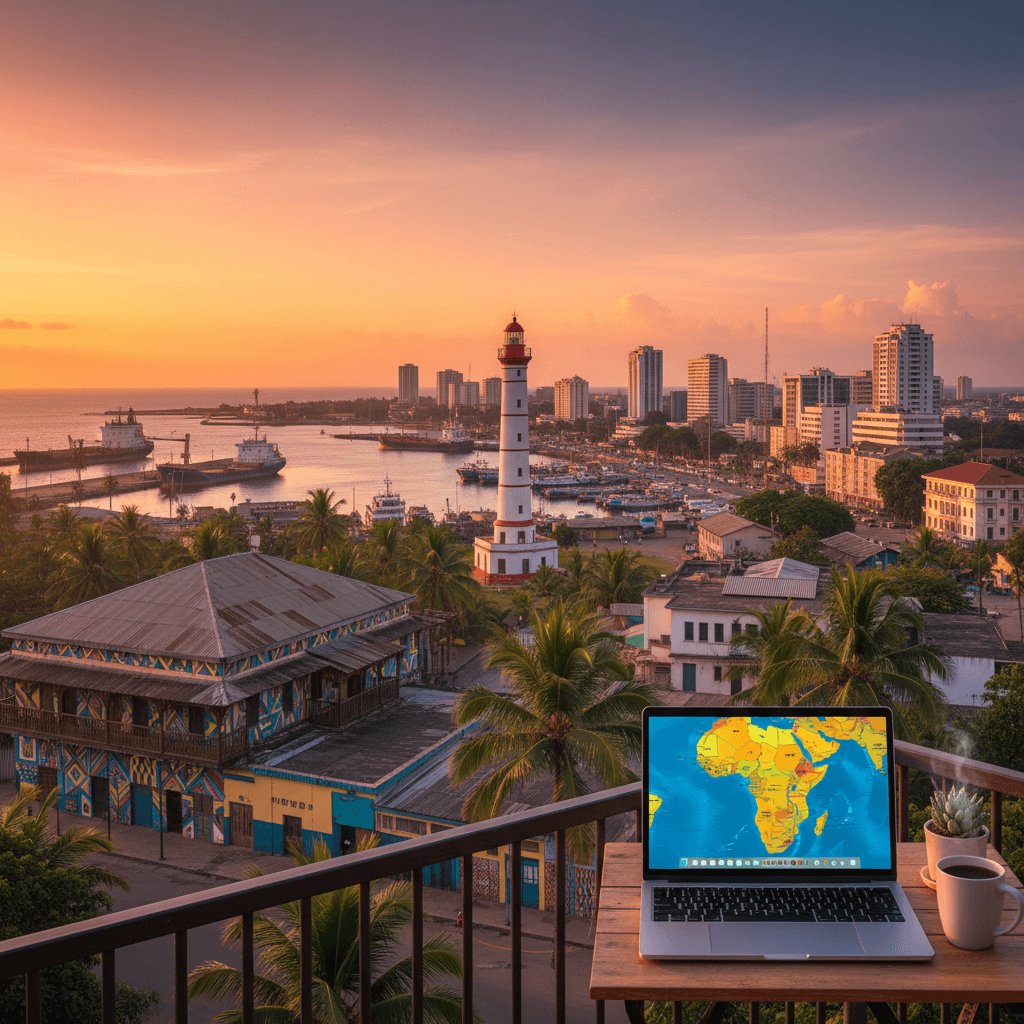
Port-Gentil
🇬🇦 Gabon
Port-Gentil feels like a city that was built for oil money, salt air and long lunches. It’s Gabon’s petroleum engine, but also a place with beaches, mangroves and a slower rhythm than Libreville, so you get the odd combo of hard hats, seafood grills and the constant hiss of humid wind off Mandji Island.
That mix is the whole point. Some expats love it, especially people tied to Total, Perenco and the wider energy scene, because the pay is better, the social circle is tight and weekends can mean Sogara Beach instead of a mall. Nomads, honestly, are more split, the city can feel isolating, the internet isn’t built for remote work and a lot of daily life still runs on patience, phone calls and asking twice.
Port-Gentil isn’t cheap. It’s cheaper than many global oil towns, but pricey for Africa and the pain shows up in rent, imported food and anything that depends on reliable service. A one-person monthly budget can sit around $660 if you keep things lean, though comfortable living jumps fast once you want a proper apartment, regular taxis and the occasional French dinner with wine.
What the city feels like
- Industrial core: Oil compounds, truck noise and a work-first mood around Sogara and company housing.
- Coastal side: Beaches, salty air, fishing boats and quiet stretches where the wind can feel gritty on your skin.
- Social scene: Small, expat-heavy and surprisingly familiar after a week or two, because everyone seems to know the same restaurants and bars.
- Downsides: Poor walkability, inconsistent services and a real feeling of distance from the rest of Gabon.
The vibe changes by neighborhood. City Center is practical, with banks, shops and enough foot traffic to get things done, though the honking and petty theft risk get old fast. Sogara is the polished option, N’Tchengue is more residential and rougher around the edges and the western coast near Cap Lopez feels quiet, windy and a bit cut off, which some people love and others absolutely don’t.
If you’re here for remote work, set expectations low and be flexible. 4G is usually fine for calls, sometimes, weirdly, decent enough for streaming, but uploads can stall, coworking is thin on the ground and most nomads end up working from home, a hotel bar or an office connection borrowed through expat networks.
What Port-Gentil does well is atmosphere, not convenience. The air smells like salt, diesel and grilled fish, rain drums on corrugated roofs and when the sun drops, the city softens a little, which is when you remember why people stay despite the friction.
Port-Gentil isn’t cheap and that surprises people who picture a sleepy oil town with beach rent and bargain meals. The truth is messier, because imported goods, patchy services and expat pricing push costs up fast, even though the city still feels cheaper than many global hubs.
A solo budget runs about $660 a month if you’re careful, sharing housing and eating local, but that number climbs quickly once you want a central apartment, better internet or regular dinners out. Honestly, most nomads end up spending more than they planned, then grumbling about it over a cold beer while the humidity sticks to everything.
Typical Monthly Costs
- Rent: Studio or 1BR in the center, about $286 to $1,000, while outside the center you might find something closer to $202 to $415.
- Food: Around $261 a month for groceries and casual eating, with street meals and quick bites usually $5.70 to $6.21.
- Transport: Roughly $34 monthly if you lean on shared taxis, though negotiating fares is part of life here.
- Utilities and internet: About $70 combined and internet can be annoying, honestly, when uploads crawl during bad 4G days.
If you want a comfortable setup, think closer to $1,800 plus, especially if you’re in a compound villa, using expat-oriented restaurants and paying for the kind of convenience that’s hard to find on Mandji Island. Mid-range living, with a decent center apartment and mixed dining, usually lands around $1,000 and that’s the sweet spot for many short-term workers.
Where the Money Goes
- Sogara: Secure compounds, beach access and newer housing, but rents can jump above $1,000 for a 1BR.
- City Center: Handy for shops, banks and hotels, though noise, traffic and petty theft risks make it less peaceful.
- N'Tchengue: Better for budget-minded renters, with more mixed housing and newer builds, but roads can be sandy and rough.
- Western Seaside and Cap Lopez: Quiet and scenic, yet isolated, windy and a pain if you need daily convenience.
Coworking is thin on the ground, which is frankly the biggest headache for digital nomads. If you need a proper desk setup, people often rely on Libreville networks like Ogooué Labs or they work from hotel bars, where the coffee’s fine, the Wi-Fi’s hit or miss and the clink of glasses fills the room.
Bottom line, Port-Gentil works best if your income comes from oil, consulting or a company package. If you’re paying your own way, keep a tight budget, expect some friction and don’t be shocked when a “simple” month turns out to be a lot pricier than it looked on paper.
Nomads
Sogara is the move if you’re an oil-sector nomad with a decent budget, because the compounds are secure, the housing is newer and you’re closer to the beach when the workday ends. It isn’t cheap, honestly, with many 1BRs pushing past $1,000 and the tradeoff is a pretty narrow social circle built around expats, rigs and hotel bars.
Internet here is, frankly, the same Port-Gentil story everywhere, patchy 4G, decent enough for calls, annoying for uploads, so don’t count on flawless remote work without backup data. The air smells like salt, diesel and wet concrete after rain, which is kind of the city in one breath.
Expats
City Center, around Port-Gentil Bay and the Casino area, suits expats who want banks, shops, restaurants and a shorter taxi ride to the places people actually use. You’ll hear constant honking, French conversations and the scrape of chairs outside bars and while it’s practical, it’s also noisier and petty theft does happen after dark.
Meals at mid-range spots are still manageable compared with many expat hubs, but groceries and imported goods add up fast, so most long-timers shop carefully and eat local when they can. The center works best if you want convenience over calm.
Families
N'Tchengue is the sensible pick for families and budget-conscious expats, because newer housing and more varied rents give you a bit more room without paying Sogara prices. The roads can be sandy and rough, though, so school runs and errands feel more like a daily chore than they should.
It’s quieter than the center and that matters when you’ve got kids, but you’ll be farther from beaches, quick nightlife and the easy social life that pulls many foreigners toward the coast. Weirdly, that distance can be a blessing if you’re trying to avoid constant noise and compound gossip.
Solo Travelers
Solo travelers usually do best in the City Center for a short stay, because you can walk to hotels, banks, supermarkets and dinner without burning money on taxis all day. Still, don’t wander late, because the streets thin out fast and the city feels much less friendly once the light drops.
If you want quiet more than convenience, the Western Seaside near Cap Lopez is the better bet, with ocean views, fishing boats and a windy, almost empty feel that can be lovely or lonely depending on your mood. It’s a beautiful place to sit with a cold drink, then it gets isolated quickly.
- Best beach access: Sogara
- Best day-to-day convenience: City Center
- Best for lower rents: N'Tchengue
- Best for quiet views: Cap Lopez
Port-Gentil’s internet is decent enough for calls, then it gets annoying fast. You’ll find 4G from Airtel and Moov around the city, usually in the 3 to 6 Mbps range, which sounds fine until you try to upload a file and the bar freezes, again. Not cheap either.
Most nomads don’t come here for remote-work infrastructure, because frankly there isn’t much of it. The city runs on oil money, beach life and expat routines, so you can work from a hotel bar or a quiet apartment in Sogara, but don’t expect the polished coworking scene you’d get in Lagos or Nairobi.
- Mobile data: Airtel and Moov are the main picks and the prepaid plans are affordable by global standards, though speeds can wobble when the network gets busy.
- SIM cards: Buy one at the airport or market with your passport, it’s the simplest move and usually gets you online the same day.
- eSIM: If you want to skip the kiosk hassle, Cellesim options start around $6.90, which, surprisingly, can be easier than finding a helpful phone shop clerk.
- Home internet: Some apartments offer 50 Mbps or better for about $23 a month, though the actual experience depends on the building, the provider and the weather, honestly.
Coworking is the weak point. There’s no dedicated space in Port-Gentil, so people either work from home, use hotel lounges or look toward the mainland in Libreville for more formal office environments.
If you need a private office, Regus in Libreville is the other fallback, but that’s a different city and a different budget, so don’t build your routine around it. Cafes aren’t really a thing here for serious laptop time, though some expats settle into hotel bars where the coffee smells burnt, the aircon hums and the Wi-Fi is just good enough for Zoom.
Best bets for getting work done
- Sogara: Better housing, more expat-friendly compounds and usually the easiest place to get stable home internet.
- City center: Handy for banks, shops and quick errands, but it’s noisier and power or connectivity hiccups feel more annoying here.
- Hotel lounges: A practical backup, especially if you need aircon, coffee and a place to sit still for a few hours.
The short version, work here if you can tolerate spotty uploads and a little improvisation. If your job lives and dies by large files, live streams or perfect latency, Port-Gentil will test your patience and honestly, it probably shouldn’t be your base.
Port-Gentil feels safe enough in the daylight if you stay alert, but crime is real here, not theoretical. Robbery and break-ins happen, especially after dark and the city gets quieter fast once the sun drops, with scooters buzzing past and a few stray honks on otherwise empty streets.
Stick to the center, Sogara or a known compound and skip isolated beaches and poorer side streets at night. Honestly, that advice saves headaches, because the petty stuff is what catches people off guard, not some dramatic big-city threat. The oil-sector compounds are calmer and expats usually sleep better behind a gate.
- Avoid: Walking alone after dark, especially near the beaches or on dim side roads.
- Watch: Phones, wallets and bags in crowded taxi zones and around Carrefour Tobia.
- Prefer: Taxis over walking and ask your hotel or landlord which drivers they trust.
Healthcare is mixed, but it’s better than people expect for a smaller oil town. Hôpital N'Tchengue and Clinique Total Gabon handle the main expat needs, pharmacies are easy to find and a basic doctor visit runs about $33, which, surprisingly, isn’t awful by regional standards. Still, bring any niche prescriptions with you, because local stock can be patchy and the selection isn’t always what you’d hope for.
If something feels off, go straight to a clinic rather than waiting it out in your apartment with the fan rattling and the humidity sticking to the walls. For emergencies, call police at 17 and for anything serious, ask a hotel or clinic to help with transport, because ambulance options are limited and speed matters here.
What most expats do
- Housing: Choose a guarded compound in Sogara or a known building near the center.
- After dark: Use taxis, don’t wander and keep your route simple.
- Meds: Pack prescriptions, plus extras for a few weeks.
- Care: Use private clinics first for anything non-routine.
The real trick is staying boring. Don’t flash cash, don’t take random late rides and don’t assume a beach road looks harmless just because the water smells clean and the wind feels good at sunset. Port-Gentil is manageable if you’re sensible, but it’s not a place to get careless.
Port-Gentil gets around on shared taxis, full stop. The base fare is usually about 400 XAF, then you haggle a bit if the driver smells trouble or the road gets ugly, which happens more than locals would like. Don’t expect ride-hailing apps to save you, because they’re basically absent here and walking far outside the center is a bad idea once the sun drops.
The city feels compact on a map, but in real life the heat, the sand and the traffic make everything drag. Honking fills the air near Carrefour Tobia, exhaust hangs over the main roads and after a rain the potholes turn sandy streets into a mess, so a five-minute trip can become a small negotiation. Honestly, most expats just keep cash for taxis and stop pretending they’ll “walk it off.”
What to expect
- Shared taxis: Cheapest and easiest, especially for short hops in the city center and Sogara.
- Airport transfer: A taxi from POG to town is about 8 to 10 USD and it’s a quick 3 km ride.
- Monthly transport: Around 30 USD if you’re using taxis regularly and don’t mind sharing.
- Ferry: Libreville runs by boat in roughly 3 to 4 hours, though schedules can feel loose.
There aren’t many bikes or scooters around and frankly, the roads don’t invite them. If you drive yourself, do it with caution, because sandy edges, poor lighting and random stops make the whole thing more tiring than it should be, especially after dark.
Best areas for getting around
- City Center: Best for short stays, banks, Casino supermarket and the easiest taxi access.
- Sogara: Good if you’re in an expat compound and want beach access without much hassle.
- N'Tchengue: Cheaper housing, but expect more dirt roads and longer rides.
- Cap Lopez side: Quiet and scenic, though getting back at night can be a pain.
If you’re here for work, keep your routine tight, then use taxis for everything after sunset, because the city’s sprawl, weak sidewalks and patchy street lighting make casual wandering a bad trade. Weirdly, the simplest move is also the smartest, stay near the center or your compound and let Port-Gentil’s taxi culture do the heavy lifting.
French runs the show in Port-Gentil. Most people under 50 speak it well and in shops, taxis, banks and clinics, that’s the language you’ll need, not English, which honestly can disappear fast once you’re outside an oil office or expat compound.
That mix matters. You’ll also hear Fang and other local languages in markets and neighborhoods, so the city feels multilingual in a practical, everyday way, with greetings carrying more weight than perfect grammar and a quick Bonjour opening more doors than you’d expect.
Useful basics:
- Bonjour, hello, use it everywhere.
- Merci, thanks, simple and polite.
- Combien?, how much?, handy in taxis and markets.
- Parlez-vous anglais?, do you speak English?, but don’t assume the answer.
Google Translate offline helps, especially for menus, rental chats and the odd bureaucratic form, though it can still mangle local phrasing. Turn your phone brightness up before you leave the house, because under Port-Gentil’s harsh sun and humidity, you’ll be squinting at screens while sweating through your shirt in five minutes flat.
In daily life, language is tied to tone. People tend to greet first, ask about family, then get to the point and if you jump straight into business in a taxi or at a counter, it can feel blunt, sometimes even rude, so slow down a bit and let the conversation breathe.
What helps most:
- Learn the greetings, they matter more than long sentences.
- Keep cash ready, then you won’t need a long exchange for small purchases.
- Use short French phrases, people usually appreciate the effort.
- Save offline translations, because mobile data can be patchy.
For nomads, the language barrier isn’t a dealbreaker, but it does slow everything down and frankly, that gets old when you’re trying to sort a SIM, ask about rent or chase a taxi after dark while cars honk and exhaust hangs in the humid air. If you’re coming here, brush up before you land, then keep learning on the street.
Weather & Best Time to Visit
Port-Gentil is hot, humid and salty most of the year, with that coastal air sticking to your skin the second you step outside. The average temperature sits around 77 to 86°F and the rain can turn streets slick and muddy fast, especially when the afternoon clouds crack open and everything smells like wet earth and diesel.
The dry season, roughly June through September, is the sweet spot. Days are still warm, but the air feels lighter, the mosquitoes ease off a bit and beach time around Sogara or Cap Lopez gets a lot more pleasant, though the Atlantic can still kick up a rough breeze that leaves sand in your shoes and salt on your face.
November is the one to dodge if you can. It’s the wettest month, with long, sticky downpours and more than 20 rainy days, so you’ll spend a lot of time listening to rain hammer tin roofs, waiting out puddles and cursing soggy taxi rides across town. Honestly, it can feel a bit trapped indoors.
- Best months: June to September, drier, cooler and easier for beaches and day trips.
- Wettest stretch: October to May, with heavy rain, high humidity and slower movement around town.
- Worst month: November, because the rain just keeps coming.
If you’re working remotely, plan around the weather, because weak 4G and stormy afternoons don’t mix well. Internet in Port-Gentil is decent for calls on a good day, but uploads get messy when the sky opens up, so most nomads who do stay here keep flexible hours and treat coffee shop work as a bonus, not a guarantee.
Shoulder months like June and September are a decent compromise, you get fewer crowds, better prices on some stays and enough sun to make the beaches worthwhile without the punishing heat of the wet season. Turnouts at expat bars and hotel lounges also feel livelier then, which, surprisingly, makes the city feel less isolated.
Bottom line: come for the dry season if you want the easiest stay or accept the rain if you’re here for work and don’t mind a few frustrating, drenched afternoons. Port-Gentil’s weather won’t ruin a trip, but it’ll definitely set the mood and sometimes that mood is humid, muddy and a little tired.
Port-Gentil runs on oil money, sea air and a fair bit of grit. It’s relaxed compared with Libreville, but the rhythm can feel strangely isolated if you work online and need reliable infrastructure every day.
Money: a solo month can land around $660 if you keep it lean, but that number climbs fast once you want a better apartment, steady air-con and more than local lunches. Not cheap. Shared housing and street food keep things sane, while expat dinners, compounds in Sogara and imported groceries push the bill up quickly.
Where to stay
- Sogara: Best for expats, oil workers and people who want security plus beach access, though rents can jump past $1,000 for a basic 1BR.
- City Center: Handy for banks, Casino supermarket and quick errands, but traffic, honking taxis and petty crime make nights feel rougher.
- N'Tchengue: A practical pick if you want newer housing and lower prices, even if the roads are sandy and the beach is farther off.
- Western Seaside, Cap Lopez side: Quiet, windy and pretty, but you’ll trade convenience for isolation, which, surprisingly, some people love.
Internet: buy an Airtel or Moov SIM at the airport with your passport, then test it before you leave the counter. Speeds are often 3 to 6 Mbps on mobile, good enough for calls and email, honestly not great for big uploads or video-heavy work and the signal can wobble when the weather turns wet and sticky.
There’s no real coworking scene in town, so most remote workers end up in hotel lounges, quiet cafes, or, if they can swing it, a home setup with fixed internet. A private line can be decent, but the setup patience needed here, frankly, can drive you mad.
Daily basics
- Transport: Shared taxis are the norm, usually around 400 XAF for a short hop and you should agree on the fare before you get in.
- Banking: Use local branches near the Casino area, plus Wise or another transfer app if you’re moving money from abroad.
- Healthcare: Hôpital N'Tchengue and Clinique Total Gabon are the names expats trust most.
- Safety: Skip isolated beaches after dark and keep valuables out of sight, because break-ins and robberies do happen.
For day trips, Cap Lopez is the easy one and Loango National Park is the proper getaway if you’ve got time and a driver. Greet people properly, say Bonjour first and don’t mess with wildlife products, that sort of thing gets frowned on fast. The humidity clings to your skin, diesel hangs in the air near the port and rain on tin roofs can drown out conversation, so pack light, carry cash and don’t expect Port-Gentil to make life easy.
Frequently asked questions
How much does it cost to live in Port-Gentil as a digital nomad?
Is internet good enough for remote work in Port-Gentil?
Which neighborhood is best for digital nomads in Port-Gentil?
Where should solo travelers stay in Port-Gentil?
Is Port-Gentil safe at night?
What healthcare options are available in Port-Gentil?
How can I get mobile data or internet set up quickly in Port-Gentil?
Need visa and immigration info for Gabon?
🇬🇦 View Gabon Country GuideWild Card
Expect the unexpected