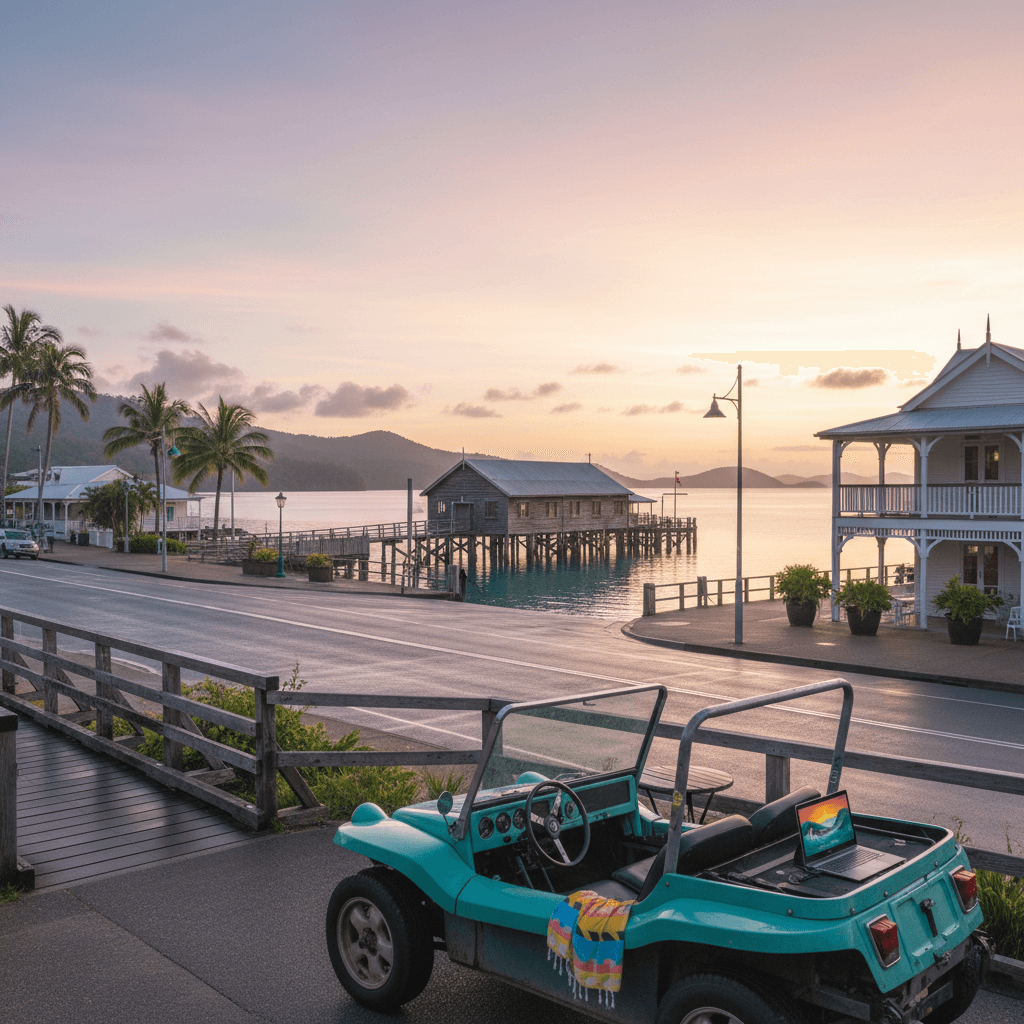
Port Douglas
🇦🇺 Australia
Port Douglas feels small in the best and worst ways. The town sits between the reef and the rainforest and that geography shapes everything, the pace, the food, even the mood at 4 p.m. when the heat sticks to your skin and the cicadas start up like a broken alarm.
Most people come for the postcard stuff, then stay for the slow life. It’s walkable around Macrossan Street and the marina, but it can feel oddly quiet once the day-trippers leave and honestly, that’s either a dream or a drag depending on your personality. If you want late-night energy, you’ll be disappointed. If you like fresh prawns, warm evenings and hearing the clink of glasses under palm trees, this place makes sense.
Cost-wise, Port Douglas isn’t cheap. Shared rentals often sit around $1,000 to $1,400 AUD a month, meals run from casual to pricey fast and a comfortable nomad setup can push past $3,000 a month once you add tours, transport and the occasional reef day.
- Macrossan Street: Best for walkability, cafés, bars and being in the middle of it all, though it’s touristy and can feel crowded in season.
- Marina Mirage: Better if you want waterfront views, polished restaurants and a calmer feel, but prices climb fast.
- Four Mile Beach area: Great for beach access and morning runs, just remember stingers are a real thing for part of the year.
- Outer residential streets: Quieter and often cheaper, though you’ll probably need a car, which, surprisingly, changes daily life a lot here.
Work can be fine, not amazing. Internet averages 50-100 Mbps depending on provider and plan, café WiFi is decent on Macrossan Street and places like the Port Douglas Neighbourhood Centre Back Deck or Pullman Port Douglas Sea Temple give you backup when your apartment connection acts up, which it sometimes does. The town runs on a slower clock, so if you need a big-city work rhythm, it can feel a bit maddening.
What Port Douglas does better than most beach towns is atmosphere. You get salt in the air, mangoes at the market, the smell of sunscreen and seafood and that strange mix of luxury tourists, expats and long-term nomads who’ve decided they’d rather live near crocodile country than anywhere suburban and dull. It’s friendly, a little rough around the edges and weirdly easy to settle into if you don’t mind the humidity, the wildlife warnings and the fact that nothing here feels rushed.
Port Douglas isn’t cheap and that catches a few people out. A digital nomad can live here on about $1,800+ USD a month if you keep things tight, but once you want your own place, regular dinners out and a few reef trips, the number climbs fast, honestly faster than Cairns.
Rent bites first. A shared studio or one-bedroom usually lands around $250 to $350 AUD a week, so you’re looking at $1,000 to $1,400 a month before groceries and the cheaper spots are often outside the center, where you’ll need a car and hear the sudden clatter of birds at dawn and the hum of air-con all night.
- Budget: $1,200 to $1,500 a month, shared housing, simple meals, little nightlife.
- Mid-range: $1,800 to $2,500 a month, your own apartment, mixed dining, regular outings.
- Comfortable: $3,000+ a month, beachfront or premium stays, frequent restaurants, tours and rides.
Food prices are high for a small town, which, surprisingly, doesn’t stop the cafés from filling up by brunch. Expect casual meals around $12 to $18 AUD, mid-range plates around $20 to $35 and seafood-heavy dinners north of $40 if you’re sitting near Macrossan Street with salt in the air and tourists snapping photos beside you.
Transport is annoying if you don’t drive. Public transport is thin, taxis can be scarce and even though you can walk Macrossan Street, Marina Mirage and parts of Four Mile Beach, most other errands turn into car errands, so expats often say a vehicle saves sanity more than money.
Best Areas by Budget
- Macrossan Street: Best for walkability, cafés, bars and markets, but pricier and tourist-heavy.
- Marina Mirage: Scenic and polished, with waterfront dining, though rents skew higher.
- Four Mile Beach area: Great if you want sand nearby, but watch seasonal stingers and storm debris.
- Outer residential streets: Roughly 20% cheaper, quieter and more local, though you’ll want a car.
Utilities aren’t gentle either. Electricity and water run above the national average and summer humidity can make the bills sting because the fan’s just not enough, the room stays damp and your clothes feel slightly warm even after the wash. Internet is decent for remote work, with average speeds around 45 Mbps and places like the Port Douglas Neighbourhood Centre, Pullman Port Douglas Sea Temple and café tables on Macrossan Street usually do the job.
Port Douglas is small, so your neighborhood choice really changes your day-to-day life. Macrossan Street suits people who want cafés, bars and dinner within a barefoot walk, while quieter residential pockets outside town feel calmer, cheaper and a bit more local. Not cheap.
Digital Nomads
Most nomads end up around Macrossan Street because the WiFi options are decent, the cafés are close together and you can hop between coffee, lunch and a late work session without getting in a car. The Port Douglas Neighbourhood Centre, also called the Back Deck, is handy when you need a desk and honestly, it beats trying to answer emails in the sticky afternoon heat. The town center gets touristy fast, though, so expect clinking glasses, scooter noise and the odd loud British table outside at 6 p.m.
- Best for: Walkable workdays, café hopping, nightlife
- Trade-off: Higher rents, more crowds
- Typical cost: About AUD 250 to 350 a week for shared rentals
Expats
If you’re staying longer, the surrounding residential areas make more sense, because they’re quieter, usually around 20% cheaper and you get more of a neighborhood feel instead of a constant holiday parade. You’ll probably need a car, since the bus setup is thin and walking home after dark can feel a bit too empty, especially when the humidity hangs in the air and the geckos start chirping on the walls. Frankly, that trade-off works for a lot of people.
- Best for: Lower costs, local routines, more space
- Trade-off: Less walkability, fewer amenities
- Good fit: Long stays, retirees, remote workers with a car
Families
Four Mile Beach is the obvious pick for families, because the beach access is easy, the area feels open and kids can burn off energy fast, though you’ll still need to watch for stinger season and hot sand that can sting your feet by midday. Around Marina Mirage, the pace is calmer, the water views are pleasant and restaurants are close enough for an easy night out after a long day in the sun. It’s polished, not hectic.
- Best for: Beach days, relaxed dinners, strollers
- Trade-off: Seasonal stingers, fewer cheap eats
- Tip: Use stinger suits from November to May
Solo Travelers
Macrossan Street is the easiest base if you’re on your own, because it’s social without trying too hard and you can drift from markets to bars to a seafood dinner without feeling stranded. The Sunday markets at the waterfront end are good for people-watching, weirdly good coffee and quick conversations that don’t turn into awkward all-night hangs. If you want peace instead, Marina Mirage feels safer and quieter after dark, but it can get a little too hushed.
- Best for: Easy meetups, food, nightlife
- Trade-off: Tourist pricing, occasional noise
- Safer quiet option: Marina Mirage
Port Douglas is small, warm and a bit stubborn about going slow. That’s fine if you work online, because the town center is compact, the cafés are used to laptop people and you can usually get a seat, a cold drink and decent WiFi without much drama. Internet averages around 45 Mbps, which is enough for calls and file work, though nobody’s pretending it’s Sydney fast.
The best working setup, honestly, is a café on Macrossan Street early in the day, before the lunch crowd and the holiday traffic. You’ll hear cutlery clinking, espresso machines hissing and the odd front desk phone ringing over the air-con, while the humidity hangs around your shoulders like a wet towel, which, surprisingly, doesn’t help productivity much.
Where to Work
- Port Douglas Neighbourhood Centre, Back Deck: A practical community option with WiFi, kitchenette access and accessible facilities. Quiet enough for focused work.
- Pullman Port Douglas Sea Temple Resort & Spa: A more polished coworking-style setup, good if you want a resort feel and don’t mind paying for it.
Cafés are the real answer for most nomads. Pick one along Macrossan Street, order something and stay polite about the table, because staff are friendly but they’re not running a free office. Fresh coffee smells great, the sea breeze drifts in and the town moves at a pace that’s either calming or maddening, depending on your deadline.
Connectivity Basics
- Mobile networks: Telstra is the safest bet, with Vodafone and Optus also available.
- eSIM: Jetpac is a solid backup if you want data the moment you land.
- Home internet: Good enough for remote work, but don’t expect luxury speeds everywhere.
For backups, bring a local SIM and a second data option, because outages and patchy coverage can happen once you drift away from the main strip. In town, it’s generally fine, but if you’re trying to upload heavy files during a storm, you’ll learn patience fast.
Most nomads stay near Macrossan Street or the Marina Mirage area so they can walk to coffee, work, lunch, then the beach. That setup works, though it’s pricey and if you’re in the outer residential pockets you’ll probably need a car to reach anything useful. Not cheap.
Port Douglas feels safe in the day and mostly easy at night too, but it isn’t the sort of place where you can switch your brain off completely. Petty theft can happen around busy tourist spots, especially near Macrossan Street and honestly the bigger daily risks are the ones locals talk about over coffee, crocs, stingers, brutal humidity and the occasional storm that turns the air thick and metallic.
Crocs are the real warning here. Don’t treat river mouths, mangroves or any signed waterway like a photo stop, because saltwater crocodiles don’t care that you’re on holiday. Four Mile Beach is gorgeous, sure, but during stinger season the water can be stingy and unpleasant, so most swimmers use stinger suits, check the flags and keep an eye on the wind whipping sand across the shore.
What locals actually watch out for
- Waterways: Stay out of signed creeks, estuaries and mangroves, croc country is real here.
- Beach swimming: November to May brings stingers, so wear a suit or stick to protected areas.
- Tourist hotspots: Keep phones and bags close on Macrossan Street, especially at night and during events.
- Weather: Cyclone season can hit hard, so check BOM alerts when the sky goes green-grey and heavy rain starts hammering the roof.
Healthcare is decent for a small town. Port Douglas has a hospital, medical centres and pharmacies and you can usually get basics sorted without drama, but serious issues often mean a trip to Cairns, which is about an hour away if the road’s clear and the weather isn’t being a nuisance. Private health insurance is the smarter move for expats and longer stays, because Australian care is good but it can get expensive fast if you need anything beyond a standard consult.
Healthcare basics
- GP care: Easy enough for everyday issues, scripts, infections and minor injuries.
- Pharmacies: Available in town for sunscreen, meds and first-aid gear.
- Hospital access: Good for local care, though complicated cases often go to Cairns.
- Insurance: Worth having, frankly, because out-of-pocket costs add up.
If you’re living here, pack the sensible stuff before you need it, insect repellent, reef-safe sunscreen, antihistamines and a small first-aid kit. The heat can feel sticky and exhausting, the sort that clings to your skin and makes even a short walk to the shops feel longer than it should, so drink more water than you think you need and don’t be heroic about it.
Getting around Port Douglas is simple in theory, annoying in practice. The town center is compact, but once you drift past Macrossan Street, you’ll feel the lack of transport pretty fast.
Cars win here. Public transport is thin and most locals either drive or sort out rides with friends. Uber and taxis do exist, though services can be patchy and a shuttle or rental car is usually the sane choice if you’re staying more than a couple of days.
Walkability depends on where you stay. Macrossan Street, Marina Mirage and the stretch near Four Mile Beach are easy on foot, with the smell of coffee, salt air and sunscreen hanging around all day, but surrounding residential pockets are quieter and often cheaper, which, surprisingly, means more driving and fewer spontaneous café runs.
Best ways to move around
- On foot: Best for Macrossan Street, the marina and beach access. Short trips are easy, but midday heat can be brutal.
- Car: The most practical option for groceries, day trips and anything outside the center. Parking is generally manageable.
- Bike or scooter: Handy for short hops, though humidity, road conditions and occasional traffic make it less dreamy than it sounds.
- Ride-hail or taxi: Fine for dinners and airport runs, but don’t count on instant pickups.
For remote workers, the setup is workable, not glamorous. The Port Douglas Neighbourhood Centre has a community feel and decent WiFi, while cafés along Macrossan Street are the real fallback, with clinking cups, ceiling fans and that low hum of people pretending to work while eating banana bread.
If you’re landing through Cairns International Airport, expect about an hour’s drive south to north and that transfer can feel longer after a flight. Most nomads book a shuttle or grab a rental car, because waiting around for loose connections in Far North Queensland gets old fast, honestly.
Useful local habits: leave early for reef tours, don’t assume you’ll find late-night transport and keep your movements simple after dark. It’s a small town, so you won’t need a car every minute, but if you want freedom, beaches, grocery runs and day trips without hassle, you’ll want one. That’s the reality.
English is the default here, so day-to-day life is easy for English speakers. That said, the local delivery is properly Australian, with quick slang, dry humour and a few words that can make first chats feel slightly offbeat.
You’ll hear "mate", "arvo" for afternoon and "no worries" constantly, usually with a smile and a lazy coastal drawl. It’s friendly, not formal and honestly people in Port Douglas tend to keep things relaxed, so if you sound polite and unhurried, you’ll fit in fast.
There’s no real language barrier for most visitors or nomads, but the social style can still catch you out, especially if you’re used to more direct service or faster small talk. The pace is slower, the pauses are longer and weirdly that can feel colder at first even though it usually isn’t.
Useful Local Phrases
- G'day: hello
- No worries: you’re welcome, all good
- Arvo: afternoon
- Fair dinkum: genuine, for real
In cafés on Macrossan Street, you’ll usually just order normally and move on, though in busy spots the staff may sound brisk because they’re flat out with tourists. A simple “G'day, can I grab a flat white?” works fine and if you’re at the beach or marina, casual chat about the weather, the humidity or the reef is a safe opener.
For work calls, Port Douglas is straightforward, but don’t assume every venue has perfect audio, because fan noise, background chatter and clinking cups can get loud. The internet is decent rather than amazing, so if you need reliable translation or live captions, Google Translate and DeepL are handy backup tools, which, surprisingly, some long-term expats still keep open all the time.
Communication Tips
- Speak plainly: locals don’t need fancy language
- Keep it casual: overly formal speech sounds stiff
- Use translation apps: rare, but useful for written signs or quick checks
- Ask twice if needed: some accents are thick, especially after a few drinks
If you’re new in town, don’t overthink it. Port Douglas people are warm, but they’re not impressed by big talk and if you ask a direct question in plain English, you’ll usually get a direct answer back, no drama.
Port Douglas is warm most of the year, but the seasons still matter. A lot. The sweet spot is usually May to October, when days sit around the mid-20s Celsius, humidity drops and you can actually breathe on Macrossan Street without feeling like you’ve walked into a steam room.
Summer, from November to April, is a different beast, honestly. It’s hot, sticky and the air can feel heavy by 9 a.m., then afternoon rain slams down on tin roofs and leaves that damp, jungle smell hanging around town. This is also stinger season, so swimming needs more care and cyclone risk rises too.
Best Time by Travel Style
- For beach time: June to September, with lower humidity and better conditions for Four Mile Beach.
- For reef trips: May to October, when seas are often calmer and boat days feel less punishing.
- For lower prices: November to March, though you’ll trade that for heat, rain and a few headaches.
- For events and atmosphere: Dry season, when the town feels busier but still relaxed, with more cafés open late and more people drifting between sunset drinks and seafood dinners.
Month-by-Month Feel
- May to August: Best all-round weather, cooler nights, low humidity and the easiest months for remote work and day trips.
- September to October: Warm and dry, still pleasant, though the build-up can start to creep in by late October.
- November to April: Wet season, humid, stormy and weirdly beautiful if you don’t mind being soaked, mosquito-bitten and slightly at the mercy of the sky.
For digital nomads, the dry season is the practical choice. Internet stays decent, cafés on Macrossan Street are easier to work from and you’re less likely to get trapped indoors by sudden rain while your laptop bag smells faintly of salt and sunscreen.
If you hate heat, skip the peak summer months. If you love lush rainforest, empty beaches and don’t mind the occasional flooded road or thunder rolling over the ranges, the wet season has its own mood, but it’s not the easy version of Port Douglas.
Port Douglas moves at a slower clip than Cairns and that catches some people off guard. The heat sits on your skin, the cicadas are loud by midday and the town can feel sleepy after dark, so if you need constant motion, you’ll get restless fast. If you’re fine with long beach walks, seafood dinners and a life that starts with coffee and ends with a sunset beer, it works beautifully.
Budget: plan on about $1,478 USD a month for a lean nomad setup, though shared rentals, casual meals and the odd tour can push that up quickly. Port Douglas runs pricier than Cairns, mostly because tourism inflates everything and frankly, a takeaway lunch can sting a bit when you’re used to city prices.
- Shared studio or 1-bed: $250 to $350 AUD a week
- Casual meal: $12 to $18 AUD
- Mid-range dinner: $20 to $35 AUD
- Upscale seafood dinner: $40+ AUD
Macrossan Street is the easy base. You can walk to cafés, bars, the Sunday market and Four Mile Beach and honestly, that convenience saves money on transport and keeps life simple when the humidity makes even short errands feel sweaty and annoying. Marina Mirage is prettier and quieter, with water views and better dinner spots, but it feels a bit polished and touristy.
Best-fit areas
- Macrossan Street: best for walkability, food and social life
- Marina Mirage: best for waterfront dining and a calmer feel
- Four Mile Beach area: best for beach access and outdoor living
- Outer residential streets: cheaper, quieter, but you’ll want a car
Internet is decent, not dazzling. Average speeds sit around 45 Mbps, with some pockets better than that and the café scene on Macrossan Street usually gives nomads enough signal to get real work done, though a storm can make everything weirdly patchy for a few hours. If you need a dedicated space, look at the Port Douglas Neighbourhood Centre, the Back Deck setup there or the Pullman Port Douglas Sea Temple Resort & Spa.
Public transport barely counts, so most people drive, bike or walk the central strip. Uber and taxis exist, but they’re patchier than in bigger towns and a Cairns airport transfer takes about an hour, which is fine until you’re arriving with luggage in midday heat and the air feels like a wet towel.
Safety: the town is generally safe, but crocs are no joke and stingers turn the water off-limits in season. Watch the signage near creeks and beaches, use a stinger suit from November to May and don’t assume the pretty water is harmless, because in Far North Queensland that’s a foolish bet.
- Healthcare: Port Douglas has a hospital, medical centres and pharmacies
- Language: English is standard, with plenty of Aussie slang
- Useful phrase: “No worries” gets you far
Need visa and immigration info for Australia?
🇦🇺 View Australia Country GuideHidden Gem
Worth the effort