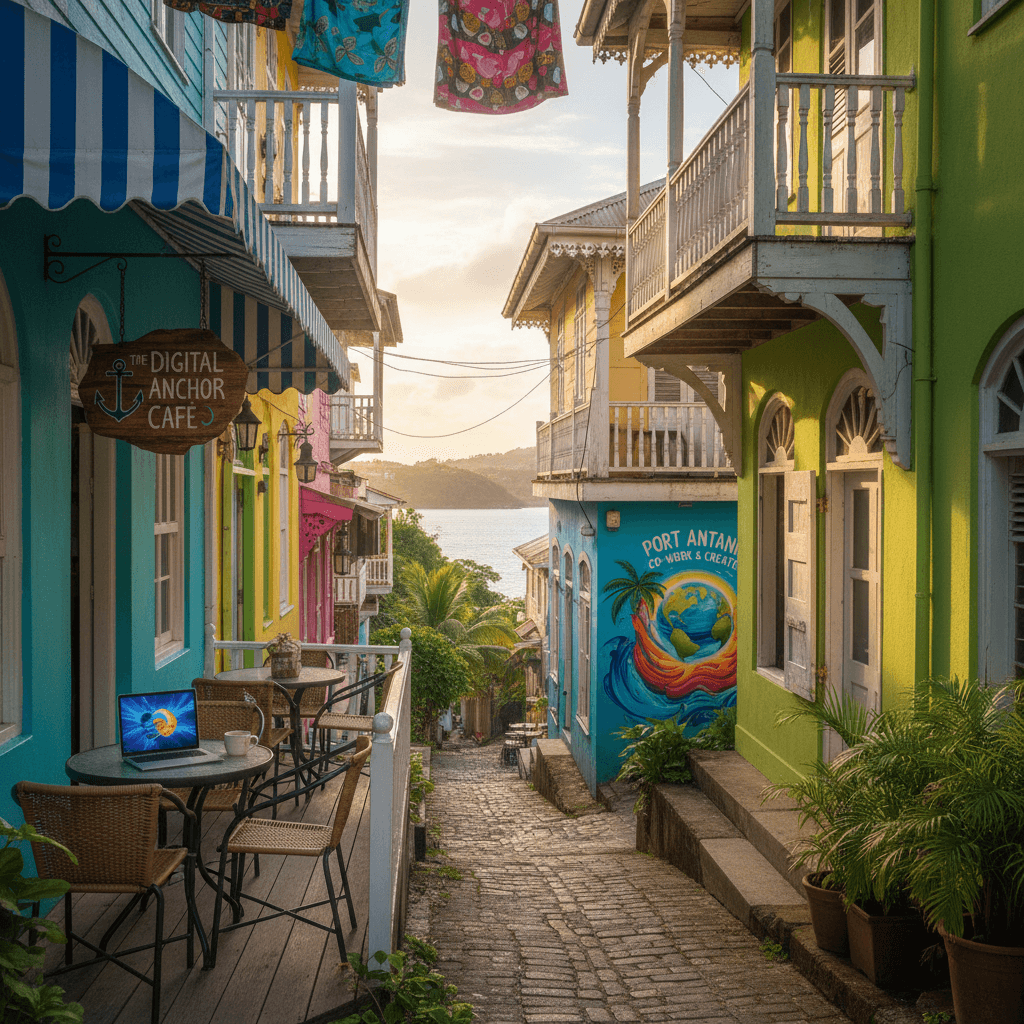
Port Antonio
🇯🇲 Jamaica
Port Antonio doesn't try to impress you. That's the point. While Montego Bay hustles for tourist dollars and Kingston pulses with urban energy, this northeast corner of Jamaica just sits there, draped in jungle, smelling of salt air and jerk smoke, doing its own thing entirely.
The pace here is, honestly, something you have to surrender to rather than manage. Mornings start slow. You'll hear roosters before traffic, rain hammering on tin roofs before any café opens and the whole town operates on a rhythm that has nothing to do with your deadlines. Most nomads either love that within a week or quietly book a flight to Kingston.
What makes Port Antonio genuinely different is that it's not performing for you. The Blue Lagoon is real, Frenchman's Cove is real, the bamboo-lined Rio Grande is real and none of it feels staged for Instagram. Errol Flynn supposedly fell in love with the place in the 1940s and bought a navy island on a bet, that story still feels accurate somehow, because Port Antonio has this low-key magnetism that's hard to explain and easy to feel.
The expat and nomad community here is small. Very small. You're not walking into a ready-made coworking scene or a packed digital nomad meetup, you're integrating into a quiet, self-selecting group of people who specifically chose to be far from all that. Drapers and San San draw most of them, tucked into hillside villas with garden WiFi and ocean views, trading guesthouse recommendations over rum at dinner.
There are real frustrations. Infrastructure is inconsistent, import prices sting and getting anywhere beyond Port Antonio takes genuine planning because Ken Jones Airport is tiny and the road to Kingston is, frankly, an adventure you don't always want. The isolation that feels romantic in week one can feel maddening by week six.
Still, the people who stay tend to really stay. The Rastafarian influences run deep here, locals are genuinely warm rather than transactionally friendly and there's a Patois-laced ease to daily life that softens most edges. It's not for everyone, it's not trying to be and that's exactly why the right traveler finds it completely irreplaceable.
Port Antonio isn't cheap, not by Jamaican standards anyway. Most nomads land here expecting budget paradise and find something more nuanced: low rent if you're patient, but groceries and dining that'll surprise you, because so much gets imported up this coast and the prices reflect that.
Monthly costs for one person run around $1,164 including rent, though that number shifts fast depending on how you eat and where you sleep. Budget travelers who cook local and take minivans can squeak by on $800 to $1,200 a month, mid-range comfort lands around $1,200 to $2,000 and anything above $2,000 gets you a proper setup with a beachside villa, gym access and dinners out most nights.
Rent
- Budget (outside center, areas like Drapers): $301/month for a 1BR
- Mid-range (town center): ~$640/month for a 1BR
- Comfortable (3BR, central): ~$1,173/month
Drapers and San San are, honestly, where most expats end up, quieter, greener and noticeably cheaper than anything near the town center. You're trading convenience for calm and most people don't regret it.
Food & Daily Costs
- Street jerk chicken: ~$8
- Local sit-down meal: $9 to $20
- Mid-range dinner for two: ~$85
- Monthly groceries: ~$488
- Local bus/minivan: $0.88 per trip
- Taxi (8km): ~$26 via Slingshot Rides or Ride Jamaica
Eat from the street and the market, your food costs drop dramatically, cook with imports and you'll feel it. The jerk spots along Boston Beach are worth every dollar, skip the tourist-facing restaurants near the marina and you'll eat better for half the price.
Utilities & Internet
- Utilities: $99 to $154/month
- Internet (home fiber): ~$56/month for 50Mbps+
- SIM card (Digicel/Flow): $10 to $20 for 10 to 50GB data
Internet is, turns out, more reliable than Port Antonio's reputation suggests, most villas and guesthouses have decent connections now. That said, power cuts happen, a small UPS or backup battery setup isn't paranoia, it's just practical.
The honest summary: Port Antonio rewards people who adapt to local rhythms, shop at the market, eat what's in season and don't need every comfort imported. Do that and the cost of living here is genuinely reasonable.
Port Antonio doesn't have a dozen neighborhoods to sort through. Honestly, it's three main areas and which one suits you depends almost entirely on why you're here.
Nomads and Long-Term Renters
Drapers and San San are where most nomads end up and for good reason. Rent runs around $301 a month outside the center, the air smells like wet jungle and salt and the pace is slow enough that you'll actually get work done without the distraction of a tourist scene pulling you out every night.
The tradeoff is real, though. Shops are limited, you'll need a taxi or scooter for most errands and if the WiFi at your guesthouse drops, turns out there's no coworking space down the road to save you. Most nomads set up a local SIM through Digicel (about $10 to get started) and treat their accommodation's connection as their primary office, it works fine until it doesn't.
Expats
San San draws the small expat community for the same reasons it draws nomads, just longer-term. Beachfront villas, proximity to Frenchman's Cove and a quiet social life built around guesthouse dinners rather than bar crawls. It's, weirdly, one of the more socially connected spots in town despite feeling so isolated, expats tend to find each other fast.
Solo Travelers
Titchfield Hill is the pick here. It's walkable to the town center and the beach, the local vibe is genuinely warm rather than performatively friendly and affordable guesthouses are easy to find. Petty theft does happen, so don't leave valuables visible and stay aware after dark on quieter streets.
Families and Short-Term Visitors
Downtown Port Antonio gives you markets, pharmacies, Scotiabank ATMs and easy access to day trips like the Blue Lagoon and Rio Grande rafting. It's noisier, the streets carry that mix of exhaust and jerk smoke that hits you immediately and it's frankly more chaotic than the other areas. But for a week-long stay with kids who need amenities close by, it makes sense.
Skip trying to base yourself downtown long-term. The convenience doesn't outweigh the noise, Drapers is only a short taxi ride away and the difference in quality of life is significant.
Port Antonio isn't a coworking hub. That's just the reality. If you're expecting a polished hot-desk setup with cold brew on tap, you're in the wrong town, but if you can work from a guesthouse veranda with tree frogs calling in the background and decent WiFi, you'll be fine here.
Home broadband through Digicel or Flow runs about $60/month (incl. tax) and delivers 50Mbps+ when it's behaving, which, honestly, is most of the time. The frustrating part is the occasional outages after heavy rain and it does rain hard here, the kind that hammers corrugated roofs so loud you can't hear yourself think, let alone take a call. Most nomads build in a mobile backup for exactly those days.
For mobile data, both Digicel and Flow sell SIM cards at the airport and in town for around $10 to $20, with data plans ranging from 10GB to 50GB. Pick one up the day you arrive, it's cheap insurance. Digicel tends to have slightly better rural coverage around the San San and Drapers areas, turns out that matters more than most people expect when they're staying outside the town center.
There's no dedicated coworking space in Port Antonio itself. Regus and Spaces operate in Kingston and Montego Bay, not here. What you get instead are cafe setups and guesthouse offices, which honestly works better than it sounds for the pace of life in this town.
- Drapers San Guesthouse: Reliable WiFi, a quiet garden workspace, popular with longer-stay nomads in the Drapers area.
- Cafe options in Titchfield: A handful of spots near the town center offer charging points and workable connections, though expect some noise and the occasional slow hour.
- Home office setup: Most expats and longer-stay nomads just rent a villa or apartment and work from there; a 1BR in Drapers runs around $301/month, which makes a private setup genuinely affordable.
Video calls are doable on home broadband, don't count on cafe WiFi for anything mission-critical. The infrastructure here is functional, not impressive and that gap matters if your work demands consistent upload speeds or low latency for client calls. Know what your workflow needs before you commit to a month here, some people love the trade-off, some find it maddening.
Port Antonio is, honestly, one of Jamaica's safer spots for long-term visitors. Crime here runs much lower than Kingston's volatile west side or the tourist-trap chaos around Montego Bay's strip and most nomads and expats living in Drapers or San San go months without any real incident. That said, petty theft happens, especially around Titchfield Hill and the downtown market area after dark, so don't get complacent.
Stick to licensed taxis rather than flagging down random cars, keep your laptop bag low-profile and avoid solo ATM runs at night. The Scotiabank on Harbour Street is fine during the day, it gets sketchier once the shops close though. Most travelers find the locals genuinely warm and helpful, the kind of place where someone will walk you to where you're going rather than just point.
For emergencies, dial 119 for police or ambulance. Tourist police also operate on 119, they're generally more responsive to visitor concerns than the standard line.
Healthcare is functional, not impressive. The Port Antonio Health Centre handles basic consultations and minor issues, and you shouldn't put off seeking care for small ailments. Pharmacies are scattered through town and reasonably well-stocked for everyday needs. The real problem is anything serious, a bad accident, surgery or a complicated diagnosis will send you straight to Kingston, which is two to three hours away on winding mountain roads and that drive is genuinely stressful even when you're healthy.
Travel insurance isn't optional here, it's the one thing expats universally agree on. Look for a policy that covers medical evacuation, turns out the cost difference between basic and evac-inclusive coverage is small, but the gap in what they'll actually do for you is enormous.
- Emergency number: 119 (police, ambulance, tourist police)
- Pharmacies: Available downtown and near Titchfield
- Serious care: Kingston University Hospital, 2-3 hours away
- Insurance: Medical evacuation coverage strongly recommended
Weirdly, the remoteness that makes Port Antonio feel like an escape is the same thing that makes a health emergency genuinely scary. Plan accordingly before you arrive.
Port Antonio doesn't have Uber. That's the first thing to sort out before you arrive, because getting around here works differently than most places you've probably been.
For taxis, download Slingshot Rides or Ride Jamaica before you land. They're the local ride-hailing alternatives and honestly, they work well enough once you're used to the slight delays. A typical 8km ride runs about $26 and the Ken Jones Airport to town is around that same price. Licensed taxi drivers also hang around the main square, they're easy to spot, just confirm the fare before you get in.
Public minivans and buses are, turns out, the cheapest way to move around the northeast coast. A single trip costs $0.88, a monthly pass around $46 and they run frequently between Port Antonio, Drapers and nearby towns. They're loud, they're packed, the reggae coming from the front seat is non-negotiable, but they get you there. Expats who've been here a while use them without a second thought.
The town center is walkable, though hilly in places. Titchfield Hill lives up to its name, so if you're staying there and working from a cafe downtown, budget some sweat for the uphill return. Drapers and San San are too spread out to walk comfortably, most nomads in those areas rent a scooter.
Scooter and bike rentals are informal here, there's no polished app or franchise shop. Ask at your guesthouse or villa, someone always knows someone and $20 a day is the going rate. It's weirdly the most freeing way to explore, especially for Reach Falls or the Blue Lagoon road.
- Taxi (8km): ~$26 via Slingshot Rides or licensed driver
- Public minivan: $0.88 per trip, ~$46/month
- Scooter rental: ~$20/day, arranged informally through accommodation
- Airport transfer (Ken Jones, 10km): ~$26 by taxi
One honest heads-up: road conditions outside the main routes can be rough, potholes are frequent and rain makes some stretches genuinely sketchy on a scooter. Drive slower than you think you need to, the locals do.
English is Jamaica's official language, so you won't hit a communication wall here. That said, Jamaican Patois (locals call it Patwah) is what you'll actually hear most of the time and it's, honestly, its own language rather than just a dialect.
Patwah draws from English, West African languages and a few others, so some phrases click immediately and others leave you completely lost. Don't stress it. Most Port Antonio locals switch comfortably between Patois and standard English once they realize you're not following, the switch happens naturally without any awkwardness on either side.
A few phrases go a long way socially:
- "Wah gwaan?" What's up? Use it as a greeting and you'll get a warm response every time.
- "Irie" Good, all good, no worries. You'll hear this constantly.
- "Tank yuh" Thank you. Simple, appreciated.
- "Respect" A general acknowledgment, used the way some cultures say "cheers."
- "No problem" Technically standard English, but in Jamaica it carries its own weight, it's the default answer to almost everything.
Google Translate has a Jamaican Patois option, it's imperfect but turns out it handles common phrases well enough to be genuinely useful when someone's speaking fast and you're catching maybe half of it.
Written communication is straightforward. Signs, menus, official documents and business dealings are all in standard English, so day-to-day logistics don't require any adjustment.
Phone and data are easy to sort. Digicel and Flow both sell SIM cards at the airport and in town for around $10 to $20, with data plans ranging from 10GB to 50GB. Pick one up on arrival, don't wait.
One thing worth knowing: communication in Port Antonio runs on its own timeline. Responses to messages, whether from a landlord, a repair person or a tour operator, come when they come. Expats who've been here a while stop fighting it, they build buffer time into everything instead. If you're used to instant replies, that adjustment is, weirdly, the steepest part of settling in here.
The warmth of the locals more than compensates, a genuine "wah gwaan" back at someone goes further than any translation app.
Port Antonio sits on Jamaica's northeast coast and the weather here is, honestly, a different beast from the drier south. It's tropical year-round, temperatures holding between 23 and 28°C (73 to 82°F), but this corner of the island catches significantly more rainfall than Montego Bay or Kingston. The jungle stays that deep, almost unreal green because of it, the air thick and warm and smelling faintly of wet earth after an afternoon shower.
Rain doesn't really have an "off" switch here, it just has louder and quieter seasons. The wettest months are June, October and November, when you can get 185 to 300mm in a single month and afternoon downpours arrive like clockwork, hammering the tin roofs of guesthouses in Drapers and turning the roads briefly into rivers. September through November also brings hurricane risk, which is a genuine concern, not just a travel advisory formality.
December through April is the sweet spot. Rainfall drops to around 75 to 120mm in February and March, mornings are clear and bright and the humidity, while still present, feels manageable rather than suffocating. Most nomads who stay longer than a month tend to time their arrival for January or February, which, surprisingly, also lines up with lower accommodation rates before the spring travel surge.
May is a reasonable shoulder month too, warm and mostly dry before the June rains kick in. Expats in the area generally say May gets overlooked, it's worth considering if December through April is out of reach.
- Best months: December to April, driest and most comfortable
- Shoulder season: May, decent weather before the rains return
- Avoid: September to November, peak hurricane season with heavy, persistent rain
- Year-round temperature: 23 to 28°C (73 to 82°F)
- Wettest months: June, October and November (up to 300mm)
One thing travelers don't always expect: even in the dry season, Port Antonio gets brief showers. Pack a light rain jacket regardless of when you visit, the weather turns fast, it clears just as quickly. Don't let a grey morning fool you into changing plans.
Get a Digicel SIM at the airport for about $10, it'll save you the hassle of hunting down a shop in town when you're tired and just off the plane. Data plans run 10 to 50GB for $10 to $20 and coverage is, honestly, decent enough for video calls in most of Port Antonio proper. Flow is the other option, though most nomads default to Digicel without much debate.
For banking, Scotiabank has ATMs in town and they're generally reliable. Don't withdraw cash alone at night, that's just common sense anywhere in Jamaica. Wise works well for transfers and avoids the painful conversion rates you'll get at local exchange counters, expats use it constantly.
Finding an apartment takes a little patience. Rentberry, Flatio and Agoda all list studios and short-term rentals in the $50 to $70 per night range, with monthly rates dropping significantly if you negotiate directly with hosts. Drapers is, turns out, the sweet spot for longer stays: quieter than downtown, close enough to the coast and cheaper than San San's more polished villa scene.
Getting around is straightforward if you're not in a hurry. Minibuses cost under a dollar per trip and run frequently between neighborhoods, though the routes can feel weirdly unpredictable until you've ridden them a few times. No Uber here. Use Slingshot Rides or Ride Jamaica for taxis, a trip to Ken Jones Airport runs about $26.
Day trips worth doing:
- Reach Falls: One of the better waterfalls in Jamaica, less crowded than you'd expect.
- Blue Lagoon: The color is real, not a filter, go early before tour groups arrive.
- Rio Grande rafting: Bamboo poles, calm water, about two hours of total quiet.
A few customs worth knowing before you settle in. Tipping 10 to 15 percent is standard at restaurants, it's not optional etiquette. Remove your hat when entering someone's home, locals notice. And when someone greets you with "Wah gwaan," a simple "Irie" or even just a smile goes further than a formal reply, it signals you're not treating the place like a resort.
Weather shapes everything here. December through April is the driest stretch and the easiest time to work and travel. September through November brings real hurricane risk, not just rain, plan accordingly.
Need visa and immigration info for Jamaica?
🇯🇲 View Jamaica Country GuideHidden Gem
Worth the effort