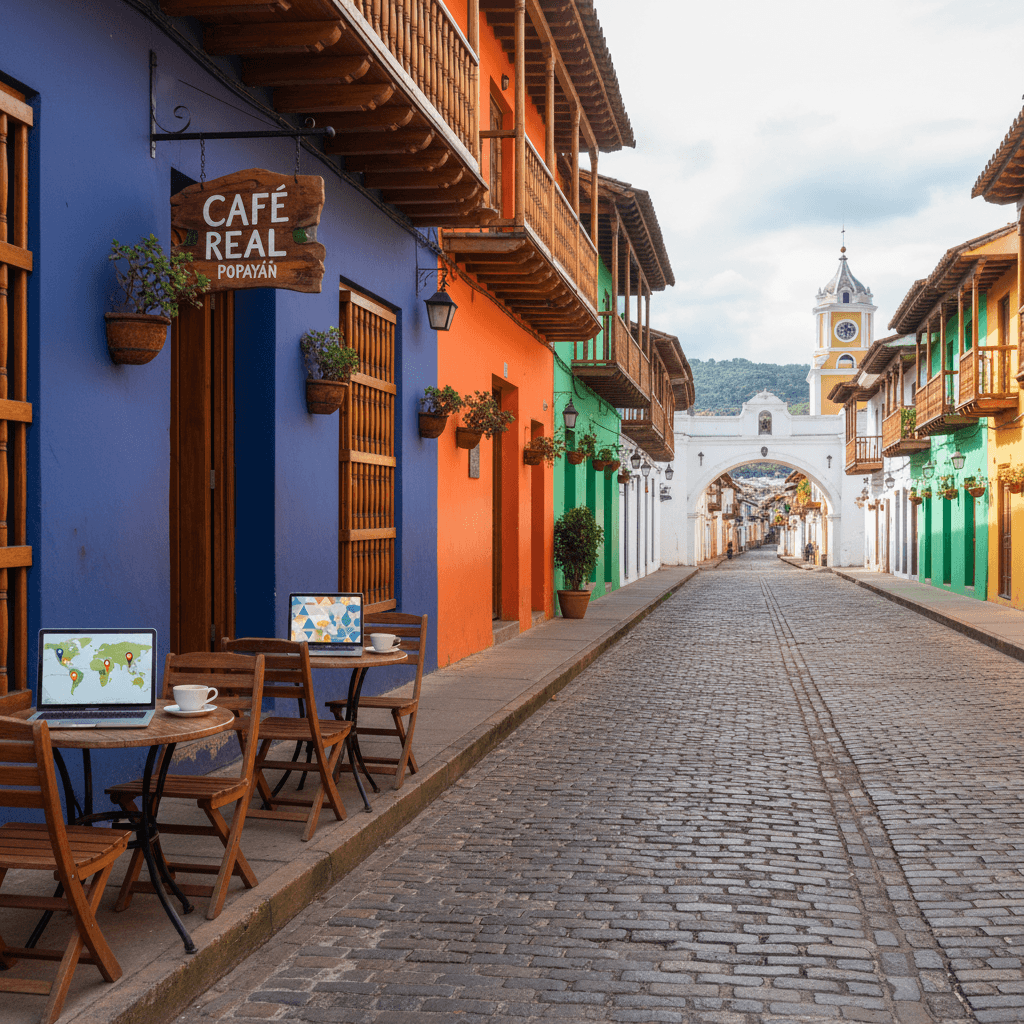
Popayán
🇨🇴 Colombia
The White City’s Quiet Rhythm
If Medellín is Colombia’s high-energy heart and Cartagena is its humid, tourist-heavy soul, Popayán is its contemplative library. Known as the "Ciudad Blanca," this city doesn't scream for your attention; it earns it through a steady, peaceful hum. Walking through the Centro Histórico feels like stepping into a monochromatic dream where every colonial facade is painted a crisp, uniform white. For digital nomads who find the "digital nomad hubs" a bit too loud or distracting, Popayán offers a rare chance to actually get work done without the constant pull of a massive party scene.
The vibe here is decidedly slow. You'll spend your mornings watching the mist lift off the surrounding mountains and your afternoons drinking local coffee in plazas that haven't changed much in centuries. It’s a place for deep work, long walks, and genuine local immersion. While you won't find a massive community of foreigners here, the locals are famously polite, and the lack of "gringo pricing" makes it one of the most affordable corners of the country.
What You’ll Pay
Your pesos go much further here than in the bigger cities. You can live a very comfortable life for a fraction of what you’d spend in Bogotá. Most nomads find they can live well on $1,200 to $1,800 a month depending on how much they lean into local life.
- Budget Life ($800 to $1,200): You're looking at a room in a shared colonial house, eating $3 set lunches (almuerzo ejecutivo), and using the local bus system.
- Mid-Range ($1,500 to $2,000): A private one-bedroom apartment in the historic center, regular cafe visits, and frequent dinners out where a nice meal costs about $10.
- The High End ($2,500+): A premium, modern apartment, daily ride-hailing apps for transport, and weekend trips to nearby hot springs or nature reserves.
The Neighborhood Breakdown
Popayán isn't a sprawling metropolis, so your choices are fairly straightforward. Most remote workers stick to the center for the aesthetics and the walkability.
Centro Histórico
- The Draw: This is the heart of the "White City." It’s walkable, safe, and incredibly photogenic. You’re steps away from the best cafes and the iconic Puente del Humilladero.
- The Trade-off: The buildings are old, so check the wiring and internet setup carefully before signing a lease. Nightlife is mostly limited to a few quiet bars.
- Estimated Rent: $350 to $600 for a decent 1BR.
Pueblito Patojo & Surrounds
- The Draw: Located just a bit further out, this area offers more green space and some of the best panoramic views of the city. It’s great for those who want to be near hiking trails.
- The Trade-off: You’ll likely need to use inDrive or DiDi to get into the center for groceries or social events.
- Estimated Rent: $300 to $500.
Living and Working
The internet is surprisingly stable for a city of this size. You can expect speeds between 100 and 200 Mbps in most modern rentals. While there aren't many dedicated coworking spaces yet, the cafe culture is evolving. You’ll see students and the occasional nomad tucked into corners of historic coffee shops using the free Wi-Fi for the price of a $2 latte.
Safety is generally high in the tourist and historic zones, though like anywhere in Colombia, you should keep your phone tucked away while walking at night. The weather is a major selling point for many; it stays between 18°C and 25°C (64-77°F) year-round. It’s "eternal spring" but with a slightly cooler, crisper mountain edge that makes it perfect for staying productive. Just be ready for the rain in April and November, when the clouds settle into the valley for a few weeks.
Ultimately, Popayán is for the nomad who wants to disappear for a while. It’s for the writer finishing a book, the developer on a deadline, or the traveler who wants to learn Spanish without hearing English at the next table. It’s not a place to "see and be seen," it’s a place to simply be.
Affordability in the White City
If you're coming from Medellín or Cartagena, your bank account is about to take a breath of fresh air. Popayán is significantly more affordable than Colombia’s major nomad hubs. It’s the kind of place where you can live a high-quality life without constantly checking your banking app. Most nomads find they can maintain a comfortable lifestyle here for about $1,500 to $2,000 a month, while those on a tighter budget can easily get by on $1,200 if they lean into local markets and shared housing.
The value for money is most apparent in the dining scene. You can grab a traditional lunch (almuerzo ejecutivo) for $4 to $6, while a nice dinner at a sit-down restaurant in the historic center usually lands between $10 and $15. If you're cooking at home, fresh produce from local markets is incredibly cheap, often costing a fraction of what you'd pay in North America or Europe.
Monthly Budget Breakdown
- Budget Tier ($800 to $1,200): Best for those sharing an apartment, eating street food like empanadas de pipián for $2 to $4, and using the local bus system.
- Mid-Range Tier ($1,500 to $2,000): Covers a private one-bedroom apartment in the Centro Histórico, daily cafe visits, and frequent meals out.
- Comfortable Tier ($2,500+): Includes a premium colonial-style apartment, upscale dining, regular weekend trips, and private ride-hailing apps for every cross-town trip.
Housing and Neighborhoods
Most nomads and expats gravitate toward the Centro Histórico. It's the heart of the city, where the iconic white-washed buildings and cobblestone streets create a serene backdrop for remote work. You'll find the best walkability here, along with easy access to parks and colonial landmarks like the Puente del Humilladero.
- Centro Histórico:
- Rent: $400 to $700 for a furnished one-bedroom.
- Vibe: Traditional, quiet at night, and very safe for walking.
- Pros: Close to everything; beautiful architecture.
- Cons: Older buildings might have fewer modern amenities.
- Pueblito Patojo area:
- Rent: $350 to $600.
- Vibe: Relaxed with great views of the surrounding mountains.
- Pros: Peaceful and great for morning hikes.
- Cons: A bit further from the main cluster of cafes.
Connectivity and Remote Work
While Popayán doesn't have the massive coworking complexes you'll find in the capital, the cafe culture is growing. Reliable fiber-optic internet is standard in most modern rentals, with speeds often reaching 100 to 200 Mbps. For a backup, local SIM cards from Claro or Tigo are essential. You can pick up a card with plenty of data for around $15 to $20 a month.
If you need a professional environment, expect to pay about $10 for a day pass at local spots that cater to remote workers. Most nomads simply rotate between the various coffee shops in the center, which are generally happy to let you work for a few hours if you're buying coffee and snacks.
Getting Around
The city center is built for walking, which keeps your transport costs near zero. When you do need to go further, use apps like inDrive or DiDi. A typical trip across town will run you $3 to $5. Local buses are even cheaper at under $1, though they can be a bit confusing for newcomers. For airport transfers from Guillermo León Valencia Airport, a taxi or app ride will cost roughly $10 and take about 20 minutes to reach the historic heart of the city.
Popayán isn't your typical high-energy digital nomad hub. It's a place where the pace of life slows down to match the colonial architecture. Most people who land here end up staying in the Centro Histórico. It's the heart of the "White City," where every building is whitewashed and the streets are paved with history. While it lacks the massive coworking scene of Medellín, it makes up for it with sheer tranquility and some of the lowest living costs in Colombia.
For Digital Nomads
The Centro Histórico is the only real choice if you want to be within walking distance of everything. You'll find most nomads tucked away in cafes near Parque Caldas, using their laptops over a $2 cup of local coffee. The vibe is focused and quiet, which is perfect if you have a heavy workload and need to avoid the distractions of a party city.
- Rent: Expect to pay between $300 and $500 for a studio or a one bedroom apartment in the historic center. If you want something more modern or upscale, prices can climb to $800.
- Internet: Most rentals offer speeds between 100 and 200 Mbps. For a backup, grab a Claro or Tigo SIM card for about $15 a month for unlimited data.
- Coworking: Dedicated spaces are rare, so you'll likely be working from home or local spots near the Puente del Humilladero.
For Expats
Expats who settle in Popayán usually prioritize safety and a sense of community. The Centro Histórico offers a high level of walkability, meaning you rarely need a car. You can handle most of your daily errands on foot, from the local markets to the bank. For longer trips, apps like inDrive or DiDi are the standard, with most rides across town costing under $5.
- Community: The expat circle is small but tight. You'll likely meet people at the local parks or through Facebook groups rather than organized meetups.
- Healthcare: There are reliable private clinics in and around the center that handle basic needs and emergencies.
- Daily Costs: A mid-range lifestyle, including dining out frequently and a nice apartment, usually sits around $1,500 to $2,000 per month.
For Solo Travelers
If you're traveling alone, the area around Pueblito Patojo (also known as Pueblito Panés) is a great alternative to the dead center. It's a bit more elevated, offering panoramic views of the city and easy access to light hiking trails. It feels more like a small village within the city, which is great for meeting locals and getting a feel for the Cauca region's culture.
- Safety: Stick to the well lit areas of the historic center at night. While Popayán is generally safer than Bogota or Cali, it's best to avoid the city outskirts after dark.
- Food: Solo dining is easy and cheap. You can grab a traditional lunch (almuerzo corriente) for about $4 or a nice dinner for $10.
- Social Life: It's low-key. Nightlife consists of small bars rather than big clubs. Most solo travelers find their social fix in the parks during the late afternoon.
For Families
Families tend to appreciate the Centro Histórico for its many parks and pedestrian-friendly zones. The lack of heavy traffic in the core makes it much easier to navigate with kids. The atmosphere is respectful and quiet, which is a major draw for parents who want a more traditional Colombian experience without the noise of more "touristy" cities.
- Activities: The Puente del Humilladero and the surrounding gardens are perfect for afternoon walks. Weekend trips to nearby hot springs or nature reserves are common.
- Housing: Larger colonial homes with courtyards are available for rent, often providing more space than the cramped apartments found in bigger cities.
- Education: While there aren't many international schools, the local environment is immersive for children learning Spanish.
Connectivity in the White City
If you're coming from the high-speed fiber hubs of Medellín, Popayán will feel like a shift into a lower gear. It isn't a tech mecca, but for nomads who prioritize deep work and a quiet atmosphere, it's surprisingly capable. Most apartments in the historic center and modern northern districts offer reliable broadband, typically ranging between 100 and 200 Mbps. While the city doesn't have the massive "nomad factories" found in larger capitals, the infrastructure is solid enough for seamless video calls and heavy uploads.
Mobile data is your best safety net. Local providers like Claro, Movistar, and Tigo offer excellent 4G coverage throughout the city. Most expats recommend picking up a Claro SIM card for the most consistent signal. You can expect to pay around $10 to $20 per month for a generous data plan, which is plenty for tethering if your Airbnb's Wi-Fi takes a temporary nap during a tropical afternoon rainstorm.
Coworking and Work-Friendly Cafes
The coworking scene in Popayán is still in its infancy, which means you won't find many dedicated desks with ergonomic chairs and networking mixers. Instead, the city's work culture revolves around its beautiful colonial cafes. The historic center is dotted with spots where you can set up for a few hours for the price of a high-quality local coffee. Most of these spots offer free Wi-Fi, though it's always polite to ask for the "clave" before you get too settled.
- Daily Cafe Costs: Expect to spend $5 to $10 on coffee and snacks if you're using a cafe as your office for the day.
- Atmosphere: These spaces are generally quiet during the mornings, making them perfect for focused tasks.
- Etiquette: Since dedicated coworking spaces are rare, nomads often rotate between three or four favorite cafes to avoid overstaying their welcome at a single table.
Digital Nomad Budgeting
One of the biggest draws of working from Popayán is the cost of living. Your dollar or euro goes significantly further here than in Colombia's more famous cities. You can live a very comfortable lifestyle for a fraction of the cost of a coastal hub. Most solo nomads find they can live well on a mid-range budget of $1,500 to $2,000 per month, which usually includes a private one-bedroom apartment and frequent dining out.
Monthly Expense Breakdown
- Private 1BR Apartment: $300 to $500 in the historic center; up to $800 for more modern, "western-style" amenities.
- Utilities and Internet: $50 to $100 depending on your AC usage and speed tier.
- Coworking/Cafe Spend: $100 to $200 per month if you work out of the house daily.
- Local Meals: $2 to $4 for a traditional "almuerzo corriente" (set lunch); $10 to $15 for a dinner at an upscale restaurant.
- Transport: $0.50 for a bus ride; $3 to $5 for a ride-hailing app like inDrive or DiDi across town.
Practical Tech Tips
Since English isn't widely spoken, keep Google Translate or DeepL downloaded for offline use. It's helpful for navigating technical issues with your internet provider or explaining your needs at a local electronics shop. For banking, most nomads rely on Wise or Revolut to manage international transfers, withdrawing pesos from local Bancolombia ATMs as needed. If you're planning a long-term stay, the Colombia Digital Nomad Visa is a great option, allowing you to stay for up to two years legally while working for companies abroad.
The lack of a massive nomad community means you'll have fewer distractions. There aren't many organized meetups, so you'll need to be proactive on Facebook groups or simply strike up conversations with the few other laptop-toting travelers you spot in the parks. It's a city for the self-motivated worker who values peace over parties.
Staying Safe in the White City
Popayan feels worlds apart from the frantic energy of Bogota or the tourist heavy streets of Cartagena. Most nomads find the historic center, or Centro Historico, to be remarkably peaceful. The atmosphere is slow and academic, which generally translates to a safer environment for walking around with a laptop bag or enjoying a coffee in the park. However, it's important to remember that Popayan is the capital of the Cauca department, a region that has historically dealt with more complex security issues than the central coffee axis.
While the city center is well policed and calm, travelers often say you should avoid the outskirts and rural areas of the department unless you're with a trusted local guide. Stick to the well lit colonial streets at night. Petty theft like phone snatching can happen, so keep your tech tucked away when you're moving between cafes. If you need to get home after a late dinner, don't hail a random car on the street. Use apps like inDrive or DiDi. They're reliable, track your route, and usually cost between $2 and $5 for a cross town trip.
- Emergency Number: Dial 123 for police, fire, or medical emergencies.
- Personal Safety: Stick to the colonial grid; avoid wandering into unfamiliar residential barrios south of the center after dark.
- Street Smarts: Don't leave your laptop unattended in cafes, even if the vibe feels neighborly.
Healthcare and Medical Services
If you come down with a stomach bug or need a routine checkup, the healthcare in Popayan is adequate for most basic needs. The city has several functional hospitals and a dense network of droguerias (pharmacies) in the center that can handle minor ailments. For anything serious or specialized, many expats recommend heading to Cali, which is about three hours away and home to some of the best hospitals in Latin America.
For day to day issues, private clinics in the city offer faster service than public facilities. You'll find that out of pocket costs for a general consultation are quite low, often ranging from $30 to $50. Most pharmacists are highly trained and can recommend over the counter treatments for common travel issues without a prescription.
- Pharmacies: Look for Drogas La Rebaja or other local droguerias for reliable service and authentic medications.
- Insurance: Always carry a digital and printed copy of your international health insurance policy. Private clinics will usually require proof of coverage or an upfront cash payment.
- Water Safety: While some locals drink the tap water, most nomads stick to filtered or bottled water to avoid any digestive disruptions during their stay.
Practical Tips for a Smooth Stay
The best way to stay out of trouble is to blend in with the local pace. Popayan is a conservative, traditional city. Being polite, using your basic Spanish, and dressing slightly more formally than you would at a beach resort goes a long way in how you're treated by locals. If you're staying for more than a few weeks on the Digital Nomad Visa, make sure you register with Migracion Colombia to keep your paperwork in order. This prevents any legal headaches if you need to access government services or open a local bank account.
Digital nomads here emphasize that the biggest risk isn't crime, but rather the isolation. Since the community is small, make an effort to meet people at Puente del Humilladero during sunset or in the cafes around the main plaza. Staying connected with other remote workers through Facebook groups for expats in Colombia can provide real time updates on any local strikes or road closures, which occasionally affect the highways leading in and out of the city.
The White City on Foot
Popayán is a dream for anyone who hates long commutes. The historic center, or Centro Histórico, is where most nomads set up shop, and it is almost entirely walkable. You can cross the colonial heart of the city in about 15 to 20 minutes, passing through white washed streets that feel more like a quiet village than a regional capital. Most travelers find that their daily "commute" consists of a five minute stroll from an apartment to a local cafe.
The terrain is relatively flat within the center, making it easy to wander without breaking a sweat, though the altitude sits at about 1,740 meters (5,700 feet). If you are heading up to spots like Pueblito Patojo or the El Morro de Tulcán hill for sunset views, expect a bit of an incline. For everything else, your own two feet are the most efficient way to get around.
Ride-Hailing and Taxis
When the rain hits or you are carrying groceries, ride-hailing apps are the way to go. While Uber exists in Colombia, in Popayán, you will have better luck using inDrive or DiDi. These apps are the local favorites for reliability and safety. A typical trip across the city usually costs between $2 and $5, making it an incredibly affordable backup plan.
- inDrive: This is the go to app here. You suggest the fare and a driver accepts it. It is great for transparency and usually results in the fastest pickup times.
- Traditional Taxis: You will see yellow cabs everywhere. They are generally safe to hail in the daytime within the Centro Histórico, but most expats recommend using an app at night so your trip is tracked.
- Safety Tip: Always check that the license plate on the app matches the car before you hop in.
Public Buses
Popayán has a network of small buses and "colectivos" that navigate the main arteries. They are incredibly cheap, usually costing between $0.50 and $1 per ride. You won't find a digital map or a formal schedule for these; instead, look at the signs in the front windows that list major landmarks or neighborhoods. While they are a fun way to see the local side of the city, they can get cramped during peak hours, and most nomads stick to walking or apps for the convenience.
Arrival and Airport Transfers
The Guillermo León Valencia Airport (PPN) is surprisingly close to the action. It is located right across from the main bus terminal and is only about a 10 minute drive from the historic center. You don't need to worry about a massive trek to get to your Airbnb.
- Taxi from Airport: Expect to pay around $10 to $15 for a direct ride to the center. It is a flat, quick trip.
- App Pickups: You can use inDrive from the airport, though sometimes drivers prefer to pick up just outside the main gate to avoid friction with the local taxi union.
- Bus Terminal: If you are arriving by bus from Cali or Pasto, the terminal is centrally located. A quick taxi or app ride from there to your lodging should only take 10 minutes.
Regional Travel
Popayán is a gateway to the south of Colombia. The bus terminal is the hub for reaching the Puracé National Park or the archaeological ruins in San Agustín. For these trips, stick to reputable bus companies like Bolivariano or Tax Belalcázar. Be prepared for winding mountain roads; the scenery is spectacular, but the trips often take longer than the mileage suggests due to the Andean geography.
The Language Barrier
In Popayan, Spanish isn't just the official language; it's the only one you'll hear in most daily interactions. Unlike the tourist bubbles of Cartagena or the digital nomad hubs in Medellin, the "White City" remains authentically Colombian. You won't find many English menus or bilingual shopkeepers here. While this might sound intimidating, it's actually one of the city's greatest draws for nomads who want a true immersion experience without the constant noise of expat chatter.
The local dialect in the Cauca department is generally clear and spoken at a more measured pace than the rapid fire slang you'll encounter on the coast. Most travelers find that locals are incredibly patient and appreciative if you make even a small effort to speak the language. If your Spanish is rusty, you'll want to lean heavily on Google Translate or DeepL for anything beyond a simple coffee order.
Staying Connected
Reliable connectivity is the backbone of any remote stint, and Popayan handles the basics well. Most apartments in the Centro Historico offer fiber optic connections reaching between 100 Mbps and 200 Mbps. However, the thick colonial walls of older buildings can be notorious for killing Wi-Fi signals. If you're booking an Airbnb, always ask for a speed test screenshot before you commit.
For mobile data, don't rely on international roaming. It's expensive and often throttled. Instead, grab a local SIM card as soon as you arrive. Claro and Tigo are the heavy hitters here. You can pick up a starter kit for about $5, and $20 will usually get you a month of unlimited data or a very generous data cap. Coverage is rock solid within the city limits, though it can drop off quickly if you head out for a hike toward Pueblito Pato or the surrounding mountains.
Communication Essentials
While you're getting your bearings, there are a few phrases and digital tools that will make your life significantly easier. Most local business is conducted over WhatsApp. Whether you're ordering delivery, booking a hair appointment, or talking to your landlord, don't expect to use email. If a business has a phone number listed, they almost certainly want you to message them on WhatsApp first.
- "¿Cual es la clave del Wi-Fi?": You'll need this for the cafes in the historic center.
- "¿Tiene transferencia?": Useful if you want to pay via local fintech apps like Nequi or Daviplata, though cash is still king for small purchases.
- "¿Cuanto cuesta?": Always ask the price before hopping in a taxi or buying street food to keep things transparent.
Digital Nomad Workarounds
Since Popayan doesn't have a massive dedicated coworking scene yet, your communication with "office mates" will mostly happen in quiet cafes. Places near the Puente del Humilladero are popular for their views and relatively stable internet. Because the community is small, you won't find many formal networking events. Most nomads find their footing by joining Colombia wide Facebook groups or using inDrive and DiDi to chat with drivers about the best local spots. These apps are also safer and more communicative than hailing a random cab on the street, as they allow you to track your route and share it with friends.
If you're planning a long term stay, keep in mind that the Colombia Digital Nomad Visa allows you to stay for up to two years. While the application is mostly online, almost all the supporting documentation and communication from the government will be in Spanish. If you aren't fluent, it's worth hiring a local fixer or using a translation service to ensure your paperwork doesn't get caught in a loop of "rechazado" notifications.
The Sweet Spot of the Highlands
Popayán sits at an elevation of about 5,700 feet, which creates a climate that most nomads find refreshing after the humidity of the coast. It is often described as a land of eternal spring, but with a slightly cooler, crisper edge than Medellín. You can expect daytime temperatures to hover between 18°C and 25°C (64-77°F) throughout the year. It rarely gets sweltering, and once the sun dips behind the mountains, the air turns chilly enough to justify a light jacket or a local wool poncho.
The city does not have dramatic seasonal shifts in temperature, but the rainfall patterns will definitely dictate your schedule. Like much of the Colombian highlands, the weather follows a double-peak rainy cycle. If you are planning a deep-work sprint where you want to stay indoors, the wetter months might suit you, but for those who want to hike and explore the colonial streets, timing is everything.
When to Book Your Stay
The best window to visit Popayán is from December to March. This is the primary dry season, offering the most consistent sunshine and clear views of the surrounding peaks. It is the ideal time for walking tours through the Centro Histórico or taking the short trek up to El Morro de Tulcán for sunset. Late June through August serves as a secondary dry window, though you should still expect the occasional afternoon shower.
Most travelers suggest avoiding April, May, October, and November if you can. These are the peak rainy months. When it rains in Popayán, it tends to be a heavy, persistent downpour that can turn the cobblestone streets into small streams. While the "White City" looks beautiful when the stones are glistening, the humidity can make older colonial rentals feel a bit damp and musty during these stretches.
The Holy Week Factor
There is one week out of the year where Popayán transforms from a sleepy retreat into the busiest spot in Colombia: Semana Santa (Holy Week). Typically falling in late March or early April, this is a massive cultural event famous for its elaborate religious processions.
- The Upside: You will witness world-class tradition, incredible street food, and a city buzzing with energy.
- The Downside: Prices for accommodation can triple, and the quiet, productive atmosphere nomads love completely vanishes.
- The Verdict: If you aren't there specifically for the festival, it is best to arrive a few weeks before or after to avoid the crowds and the price hikes.
Seasonal Breakdown for Nomads
- December to March (Peak Season): Sunny days, cool nights, and the best conditions for exploring. Expect prices to be slightly higher around the holidays, but the weather is unbeatable.
- April to May (Heavy Rain): Frequent afternoon and evening storms. Great for hunkering down in a cafe with your laptop, but less ideal for weekend trips to nearby Puracé National Park.
- June to September (The Shoulder Months): A mix of weather. You will get plenty of clear days, but the wind can pick up. This is a great time to find long-term rental deals on Airbnb or via local Facebook groups.
- October to November (Second Rainy Season): Expect grey skies and damp weather. It is the quietest time for tourism, which means you will have the parks and museums almost entirely to yourself.
For most remote workers, a January arrival is the gold standard. You get the best weather of the year, a fresh start after the holiday rush, and a solid three months of dry conditions to settle into a routine before the spring rains arrive.
The Vibe and Cost of Living
Popayán is the place you go when you're burnt out on the frantic energy of Medellín or the humidity of the coast. Known as the White City, it’s a high-altitude retreat where life slows down to a crawl. You’ll find yourself working from 17th-century colonial buildings rather than glass-and-steel high-rises. It’s significantly more affordable than Colombia’s major hubs, making it a dream for those looking to stretch a budget while maintaining a high quality of life.
Most solo nomads can live comfortably here on $1,500 to $2,000 per month. If you’re sticking to a strict budget, you can get by on $800 to $1,200 by opting for shared housing and hitting the local markets. A mid-range meal at a nice restaurant in the center usually runs between $5 and $10, while a quick street food fix like an empanada or a local snack will only set you back about $2 to $4.
Where to Set Up Base
The Centro Histórico is the undisputed heart of the nomad experience. It’s walkable, safe, and puts you right in the middle of the city’s whitewashed charm. You’ll be close to the best cafes and the iconic Puente del Humilladero. Rent for a private one-bedroom apartment in this area typically ranges from $300 to $800 depending on how modern the interior is. While the nightlife is quiet, the cultural immersion is unbeatable.
If you prefer a bit more nature, the area near Pueblito Patojo (sometimes referred to as Pueblito Panés) offers incredible panoramic views and access to hiking trails. It’s a bit more remote, so you’ll rely more on ride-hailing apps to get into the center for supplies or social meetups.
Internet and Connectivity
Don't let the colonial architecture fool you; the internet is generally reliable. Most apartments and cafes offer speeds between 100 and 200 Mbps. While dedicated coworking spaces are still a rarity in Popayán, the cafe culture is growing. Many remote workers treat local coffee shops as their office for the price of a daily pass or a few lattes, usually around $5 to $10. For a backup, grab a local SIM card from Claro or Tigo. You can get a plan with plenty of data for $10 to $20 per month, which is plenty for tethering during a power hiccup.
Getting Around and Staying Safe
Popayán is a walker’s city, especially in the historic core. If you need to go further, skip the traditional street taxis and use apps like inDrive or DiDi. Rides across town rarely cost more than $3 to $5. If you’re arriving by air, the Guillermo León Velásquez airport is just a 20-minute jump from the center, and a ride there will cost roughly $10 to $15.
Safety is generally high in the tourist areas, but it’s wise to stay within the well-lit parts of the Centro Histórico at night. The surrounding Cauca department can be unpredictable, so stick to established routes if you’re heading out of town for a weekend trip. For any health concerns, the private clinics in the city center are well-equipped for basic medical needs. In an emergency, dial 123.
Practical Essentials
- Language: Spanish is the primary language here. English isn't widely spoken outside of hospitality, so keep DeepL or Google Translate handy.
- Weather: It’s a temperate highland climate. Expect 18°C to 25°C (64°F to 77°F) year-round. Bring a jacket for the cooler nights.
- Best Time to Visit: Aim for December through March to catch the best sun. Avoid April, May, October, and November if you aren't a fan of heavy rain.
- Banking: Use Wise or Revolut for your daily spending to get the best exchange rates. Local ATMs like Bancolombia are your best bet for cash, which you'll still need for smaller shops and markets.
- Visa: If you're staying long-term, the Colombia Digital Nomad Visa is valid for up to two years. Just remember to register your visa or Cedula within 15 days of arrival.
Need visa and immigration info for Colombia?
🇨🇴 View Colombia Country GuideHidden Gem
Worth the effort