Plettenberg Bay
🇿🇦 South Africa
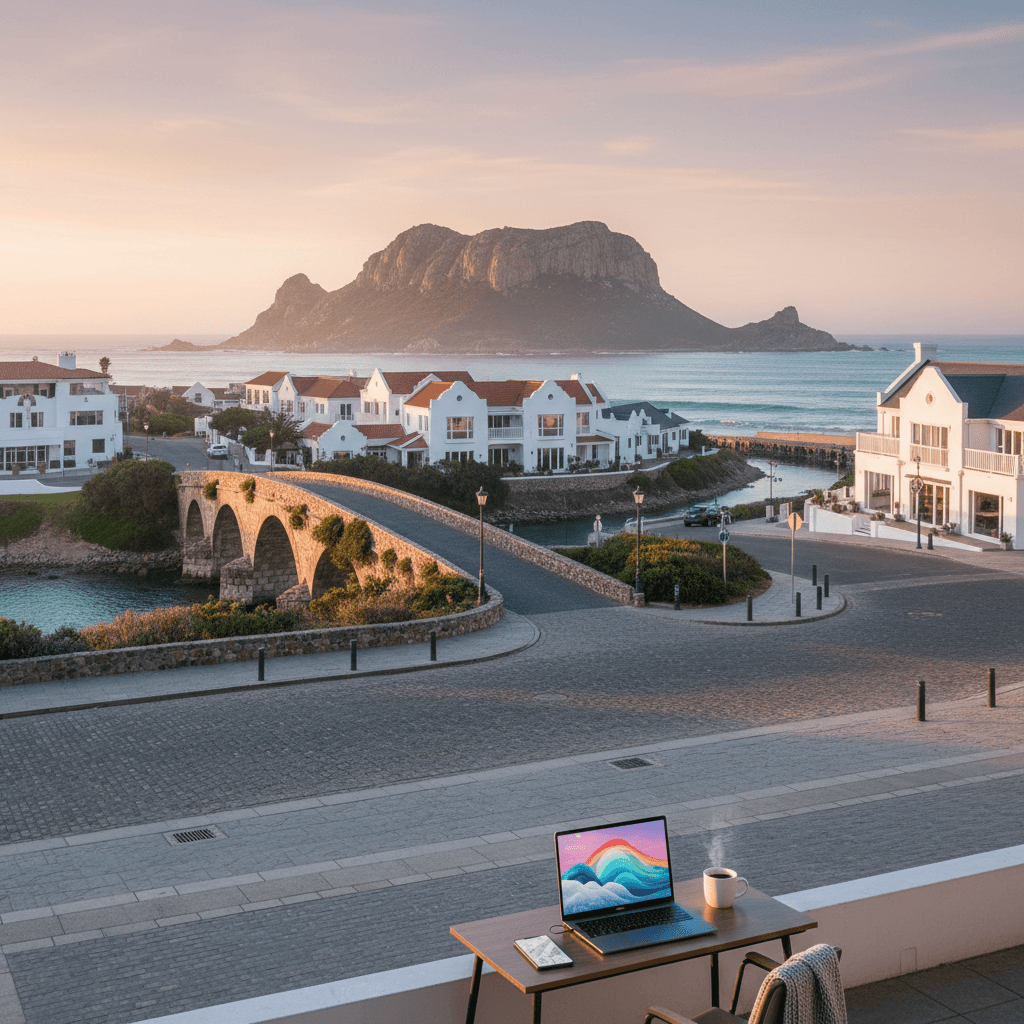
Plett moves at its own pace. That's not marketing copy, it's genuinely how life feels here, where the morning smell of salt air and fynbos drifts through your window before the town has even woken up and where most "urgent" decisions involve whether to hit Robberg Beach before or after your first coffee.
Plettenberg Bay sits along the Garden Route in the Western Cape, about four hours east of Cape Town and it's the kind of place that was built for holidays but keeps people around longer than planned. Nomads and expats, turns out, find it surprisingly liveable once they stop treating it like a vacation and start treating it like a base.
The draw is obvious on arrival. Dolphins are a genuinely common sight off the beach, whales pass through between June and November and the Robberg Nature Reserve is a 20-minute walk from a decent flat. The landscape is honestly hard to ignore, dense green forest dropping into blue water, with the kind of light that makes everything look slightly unreal in the late afternoon.
But Plett isn't without friction. It's a small town, the job market is thin and prices spike hard in December and January when the Joburg crowd floods in and restaurants stop caring about value. Crime is a real concern, not paranoia-level, but the kind where you stay aware at ATMs and don't leave a laptop bag visible in a parked car. The vibe is relaxed, the risk profile isn't zero.
What makes it different from, say, Cape Town or Bali is the scale. There's no overwhelming traffic noise, no crowds pressing in, no constant hustle to contend with. It's quiet in a way that either restores you or drives you mad, depending on your personality. Most nomads who last more than three months here are the kind who wanted to actually slow down, not just say they did.
Socially, the expat community is small and warm, connections happen fast because everyone ends up at the same handful of spots. The locals are genuinely friendly, English works fine and the Afrikaans and isiXhosa you'll hear around town gives the place a texture that feels distinctly South African rather than generically coastal.
It's not for everyone. It's absolutely for some people.
Plett isn't cheap. That's the first thing most nomads discover when they start pricing it out, especially if they arrive during peak summer season when short-term rentals spike and every café near the beach seems to know exactly what tourists will pay for a cappuccino (around R30 to R33, for the record).
Rent is, honestly, the biggest variable. A studio or one-bedroom outside the center in spots like Lower Robberg or Keurbooms runs R5,000 to R8,000 a month, which is manageable, but central apartments push R14,000 and up. Most long-term nomads head straight for Lower Robberg: it's quieter, you can smell the salt air from most streets and the shopping center means you're not totally car-dependent.
Food costs depend entirely on how disciplined you are about avoiding tourist menus. A meal at an inexpensive local spot runs around R150, a sit-down dinner for two at somewhere like The Fat Fish lands around R500 and that number climbs fast if you're ordering wine with ocean views every night. Cook at home a few nights a week, it makes a real difference.
Here's what a realistic monthly budget looks like for a solo nomad:
- Budget tier: R15,000 to R20,000 (shared housing, cooking most meals, minimal transport)
- Mid-range: R25,000 to R35,000 (one-bedroom outside center, mix of dining out and cooking, occasional Bolt rides)
- Comfortable: R40,000 and up (central apartment, eating out regularly, renting a car)
Coworking at The Station Co-Work costs R2,499 for a full day or from R5,000 a month for a dedicated space, which is turns out a lot steeper than most nomads expect from a small coastal town. Mobile data through Vodacom or MTN runs R300 to R500 a month for a decent plan and most cafés have workable WiFi if you don't need anything upload-heavy.
Transport is a genuine friction point. There's no real public transit network, one-way taxi fares start at R25 and gasoline sits around R23.25 per liter for 93 ULP (as of April 2026), so a car adds up quickly. Bolt works in town, it's not always fast though. Budget for it or rent an e-bike if you're staying central.
Plett's small enough that neighborhood choice genuinely shapes your experience here. The town sits across a few distinct pockets, each with its own feel, price point and crowd, so it's worth thinking about who you are before you sign a lease.
For Digital Nomads
Lower Robberg is, honestly, where most nomads end up landing. It's quieter than central, you're close to Robberg Beach and a decent shopping center and rents sit around R5,000 to R8,000 a month for a one-bedroom. That's a real difference from the R14,000 you'd pay closer to the center. The Station Co-Work is your main option for a proper desk, priced from R2,499 a day or R5,000-plus monthly, which sounds steep until you factor in the load-shedding backup power, because working through outages on a cafe hotspot gets old fast.
For Expats
Expats who've settled here tend to split between Lower Robberg and Brackenridge Estate. Brackenridge is gated, secure and threaded with walking trails, it's the kind of place where you don't worry much about the Grade F crime rating that hangs over the broader area. Average property prices there run around R5.7 million, so it's not for everyone, but long-term expats with families often say the security alone justifies it. Lower Robberg, turns out, hits a sweeter spot for those who want nature access without the full luxury price tag.
For Families
Keurbooms is the quiet one. Riverfront, peaceful, a beach nearby and far enough from the central noise that kids can actually sleep. It's outside town proper, so you'll need a car, there's no getting around that. Brackenridge works well too if budget isn't the constraint, the trails and gated security make it genuinely family-friendly in a way that central Plett isn't.
For Solo Travelers
Central Plettenberg Bay is the obvious pick. Walkable, social, close to restaurants like The Fat Fish and the handful of bars worth visiting. It's noisier and pricier, weirdly more so than you'd expect for a town this size, but for short stays it makes sense. You won't need a car, which cuts costs meaningfully when taxis start at R10 plus per kilometer.
Skip central if you're staying longer than a month. The noise and price premium stop feeling worth it pretty quickly.
Plett isn't a digital nomad hub. It's a small coastal town that happens to have one decent coworking option, reasonable mobile data and enough cafe culture to get by if you're not too demanding about your setup.
The Station Co-Work is honestly your only real dedicated option here and it does the job well. Speeds are fast, there's no load-shedding disruption and the space is clean and professional. Pricing for an Open Co-Work Desk is R49 per hour or R249 for a full day; an Individual Pod is R119 per hour or R399 for a full day; a 4-Seater Pod is R299 per hour or R1,199 for a full day; and the Boardroom is R499 per hour, R1,599 for half day, or R2,499 for full day. You're paying for reliability, which matters when Eskom is doing its thing elsewhere in the country.
Most cafes in the central area are fine for a few hours of work, the wifi is, turns out, more stable than you'd expect from a tourist town, though you'll want to arrive early before the holiday crowd fills the tables and the ambient noise picks up. There's something weirdly pleasant about working with the smell of sea air drifting in, but don't count on a quiet afternoon in peak season.
For mobile data, grab a SIM from Vodacom or MTN, both have stores in town and budget around R300 to R500 per month for a 10GB or larger data plan. Coverage is solid in the central areas and Lower Robberg, patchier if you're out toward Keurbooms or in the forest surrounds. Frankly, mobile data as a backup is something most nomads here rely on more than they expected to.
- The Station Co-Work: Open Desk (R49/hr, R249/day); Individual Pod (R119/hr, R399/day); 4-Seater Pod (R299/hr, R1,199/day); Boardroom (R499/hr, R1,599 half day, R2,499 full day)
- Cafe working: Central area spots work well for short sessions; busier in peak season
- Mobile data: Vodacom or MTN SIM, R300 to R500 per month for 10GB or more
- Coverage: Strong in central Plett and Lower Robberg, weaker on the outskirts
If your work demands rock-solid connectivity eight hours a day, The Station is worth the spend. If you're working lighter hours or just need to stay on top of emails, a decent cafe and a local SIM will carry you fine.
Plett's crime rate is, honestly, one of the harder truths about living here. While it's not a reason to avoid the place, it does mean you can't just switch your brain off the way the beach vibe tempts you to.
Most nomads and expats who settle in quickly learn the rhythm. Don't leave anything visible in a parked car, avoid isolated stretches of road after dark and stay alert around ATMs because opportunistic theft near cash machines is a known pattern here. Gated communities like Brackenridge Estate exist partly for this reason, the walls and security guards aren't just for show.
Day-to-day in central Plett or Lower Robberg, you'll feel pretty relaxed, it's a small town and you start recognizing faces fast. The tension tends to spike in peak tourist season when there are more strangers around and more targets. Locals are generally warm and will tell you straight if somewhere feels sketchy.
On the healthcare side, Plett punches above its size. Mediclinic Plettenberg Bay is the main private facility and it's genuinely solid for a town this small, handling emergencies and general care without sending you scrambling to George or Cape Town for basic treatment. For prescriptions and after-hours needs, Robberg Pharmacy and the Clicks pharmacy both cover you reliably.
- Police emergency: 10111
- Netcare 911 (private ambulance): 082 911
- Mediclinic Plettenberg Bay: main private hospital, central location
- Robberg Pharmacy and Clicks: prescriptions, after-hours basics
Travel insurance isn't optional here, it's just the cost of not being reckless. Private care at Mediclinic costs real money without cover and the public system in a town this size isn't where you want to end up for anything serious. Sort your policy before you arrive, not after you need it.
Weirdly, the healthcare situation is one of the more pleasant surprises Plett throws at you. Small town, decent hospital, pharmacies that actually stock what you need. The crime picture is the honest counterweight, keep your wits about you and it's manageable.
Plett doesn't have much public transport. That's the honest starting point. A one-way ticket on the limited local service runs around R25, but the routes are sparse enough that most nomads and expats give up on them pretty quickly and find other ways to get around.
For on-demand rides, Bolt works here and is, honestly, your most reliable option for short hops around town. Taxis are available too, starting at roughly R10 plus a per-kilometre rate and hotels will often point you toward trusted local drivers like Bryton if you ask at the front desk. It's a small town, word travels fast and those personal recommendations are usually worth following.
Central Plett is walkable, which helps. If you're staying near the main strip, you can reach most cafes, shops and the beachfront on foot without much effort, the kind of easy strolling where salt air hits you before you even see the ocean. Lower Robberg has a shopping centre close by, so that neighbourhood works too. Keurbooms is quieter but further out, you'll need wheels there.
E-bikes and scooters are available for rent and are, turns out, a genuinely good fit for the terrain here. The distances between spots like Robberg Beach and central town aren't huge and the coastal roads are scenic enough that the ride itself doesn't feel like a chore.
Getting to Plett from George Airport (GRJ) is where it gets a bit more involved. Bolt operates airport transfers, the Garden Route Shuttle runs from around R225 and JBay Cabs covers routes toward Port Elizabeth if you're coming or going that direction. None of these are complicated to book, they just require a little planning ahead rather than assuming you'll sort it on arrival.
If you're staying longer than a few weeks, renting a car is, frankly, the move. It opens up day trips to Tsitsikamma and Knysna, makes grocery runs painless and removes the mild frustration of timing your day around ride availability. Gasoline sits around R23.25 per litre (as of April 2026), so factor that into your monthly budget. Not free, but not prohibitive either.
Plett's language situation is, honestly, more layered than most coastal towns its size. English works fine for day-to-day life, shopping, restaurants, dealing with landlords. You won't hit walls. But it's not the whole picture and knowing that matters.
English is the most widely spoken language here, with around 57% of residents using it as their primary tongue. Afrikaans comes in at roughly 32% and isiXhosa sits at just 5%. In practice, most locals switch comfortably into English the moment they clock you're not a native speaker, the transition is seamless and warm.
Still, a few phrases go a long way. "Sawubona" (hello in isiXhosa) and "Enkosi" (thank you) aren't just polite gestures, they genuinely shift how locals receive you. Expats who've been here a while say it's one of those small things that turns a transactional interaction into an actual moment. Worth the two minutes it takes to learn them.
For Afrikaans, you'll hear it in the older surf crowd, in farm stalls on the N2, in casual banter between locals at the market. You don't need it, but you'll start picking up words without trying. "Lekker" (great, nice, delicious) gets thrown around constantly, it's one of those words that attaches itself to everything.
If you want to go deeper, apps like FunEasyLearn cover isiXhosa basics at a beginner level. Don't expect fluency fast, isiXhosa has click consonants that take real time to produce correctly, but even clumsy attempts tend to land well.
On the practical side, written communication is almost entirely in English. Menus, signage, lease agreements, WhatsApp groups for your building or neighborhood, all English. Business emails are formal but friendly and turns out most service providers respond faster via WhatsApp than email. That's just how Plett operates.
- Primary languages: English (57%), Afrikaans (32%), isiXhosa (5%)
- Useful isiXhosa: Sawubona (hello), Enkosi (thank you), Molo (hi, informal)
- Useful Afrikaans: Lekker (great), Dankie (thank you), Braai (barbecue)
- Learning apps: FunEasyLearn, PhrasePal
- Business communication: English throughout; WhatsApp preferred over email
Plett's climate is, honestly, one of its strongest selling points. It sits in a mild oceanic zone, so you're not dealing with the brutal summers of the interior or the bone-chilling winters of the Cape. Temperatures stay remarkably stable year-round, ranging from around 14°C on cool winter nights up to 25°C on warm summer days, which means outdoor life doesn't really stop.
That said, rain is a constant companion no matter when you visit. Expect around eight to ten rainy days per month throughout the year, with February being the wettest, the kind of persistent drizzle that rolls in off the ocean and smells like salt and wet fynbos. It's not tropical downpours, it's more of a soft, grey soaking that locals barely notice.
Spring and early summer (September through December) is when most nomads and expats say Plett hits its stride. Temperatures sit between 18°C and 25°C, the whale season is still running into October and the beaches aren't yet packed with the December holiday crowd that drives up prices and noise in equal measure.
- Best overall: September to November. Warm, uncrowded and whale sightings are still likely along the bay.
- Peak season: December to January. Lively and warm, but accommodation prices spike hard and central Plett gets loud.
- Shoulder season: February to March. Still warm, rain picks up, crowds thin out, better rental deals.
- Winter (June to August): Cooler and quieter, turns out it's surprisingly pleasant if you don't need beach weather. Good for focused work, fewer distractions.
Winter does get windy and the cold fronts that sweep through can feel sharp if you're not used to them, cold tile floors, grey skies, a certain stillness that settles over the town. Some people love it, some find it isolating.
One thing worth flagging: summer brings hot, dry spells that can push past 30°C with a dry wind that makes everything feel gritty. Not unbearable, but it catches visitors off guard. If you're planning a longer stay and want stable working conditions without the tourist chaos, September or October is frankly the sweet spot.
Get your SIM card sorted before anything else. Vodacom and MTN both have shops in central Plett and a data plan with 10GB or more runs around R300 to R500 a month. Don't rely on accommodation WiFi for serious work.
For banking, ATMs are widespread and most international cards work fine, though expats recommend using Wise to avoid conversion fees. Be mindful at ATMs in town, as card skimming and shoulder-surfing can occur.
Finding a place to stay longer-term means checking Property24, Airbnb and Gumtree, ideally in that order if you want to avoid tourist pricing. Lower Robberg and Keurbooms often offer different rental rates than central Plett, so it is worth comparing neighborhoods before you sign anything.
While Plett is a popular destination, it is important to stay aware of your surroundings. Burglaries and opportunistic theft can occur, so stick to well-lit areas at night, don't leave valuables visible in cars, and if you're in a quieter neighborhood, a basic alarm system on your rental is worth asking about.
For healthcare, Mediclinic Plettenberg Bay handles most situations competently, Robberg Pharmacy and the Clicks store cover after-hours prescriptions and Netcare 911 is an available emergency service. Save those numbers now, not when you need them.
Getting around without a car can be challenging. Public transport is sparse and routes are limited, so most nomads end up relying on Bolt or pre-arranged taxi drivers. Renting an e-bike works well for central areas and the smell of fynbos on the Robberg trails makes the effort worthwhile.
- Day trips worth making: Robberg Nature Reserve, Tsitsikamma National Park, Knysna
- Emergency numbers: Police emergency: 10111, Ambulance/Medical emergency: 10177, Netcare 911 (private ambulance): 082 911
- Housing platforms: Property24, Airbnb, Gumtree
- Useful phrases: "Sawubona" (hello, isiXhosa), "Enkosi" (thank you)
One cultural note: greet people warmly and take it seriously, a quick nod doesn't cut it here. Locals notice and frankly, a genuine hello opens more doors than any amount of tourist charm.
Need visa and immigration info for South Africa?
🇿🇦 View South Africa Country GuideHidden Gem
Worth the effort