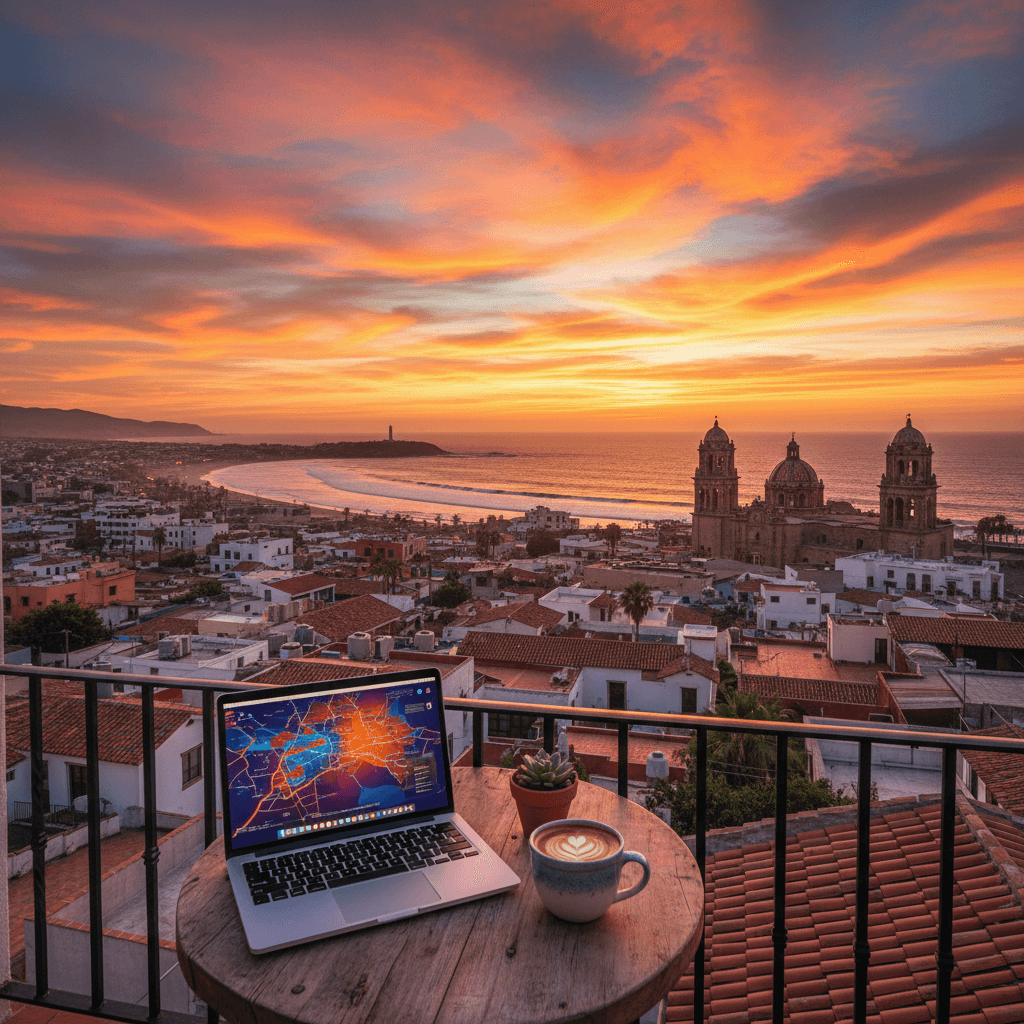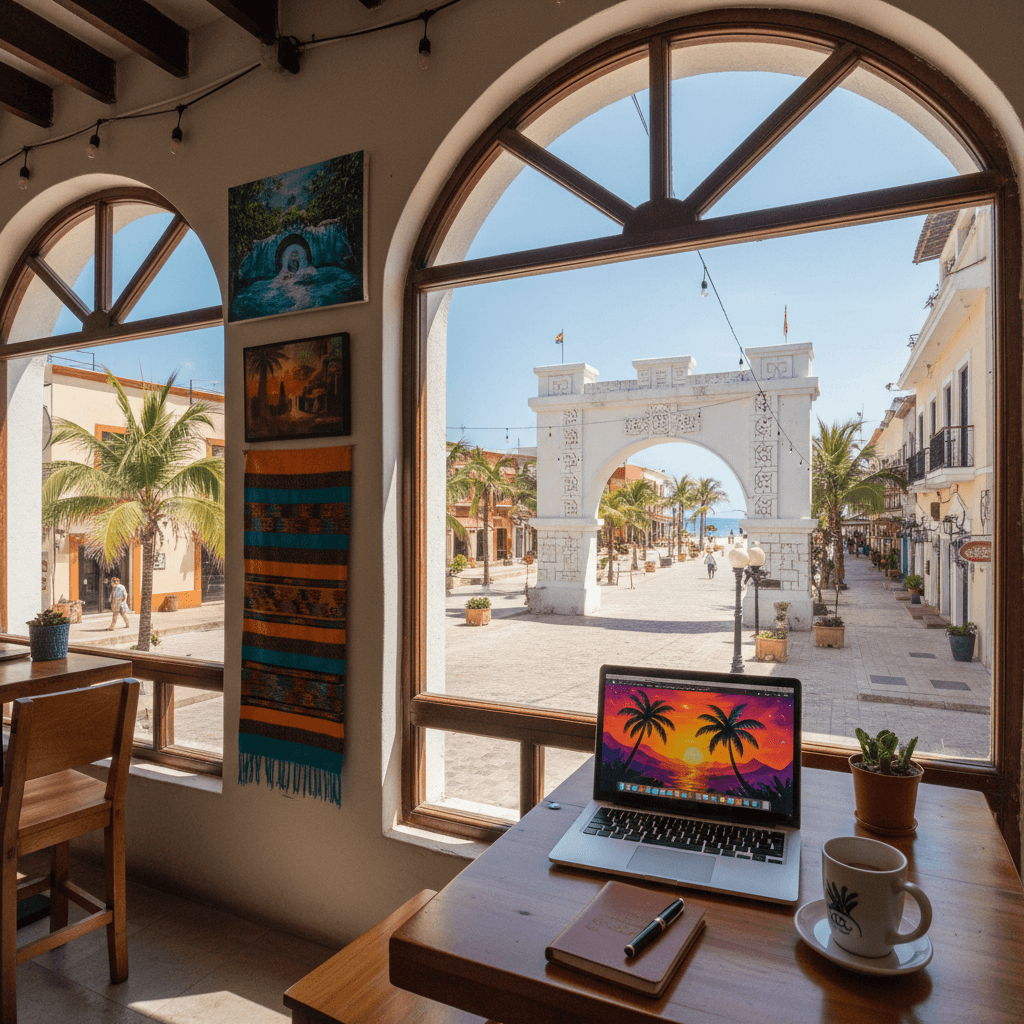
Playa del Carmen
🇲🇽 Mexico
The Vibe: High-Speed Infrastructure Meets Coastal Ease
Playa del Carmen occupies a sweet spot in the Mexican Caribbean that its neighbors haven't quite mastered. While Tulum struggles with spotty infrastructure and Cancun feels like a giant resort, Playa offers a functional, walkable urban core where you can actually get work done. It is a multicultural hub where Maya heritage and Mexican street food live alongside vegan cafes and high-speed fiber optics. The atmosphere is energetic but far less frantic than a major capital city.
Most nomads find that Playa operates on two speeds. There is the tourist-heavy pulse of 5th Avenue (Quinta Avenida), filled with neon lights and beach clubs, and then there is the local side just a few blocks inland. You will see people taking Zoom calls from Ah Cacao with a chocolate frappe in hand, then heading to a $3 USD taco stand for lunch. It is a place where you can be a professional by day and a beach bum by night without ever needing a car.
What You Will Spend
Living here is affordable, though prices fluctuate based on how close you are to the water. A comfortable monthly budget for most nomads sits around $1,300 to $2,000 USD. While you can survive on less if you eat locally and share a flat, those who want air conditioning and a modern kitchen should expect to pay more.
- Housing: A studio in the center costs between $600 and $1,000 USD. If you head to Playacar, expect $800 to $1,500 USD.
- Food: Street tacos are a steal at $3 to $5 USD, while a mid-range dinner with a drink usually lands between $10 and $15 USD.
- Transport: You will mostly walk, but a colectivo across town is about $1 USD, and ride-hailing apps like Uber usually cost $5 to $10 USD per trip.
- Work: A day pass at a dedicated coworking space like Nest is around $15 USD.
The Best Neighborhoods for Remote Work
Choosing where to stay depends on your tolerance for noise and your budget. Most newcomers start in the center to be near the action before migrating to quieter pockets.
Downtown / Centro
- Best For: First-timers and solo travelers who want everything within a five-minute walk.
- Pros: Immediate access to Anana Coliving, Azure Coliving, and the best cafes like Marley Coffee.
- Cons: It is loud. Between the nightlife and the construction, you will want noise-canceling headphones.
Playacar
- Best For: Expats, families, and those who prioritize security and quiet.
- Pros: Gated community, very safe, and much closer to the cleaner stretches of beach.
- Cons: Higher rents and a bit of a trek to the more authentic, cheaper local eateries.
Colosio and Little Italy
- Best For: Budget-conscious nomads and long-termers looking for a local feel.
- Pros: Rent is significantly lower, often ranging from $500 to $800 USD.
- Cons: It is further from the beach, and the internet reliability can be hit-or-miss compared to the fiber-rich Centro.
Connecting and Staying Productive
The internet in Playa is surprisingly robust for a beach town. You can expect 50 to 100 Mbps in most central apartments. Outages are rare, usually only occurring during heavy tropical storms in the rainy season from June to November. For the most reliable setup, nomads recommend Nest Coworking for its quiet zones or Ah Cacao for a more social work environment.
Socializing is arguably the easiest part of the experience. The Playa del Carmen & Tulum Digital Nomads Facebook group is the go-to for apartment hunting and event listings. Many expats also use the Mexpats Club or join WhatsApp groups like Happening Hoy to find wine tastings, beach volleyball games, or weekend trips to nearby cenotes. It is a city where "see you tomorrow" is a standard farewell, because in this community, you almost certainly will.
The Price of Paradise
Living the Caribbean dream in Playa del Carmen is surprisingly accessible compared to Tulum or the US, but it requires a bit of strategy. Most nomads find they can live comfortably on about $1,300 USD a month, though your lifestyle choices will swing that number significantly. While card payments are standard in the air-conditioned malls and upscale beach clubs, you will still want pesos in your pocket for the best street tacos and local markets.
Monthly Budget Tiers
- The Budget Nomad ($1,000 to $1,500): You are likely sharing a flat in Colosio or finding a studio in Little Italy. You eat like a local, stick to public colectivos, and use a local SIM card rather than international roaming.
- The Mid-Range Lifestyle ($1,500 to $2,000): This is the sweet spot. You can afford a private 1BR in Centro, daily visits to cafes like Ah Cacao, and a dedicated desk at Nest Coworking.
- The Comfortable Expat ($2,000+): You are likely based in Playacar with full amenities, 24/7 AC, and frequent dinners at the high-end spots along 5th Avenue.
Housing and Neighborhoods
Rent is your biggest variable. Avoid Airbnb for long term stays; instead, join Facebook groups like Mexpats Club or Rentas y Roomies to find local rates. Prices are usually quoted in pesos but often discussed in USD for the expat market.
Downtown (Centro)
- Best for: Networking and nightlife.
- Rent: $600 to $1,000 USD for a 1BR.
- The Vibe: You are steps away from the action on 5th Avenue and coworking hubs like Azure. It is convenient but can get loud on weekends.
Playacar
- Best for: Families and peace seekers.
- Rent: $800 to $1,500 USD.
- The Vibe: A gated community with manicured paths and quiet beaches. It feels more like a resort and less like a Mexican town.
Colosio or Little Italy
- Best for: Budget-conscious long-termers.
- Rent: $500 to $800 USD.
- The Vibe: More authentic and residential. While it is further from the beach, the savings are significant and the local food is better.
Food and Daily Expenses
Eating out is a major part of the social scene here. A quick street food meal will run you about $3 to $5 USD, while a mid-range dinner with a cocktail usually lands between $10 and $15 USD. If you are celebrating at an upscale rooftop, expect to pay $20 to $30 USD per person.
For groceries, locals head to Walmart or Mega, though small neighborhood fruterias offer better deals on seasonal produce. If you need a workspace, a day pass at Nest is $15 USD, which includes fast fiber internet and a community of like-minded professionals.
Getting Around
Centro is highly walkable, so you likely won't need a car. When you need to go further, Uber and Didi are reliable and typically cost between $5 and $10 USD for a cross-town trip. For the adventurous, the local colectivos (shared vans) are a steal at roughly $1 USD. If you want more freedom, bike or scooter rentals go for about $5 to $10 USD per day.
Connectivity and Practicalities
Reliable fiber internet (50 to 100 Mbps) is now the standard in central areas, making Playa a more stable choice than Tulum for those with heavy video call schedules. For backup, travelers often grab a local Telcel SIM at any OXXO or set up a Holafly eSIM before landing. Just keep in mind that heavy tropical rains can occasionally cause brief outages, so having a mobile hotspot ready is a smart move.
Choosing where to plant your flag in Playa del Carmen depends entirely on whether you want to wake up to the sound of waves or the smell of roasting coffee. While the city is compact and walkable, each neighborhood has a distinct personality and price point that can make or break your productivity.
The Solo Nomad and Social Butterfly: Centro
If you want to be within a five minute walk of everything, Centro is your base. This is the heart of the action, centered around the famous 5th Avenue. It's the most multicultural part of town, where you'll find the highest concentration of coworking spaces and cafes with reliable fiber optic internet hitting 50 to 100 Mbps.
- Rent: Expect to pay between $600 and $1,000 USD for a decent studio or one bedroom.
- Work: Most nomads congregate at Nest Coworking for the quiet zones or Anana Coliving for the community vibe. For a laptop session with a view, Ah Cacao and Marley Coffee are the local staples.
- The Trade-off: It gets loud. Between the late night beach clubs and the tourist crowds, you'll want a place with thick windows if you value your sleep.
The Long-Term Expat and Professional: Coco Beach
Located at the northern end of the downtown area, Coco Beach is the sweet spot for those who want to stay close to the energy without living inside a tourist brochure. It feels a bit more "grown up" than Centro. The streets are slightly wider, the buildings are newer, and there's a strong community of remote workers who stay here for months rather than weeks.
- Rent: Similar to Centro, usually $700 to $1,100 USD for modern apartments.
- The Vibe: It's safer and quieter than the core, with easy access to some of the better, less crowded beach stretches.
- Connectivity: Internet is generally excellent here, with many new developments pre-wired for high speed fiber.
Families and Security-Conscious Travelers: Playacar
Playacar is a massive gated community on the south side of town. It feels like a different world; think manicured lawns, golf courses, and paved bike paths. It's the go-to for families because it's incredibly safe and shielded from the city's grit. You'll see expats jogging and kids biking to the private beach access points.
- Rent: This is the premium tier. Budget $800 to $1,500 USD for a place here, and keep in mind that electricity with heavy AC use can add up quickly.
- Logistics: You'll likely want a bike or a scooter. While it's walkable, the neighborhood is sprawling, and getting to the grocery stores in town can be a trek on foot.
- Pros: It's the quietest place in Playa, perfect for those who need a professional environment for frequent video calls.
Budget Seekers and Local Life: Colosio and Little Italy
For those looking to keep their monthly burn under $1,500 USD, moving a few blocks further from the beach pays off. Colonia Hollywood and Little Italy offer a charming, leafy atmosphere with some of the city's best local eateries. Colosio is further north and much more rugged, but it's where you'll find the true bargains.
- Rent: You can often find apartments for $500 to $800 USD by checking local Facebook groups like Mexpats Club or Rentas y Roomies.
- The Vibe: You'll be living among locals and long-term residents. It's less polished, but the food is cheaper and the coffee shops feel less like tourist traps.
- Food: Street tacos here run $3 to $5 USD for a full meal, compared to $15 USD on 5th Avenue.
- Note: Infrastructure can be a bit more variable here. Always ask for a speed test before signing a lease, as some older buildings haven't upgraded their wiring yet.
Connectivity That Actually Works
Unlike its neighbor Tulum, where the WiFi can be as temperamental as the Caribbean weather, Playa del Carmen is a powerhouse for remote work. You can expect fiber optic speeds ranging from 50 to 100 Mbps in the central neighborhoods like Centro and Playacar. It is the kind of reliability that handles Zoom calls and heavy uploads without breaking a sweat, making it a favorite for developers and creative professionals.
Outages are rare, usually only popping up during the peak of the rainy season or during a tropical storm. Even then, things usually get back online within a couple of hours. Most nomads keep a Holafly eSIM or a local Telcel SIM card from an OXXO shop as a backup. It is cheap insurance for your peace of mind when a deadline is looming.
Top Coworking Spots
The coworking scene here is mature and social. It is not just about a desk; it is where you will find your community and your weekend plans. Most spots offer day passes for around $15 USD, but monthly memberships are the way to go if you are sticking around.
- Nest Coworking: Located right near 5th Ave, this is the original nomad hub. It has dedicated quiet zones, great coffee, and a constant rotation of networking events. It is the best place to find people who have been living in Playa for years.
- Anana Coliving: This spot is built for the modern remote worker. They have soundproof booths for calls and high-speed infrastructure that rarely dips. It is professional but retains that relaxed beach town aesthetic.
The Cafe Culture
If you prefer the hum of a coffee shop over a quiet office, you will be in good company. Playa is full of "laptop friendly" spots where you won't be glared at for staying a few hours. Just remember to keep the orders coming as a courtesy to the staff.
- Ah Cacao: This is a local staple. The WiFi is stable enough for most tasks, and their chocolate based drinks are legendary. It gets busy, so arrive early if you want a table near a plug.
- Marley Coffee: Known for being spacious with plenty of power outlets. It is a reliable fallback when other cafes are packed with tourists.
- Choux Choux Cafe: A bit more of a "local" favorite in the Little Italy area. The food is excellent, and while it is more of a brunch spot, the back tables are often filled with nomads tapping away on MacBooks.
Practical Tips for Staying Online
While the infrastructure is solid, seasoned expats recommend checking the specific WiFi situation before signing a long term lease. If you are looking at apartments in Colosio or the outskirts, the speeds can be variable. Always ask for a speed test screenshot if you are booking through Facebook groups like Mexpats Club or Rentas y Roomies.
Most nomads find that a $1,500 to $2,000 USD monthly budget allows for a comfortable lifestyle in Centro with high speed internet included. If you are on a tighter budget, look toward Colonia Hollywood or Little Italy. You will still be within walking distance of the main coworking hubs but at a fraction of the price of a beachfront condo.
Join the Playa del Carmen & Tulum Digital Nomads Facebook group or look for WhatsApp communities like OG Playa Meetups. These groups are the lifeblood of the city, providing real time updates on everything from internet outages to the best new cafes to work from.
Staying Safe in Playa
Playa del Carmen feels more like a large beach town than a chaotic city. Most nomads feel perfectly comfortable walking through Downtown or Playacar during the day. The vibe is generally relaxed, but you still need to keep your wits about you as you would in any major tourist hub. Stick to well lit, populated areas like 5th Avenue after dark, and try to avoid the outskirts of town late at night.
The most common issues you'll face aren't violent; they're opportunistic. Petty theft and tourist scams are the main things to watch for. Don't leave your phone or laptop unattended at a beach club while you go for a swim. Travelers often mention "the bird poop scam" or ATM skimmers, so it's best to use ATMs located inside bank branches rather than standalone machines on the street.
If you're traveling with family, Playacar is widely considered the safest and most secure pocket of the city. It's a gated community with private security, making it a favorite for those who want a quiet night's sleep without worrying about the late night noise of the club district.
Healthcare and Emergencies
One of the perks of Playa is that you aren't sacrificing quality medical care for beach views. The central zones are home to several high quality private hospitals that meet international standards. Most doctors in these facilities speak English, and they're well acquainted with treating expats and nomads.
- Emergency Services: Dial 911 for any immediate police, fire, or medical emergencies.
- Pharmacies: You'll find a Farmacia Similares or Farmacia Ahorro on almost every other block. They're great for minor ailments, and many have a doctor on site for quick, low cost consultations.
- Hospitals: Facilities like Costamed and Hospiten are the go to choices for more serious issues or specialist visits.
Most nomads recommend carrying a private international health insurance policy. While local clinics are affordable for a quick checkup, a hospital stay can get expensive quickly if you're paying out of pocket. Always keep a digital copy of your insurance card and a list of any allergies on your phone.
Practical Wellness Tips
The biggest health "danger" in Playa isn't a tropical disease; it's the sun and the water. The Caribbean heat is intense, especially between June and November. Dehydration happens faster than you think, so keep a reusable bottle handy. Just remember: never drink the tap water. Even locals use 20 liter "garrafones" of purified water for drinking and brushing teeth.
If you're heading into the jungle for a cenote trip, bring biodegradable bug spray. The mosquitoes can be relentless, and standard sprays aren't allowed in the delicate ecosystems of the cenotes. For daily peace of mind, join local Facebook groups like Mexpats Club or Playa del Carmen & Tulum Digital Nomads. Members are quick to share updates on local safety or recommend the best English speaking dentists in town.
Getting Around Playa del Carmen
Playa del Carmen is one of the most walkable hubs in the Riviera Maya, especially if you stick to the grid between Juarez Avenue and Calle 40. Most nomads find they can handle 90% of their daily life on foot. The city is laid out in a simple grid where North-South streets are called "Avenidas" (usually in increments of five) and East-West streets are "Calles" (usually in increments of two). It is almost impossible to get lost once you realize the beach is always East.
The Airport Run
Most travelers land at Cancun International (CUN), which is about an hour away. The ADO bus costs roughly 250 pesos (approximately $15-16 USD). It is reliable, air-conditioned, and you can buy tickets at the kiosks right outside the arrivals terminal. If you prefer a door-to-door service, an Uber or private transfer will typically run you between $40 and $60 USD depending on your haggling skills or the app surge pricing.
Public Transport and Colectivos
For local trips that are too far to walk, colectivos are the local secret. These white shared vans run specific routes through the city and up the highway toward Tulum or Cancun. They cost about $1 USD (around 10 to 15 Pesos) for local hops. Just wave one down on the street and tell the driver where you are going. It is cramped and sweaty, but it is the fastest way to travel like a local.
Ride-Hailing and Taxis
Uber and Didi are active in Playa, though there has been historical tension with the local taxi unions. Most nomads find them reliable for short trips across town, with prices usually landing between $5 and $10 USD. If you take a street taxi, always agree on the price before you get in. There are no meters here, and "gringo pricing" is a real thing if you don't negotiate upfront.
Two-Wheeled Travel
Bicycles are the preferred mode of transport for those living in Playacar or Colosio. The terrain is flat, making it easy to cruise around even in the midday heat. You can find daily rentals for $5 to $10 USD, but if you are staying for a month or more, it's cheaper to buy a used bike on the Mexpats Club or Rentas y Roomies Facebook groups and sell it before you leave.
- Bicycle/Scooter Rental: Expect to pay $5 to $10 USD per day.
- ADO Bus to Cancun: Roughly 250 pesos (approximately $15-16 USD) per person.
- Local Colectivo: Approximately $1 USD per ride.
- Private Airport Transfer: Between $40 and $60 USD.
Navigation Tips
While 5th Avenue (Quinta Avenida) is the famous pedestrian walkway, it is often too crowded for efficient travel. If you are in a rush to get to a meeting at Nest Coworking or Anana, use 10th or 15th Avenue instead. These streets have proper sidewalks and significantly fewer tourists stopping to take photos. For longer day trips to cenotes or the Tulum ruins, the ADO station on 5th Avenue and Juarez is your primary hub for comfortable, long-distance coaches.
The Language Balance
You can easily get by with English in the heart of Playa del Carmen. Because the city is a global hub for tourism and remote work, staff at beach clubs, hotels along 5th Avenue, and popular cafes like Ah Cacao or Marley Coffee usually speak it well. You won't struggle to order a latte or check into your Airbnb in English.
However, the vibe changes once you step a few blocks away from the tourist corridor. In local neighborhoods like Colosio or Colonia Hollywood, Spanish is the primary language. While you don't need to be fluent to survive, having a basic grasp of Spanish opens up a much better experience. It helps you negotiate better rates with taxi drivers, chat with vendors at the local markets, and build rapport with the community.
Useful Phrases for Your Daily Life
Most nomads find that a few polite phrases go a long way. Locals appreciate the effort, even if you revert to English afterward. Here are the basics you will use every single day:
- Hola: Hello (Universal and used constantly).
- ¿Cuánto cuesta?: How much does it cost? (Vital for street food and markets).
- ¿Cuál es la contraseña del WiFi?: What is the WiFi password? (The most important phrase for any nomad).
- La cuenta, por favor: The bill, please.
- Gracias: Thank you.
Digital Tools and Communication
Even if your Spanish is shaky, technology bridges the gap. Travelers often say that Google Translate is their most used app, especially the camera feature for translating menus at local taco stands. For staying connected, most expats recommend getting a local Telcel SIM card at an OXXO convenience store or using a Holafly eSIM for immediate data upon arrival.
WhatsApp is the undisputed king of communication here. You will use it for everything: booking a hair appointment, ordering water delivery, or messaging your landlord. If you are looking for community, the Playa del Carmen & Tulum Digital Nomads Facebook group is the place to ask questions or find meetups.
Cultural Nuances in Communication
Communication in Mexico is generally polite and indirect. Starting a conversation with a quick "Buenas tardes" (Good afternoon) before asking for something is standard etiquette. In the nomad scene, you will hear a mix of "Spanglish" at coworking spaces like Nest or Anana, where the community is a blend of Mexicans, Americans, Europeans, and South Americans.
While English is common in the Centro, learning the numbers one through one hundred in Spanish will save you a lot of confusion when paying for $3 to $5 USD street tacos. If you want to dive deeper, there are several language schools in town where you can take intensive morning classes before starting your work day.
The Tropical Climate Cycle
Playa del Carmen stays warm year round, but the humidity and rain levels shift significantly between seasons. You'll generally find temperatures hovering between 28°C and 32°C (82-90°F). While the sun is a constant, the air quality and "stickiness" factor change how you'll plan your work day, especially if you prefer working from outdoor cafes like Ah Cacao or Marley Coffee.
The dry season runs from November through May. This is when the weather is most predictable and comfortable for digital nomads. The humidity drops, the skies stay clear, and you can walk from Centro to the beach without breaking a sweat. It's the ideal time for those who want to use the high speed fiber internet at Nest Coworking during the day and hit the beach clubs by late afternoon.
When to Visit: The Nomad Perspective
- High Season (December to February): This is the sweet spot for weather. It's dry and slightly cooler, making it perfect for exploring cenotes or taking the ADO bus to Tulum on weekends. Expect the biggest crowds on 5th Avenue and the highest rental prices in Playacar and Little Italy.
- Shoulder Season (March to May): The heat starts to ramp up, but the rain stays away. Many nomads find this the best balance between good weather and slightly lower prices before the summer humidity kicks in.
- Rainy & Hurricane Season (June to November): You'll see more frequent downpours, usually in short, intense bursts. September and October are the peak of the rainy season and the time when hurricanes are most likely. While major storms are rare, they can cause temporary internet outages lasting a few hours.
Seasonal Impact on Your Stay
If you're planning a long term stay, your choice of neighborhood should reflect the season. During the humid summer months, having a place with reliable AC in Playacar or a modern apartment in Centro is non-negotiable. Budget nomads staying in Colosio should double check that their rental includes a high quality ceiling fan or AC unit, as the tropical heat can make deep work difficult in July and August.
Travelers often say that the "worst" months of September and October are actually great for saving money if you don't mind staying indoors during the afternoon rains. Rent prices in Little Italy or Colonia Hollywood can drop significantly, and the coworking spaces like Anana or Azure are much quieter, giving you more room to spread out.
Packing for the Playa Weather
Light, breathable fabrics are your best friend here. Even in the "winter" months of December and January, you'll rarely need more than a light sweater for air conditioned cafes or the occasional breezy evening. If you're visiting during the rainy season, a waterproof laptop sleeve is a smart investment for those walks between your apartment and the coworking office. Most nomads find that a simple pair of sandals and linen clothing will get them through 90% of their stay.
Living and working in Playa del Carmen is a balancing act between high-speed fiber optics and the laid-back rhythm of the Caribbean. Most nomads find the city a more reliable alternative to Tulum, offering better infrastructure and a more walkable core without sacrificing the beach town energy.
The Monthly Budget
Expect to spend around $1,300 USD per month for a standard nomad lifestyle. If you are looking for a high-end experience in gated communities, that number can easily climb past $2,000 USD. Card payments are common in most restaurants and shops, but keep pesos on hand for street food and smaller vendors.
- Housing: A studio or 1BR in the Centro area typically runs between $600 and $1,000 USD. For those on a tighter budget, look toward Colosio or Little Italy for spots in the $500 to $800 USD range. Professional expats often prefer Playacar, where rents start around $800 USD and go up quickly.
- Food: Local street tacos will cost you $3 to $5 USD. A mid-range dinner on 5th Avenue usually lands between $10 and $15 USD, while upscale dining hits $20 to $30 USD.
- Transport: Uber and Didi are reliable for $5 to $10 USD per ride. If you want to go local, the colectivos (shared vans) are a steal at $1 USD.
Where to Set Up Base
The neighborhood you choose defines your experience. Most remote workers start in Centro or Downtown to be near the action. It is noisy and crowded, but you are steps away from coworking spaces like Nest and cafes like Ah Cacao. It is the best spot for networking and solo travelers.
Playacar is the choice for families and those who value quiet. It is a gated community with plenty of greenery and security, though the rents are higher. Coco Beach offers a middle ground with a strong expat presence, while Colosio and Colonia Hollywood provide a more authentic local feel and lower prices, though the walk to the beach is longer.
Internet and Coworking
Playa is a heavy hitter for connectivity, with speeds often reaching 50 to 100 Mbps in central areas. While rainy season can cause brief outages, they rarely last more than a few hours. For a dedicated workspace, Nest Coworking on 5th Avenue is the local favorite, offering day passes for $15 USD and a quiet environment for calls. Anana Coliving and Azure Coliving are also excellent options for those who want community built into their stay.
If you prefer the cafe scene, Marley Coffee has plenty of plugs and space. Ah Cacao is a staple for quick emails and stable WiFi. For a backup, travelers recommend picking up a Holafly eSIM or a local Telcel SIM card from any OXXO convenience store.
Getting Around and Staying Safe
You won't need a car if you stay in the central zones. The city is highly walkable, and many nomads rent bikes or scooters for $5 to $10 USD a day to get around. To get here from Cancun airport, the ADO bus is the most cost-effective method, costing roughly $20 USD, while private transfers or Ubers can cost up to $50 USD.
Safety is generally good in the tourist and expat hubs, though it is smart to avoid the outskirts after dark. Healthcare is accessible, with several high-quality hospitals in the central area and pharmacies on nearly every corner. For emergencies, dial 911.
Social Life and Community
Building a network is easy here. Join the Playa del Carmen & Tulum Digital Nomads group on Facebook or look for the Mexpats Club. There are also active WhatsApp threads like OG Playa Meetups that post daily events. Most social life revolves around Quinta Avenida (5th Avenue) for nightlife or the various beach clubs during the day. Locals speak Spanish, but you will get by fine with English in the Downtown area. Still, learning phrases like "Cuánto cuesta?" and "WiFi contraseña?" will go a long way.
Practical Logistics
- Best Time to Visit: December to February offers the best weather. Avoid September and October if you don't like heavy rain and humidity.
- Visas: Mexico typically grants a 180-day tourist visa on arrival, but always check your passport stamp.
- Finding Apartments: Skip the high Airbnb fees and check Facebook Marketplace or groups like Rentas y Roomies for better monthly rates.
- Banking: Use Wise for transfers and Charles Schwab or similar cards to avoid high ATM fees.
Need visa and immigration info for Mexico?
🇲🇽 View Mexico Country GuideEasy Landing
Settle in, no stress
Monthly Budget Estimates
More cities in Mexico
Mazatlán
🇲🇽 Mexico
Querétaro
🇲🇽 Mexico
San Cristóbal de las Casas
🇲🇽 Mexico