Pisa
🇮🇹 Italy
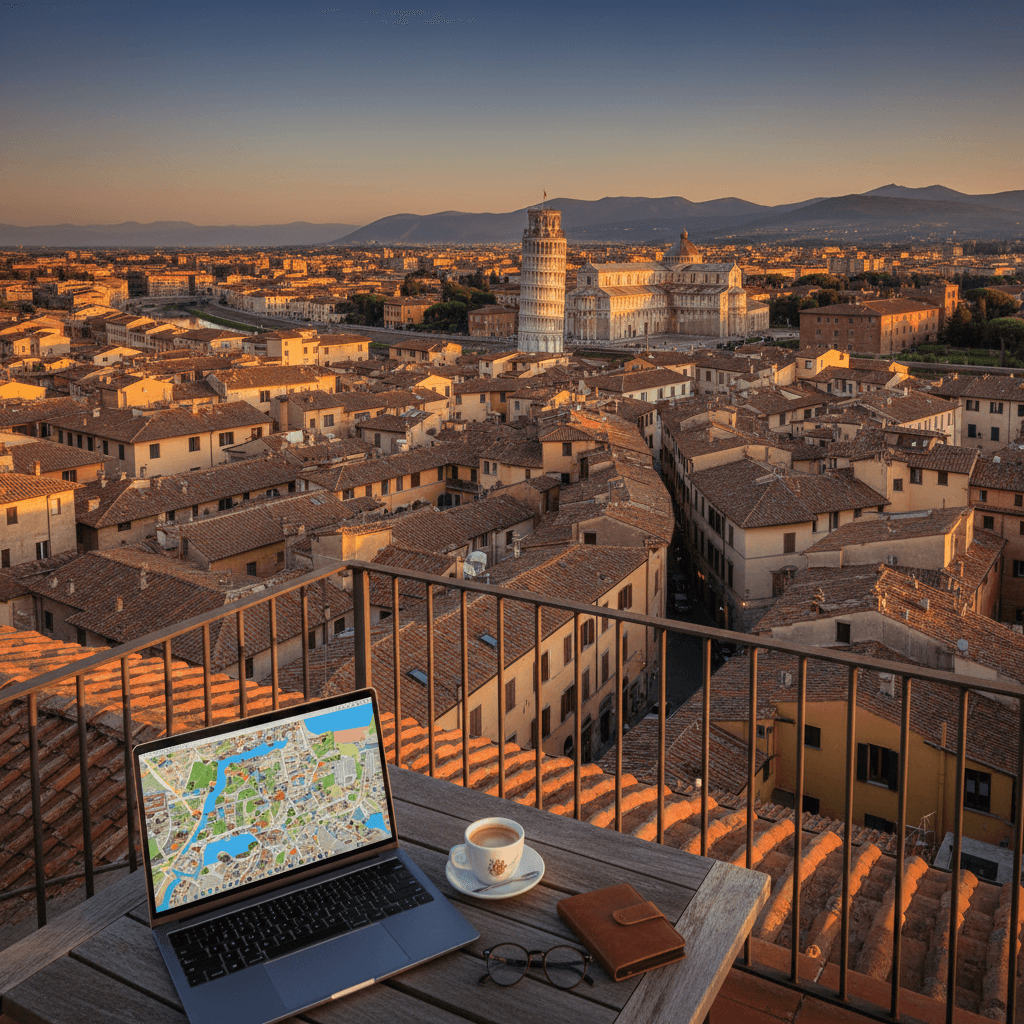
Pisa feels smaller than the postcards suggest. The Leaning Tower pulls in the day-trippers, sure, but once you get a few blocks away, the city settles into a slower rhythm, with bike bells, espresso machines hissing and students spilling out of bars near the university. It’s calm, walkable and a bit sleepy, which, honestly, is why remote workers keep coming back.
That said, summer around Piazza dei Miracoli can be a mess. Tour buses unload, selfie sticks go up and the whole area starts to feel like a theme park with church bells, so if you hate crowds, stay nearby for the convenience but don’t expect peace. The upside is that Pisa’s cost of living stays saner than Florence and the sea, Tuscany and Lucca are all close enough for easy escapes.
Typical monthly budget: €1,500 to €2,500 for one person, depending on how central you live and how often you eat out.
- Budget: around €1,500, shared flat, panini lunches, simple nights out.
- Mid-range: about €2,000, one-bedroom outside the center, decent meals, a few coffees and beers.
- Comfortable: €2,500+, central studio, better restaurants, more room to breathe.
- Rent: roughly €676 to €909 for a studio or 1BR in the center, closer to €553 outside it.
- Food: coffee about €1.50, beer around €5, street food €5 to €10, mid-range meals €15 to €25.
The vibe changes by neighborhood. City Center, especially near the tower, is best for short stays and people who want everything on foot, but it’s noisier and pricier. Porta a Mare and San Martino feel more lived-in, with better cafes and a little less tourist fatigue, while Cisanello is cheaper and quieter, though you’ll be relying on buses or a bike.
The coworking scene, turns out, is solid for a city this size. Talent Garden Pisa is the name most nomads mention, with hot desks around €300 a month and Dao Campus is another option if you want a different crowd. Internet is decent, often 16 to 101 Mbps and cafes usually don’t blink if you open a laptop after one cappuccino.
Pisa isn’t flashy. It’s practical, slightly dusty and a little stubborn, with wet winter streets, hot stone in July and just enough student energy to keep it from feeling dead, which is exactly why it works for focused remote work. If you want nonstop nightlife, skip it, but if you want a place where you can work, walk, eat well and get out of town fast, Pisa makes a lot of sense.
Pisa isn't cheap, but it isn't Florence either. A single nomad usually lands somewhere around €1,500 to €2,500 a month, depending on whether you're okay with a shared flat, panini lunches and the occasional beer under the porticoes. The center gets noisy fast, with tour groups clattering past the tower and scooters buzzing by, so most people who stay a while start looking a few streets out. Honestly, that saves money and sanity.
Here's the rough math that people actually use:
- Budget: about €1,500, with shared housing, cheap eats and a pretty lifestyle
- Mid-range: around €2,000, with a 1-bedroom outside the center and regular restaurant meals
- Comfortable: €2,500 plus, with a central studio, nicer dinners and less price checking
Rent is the biggest swing and it changes fast once you cross into the historic center. A studio or one-bedroom near Piazza dei Miracoli can run €676 to €909, while places outside the center can drop to about €553, which, surprisingly, is where a lot of long-term nomads end up. Cisanello is cheaper and calmer, though you'll deal with buses or a bike and fewer places to grab an aperitivo at 7 p.m.
Daily spending
- Coffee: about €1.50, usually at the bar standing up
- Beer: around €5, sometimes more in tourist-heavy spots
- Street food: €5 to €10 for a panino or quick bite
- Mid-range meal: €15 to €25 per person
- Upscale dinner: €40 plus for three courses
Food can be very reasonable if you eat like locals do, which means panini, simple pasta and a quick espresso instead of lingering in overpriced places near the tower. The smells of fried dough, espresso and exhaust mix together around the center and the crowds can feel relentless in summer, so skip the obvious tourist traps and eat a few streets away. Transportation's manageable too, with a monthly pass around €70, buses at €1.70 for 90 minutes and taxis averaging about €8 per ride.
Work and connectivity
- Internet: reliable enough for remote work, with cafe WiFi and decent home connections
- Mobile data: SIMs from TIM, Iliad or Vodafone are easy to buy locally
The coworking scene is one of Pisa's better surprises for those who don't want to work alone all month. For a city this small, the costs are fair, the walkability helps and the humidity won't exactly win you over in July, but if you pick the right neighborhood, Pisa can feel pretty livable without draining your account.
Pisa isn’t a giant city, so your neighborhood choice changes the vibe fast. Stay near the center if you want to walk everywhere and hear student chatter spilling out of bars or go quieter and save money if you’re fine biking in, which, surprisingly, works well here.
Solo travelers
- Best area: City Center, especially around Piazza dei Miracoli
- Rent: About €700+ for central places
- Watch out for: Tour groups, noise and the tower area turning into a daytime zoo in peak season
Pick the center if you’re in Pisa briefly and want cafes, pastries and the whole postcard version of the city. It’s walkable, easy and frankly a little overrun near the tower, so skip the souvenir drag and head to side streets once the crowds start clumping under the heat.
Nomads
- Best area: Porta a Mare or San Martino
- Rent: Usually less than the center, with decent one-bed options
- Good for: Cafes, coworking, quieter evenings, easier day-to-day routines
Nomads usually do better in San Martino or Porta a Mare, because you get a calmer base without feeling stuck in a sleepy suburb and you can still reach Talent Garden Pisa, Dao Campus or the station without drama. The streets smell like espresso and exhaust in the morning, scooters buzz past and the city stays lively without the tourist crush.
Families
- Best area: Outside Center, especially Cisanello
- Rent: Often €500 to €600
- Trade-off: Less charm, more buses and bikes, fewer late-night options
Families tend to prefer Cisanello or other outside-center spots because the apartments are cheaper and the streets are calmer, honestly, even if the area feels more residential than pretty. You’ll need buses or a bike more often, but you’ll also avoid the constant tower traffic, honking coaches and the summer noise that bounces off the stone all afternoon.
Expats
- Best area: San Martino, Porta a Mare and select outside-center streets
- Rent: Central studios run higher, outside the center is easier on the wallet
- Good fit: Longer stays, local routines, easy access to shops and transport
Expats usually want a place that feels lived-in, not staged for tourists and these neighborhoods do that better than the tower zone. You’ll find better grocery runs, less noise at night and a more normal rhythm, plus buses, bikes and the occasional taxi are easy enough when the humidity’s heavy and you don’t feel like walking.
Pisa’s internet is good enough for real work and sometimes better than people expect. Speeds average around 16-100 Mbps in cafes and coworking, cafés often have free WiFi and the university crowd keeps the city feeling a little plugged in, even when the streets around the tower get packed and loud.
Not blazing fast. But it’s stable. For video calls, uploads and everyday work, most nomads get by fine, though the center can feel a bit chaotic when tour groups are shuffling past the Duomo and scooters are buzzing by with that constant Italian hum.
The coworking scene, turns out, is small but useful. Talent Garden Pisa is the name people mention most, with hot desks around €300 a month, better-priced fixed desks and a community calendar that actually gives you a reason to leave the apartment. Dao Campus is the main alternative and pricing sits in the same ballpark, so don’t expect a bargain hunt.
- Talent Garden Pisa: Best pick for most remote workers, especially if you want events and a built-in crowd.
- Dao Campus: Good backup if Talent Garden feels too polished or full.
- Cafés: Fine for a few hours, free WiFi is common, but don’t hog a tiny table all afternoon unless you’re ordering coffee and panini.
SIMs are easy. Buy one at Pisa Airport or in town. TIM Tourist runs about €30 for 200GB plus unlimited calls, Iliad sits around €10 to €22 for 150GB and Vodafone is usually about €17 for 200GB, which is plenty unless you’re uploading huge files every day.
Where you work matters more than people think. City Center is walkable and convenient, but it gets noisy, touristy and frankly a bit annoying in peak season, while Porta a Mare and San Martino are calmer, with better day-to-day coffee stops and less of that camera-click, suitcase-dragging din.
Best Areas for Remote Work
- City Center: Best if you want cafes, students and everything on foot, though rent is higher and the tourist crush can be miserable.
- Porta a Mare / San Martino: Quieter, modern-feeling, decent for longer stays and usually a smarter base for focused work.
- Outside Center, like Cisanello: Cheaper, more residential and a solid choice if you care more about sleep than postcard views.
For daily rhythm, Pisa works best when you split your day, work early, take a proper lunch, then wander back out once the heat drops and the streets smell like espresso, exhaust and bread from the bakeries. Summer gets sticky and brutal, so if you can, come in May, June or September, when the light’s softer and the air doesn’t cling to your skin.
Pisa feels calm on the surface, then summer hits and the crowds around the Leaning Tower turn the center into a slow-moving scrum of selfie sticks, scooter horns and tired voices. Still, it’s a pretty safe city and most nomads move around without much drama if they keep their wits about them.
Pickpocketing is the main annoyance, especially near Piazza dei Miracoli at night and anywhere tourists cluster. Don’t leave a phone half out of a back pocket, don’t wave your wallet around after a late panino and keep your bag zipped on buses, because that’s where the easy theft happens, not in some darkly cinematic corner.
Honestly, the city center is fine on foot, but it gets quieter fast once you leave the student zones. The streets can smell like exhaust, espresso and hot stone after lunch and the vibe is more sleepy than threatening, though you’ll still want common sense after midnight.
Where to stay
- City Center: Best for short stays and walkability, but it’s noisier, pricier and crowded with tourists near the tower.
- Porta a Mare / San Martino: Quieter, better for longer stays, with easier access to cafes and coworking without the tourist crush.
- Cisanello and outside center: Cheaper and calmer, though you’ll be relying on buses, bikes or taxis more often.
Healthcare is solid. The main hospital, Azienda Ospedaliero-Universitaria Pisana, handles emergencies 24/7 and pharmacies are everywhere, often with staff who can point you in the right direction even if their English is limited. For urgent issues, call 112 for general emergencies, 118 for medical help and 113 for police, which, surprisingly, some operators do manage in English.
If you need care, go early and bring ID, insurance details and any prescriptions you’ve got. The bureaucracy can be maddening, frankly, but for basic treatment, stitches or a bad fever, Pisa’s system is decent and usually faster than people expect.
Keep a few basics on you: your passport copy, European Health Insurance Card if you have one, travel insurance and the number of your clinic or insurer. For small things, pharmacies can save your day and for bigger problems, the hospital is the place to go, not a random walk-in office near the station.
Pisa is easy to live in if you keep your day centered around the middle of town. The historic core is compact, the sidewalks are decent and you can get across most of it on foot, though the summer crowds near the tower can make the streets feel stuffed and sticky, with camera shutters clicking and tour groups spilling into every corner.
Honestly, you won’t need a car unless you’re living outside the center or planning regular beach runs. Buses are cheap at about €1.70 for 90 minutes and the monthly pass runs around €40 if you use the app, which, surprisingly, is the better move than buying tickets one by one. Taxis are fine for short hops, usually around €8 and Uber exists too, but don’t expect big-city convenience.
Best Areas to Stay
- City Center, near Piazza dei Miracoli: Best for short stays and people who want to walk everywhere, but it gets noisy, touristy and expensive, with rents often starting around €700.
- Porta a Mare and San Martino: A better pick for most nomads, with quieter streets, decent cafes and easier access to coworking, though you’ll be a bit farther from the postcard stuff.
- Outside Center, like Cisanello: Cheaper and calmer, with rents around €500 to €600, but you’ll rely on buses or a bike more often, so don’t choose it if you hate commuting.
Walking is the default and that’s the nicest part of living here. The narrow streets, the smell of espresso drifting out of bars and the occasional clang of a scooter passing a stone wall all make the city feel manageable, even lazy in a good way.
If you bike, you’ll be happier, though bike lanes can feel patchy and drivers aren’t always patient. Bikes and scooters through app services work well enough for quick errands and PisaMover is the cleanest option for the airport, getting you to the station in about five minutes for roughly €5 to €10.
What Nomads Actually Use
- Airport shuttle: PisaMover is fast and simple, especially if you’re arriving with luggage.
- Buses: Good for Cisanello, the station and lazy days when you don’t want to walk.
- Bikes and scooters: Handy for short trips, but keep an eye on traffic and potholes.
My take, frankly, is this, stay central only if you love being close to the action and don’t mind crowds, otherwise pick San Martino or Porta a Mare and save your money. The city isn’t made for frantic movement and that’s the point, you hear church bells, food delivery scooters buzzing by and the city settles into a slower rhythm that works pretty well for remote work.
Pisa’s everyday language is Italian and if you only know a handful of phrases, you’ll feel that pretty quickly outside the tower area. English is decent around the university, in cafes and with younger locals, but in ordinary shops and on buses it drops off fast, so a little Italian goes a long way, honestly.
Start with the basics: “Parla inglese?”, “Grazie” and “Per favore”. People appreciate the effort and you’ll get better service or at least a warmer reply, which matters when you’re trying to sort a SIM card, ask for directions or order lunch without pointing at a menu like a tired tourist.
Don’t expect everyone to switch languages for you. That’s the real pace here. In the center, especially near Piazza dei Miracoli and the university streets, you’ll hear English mixed in with student chatter, scooter engines and the clatter of cups on saucers, but in neighborhoods like Cisanello or quieter residential blocks, it’s Italian first and then maybe a smile and some hand gestures.
How people actually communicate
- Tourist zone: English is common, but service can feel rushed and a bit transactional.
- Student areas: Better odds with English, especially in cafes, coworking spaces and bars near campus.
- Outside the center: Basic Italian helps a lot and honestly, it saves time and awkwardness.
Google Translate is the app most nomads end up using, not because Italians are difficult, but because everyday conversations can turn practical fast, from apartment issues to pharmacy questions to bus delays. Weirdly, even a badly pronounced “buongiorno” often does more for you than flawless English spoken at full speed.
The vibe is friendly but not overly chatty. Ask directly, keep it polite and don’t be surprised if someone answers while half turned toward the espresso machine, the phone and a queue of people behind you, because Pisa runs on small interruptions and a lot of coffee.
Useful local habits
- Greet first: Say “buongiorno” in the morning, then “buonasera” later.
- Keep it simple: Short sentences work better than long explanations.
- Use gestures: They’re normal here and they’ll save you when your vocabulary runs out.
If you’re staying a while, learn enough Italian to handle transport, food and housing basics. It makes daily life smoother and it keeps you from sounding like the noisy tower crowds that everyone else is trying to avoid.
Pisa’s weather is gentle for most of the year, then turns annoyingly sticky in summer and properly soggy in winter. Spring and early autumn are the sweet spots, with daytime temperatures usually around 18 to 27°C, lighter rain and streets that don’t smell like hot asphalt and sunscreen. July and August, honestly, can feel brutal.
May and June are my pick, especially if you want to work remotely and still enjoy late dinners near Piazza delle Vettovaglie or a quiet walk by the Arno, when the air feels warm but not heavy and the city still sounds like itself, not a tourist machine. September is almost as good, with fewer crowds, softer heat and that slightly sleepy post-summer mood that fits Pisa well.
Best months: May, June, September
Also good: April and October, if you don’t mind some rain
Season-by-Season
- Spring: Probably the best balance, mild weather, manageable crowds and good café days for laptop work.
- Summer: Hot, bright and packed around the Leaning Tower, the heat clings to you and the center can feel like a theme park by midday.
- Autumn: Comfortable and quieter, though rain starts creeping in, so keep a light jacket handy.
- Winter: Cool, damp and gray, with around 9 to 13°C, plus enough drizzle to make the pavements shine and your shoes stay wet.
If you’re trying to work and live like a normal person, skip the peak-summer crush. The tower area gets crowded, noisy and weirdly expensive for what it's, while the rest of the city stays calmer and more livable, especially around Porta a Mare or San Martino. Rainy months run roughly from October to March, so pack for damp mornings and cold tile floors.
For day trips, late spring and early autumn also work best, because Lucca, Florence and the coast are easier when you’re not sweating through your shirt on a train platform. Tickets, buses and bikes are all more pleasant when the weather isn’t fighting you and frankly, nobody wants to lug a laptop in August humidity.
Pack: light layers, a compact umbrella and shoes that dry fast
Book early: if you’re coming in July or August, because prices and crowds jump fast
Pisa’s center is easy to live in and honestly that’s half the appeal. You can walk to cafes, the station and the river in minutes, then hear student chatter, scooter engines and the occasional church bell instead of the usual big-city racket. Summer is the tradeoff, because the tower area turns into a tourist funnel and it gets hot, noisy and a bit annoying.
Budget €1,500 to €2,500 a month if you want a realistic range. Shared housing and cheap panini can keep you near the low end, while a central studio, regular restaurant meals and coworking push you up fast and yes, rent stings more if you want to sit right by Piazza dei Miracoli.
Where to stay
- City Center: Best for short stays and solo nomads, with everything walkable, but tourist crowds and noise get old quickly.
- Porta a Mare / San Martino: Quieter, more local and close to decent cafes, which, surprisingly, makes remote work feel easier.
- Cisanello and other outer areas: Cheaper and calmer, though you’ll need buses or a bike and nightlife is thin.
Internet is solid enough for remote work, with speeds that usually land somewhere between decent and very usable and cafes often have free WiFi. Talent Garden Pisa is the best-known coworking space, Dao Campus is the other name people mention and hot desks run around €300 a month, so this isn’t the place for bargain hunters.
Getting connected is painless. Buy a SIM at Pisa Airport or in town, TIM Tourist is about €30 for a chunky data bundle, Iliad is cheaper and Vodafone sits in the middle, so you’ve got options if you hate being offline the second you land.
Daily basics
- Transit: Buses are cheap, a monthly pass is around €40 and the center is very walkable.
- Airport: PisaMover gets you to the station fast, though the fare feels a little cheeky for a five minute ride.
- Money: Use Wise or Revolut if your bank charges stupid fees, ATMs are common.
Food is straightforward and good if you keep it local, with ribollita, pappardelle al cinghiale and €5 to €10 panini filling the gap between coffee runs and real dinners. A cappuccino usually costs about €1.50, beer about €5 and no, you don’t need to tip like you would in the US, just be polite and leave the table tidy.
Safety is pretty good, though pickpockets still work the tower crowds at night, so keep your bag zipped and your phone out of sight. For healthcare, Ospedale di Pisa handles emergencies well, pharmacies are everywhere and 112 is the number to remember if something goes sideways. Dress modestly in churches, say buongiorno when you walk in and don’t show up expecting the city to run on your schedule, because Italian bureaucracy, frankly, has its own ideas.
Frequently asked questions
How much does it cost to live in Pisa as a digital nomad?
How much is rent in Pisa for a studio or one-bedroom?
Is the internet good enough for remote work in Pisa?
Where do digital nomads work from in Pisa?
Which Pisa neighborhoods are best for digital nomads?
Is Pisa safe for remote workers and long stays?
What is healthcare like in Pisa?
Need visa and immigration info for Italy?
🇮🇹 View Italy Country GuideEasy Landing
Settle in, no stress