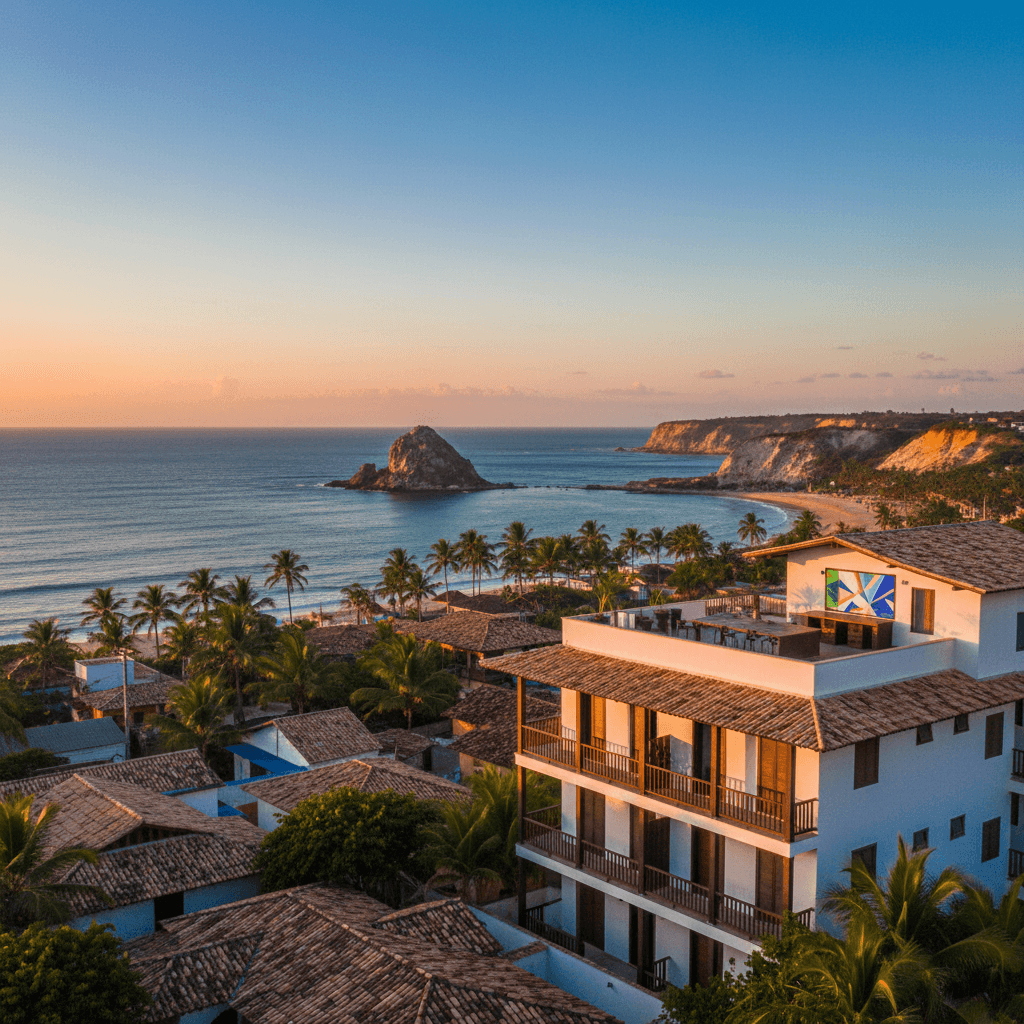
Pipa (Tibau do Sul)
🇧🇷 Brazil
The Vibe: Where Jungle Cliffs Meet Digital Freedom
Pipa isn't your standard Brazilian beach town. It feels like a bohemian secret that the rest of the world is only just starting to whisper about. While places like Florianópolis offer a more polished, urban nomad experience, Pipa is raw and magnetic. You're working from the top of massive reddish cliffs at Chapadão, watching dolphins break the surface of the Atlantic between your afternoon Zoom calls. It was South America's first official digital nomad village, launched as a pilot program through NomadX from November 2022 to April 2023, and has continued operating since, and that intentionality shows in the way the community has organized itself without losing its soul.
The atmosphere is a blend of barefoot luxury and rugged nature. You'll see surfers carrying boards down to Love Beach past tech founders and creative expats from Argentina and Europe. Most nomads describe the feeling here as "productive peace." It is a place where the morning commute is a walk through reforested jungle and the after-work happy hour usually involves a sunset at the Mirante de Pipa Sunset Bar. It doesn't have the frantic energy of Rio; instead, it offers a slow-burn rhythm that actually helps you get more done.
Living Costs & Typical Budgets
While Pipa is one of the more sought-after spots in Rio Grande do Norte, it remains remarkably affordable for those earning in Dollars or Euros. You can live well here without the price tag of a major global hub. Expats generally break down monthly costs into three tiers:
- The Budget Nomad: Expect to spend R$3,000 to R$5,000. This covers a simple guesthouse or studio, eating at local stalls or making use of a shared kitchen, and getting around primarily on foot.
- The Mid-Range Lifestyle: Around R$6,000 to R$9,000. This gets you a comfortable 1-bedroom apartment, frequent meals at spots like Casa do Abacate, and a dedicated desk at a coworking space.
- The High-End Experience: R$10,000+. This allows for premium stays at places like Nomad's Ville, upscale dining at the Pipa Beach Club, and weekend jeep tours to the southern coast.
The Neighborhood Breakdown
Pipa is compact and highly walkable, which is a major draw for the car-free nomad. However, where you plant your laptop matters for your daily flow.
Pipa Centro
- Best For: First-timers and social butterflies who want to be steps from the action.
- The Draw: You are right in the heart of the artisan shops and the colorful Rua do Céu. Everything is walkable, from the beach to the nightlife.
- The Trade-off: It can get noisy on weekends when the tourist crowds arrive, and the nightlife is right on your doorstep.
Mirante de Pipa
- Best For: Focused remote workers and families.
- The Draw: This is the nomad hub. It offers high-speed WiFi, jungle views, and a dedicated community at Nomad's Ville. It is quieter and more intentional than the center.
- The Trade-off: You're a bit further from the shoreline, though the views of the ocean from the cliffs are arguably better.
Tibau do Sul & Outskirts
- Best For: Surfers and long-term expats seeking total serenity.
- The Draw: Areas like Sibaúma or the outskirts near Praia das Minas offer untouched beauty and world-class surf breaks.
- The Trade-off: You'll likely need a scooter or a car, and you're further from the nomad meetups and high-speed coworking hubs.
Connectivity & Infrastructure
Don't let the "village" label fool you; the internet is surprisingly robust. 5G coverage is strong throughout the town center. Most nomads find that even the local guesthouses, like Villa Mundu Peipa, provide speeds reliable enough for video calls. For a more professional setup, Mirante de Pipa Coworking offers day passes for R$50 to R$100, featuring ergonomic setups and some of the best sunset views in the country. If you prefer the cafe culture, Hygge Cafe is a local favorite for laptop-friendly tables and great coffee.
Safety is another highlight. Many travelers coming from larger Brazilian cities find Pipa's tranquility a breath of fresh air. It is widely considered safe to walk at night in the central areas, and the tight-knit community means people tend to look out for one another. It's the kind of place where you'll recognize half the people at the grocery store after just a week, making it one of the easiest places in South America to integrate as a solo traveler.
The Nomad Budget Breakdown
Pipa strikes a sweet spot between the high prices of Rio and the rustic simplicity of northern fishing villages. While it's one of Brazil's premier beach destinations, your money goes surprisingly far if you avoid the obvious tourist traps on the main drag. Most nomads find they can live a high-quality life here for significantly less than in Europe or North America.
For a solo traveler, a budget-tier lifestyle sits around R$3,000 to R$5,000 per month. This usually involves staying in a basic guesthouse or a shared apartment, eating at local "prato feito" (fixed price) spots, and sticking to the free beaches. If you want a more mid-range experience with a private studio and frequent dinners out, plan for R$6,000 to R$9,000. Those looking for high-end villas at Nomad's Ville and upscale dining should budget R$10,000 or more.
Accommodation and Rent
Housing will be your biggest expense, and prices fluctuate based on your proximity to the cliffs. Short term rentals are plentiful, but booking a full month usually triggers a significant discount on platforms like Airbnb or through local nomad networks.
- Digital Nomad Village/Studios: Expect to pay between R$2,500 and R$5,000 per month for a modern 1BR or studio. Spots like Villa Mundu Peipa are popular for their reliable infrastructure.
- Long-term Guesthouses: Many smaller pousadas offer monthly rates for remote workers that include breakfast and basic cleaning, often starting around R$3,000.
- High-end Villas: Luxury options in areas like Mirante de Pipa can easily exceed R$7,000, but they often come with the best views and dedicated workspaces.
Dining and Groceries
Eating out is a central part of the Pipa lifestyle. You can grab a quick street snack for the price of a coffee, or spend a few hundred Reais on a gourmet seafood spread by the water.
- Street Food and Local Stalls: Quick bites like tapiocas or savory pastries usually cost between R$10 and R$20.
- Mid-range Restaurants: Places like Casa do Abacate or Pipa Beach Club offer solid meals for R$30 to R$60. Expats recommend looking for "Executive Lunch" deals during the week.
- Upscale Dining: Dinner at a trendy spot in Pipa Centro or a beachfront club will run R$80 to R$150 per person once you add a few drinks.
- Groceries: Cooking at home is affordable if you stick to local produce. A weekly grocery run for basics usually stays under R$250.
Coworking and Connectivity
Since Pipa is a dedicated nomad hub, you aren't just paying for a desk; you're paying for a community. Many nomads skip the dedicated coworking office and work from laptop-friendly cafes like Hygge Cafe, where the cost is just a few cups of coffee.
- Coworking Day Pass: A desk at a professional space like Mirante de Pipa Coworking typically costs R$50 to R$100 per day.
- Monthly Memberships: If you're staying a while, monthly passes are much more economical, often averaging R$600 to R$900.
- Mobile Data: A local SIM card with a generous 5G data plan from providers like Vivo or TIM is a steal at roughly R$50 to R$100 per month.
Transport and Utilities
The beauty of Pipa is its walkability. If you live in Centro, your transport cost is effectively zero. Most people only spend money on transport when arriving from the airport or taking a weekend trip to nearby Sibaúma.
- Natal to Pipa Bus: The 2-hour journey from the capital costs about R$50.
- Local Tours: Renting a quad bike or taking a Jeep tour to the Chapadão cliffs is affordable, with group rates often starting around R$100 to R$200.
- Utilities: If your rent doesn't include electricity, be careful with the air conditioning. Electricity in Brazil is pricey, and heavy AC use can add R$300 to R$500 to your monthly bill.
For Digital Nomads: Pipa Centro
If you want to be in the heart of the action, Pipa Centro is your base. This is where the first digital nomad village in Brazil took root, specifically around the colorful, pedestrian friendly streets like Rua do Céu. It has a distinct Mediterranean feel, especially around Vila Mangueira, which looks like a slice of Greece dropped into the tropics. You'll find most of the town's artisan shops, ceramic galleries, and the best laptop friendly cafes here.
The main draw for remote workers is the sheer walkability. You can finish a meeting and be on the sand at Praia de Pipa in five minutes. Most nomads gravitate toward Hygge Cafe for a morning work session or Villa Mundu Peipa for reliable guesthouse stays. While it gets lively at night with bars and live music, it’s the best place to find community. Expect to pay between R$2,500 and R$5,000 for a decent studio or one bedroom apartment in this area.
For Long Term Expats: Mirante de Pipa
Expats looking for a more permanent, tranquil lifestyle usually head slightly uphill to the Mirante area. It’s famous for its jungle views and being home to Nomad's Ville, a dedicated hub that offers high speed WiFi and structured workspaces. It feels more like a retreat than a tourist strip, surrounded by reforested greenery where you'll likely see marmosets and exotic birds from your balcony.
The vibe here is quiet and professional, making it the preferred choice for those staying six months or longer. You’re still within walking distance to the center, but you escape the noise of the weekend crowds. The Mirante de Pipa Sunset Bar is the local "office watercooler" where everyone gathers for a drink at the end of the day. Rentals here can be slightly pricier due to the views and modern infrastructure, often starting around R$4,000 per month for nomad focused housing.
For Families and Nature Lovers: Sibaúma and Chapadão Outskirts
Families or those who want to avoid the "backpackery" side of town should look toward the outskirts near Chapadão or the village of Sibaúma. These areas offer dramatic red cliffs and much more space. It’s significantly more serene than the center, though you'll likely want a car or a regular quad rental to get groceries and reach the main coworking spots. Sibaúma feels like a traditional fishing village and offers a much slower pace of life.
The beaches here, like Praia das Minas, are wider and less crowded, perfect for kids to run around or for long morning walks without the beach club music. While internet in private villas is generally good, you’ll be relying on 5G mobile hotspots more often than public WiFi. It's the most "authentic" version of the region, where the cost of living can be lower if you shop at local markets rather than tourist facing boutiques.
For Surfers and Solo Travelers: Tibau do Sul and Praia do Madeiro
Solo travelers and surf enthusiasts often split their time between Pipa and the main town of Tibau do Sul. Positioned between the lagoon and the ocean, this area provides access to some of the best breaks in the region, particularly Madeiro Beach. It’s a bit more spread out, so it’s common for travelers to use the local buses that run between the two towns for about R$50 from the Natal direction.
This area is ideal if you want to be close to the Bossa & Jazz festival venues or if you prefer the calmer waters of the lagoon for sunset. While it’s less of a "nomad hub" than Centro, the social scene is built around surf schools and beach clubs like Pipa Beach Club. If you’re looking for a social hostel or a shared house vibe to meet people quickly, the stretch of road connecting Pipa to Tibau is your best bet for finding mid range guesthouses and surf camps.
Connectivity and Speeds
Pipa might look like a sleepy fishing village, but it's surprisingly wired. As Brazil's first official digital nomad village, the infrastructure has caught up to the hype. You'll find strong 5G coverage throughout the town center, and most guesthouses have upgraded to high-speed fiber to accommodate the influx of remote workers from Europe and North America.
Expats generally find that residential WiFi is stable enough for video calls and heavy uploads. If you're staying at a spot like Villa Mundu Peipa, the connection is famously reliable. Most nomads pick up a local SIM card from providers like Vivo or TIM upon arrival to use as a hotspot backup, though you'll rarely need it in the main village area.
Top Coworking Spaces
The coworking scene here is less about clinical office blocks and more about "work with a view." The community tends to congregate in spots that balance ergonomics with a tropical breeze.
- Nomad's Ville: This is a central hub for the remote work community, offering dedicated coworking facilities with high-speed internet and jungle views. It is a primary spot where the community organizes meetups, making it the best place to network if you're looking for collab partners or just someone to grab a R$15 caipirinha with after work.
- Pipa Beach Club: While technically a restaurant, it's a popular spot for nomads who want to work with their toes near the sand. It's better for light admin tasks than deep work sessions, but the WiFi holds up surprisingly well for a beachfront venue.
Laptop-Friendly Cafes
If you prefer the hum of a coffee shop over a formal office, Pipa's cafe culture is welcoming to the laptop crowd. Most owners are happy for you to stay a few hours as long as you're ordering.
- Hygge Cafe: This is the local favorite for focused sessions. It's quiet, the coffee is excellent, and the staff won't hover if they see you're in the zone.
- Rua do Céu Cafes: Several small spots along this colorful street offer decent WiFi. It’s a great area for morning work before the tourist crowds arrive in the late afternoon.
- Casa do Abacate: Known for healthy eats, this spot attracts a health-conscious remote work crowd. It's a solid choice for a "brunch and browse" session.
Practical Tips for Remote Work
The biggest challenge isn't the internet; it's the temptation of the outdoors. Many nomads follow a "split shift" schedule. They'll put in four hours in the morning, take a long surf break at Praia do Madeiro or watch the dolphins at Baia dos Golfinhos, and then finish their tasks in the early evening.
Power outages can happen during heavy tropical storms, particularly between April and July. It’s a good idea to keep your devices charged and have a data plan on your phone. If you're planning a long-term stay, look for rentals through platforms like NomadX, which vets properties specifically for WiFi quality. You can expect to pay anywhere from R$2,500 to R$5,000 per month for a studio with a workspace that actually works.
Most digital nomads find the social aspect of working here to be the biggest draw. Between the Mirante de Pipa Sunset Bar and the various meetups in the center, you’re never more than a few minutes away from someone else who is also balancing Slack notifications with beach life.
Stay Sharp and Secure
Pipa is surprisingly tranquil compared to Brazil's larger metropolitan hubs. Most digital nomads arriving from Europe or North America find the atmosphere remarkably safe, often describing a sense of relief at the lack of urban tension. You'll see people walking home from Rua do Céu or Vila Mangueira late at night without the constant over-the-shoulder glance common in cities like Rio or São Paulo.
That said, it isn't a total bubble. The influx of international travelers has kept the town on its toes. While Pipa Centro is well lit and active until the early hours, use your head if you're exploring the more remote stretches of Praia das Minas or the outskirts near Sibaúma after dark. If you're heading to a late-night party at a beach club, it's smarter to stick with a group rather than wandering the cliffside paths alone. Travelers generally recommend keeping high-end electronics tucked away when you're just lounging on the sand, though working from a beach club like Pipa Beach Club is usually perfectly fine.
- Night Safety: Stick to the main paved streets in the center. Avoid the unlit beach trails under the cliffs once the sun goes down.
- Personal Belongings: Don't leave your laptop or phone unattended on your beach towel while you go for a swim. Most nomads use dry bags or take turns watching gear.
- Emergency Contacts: Dial 190 for the police and 192 for an ambulance (SAMU).
Healthcare and Medical Services
For minor ailments, you'll find several well-stocked pharmacies along the main street in the center. Pharmacists here are used to helping tourists with everything from sunstroke to tropical bug bites. If you need a doctor for something non-urgent, there are small clinics in town, but for anything major, you'll likely be heading out of the village.
The nearest basic hospital facilities are in Tibau do Sul, about a 15-minute drive away. For specialized care, surgeries, or high-tech diagnostics, Natal is your best bet. It is roughly a 90-minute drive, so having comprehensive travel insurance that covers private hospital stays is a must. Private hospitals in Natal are excellent and often much faster than public options.
Practical Health Tips for Nomads
The tropical sun here is no joke. Between the reflection off the white cliffs at Chapadão and the constant sea breeze that masks the heat, it's easy to end up with a nasty burn by lunchtime. Hydration is also a full-time job; stick to bottled or filtered water, which is cheap and available at every "mercado" in town.
- Mosquitoes: They can be active at dusk, especially in jungle-adjacent spots like Mirante de Pipa. Use repellent to avoid the risk of Dengue, which occasionally pops up in the region.
- Insurance: Most expats and long-term nomads use providers like SafetyWing or Insured Nomads, as they understand the "village" lifestyle where the nearest trauma center isn't around the corner.
- Pharmacy Hours: Most shops in the center stay open until 9:00 PM or 10:00 PM, catering to the late-night crowd.
Overall, the biggest "danger" in Pipa is usually a stubbed toe on a cobblestone street or a hangover from one too many caipirinhas at a sunset bar. As long as you follow basic urban common sense, you'll find it one of the most relaxing places to live and work in South America.
The Walkable Life
In Pipa, your primary mode of transport is your own two feet. Most nomads find they can go weeks without ever stepping into a motorized vehicle. The town center and the main beaches like Praia do Porto and Praia do Amor are all within a 10 to 15 minute walk from most guesthouses. The streets are narrow and paved with charming but uneven cobblestones, so leave the dress shoes in your suitcase; a sturdy pair of sandals or sneakers will be your best friend here.
The layout is intuitive. The main street, Avenida Baía dos Golfinhos, acts as the town's spine. It's where you'll find the bulk of the cafes, pharmacies, and shops. If you're staying further out near Mirante de Pipa or the cliffs of Chapadão, the walk into town is scenic but involves some elevation. It's great for getting your steps in, but you might want a different plan if you're carrying heavy groceries.
Public Transit and Regional Connections
For trips beyond the central village, the local bus system is surprisingly efficient and easy on the wallet. The Viação Riograndense buses are the lifeline for those commuting from Natal or heading to the quieter corners of Tibau do Sul.
- Natal to Pipa: The bus departs from the Natal Rodoviária and takes about 2 hours. The 2-hour journey from the capital costs about R$21-35 for regular buses and varies for alternativo vans and offers a scenic introduction to the Rio Grande do Norte coastline.
- Local Vans (Alternativos): White vans run between Pipa and Tibau do Sul (short routes, a few Reais), and also between Natal and Pipa. Just wave one down; they'll stop almost anywhere.
- Airport Transfers: Natal International Airport is about 90 minutes away. While buses are the cheapest route, most nomads arriving with luggage opt for a pre-booked transfer or a taxi, which usually runs between R$250 and R$350.
Wheels for Exploration
While you don't need a car for daily life, renting one for a weekend is the best way to see the "wild" side of the region. Local agencies along the main street offer a variety of options. Expats often recommend renting a buggy or a quad bike for a day to reach Sibaúma or the more remote dunes, as standard rental cars can struggle with the sandy backroads.
- Quad Bike Rentals: Expect to pay around R$150 to R$300 for a half-day rental, depending on the season and your haggling skills.
- Bicycles: Some guesthouses like Villa Mundu Peipa provide bikes, but keep in mind that Pipa is hilly. If you aren't used to cycling in 30 degree heat, stick to the vans.
- Ride-Hailing: Don't count on Uber here. The app is virtually non-existent in the village. If you need a lift home after a late night at Vila Mangueira, look for the local taxi stands near the main square. Prices within the village are usually fixed and reasonable.
Navigating the Tides
One "transportation" quirk unique to Pipa is the tide schedule. To get to Baía dos Golfinhos to see the dolphins, you have to walk along the beach from Praia do Centro. This route is only accessible during low tide. If you time it wrong, you'll find your path blocked by the ocean and cliffs, forcing you to wait it out or take a long detour through the upper trails. Most locals keep a tide chart bookmarked on their phones, and you should too.
The Portuguese Priority
Portuguese is the heartbeat of Tibau do Sul, and Pipa is no exception. While the town has transformed into a global hub for remote workers, you shouldn't expect a high level of English once you step away from the main laptop-friendly cafes. Most locals, from the artisans on Rua do Céu to the drivers heading toward Sibaúma, speak only Portuguese. If you're coming from a Spanish-speaking background, you'll find "Portuñol" gets you remarkably far, but for everyone else, a little effort goes a long way.
Expats living here long-term suggest that while you can survive with gestures and Google Translate, your social life will be capped if you don't pick up the basics. The good news is that the community is incredibly patient. Brazilians in Rio Grande do Norte are known for being warm and helpful; they'll usually wait for you to find the right word rather than getting frustrated.
Language in the Nomad Bubble
The "Digital Nomad Village" infrastructure has made life significantly easier for non-Portuguese speakers. At Nomad’s Ville or Mirante de Pipa, you’ll find staff and fellow residents who are fluent in English and often Spanish or French. The same applies to popular spots like Hygge Cafe or Casa do Abacate, where the menus and service cater to an international crowd. If you're sticking to the nomad circuit, you won't feel isolated.
Argentina has a massive influence on Pipa’s demographic. You'll hear Spanish almost as often as Portuguese in the bars of Pipa Centro. This bilingual atmosphere makes the town feel more European or South American than a typical Brazilian coastal village. If you speak Spanish, you’ll have a much easier time communicating with a large portion of the business owners and hospitality staff.
Practical Tools and Phrases
Don't rely on your data plan for real-time translation in the more remote areas like Praia das Minas where signals can occasionally dip. Download the Portuguese offline dictionary on Google Translate before you arrive. It’s the most used app for everything from explaining a specific haircut to negotiating a long-term rental price with a local landlord.
Most nomads recommend learning these few essentials to break the ice:
- Oi / Tudo bem?: Hi / How are you? (The standard opener for every interaction).
- Obrigado (m) / Obrigada (f): Thank you.
- Quanto custa?: How much does it cost?
- A conta, por favor: The bill, please.
- Você fala inglês?: Do you speak English?
Communication Logistics
WhatsApp is the undisputed king of communication in Brazil. You won't book a surf lesson at Madeiro Beach or reserve a table at Pipa Beach Club via a website or phone call; you'll do it through a WhatsApp message. This is actually a massive advantage for language learners, as you can use translation tools to compose your messages at your own pace.
When you arrive, grab a local SIM card from a provider like Vivo or TIM in the center of town. Having a local +55 number makes you look less like a passing tourist and more like a resident, which often helps when negotiating prices for quad bike rentals or apartment extensions. Most nomads find that 5G coverage is strong enough in the center that voice notes and video calls on WhatsApp rarely drop, even if your Portuguese is still a work in progress.
The Tropical Rhythm
Pipa is one of those rare places where the weather actually cooperates with a remote work schedule. Located in the state of Rio Grande do Norte, it sits close to the equator, which means you can ditch the heavy luggage. The temperature stays remarkably consistent, hovering between 25°C and 32°C (77°F to 90°F) throughout the year. You'll rarely need more than a light hoodie for a breezy evening at the Mirante de Pipa sunset bar.
The climate is defined by two distinct phases: the dry season and the rainy season. While it's technically "summer" year-round, the humidity and precipitation levels shift enough to change the vibe of the town and the quality of the surf.
Peak Season: September to March
If you're looking for postcard-perfect days with zero chance of a rained-out Zoom call, this is your window. The skies are consistently blue, the Atlantic breeze keeps the heat manageable, and the ocean is crystal clear for spotting dolphins at Baia dos Golfinhos. This is when the nomad community is at its most active, with meetups at Nomad's Ville and busy tables at Hygge Cafe.
- September to November: This is the "sweet spot" for many expats. The heavy rains have stopped, the landscape is still lush and green, and the massive holiday crowds of late December haven't arrived yet.
- December to February: Expect high energy and higher prices. Brazilians flock here for New Year's and Carnival. It's the best time for social butterflies, but you'll want to book your accommodation months in advance to secure a spot with reliable 5G.
- March: The transition month. It's still very warm, but you might see the occasional afternoon shower.
The Rainy Season: April to August
Rain in Pipa isn't usually a day-long gloom. It typically comes in heavy, tropical bursts followed by sunshine. However, May, June, and July are the wettest months. During this time, some of the dirt roads leading to more remote spots like Sibaúma can get muddy and a bit tricky to navigate on a scooter or quad bike.
For budget-conscious nomads, this is a strategic time to visit. Monthly rents for studios in the center can drop significantly, and you won't have to fight for a seat at the best beach clubs. Surfers often prefer this window too, as the swells become more consistent, even if the water isn't as transparent as it is in November.
Timing Your Move
Most long-term travelers suggest arriving in late August or early September. You'll beat the price hikes of the high season, lock in a good monthly rate on a guesthouse like Villa Mundu Peipa, and enjoy the best weather Pipa has to offer. If you're planning to stay through 2025 or 2026, keep in mind that the local festivals, like Bossa & Jazz, often align with the drier months, making the town feel particularly alive.
Whenever you choose to go, remember that the sun here is intense. Even on overcast days in June, the UV index is high. Most nomads find that a 7:00 AM beach walk or surf session is the best way to start the day before the heat peaks around midday, right when you'll want to be tucked away in a cool, air-conditioned workspace.
Connectivity and Tech Setup
You won't have to hunt for a signal here. Most nomads find the 5G coverage surprisingly robust throughout the town center. While your guesthouse WiFi is usually reliable for standard calls, serious remote work happens at Nomad's Ville in the Mirante de Pipa area. They offer dedicated high speed setups with jungle views that make those Monday morning meetings much more bearable.
For your phone, grab a local SIM card from Vivo or TIM as soon as you arrive. You can find these in Natal or at smaller shops in Pipa Centro. If you're using a fintech like Wise or Revolut, you'll find they work at most restaurants and the ATMs in the center, though keeping some cash on hand is smart for street food stalls and smaller artisan markets.
Navigation and Getting Around
Pipa is one of the few Brazilian beach towns where you can truly live car free. Most of your daily life happens within a 15 to 20 minute walk of the main street, Rua do Céu. The layout is compact and easy to navigate on foot, though the hills can be a workout in the midday heat.
- Arrival: Take the Viação Riograndense bus from the Natal bus station. It costs about R$21-35 and takes roughly 1.5-2 hours. It's scenic, cheap, and drops you right in the heart of town.
- Local Transit: If you want to explore further out to Sibaúma or the Chapadão cliffs, you can rent a quad bike or book a Jeep tour from the agencies lined up on the main road.
- Ride Hailing: Uber isn't a reliable mainstay here like it is in São Paulo. Stick to walking or the local "alternativo" vans that run between Pipa and Tibau do Sul.
Budgeting for the Nomad Life
Pipa is affordable, but it's easy to overspend if you eat at the beachfront "tourist traps" every night. Solo nomads typically spend between R$3,000 and R$5,000 per month for a basic lifestyle. If you want a studio with a view and regular dinners at spots like Pipa Beach Club, budget closer to R$9,000.
Cost Breakdown
- Housing: A decent 1BR or studio in Pipa Centro or near Mirante runs between R$2,500 and R$5,000 per month. Check the NomadX platform; they specialize in matching remote workers with vetted local hosts.
- Food: Street food like tapioca or acai will cost you R$10 to R$20. A mid range meal at Casa do Abacate or Hygge Cafe usually lands between R$30 and R$60.
- Coworking: Day passes at Mirante de Pipa cost around R$50 to R$100, depending on the season and the length of your stay.
Health and Safety
Expats frequently mention how safe they feel walking the streets at night. It's a tight knit community where people look out for one another. That said, the nearest major hospital is a 90 minute drive away in Natal. For minor issues, the pharmacies in the center are well stocked, but for emergencies, dial 192 for an ambulance.
Timing Your Stay
The tropical weather stays warm year round, but the September to March window is the sweet spot for dry, sunny days. If you're planning for 2025 or 2026, try to avoid April through July, as the heavy rains can turn the dirt roads into a bit of a mess and dampen the social scene. Stick to the dry season to get the most out of the beach breaks between your work blocks.
Need visa and immigration info for Brazil?
🇧🇷 View Brazil Country GuideEasy Landing
Settle in, no stress