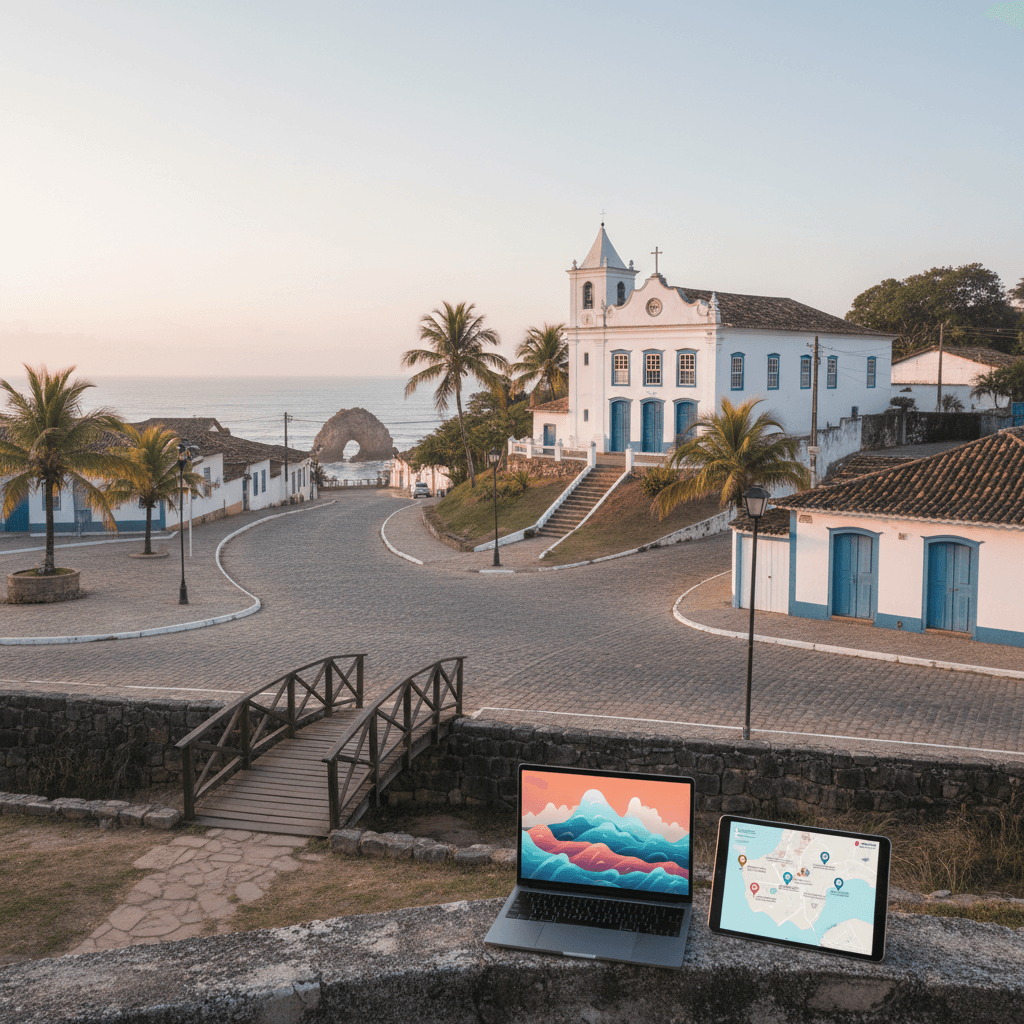
Pipa
🇧🇷 Brazil
The Brazilian Surf Town Growing Up
Pipa isn't your typical high-speed digital nomad hub, and that is exactly why people are flocking here. Once a quiet fishing village discovered by surfers in the 70s, it has evolved into a sophisticated yet rugged escape where red sandstone cliffs meet the turquoise Atlantic. It feels raw and authentic, largely because it remains a favorite for Brazilian vacationers rather than being overrun by the Western backpacker circuit. You'll share the waves with dolphins in the morning and spend your afternoons working from a deck overlooking the jungle.
The vibe is a paradox of lazy beach days and high-energy nights. During the day, the town moves at a glacial pace, dictated by the tides and the heat. By sunset, the cobblestone streets of the Centro transform. You'll find a surprising level of culinary sophistication here, with upscale seafood spots and cocktail bars that wouldn't look out of place in São Paulo or Lisbon, all while people walk around barefoot with salt in their hair.
The Nomad Experience
For remote workers, Pipa offers a specific kind of freedom. It is one of the few places in Northeast Brazil where "beach office" isn't just a marketing slogan. While the international nomad community is still small and heavily influenced by Argentinian expats, the infrastructure is catching up fast. You aren't just working from a hotel room; you're joining a movement of people trying to prove that you can run a business from a town where the main transport is your own two feet.
The biggest hurdle for most is the language barrier. English is rare once you step off the main tourist drag. If you don't speak Portuguese, you'll rely heavily on Google Translate and a lot of gesturing. However, the locals are incredibly patient, and the small-town safety means you can focus on your Portuguese lessons rather than looking over your shoulder. It is the kind of place where the barista remembers your order by day three.
Cost of Living & Neighborhoods
Pipa is affordable by international standards, though it is a premium destination within the region. You can live comfortably on a mid-range budget, but prices spike during the peak summer months of December to February.
- Centro: The heart of the action. Stay here if you want to be steps away from Majus Café-Brunch and the nightlife. It can get noisy on weekends, but the convenience is unbeatable for solo nomads.
- Mirante de Pipa: This is the "hilltop" area. It offers incredible views and a cooler breeze. It is home to Nomad’s Ville and is generally quieter, making it better for those who need deep focus.
- Pousada Morada dos Ventos: A specific hub for the Nomad Village Brazil project. It is slightly further out but offers a built-in community of remote workers and reliable setup.
Monthly Budget Estimates
- Budget (Solo): Under R$3,000. This involves staying in a simple guesthouse and eating mostly street food like R$15 tapiocas or R$20 prato feito lunches.
- Mid-Range: R$4,000 to R$6,000. This covers a nice 1BR Airbnb or a nomad-friendly pousada, regular coworking passes, and dining out at mid-tier restaurants.
- Comfortable: R$7,000+. This gets you a high-end villa with a pool, daily upscale meals, and frequent weekend trips to nearby spots like Natal.
Productivity in Paradise
The internet in Pipa has stabilized significantly. Most dedicated nomad spaces now offer high-speed fiber, though it is always wise to have a local SIM card as a backup. Claro and Vivo have the best coverage in the area. If you prefer the cafe route, Nossa Confeitaria Artesanal and Crepettit are laptop-friendly spots where the staff won't mind you lingering over a coffee.
The social scene is organic. There aren't dozens of organized Facebook meetups yet, so the "watercooler" is usually the Nomad’s Ville coworking space or the surf lineup at Praia do Amor. It is a place for the self-sufficient nomad who enjoys building community in person rather than through an app.
Practical Realities
The best time to be here is from September to April. The weather is dry, the sun is consistent, and the town is alive. Avoid the May to August window if you can, as the heavy tropical rains can turn the dirt roads into mud and dampen the outdoor-centric lifestyle. For healthcare, you'll find basic pharmacies for minor issues, but for anything serious, you'll need to make the 90-minute trip to Natal. It is a small price to pay for living in a place where your morning commute involves watching dolphins jump in the bay.
Cost Overview
Pipa strikes a rare balance in Brazil. It feels like a boutique escape but carries the price tag of a laid-back Northeast beach town. While it's more expensive than the neighboring village of Tibau do Sul, it remains significantly more affordable than Rio or São Paulo. Most solo nomads living a comfortable, mid-range lifestyle find they spend between R$4,000 and R$6,000 per month. If you're on a tighter budget and sticking to local guesthouses and street food, you can get by on under R$3,000.
The local economy runs on the Real (BRL), and while card payments are accepted almost everywhere, having a fintech backup like Wise or Revolut is the standard move for avoiding high ATM fees. Prices fluctuate with the seasons; expect a jump in costs during the peak summer months from September to April, especially around Christmas and Carnival.
Accommodation by Neighborhood
Rent is your biggest variable here. Because Pipa is compact, you're usually paying for the view or the proximity to the main drag, Avenida Baía dos Golfinhos.
- Centro: This is the heartbeat of Pipa. It's walkable, loud, and full of cafes. A decent studio or one-bedroom apartment through Airbnb or a local guesthouse typically runs between R$2,000 and R$3,500 per month. It's the best spot if you want to be steps away from the nightlife and the main beach.
- Mirante de Pipa: Located slightly higher up the hill, this area offers more tranquility and better views. It's home to spots like Nomad’s Ville, where you'll find jungle-surrounded bungalows. Prices here lean toward the higher end, often R$3,500 to R$4,500, but the trade-off is a better setup for deep work and less street noise.
- Praia do Amor: Popular with the surfing crowd, this area is slightly south of the center. It's a bit more rugged and can be cheaper if you find a long-term pousada willing to negotiate a monthly rate outside of the high season.
Eating and Drinking
Dining out is a highlight in Pipa, and it caters to every tax bracket. You can grab a quick street food snack like a coxinha or a tapioca for R$10 to R$20. A standard "Prato Feito" (a hearty plate of rice, beans, and protein) at a local spot will cost about R$30.
For a nicer dinner at a mid-range restaurant, expect to pay between R$40 and R$60 for a main course. If you're heading to the upscale seafood spots overlooking the cliffs, a meal with drinks can easily top R$80 to R$100 per person. Groceries are affordable if you stick to local produce, though imported goods are scarce and pricey.
Workspace and Connectivity
Most nomads find that their guesthouse WiFi is sufficient for basic tasks, but for high-stakes calls, a dedicated space is worth the investment. Nomad’s Ville Mirante de Pipa and Nomad Village Brazil at Pousada Morada dos Ventos are the go-to hubs for reliable high-speed internet. Day passes generally range from R$50 to R$100.
If you prefer the cafe-hopping route, Majus Café-Brunch and Nossa Confeitaria Artesanal are nomad favorites. They have solid WiFi and don't mind if you linger over a coffee for a couple of hours. To stay connected on the move, pick up a Claro or Vivo SIM card at the airport or a local shop; data packages are cheap and coverage is generally strong throughout the town.
Transportation
Pipa is exceptionally walkable, so you likely won't spend much on daily transport. When you do need to move, Uber and the 99 app are active and very affordable for short hops. For trips further afield, like getting to the airport in Natal, a bus costs roughly R$50 and takes about 90 minutes. Many travelers also rent bicycles or scooters to explore the surrounding cliffs and more distant beaches like Praia do Madeiro.
For Nomads: Centro and Mirante
If you're coming to Pipa to work, you want to be in the Centro or the elevated Mirante area. This is the heart of the action where the town's main street, Avenida Baía dos Golfinhos, hosts the best laptop-friendly cafes and most of the social energy. Most nomads find that staying here eliminates the need for any transport since the beaches, gyms, and grocery stores are all within a ten minute walk.
The Mirante de Pipa area is particularly popular for its views and proximity to the Nomad’s Ville coworking hub. You'll get high speed internet and a community of remote workers right on your doorstep. Living here means you can hit Majus Café-Brunch for a mid-morning meeting or grab a quick surf at Praia do Amor between calls. Expect to pay between R$2,000 and R$4,000 for a decent studio or one-bedroom apartment in this central hub.
- Rent: R$2,000 to R$4,000 per month
- Vibe: Social, walkable, and high energy
- Best for: Networking, nightlife, and beach access
For Expats: Jungle Edges and Pousada Zones
Expats who plan to stay for several months often move slightly away from the main drag toward the Jungle Edges or the area around Pousada Morada dos Ventos. This neighborhood offers a more serene environment while still keeping you connected to the Nomad Village Brazil community. It's quieter at night, which is a big plus if you aren't looking to hear the bass from the central bars until 2:00 AM.
The infrastructure here is solid, with many long-term rentals offering private pools and more spacious layouts. You'll find a mix of international residents, particularly Argentinians, who have made Pipa their permanent home. While it's a bit more of a walk to the main beach, the peace and quiet make it much easier to focus on deep work projects. Monthly budgets for a more comfortable, upscale setup here usually start around R$7,000 inclusive of all costs.
- Rent: R$4,000 to R$6,000 per month
- Vibe: Peaceful, green, and community-oriented
- Best for: Long-term stays and focused work
For Solo Travelers: Central Guesthouses
Solo travelers usually stick to the Centro area near the main beach. Staying in one of the many guesthouses (pousadas) along the side streets of the main avenue is the easiest way to meet people. The social scene revolves around the local bars and the nightly gatherings at Praia do Centro. Since Pipa is a small town, solo travelers often report feeling very safe walking around this area, even after dark.
Budgeting is easier here too. You can find street food like acai bowls or local snacks for R$10 to R$20, while a mid-range dinner will run you about R$30 to R$50. For work, solo travelers often frequent Nossa Confeitaria Artesanal or Crepettit, which offer reliable WiFi and a cozy atmosphere for an afternoon of emails.
- Daily Spend: R$150 to R$250
- Vibe: Easygoing and very friendly
- Best for: Meeting locals and budget flexibility
For Families: Beachfront and Quiet Enclaves
Families generally prefer the Beachfront zones further away from the central nightlife noise. These areas provide direct access to flatter, calmer stretches of sand that are better for children. You'll find larger villas and Airbnb options that offer more privacy and kitchen facilities, which are helpful for saving on the R$80+ prices found at upscale seafood restaurants.
The lack of heavy traffic makes these residential pockets quite safe for kids. While the town is walkable, families often use ride-hailing apps like Uber or 99 to get around when the tropical heat gets too intense. It's a slower pace of life that allows for dolphin watching in the mornings and quiet evenings by the pool.
- Rent: R$5,000+ for larger homes
- Vibe: Relaxed, safe, and scenic
- Best for: Privacy and nature access
Connectivity Overview
Pipa might look like a sleepy surf town, but the infrastructure for remote work is surprisingly robust. Most guesthouses and Airbnbs have caught on to the nomad trend, offering reliable fiber optic connections that can handle Zoom calls without much lag. You'll find that WiFi speeds vary; average around 17-50 Mbps in nomad areas, test before booking, so it's always smart to ask for a speed test screenshot before committing to a long-term stay.
For mobile data, don't rely on your home roaming plan. Pick up a local SIM card from Claro or Vivo. These two carriers have the best coverage in the Rio Grande do Norte region. You can grab one at the airport in Natal or at small shops in the center of Pipa. Expect to pay around R$15 to R$40 for decent data packages that serve as a solid backup if the power flickers during a tropical storm.
Top Coworking Spaces
If you need a dedicated desk and a community of like-minded professionals, Pipa has a few standout options that lean into the "work from paradise" aesthetic. These spaces often double as coliving hubs, making them the easiest way to meet other nomads in a town where the community is still growing.
- Nomad’s Ville Mirante de Pipa: This is arguably the most scenic place to clear your inbox. It's perched on a hill with jungle views and high-speed internet. They cater specifically to the long-term crowd, so the vibe is more "productive professional" than "backpacker with a laptop." Day passes usually hover between R$50 and R$100.
- Nomad Village Brazil (Pousada Morada dos Ventos): Located a bit further from the noise of the main strip, this spot offers a campus feel with bungalows and pools. It's a popular choice for those participating in organized nomad programs, providing a built-in social life alongside stable desk space.
Laptop-Friendly Cafes
Pipa’s cafe culture is evolving, and many owners are happy to let you work for a few hours if you're ordering coffee and food. Just keep in mind that many spots are open-air, so glare on your screen and the afternoon heat are factors to consider.
- Majus Café-Brunch: A favorite for the breakfast crowd. The WiFi is solid, the coffee is excellent, and the atmosphere stays relatively calm until the lunch rush.
- Nossa Confeitaria Artesanal: Great for a mid-morning session. It's cozy, has reliable power outlets, and the artisanal pastries are a dangerous distraction.
- Crepettit: A smaller, quieter nook where you can tuck into a corner and get some deep work done. It doesn't get as much foot traffic as the beachfront spots, which is a plus for focus.
Digital Nomad Community & Logistics
The nomad scene here is smaller and more intimate than what you'll find in Madeira or Mexico City. You won't find dozens of active Facebook groups for Pipa specifically; instead, the community happens in person at the coworking spots or through WhatsApp groups shared among residents. Much of the international crowd consists of Argentinians, so knowing some Spanish or Portuguese will significantly help you break into social circles.
The best time to plan your "workation" is between September and April. The weather is dry, the sun is out, and the town feels alive. If you visit during the rainy season from May to August, you might find the humidity a challenge for your hardware and the social scene a bit more subdued. Most nomads find that a monthly budget of R$4,000 to R$6,000 allows for a comfortable lifestyle, including a nice apartment with good WiFi and frequent dinners out in the Centro area.
Personal Safety and Street Smarts
Pipa feels worlds away from the high-stress security concerns of Brazil's major metros. It’s a small, walkable village where the vibe is more about surf wax and sunset drinks than watching your back. Most nomads find the town remarkably safe, even when walking home from the central bars late at night. The community is tight-knit, and the heavy presence of Brazilian families and international travelers creates a protective "tourist bubble" effect.
That said, you shouldn't abandon common sense entirely. While the main drags like Avenida Baía dos Golfinhos are well-lit and active, travelers recommend avoiding isolated beach stretches or dark jungle paths after the sun goes down. If you're heading back to a more remote pousada or a spot near Mirante de Pipa late at night, calling a ride through 99 or Uber is a cheap way to stay on the safe side. Petty theft isn't common, but leaving a MacBook unattended at a beach shack while you go for a swim is asking for trouble.
Healthcare and Emergencies
For day-to-day health needs, you'll find several well-stocked pharmacies in the town center. They can handle minor ailments, basic prescriptions, and first aid supplies. If you run into a more serious issue, Pipa has basic medical clinics that can stabilize patients, but the infrastructure is limited. For anything requiring specialists, surgeries, or advanced imaging, you’ll need to make the 90-minute drive north to Natal.
Expats and long-term nomads usually keep a private health insurance policy that covers them at top-tier hospitals in Natal, which offer world-class care compared to the local public options. If you find yourself in a genuine emergency, dial 192 for SAMU, the national ambulance service. Be aware that English is rarely spoken by emergency dispatchers or local clinic staff, so having a translation app or a Portuguese-speaking friend on speed dial is a massive help.
Practical Health Tips
- Water Safety: Stick to bottled or filtered water. While some high-end guesthouses have filtration systems, the tap water in this region isn't reliable for drinking and can lead to a rough few days in bed.
- Sun and Hydration: The Rio Grande do Norte sun is intense, especially between September and April. Heat exhaustion is a more frequent "safety" issue for nomads than crime is.
- Mosquitoes: Being surrounded by jungle means bugs are part of the deal. Use repellent, especially at dusk, to avoid the occasional local risk of Dengue or Zika during the rainier months.
- Ocean Safety: The tides here are dramatic. Always check the tide charts before heading to Praia do Amor or Baía dos Golfinhos, as the rising water can cut off your path back along the cliffs.
Emergency Contacts
- Ambulance (SAMU): 192
- Police: 190
- Fire Department: 193
- Nearest Major Hospital: Natal, RN (approx. 80km away)
The Logistics of Coastal Living
Pipa is one of those rare beach towns where you can truly rely on your own two feet. The town's layout is compact and centered around the main street, Avenida Baía dos Golfinhos. Most nomads find that if they stay in the Centro or near Mirante de Pipa, they rarely need a motorized vehicle for daily life. The walkability is a huge part of the charm, though be prepared for some steep hills and cobblestones that will give your calves a serious workout.
Getting Into Town
Most travelers arrive via Natal International Airport (NAT), which is about 90 minutes away. You have a few solid options to reach the village:
- Public Bus: The most budget-friendly route. Frequent buses run from Natal to Pipa for roughly R$25 to R$50. It is reliable but can be slow with multiple stops.
- Shared Vans (Transfers): Many guesthouses and the Nomad Village Brazil can arrange shared shuttles. These are faster than the bus and usually drop you right at your door.
- Ride-Hailing: Uber and 99 operate in the region. A private ride from the airport typically costs between R$150 and R$250 depending on the time of day and demand.
Daily Transit Options
While walking is the default, you might want more range to explore distant surf breaks like Praia do Amor or the ecological sanctuaries. For those trips, the local infrastructure is surprisingly efficient for a small town.
Local Rides and Apps
Uber and 99 are active here, though wait times can fluctuate during the peak summer months of December to March. For short hops around the center or to nearby beaches, a quick ride usually costs R$10 to R$20. If you are heading out at night, locals recommend using these apps rather than walking alone on isolated beach paths.
Bikes and Scooters
Renting a scooter is a popular move for nomads staying a month or longer. It gives you the freedom to hit the Madeiro Beach steps before the crowds arrive. Expect to pay around R$80 to R$120 for a daily rental, with significant discounts for weekly or monthly agreements. Bicycles are also available, but the hilly terrain and humidity mean you will likely prefer an e-bike if you can find one.
Micro-Buses (Alternativos)
White vans known as alternativos run constantly between Pipa and the neighboring town of Tibau do Sul. They are a staple for expats and locals alike. You just wave them down on the main road. The fare is cheap, usually under R$10, and they run every 10 to 15 minutes during daylight hours. It is the easiest way to reach the lagoon for a sunset drink without paying for a private taxi.
Navigating the Tides
In Pipa, your "commute" to certain beaches is governed by the ocean. To get from the main beach to Baía dos Golfinhos to see the dolphins, you have to walk along the sand. This is only possible at low tide. Always check a local tide chart app before you head out; otherwise, you might find your walking route swallowed by the Atlantic, forcing a much longer trek over the cliffs.
The Portuguese Priority
In Pipa, Portuguese isn't just the official language; it's the heartbeat of daily life. While the town has a cosmopolitan flair thanks to its surfing roots, English proficiency remains quite low once you step away from the reception desks of high end pousadas. Most locals speak little to no English, which can create a bit of a barrier for digital nomads used to the English speaking bubbles of Bali or Lisbon.
You'll find that the international crowd is heavily dominated by Argentinians. Because of this, Spanish is widely understood and often serves as a functional bridge if your Portuguese is shaky. However, even a basic effort to speak the local tongue goes a long way with the residents, who are known for their warmth and hospitality. If you're planning to stay for more than a week, downloading an offline version of Google Translate is a non negotiable move for survival at the pharmacy or the local fruit stand.
Essential Phrases for the Remote Worker
Navigating a workday in a Brazilian beach town requires a few specific linguistic tools. Beyond the standard greetings, you'll want these phrases in your back pocket:
- "Qual é a senha do Wi-Fi?" (What is the Wi-Fi password?)
- "Tem uma tomada por perto?" (Is there a power outlet nearby?)
- "Tudo bem?" (Everything good? / How are you?) — Use this constantly; it's the universal lubricant for social interactions.
- "A conta, por favor." (The bill, please.)
- "Obrigado" (if you identify as male) or "Obrigada" (if you identify as female) for "Thank you."
Social Dynamics and Networking
The lack of a massive English speaking community means the social scene is more intimate and authentic. Many nomads find that the best way to connect is through shared activities like surfing at Praia do Amor or hanging out at coworking hubs. Nomad’s Ville at Mirante de Pipa and Pousada Morada dos Ventos are the primary spots where you'll hear a mix of Portuguese, Spanish, and the occasional bit of English.
Because there aren't many established Facebook groups for Pipa nomads yet, most communication happens in person or through smaller WhatsApp groups that you'll likely be invited to once you meet someone at a cafe like Majus Café-Brunch. It’s a word of mouth town. If you're a solo traveler, don't be surprised if you need to rely on hand gestures and a smile for the first few days while you find your rhythm.
Practical Communication Tools
For staying connected, don't rely on your home SIM card's roaming rates. Pick up a local SIM from Vivo or Claro. You can usually find these at the airport in Natal or at small shops in the center of Pipa. A prepaid data plan is affordable, usually costing around R$20 to R$50 per month for ample data depending on your data needs. Having a local number is also helpful for using 99 (a popular ride hailing app) or Uber, though the town is small enough that you'll mostly be communicating with your feet.
Digital nomads who thrive here are usually those who embrace the "Portuñol" (a mix of Portuguese and Spanish) and aren't afraid of a little trial and error at the grocery store. It’s part of the charm that keeps Pipa feeling like a genuine escape rather than a sterilized tourist trap.
The Sweet Spot: September to April
If you want to experience Pipa at its peak, aim for the window between September and April. This is the Brazilian summer, where the sun is relentless in the best way possible and the town feels most alive. During these months, the thermometer usually hovers between 28°C and 32°C (82°F to 90°F). It is humid, but the constant coastal breeze makes working from an open-air cafe like Majus Café-Brunch or a terrace at Nomad’s Ville surprisingly comfortable.
This period is also when the social scene hits its stride. You will find the most active community of remote workers and surfers during these dry months. It is the best time for afternoon beach breaks because the tide pools are clear and the dolphins at Baía dos Golfinhos are easy to spot in the calm water. If you are looking for networking and parties, this is your season, though keep in mind that prices for Airbnbs and guesthouses can spike around New Year’s and Carnival.
The Rainy Season: May to August
The "winter" in Northeast Brazil is less about cold and more about water. From May through August, Pipa sees significant rainfall. It is rarely a total washout for days on end; instead, you will get heavy, tropical downpours followed by bursts of sun. Temperatures stay warm, rarely dipping below 24°C (75°F), but the humidity can make your laptop feel a bit sticky if you aren't in an air-conditioned space.
For the budget-conscious nomad, this is actually a strategic time to visit. Long-term rentals at spots like Pousada Morada dos Ventos are often easier to negotiate, and the town loses its frantic tourist energy. You will have the cliffs and the jungle trails to yourself. Just be prepared for some of the dirt roads to get muddy, which can make the walk from the Mirante area down to the main drag a bit more of an adventure than you might want on a workday.
Planning Around the Crowds
Pipa is a favorite for domestic Brazilian tourists, which dictates the vibe more than international flight schedules. Most nomads recommend avoiding the absolute peak of January if you value quiet deep-work sessions. The town is small, and the narrow streets of the Centro can feel cramped when the holiday crowds arrive.
- Best for Surfing: The swells are most consistent between November and March, though beginners can find waves year-round.
- Best for Savings: June and July offer the lowest rates, provided you don't mind the occasional rain delay for your beach plans.
- Best for Socializing: December through February brings a heavy rotation of live music, DJ sets, and pop-up events.
Most travelers find that October and November are the "goldilocks" months. The rain has stopped, the landscape is still lush and green from the winter, and the high-season price hikes haven't fully kicked in yet. You get the reliable high-speed WiFi performance and the sun-drenched lifestyle without having to fight for a seat at Nossa Confeitaria Artesanal.
Getting Settled and Staying Connected
Pipa is remarkably easy to navigate once you land, but don't expect a massive digital nomad infrastructure just yet. Most remote workers head straight to Nomad’s Ville Mirante de Pipa or Nomad Village Brazil at Pousada Morada dos Ventos. These spots are the heartbeat of the local scene, offering high speed internet and a community of people who actually understand why you're on a Zoom call at 10:00 PM. If you prefer working from cafes, Majus Café-Brunch and Nossa Confeitaria Artesanal are the local favorites for reliable WiFi and a solid caffeine fix.
For mobile data, grab a SIM card from Claro or Vivo. You can find these at the airport in Natal or at small shops in the village center. Most nomads use Wise or Revolut for daily spending, as card machines are everywhere, even at beach stalls. Just keep some cash for small street food purchases or bus fares.
Cost of Living
While Pipa is gaining popularity, it remains affordable compared to European or North American beach towns. Your budget will largely depend on how close you stay to the cliffs and how often you eat out at the upscale seafood spots on the main drag.
Monthly Budget Estimates
- Budget (Solo): Under R$3,000. This covers a basic guesthouse room, local street food like R$10-20 tapiocas, and plenty of free beach time.
- Mid-Range: R$4,000 to R$6,000. This gets you a comfortable Airbnb or studio in Centro, coworking day passes at roughly R$50 to R$100, and regular meals at mid-range restaurants.
- Comfortable: R$7,000+. Expect a private villa or premium apartment in Mirante, upscale dining, and frequent weekend trips.
Neighborhood Guide
Pipa is compact and walkable, so you won't need a car unless you're planning deep exploration of the Rio Grande do Norte coast. Most life revolves around two main areas.
Centro & Mirante
- The Vibe: High energy, social, and steps away from the nightlife.
- Rent: R$2,000 to R$4,000 per month for a 1BR.
- Pros: Everything is walkable; close to Crepettit and the best coworking spots.
- Cons: It gets loud on weekends when the Brazilian tourists arrive.
Beachfront & Jungle Edges
- The Vibe: Serene, surrounded by greenery, and ideal for long term stays.
- Rent: Usually R$3,500+ for premium setups.
- Pros: Incredible views and much quieter for deep work.
- Cons: A longer walk or a quick scooter ride to get to the main grocery stores.
Language and Safety
Portuguese is the primary language here. While you'll hear plenty of Spanish thanks to a large Argentinian expat community, English is rare outside of the main hotels. Download Google Translate and learn basics like "WiFi senha?" (WiFi password) or "Obrigado" (thank you). It goes a long way with the locals.
Safety wise, Pipa feels like a relaxed village. It's generally safe to walk around, but use common sense. Don't wander onto isolated beaches alone after dark, and keep an eye on your belongings at the crowded Praia do Centro. If you have a medical emergency, the SAMU ambulance (192) is the number to call, though for anything serious, you'll likely need to head to Natal, which is about 90 minutes away.
Timing Your Stay
The best weather hits between September and April. This is the dry season when the sun is out, the dolphin sightings are frequent, and the village is at its liveliest. If you come between May and August, expect tropical rain and a much slower pace. Temperatures stay warm year round, usually hovering between 25°C and 32°C, so pack light and leave the heavy layers at home.
Need visa and immigration info for Brazil?
🇧🇷 View Brazil Country GuideEasy Landing
Settle in, no stress