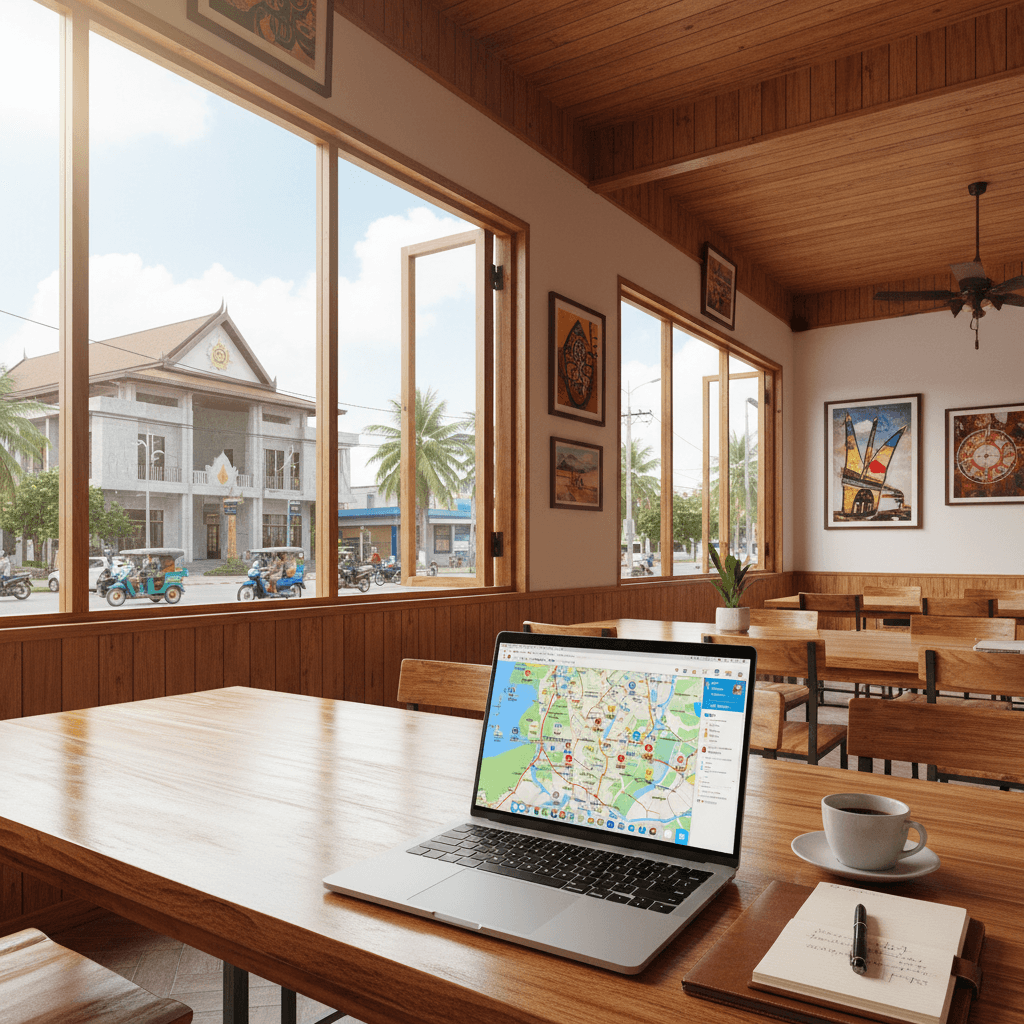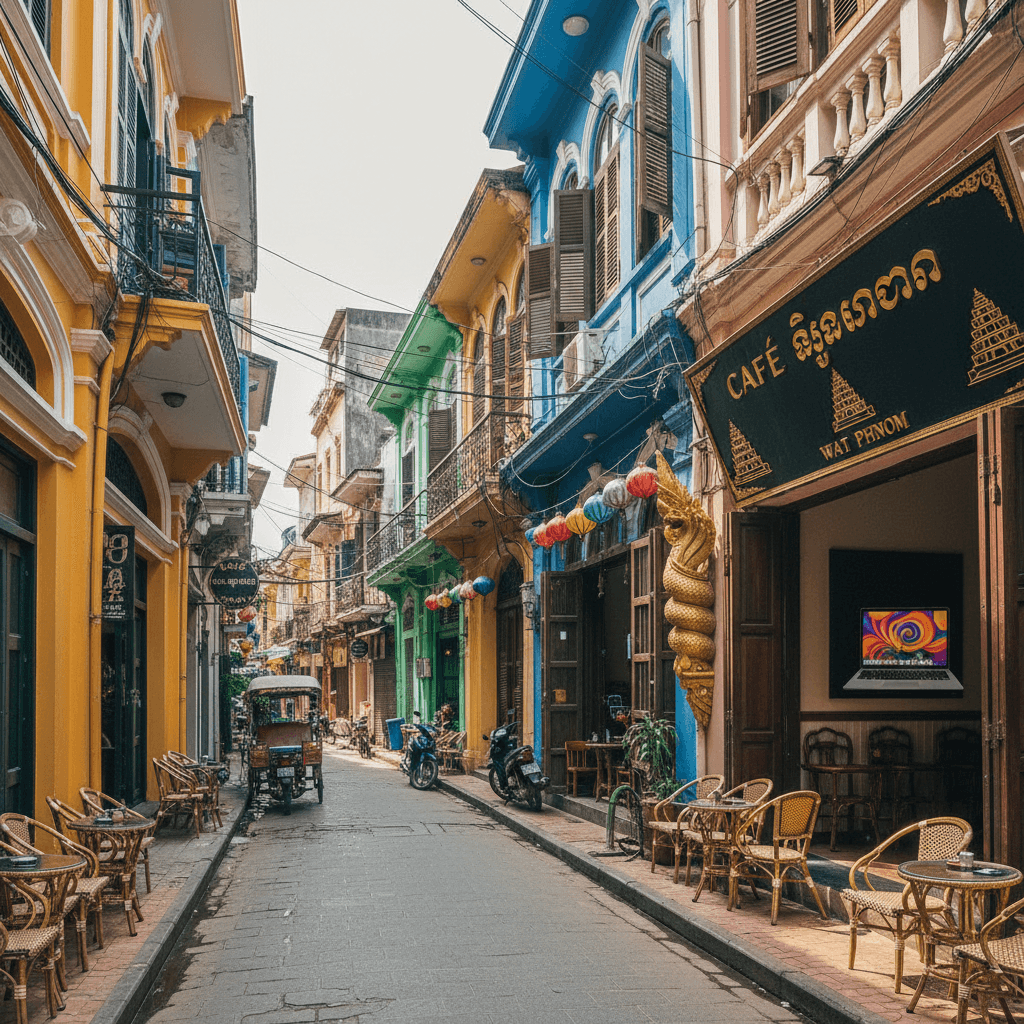
Phnom Penh
🇰🇭 Cambodia
Phnom Penh is a city of gritty, unapologetic character. While its neighbors like Bangkok or Bali have become highly polished nomad playgrounds, the Cambodian capital retains a raw edge that appeals to those who find perfection a bit boring. It is a place where French colonial villas stand beside gleaming skyscrapers, and where a quiet afternoon in a boutique cafe can be punctuated by the roar of a passing tuk-tuk. You come here for the energy, the history, and a cost of living that remains one of the lowest in Southeast Asia.
The Local Atmosphere
The vibe is a unique mix of chaotic urban hustle and a surprisingly laid-back cafe culture. Unlike the high-pressure environment of other major capitals, Phnom Penh allows you to breathe. You will see monks in saffron robes walking past Art Deco landmarks like the Central Market, and the riverside promenade stays alive with locals exercising at sunset. It is a city that feels like it is constantly under construction, evolving in real time while keeping its roots firmly planted in its complex past.
Most nomads find the community here to be smaller but far more tight-knit than in larger hubs. You aren't just another face in a crowd of thousands; you are part of a growing scene that favors genuine connection over networking. People here are approachable, and the local Khmer hospitality is legendary. It is easy to find your "usual" spot within a week of arriving.
What Nomads Love and Hate
The draw for remote workers is the balance of productivity and affordability. You can secure a desk at Suzy Time Café for just $2 an hour or $5 for a full day, which includes unlimited drinks. The internet in these dedicated spaces and high-end cafes is reliable enough for deep work, often surprising those who expect a developing nation to be offline. Plus, the lack of overcrowding means you won't be fighting for a power outlet.
- The Upside: Incredible value for money, a high standard of living for under $1,500 a month, and a central location that makes regional travel easy.
- The Downside: The traffic is legendary for its lack of rules, the heat can be oppressive from March to May, and city-wide WiFi can be patchy, making a local Cellcard SIM a requirement rather than a suggestion.
The Financial Reality
Living here feels like a life hack. You can eat like a king on a modest budget, especially if you embrace the local food scene. Street food usually runs between $1 and $3, while a mid-range dinner with drinks will rarely top $10. For those on a budget, a total monthly spend of $800 to $1,200 is doable. If you want a more comfortable lifestyle with a modern apartment and frequent nights out at Bassac Lane, expect to spend closer to $1,200 to $2,000.
Neighborhood Snapshots
Where you stay defines your experience. Most long-termers gravitate toward one of three main pockets.
Russian Market (Toul Tom Poung)
- Vibe: The true nomad heart of the city. More local, less touristy, and very affordable.
- Rent: $400 to $600 for a solid one-bedroom apartment at places like La Belle Residence.
- Best For: Long-term stays and those who want a neighborhood feel.
Riverside (Sisowath Quay)
- Vibe: Historic, bustling, and right in the thick of the action. It is beautiful but can be noisy and tourist-heavy.
- Rent: $500 to $800 for apartments with a view.
- Best For: First-timers and nightlife lovers.
Bassac Lane & BKK1
- Vibe: Upscale, trendy, and home to the city’s best cocktail bars and international dining.
- Rent: $600 to $1,000+ for modern builds.
- Best For: Expats who want high-end amenities and a social scene right outside their door.
Getting around is simple as long as you have the right apps. Walking is rarely an option due to the heat and uneven sidewalks, so everyone uses Grab or Passapp. A typical tuk-tuk ride across town will cost you $1 to $3, making it easy to hop between your apartment in the Russian Market and a sunset drink by the Mekong.
The Nomad Budget
Phnom Penh is currently one of the most affordable capitals in Southeast Asia. While costs are rising, your dollar still goes significantly further here than in Bangkok or Bali. Most solo nomads find they can live comfortably on $1,200 to $2,000 per month, though you can easily get by on $800 if you're happy with street food and shared housing.
The local economy runs on a dual-currency system of US Dollars and Cambodian Riel. You'll use dollars for most transactions, though riel is common for small change. Expect to pay $3 to $5 in fees every time you hit an ATM, so it's smart to withdraw larger amounts at once.
Housing and Neighborhoods
Rent is your biggest variable. Most nomads gravitate toward the Russian Market (Toul Tom Poung) area. It's less touristy than the riverside and has a high concentration of specialized cafes and apartments. You can land a modern one-bedroom at a spot like La Belle Residence for $400 to $600, usually including fast WiFi and cleaning services.
If you prefer being in the thick of the action, the Riverside area offers great views and proximity to the Royal Palace, but you'll pay a premium. Expect to shell out $500 to $800 for a decent apartment here. For those who prioritize nightlife and high-end dining, Bassac Lane is the place to be, though the noise levels in the evenings aren't for everyone.
Eating and Drinking
Food costs depend entirely on how much you want to "live like a local." If you're hitting the street stalls for pork and rice or noodle soup, you'll spend $1 to $3 per meal. Mid-range spots like Backyard Cafe or Wild serve up excellent international fare for $5 to $10. If you're feeling fancy, the city's upscale dining scene starts at around $15 for a main course.
- Street Food: $1 to $3
- Mid-range Meal: $5 to $10
- Upscale Dining: $15+
- Local Beer: $0.50 to $1.50
- Specialty Coffee: $2 to $4
Transport and Utilities
Forget about walking. Between the heat and the lack of sidewalks, you'll be using ride-hailing apps constantly. Download Grab or PassApp immediately. A typical tuk-tuk or car ride across town will set you back $1 to $3. If you're staying long-term, a monthly gym membership at a place like Elite Fitness costs about $35.
Internet is generally reliable in dedicated workspaces, but city-wide WiFi can be spotty. Most nomads pick up a Cellcard SIM card at the airport for a few dollars to ensure they stay connected. For work, Suzy Time Café is a favorite because they offer a $5 day pass that includes unlimited drinks, making it much cheaper than renting a traditional office desk.
Monthly Cost Breakdown
- Budget Nomad ($800 to $1,200): Shared housing, heavy reliance on street food, and using public buses or local motorbikes.
- Mid-Range ($1,200 to $2,000): Private one-bedroom apartment, a mix of local and Western cafes, and daily Grab rides.
- Comfortable ($2,000+): Luxury serviced apartment, frequent upscale dining, a private driver for weekend trips, and premium coworking memberships.
Nomads and Remote Workers
If you are looking for the sweet spot between affordability and a community of like-minded workers, head straight to the Russian Market area, known locally as Toul Tom Poung. This neighborhood is the unofficial headquarters for the city's digital nomad scene. You can find modern, comfortable studio apartments at La Belle Residence or similar buildings for $400 to $600 a month. These usually come with the kind of reliable WiFi you need for video calls, which can be hit or miss in other parts of the city.
The work culture here is relaxed but productive. Suzy Time Café is a favorite for deep work sessions because they offer a daily rate of $5 that includes unlimited drinks. If you prefer a dedicated office vibe, Emerald Hub and Workspace1 by Factory are the go-to spots. For a change of scenery, nomads often rotate through cafes like Backyard or Wild, where the internet is fast and the staff won't mind if you stay for a few hours. Just keep in mind that the streets here are narrow and traffic can get heavy during the evening rush.
Expats and Long-Term Residents
Expats who want to be in the thick of the action usually gravitate toward the Riverside area or Sisowath Quay. This is where the city's French colonial history is most visible, with the Royal Palace and the Central Post Office nearby. Living here feels more like a traditional capital city experience. Rents are slightly higher, typically ranging from $500 to $800 for a one-bedroom apartment with a view of the Tonle Sap River.
The community here is well-established, and you'll find plenty of networking opportunities at the riverside bars and cafes. While it can feel a bit touristy and crowded on weekends, the walkability is better than most other districts. Most expats rely on the Grab or Passapp apps to get around, as a cross-town trip rarely costs more than $3. For fitness, the international crowd typically pays $40 to $60 for gym memberships like Elite Fitness.
Solo Travelers and Social Butterflies
If your priority is nightlife and meeting people, Bassac Lane is the place to be. This neighborhood is famous for its "micro-bars" and hidden cocktail spots tucked away in narrow alleys. It is only a 5 to 15 minute walk to the Riverside, making it a perfect base for exploring. Solo travelers love this area because it is easy to strike up a conversation at a sports bar or a hole-in-the-wall eatery.
The vibe here is upscale but unpretentious. You can grab a street food snack for $2 and follow it up with a craft cocktail for $7. The only downside is the noise; since this is the city's nightlife heart, don't expect a quiet night's sleep if your window faces the main strip. Safety is generally good here, though you should always keep an eye on your phone and bag in crowded areas to avoid petty theft.
Families and Slow Travelers
For those traveling with family or anyone who prefers a more residential feel, the Central district near Central Market (Phsar Thmey) is a practical choice. The 1937 Art Deco market building is a landmark, and the surrounding streets are filled with vendors selling fresh produce and household goods. This area provides easy access to the city's bus lines, which cost about $0.37 per trip and are a great way to avoid the chaotic traffic if you aren't in a hurry.
- Russian Market: Best for budget, coworking, and local markets.
- Riverside: Best for views, colonial architecture, and expat community.
- Bassac Lane: Best for cocktails, social scenes, and boutique dining.
- Central Market: Best for shopping, local immersion, and transport links.
Regardless of where you land, the city's tropical climate means you'll want to stay near a Grab pickup point. Between May and October, the heavy rains can turn a short walk into a swim, so having a reliable ride-hailing app is a necessity. Most neighborhoods are safe, but it pays to use common sense and stay in well-lit areas after dark.
Getting Connected
You won't find the blazing fiber speeds of Seoul or Singapore here, but Phnom Penh’s internet scene has improved massively. Most nomads find the WiFi in dedicated workspaces and cafes is more than enough for video calls and deep work. The city wide infrastructure can be a bit spotty though, so don't rely solely on your apartment’s router.
Your first move should be grabbing a local SIM card immediately upon arrival. Most expats recommend Cellcard for the best reliability and speed, though Smart is a solid runner up. You can pick these up at the airport for a few dollars. Keeping a data hotspot active is a smart backup for those occasional afternoon power flickers or neighborhood maintenance windows.
Top Coworking Spaces
Unlike the overcrowded hubs in Bali or Chiang Mai, Phnom Penh’s coworking spaces usually have plenty of breathing room. You won't have to fight for a chair or deal with "digital nomad influencers" filming in the corner.
- Suzy Time Café: This is a favorite for those on a budget. It operates on a unique model where you pay $2 per hour or $5 for a full day. That price includes unlimited drinks, making it one of the best value spots in the city for a productive afternoon.
- Emerald Hub: Known for having some of the most stable and fast WiFi in town. It attracts a focused crowd of entrepreneurs and remote workers who need a professional environment.
- Workspace1 by Factory: Located in a massive repurposed garment factory, this spot is part of a larger creative hub. It is a bit further out but offers a cool, industrial vibe and a strong community feel.
- The Desk: A more corporate and quiet option, perfect if you have a day full of sensitive client calls and need a polished backdrop.
The Cafe Culture
If you prefer the hum of a coffee shop over the silence of an office, you are in luck. The city has a thriving cafe culture where staff generally don't mind if you linger for a few hours with your laptop.
Backyard Cafe and Wild are two of the most popular choices for nomads. They offer fast internet and healthy food menus that cater to western tastes. Most nomads find these spots particularly refreshing because, unlike popular hubs in Thailand, you can actually find an empty seat during peak lunch hours. If you get deep into a flow state and forget to eat, just use the Grab app to have a meal delivered straight to your table; most cafes are relaxed about it as long as you keep buying coffee.
Reliability and Costs
While the digital infrastructure is developing quickly, it is still a developing urban environment. You should expect the occasional hiccup. Here is what to keep in mind for your budget and planning:
- Daily Coworking Rates: Expect to pay between $5 and $15 depending on the level of amenities and "corporate" feel you want.
- Monthly Memberships: Most dedicated spaces range from $80 to $150 per month for hot desking.
- Mobile Data: Very affordable; you can often get 20GB to 40GB of data for under $10 to $15.
- Power: Most upscale cafes and all major coworking spaces have backup generators, which is a lifesaver during the rainy season when short outages can occur.
Overall, the city offers a functional balance. It is cheap enough to work from a different cafe every day, but professional enough that you won't miss your deadlines. Just keep that Cellcard SIM topped up and you'll be fine.
Stay Sharp on the Streets
Phnom Penh is generally a safe place to base yourself, and most nomads find the daily rhythm here surprisingly relaxed. That said, it's a city where you need to keep your wits about you. Petty theft, specifically phone and bag snatching, is the most common issue. This usually happens when someone is distracted while using their phone on the street or sitting in an open air tuk tuk. To stay off the radar, keep your phone tucked away when walking and hold your bags toward the inside of the sidewalk.
The central areas like Riverside and Central Market have a higher risk of pickpockets due to the crowds. Most expats recommend avoiding isolated or poorly lit streets late at night, especially in less developed neighborhoods. If you're heading home after a few drinks at Bassac Lane, don't walk back alone; just use a ride hailing app to get a car or a covered tuk tuk directly to your door.
Healthcare and Medical Services
For minor ailments, pharmacies are everywhere and usually well stocked with international brands. If you need something more serious, the city has several high quality private hospitals that cater to the expat community. These facilities are modern and staffed by English speaking doctors, though they can be expensive if you aren't insured. For emergencies, don't wait for an ambulance. Travelers often say the fastest way to get to a hospital is to call a Grab or Passapp for an immediate ride.
- Emergency Transport: Use Grab or Passapp for the quickest response.
- Private Hospitals: Look for international clinics in the BKK1 or Central districts.
- Pharmacies: Widely available for over the counter needs.
Entry Requirements and Logistics
Getting into Cambodia is straightforward for most nationalities. You can grab a 30 day visa on arrival at the airport, which is the standard move for short term stays. If you're planning to stick around longer, many nomads look into the digital nomad visa options or extensions to keep their stay legal. Make sure you have some cash on hand for the visa fee, which is a $30 visa + $5 processing fee (total $35), as the airport card machines can be temperamental.
Practical Safety Tips
- Ride Hailing: Stick to Grab or Passapp. It keeps a digital record of your journey and prevents any price haggling.
- Connectivity: Pick up a Cellcard SIM at the airport immediately. Having a reliable data connection is your best safety tool for GPS and summoning rides.
- Local Customs: When visiting the Royal Palace or local temples, respect the dress code. Cover your shoulders and knees to avoid being turned away or causing offense.
- Cash and ATMs: The city runs on cash. ATMs charge fees between $3 and $5 per withdrawal, so it's smarter to take out larger amounts less frequently and store the bulk of it in a secure spot at home.
While the city can feel chaotic at first, you'll quickly realize that most of the "danger" is just navigating the traffic. Once you get used to the flow of the streets and learn to keep your valuables out of sight, Phnom Penh feels as secure as any other major Southeast Asian capital.
The Chaos and the Charm
Phnom Penh is a city that moves at its own rhythm. It is loud, dusty, and occasionally overwhelming, but it is also incredibly easy to navigate once you understand the local logic. You won't find yourself walking much; the tropical heat and the lack of consistent sidewalks make it a city of wheels rather than feet. Most nomads quickly realize that the sidewalk is actually a multipurpose space for parking motorbikes, selling street food, or hosting family dinners.
The Power of Ride-Hailing
The days of haggling with tuk-tuk drivers on every street corner are largely over. While you can still flag someone down, almost everyone uses apps now. It saves you the headache of explaining your destination and ensures you pay the local rate rather than the "tourist tax."
- Grab: The regional giant. You can book everything from standard cars to the iconic three-wheeled remorks. It is reliable, allows for credit card payments, and is the go-to for most expats.
- PassApp: This is the local favorite. It is often slightly cheaper than Grab and has a massive fleet of drivers. You will mostly use this for the small, Indian-style rickshaws that zip through traffic gaps.
- Pricing: Expect to pay between $1 and $3 for most trips within the city center. A ride from the Russian Market to the Riverside usually sits right in that sweet spot.
Public Transit and Buses
Phnom Penh does have a public bus system, though it is often overlooked by the nomad community. There are multiple bus routes (over 10) operating daily. At just $0.37 per trip, it is the cheapest way to get around if you aren't in a rush. If you want to try it, download the City Bus Official App to track buses in real-time, otherwise, you will be left standing on a hot corner wondering if the bus exists at all.
Two-Wheeled Freedom
For those staying longer than a month, renting a scooter is a popular move. It gives you total autonomy, but the traffic rules are more of a suggestion than a law. If you aren't experienced on a bike, this is not the city to learn. Helmets are mandatory for drivers, and the police do frequent checks, especially near the Independence Monument.
- Scooter Rentals: Prices generally range from $70 to $120 per month depending on the model and condition.
- Bicycles: Common in quieter neighborhoods like BKK1, but the heat makes any ride longer than ten minutes a sweaty endeavor.
- Private Drivers: If you are planning a full day of sightseeing at the Killing Fields or the Royal Palace, hiring a driver for the day is a smart move. This typically costs between $25 and $30 and saves you from booking multiple individual trips.
Getting to and from the Airport
Phnom Penh International Airport is about 10 kilometers from the city center, but that journey can take anywhere from 30 minutes to over an hour depending on the notorious Monivong Boulevard traffic. A Grab or a tuk-tuk into the city will usually cost you between $10 and $15. There is a train link that occasionally runs, but it is inconsistent; most travelers find the apps much more dependable for a flight catch.
Practical Navigation Tips
The city is laid out on a grid with numbered streets. Even numbers generally run east-west and odd numbers run north-south. This makes it easy to find your way if your phone dies. Most nomads find that living in the Russian Market area provides a bit more breathing room, while those in Riverside or Bassac Lane enjoy being within a short, cheap tuk-tuk ride of the best nightlife and coworking spots like Emerald Hub or Suzy Time Café.
Getting by in the Capital
You'll find that navigating Phnom Penh is a bit of a linguistic balancing act. Khmer is the official language, and while its script looks beautiful, it's notoriously difficult for foreigners to read or write. However, the city has a massive expat footprint and a history of international NGOs, which means English proficiency is surprisingly high in the pockets where nomads tend to hang out.
In neighborhoods like Russian Market (Toul Tom Poung) and BKK1, you can walk into almost any specialty cafe or coworking space and communicate with ease. Staff at spots like Suzy Time Café or Backyard speak excellent English. Most nomads find that they can navigate daily life, from ordering a $5 lunch to discussing lease terms, without much friction. That said, once you step away from the digital nomad bubbles and into the local wet markets or the outskirts of the city, English levels drop off quickly.
Essential Khmer for Your Toolkit
While you can survive on English alone, learning a few Khmer basics goes a long way with the locals. Cambodians are incredibly friendly, and even a butchered attempt at a greeting usually earns a genuine smile. It changes the dynamic from being just another tourist to being a respectful guest in their city.
- Susaday: Hello (informal).
- Choum Reap Sour: Hello (formal, used with elders).
- Aw kohn: Thank you.
- Chhnang: Delicious (perfect for street food stalls).
- Bon man?: How much?
A quick tip on etiquette: when saying hello or thank you, it's common to perform a "Sampeah." This involves placing your palms together in a prayer-like gesture. The higher your hands are relative to your face, the more respect you're showing. For peers and service staff, keeping your hands at chest level is the standard move.
Digital Communication and Apps
Since English isn't universal, technology does the heavy lifting for most travelers. You shouldn't rely on the hope that your driver speaks English. Instead, use the Grab or Passapp apps for every single trip. These apps allow you to input your destination in English, and the driver follows the GPS. It eliminates the "lost in translation" moments that often happen in the back of a tuk-tuk.
For everything else, Google Translate is your best friend. The camera feature is particularly useful for translating menus at local spots or signs in smaller markets. For staying connected, expats recommend picking up a Cellcard SIM card immediately upon arrival at the airport. It's affordable, and having a local number makes it easier to use delivery apps and coordinate with landlords.
The Social Language
Phnom Penh has a very active social scene, and English is the lingua franca of the nomad community. If you're looking to meet people, head to Bassac Lane in the evenings. The narrow alleys are packed with small bars where English-speaking expats and locals mingle. Because the city is smaller and less "discovered" than places like Chiang Mai, the community feels tighter. You'll find that people are very open to striking up a conversation, making it one of the easier cities in Southeast Asia to build a social circle quickly.
The Tropical Rhythm
Living in Phnom Penh means embracing a tropical climate that stays hot year round. You can expect temperatures to hover between 28°C and 35°C (82°F to 95°F) basically every day. While the heat is a constant, the humidity and rainfall shift significantly throughout the year, dictating when you'll want to be out exploring and when you'll be ducking into a coworking space for the air conditioning.
The city operates on two main seasons: the dry season and the monsoon. Most nomads find the transition periods the most interesting, but your tolerance for sweat and sudden downpours will determine your best move-in date.
Peak Season: November to February
This is widely considered the prime time to land in the capital. The "cool" season brings temperatures down to a manageable 25°C to 30°C. It is the most comfortable period for walking around the Riverside or exploring the Art Deco architecture of Central Market without needing a shower every twenty minutes.
- The Draw: Low humidity and clear blue skies. It is perfect for outdoor cafe sessions at spots like Backyard or Wild.
- The Trade-off: This is the busiest time for tourism. While Phnom Penh rarely feels as overrun as Siem Reap, you might find slightly higher prices for short term rentals and more crowded bars along Bassac Lane.
The Shoulder Season Heat: March to May
If you aren't a fan of intense heat, you might want to plan a visa run during these months. This is the hottest time of the year, with temperatures frequently spiking above 35°C (95°F). The air can feel heavy, and the city gets dusty before the rains arrive.
Expats usually spend these months hopping from one air conditioned environment to another. It is a great time to hunker down for deep work at Suzy Time Café or Emerald Hub. If you are here in April, you will catch Khmer New Year. The city actually gets quite quiet as locals head to the provinces, but be prepared for water fights and a festive, albeit sweltering, atmosphere.
The Monsoon: June to October
The rainy season is often misunderstood by travelers. It rarely rains all day; instead, you'll see massive, dramatic afternoon downpours that flood the streets for an hour and then vanish. The city turns a lush green, and the dust from the dry season finally settles.
- Rainfall: High, especially in September and October.
- Pros: You can often find better deals on monthly apartment rentals in the Russian Market area. The air is cleaner, and the afternoon storms provide a nice excuse to stay productive in your home office.
- Cons: Drainage in Phnom Penh isn't always great. Some streets can flood quickly, making the usual $1 to $3 Grab or Passapp rides a bit more complicated as traffic slows to a crawl.
At a Glance: Monthly Averages
- January and February: Average high of 31°C. Very low rainfall. This is the goldilocks zone for digital nomads.
- May to October: Average high of 32°C. High rainfall. Expect humidity to peak, making 10:00 AM to 4:00 PM the "indoor hours."
- November and December: Average high of 30°C. Medium rainfall. The weather begins to break, and a pleasant breeze often returns to the Riverside.
Most long term residents recommend arriving in late October or early November. You'll beat the peak season price hikes but arrive just as the weather turns beautiful, giving you a few solid months of outdoor living before the intense heat of March kicks in.
Connectivity and Power
You shouldn't rely on your hotel or guesthouse WiFi for anything high stakes like a client call. While cafe internet has improved significantly, city wide speeds fluctuate. Most nomads pick up a Cellcard SIM card immediately upon arrival at the airport. It's cheap, reliable, and provides a necessary hotspot backup when your apartment's router decides to take a nap.
For serious deep work, Suzy Time Café is a local favorite because it offers a $5 day pass that includes unlimited drinks. If you prefer a traditional office environment, Emerald Hub and Workspace1 by Factory are the go-to spots for fast fiber and ergonomic chairs. Unlike the digital nomad hubs in Bali or Chiang Mai, you won't usually have to fight for a seat here.
Money and Budgeting
Phnom Penh operates on a dual currency system using US Dollars and Cambodian Riel. ATMs typically spit out USD, but you'll receive Riel back as change for anything less than a dollar. Expect to pay a $3 to $5 fee per ATM transaction, so it's smarter to pull out larger sums less frequently. While high end spots take cards, cash is still king at the markets and smaller street stalls.
- Budget Lifestyle: $800 to $1,200 per month. This covers a room in a shared house and a heavy rotation of $1 to $3 street food meals.
- Mid-range Lifestyle: $1,200 to $2,000 per month. This gets you a private 1BR apartment in a spot like the Russian Market and regular dinners at mid-range restaurants where meals cost $5 to $10.
- Comfortable Lifestyle: $2,000+ per month. You'll live in a modern serviced apartment with a pool and gym, frequently dine at upscale riverside spots, and likely use a private driver for longer trips.
Getting Around the Chaos
The city isn't built for walking. Sidewalks are often blocked by parked motorbikes or street food carts, and the heat makes a ten minute stroll feel like a marathon. Download Grab and PassApp before you land. These apps are the gold standard for booking tuk-tuks and taxis safely. Most short trips across town cost between $1 and $3.
If you're feeling adventurous, the public bus system is incredibly cheap at roughly $0.37 per trip. Download the Stops Near Me app to track the three main routes. For weekend escapes to the outskirts, nomads usually hire a private driver for the day, which typically costs between $25 and $30.
Visas and Staying Legal
Most travelers opt for the 30 day visa on arrival. If you plan on staying longer to work, make sure you look into the specific E-class (ordinary) visa options which are easier to extend than a standard tourist visa. Always keep a few passport photos and crisp USD bills on hand for the immigration desk to avoid any hiccups at the border.
Health and Safety
Phnom Penh is generally safe, but petty snatch-and-grab thefts do happen, especially in crowded areas like the Central Market or the Riverside. Keep your phone tucked away while in a tuk-tuk and don't dangle your bag loosely over your shoulder. For medical issues, there are several reputable private clinics and pharmacies that stock international brands. If you have a major emergency, use a ride-hailing app to get to a hospital rather than waiting for an ambulance, as they can be slow to navigate the traffic.
When to Visit
The weather is tropical and stays hot year round, usually hovering between 28°C and 35°C. Most expats agree that November to February is the sweet spot. It's the "cool" season, meaning you can actually enjoy a coffee outside without melting. Avoid March to May if you can; the heat is oppressive and can make even the shortest commute feel exhausting. The rainy season runs from May to October, bringing heavy afternoon downpours that can occasionally cause flash flooding in lower lying streets.
Need visa and immigration info for Cambodia?
🇰🇭 View Cambodia Country GuideHidden Gem
Worth the effort
Monthly Budget Estimates
More cities in Cambodia
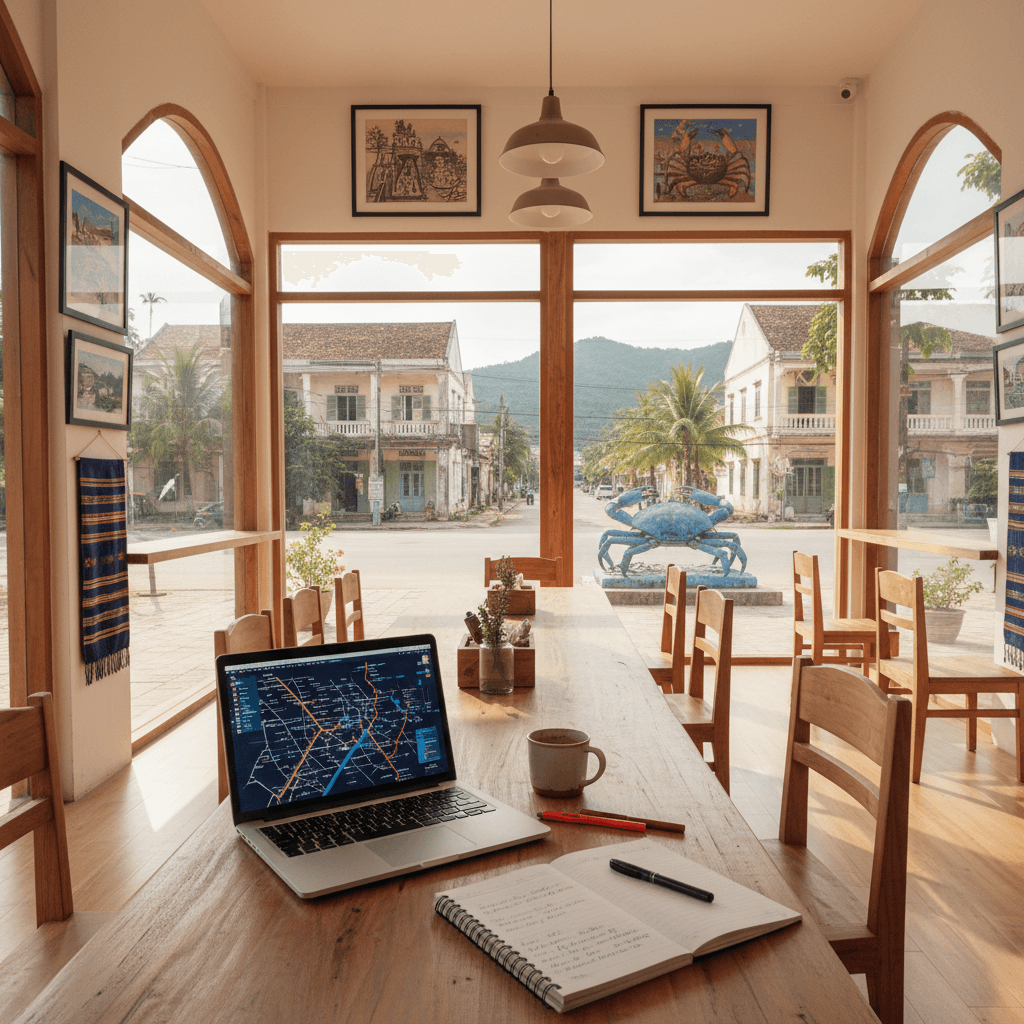
Kep
🇰🇭 Cambodia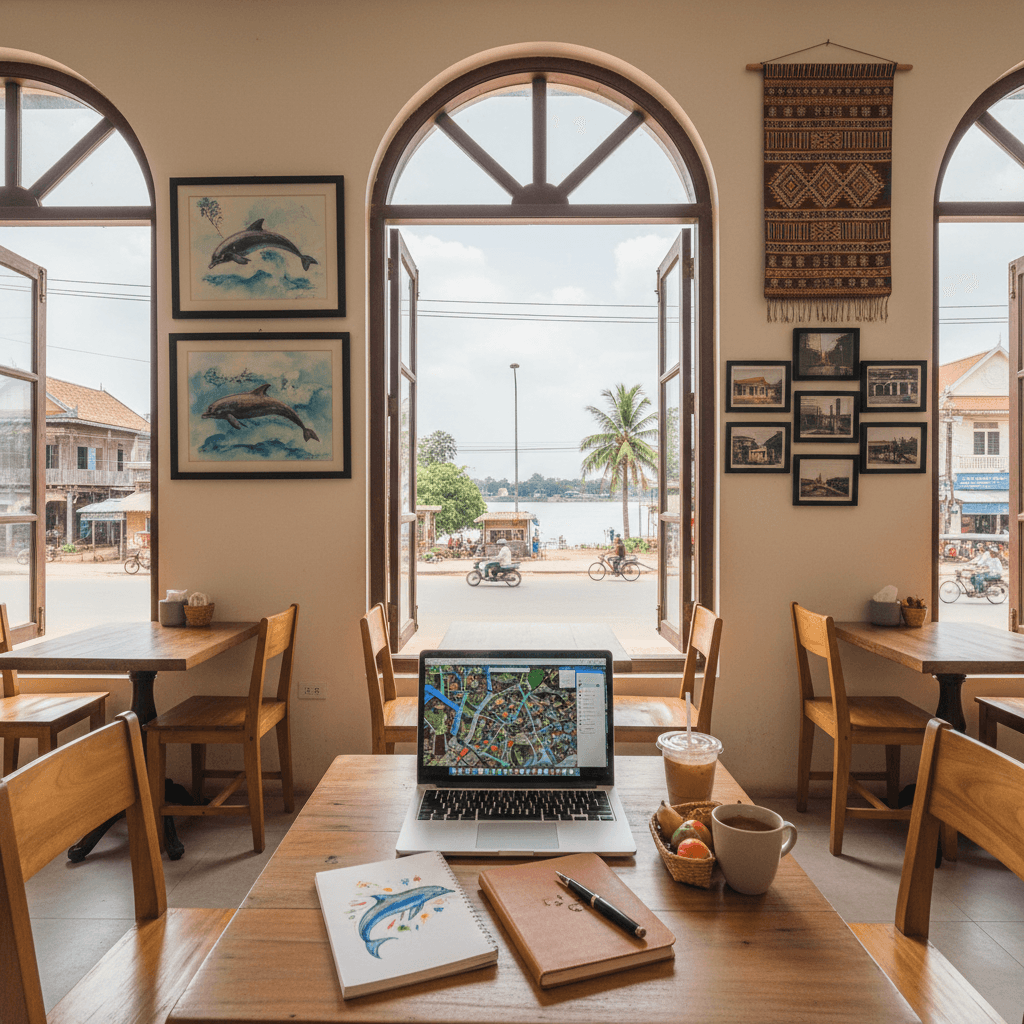
Kratie
🇰🇭 Cambodia
Sen Monorom
🇰🇭 Cambodia